Some decades ago, I was a commissioned officer in the US Navy nuclear propulsion program. Pulled a couple of WestPac-Indian Ocean deployments as a nuclear engineering officer — I’ve long been familiar with APAC military ops and remain so to this day.
Back then, we patrolled the perimeter — from the Gulf all the way up to the East China Sea.
Call this repost from Mark Wauck a “sentimental journey”.
Civilized people have been celebrating the departure of a key Neocon, Victoria Nuland, from her position in the State Department. So far I’ve seen very little about who will replace Nuland. Today Geroman is claiming that Nuland will be replaced by a “China hawk”. The idea is that the Zhou regime is “pivoting to China” while trying to keep the war on Russia going by means of rhetoric and spending. Here’s what Geroman is saying—with some extra comments:
— GEROMAN — time will tell – 👀 — @GeromanAT
Nuland was taken out for a reason – the new guy is a China hawk – Europe is now in full panic mode because they know that the war US=NATO has caused is now a European problem – good luck producing shells without cheap energy and basically zero own resources.
US used NATO to cut EU off cheap Russian energy – fertilizer – and other important resources.
To be a vassal of US regime comes with a price tag
Macron is afraid – like most of those “Western Leaders” in Europe – because US is shifting focus on China now – and the Russia / Ukraine project has failed epically – and now those idiots just learned that it is on them now to save the day.
Spoiler alert: NATO lost its dirty war… x.com/JBrowsing2023/…
1:45 PM · Mar 8, 2024
JuliusXXVI @JuliusXXVI
Tbh Nuland’s replacement just happened to be down the list next in line. But he has a history of acting as the clean-up guy of failed US policies, if pattern is same that’s what he’ll do this time. US isn’t even sending money anymore so project is over, they have no more policies
— GEROMAN — time will tell –  — @GeromanAT
they could have chosen anyone but picked him – and yes – he is for the cleanup – but also a China hawk
You’ll notice that nobody is actually named. What I’ve read is that John Bass (also here) will be the interim replacement for Nuland, but Julianne Smith is being prepped to be the permanent replacement. Bass has a somewhat controversial record for aggressively interfering in the affairs of the countries he’s been stationed in, but I didn’t pick up any specific “China hawk” references.
There are some reasons to take Geroman’s thesis seriously, despite the increasingly bellicose anti-Russian rhetoric from Zhou and the collective West. For example, the US has closed a deal for basing in three Pacific island nations. This is not actually a sudden policy move—it was made possible long ago and the activation of this plan has been in the works for a while:
Five months behind schedule, the US Senate on Friday approved promised economic assistance for three allied Pacific island nations to blunt China’s influence in the strategically vital region.
The delayed funding for the Marshall Islands, Micronesia and Palau under the Compacts of Free Association (Cofa) found its way through a US$460 billion appropriations package passed by the Senate hours before a midnight Friday deadline to narrowly avert a federal government shutdown.
…
First signed in the 1980s, the Cofa agreements provide the United States exclusive military access to strategic swathes of the western Pacific in exchange for economic help.
I wasn’t able to come up with a map that singled out these specific islands, but these two maps will give you an idea of what’s going on:
Basically, the US concept is to—optimally—blockade China inside the First Island Chain utilizing US bases and “allied” nations, stretching from Japan and Korea, Taiwan, the Philippines, and down to Malaysia. That first military chain of bases will be backed up by the Second and Third Island Chains further out in the Pacific. The need for the second and third island chains is dictated—as I understand it—by two factors. The first is to protect the US supply chain across the thousands of miles of the Pacific Ocean. The second is to intimidate Pacific island nations—the Solomon Islands come to mind—who might see their interests best served by establishing cordial relations with China. Predictably, China—which is heavily dependent on foreign trade and energy—isn’t inclined to sit back and allow the American Empire to establish a stranglehold over its economy, to be utilized at the pleasure of the US.
[Comment: here is the punch line]
In other words, the American Empire is attempting to solve what is a fundamentally a trade and commerce problem caused by misguided US polices … by military force and intimidation. [Empasis added] For the imperial mindset, every geopolitical issue has a military solution. Why not change the US policies that led to this, instead of blaming China? The ruling oligarchy of the American Empire—which enriched itself by outsourcing American industry—has simply too much money at stake. In essence, our ruling class wants to have its cake—obscene profits from our financialized economy—and eat it too—keep China in industrial servitude as the provider of inexpensive “stuff” that the US no longer makes. The interests of Americans, who are being gradually crushed by what the ruling class has done, are not a consideration for the ruling class. Nor is the increasingly obvious demoralization and decline of American society a consideration, since the ruling class feels secure in its own enclaves. This is what lies behind the American Empire’s pretty nakedly imperialistic adventures: enrichment of the ruling class through the projection of military force to control the world’s resources and trade routes. Virtually every military adventure you can name ultimately fits into this framework. And this is what accounts for the rise of BRICS.
[Comment: got it? No? Then read that paragraph again very slowly.]
Yesterday I briefly outlined my disagreement with Professor John Mearsheimer. Mearsheimer is of the view that the US should be on good terms with Russia—so that we can crush China without hinderance from stupid wars in Europe. In this view Russia would foolishly assume that, having crushed China, the American Empire would never pivot once again to crush Russia and loot it for its treasure chest of resources. YMMV, but I don’t think the Russians are that stupid—not even close. They’ve seen enough of our act. They get it that we can’t be trusted. Here’s what I wrote yesterday:
One thing I want to make clear. I don’t really agree with Mearsheimer regarding China. He characterizes China as a “peer competitor”. To the extent that China actually is such a competitor, however, I think that’s more due to America’s folly in pursuing the impossibility of becoming now and future World Hegemon. China has many problems that are at the core of its national existence. If America retrenches in the direction of pursuing its own limited national interests, China will end up not being anything like a “peer competitor.”
For that reason I also would take issue with the idea that America should regard China as a “threat”, as an “adversary”, or that “containing China [is] America’s principal mission.” I can certainly agree that it’s foolish to push Russia into the arms of China. However, to the extent that China is perceived as a threat, I would maintain—as commenter Cassander did earlier today—that that is mostly do to the cynical and self interested policies of our ruling class in pursuing their own enrichment. Framing this issue as The China Threat simply diverts attention from the real issues and their real solutions.
Not long ago I heard Mearsheimer present his “optimistic” take on China US relations. He maintained that, by 2075, the US would be much more “powerful” than China. Why? Because, he said, the US population is growing while China’s is contracting. I was stunned at this statement, failing, as it did, to account for how America’s population is growing and the quality of the human capital that is causing that growth by walking across our borders.
[Comment: I had the same reaction to John as Mark did. And I hasten to add, I casually knew John a long time ago who gave me very good advice at the time. Always remember him fondly for it. So when John drifts off into his take on US-PRC relations, it’s like … WTF?]
Now, none of this is to say that the US should abandon all national security concerns with regard to China. However, I would suggest that national security for America begins at home. We are surrounded by thousands of miles of ocean. Rather than pursuing the impossible goal of projecting military might around the globe, we would be far better off scaling our objectives back to manageable proportions. That, and securing our home front against rampant foreign interests that are distorting our entire constitutional order. This is our true weakness. We need to build back the moral character of America if we want to influence the rest of the world, rather than relying on purely military force. Unfortunately, this sensible approach is opposed by our dominant ruling oligarchy. I’m not optimistic that the American people will be able to summon up the character to reclaim their country. Only a serious reverse on the foreign war and economic front may accomplish the needed turnaround.
Pivoting back, as it were, to our Euroweenie vassals, you have just shake your head at the stupidity they’re exhibiting. The UK continues to back attacks on Russia, Macron is drawing supposed “redlines” for Russia, and Poland’s new government, ignoring public opinion, is engaged in mindless provocation against its powerful neighbor. Read what Radek Sikorski (Mr. Anne Applebaum) said recently—presuming that Poland has total “asymmetric escalation” dominance over Russia, by keeping Russia guessing. Not kidding. Putin and Shoigu most be having a good laugh:
“In Korea in the 50s there was a coalition of UN countries that fought against aggression. So it can’t be said that this is something unthinkable. So I appreciate the recent French initiative. Because there are good intentions behind it, namely, for the president of Russia to ask himself what our next step will be, so that he is not sure that we will not do anything creative, and therefore could not freely plan his scenarios. This ability of asymmetric escalation should also be on our side.”
What comes through loud and clear is that the Globalist oligarchy gives not a fig for the subject population. Big Serge offered a humorous thread on this subject, with reference to Macron, but the same goes for the rest of these goofballs:
Nothing about this threat even makes sense. If you think that Ukraine is worth fighting a war with Russia, you wouldn’t set some weird redline where you pledge to intervene *after* Ukraine has been defeated.
The French Army has eight combat capable brigades (2 armored, 2 mech, 2 light armored, 1 mountain, 1 airborne). French force quality is fine, but this is an expeditionary force that’s not built to slug it out in Eastern Europe.
One is reminded of Bismarck’s famous quip that if the tiny peacetime British Army invaded Germany he would “simply have them arrested”. Given immensely negative reaction from the rest of NATO to Macron’s trial balloon, it’s hard to see France trying to go it alone here.
The balance of things is that Macron is trying to make it look like he’s taking a tough stance on Russia, knowing that the veto from Germany and America will prevent him from actually having to follow through. He can then say “I tried, but the Germans are cowards”.
Threatening to enter the war if Russia gets to Odessa is basically like saying “you better not beat up my little brother, if you knock him unconscious I’m going to hit you.” You wouldn’t wait until your kid brother has already been pulverized to step in.
It’s standard practice in nuclear ballistic missile submarine fleets throughout the world to periodically demonstrate you can actually launch a warbird successfully.
“Success” is defined as the warhead lands within the down-range target area.
Another measure of success is you don’t destroy your boat trying to light one off.
The Royal Navy dodged “yet-another” bullet the other day in one of its recent Trident missile tests — they seem to repeat their failures regularly.
Even back in my day, the Royal Navy was a sketchy operation.
Seems the mortgage business is getting pretty sketchy. We can check out Rocket recent results
Rocket Cos. lost $233 million in the final months of 2023, sending its full-year mark deep into the red.
Executives for the Detroit-based giant Thursday touted the firm’s artificial intelligence bona fides and cost-cuttiing amid its step back in quarterly and annual performance. The company, which had predicted a difficult period, saw net income fall from $114.9 million in the third quarter, but improved on its $492.6 million net loss to close 2022.
The fourth quarter of 2023 pushed Rocket’s net loss for the year to $390 million, also a major step back from the $699.9 million profit it reported amid the market’s downswing at the end of 2022. Rocket posted adjusted net revenue of $885 million in the fourth quarter – a figure above guidance that Chief Financial Officer and Treasurer Brian Brown attributed to stronger origination metrics.
“We delivered these achievements in what was one of the worst quarters for mortgage origination in recent history,” he said in a conference call Thursday evening.
Rocket Mortgage counted total origination volume of $17.2 billion between last October and December, down 22% quarterly and 9% less than the same time in 2022. Over 2023, originations hit $78.7 billion, a steep decline from the $133 billion in volume in 2022.
Origination volume in the direct-to-consumer channel of $10.36 billion and in Rocket’s partner network, including Rocket Pro TPO, of $8.46 billion were down quarterly and year-over-year as well. Each channel also saw steep dips in volume compared to the same period last year.
Brown and CEO Varun Krishna in Thursday’s call emphasized Rocket’s cost-cutting, with annual expenses falling from $5 billion in 2022 to $4.2 billion in 2023. The business said it cut its project list by more than 80%, slashing or pivoting efforts including Rocket Auto and Rocket Solar for solar upgrade loans.
Rocket’s prominent AI focus is apparently giving it an edge in originations. In December, its underwriters didn’t have to intervene in nearly two-thirds of income verifications, a fivefold improvement compared to a year-and-a-half earlier, the company said.
“AI is something that you have to have a right to win. and a right to win means you have to have the assets,” said Krishna. “Because of those ingredients that we have at scale, It’s why we expect to be a benefactor.”
The lender’s gain on sale margin of 268 basis points was down from the third quarter’s 276 bps, but up from the 217 bps at the same time in 2022. Brown told an investor it was hard to say when the company would reach the 300 bps GOS margin of years past, but capacity exiting the market will help.
“Now we’re starting to actually see it flow through in terms of pricing competitiveness,” said Brown of industry capacity reductions.
Rocket held $6.4 billion of mortgage servicing rights at the end of the year, a number that’s dipped slightly over the past five quarters. The company is actively bidding on MSRs, and Brown said the supply isn’t great amid aggressive bids by other industry players.
The CFO also expressed confidence in Rocket regarding recent comments by Treasury Secretary Janet Yellen suggesting a nonbank lender could fail amid market stress. Rocket’s balance sheet and liquidity of $9 billion are among, if not, the strongest in the industry.
“It’s something we’ll pay close attention to, but in a lot of cases, new regulations like this could actually increase our competitive advantage and sometimes even increase the moat around this business,” he said.
****************************************
To put Rocket in context, consider some market trends.
The 30-year fixed rate mortgage is up 2x since 2021. And not going anywhere until Powell cuts rates which seems like “not for a while.”
Originations?
When I reported to my boat way back when, Rocket Man was on our sound track. I’m not an Elton fan but the line still resonates from standing a lot of otherwise quiet backwatches.
“All the science I don’t understand, it’s just my job 5 days a week.”
Today looks like it’s time for a small update on the fighting in Ukraine. Avdeevka is perhaps the most fortified Ukrainian stronghold. It’s the fortress city from which the Ukrainians have used artillery to inflict civilian casualties on Donetsk City. This is a big victory for Russia and could signal further breakthroughs. There is heavy activity all along the front, from south to north—constant Russian pressure forcing Ukraine to commit what reserves they have.
The Battle for Avdeevka is lost for Ukrainians – but the battle is not over yet. AFU will either try to fight its way out of the city – or hold on to the last man to gain time for a better line of defense further in the West. One is clear – Russian forces won’t make it easy for AFU – no matter what they will try. Artillery and aviation is working – RF is pinning down AFU on the outskirts – making it harder to leave post – and moving deeper into the center to split the cake for good.
both – Ukrainian and Russian sources report Russians are dropping an insane number of FABs on the remaining AFU positions in Avdeevka – more than 40 counted in the last hours – while RF have now basically FULL fire control on the remaining supply route – looks like AFU will be wiped out there in the next 48h – or they will call VOLGA
FABs are gravity bombs that come in many sizes, but these are the very heavy variety for use against deeply fortified positions. The US provides such bombs to Israel for use against Palestinian civilians.
VOLGA is the surrender hotline the Russians have set up for Ukrainian troops to use.
Military Summary @MilitarySummary
Information is coming from different sectors of the front about multiple breakthroughs by the Russian Armed Forces along the entire line of combat contact.There is an operational crisis, and if the Ukrainian Armed Forces cannot stabilize the situation, the crisis could instantly develop into a strategic one.
In the near future, American journalist Tucker Carlson will publish an interview with Putin. This is expected to be another blow to a weakened Biden and Zelensky, who has almost lost all hope.
and we saw how it works in the last 24h. Russia broke through on several locations. AFU is in a real operational crisis. And this tactics (to attack everywhere – even if just a little) – is also used all along the lines. AFU had to shift reserves to keep Avdeevka open – Russia attacked towards Terny – and Kupyansk – AFU is shifting forces to the north – RF is advancing in Marinka and south of Avdeevka. So – again – we won’t see any “big arrows” in the coming months – there is no need for that at all. And the idiotic assumption by “Western Experts” – that Russia “will take Kupyansk as a gift for Putin to win the elections” is another sign of desperation in the NATO camp – they create another “time line” – “Russia will take this or that unit 24th of Feb – or until elections” – this is another attempt to create a virtual victory for the losers club. Russian military doctrine has nothing to do with “we have to take that to show the West” – for Russia this war is like all others – take out the enemy – and try to avoid idiotic losses just for political reasons. But I’m sure the idiots in the NATO camp won’t understand this at all. All their military decisions were based on idiotic assumptions and PR.
Big Serge @witte_sergei
Avdiivka is collapsing in real time. Incredible. Russia is bombarding the remaining corridors, and it looks like the Ukrainian evacuation order was real, as well.
4:58 PM · Feb 7, 2024
I agree with Danny Davis’ assessment today that it’s questionable whether Ukraine can avoid collapse before the November US elections.
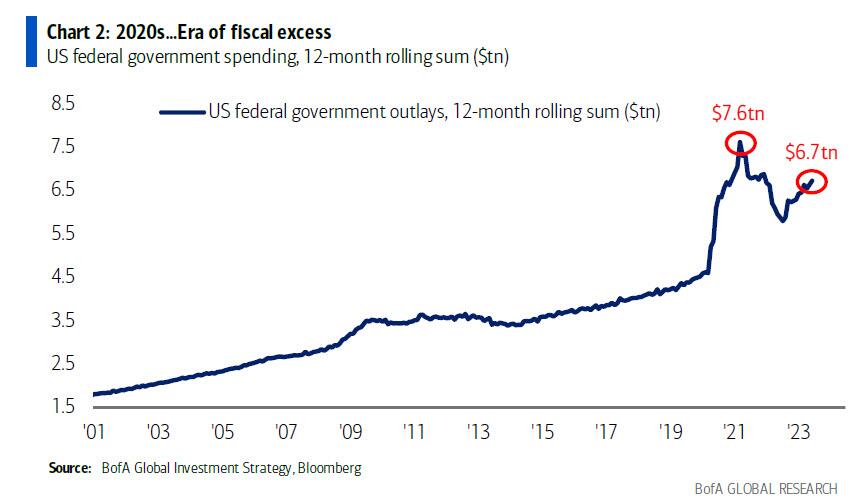
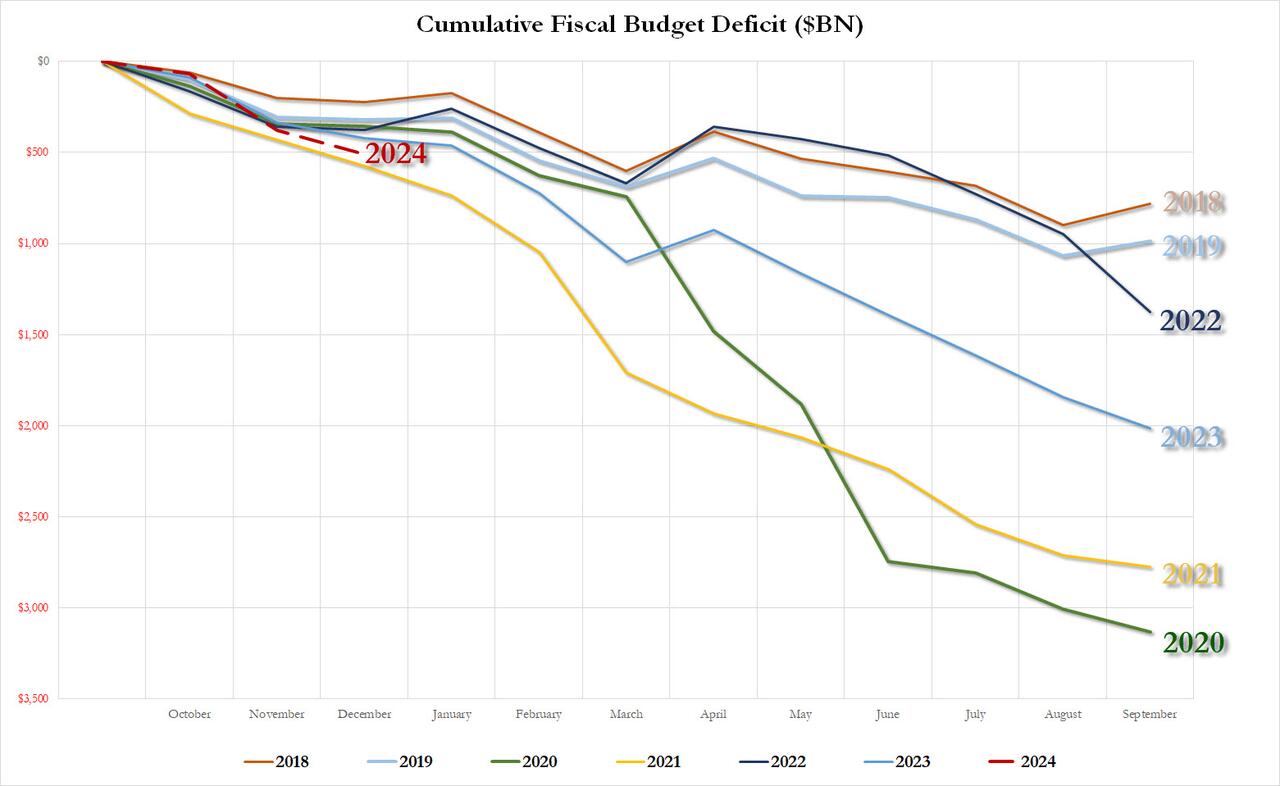
Remember when we showed that the “stealth” secret sauce behind Bidenomics was nothing more than a massive, multi-trillion debt-fueled spending spree, which led to the biggest peactime, non-crisis budget deficit in US history, with the total deficit for fiscal 2023 ending just over $2 trillion, or double the prior year, something which BofA’s Michael Hartnett called the “era of fiscal excess”?
Well, we have news for you: if 2023 was bad, 2024 – an election year of course – is shaping up to be far worse.
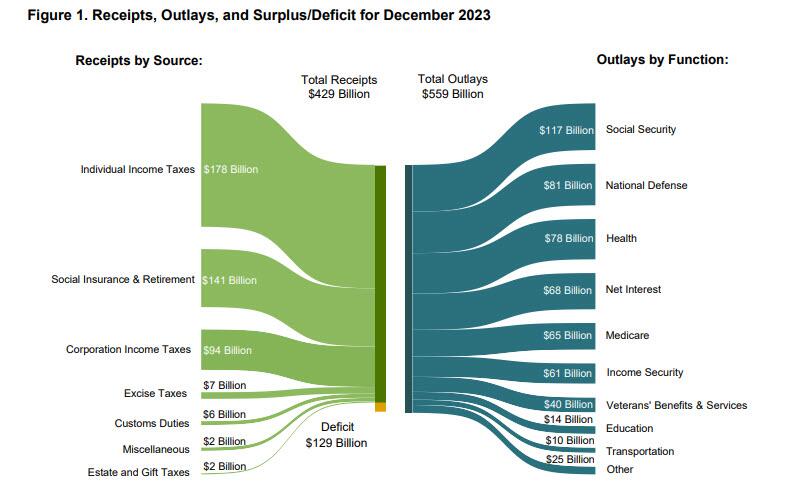
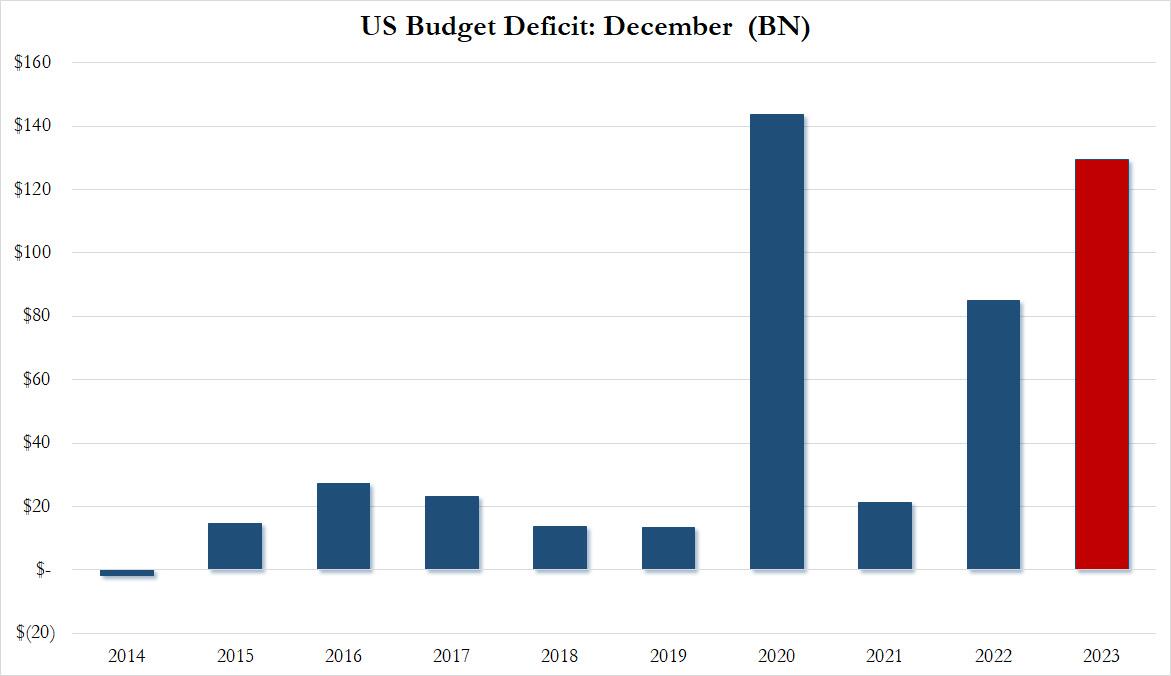
Moments ago the US Treasury reported the budget deficit picture for December and it will come as no surprise to anyone that the US has continued to spend like a drunken sailor, or rather, even more. As shown in the chart below, in the month of December, the US collected $429 billion through various taxes, while total outlays hit $559 billion…
… resulting in a December deficit of $129.4 billion.
This may not sound like a lot, but December is actually one of those months when the US deficit is relatively tame, or used to be.
As shown in the next chart, traditionally the December deficit was barely in the $10-20BN range… until 2020 when it exploded to an all time high of $140BN. And while it dropped sharply in 2021, it rebounded dramatically in 2022, and rose to just shy of the December crisis high last month!
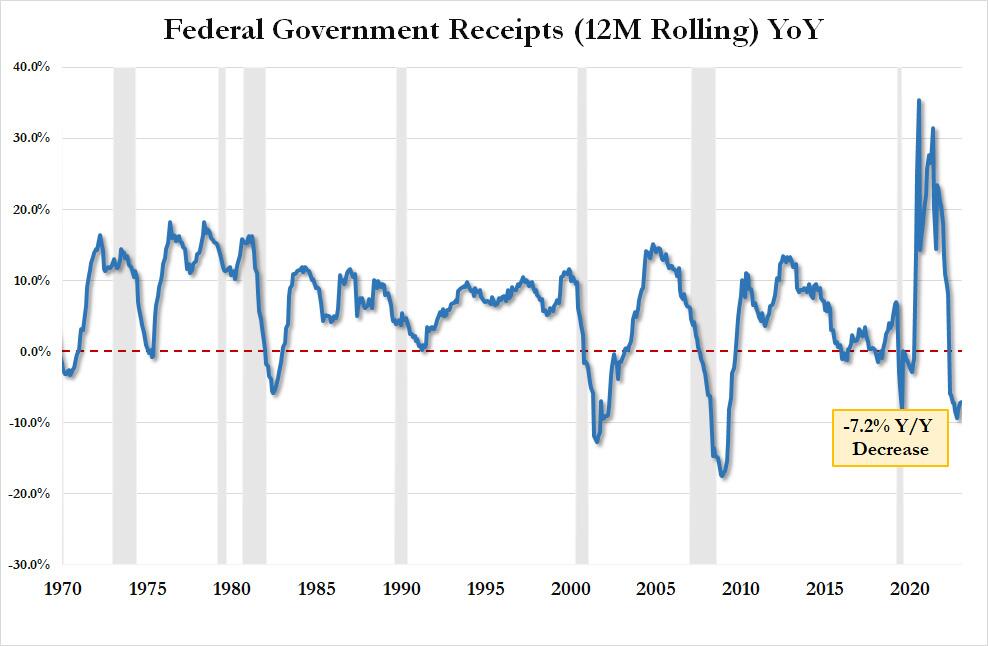
Here is some more context: tax receipts of $429.3BN in December were down 5.6% from the $454.9BN in December 2022 and down a whopping 11.8% from December 2021. On an LTM basis, US total tax receipts were $4.521TN, or down 7.2% YoY. This is now the 9th consecutive YoY decline in LTM tax receipts, something that historically has only taken place when the US was in a recession. As an aside, the “smart economists” were certain that the collapse in tax receipts would reverse after November when the postponed California taxes would be collected. Well, November has come and gone and the big picture is just as ugly.
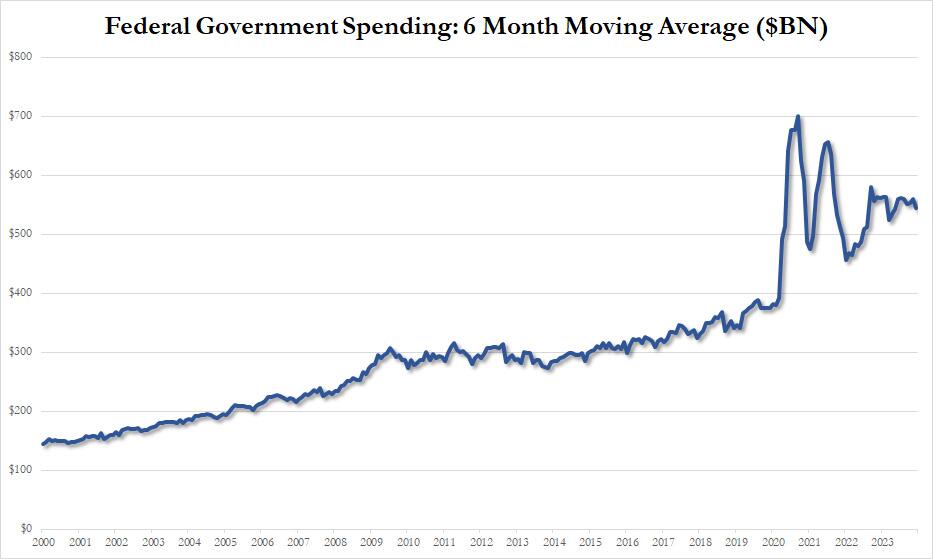
Looking at outlays, unlike tax receipts, there is danger of a decline… ever; and indeed in December the US spent a total of $559 billion, up 3.5% from the $540BN spent a year ago, and up even more from the $508BN in 2021. On a 6 month moving average basis, we are rapidly approaching the exponential phase even when accounting for the spending burst in 2020 and 2021.
Putting it all together, we get the scariest chart of all: the YTD budget deficit three months into fiscal 2024 is already $509 billion, which would be the biggest deficit in US history after one quarter with the exception of the covid outlier year of 2021 when the US injected multiple trillions in stimmies.
As for the final, and most shocking, data point, the December budget deficit of $129.4 billion was more than $40BN higher than the $87.5BN median estimate, and was more than 50% higher compared to the $85BN December deficit in fiscal 2022.
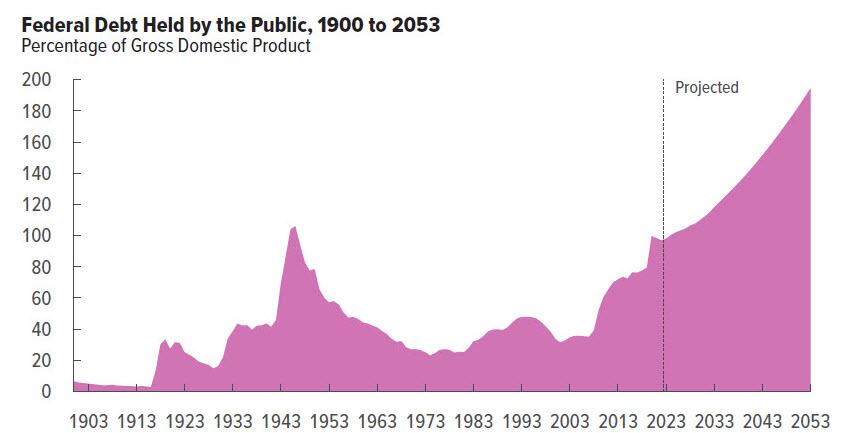
Needless to say, this is completely unsustainable and assures fiscal collapse for the US, not if, but when. Then again, we already knew this thanks to the CBO which was kind enough to chart the endgame:
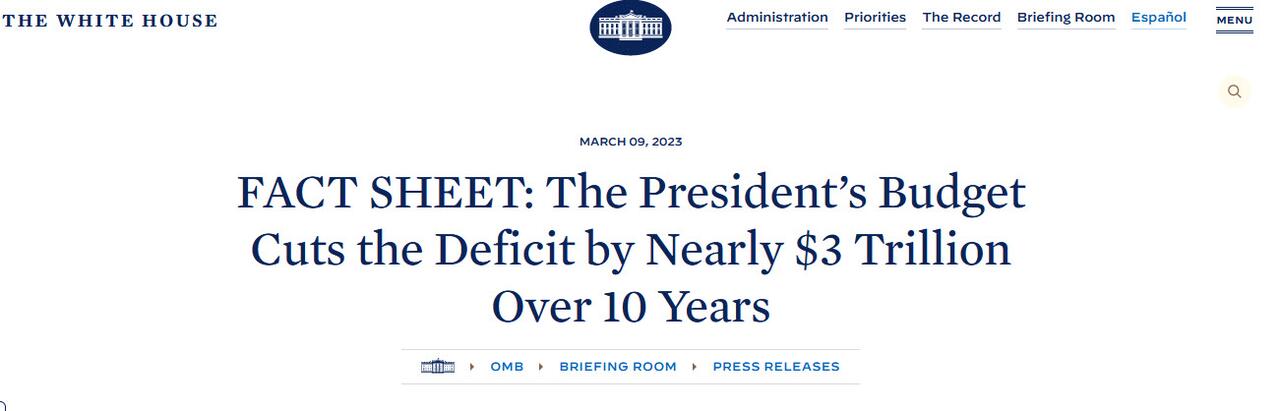
What is funniest about all this is that the US is on an accelerating path to ruin less than one year after the imposter in the White House published this laughable propaganda.
We can’t wait to see what really happens to the budget deficit over the next 10 years. Spoiler alert: there won’t be a happy ending.
One of the more interesting bloggers regarding the NATO-Russia Proxy War. He leverages Simplicius of Cilicia, a Greek Neoplatonic philosopher and polymath who wrote commentaries on Aristotle and Plato. He provides in depth geopolitical and conflict analysis, with a dash of the sardonic. You can support himby pledging here or tipping at: http://www.buymeacoffee.com/Simplicius.
************
This past July, one of the most remarkable articles of the entire Ukrainian war flew under the radar. I’ve had it sitting on my tab for weeks now, but could never quite fit the information in. It is so eye-opening, and dispels so many narratives in the West, that I thought it deserving of its own writeup; particularly because it has flown so under the radar for whatever reason, causing most people to miss its many juicy revelations.
Its age does not detract from its significance as the information therein is more pertinent than ever—which is precisely why I chose to do an exposé on it now.
The reason is, as the Ukrainian war presently enters a new watershed phase characterized by the slow-acceptance of Ukraine’s now de facto losing position, a proverbial windmill of narratives is churned out from the pro-UA side seeking to somehow reconcile the various cognitive dissonances created by their inability to understand how it is possible that the mighty NATO bloc could be losing to Russia.
This results in their proposing increasingly convoluted theories as to why the US may be “deliberately sabotaging” Ukraine’s otherwise guaranteed “victory”. For instance, a common coping narrative you might hear these days is that the US “fears” Ukraine winning a total and ‘decisive’ victory over Russia because this would cause Russia to “fracture” into many small feudal states, which could precipitate an existential crisis as the warlords of the new states would vie for the now unaccounted for nuclear weapons, etc. Though it is obviously preposterous, this is the type of narrative being floated on pro-UA thinkspaces to try and explain away the US’s perceived weakness and ‘cowardice’ in the face of Russia’s growing dominance.
They simply cannot understand how it is possible that the US would not stand up to the putatively “weak” Russia. In their mind, addled by two years of propaganda characterizing Russia as a totally dysfunctional failed state with an unimaginably weak military, it’s simply impossible to reconcile these two quotients. So the only logical inference is that it is an intentional act by the US—the only remaining question being why the US would intentionally condition Ukraine’s loss.
But the article dispels such fantasies and reveals some of the real reasons behind US’s seemingly perplexing posture.
Firstly, the article revolves around—as per usual—the statements of an anonymous “senior intelligence official” from the Biden administration, who is “directly involved in Ukraine policy planning,” and notes that the topics discussed therein are ‘highly classified matters’.
The first significant offering is the following:
That the Ukraine war is a clandestine war, with its own set of clandestine rules, and that one of the CIA’s chief roles is to prevent the war from spiraling too much out of control. This will come into heavier play later.
The senior official goes on to clarify the latter position:
“Don’t underestimate the Biden administration’s priority to keep Americans out of harm’s way and reassure Russia that it doesn’t need to escalate,” the senior intelligence officer says. “Is the CIA on the ground inside Ukraine?” he asks rhetorically. “Yes, but it’s also not nefarious.”
What he reveals there is likewise significant: the Biden administration has an absolute priority in reassuring Russia to keep Russia from escalating too much. Why would that be? The answer is the broader theme of my entire article.
In fact, Newsweek states that the article is the culmination of three long months of intense trail-following and digging into the CIA’s covert operations in Ukraine.
Again, they highlight the chief operative pillars:
The second official says that while some in the Agency want to speak more openly about its renewed significance, that is not likely to happen. “The corporate CIA worries that too much bravado about its role could provoke Putin,” the intelligence official says.
You can see the common theme of the constant prudential tip-toeing around Russia’s redlines so as not to excessively provoke Putin.
They go on to express that the CIA is keen to distance itself from any of Ukraine’s more provocative actions, like the Nordstream attack, or strikes on Russian territory.
But the key portion of the article, which comes next, is the admission that Biden dispatched CIA director Burns to Russia on the eve of the invasion in late 2021. They had been watching Russia’s troop buildups, and in essence sent Burns to deliver a final warning of consequences should Russia proceed with an invasion. Though Putin ended up “snubbing” the CIA head by staying in a Sochi resort and refusing to meet him in person, he did take his secure phone call from Sochi.
What comes next is the heart of the entire article and is one of the most significant and remarkable admissions of the entire war. It is a must read:
Read that several times to comprehend the gravity of it, as this one statement alone single handedly explains and encapsulates the entire dynamic of the war.
Once again I’m forced to be the bearer of the news that not all is as it seems on the surface. Russia isn’t the 10 foot giant some have built it up to be, nor is it a dwarf. Likewise, the US isn’t some uncompromisingly all-powerful entity that does what it wants at all times with zero qualms or concern for repercussions.
This may be a difficult point for some to swallow; after all, how is it possible in actual practice that the US could be fearful of Russia’s reprisal? After all, the US has its vaunted fleets that sail unchallenged through every sea; just the US’s naval air wing alone, believe it or not, makes up the second largest airforce in the entire world. That’s right, just the Navy, which itself pales in comparison to the Airforce, has more planes than the entire Russian airforce. What could such an imposing powerhouse possibly fear from little ol’ Russia?
It stems from the misunderstanding of the actual logistical nuances of the US’s force projection capabilities in the European theater. The people confused by these revelations are those who easily fell prey to a very generalized and caricaturized image of the US military’s operations therein. They’ve developed a blanket image of US forces being able to operate all over Europe, instantly bringing to bear endless stealth craft, unlimited unstoppable missiles, hundreds of thousands of troops, etc.
But that’s far from reality. The US is direly overstretched; its most critical bases in Europe—the ones actually capable of fielding the types of platforms that could actually do anything against Russia, are highly vulnerable. The US has further learned from the Ukrainian conflict that its most advanced air defense is virtually helpless against Russia’s top missiles. Reuters recently told us that Ukraine alone has 1/3 of all the air defense of the entire European continent, and yet Russia has no trouble penetrating it.
This is not to swing the pendulum too far to the other side and lay unrealistic claim to Russia being able to easily and instantly wipe out all of NATO—no, it’s simply to temper ideas about what US and NATO could realistically do to Russia. At the end of the day, a war between the two could very well be a stalemate but it would come at massive costs to the US/NATO, which is precisely the point that pro-UA supporters have made themselves blind to.
But the internal players—the CIA and policy makers—certainly understand this. Which is why they have openly made clear in the above article that a stringent set of ‘rules of the game’ have been laid out between the counterparties. Russia has obviously made it clear that it is willing to strike NATO assets that are assisting Ukraine if things are pushed too far. The US likewise now understands that Russia indisputably has the capability to do so. Thus they have shaken hands and agreed to limit the trampling of each other’s red lines. Russia will allow the US certain clandestine operations within the purview of the gentleman’s agreement, and the US in turn will venture to keep its rabid dog on a short leash and within the narrow bounds of the playpen.
We’ve long known and suspected that such rules extend beyond just this locus, and could explain why, for instance, Russia has limited its strikes on Ukrainian rail infrastructure, bridges, etc. We’ve long known the West still receives critical supply deliveries from both Russia and China—particularly of precious metals, rare earths, etc.—by rail through Ukraine. This is simply realpolitik at work, and all wars in history have operated under more or less similar conventions.
Just as a final thought experiment to drive the point home for those who remain skeptical or unconvinced. It’s not so much that NATO—in its most “ideal” and purest sense can’t defeat Russia. If we were absolutely certain that NATO could operate under the most ideal circumstances, with full solidarity and a united front, then sure. But the problem is, the real world simply doesn’t operate in “ideals” all the time, or even most of the time. NATO suffers from large internal disputes and friction on critical points.
The fear is the following: if Russia were to actually strike NATO territory, what would happen if unity fails, and some members refuse to risk the total annihilation of their state and citizens’ lives to protect another member merely for the sake of something they rationally know was that members’ fault? For instance, if Rzeszow, Poland was struck—why would Hungary and several other states risk being annihilated when they know full well that Poland is acting as a central hub of aggression against Russia, and that Russia could clearly be argued to be justified in protecting itself?
Do the pro-UA people understand what the consequences of a smaller NATO state’s involvement are? It could mean the literal nuclear annihilation of that state if they were to escalate Article 5 and bring NATO vs. Russia to the brink. Why would many of these smaller states want to risk their total erasure from existence for the sake of the scenario above? A single state or two cowing could create a cascade which ripples through the entire alliance. And guess what the implication of that would be?
It could be the total dissolution of NATO as an alliance.
Because once the point is reached where Article 5 has been exposed as an irrelevant non-starter, then NATO itself ceases to be—given that the article serves as NATO’s primary existential heart and soul.
Arestovich broached this very topic earlier today:
So, getting back: knowing the above, why would the US risk such a confrontation that could potentially collapse all of NATO and undo decades of US hegemony over all of Europe? Such a disaster would lead to the US’s entire downfall—the loss of all influence and global power. Is that much of a risk worth it to play brinkmanship games against Russia for mere bragging rights and geopolitical ego?
No, of course not. US elites are smarter than that. Calculated risk is certainly operable in many circumstances, but when the stakes are that high, US planners know when to hedge and when to fold. The loss of Ukraine is not worth risking the loss of their entire global hegemonic order—it’s simply far too much Empire to lose.
That means the US is forced to play within the bounds of certain rules set by Russia. The article goes on to emphasize this:
“Zelensky has certainly outdone everyone else in getting what he wants, but Kyiv has had to agree to obey certain invisible lines as well,” says the senior defense intelligence official. In secret diplomacy largely led by the CIA, Kyiv pledged not to use the weapons to attack Russia itself. Zelensky has said openly that Ukraine will not attack Russia.
Interestingly, we learn not everyone was on board:
Behind the scenes, dozens of countries also had to be persuaded to accept the Biden administration’s limits. Some of these countries, including Britain and Poland, are willing to take more risk than the White House is comfortable with. Others—including some of Ukraine’s neighbors—do not entirely share American and Ukrainian zeal for the conflict, do not enjoy unanimous public support in their anti-Russian efforts and do not want to antagonize Putin.
Two important points from the above. Firstly, it’s no surprise the UK and Poland are open to “taking more risk” than the US itself. At first glance this appears to imply the US to be the most skittish. But I’ve covered this angle before: the fact remains that the US has the most to lose. Of course the weak Poles would be full of bravado—they know if crap hits the fan, they can run to hide behind the US’s skirts.
The UK likewise hasn’t too much to fear from Russia owing to the fact that it doesn’t have much assets in Europe—at least compared to the US. And it’s situated far enough that, unlike even Poland, it needn’t fear much from medium range ballistic missile retaliation. It’s difficult to strike Britain—and therefore harm it in any way—without escalating to a far larger scale of conflict in general. Poland on the other hand can be struck at whim without even changing the tempo of the current war.
So the fact remains: such countries are full of bravado precisely because they have “daddy” to hide behind, and neither has as much to lose as the US. But since “the buck stops” with the US, the de facto NATO head doesn’t have the luxury to be so gung ho because it would be the US taking the brunt of Russia’s reprisal if things drastically turned left.
The second point confirms what I said earlier about NATO’s hidden internal disunity. They state openly that some of Ukraine’s “neighbors”—which can only refer to countries like Romania, Hungary, Slovakia, etc.—which are allNATO—do not share the same ‘zeal’ for the conflict and do not have public support for it. This means if a scenario developed as I described earlier, it would end precisely as I outlined: NATO disunity on Article 5 would risk tearing the entire alliance apart, and “exposing” its central and founding pillar as fraudulent and ineffective in practice. It’s too grave a risk for US to haphazardly take on.
The article adds more details:
“The CIA has been operating inside Ukraine, under strict rules, and with a cap on how many personnel can be in country at any one time,” says another senior military intelligence official. “Black special operators are restricted from conducting clandestine missions, and when they do, it is within a very narrow scope.” (Black special operations refers to those that are conducted clandestinely.)
Simply, CIA personnel can routinely go—and can do—what U.S. military personnel can’t.That includes inside Ukraine. The military, on the other hand, is restricted from entering Ukraine, except under strict guidelines that have to be approved by the White House. This limits the Pentagon to a small number of Embassy personnel in Kyiv. Newsweek was unable to establish the exact number of CIA personnel in Ukraine, but sources suggest it is less than 100 at any one time.
This is an interesting set of admissions because it asserts that the CIA is operating in Ukraine because nominal US military forces being there would constitute “boots on the ground”—a far stickier situation. However, the real angle to this is that allowing CIA to operate gives the US a sort of plausible deniability to characterize the operations with an image of corporate looking guys in suit-and-ties, black sunglasses, briefcases, merely gathering intel—innocuous by comparison to full-fledged military commandos armed to the teeth.
However, in reality we know the CIA has its own clandestine combat forces. Things like the Special Activities Center (SAC), within which lies Special Operations Group (SOG)—considered to be the most secretive unit in the entire US governmental structure. SOG has its own direct combat units, from wiki:
As the action arm of the CIA’s Directorate of Operations, SAC/SOG conducts direct action missions such as raids, ambushes, sabotage, targeted killingsand unconventional warfare (e.g., training and leading guerrilla and military units of other countries in combat) as an irregular military force. SAC/SOG also conducts special reconnaissance that can be either military or intelligence driven and is carried out by Paramilitary Officers (also called Paramilitary Operatives or Paramilitary Operations Officers) when in “non-permissive environments”. Paramilitary Operations Officers are also fully trained case officers (i.e., “spy handlers”) and as such conduct clandestine human intelligence (HUMINT) operations throughout the world.
That’s all to say that bureaucratically limiting “personnel on the ground” to just “CIA” and not “boots on the ground” doesn’t mean a thing: the CIA has its own “boots” and is most certainly using them. It’s just administrative semantics.
The article goes on to describe the off-radar logistics operation which clandestinely supplies Ukraine:
Now, more than a year after the invasion, the United States sustains two massive networks, one public and the other clandestine. Ships deliver goods to ports in Belgium, the Netherlands, Germany and Poland, and those supplies are moved by truck, train and air to Ukraine. Clandestinely though, a fleet of commercial aircraft (the “grey fleet”) crisscrosses Central and Eastern Europe, moving arms and supporting CIA operations. The CIA asked Newsweek not to identify specific bases where this network is operating, nor to name the contractor operating the planes. The senior administration official said much of the network had been successfully kept under wraps, and that it was wrong to assume that Russian intelligence knows the details of the CIA’s efforts. Washington believes that If the supply route were known, Russia would attack the hubs and routes, the official said.
Another small admission at the end. Pro-UA armchair warriors on Twitter believe US is incapable of being challenged and that Russia is weak; in the meantime, the actual CIA people who work the conflict understand the realities quite differently.
Then comes another reveal of Russia’s own clandestine capabilities:
It then outlines the key role Poland has taken, which obviously goes toward reinforcing the idea that Poland will be made into the “new Ukraine” in the future, after the current one is used up and discarded:
Since the end of the Cold War, Poland and the United States, through the CIA, have established particularly warm relations. Poland hosted a CIA torture “black site” in the village of Stare Kiejkuty during 2002-2003. And after the initial Russian invasion of Donbas and Crimea in 2014, CIA activity expanded to make Poland its third-largest station in Europe.
In fact, I’m fairly well taken aback that they’re even so openly making such large admissions. The CIA usually doesn’t talk about the CIA unless there’s an advantageous angle to it.
And that angle could very well be their attempt to distance themselves from an increasingly erratic and unpredictable Ukrainian ‘mad dog’, which has increasingly gone ‘off the leash’, refusing to play by those previously established rules. The article goes on to highlight this next:
One crisis was averted. But a new one was brewing. Strikes inside Russia were continuing and even increasing, contrary to the fundamental U.S. condition for supporting Ukraine.There was a mysterious spate of assassinations and acts of sabotage inside Russia, some occurring in and around Moscow. Some of the attacks, the CIA concluded, were domestic in origin, undertaken by a nascent Russian opposition. But others were the work of Ukraine—even if analysts were unsure of the extent of Zelensky’s direction or involvement.
Given the above, could the CIA have been using such publications to absolve itself? This would further play into the chief theme that the CIA is very diligently trying to signal its ‘gentlemanly’ intentions to Russia so that no misunderstandings or un-planned escalations can occur.
The article segues this into the Nordstream attacks in such a way as to almost suggest the entire thing was written merely to absolve the CIA of those attacks, and pin the blame entirely on Ukraine.
In a clear sign that the CIA feared Russian reprisals, they reportedly “scrambled” to discover the origins of the Kerch and other attacks after a Russian security council began to change its tone in those attacks’ aftermath:
Meeting with his Security Council, Putin said, “If attempts continue to carry out terrorist acts on our territory, Russia’s responses will be harsh and in their scale will correspond to the level of threats created for the Russian Federation.” And indeed Russia did respond with multiple attacks on targets in Ukrainian cities.
“These attacks only further reinforce our commitment to stand with the people of Ukraine for as long as it takes,” the White House said of the Russian retaliatory strike. Behind the scenes, though, the CIA was scrambling to determine the origins.
Once again we see the common thread: contrary to BroSints’ performative gung ho chauvinism, the real movers and shakers are scrupulous and smart enough to fear Russia’s wrath.
Though it’s besides the central point, this was an eye-opening revelation indeed:
“The CIA learned with the attack on the Crimea bridge that Zelensky either didn’t have complete control over his own military or didn’t want to know of certain actions,” says the military intelligence official.
After the foolhardy drone attack on the Kremlin in the center of Moscow, the article notes that even Poland had begun warning the CIA that Ukraine was, in essence, a refractory mad dog:
A senior Polish government official told Newsweek that it might be impossible to convince Kyiv to abide by the non-agreement it made to keep the war limited. “In my humble opinion, the CIA fails to understand the nature of the Ukrainian state and the reckless factions that exist there,” says the Polish official, who requested anonymity in order to speak candidly.
This is quite interesting for the following reason. Firstly it could explain Poland’s own later distancing from Kiev, the fruits of which we’re seeing now. Even brazen Poland may have started getting cold feet after they realized that Ukraine’s entire MO would likely revolve around trying to rope Poland into WW3. Not only were there several missile attacks on Polish territory for which Ukraine tried to frame Russia, but there were increasing reports in recent weeks from Russian intel sources that Ukraine intended to escalate this plan in the near future.
It’s clear that Poland has recently seemed to have a big shift vis a vis Ukraine—the turning point was several months back after the failed NATO summit and Zelensky’s subsequent disrespectful rhetoric. That is when Duda openly called Ukraine a “drowning man that would pull everyone down with him.” It all went down hill from there.
But it could also explain the US’s new cold posture and seeming snub of Ukraine. For instance, many are currently complaining that the US has $4B drawdown authority funds remaining yet they’ve announced no further funding will be allotted. This mysteriously comes on the heels of repeated Ukrainian strikes to sensitive targets in Crimea, as well as senseless attacks on Belgorod. Could the CIA have finally seen the light, preached earlier by Poland, and perhaps convinced the Biden administration that this mad dog is getting too unhinged to continue safely supporting? It could at least have something to do with it, if not be entirely responsible for the cold stance switch.
In fact, this is suggested by the very next paragraph in the article:
In response, the senior U.S. defense intelligence official stressed the delicate balance the Agency must maintain in its many roles, saying: “I hesitate to say that the CIA has failed.” But the official said sabotage attacks and cross border fighting created a whole new complication and continuing Ukrainian sabotage “could have disastrous consequences.”
As one can see, Ukraine’s recalcitrant flaunting of the ‘unspoken rules’ could have finally contributed to making the US realize that it was suicidal to continue supporting such a brazenly fractious mad dog whose sole intention has clearly become to embroil the world in WW3 as a last ditch escape from its own self-sealed fate.
In an absolutely demonstrative twist of irony, the comments section under the Newsweek article is filled with the very types of shallow-brained people who inspired my own writeup to begin with. Despite reading the exact pinpoint refutation of their own delusions, they still found the gall to comment things like: “And what would Putin do if US violated his “red lines”?”—implying again that Russia is somehow weak, and the US is this caricaturized unstoppable superpower which owes no compromise or concession to anyone. To such people with utterly shallow and hare-brained understandings of international relations and geopolitics: I beg you, leave your basements, go read a book sometime. Learn how the real world functions. It’s not a one dimensional comic book as you imagine. Believe me, no one in the entire world who actually operates within the halls of power of any major country believes that Russia is some sort of limp pushover to be laughed at and whose red lines are to be ignored. This sort of characterization only exists in the 12 year old minds of videogame addicts who moonlight as military analysts on Twitter. It’s also sometimes done as mere bravado, or a show of grandstanding by two-bit punks like Lindsey Graham on TV—but the tone “behind the scenes” remains in stark contrast to the “character” they portray in their laughable put-ons for the CNN peanut gallery.
Ultimately though, this Newsweek article should serve as further proof to brainwashed pro-UA supporters that this really is a proxy war between two giants, with Ukraine merely being a pawn stuck in the middle, whose own infant squalls are ignored in favor of Russia’s far weightier demarches. That should serve as a wake up call for Ukrainians: you are merely being used as disposable puppets in a geopolitical Great Game. And when that game is done, the actual players will shake hands and move on to the next contest while you will be left as the detritus to be ‘swept up’, like the trash and fast-food wrappers strewing the stadium grounds after a big match.
No matter how hard you try, no matter how many hundreds of thousands of lives of your own people you throw away, you will never become that Big Player on the stage that you were induced and gaslighted into thinking you could become. The only chance at survival you stand is to join the only one of the two Big Players which actually cares for you and views you as a close blood relative, rather than as a soggy rag to blow snot into then discard.
As a last point. I actually predicted much of this long ago, at the start of this year. In one of my earliest reports I wrote how when things would begin to really go down hill for Ukraine, Zelensky would opt for increasingly dramatic actions that would be more threats to his own handlers and sponsors, rather than to Russia. That’s because he knows Ukraine balances on a fulcrum and has the power to cause a wider global war between the two blocs to erupt. So I had proposed that when his back would be against the wall, Zelensky would escalate in such a way as to increasingly bring a wider war closer as a threat: “If you don’t give me what I need—arms and money—I will pull you into the war with me.”
This could very well be one of the reasons the US has decided to pull the plug on Ukraine now. Seeing no other options remaining, they may have been bothered by some of the recent rhetoric, knowing where such unchecked recklessness could lead. For instance, weeks ago after killing Ilya Kiva near Moscow, the Ukrainian SBU head promised big “surprises” for 2024, with the crowning achievement to be some kind of strike that he said would be a “needle to the heart” of Russia:
This could very well be a threat of some major assassination as a final logical escalatory precipice, whether of Putin or some other leading figure in Russia. The CIA may have read the internal signals in this direction and decided that the point of no return had finally come in supporting this ‘mad dog’, and if the US doesn’t put the brakes on now, it would be dragged into Zelensky’s existential trap.
The other elephant in the room is that such findings as those in this article naturally lead to people wondering whether the entire conflict is just one orchestrated and well-choreographed dance between “two sides of the same coin”. This cleaves to the age old conspiracy theories about Russia and the US both being under some manner of ‘globalist control’, and merely being played off each other as pawns to fool us into some grand theatrical spectacle.
This would once more be a fairly uninformed reading of the situation. Typically, such views sprout from people who are only capable of skimming the surface, judging conflicts and developments through very simplistic ‘broad stroke’ lenses. These are the people that subsist on “either/or” and other binary style reductions of everything. Their minds are usually not capable of grasping nuance, or sometimes they’re simply surface-scraping because their lives are too busy to really dig into highly complex situations to truly understand them.
In this case, Russia and the US’s informal ‘secret handshakes’ certainly does not equate to their being part of some grand charade to defraud the world together, or that Putin is a secret mole for [insert globalist clan here]. To come to that conclusion is to admit one’s ignorance of history, and how these things really work. This is standard operating procedure for any sort of sensitive geopolitical entanglement and is merely characteristic of the true behind-the-scenes statecraft that underlies the surface level gloss the majority of people ingest via CNN and such outlets. Such ‘handshakes’ represent simple basic diplomatic statecraft, courtesy, and precaution in the form of scrupulous risk-hedging and due diligence, nothing more than that.
With that said, this alone doesn’t preclude larger conspiracies of secret collusion between large, ostensibly adversarial nations—I’m simply stating that this specific instance would not qualify as exemplary of that. There are many other actual examples, but that’s beyond the scope of this article.
But as always, one must also remember that there are corridors within corridors in each organization, and there are groups within the CIA operating independently—and even antithetically—to the parent organization just as the CIA may itself be operating against the wider interests of the US itself. So ultimately, we’re still only hearing one side of the story, which happens to be the side they want us to hear.
As a long-time fan of Tom’s, “Gold, Goats ‘N Guns” is always entertaining.
And who can resist the image of a tactical nuke surface burst a 5000 yards out from your backyard.
In fact, I find myself starting to back-calculate the yield of the device pictured. Old skills die hard.
Anyway, here’s Tom for his “Top 10” for 2024, shamelessly reposted (I assume you’re cool with this, Tom – if not, DM as always)
Where do we go from here Terror in Rue de St. Denis, murder on the periphery Someone else in someone else’s pocket Christ knows I don’t know how to stop it Poppies at the cenotaph, the cynics can’t afford to laugh I heard in on the telegraph there’s Uzis on a street corner — Marillion, White Russian
Last year I finally gave in to the pressure and did a 10 Predictions for 2023 post. I’m not a huge fan of these things, but getting out of your comfort zone is never a bad thing. So, let’s look at the scorecard and update things.
Last year’s theme was “Losing My Religion.” Last year was a mess. So many of the themes I wrote about advanced significantly. So many of them caused a lot of folks to lose their religion over old narratives.
What most of them didn’t do, however, was come true. By my count I hit .300 last year — good enough for the Majors but not for the geopolitical prediction business. Predictions #4,6,8 are winners.
The Ukraine War did continue dangerously (#4). De-dollarization (#6) did accelerate as bilateral trade moved away from the US dollar is many areas, while the USDX spent most of the year rising only to collapse in Q4 on ridiculous hopes of eight (8) rate cuts by the Fed in 2024. Oil never dropped below $70 per barrel Brent (#8).
I’d take credit for #9 but the Dow Jones Industrials missed the 40,000 mark by just over 2,000 points. Then again, given that nearly everyone else expected the Dow to collapse into oblivion, I think I should get extra credit for at least calling the shift from bonds into equities for most of the year, to be turbo-charged into the end of Q4 on the perception of a dovish Fed.
Given how much of a mess 2023 was, I guess I’ll have to take that as a challenge to improve. Let’s get started… the problem with that is, of course, where do we start? Where do we go from here?
#1 – The Democrats Will Try to Burn the Country Down to Win the Election
We are in the midst of a Cultural Revolution the likes of which we haven’t seen since the days of Mao in China. Until we wrap our heads around this, take it into our black hearts, and metaphorically start “slitting throats” to invoke H.L. Mencken we will lose what, sadly, has become the most important election of our lifetimes.
Not that elections mean much anymore. Certainly not after “Joe Biden” was selected over Donald Trump in 2020. I said after the 2020 election steal that “Civil War it is, then.”
If we just get rid of Orange Man Bad, everything wrong with America will be gone…
… So, all they have now is the unquenchable envy of Marxism which burns until it consumes everyone in retribution or they are put down like rabid dogs. That’s what is on display in these counting centers.
This is what they did in 2020. Today too many people see them for what they are. The speech environment is less controlled, thanks to some guy named Musk.
Therefore, the only option for them and Davos now is to go big or go home.
They have to win this thing or a few hundred years of colonial oppression and extraction collapses… at least that’s what they are thinking. To stop Trump they will stop at literally nothing. If you don’t believe me, believe the AP’s description of the first week of Biden’s 2024 election campaign, where he’s not even allowed to have a challenger.
It’s all race baiting; dark and twisted. It’s all Goebbels in the media, all day. “MAGA Republicans,” “Nazis,” “Saving Democracy!” Read the quotes from the Millennial operatives building “Biden’s” campaign and tell me they are just cynical hacks.
Is is just me or does anyone else think of “Matt Daaa-mon” from Team America: World Police whenever I see or hear “Joe Biden” anymore?
#2 – It’s False False False False False Flag World.
Or they will provoke an attack on whites by DEI. Surprisingly, the numerous ones they've done already have not provoked one already.
Both of these things I’m predicting in this tweet have sprung from events from this week… in 2024. “Joah Bii-den’s” campaign kickoff tour as described and the attack on the funeral commemorating the 3rd anniversary of Trump assassinating Gen. Qassem Soleimani in Iran.
Every neocon douchebag in an off-the-rack (pant)suit will remind us day and night for the next few months about how much Iran hates us. They will now also use the US pulling the Gerald Ford carrier group — long overdue for maintenance FYI — out of the Persian Gulf as a talking point. First to show how weak we’ve become by not standing up to Iran and Shi’ite terrorists.
Second, they will use that to concoct a fantasy of an empowered Iran sending agents through the border to take out the grid in Texas or Florida.
The best part is that will come from the Republi-tards like Nimrata Haley scoring political points with the Fox News set because “Joah Bii-den” opened up the border. This sets up #3.
The main point is that it will be nothing but false flag operations all summer long. These people need a casus belli to rouse the US out of its anti-war slumber for the war that will end the American experiment once and for all.
The goal is always to save themselves, and a US fighting a war on every front is, to them, the best path to do that.
#3 – Neither Trump Nor Biden Will be President in 2025.
The handwriting is already on the wall. It has been written in blood and drool. None of “Bii-den’s” moves to save himself politically will work. The US electorate is too far gone for that. The only thing that gets his or the Democrats’ approval rating out of the cellar is a war, and only a Just War thanks to #2, if it comes to pass.
But, even as I laid out, “Joah Bii-den” and the Dems will get the blame for any attack on US civilians by ‘terrorists’ let into the country.
So, in that scenario, getting rid of Donald Trump is the priority. Trump is clearly primed to go into the White House again, this time armed with a much better sense of what power he actually wields as President.
I’m no Trumptard, far from it. But just Trump’s desire for revenge and his sense of patriotism alone should be enough for him to blow up a whole lot in his second 100-days.
And that is why they have to stop him from either winning or, if he wins, ever taking office.
I’m not making a prediction on how the election turns out. But it is obvious that a lot of bad people are auditioning to be Trump’s Veep. Wall St. has made it obvious that it should be Nimrata. The Gods forbid happening! But it’s the most likely scenario if she makes it out of the early states with even some false momentum.
Vivek Ramaswamay is as authentic as Hillary Clinton’s chocolate chip cookies but he’s saying all the right things, and may even mean a couple of them.
Ron DeSantis isn’t ready for prime time and has too much work to do in Florida to prepare for the Civil War anyway.
The less said about the rest, the better. If somehow Trump is inaugurated a year from now, he will be saddled with more poison pills than your local CVS.
On the Democrats’ side of the aisle, Gavin Gruesome is clearly being groomed (all puns intended) for the job. Michelle Obama hates the US so much she’d love to finish the job her ‘husband’ started but only if she could be handed the job like “Joah Biii-den” was.
Big Mike doesn’t do kissin’ white babies.
And current Veep Kamala Harris may just have something to say about all of this yet. The problem is will anyone be able to understand it.
None of these people can beat Trump even if some of my failed predictions from 2023 come true and they embrace them in 2024, namely #5, “The US will Leave Syria,” to try and shift away from deeply unpopular positions.
Getting our troops out of Syria would fit into the “Iran attacks US civilians” plot I outlined above. It would fuel the Neocon/Nimrata schtick about empowering Iran by running from the Houthis. It will remind everyone of “Joah Bii-Den’s” disgraceful withdrawal from Afghanistan and give her foreign policy cred to be Trump’s VP pick.
#4 – Inflation, Interrupted
I predicated most of my 2023 predictions on inflation returning in the second half of the year. Inflation didn’t come back because of the concerted effort to keep oil prices below $80 per barrel Brent. That kept wholesale gasoline prices lower for :Joah Bii-Den” to try and score a point with the voters.
Moreover, RINS blending credit prices fell dramatically because of a record US corn harvest. Low natural gas prices used for drying also helped keep pressure on gas prices all year. This dynamic isn’t going to change in the first half of 2024.
Since COVID we’ve been dealing with cost-push inflation and especially of the ‘gasoline-induced’ variety.
Gas futures entered 2024 with all the momentum of EV sales at a Jeb Bush revival.
Please Clap.
And that means low CPI inflation through the first half of 2024. Despite having declared an end to fossil fuels by 2030 or 35 or Juneteenth, the Davos ninnies are having a hard time explaining away why the IEA just revised upward their projection for 2024 global demand for gasoline after a record 2023.
Low gasoline prices are an American phenomenon: equal parts non-market ethanol-blending shenanigans (RINS), the reindexing of Brent to include oversupplied West Texas Intermediate (25% weighting), and dumping more than half of the US Strategic Petroleum Reserve into the market to punish Russia and Saudi Arabia.
The widening Brent/WTI spread, now over $5 per barrel, tells you that global demand is strong despite record US production numbers.
Finally, the “Bii-Den!” administration is refilling the SPR, at far higher prices than they turned down in February of last year. While inflation is on hold, it’s still baked into this economic cake and FOMC Chair Jerome Powell knows it.
So, I expect the CPI to remain exactly where no one wants it for the first half of 2024; just high enough to stay the Fed’s hand on cutting rates but just low enough to keep the pressure on Powell to loosen credit conditions around the world.
#5 – Is It Really a Pivot after More than Two Years?
The biggest questions of 2024 surround the Fed. When will they begin cutting rates and how many times? These are questions that have far bigger implications for the dollar worldwide rather than domestically.
We can look now at the financial health of the country more accurately thanks to having a real market for domestic dollar demand, SOFR — The Secured Overnight Financing Rate. Anyone using dollars now has to think about what the Fed wants directly rather than what City of London wants with its hand up the Fed’s ass.
It’s an important distinction for this cycle.
In past cycles, the Fed was never really in control of its monetary policy, but yet it always took the blame for what happened. Austro-libertarians like myself and others applied our general (and I still believe correct) critique of central banking as yet another iteration on why all central planning fails.
But, without the larger context of the system as built, i.e. the eurodollar system, that critique is a shallow one. This is not because the end goal of decentralizing banking and money is wrong, but because there are a few dozens moves to be made before you can actually implement it.
The whole world isn’t just going to gather ’round the campfire, pick up a mistuned acoustic guitar and a joint, and say, “Yeah… man,” before launching into the Ron Paul Song (as good as it is!).
Even Ron argued that we had to do as little harm as possible. That means changing the direction of the country while we keep our promises, pay our bills, and clean our rooms.
Did Ron advocate tearing down 95% of the federal government in a year? No, he said roll back the budget to that of a few years ago, for example. Rein in the spending. Normalize interest rates. End the Empire abroad.
But we couldn’t do that if LIBOR was actually the tail wagging the US banking system dog.
Isn’t rolling the Fed back to being the central bank of the US rather than the world a similar move as the ones listed above? Ending the Eurodollar system will take more than a couple of years. It will take decades to drain if we don’t want to maximize the collateral damage of changing out this system to, you know, everyone.
So, for this year, monetary policy is absolutely political. Whatever Powell does or does not do will be politicized. Everyone will grind their ideological axe because it gets clicks, buys votes, and pays the bills.
The ones dying on the Eurodollar vine will scream, “PIVOT!” The ones finally getting positive real yield on their savings will say, “Don’t you dare!”
One could argue that the first two years of the fight versus the Great Reset and the grand Eurocommie Revival were the easy ones. The easy ground to take. Now it’s crunch time. Now we get to find out not just now strong Powell is internally, but how strong those backing his play actually are.
That’s the real question we’ve all been struggling to answer since I first brought this all up two years ago.
If I’ve been correct about all of this SOFR v. LIBOR stuff, then Powell will hold to his “Higher for Longer” position for as long as he can. We can argue about the definition of “long.”
That means as long as he has the cover of low but annoyingly high inflation (#4 above), then he doesn’t have to do anything in Q1 even if the markets scream otherwise.
Since the beginning of this week, the SOFR Futures market has already priced out one rate cut for 2024.
Will it price out another 1 or 2 by the next FOMC Meeting? Look at how far these curves are moving meeting to meeting and you tell me the market has any clue as to what’s on the horizon.
Last year because I was expecting inflation to return I expected the Fed to pause and then resume rate hikes, pushing to a terminal rate closer to 7% than 5%. Clearly that didn’t work out. But, if I’m right about inflation returning in H2 of this year then that argument still holds serve.
All this said, here are the answers to the questions surrounding the Fed in 2024.
The Goldilocks scenario is this (and it’s the one we should all hope for):
If the Fed can get through the lowflation period thanks to low gasoline prices of H1 2024, then it clears the decks for Powell to continue just doing nothing until the election is no longer in Davos’ grasp. At that point he’s clear to lower rates in the second half of the year, at the July meeting or after Jackson Hole, to give the incoming president, hopefully Trump, clear sailing to clean house with a positive credit environment to continue the reorganization of the economy with a less corrupt Congress.
Now here’s my realistic scenario:
Powell refuses to cut rates by March to help Bii-den! win the election. The Fed becomes one of the main focal points of the Democrats’ campaign. End the Fed and absorb it into the US Treasury. Blame the recession on the Fed. It won’t work. Powell cuts in May or June, once. The FOMC statement at the Halloween meeting will be a harbinger of where election shenanigans are headed.The Usual Suspects will scream “Cuck!” and “Baby Murderer!” with equal ferocity.
It’s been apparent for a long time that there has never been any real prospect of Russia being defeated on America’s chosen battlefield—Ukraine. The talk we’ve been hearing of the vaunted Ukraine counteroffensive being designed to make serious gains on the ground that would force Russia into a favorable settlement—favorable to the American Empire—has faded into recriminations against the Ukrainians. However, there is a new strategy being advanced in the media—one which ends up in the same way as envisioned in the previous version. Russia will be forced—by military force—to either negotiate a peace or to at least agree to a ceasefire. The basic idea is that Ukraine will slowly fall back, to shorten its defensive lines and make up for its vast losses in personnel and equipment. In the meantime, Ukraine will gear up an armaments industry—basically from scratch—while Western aid keeps the war going.
What I see as the truly dangerous new development is the possibility that, in view of the likelihood that Ukraine will not be able to last as long as that pie in the sky scenario requires, Ukraine is being provided with significant new weaponry—almost certainly operated by NATO, including US, military personnel—with the idea of bludgeoning Russia into a ceasefire by inflicting heavy losses. Couple with this are some very aggressive new developments involving US bases. Here are a few examples:
First we have the missile attack on a Crimean port that was previously out of range of the missiles that have been provided to Ukraine. While it’s not definite, there are reports that the missiles used may have been longer range Storm Shadow missiles from the UK’s store.
The claimed use of Patriot missiles batteries—manned by US personnel—that had been moved near the front lines in the Kherson region. Japan, under US pressure, is apparently transferring Patriot batteries that may be redeployed to Ukraine. Russia has issued a harsh warning to Japan if those missiles are used against Russia:
Such a scenario would be “interpreted as unambigously hostile actions against Russia and will lead to grave consequences for Japan in the context of bilateral relations”, [Zakharova] said.
The agreement of Finland to grant the US access to all 15 of their military bases. This could place US forces in proximity to the key ice free Russian port of Murmansk as well as to Russian naval installations. Americans don’t usually remember things of this sort, but during the Russian Civil War British and American troops occupied Murmansk. Russians remember.
According to Russia, Finland will not only taste the consequences of joining NATO. The country will also be first in line to suffer if tensions between Russia and the Western world escalate further, warns Russian diplomat Mikhail Ulyanov, as reported by Reuters.
Politico has an article that suggests that my fears are well founded—that the Neocons are intent on bludgeoning Russia by main military force into some sort of settlement that the American Empire will be able to spin as a victory:
For two years, Biden and Zelenskyy have been focused on driving Russia from Ukraine. Now Washington is discussing a move to a more defensive posture.
With U.S. and European aid to Ukraine now in serious jeopardy, the Biden administration and European officials are quietly shifting their focus from supporting Ukraine’s goal of total victory over Russia to improving its position in an eventual negotiation to end the war, …
U.S. and European officials are now discussing the redeployment of Kyiv’s forces … into a stronger defensive position … In addition, the Biden administration is focused on rapidly resurrecting Ukraine’s own defense industry to supply the desperately needed weaponry the U.S. Congress is balking at replacing.
The administration official told POLITICO Magazine this week that much of this strategic shift to defense is aimed at shoring up Ukraine’s position in any future negotiation.
The article then discusses US politics and Zhou’s shifting rhetoric—from “as long as it takes” to “as long as we can.”
Some analysts believe that is code for: Get ready to declare a partial victory and find a way to at least a truce or ceasefire with Moscow, one that would leave Ukraine partially divided.
The difficulty here is simple: How to get Russia to cooperate? Previous attempts to con the Russians have fallen totally flat. George Beebe, a former chief of Russia analysis for the CIA, points out that time is critical:
“The longer this goes on the more we’re going to have to concede up front just to get the Russians to the negotiating table.”
A shift to defense could buy Ukraine the time it needs to eventually force Putin into an acceptable compromise.
Read and parse that carefully. The Neocons understand that they don’t have much time to play with, and that the only was to pull this off is to “force” Putin to comply. Have you ever tried to force the leader of what’s turning out to be the most capable military in the world to comply with your wishes? I haven’t either, but it sure seems like a tricky strategy. One false move, and … Maybe that’s what that special flight from St. Petersburg to DC was about—the flight that sat on the tarmac for 54 hours. This is why I call this a dangerous situation.
At any rate, there’s lots more in the article, much of it having to do with the US political angle. But what about the Russian perspective on all this? Dmitry Medvedev—who, if anyone does, knows the mind of Putin—is unimpressed and, seemingly, unmoved:
Question by RIA Novosti: The collective West, having wasted almost all of its weapons, starts to push the Kiev regime to engage in talks in 2024. Is that possible?
Answer: What about the talks in 2024? It’s all perfectly clear.
1. The special military operation will continue, with its aim still being the disarmament of the Ukrainian forces, and abandonment of neo-nazi ideology by the present-day state of Ukraine.
2. Displacement of the ruling Bandera[i.e., Ukro-Nazi] regime is, though not openly stated, the most important and inevitable goal which must, and will be achieved.
3. Odessa, Dnepropetrovsk, Kharkov, Nikolaev, Kiev, as well as many others are Russian cities, temporarily occupied. All of them are still marked by the colours of yellow and blue on the maps and pads.
And so, yes. The “talks” are possible, of course. Russia never rejected them – unlike the mad authorities of Ukraine. Such “talks” have no time limits. They can go on till full defeat and surrender of the North Atlantic Alliance’s Bandera forces.
And, by the way, I’d like to inform you that since January 1, 2023, the Armed Forces of Russian Federation have accepted half a million people as servicemen under contract.
Translation: The SMO will continue with the same goals as ever. Just to be clear, that means that the current regime in Kiev will be “displaced.” Inevitably. We’re perfectly happy to talk with anyone—talk, and talk, and talk—while we continue to carry out the SMO to its conclusion. Ceasefire? Don’t make us laugh! Oh, did we mention? Odessa, Dnepropetrovsk, Kharkov, Nikolaev, Kiev, as well as many other cities are Russian cities—it’s just that they’re temporarily occupied by the Bandera regime.
I’ll finish off with a very thought provoking partial transcript from Judge Nap and Matt Hoh:
The Ukrainians are going to be the next Afghans. They are going to be forgotten and left behind as soon as that’s politically convenient for the US, as soon as the US can see another path in Eastern Europe. For the US one of the reasons why I think we may have an interest in a negotiated settlement in Ukraine is because the major aspect, maybe the most important aspect for the Americans is the domination of the energy market in Europe. For me this is where it all begins. How did this go from, in 2012, Barack Obama in debates making fun of Mitt Romney for suggesting that Russia is an adversary, to within a year the Russia phobia that we have seen? For me a lot of that comes from fracking and, then at the same time, the construction or the expansion of a dozen or so liquid natural gas terminals on the East Coast, in the Gulf of Mexico. They had to send all this fracked gas someplace and where’s the best market? It was Europe. For me that’s the genesis of the last decade’s worth of tensions with Russia, as well as you know the genesis of the coup in Ukraine in 2014. So in that sense the Americans have won, at least at this point, because we are dominating that energy market. We are now the largest liquid natural gas supplier to the world with much of that going to Europe, taking over from what the Russians used to provide.
So, if the Americans can say, ‘Look, we got this and this is what we really wanted,’ we can always just spin what we did in Ukraine as,‘We stopped Vladimir Putin, he was only ever to able to advance 60 or 70 kilometers west, he only actually really took 10% of the territory because he had taken Crimea before, this is a victory. We stopped the tyrant in his tracks, he wasn’t able to march on Berlin or Paris.’ You can see how Biden could spin this when he’s out campaigning for reelection. These are all the things that should make the people in Kiev realize that they are ripe for betrayal …
We’re coming out of Christmas and I think it’s appropriate to understand the societal aspects of this–the philosophical, the metaphysical, the religious aspects of all this. What we are seeing is really something that is unholy, and I think you can use that in a religious sense but also in a secular sense: the moral horror of this and what that means for us as a people, who we are and, of course, what it has done to tens and tens of millions of people. But then, too, the nightmare of the Empire, the ever extending nightmare of the empire, in the sense that as things get out of control for our Empire, as it devolves, as it falls apart, as there’s more fractures in it, as we try to maintain more control by putting pressure on things through violence, through military force, whether direct or by proxy, it causes even greater stress which cause even greater fractures.
So what that plays out to, then, is nations saying, ‘This American hegemony just doesn’t benefit us–it harms us. We have to not just get away from it, we don’t just need to find alternatives like, say, the BRICS, but we need to actively oppose it.’ So what you see is things like what are happening in the Red Sea, with the Houthis or Ansar Allah as they’re called, fighting back, and the harm that has caused because they can fight back asymmetrically against very soft parts of the Empire’s global economy. It’s causing effects that are really outstripping what our actual capabilities are and so, rather than seeing that the way to handle this is to address what they are are fighting about, what they are standing up against–basically stop the genocide in Gaza–the desire is to double down on it and to quash them militarily. So what we’re seeing play out in the Red Sea, that could blow up into other things with consequences that we just can’t foresee but are likely going to be bad, is something that is just lost on the Romneys the Grahams the Blumenthals, because, one, they are so ideologically driven, they are infested with this religious American exceptionalism, they believe it’s good for their careers, but also this is how they’re they’re underwritten by the arms industry.
Russia confirms ‘massive barrage’ on targets in Ukraine
An overnight operation added to 50 group strikes conducted throughout the week, the Defense Ministry reported.
The Russian Defense Ministry has confirmed that its forces launched a series of air attacks against multiple targets in Ukraine in the last week. A statement from the ministry on Friday detailed 50 “group” strikes and a single “massive” barrage using precision missiles and drones.
The ministry described the intended targets as “defense industry sites, military airfield infrastructure and depots for the storage of artillery munitions, naval drones, arms and fuel for military vehicles,” as well as troop positions. All of them were successfully hit, the statement added.
Valery Zaluzhny, the commander-in-chief of the Ukrainian armed forces, reported earlier in the day that at least 158 separate launches were detected by Kiev’s troops on Thursday evening and Friday morning. He claimed that of the total, 27 drones and 87 cruise missiles were intercepted.
President of Russia Vladimir Putin: Comrade officers, Mr Shoigu,
A year ago, we met at the concluding meeting of the Defence Ministry Board and discussed priority tasks linked with the conduct of the special military operation, and we talked about additional measures to strengthen the army and navy.
Today, we will evaluate the achievements of the past 12 months and single out the spheres where we still have to fundamentally improve and step up our work.
The year 2023 was intense and uneasy for the Armed Forces, and I would like to say right away that our officers and soldiers and commanders of all levels bravely and professionally dealt with challenges during the special military operation, ensuring the country’s global sovereignty, as well as Russia’s nuclear missile parity and strategic security. At the same time, units and elements of all military districts and fleets maintained high level of combat readiness. Systemic combat training programmes took place strictly according to plan, and we also addressed mobilisation, technical and personnel issues.
I would like to thank the leadership of the Defence Ministry and the Ministry’s personnel for their service and for conscientiously accomplishing the tasks, set by the Motherland.
I would like to specially thank everyone who has fought or is fighting in frontline areas, fulfilling their difficult duty in the special military operation zone, defending Russian airspace, repelling attacks by the enemy’s aerial and naval drones, thwarting artillery barrages and incursions by subversive groups in our western border areas.
Of course, I would like to note the unprecedented support of our people, including support for the defenders of the Fatherland, the patriotic mood of the overwhelming majority of Russian citizens, the unity and cohesion of people of various nationalities and religious denominations. This is a reliable and indestructible pillar of our army and navy.
We will always remain loyal to the cause for which our comrades-in-arms gave their lives. I invite everyone present to rise and observe a moment of silence in tribute of their memory.
(A moment of silence is announced.)
Comrades,
The past year’s developments have confirmed, and we can all see it, that the West continues to wage hybrid warfare against Russia, actively providing the Kiev regime with real-time intelligence data, sending military advisers, transferring new weapons systems to the country, including high-mobility multiple rocket launchers, long-range missile systems, cluster munitions, and large batches of new UAVs. As we know, Western countries are also planning to send F-16 multirole fighter jets to Ukraine, and pilots are now being trained in the West.
The NATO military bloc has increased its overall activity dramatically of late. Considerable forces and resources from the United States have been redeployed to our borders, including aircraft. The number of NATO troops in Eastern and Central Europe has increased. As we know, Finland has been dragged into NATO already, and Sweden is planning to join. In fact, this means a new stage of the alliance’s advance to our borders.
Let me remind you of what we all know: in 1991, they promised Gorbachev: no, no, not an inch to the east – well, there you go. This is the kind of partners they are. They lie shamelessly, through their teeth. At the same time, the bloc is no longer hiding its aggressive nature behind defensive rhetoric. I was told years ago it was not a military bloc, but a political organisation. And last time I checked, Article 5 was still there. At the same time, as I said, the aggressive nature of the bloc is not being hidden. US policy doctrines explicitly spell out its claims to global supremacy.
The West is not abandoning its strategy to contain Russia and its aggressive goals in Ukraine. Well, we are not going to give up the goals of our special military operation either.
Assessing the current situation on the ground, on the line of contact, we can say with confidence that our troops hold the initiative. In fact, we are doing what we think is necessary, and what we want to do. Where necessary, where you, the commanders generally consider it appropriate to use active defence, tactics, you do that; in other areas, we are improving our positions.
The enemy is suffering heavy losses and has largely squandered their reserves trying to show their real bosses at least some progress in their much-hyped operation they call a counter-offensive. Speaking of which, the myth about the Western military equipment being invulnerable has also collapsed.
All attempts, as they used to say in the West, to inflict a military defeat on us, a strategic defeat, were frustrated by the courage and resilience of our soldiers, faced with the increased power of our Armed Forces and the potential of our domestic industry and defence production capacities.
At the same time, and we have said this many times, the special operation has also revealed some problems. For example, we need to seriously restructure the communications system and use modern reconnaissance, target designation and counter-battery warfare methods more effectively. We need to increase the capabilities of our satellite constellation not only for the special operation zone, but also at the global level.
We have to seriously increase the production and supply of high-precision projectiles and drones of various types. I know that changes are taking place, and they are happening quickly, I will talk about this later, but we still need to work on it, we need to consolidate this effort. The air defence system also needs improving. Of course, our well-known Pantsir, Buk, S-300 and S-400 systems work without fail, they are the best in the world, without exaggeration.
But the things we did not pay attention to before, that we thought were just details, some plywood and so on, maybe, small drones that fly around – no, it turned out that these things also cause damage and should not be missed in any case.
Yes, I said, there has been a reaction, that’s clear, it is known, and the men on the battlefield are noting it. There are some fighters here who will receive decorations today – they probably also see it and can talk about it. But nevertheless, we need to work on it.
I would like to draw your attention to a number of priority and systemic tasks.
First. Given the changing nature of military threats and the emergence of new military and political risks, the role of the nuclear triad, which ensures the balance of power, the strategic balance of power in the world, has significantly increased.
This year, thanks to the consistent implementation of the state armament programme and the efficient operation of the defence industry enterprises, the level of modern weapons and equipment in the strategic nuclear forces as a whole has reached 95 percent, and the naval component – almost 100 percent.
By the end of the year, 15 Yars and Avangard missile system launchers will be put into combat service in the strategic missile forces. We have received four submarines, two just recently; last week I accepted the Krasnoyarsk, a multi-purpose nuclear-powered submarine, and the Emperor Alexander III, equipped with Bulava ballistic missiles.
The aviation component is also being upgraded. In particular, four Tu-160M missile carriers have arrived. We must continue to maintain the combat readiness of strategic forces at the highest level. All plans approved in this area will certainly be implemented.
Second, the indicators achieved in re-equipping the nuclear triad are a benchmark for our work on conventional weapons and equipment. New equipment deliveries to the troops have tripled compared to last year. It is expected that, in general, the state defence order will be completed at about 98 percent by the end of 2023. It is necessary to continue sending cutting edge weapons to the troops.
In 2024, the volume of purchases and repairs of weapons and equipment will be significantly increased considering the additional budgetary allocations. It is also necessary to continue creating the foundation for the Army and Navy’s future, including the development and production of promising types of weapons, such as robotic systems and combat lasers, weapons using artificial intelligence technology and based on new physical parameters.
The third most important task is the timely and full supply of everything necessary for the troops participating in the special military operation.
Over the past year, the Coordination Council under the Government and the working group of the Military-Industrial Commission have been working on the implementation of this task. Regional heads and representatives of the defence industry provide effective assistance. And of course, there are results, the supplies to the troops are improving.
I would like to especially note the staff at the defence industry enterprises and workers in related industries, research institutes and design bureaus. They have made real labour breakthroughs. Many companies operate three shifts. They gave their working, engineering, and scientific response to the challenge of the entire potential of the West, which is working to contain Russia, to support the Kiev regime and the war in Ukraine.
Our defence workers are faster – and this is the essence of today’s conflicts. They respond faster and more accurately to the latest developments and to the needs of those who are fighting on the battlefield. I hope this continues.
This year, the volume of supplies of armoured vehicles has increased threefold, and other vehicles by 4.5 times thanks to the effort of the defence industry. In general, the number of purchased basic weapons has increased by 2.7 times, and those in high demand by seven times.
At the same time, I would like you to note that there are representatives of the Government and the leadership of the Defence Ministry here [in the hall]; what is happening on the battlefield must be carefully analysed every day, and we must carefully look at what else our soldiers on the frontline need. We need to constantly analyse this. I have talked about armoured and other vehicles. Yes, the supply of armoured vehicles has tripled. But more are needed. We need advanced tanks and advanced armoured vehicles.
It is important to continue increasing the supplies of the most popular weapons, as I have said, and also create a production line of unmanned aerial vehicles from heavy attack vehicles to ultra-small ones; to engage high-tech businesses and engineering design companies in the development and production. By the way, I want to thank them for this. Many private enterprises, which previously were in no way connected with the defence industry, have started working in certain areas, and are doing this quickly, efficiently, and with high quality. This is great. Many probably did not expect it. Some states are trying to organise the production of seemingly conventional weapons and are failing, but we are succeeding. Thanks to everyone who is working to resolve these problems.
Like a few days ago, during Direct Line, I would like to mention once again the enormous support provided to our military units by many average people, entrepreneurs, and volunteers, as well as representatives of public organisations, parties and company teams, schoolchildren, students, and the elderly. Of course, everything that goes to the front is important to us, but the general consolidation of all the forces of Russian society is no less important – and perhaps even the most important thing. I once again thank everyone who helps our soldiers at the front, transfers money and sends to the frontline vehicles and drones, radiosets and body armour, as well as New Year’s gifts and letters of support, warm clothes, medicines, and much more. This help, this patriotic spirit, this solidarity cannot be overestimated.
Next, the fourth point is, as I have already said, the wide use of the experience gained during the special operation in tactical and combat training, in the teaching process at military universities and academies. I know that this work is ongoing. Programmes and training plans for personnel have been updated, in particular, training modules for using drones have been included in the programmes of all Defence Ministry educational institutions and centres. The educational and material base of training grounds is being upgraded. Instructors with combat experience are being engaged in teaching classes. They need to be engaged in working with military personnel, and also on the civilian side, but this is a separate topic, we will talk about this with our colleagues.
Based on these developments, we need to continue improving the forms and methods for using our troops, specify provisions for combat documents, regulations and manuals, and take account of this experience in preparing and conducting exercises and training sessions at all levels.
What is there to say to this audience – we understand that nobody in the world has the kind of experience of conducting modern warfare that the Russian army has. But this experience should be used in practical terms to further improve training of our military personnel.
Comrades,
I would like to focus separately on the important issue of prompt material and social support for our participants in the special military operation and their family members. Much has been done in the past year for adjusting the system of monetary allowance for contract service personnel, mobilised personnel, and volunteers and for providing them and their families with additional payments, benefits and other compensation.
At the same time, some problems have not been resolved yet. Some issues remain. In this context, I would like to emphasise again – all participants in the special military operation – servicemen under contract, volunteers, mobilised individuals, fighters of separate units, and the Donbass militia forces whose combat path began as early as 2014 – let me repeat, all defenders of Russia, the families of our fallen heroes, our comrades, should receive equal guarantees. This is a principle of justice and combat brotherhood.
This applies to the procedure for receiving full status as a combat veteran, which entitles these people and their family members to benefits and additional support measures.
The Defence Ministry, in cooperation with other departments and regions, should promptly resolve any arising problems and ensure that payments are made in full and on time.
And, of course, anyone wounded participants in the special military operation should receive proper medical care, including assistive devices, medical treatment in military sanatoriums, as well as in civilian – the Healthcare Ministry always offers its services and is always open to cooperation with the Defence Ministry.
I will note that in general, the system of benefits, compensation and additional payments in the Armed Forces should and will be further improved. This applies to our work on housing and social programmes for military personnel and the space planning for military towns and garrisons. We will definitely continue our efforts in this area.
Let’s move on to the reports. I am giving the floor to Defence Minister Sergei Shoigu.
Go ahead, please.
Defence Minister Sergei Shoigu: Comrade Supreme Commander-in-Chief,
I will begin with the preliminary results of the special military operation.
Russian groups of forces have liberated a territory five times larger than that of the Lugansk and Donetsk people’s republics before the special military operation began. Following the results of referendums, the Russian Federation included four new entities with a total area of more than 83,000 square kilometres and a population of about five million people.
A naval area has been created in the Sea of Azov, which has become Russia’s internal sea. Railway traffic with Donbass has been restored. A land corridor with Crimea has been operating for more than a year. Connection by rail and road has been established. Almost three million refugees who have not seen their relatives since 2014 have returned to new regions of the Russian Federation.
Since the beginning of the special military operation, 54 countries have announced military supplies to the Kiev regime. In fact, weapons and military equipment have come from 15 states.
At the moment, Ukraine has received US$203 billion from foreign donors, which is US$30 billion more than its gross domestic product. In fact, the country is bankrupt, since a significant part of these funds are loans that must be repaid.
In total, Kiev has been supplied with 5,220 tanks, armoured infantry fighting vehicles, and armoured personnel carriers, 28 aircraft, 87 helicopters, 23,000 unmanned aerial vehicles, over 1,300 artillery systems, of which 494 were M777, Caesar, Paladin and Krab howitzers, and 2,650,000 shells of 155- and 122-mm calibre.
NATO military personnel directly control air defence systems of operational and tactical missiles and multiple launch rocket systems. We record conversations between Americans, Poles and British via radio intercepts in which they are planning strikes. NATO officers prepare military operations and train personnel of the Ukrainian armed forces both in their countries and at Ukrainian training grounds; 410 military and dual-capable spacecraft from NATO countries are operating for the benefit of the Ukrainian Armed Forces.
On June 4, the Ukrainian armed forces launched a large-scale counter-offensive, prepared by their foreign curators. Without breaking through our troops’ tactical defence zone, the enemy was stopped and suffered colossal losses: 159,000 military personnel killed and wounded, 121 aircraft, 23 helicopters, 766 tanks, including 37 Leopards, and 2,348 armoured vehicles of various classes, including 50 Bradleys. Apparently, this is why we still do not see the American Abrams, delivered several months ago, on the battlefield.
Since the beginning of the special operation, the losses of the Ukrainian Armed Forces have exceeded 383,000 military personnel killed and wounded, as well as 14,000 tanks, infantry fighting vehicles and armoured personnel carriers, 553 aircraft and 259 helicopters, 7,500 guns, field artillery and multiple launch rocket systems.
Ukraine has had nine mobilisation waves, with the tenth wave currently underway where even individuals only partially fit for service are being called up.
Mercenaries that had been recruited since the beginning of the special military operation have, for the most part, been taken out. Over 5,800 fighters have been neutralised, including 1,427 from Poland, 466 from the United States, and 344 from Great Britain. Within Ukraine, 103 military criminals displaying particular cruelty have been eliminated.
As per the decision of the Supreme Commander-in-Chief, unprecedented steps have been taken to rearm the army and navy, as well as to provide social support for military personnel.
In order to meet the needs of the Armed Forces, defence industry enterprises have quadrupled their capacities and now operate round-the-clock. Since February 2022, when the special military operation began, the production of tanks has increased 5.6 times, IFVs 3.6 times, APCs 3.5 times, UAVs 16.8 times, and artillery ammunition, which is vitally important, 17.5 times. Currently, the troops in the special operation zone are supplied with sufficient ammunition for the tasks they are assigned to perform.
Coordination centres created by decision of the Supreme Commander-in-Chief have assumed oversight of the execution of state defence order and established a modern and effective system. The repair capacities of military units and subunits are now 1.5 times higher. Over 270 field repair shops of key defence industry enterprises have been created to take care of the most complex jobs in the special military operation zone. As a result, the time needed to repair and return the equipment to service has been cut by more than half.
To enhance the resilience of defence groups, formidable projects to fortify the defence lines have been completed as instructed by the Supreme Commander-in-Chief. Seven thousand kilometres of minefields, 1.5 million anti-tank Piramida-type barriers, 2,000 kilometres of anti-tank ditches, 12,000 prefabricated reinforced concrete structures, 3,000 platoon strongholds, 45,000 bunkers, and over 150,000 equipment hideouts have been created along the line of contact which is over 2,000 kilometres long. Currently, the depth of mining reaches up to 600 metres, which is twice the adopted standard.
Military builders, engineering, and railway troops have performed a colossal amount of work accounting for 82 percent of the entire effort. By decision of the Supreme Commander-in-Chief, the state company Avtodor and civilian specialists from the regions have been involved in this work. Many governors personally visited and coordinated the construction of fortifications. These efforts are yielding results.
We adjusted approaches to the use of troops, given modern warfare conditions. Combined arms tactics underwent major changes; assault units and unmanned aircraft units were created and deployed. We revised approaches to the formation of reserves. As a result, each army has its own reserve regiment.
We are using air defence systems in a comprehensive manner during the special military operation. This significantly improved their responsiveness and strike range. Over the last six months, we have shot down 1,062 of NATO’s HIMARS rockets, short-range and cruise missiles, and guided bombs.
We are successfully using precision weapons despite the enemy’s modern air defence and electronic warfare systems. Hundreds of ammunition depots, weapons and equipment drop-off points, workshops, and enterprises producing and repairing military equipment were hit at strategic depths. Thousands of Ukrainian militants, nationalists and foreign mercenaries were killed in centres for reserve unit training in the rear.
During the special operation, we have significantly improved the quality and reliability of the weapons and military equipment used. In the shortest possible time, 107 items were upgraded by industry representatives working in the troops. It takes our leading designers just a few months to develop the latest complexes and weapons for the tasks of our troops.
Weapons that used to be developed and tested under normal conditions for five to eight years are now brought to mass production within four to seven months. This has not happened since the Great Patriotic War.
Modern Russian equipment and vehicles have undergone rigorous testing during the special operation and shown their superiority over NATO analogues. Firing grounds and training centres were created to train soldiers to use FPV drones, individual electronic warfare equipment, and new aviation-based weapons.
More than 1,700 crews of unmanned aerial vehicles and over 1,500 FPV drone operators were trained. New non-standard tactical methods of unit action were added to combat training, having proved their effectiveness on the battlefield. The capacity of district and army firing grounds was tripled. Over 1,500 additional training spots were equipped, and more than 800 training centres operate 24/7. A new system for training military specialists was created in the shortest possible time.
Medical support has achieved good results. As a rule, medical aid is rendered on the battlefield in the first minutes after the wound. Field hospitals are deployed in the direct vicinity of the frontline. They are staffed with experienced surgeons from central medical institutions. The survival rate of the wounded has been increased many times over. Owing to prompt treatment on the battlefield, timely evacuation, and high-precision medical assistance, over 98 percent of the wounded are discharged from hospitals after recovery. All wounded servicemen undergo personal medical certification by military medical commissions in military hospitals where they receive treatment. At present, there are 440 such commissions. The mortality rate in hospitals is less than 0.5 percent and continues to go down. This is the lowest figure in the history of military medicine. All this makes it possible to return military personnel with combat experience to their units.
Hospitals and health resorts offer an effective system of rehabilitation. Today, there are nine rehabilitation centres in which wounded servicemen receive new military and civilian professions after prosthetics. Of these, 75 percent receive jobs at military conscription centres, higher educational institutions, and other organisations of the Defence Ministry.
Russian military personnel and volunteers are showing a lot of courage, fortitude and dedication in the special military operation. Tankmen, motorised riflemen, paratroopers, marines, pilots, artillerymen are fighting bravely. About 320,000 service personnel have received state decorations and 272 were honoured with the title Hero of the Russian Federation.
Military-political bodies are making a tangible contribution to ensuring readiness for fulfilling combat missions. Officers and political officers work in combat units. They explain to the military the goals and tasks of the special military operation and encourage them to believe in victory. Their work and patriotism ensure a high combat spirit among our fighters.
The special military operation has united the army and the people. Every day, over 1,500 people submit applications for military service. This year alone, about 490,000 contract servicemen and volunteers were enlisted. Over 4,000 Russian students have taken an academic leave on their own free will and are now fulfilling combat missions. The number of foreign volunteers wishing to fight on the side of the truth has increased by seven times. The Ukrainian army is seeing the reverse – the number of foreign mercenaries has decreased six-fold.
I would like to separately thank the volunteers who have established additional 348 facilities for manufacturing unmanned aerial vehicles, camouflage nets and tactical gear. Students alone have manufactured over 50,000 square metres of camouflage nets – enough to cover four battalion-level defensive positions. University students have donated over 17 tonnes of blood, and they continue to do so. This blood has saved the lives of many soldiers. One can say that the entire country is supporting the Armed Forces and has rallied around the country’s leadership.
When summing up the results of the year, the Supreme Commander-in-Chief noted that the state was completely meeting troop demands. In addition to providing all the required materiel for army groups, reserves have been created including 500,000 kits of military uniform and accessories, equipment, body armour, 300,000 first aid kits, as well as 160 medical evacuation vehicles.
Every day, army groups receive up to 15,000 tonnes of ammunition and fuel, as well as 2,000 tonnes of food and 1,500 tonnes of drinking water, to replenish their supplies. Contract soldiers, volunteers and conscripts receive well-balanced pay grades totalling at least 210,000 rubles monthly, depending on specific positions and combat objectives. Service personnel get paid for destroying or capturing enemy weapons and military equipment.
Service personnel receive all payments due on time. This issue is being specifically monitored, and in case of any problems, measures are taken immediately.
Those serving in the special military operation zone receive housing ahead of others. The government has allocated 40 billion rubles for these purposes. The Defence Ministry is setting up its Military Social Centre based on the one-stop-shop principle. The centre will provide social guarantees for active and retired service personnel more effectively.
The procedure for issuing war veterans’ certificates has been simplified. Applicants no longer have to personally request these documents, and 458,000 certificates have been issued to date. All veterans will receive them in the near future.
Following the implementation of specific measures, all service personnel supporting the Armed Forces in the special military operation zone, including those serving in private military companies, receive war veterans’ certificates on time. As per the Defence Ministry’s decision, 50,000 certificates have been issued in the past 30 days. There are plans to issue electronic war veterans’ certificates starting from early 2024.
On the whole, the experience of the special operation has demonstrated that the Russian Armed Forces are capable of effectively and promptly responding to the actions of any enemy. A total of 650,000 servicemen have gained combat experience.
Today, the Russian army is the most well-trained and combat-ready in the world, equipped with advanced weapons tested in actual combat conditions.
Our nuclear triad is maintained at a level that ensures strategic deterrence. The strategic nuclear forces have achieved an unprecedented 95 percent level of state-of-the art armaments, guaranteeing high combat readiness.
The Strategic Missile Forces have completed the rearmament of the modern Avangard missile system and continue to be equipped with the Yars system.
The delivery of four Tu-160M strategic missile carriers to the Strategic Air Forces is nearing completion.
This year, the strategic aviation forces conducted 20 air patrols, including two joint patrols with the China’s People’s Liberation Army Air Force.
Another nuclear-powered submarine cruiser of the Borei-A project, the Emperor Alexander III, armed with Bulava ballistic missiles, has been delivered to the Navy.
The Land Forces have received 1,530 new and upgraded tanks, as well as 2,518 infantry fighting vehicles and armoured personnel carriers.
The Aerospace Forces have received 237 aircraft and helicopters, 86 surface-to-air missiles and 67 radar stations.
Training aviation continues to develop. With the arrival of new combat training aircraft, the flight time of cadets has increased by an average of 20 percent.
The space and ground components of the Missile Attack Warning System are operating efficiently. This year, it detected 78 launches of various types of ballistic missiles, including foreign ones, as well as 168 launches of domestic and foreign space missiles.
The construction of a unified technical complex for Angara launch vehicles has been completed at the Plesetsk Cosmodrome, enabling the entire range of preparation work for launching this type of missile.
The Navy has received four modern multipurpose submarines and eight surface ships. Despite the sanctions, we produce more high-tech weapons than NATO countries. The Admiral of the Soviet Union Gorshkov frigate, armed with Zircon hypersonic cruise missiles, has successfully completed its combat service tasks in important areas of the World Ocean, travelling more than 46,000 miles in 263 days.
All the staffing plans for the Army and Navy have been fulfilled for this year with their headcount reaching 1,150,000 service personnel.
We have created, staffed, and equipped two combined arms armies, a mixed aviation corps, as well as 50 formations and military units, including four divisions, 18 brigades, and 28 regiments.
On December 1, we embarked on an effort to carry out your instruction, Mr President, to increase the headcount of our Armed Forces to 1,320,000 million.
The effort to create the Leningrad and Moscow military districts continues following Finland’s accession to NATO and Sweden’s upcoming membership. In doing so, we took into account the agreement signed by the United States and Finland to enable the Americans to use 21 military facilities in Finland, including four air bases.
Moving forward, the size of the Armed Forces will increase to 1.5 million, which is an appropriate figure for addressing external threats.
In 2023, we carried out all scheduled initiatives in terms of operational and combat training, which included holding 17 international military exercises at various levels. In August 2023, the Ocean Shield 2023 naval exercise took place in the Baltic Sea. During these drills, the Navy and the Aerospace Forces have successfully fulfilled tasks related to defending maritime communication lines and ensuring sea coast defence.
During a dedicated exercise, Strategic Nuclear Forces practiced launching a massive retaliatory nuclear attack in response to the use of WMDs by an adversary. In 2023, the Pacific Fleet underwent a snap inspection involving over 25,000 service personnel, about 900 aircraft and helicopters, and some 160 ships. The Pacific Fleet demonstrated the high level of readiness to deflect an aggression by a possible adversary coming from the ocean or from the sea.
We have been proactive in developing training for military professionals. In 2023, the Military Engineering Academy opened in Krasnogorsk, and a Military Higher Combined Arms Command School was created in Donetsk. The Baltic Higher Naval School named after Admiral Ushakov in Kaliningrad became an independent higher education institution.
We have been supplying modern training equipment in order to offer service personnel better training, while the Defence Ministry’s educational institutions included into their curricula modules for training specialists in using unmanned aerial vehicles, robotics, and information technology. Military academies remain highly selective, with an acceptance rate for these specialties of one in four applicants.
Many foreign countries are highly interested in the combat experience we have gained during the special military operation. We are accommodating their wishes by sharing the experience with them.
As per your instructions, we continue to gradually build up the system of combat training at civilian universities. To date, over 60,000 students are undergoing training at 120 military training centres. This number will increase to 137 next year. Miliary training will be available in all Russian regions. We continue improving the network of pre-university educational establishments. In particular, we have opened a Suvorov military school in Irkutsk.
We are stepping up military and military-technical cooperation with foreign countries. We are developing ties with the armed forces of 110 countries. We continued to strengthen all-round strategic partnership with China. This year, we have held 600 major international events.
Despite the threat of sanctions, a growing number of foreign defence companies take part in the Army forum. This year, we welcomed delegations from 83 states, and the number of visitors exceeded one million. We have signed state contracts worth in total over 400 billion rubles.
The 11th Moscow Conference on International Security, which was held in August, was attended by over 800 delegates from 76 counties. This conference is the most widely attended military-political event in the world.
The Second International Anti-Fascist Congress was held in Minsk. It was attended by government officials, public figures, veterans of the Great Patriotic War and delegates from 30 countries.
Russian groups of forces remain the backbone and the main guarantee of peace in Syria and Karabakh.
Regarding military construction, we have successfully implemented all our plans, erecting more than 2,700 buildings and structures. Our focus has been on the development of infrastructure for the Strategic Nuclear Forces.
This year, we have built 592 high-tech facilities for the deployment of the Sarmat, Avangard and Yars missile complexes. We have stepped up efforts to create infrastructure for the Burevestnik strategic nuclear-powered cruise missile systems and the Poseidon unmanned underwater vehicles.
The construction of an energy centre to supply the Northern Fleet’s facilities has been completed in Severomorsk.
A fully-fledged naval base has been built at the main deployment site of the Caspian Flotilla.
The facilities at the Baltimore, Lipetsk and Chkalovsky airfields have been upgraded to handle all modern aviation equipment.
More than a thousand buildings and structures, park housing areas and barracks were built as part of the development and improvement of permanent military communities. In the next three months, nine cutting-edge military hospitals will be completed in various regions of Russia.
A new educational and laboratory complex has opened at the medical school of Pskov State University; the first cohort of 850 future Armed Forces medics have begun training there.
Furthermore, military builders completed 18 residential buildings in Mariupol – with 1,880 flats, a school and a kindergarten.
The first stage of construction of a new high-tech complex for the Federal Medical-Biological Agency has been completed.
Three water pipelines, with a total length of over 250 kilometres, were constructed as part of the project to restore the water supply systems in the Donetsk and Lugansk people’s republics; more than 1.5 million people have been connected to the new pipelines and supplied with water.
In accordance with your instructions, railway troops are continuing to upgrade the 339-kilometre-long Ulak-Fevralsk section of the Baikal-Amur Mainline. The main types of earthworks have been completed.
Housing conditions have been improved for 56,000 military personnel families, and 100,000 people have their rent reimbursed. This year, military personnel have been provided with housing subsidies amounting to a total of 73 billion rubles for purchasing or building homes.
Major patriotic and cultural projects have been implemented. Particular emphasis is being placed on the patriotic education of young people. Today, Yunarmiya (Young Army) is the largest military-patriotic organisation in the country, bringing together 1.5 million children and teenagers.
During the year, 79 new Yunarmiya training centres opened, bringing their total number to 261. The Avangard network of education and methodology centres is at the core of the system of basic military training and military-patriotic education of young people in Russia.
Your decision to create regional centres in cities with a population of over 100,000 has been practically implemented. Now we have begun building these centres in populated localities with a population of 50,000. In all, 73 regional centres have been created, where more than 150,000 high-school students received training.
Comrade Supreme Commander-in-Chief, the Armed Forces have, on the whole, accomplished all the tasks that were outlined for 2023. The required level of national defence capability has been achieved.
Next year’s priorities are as follows: the special military operation will continue until all tasks set by the Supreme Commander-in-Chief are attained in full. The main effort in combat training will focus on high-quality training of the newly formed units and on developing teamwork and coordination between formations and military units. Russian military contingents will continue to maintain peace and stability in Syria and Nagorno-Karabakh in a volatile situation.
A set of operational and combat training measures will be implemented with account taken of the threats of NATO’s further expansion eastwards. The Ocean-2024 strategic command and staff exercise will be prepared and conducted. The Strategic Missile Forces will complete the task of putting the Sarmat strategic missile system on full combat alert. Two Tu-160M strategic missile carriers will join the Strategic Air Forces. The Knyaz Pozharsky nuclear-powered submarine cruiser of Borei-A project, three submarines and 11 surface ships will join the Navy.
The production of Kinzhal and Tsirkon precision hypersonic missile systems will be stepped up, and deliveries of missiles and ammunition will grow by 80 percent. The work on other promising models will continue.
The number of contract soldiers will reach 745,000 by the end of the year, given the need to form new units. It is also necessary to guarantee the timely construction of military social infrastructure facilities with account taken of the Armed Forces’ growing needs.
Comrade Supreme Commander-in-Chief,
We will continue to ensure the progressive development of the Russian army and enhance its combat capabilities next year as per your instructions.
We will discuss the results of our activities in detail during the closed part of the Board meeting.
Thank you for your attention.
Vladimir Putin: Comrades,
We are about to conclude this part of the discussion. As usual, I will say a few words before we wrap it up. It is unlikely that I will say something you have not heard before. Nevertheless, considering the circumstances we are living, working, and fighting a war in, I would be remiss in not mentioning it.
I would like to revisit the causes of the current conflict. The audience we have here is quite knowledgeable, but I still think it is important to highlight certain things again and to point out the reasons for today’s conflict in Ukraine.
Let’s go back to the times when shortly after the collapse of the Soviet Union, the West used widespread efforts in Russia to win over our fifth column, which we never stopped propitiating, patting them on the head, and talking to them, trying to steer them to a patriotic path. It does not really matter. There are different people there; let’s not paint everyone with the same brush. Nevertheless, the adversary knew what they were doing it for and knew whom to work with, namely, the fifth column, the terrorist organisations, including international terrorist organisations, and separatists in order to fulfil their goal of breaking down Russia. At the same time, they were equally active in the post-Soviet space, tearing apart the newly formed independent states, the former Soviet republics. A particular emphasis, even before the collapse of the Soviet Union, was placed on Ukraine.
First, based on a series of historical considerations and the fact that many former Nazis had moved to the American continent, particularly Canada and the United States, they worked with them. Entire institutes were created there that focused exclusively on this topic. They were priming themselves. And as soon as the collapse occurred, they went for it full throttle. They worked inside our country and they doubled and tripled their efforts there. Why? Because they always believed that once it had lost its potential, Russia would never regain its previous geopolitical position and would not pose any threat as a competitor, at the least, as a competitor.
They planned to divide Russia into five parts. They did not hide their plans; it was all discussed openly.
The work on Ukraine was conducted separately. Of course, they bet primarily on nationalists. They forgot that these extreme nationalists were former Nazis that collaborated with Hitler. Without a moment’s hesitation, they allowed Ukrainian nationalists to turn these former Nazis into national heroes, including Bandera and the like. We had done everything we could over the decades to develop normal relations with our neighbouring state. We have always said, and I keep saying that this is a fraternal people. However, this adversary acted differently.
Politically, Russia emphasised the southwest [of Ukraine] and this is also common knowledge. Why? Because these are historically Russian regions. They are inhabited, in fact, by Russian people regardless of any stamp in their passports. They have only one native tongue – Russian, and their entire culture and traditions are also Russian, everything. They are our people.
We always focused on this part of Ukraine, and this had important domestic political consequences because it did not allow ultra-nationalists to obtain real power through legal political means. The political forces and leaders that claimed the state’s top positions always had to consider the opinion of the voters in the southeast of Ukraine. This was always the case. Without this, it was impossible to come to power. But as soon as these forces came to power, they immediately forgot about these regions. Nobody thought about their interests or mandates, and the authorities instantly followed in the wake of the extreme nationalists that were active, offensive and aggressive. They also immediately adopted the latter’s domestic political agenda.
We tried to counter this. How? Primarily with an economic approach, you know that. We sold them energy for next to nothing, gave them loans and encouraged cooperation. Believe me, we did everything to build relations, having gained a lot of patience for this. But no. Relying on these active and aggressive nationalist forces in Ukraine, the West simply did not leave us any chance for this.
But they also realised their inability to achieve their ultimate goals through legal means and to drag all of Ukraine to their side. It just didn’t work out that way. The residents of the southeast went to the polling stations and voted for those who spoke about good relations with Russia. This is what happened in real life. But it didn’t work out. Decade after decade, it never worked out. So what did they eventually choose? A coup d’état.
Indeed, Ukraine was plagued by a host of internal, economic, and social problems, as well as many iniquities. But why the coup? Go to the polls, as we were always told: only through political means and only within the framework of the constitution. Where is all that? I do not feel like making certain gestures here since the camera is on, ok? I am sure you know the gestures I would like to make right now. This is exactly what they showed us. They realised that they wouldn’t be able to steamroll Ukraine using just political means, and they took advantage of the mistakes and miscalculations of the then Ukrainian leadership – again with an emphasis on aggressive nationalist forces – and fomented a coup. It is not clear why they did this. Perhaps, just to put an end to this issue once and for all.
In this sense, they achieved their goals. We had no choice but to support Crimea, or else it would have drowned in blood.
But then the issue of Donbass arose. You know, we tried to negotiate a peaceful solution. Overall, we were ready, under certain conditions outlined in the Minsk agreements, to gradually restore the territorial integrity of Ukraine, including Donbass, in order to keep the local people out of harm’s way and to create proper conditions and guarantees for their safety. That was the whole point of the Minsk agreements.
But if the Ukrainian authorities and their Western handlers had agreed to it, agreed to implement these arrangements, everything would have gradually – I sincerely believe it – would have worked out. But they did not agree to it and unleashed a real war there in 2014.
I am open about it. It is no secret to those who participated in these events: we did nothing but were gradually forced to get involved in order to protect the people and save them from extermination. That is how it all began.
The West, especially the people overseas, enjoyed watching this. In this sense, they outplayed us if I can put it that way. We were compelled to respond to this aggressive position. Later, they simply tossed out the Minsk agreements, said this publicly, and then the Western leaders said it publicly and confessed that this was just a front to revive or rather build up Ukraine’s armed forces.
Why do that? Here comes the second part of their plot. It was to pull Ukraine into NATO. And this is what they kept telling me: what are you concerned about, we will not let them join right now. I said, what about tomorrow? When will this tomorrow come? In a year, two years? Looking at it from the historical perspective and from the strategic interests of the Russian state, even 10 or 15 years are unacceptable. What does “not right now” mean? What about tomorrow? Clearly, their goal was and is to pull Ukraine into NATO.
Let’s go back, I just said this from the rostrum. We have been talking about this the whole time. They said back in 1991 – not an inch eastward. Like hell it’s not an inch. Here they are, at our fence, sticking out here. And they stuck there. They took the Baltic region and all of Eastern Europe. The same question suggests itself – why? There were many alternatives that would have been acceptable to everyone. But the point is simple – I have said this many times and will say it again – to them, a country like Russia is not needed – it’s too big. It should be divided into pieces and subjugated – the same way they are subjugating Europe. I will say a little more about this.
In short, they basically brought these matters to the point of war. They unleashed the war in 2014, and we had to get involved gradually. Unfortunately, or maybe not, we had no choice, we had to get involved.
At the same time, they took care of another important problem for themselves. They cleared the air for themselves – they had been worried about Russia-Europe rapprochement. This was their concern. They wanted to control the whole show, and they intimidated everyone the whole time – look, this malicious Russia is threatening you! I have talked with many leaders and they asked, why are they scaring us? We realise that Russia is not going to fight Europe. We are not going to fight against them today either. US and NATO leaders keep saying, if Russia wins in Ukraine now, the NATO countries will be next in line. Why do we need these NATO countries? We have never needed them and don’t need them now and won’t need them in the future. Why are they saying this? To encourage them to pay – this is the whole point.
Having reached its current goals, having torn Ukraine away, as they saw it, and having severed Russian-European relations, the United States has achieved what it was after, unfortunately. We simply couldn’t act in any other way – or we should have given up everything and watched them lick their lips while eating up everything that was ours, everything that was originally Russian. But we could not do that, and they realised we could not do it, so they did it on purpose. They deliberately pushed us and Europe into this conflict and reached their goals in this sense by setting Russia and Europe against each other. Now they are also shifting the burden of financial responsibility and the costs for this to Europe.
Meanwhile, the current weak-willed, spineless generation of politicians in Europe cannot oppose it, considering the enormous dependence of their media, their economy and politics. Pick any large media outlet in Europe, and you will find that the ultimate beneficiary is some American foundation, after you sift through three of four layers. Everything is over there, everything is overseas. This comes down to influence over politics. We know that the secret services there get their proponents at a young age, as young students. They are working with these young people, dragging them to the political stardom of the European countries.
But it’s not that simple now; the Europeans are starting to realise what is happening and a certain shift is already taking place in Europe. I am not even referring to the economic problems – they exist and this is reflected not only in the rallies in Europe – it has been recorded in documents. The leading industrial economies of Europe are seeing a decline – they are in a recession.
However, changes are taking place in the political consciousness of many European nations as well. They understand that the United States is shamelessly and ruthlessly exploiting Europe in its own interests and does not care about Europe’s interests at all.
However, this is the choice made by the European nations. We have never interfered, are not interfering and do not plan to interfere in their affairs. But there is something we will certainly do. We will uphold our interests. Because what the Unites States did in Ukraine, as I mentioned earlier, the United States has essentially denied us the chance to build good relations with that country using political means. What they did was a case of utter lawlessness. In 2014, they carried out a coup d’état, and from then on, they continued down that path of lawlessness. They simply forced us to respond to it.
Regarding Europe, the people are becoming increasingly aware that other countries, primarily the United States, are using them to advance their own agendas. Well, their awareness is growing. Good for them, but we are not going to interfere.
Here is what I would like to say in closing: Russia was the only guarantor of Ukraine’s sovereignty and territorial integrity. I mentioned this earlier. When creating the Soviet Union, Russia transferred to it vast historical territories, Russian territories, along with the population, a huge potential, and invested immense resources into this land.
The western lands of Ukraine? We know how Ukraine obtained them. Stalin gave them away after World War II. He gave part of Polish lands, Lvov, and so on including several large regions with a population of ten million. Not to offend the Poles, he compensated for their losses by giving them the eastern German lands, the Danzig Corridor, and Danzig itself. He took some from Romania and some from Hungary and gave it to Ukraine.
The people who live there – many of them, at least, I know this for sure, 100 percent – they want to return to their historical homeland. The countries that lost these territories, primarily Poland, dream of having them back.
In this sense, only Russia could be the guarantor of Ukraine’s territorial integrity. If they do not want it, so be it. History will put everything in its place. We will not interfere, but we will not give up what is ours. Everyone should be aware of this – those in Ukraine who are aggressive disposed towards Russia, and in Europe, and in the United States. If they want to negotiate, let them do so. But we will do it only based on our interests.
Of course, Russia will not be able to do this without strong, reliable, well-equipped, and properly motivated Armed Forces. The Armed Forces will not be able to achieve this without a strong economy, without industry in general and the defence industry in particular working like clockwork and, most importantly, without the support of the multi-ethnic people of Russia. You have it all now, and the Motherland expects you to deliver.
The Office of Financial Research (OFR) is a unit of the U.S. Treasury Department. OFR was created as part of the Dodd-Frank financial reform legislation of 2010 to keep the Financial Stability Oversight Council (F-SOC) informed about emerging threats that have the potential to spread contagion throughout the U.S. financial system — as occurred in 2008 in the worst financial crash since the Great Depression.
Janet Yellen, the U.S. Treasury Secretary, chairs F-SOC. Its members include the heads of every federal banking and Wall Street regulator, who meet regularly to assess any threats on the horizon that could lead to financial instability in the U.S.
One of the data charts that OFR makes available both to F-SOC and the public to assess accelerating financial problems is its Financial Stress Index. OFR describes that index as follows:
“The OFR Financial Stress Index (OFR FSI) is a daily market-based snapshot of stress in global financial markets. It is constructed from 33 financial market variables, such as yield spreads, valuation measures, and interest rates. The OFR FSI is positive when stress levels are above average, and negative when stress levels are below average.
“The OFR FSI incorporates five categories of indicators: credit, equity valuation, funding, safe assets and volatility.”
Looking at OFR’s Financial Stress Index above, however, one would never know that there have been two major financial crises since the 2008 crisis – not counting the financial crisis that resulted from the COVID-19 pandemic. The Financial Stress Index failed to send a warning prior to the Fed making trillions of dollars in emergency repo loans beginning on September 17, 2019 and it also failed to send a warning prior to the second, third and fourth largest bank failures in U.S. history that occurred in a seven week span this past spring.
Since this Financial Stress Index clearly isn’t working as an early warning mechanism, why is it still being touted on the website of the OFR? Our theory is that it is one of numerous mechanisms used to delude the American people into thinking that federal banking regulators know what’s going on inside the U.S. banking system when recent history has shown, time and again, that they clearly do not know what is going on.
Let’s start with the repo loan crisis in the fall of 2019, which resulted in the Fed making enormous emergency loans to Wall Street trading houses.
On September 17, 2019 the overnight loan rate spiked from an average of about 2 percent in previous days to 10 percent – signaling that one or more financial firms were in trouble. Liquidity became so stressed on Wall Street that the Fed began making billions of dollars in emergency repo loans available daily to 24 trading houses on Wall Street, the majority of which were owned by the mega banks. The Fed released on a daily basis the dollar amounts it was loaning, but withheld the names of the specific banks and how much they had borrowed that day, or cumulatively. This made it impossible for the public to see which Wall Street firms were experiencing the most severe liquidity crisis.
It was the first time the Fed had intervened in the repo market since the 2008 financial crash – another crisis that federal banking regulators did not see coming.
In September 2019, the COVID-19 related financial crisis remained months away, so COVID had nothing to do with the onset of the financial strains of September 2019. The first reported case of COVID-19 in the U.S. was not reported by the CDC until January 20, 2020 and the World Health Organization did not declare a pandemic until March 11, 2020.
The dollar amounts of the Fed’s emergency repo loans grew to staggering levels. On October 24, 2019, we reported the following:
“The New York Fed will now be lavishing up to $120 billion a day in cheap overnight loans to Wall Street securities trading firms, a daily increase of $45 billion from its previously announced $75 billion a day. In addition, it is increasing its 14-day term loans to Wall Street, a program which also came out of the blue in September, to $45 billion. Those term loans since September have been occurring twice a week, meaning another $90 billion a week will be offered, bringing the total weekly offering to an astounding $690 billion. It should be noted that if the same Wall Street firms are getting these loans continuously rolled over, they are effectively permanent loans. (That’s exactly what happened during the 2007-2010 Wall Street collapse: some teetering Wall Street casinos received, individually, $2 trillion in cumulative loans that were rolled over for two and one-half years – without the authorization or even awareness of Congress or the American people. One bank, Citigroup, received over $2.5 trillion in Fed loans, much of them at an interest rate below 1 percent, at a time when it was insolvent and couldn’t have obtained loans in the open market at even high double-digit interest rates.)”
The Fed’s emergency repo loan program lasted from September 17, 2019 until July 2, 2020, by which time the Fed had resurrected the alphabet soup list of emergency loan programs from 2008 (and others) in response to the COVID-19 pandemic.
Under the Dodd-Frank financial reform legislation, the Fed was legally required to release the names of the banks and the amounts they borrowed “on the last day of the eighth calendar quarter following the calendar quarter in which the covered transaction was conducted.”
Those Fed revelations, that had been withheld from the American people for two years, should have made front page headlines in newspapers and on the digital front pages of every major business news outlet. Instead, there was a universal news blackout of the story at the largest business news outlets, including: Bloomberg News, the Wall Street Journal, the business section of the New York Times, the Financial Times, Dow Jones’ MarketWatch, and Reuters.
Let that sink in carefully for a moment. The same reporters who had covered the onset of the repo crisis and the Fed’s response to it initially, for some strange reason had no interest in telling the American people which Wall Street banks had gotten the lion’s share of all that cheap money from the Fed. Even after Wall Street On Parade published the data and provided it to the reporters, the mainstream media news blackout continued.
When we downloaded the Fed’s emergency repo loans directly from the Fed for the fourth quarter of 2019, and adjusted them for the term of the loan (some terms ran as long as 42 days) it became apparent that the Fed had pumped staggering sums into Wall Street trading firms – in advance of the pandemic.
When we tallied the Fed’s “trade amount” column for the fourth quarter of 2019, the emergency repo loans came to $4.5 trillion. But when we set up a new column that adjusted the loans by the number of days in the term, the Fed’s repo loans for the fourth quarter of 2019 came to $19.87 trillion, or 4.4 times the “trade amount” column.
Just six trading houses received 62 percent of the $19.87 trillion, as illustrated in the chart below. The parents of three of those firms, JPMorgan Chase, Citigroup and Goldman Sachs, are shareowners of the New York Fed, the regional Fed bank that funneled the emergency loans to the Wall Street banks in 2019 as well as in 2008. The New York Fed is allowed to electronically create the trillions of dollars it loans out at the push of a button.
Next, let’s take a look at this year’s spring banking crisis.
In the span of seven weeks this past spring, running from March 10 to May 1, the second, third, and fourth largest bank failures in U.S. history occurred. In order of size, those were: First Republic Bank (May 1), Silicon Valley Bank (March 10) and Signature Bank (March 12). (The largest bank failure in U.S. history, Washington Mutual, occurred in 2008 during the financial crisis.)
In the failures of Silicon Valley Bank and Signature Bank, the Federal Deposit Insurance Corporation (FDIC) took the drastic step of bailing out uninsured depositors alongside insured depositors in order to stop the kind of systemic contagion that erupted with the fall of Lehman Brothers in 2008. In a recent report, the FDIC has put the losses to its Deposit Insurance Fund at $16.3 billion from protecting uninsured depositors at those two banks.
And, once again, the Federal Reserve stepped in with yet another bailout program, this time called the Bank Term Funding Program (BTFP). The Fed is already the lender of last resort to banks with short-term loans from its Discount Window, but, apparently, the banks wanted long-term loans – something that the Federal Reserve Act has never envisioned as a legitimate role for the Fed. And yet, under the BTFP, the Fed provided loans of up to one year and will value the bonds put up as collateral at par (full face amount) instead of at their deeply underwater market value. According to the Fed’s weekly H.4.1 report, as of Wednesday, November 22, the BTFP had $114 billion in loans still outstanding.
Also, once again, as the Financial Stress Index chart below indicates, it failed to send any advance warning to F-SOC that the second, third and fourth largest bank failures in U.S. history were about to occur with unprecedented speed.
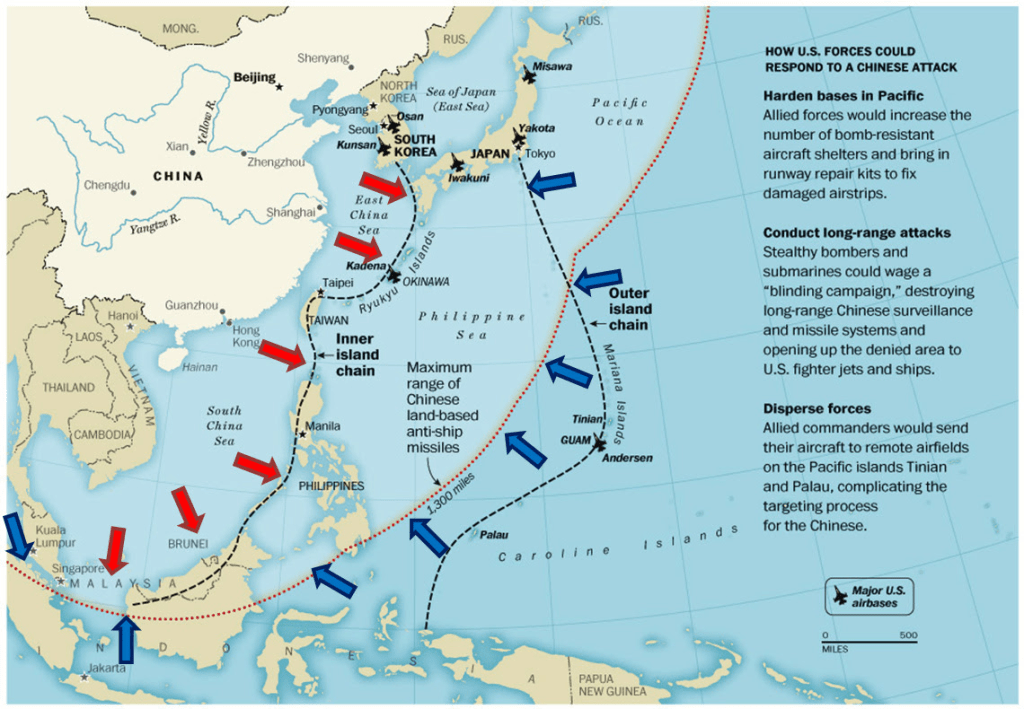
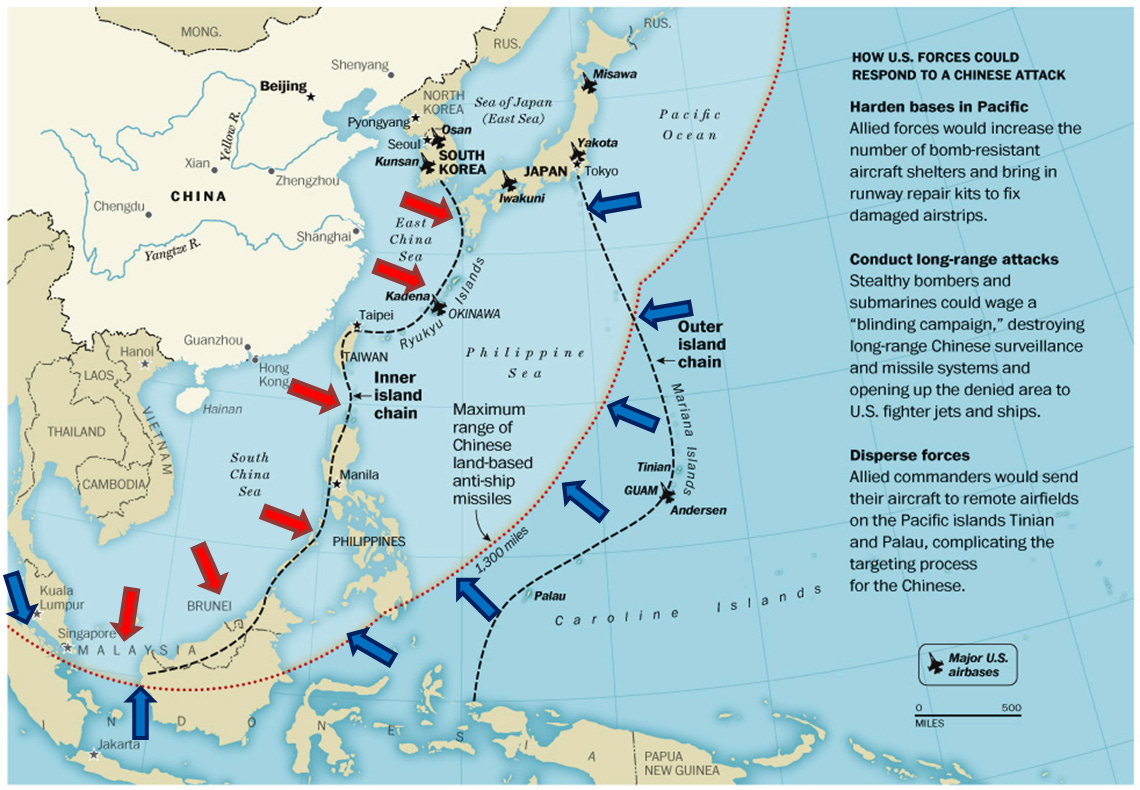
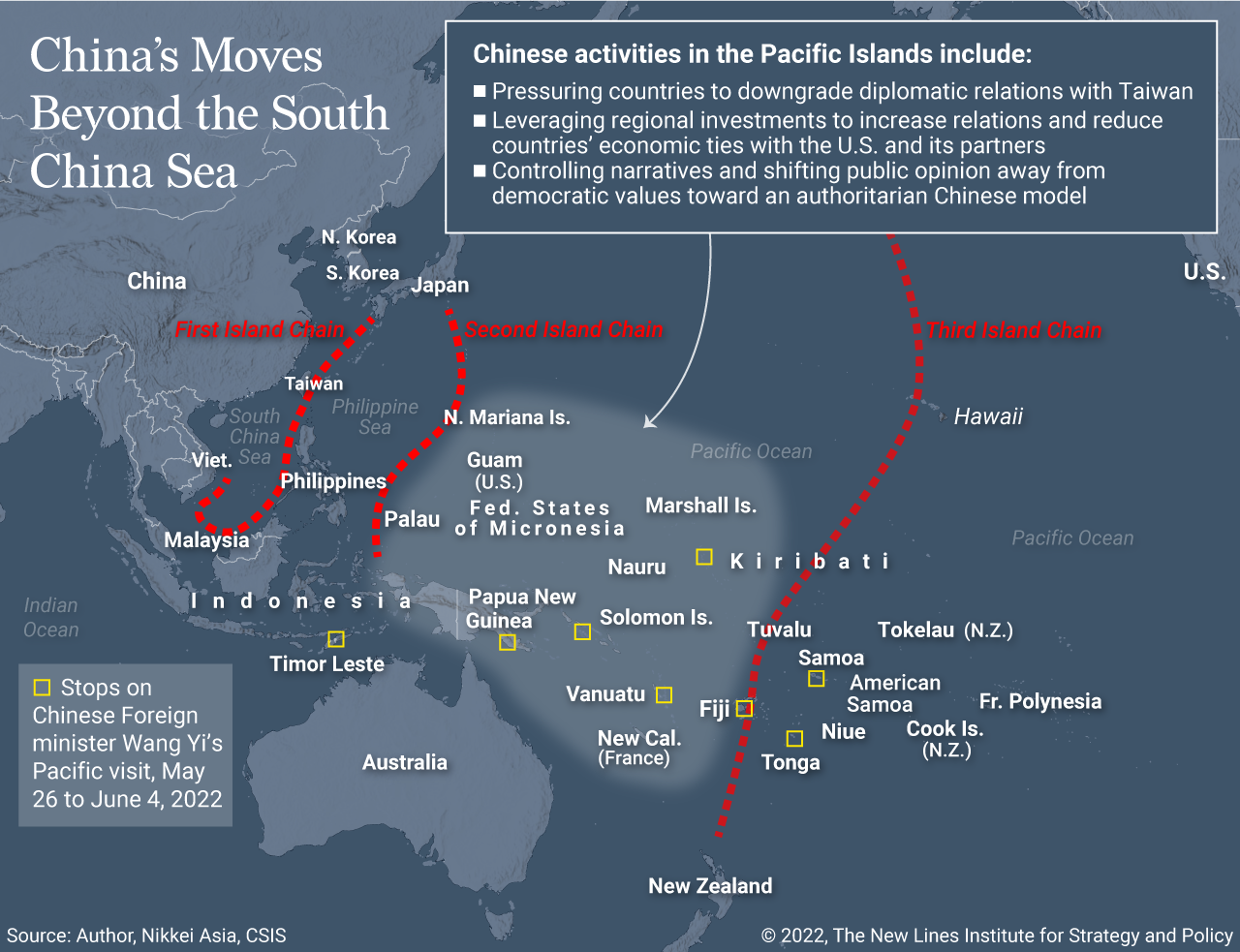
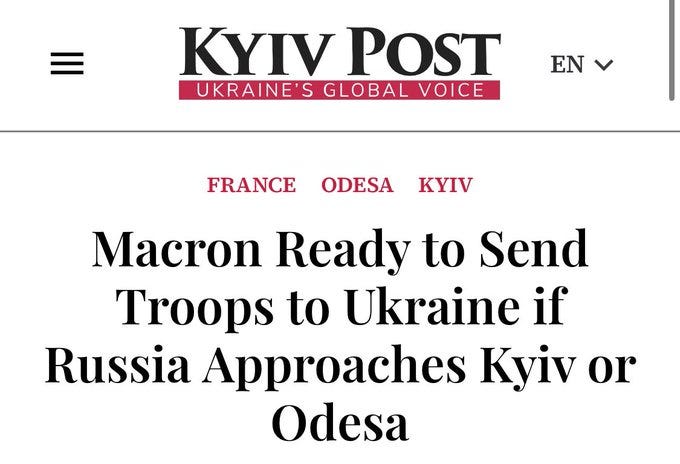
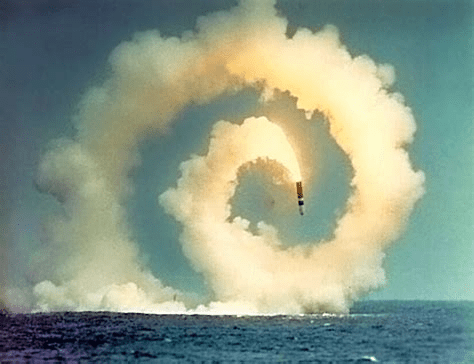
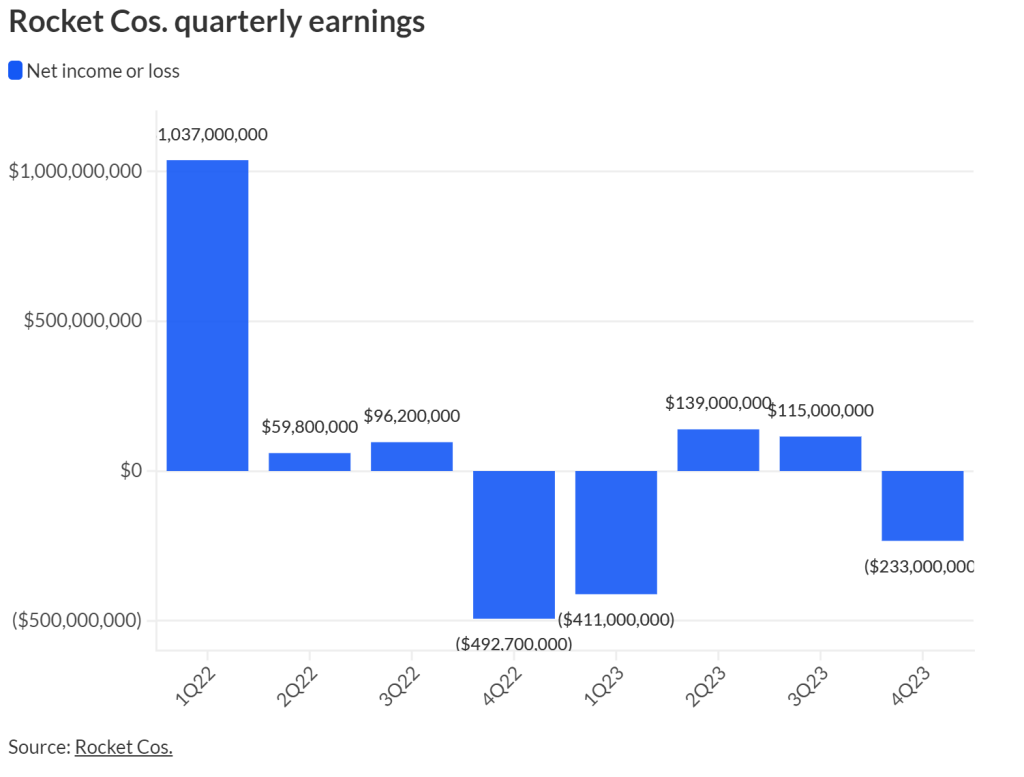

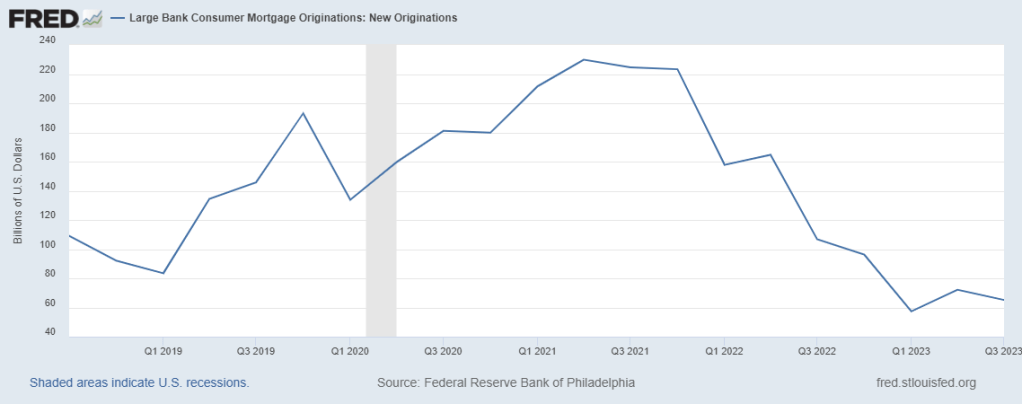
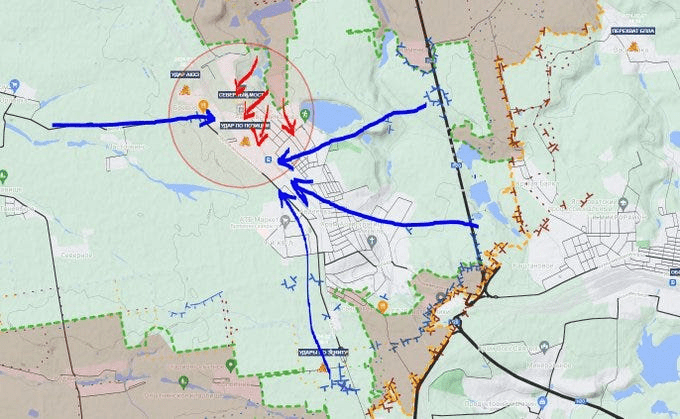

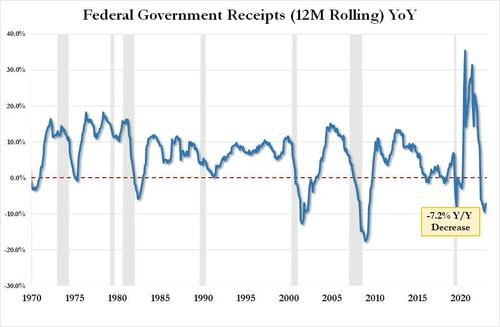
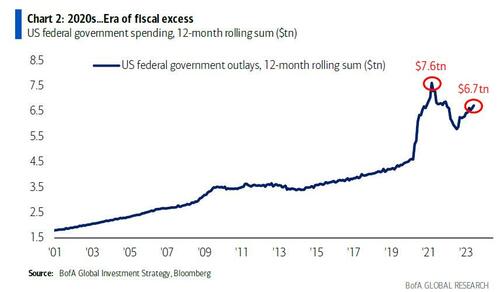
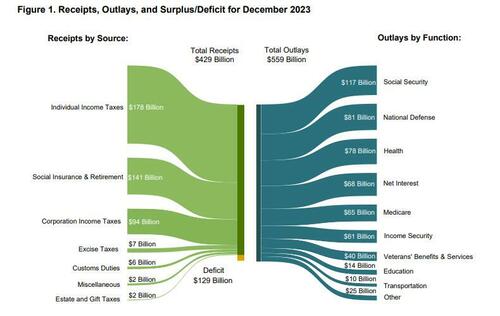
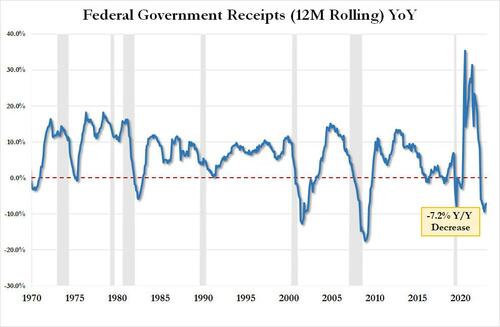
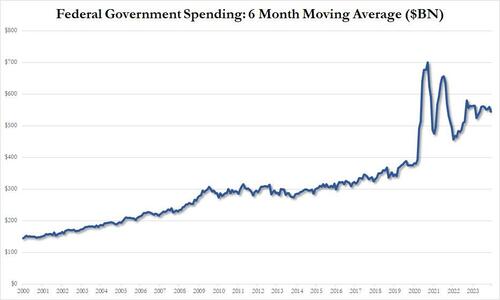
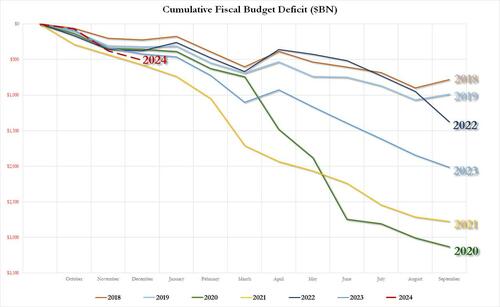
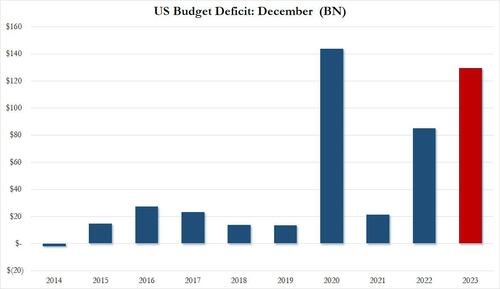
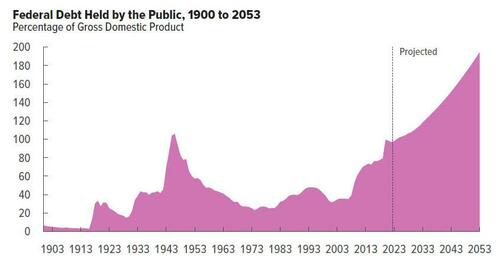

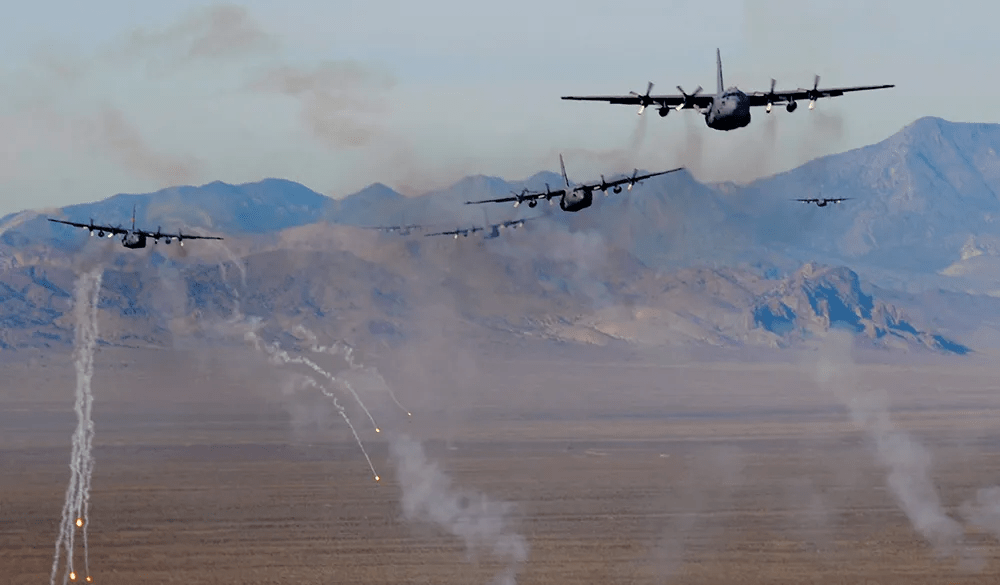


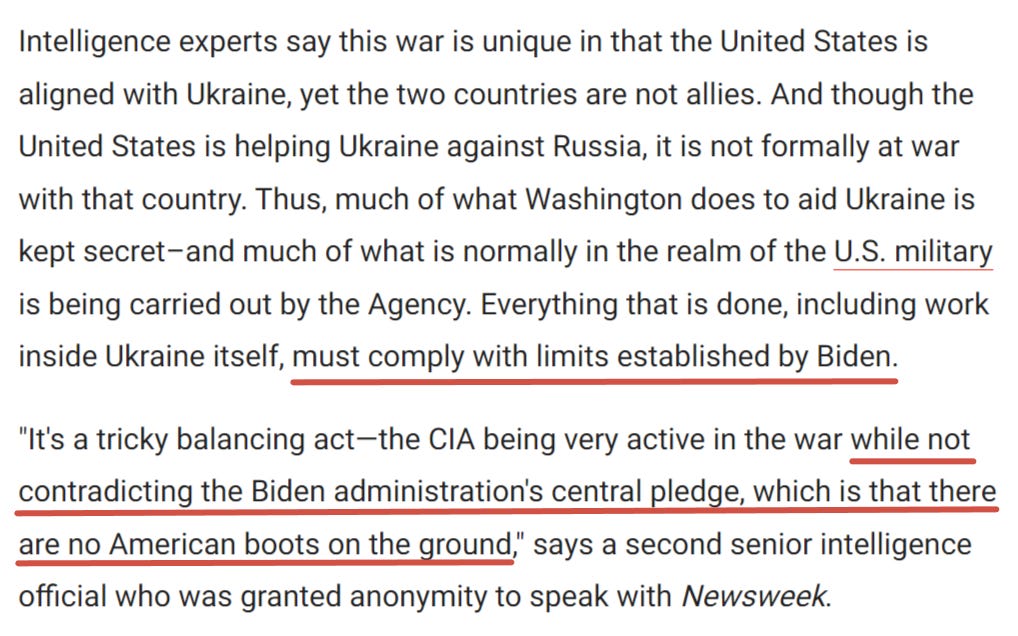


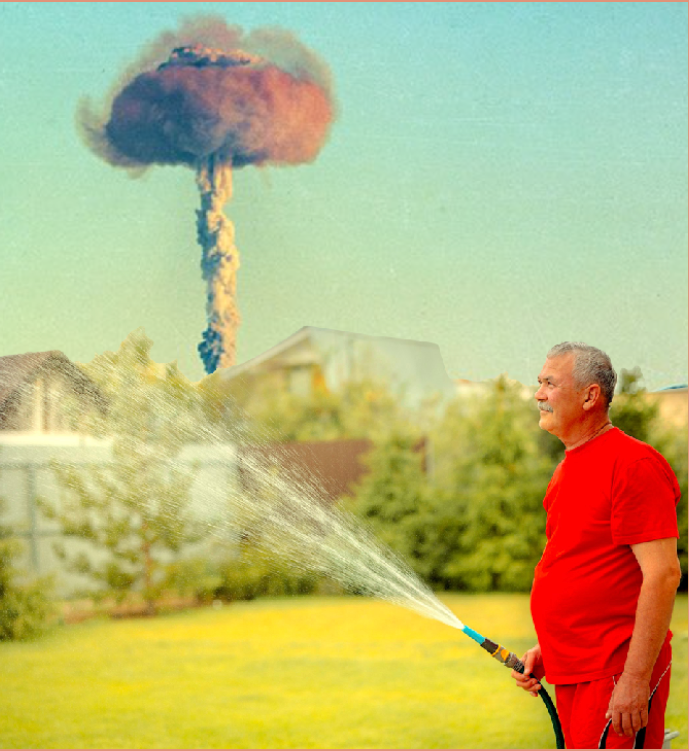


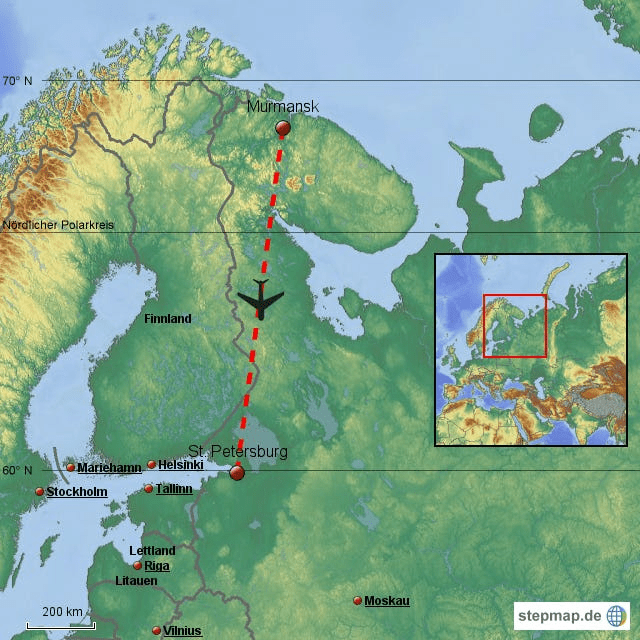

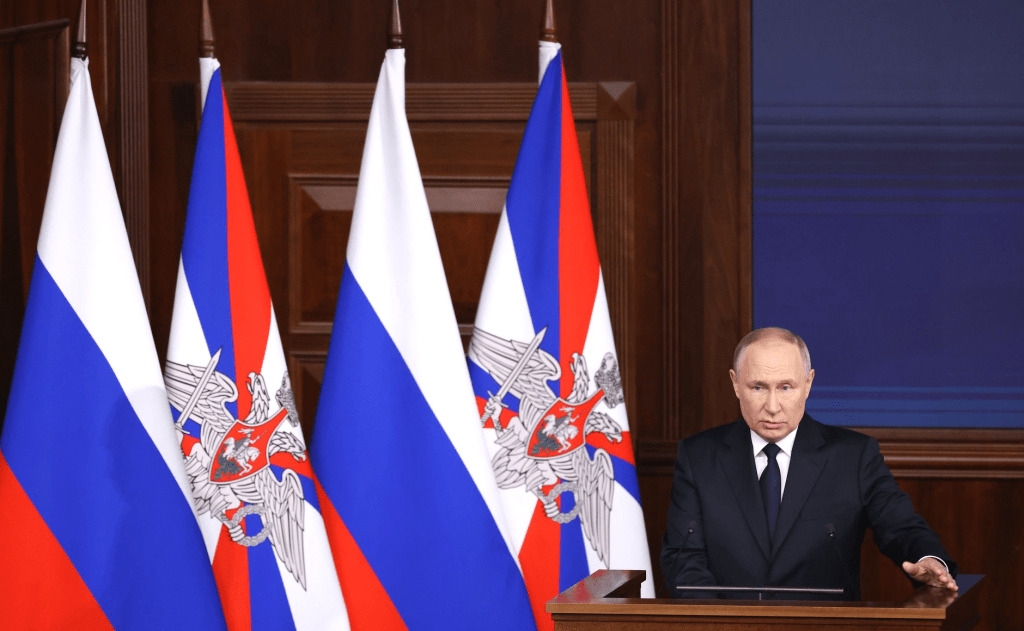
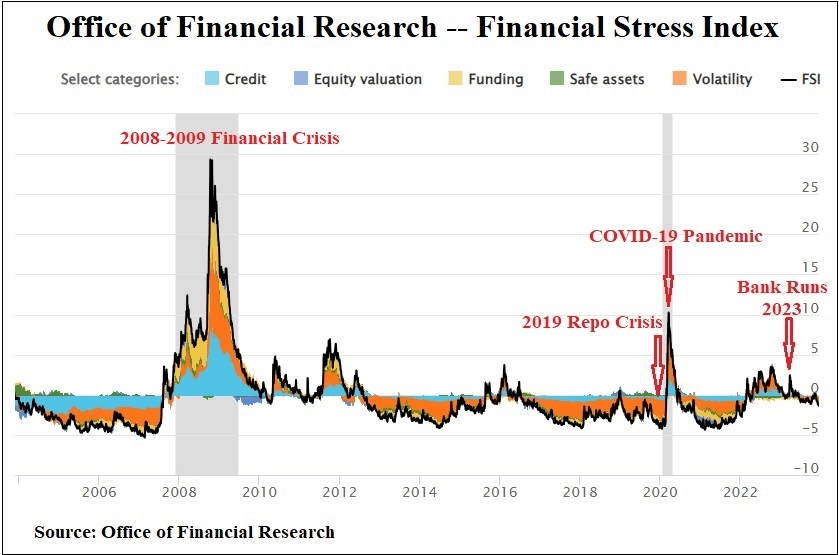
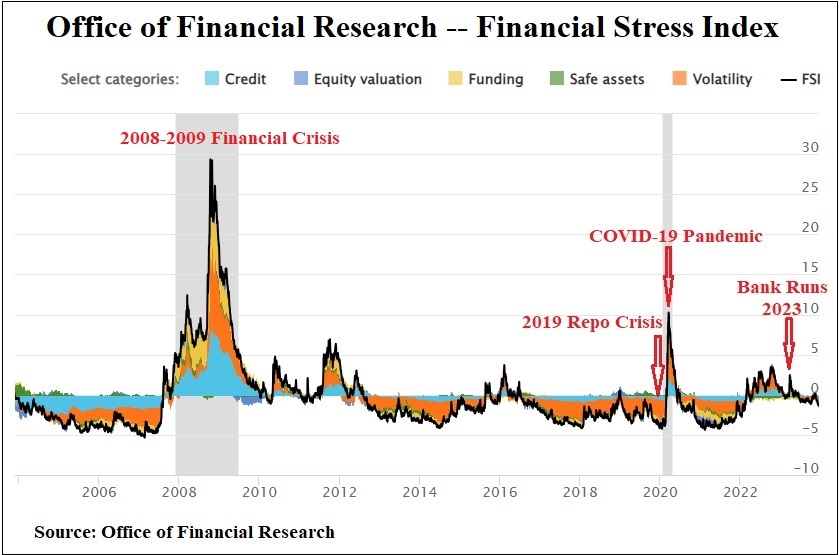
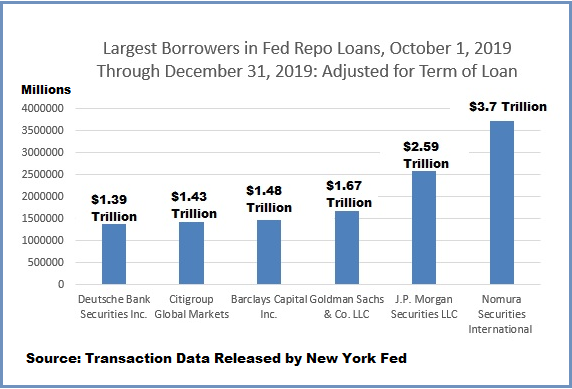
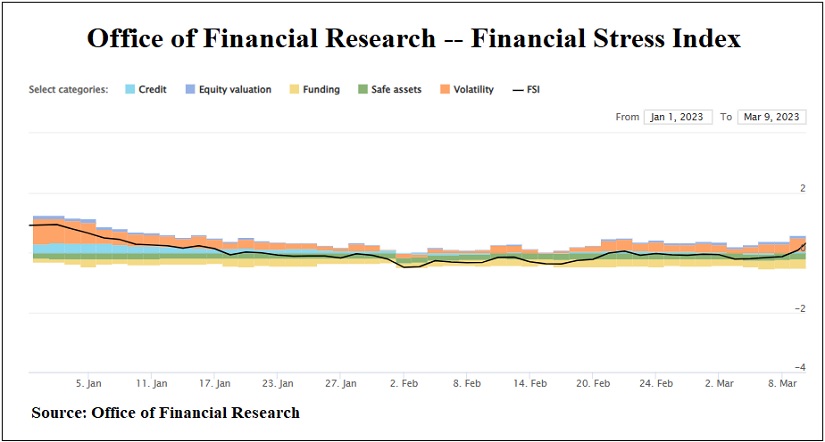
 Econophysics2020