McKinley had built his reputation in Congress on high tariffs, promising protection for American business and well-paid U.S. factory workers. With the Republicans in control of Congress, Ways and Means chairman Dingley introduced the Dingley Act, which would raise tariff rates on wool, sugar, and luxury goods. Congress passed the legislation with McKinley’s support, and he signed it into law on July 24, 1897, less than five months into his presidency.
American negotiators soon concluded a reciprocity treaty with France, and the two nations approached Britain to gauge British enthusiasm for bimetallism. Prime Minister Lord Salisbury and his government showed some interest in the idea and told American envoy Edward O. Wolcott that he would be amenable to reopening the mints in India to silver coinage if the Viceroy’s Executive Council there agreed. News of a possible departure from the gold standard stirred up immediate opposition from its partisans, and misgivings by the Indian administration led Britain to reject the proposal. With the international effort a failure, McKinley turned away from silver coinage and embraced the gold standard.Even without the agreement, agitation for free silver eased as prosperity began to return to the United States and gold from recent strikes in the Yukon and Australia increased the monetary supply even without silver coinage. In the absence of international agreement, McKinley favored legislation to formally affirm the gold standard, but was initially deterred by the silver strength in the Senate. By 1900, with another campaign ahead and good economic conditions, McKinley urged Congress to pass such a law, and signed the Gold Standard Act on March 14, 1900, using a gold pen to do so.
He was assassinated a year later.
Trump Reveals Key Pillars Of “Trumponomics”: Low Taxes, Sky High Tariffs, Powell Not Fired, Treasury Secretary Dimon And Much More
Before the failed assassination attempt, before the catastrophic (for Biden) first presidential debate, Donald Trump gave Bloomberg an extensive interview in which he laid out the core tenets of Trumponomics 2.0 that will define his next presidency. Here are the key highlights:
According to the interview, if Trump wins, he will…
enforce huge bilateral sanctions even though he claims “I don’t love sanctions,” he says. He keeps circling back to William McKinley, who he says raised enough revenue through tariffs during his turn-of-the-20th-century presidency to avoid instituting a federal income tax yet never got the appropriate credit.
allow Jerome Powell to serve out his term as chair of the Federal Reserve, which runs through May 2026
will lower the corporate tax rate to as low as 15%
no longer plans to ban TikTok.
considers Jamie Dimon to serve as secretary of the Department of the Treasury
ambivalent (if not outright hostile) to the idea of protecting Taiwan from Chinese aggression and to US efforts to punish Putin for invading Ukraine.
While the broad strokes of Trumponomics might not be different from what they were during his first term, what’s new is the speed and efficiency with which he intends to enact them. He believes he understands the levers of power much more deeply now, including the importance of selecting the right people for the right jobs. “We had great people, but I had some people that I would not have chosen for a second time,” he says. “Now, I know everybody. Now, I am truly experienced.”
Maybe he is, or maybe he just is surrounded by better people. Here is the inner circle of Trump economic policy advisors:
In a world where everything else has been tried – and has pushed US debt to stratospheric levels that virtually assure the US will lose the dollar reserve status in coming years, Trump is betting that his unorthodox agenda of tax cuts, more oil, less regulation, higher tariffs and fewer foreign financial commitments will appeal to enough swing state voters to hand him the election. And it’s working: debate and assassination attempt boosts aside, recent polling has showed that Black and Hispanic men are shifting to the Republican Party as they tire of historically high prices for food, housing and gas. As many as 20% of Black men now back Trump while Biden is struggling to sell key voters on his catastrophic economic record (not to mention the panic over his age). While Trump is almost assured a win in November according to online prediction markets, many Democratic leaders are increasingly concerned he’ll also deliver Republicans control of the House and Senate along with the White House: a sweeping red tsunami. In such an outcome, Trump would have unprecedented leverage to shape the US economy, the climate for global businesses and trade with allies for decades to come.
But there is one hurdle: while the business leaders Trump would be working with prize stability and certainty, they didn’t get much of either in Trump’s first presidency. This time around, his campaign is more professionally run, but he hasn’t produced a detailed economic policy agenda to reassure them. The vacuum has generated confusion among those who are planning for a second Trump term.
So Trump took advantage of the interview to set the record straight on some key items:
The Fed
In late April, a few of Trump’s informal policy advisers leaked to the Wall Street Journal an explosive draft proposal to severely curb the independence of the Federal Reserve. It was inferred that Trump had endorsed the idea, which didn’t seem like a stretch given his prior attacks on Powell. In fact, the Trump campaign insisted he’d endorsed neither the proposal nor the leak, and his top campaign brass were furious about it. But the episode was a consequence of Trump’s still-unformed policy, which has left wonks from such think tanks as the Heritage Foundation battling to fill in the details and jockey for influence. Other conservative policy entrepreneurs have been pushing proposals to devalue the dollar or institute a flat tax. At Mar-a-Lago, Trump makes it clear he’s fed up with the unauthorized freelancing. “There’s a lot of false information,” he complains. He’s eager to set the record straight on several topics.
First, there’s Powell. While in February, Trump told Fox News that he wouldn’t reappoint the Fed chair; now he states unequivocally that he’ll let Powell finish his term, which would last well into a second Trump administration. “I would let him serve it out,” Trump says, “especially if I thought he was doing the right thing.”
Even so, Trump has thoughts on interest-rate policy, at least in the near term. The Fed, he warns, should abstain from cutting rates before the November election and giving the economy, and Biden, a boost. That would be a problem for a market that has already priced in not one but two rate cuts in the second half (the first of which in September). “It’s something that they know they shouldn’t be doing,” he said.
Inflation
Trump has been ruthlessly critical of Biden’s stewardship of the economy. But he sees, in the anger generated by high prices and interest rates, an opportunity to woo voters who typically don’t support Republicans, such as Black and Hispanic men. Trump says he’ll bring down prices by opening up the US to more oil and gas drilling. “We have more liquid gold than anybody,” he says, even though the tariffs he plans on implementing will certainly lead to higher prices for imported goods. A report from the Peterson Institute estimates that Trump’s tariff regime would impose an additional annual cost of $1,700 for the average middle-income family. And Oxford Economics estimates that Trump’s combination of tariffs, immigration restrictions and extended tax cuts could also increase inflation and slow economic growth. The through line of these policies, says Bernard Yaros, lead US economist at Oxford Economics, is “an increase in inflation expectations.”
Immigration
He believes harsh restrictions are key to boosting domestic wages and employment. He characterizes immigration restrictions as “the biggest [factor] of all” in how he’d reshape the economy, with particular benefits for the minorities he’s eager to win over. “The Black people are going to be decimated by the millions of people that are coming into the country,” he says. “They’re already feeling it. Their wages have gone way down. Their jobs are being taken by the migrants coming in illegally into the country.” Trump’s language turns apocalyptic. “The Black population in this country is going to die because of what’s happened, what’s going to happen to their jobs—their jobs, their housing, everything,” he continues. “I want to stop that.”
Budget deficit
Trump’s desire to renew his landmark 2017 Tax Cuts and Jobs Act and to further reduce corporate taxes means that the budget deficit, having ballooned to war levels, will not shrink any time soon if ever. Coupled with the upward pressure on interest rates that economists expect from his protectionist policies, Trump’s plans could exacerbate the country’s growing debt burden. In the end, however, Trump’s other positions could be enough to sway business leaders to his side. Harold Hamm, a Trump donor and the executive chairman of oil giant Continental Resources Inc., writes in an email: “There seems to be outright hostility to free markets in the Biden Administration. As a result, capital is parked on the sidelines. Why? Because of regulatory uncertainty and in some cases downright regulatory hostility toward certain sectors.” Hamm cites the pause Biden put on liquefied natural gas projects in January as one example. “When Trump is re-elected,” he predicts, “that capital that was parked on the sidelines will be unleashed once again.”
Treasury Secretary Dimon
It is no secret that most Fortune 1000 CEOs have never been fans of Trump, but slowly the tide is turning. Overnight, the world’s richest man, Elon Musk, announced he would donate $45 million a month to a Trump PAC. Expect many others to follow. But the biggest praise for Trump in recent months has come from a card-carrying Democrat and the CEO of the largest US bank: “Be honest,” Jamie Dimon said at the World Economic Forum in Davos in January. “He was kind of right about NATO, kind of right about immigration. He grew the economy quite well. Tax reform worked. He was right about some of China. … He wasn’t wrong about some of these critical issues, and that’s why they’re voting for him.” According to Bloomberg, Trump relishes the compliment. He’s changed his view of the man he attacked on Truth Social last year as “Highly overrated Globalist Jamie Dimon” and now says he could envision Dimon, who’s thought to be contemplating a political career, as his secretary of the Treasury. “He is somebody that I would consider,” Trump says.
Tariffs and Foreign Policy
As president, Trump shattered the long-standing Republican orthodoxy of favoring free trade. He says he’ll go further if reelected. To Bloomberg, he offered an impassioned defense of US tariffs — he’s been studying McKinley, dubbing him “the Tariff King” — to make it clear he intends to ratchet up levies not just on China but on the European Union, too. “McKinley made this country rich,” Trump says. “He was the most underrated president.” In Trump’s reading of history, McKinley’s successors squandered his legacy on costly government programs such as the New Deal (“the whole thing with the parks and the dams”) and unjustly poisoned an important tool for economic statecraft. “I can’t believe how many people are negative on tariffs that are actually smart,” Trump says. “Man, is it good for negotiation. I’ve had guys, I’ve had countries that were potentially extremely hostile coming to me and saying, ‘Sir, please stop with the tariff stuff.’”
Another confirmation that Trump was right: despite rampant criticism, Biden maintained Trump’s tariffs on China, even increasing ones on steel, aluminum, semiconductors, electric vehicles, batteries and other goods. “This is going to add price inflation across the board, all in the name of ‘tough guy’ election-year politics,” Yaël Ossowski, deputy director of the Consumer Choice Center, a nonpartisan advocacy group, said in May. And sure enough, in Trumpworld, Biden’s actions are seen as validation that Trump was right, and his Democratic critics were wrong, about the threat China poses to the US economy and security. Trump is eager to prescribe more of the same medicine, including to European allies. In addition to targeting China for new tariffs of anywhere from 60% to 100%, he says he’d impose a 10% across-the-board tariff on imports from other countries, citing a familiar litany of complaints about foreign countries not buying enough US goods.
“The ‘European Union’ sounds so lovely,” Trump says. “We love Scotland and Germany. We love all these places. But once you get past that, they treat us violently.” He mentions reluctance in Europe to import US automobiles and agricultural products as key drivers of the more than $200 billion trade deficit, a statistic he considers a critical measure of economic fairness.
Taiwan
Asked about America’s commitment to defending Taiwan from China which views the Asian democracy as a breakaway province, Trump makes it clear that despite recent bipartisan support for Taiwan, he’s at best lukewarm about standing up to Chinese aggression. Part of his skepticism is grounded in economic resentment. “Taiwan took our chip business from us,” he says. “I mean, how stupid are we? They took all of our chip business. They’re immensely wealthy.” What he wants is for Taiwan to pay the US for protection. “I don’t think we’re any different from an insurance policy. Why? Why are we doing this?” he asks. Another factor driving his skepticism is what he regards as the practical difficulty of defending a small island on the other side of the globe. “Taiwan is 9,500 miles away,” he says. “It’s 68 miles away from China.” Abandoning the commitment to Taiwan would represent a dramatic shift in US foreign policy, as significant as halting support for Ukraine. But Trump sounds ready to radically alter the terms of these relationships.
Saudi Arabia
His views about Saudi Arabia are far more amicable. He says he’s spoken to Crown Prince Mohammed bin Salman Al Saud within the past six months, though he declines to elaborate on the nature and frequency of their talks. Asked if he worries that increasing US oil and gas production would upset the Saudis, who wish to maintain their primacy in energy, Trump replies that he doesn’t think so, pointing once more to a personal relationship. “He likes me, I like him,” he says of the crown prince. “They’re always going to need protection … they’re not naturally protected.” He adds: “I’ll always protect them.” Trump blames Biden and former President Barack Obama for eroding US relations with Saudi Arabia, saying they pushed the country toward a key adversary. “They’re not with us anymore,” he says. “They’re with China. But they don’t want to be with China. They want to be with us.”
Ukraine
Western allies are taking extensive measures to prepare for his possible return to the White House. These include increasing defense spending, transferring control of military aid for Ukraine to NATO, racing to improve relationships with Trump’s advisers and affiliated think tanks, and reaching out to Republican governors and thought leaders to divine his intentions. At a NATO summit in Washington, Ukrainian President Volodymyr Zelenskiy urged allies to act quickly to help his country repel Russia’s invasion instead of waiting for the election results in November to decide what to do. Dan Caldwell, a policy adviser at the right-leaning think tank Defense Priorities, says that “it’s actually in Europe’s interest to ‘America-proof’ their defense and to start operating on the assumption that the United States has other, more urgent national security priorities, and domestic ones as well.”
TikTok
The one exception to Trump’s claim to not want to harm US tech companies, and to privilege domestic ones over foreign ones, is TikTok. Discussing his recent embrace of the Chinese-owned social media platform, where he’s already quite popular, Trump mentions that banning it in the US would benefit a company and a CEO he has no desire to reward. “Now [that] I’m thinking about it, I’m for TikTok, because you need competition,” he says. “If you don’t have TikTok, you have Facebook and Instagram—and that’s, you know, that’s Zuckerberg.” It’s an outcome he won’t abide. He’s still stung by Facebook’s decision to bar him indefinitely in the wake of the Jan. 6 attacks. “All of a sudden,” Trump grouses, “I went from No. 1 to having nobody.”
Crypto
His reversal on cryptocurrency has been marked by similar dynamics: not long ago he criticized Bitcoin as a “scam” and a “disaster waiting to happen.” Now he says it and other cryptocurrencies should be “made in the USA.” He frames this about-face as a practical necessity. “If we don’t do it, China is going to figure it out, and China’s going to have it—or somebody else,” he says.
Not coincidentally, the crypto industry – spurned by the Democratic Party, brimming with cash and eager for friends in Washington – has now found its way to Trump. “Thanks largely to the actions of the Securities and Exchange Commission, the Biden administration has stumbled into becoming anti-crypto,” says Justin Slaughter, policy director at the crypto-focused investment firm Paradigm. “Given that about 20% of Democrats own crypto, per polling, and its ownership skews young and non-White, this was politically unwise.” Trump has moved to fill the void, declaring in a May speech that he would “stop Joe Biden’s crusade to crush crypto.” The following month he reaped the benefits, raising money from Bitcoin miners at a Mar-a-Lago fundraiser. Trump’s campaign then announced it would “build a crypto army,” and it now accepts crypto contributions.
We can see how many of the Euro-Atlantic countries are actually rejecting their roots, including the Christian values that constitute the basis of Western civilisation. They are denying moral principles and all traditional identities: national, cultural, religious and even sexual. They are implementing policies that equate large families with same-sex partnerships, belief in God with the belief in Satan.
The excesses of political correctness have reached the point where people are seriously talking about registering political parties whose aim is to promote paedophilia. People in many European countries are embarrassed or afraid to talk about their religious affiliations. Holidays are abolished or even called something different; their essence is hidden away, as is their moral foundation. And people are aggressively trying to export this model all over the world. I am convinced that this opens a direct path to degradation and primitivism, resulting in a profound demographic and moral crisis.
What else but the loss of the ability to self-reproduce could act as the greatest testimony of the moral crisis facing a human society? Today almost all developed nations are no longer able to reproduce themselves, even with the help of migration. Without the values embedded in Christianity and other world religions, without the standards of morality that have taken shape over millennia, people will inevitably lose their human dignity. We consider it natural and right to defend these values. One must respect every minority’s right to be different, but the rights of the majority must not be put into question.
As Mark observes, while Putin seek a return to Christian tradition, the West embraces Nihilism.
Excerpts from transcript of themeeting of the Valdai International Discussion Club
President of Russia Vladimir Putin: Good afternoon, friends, ladies and gentlemen,
I hope that the place for your discussions, for our meetings is well chosen and that the timing is good. We are in the centre of Russia – not a geographical centre, but a spiritual one. [Novgorod Region] is a cradle of Russian statehood. Our outstanding historians believe and have analysed how the elements of Russian statehood came together right here. This is in the light of the fact that two great rivers – the Volkhov and Neva – acted as natural means of communication, providing a natural linkage at the time. And it was here that Russian statehood gradually began to emerge.
As has already been pointed out, this year the [Valdai] club has brought together an unprecedented list of participants: more than 200 Russian and foreign politicians, public and spiritual leaders, philosophers and cultural figures, people with very different, original and sometimes opposing views.
You have already been conferring here for a few days now, and I’ll try not to bore you unduly. But nevertheless, I will allow myself to state my views on subjects that you have touched on during these discussions in one way or another. I am not only thinking about analysing Russian historical, cultural, and governance experiences. First and foremost, I am thinking of general debates, conversations about the future, strategies, and values, about the values underpinning our country’s development, how global processes will affect our national identity, what kind of twenty-first-century world we want to see, and what Russia, our country, can contribute to this world together with its partners.
Today we need new strategies to preserve our identity in a rapidly changing world, a world that has become more open, transparent and interdependent. This fact confronts virtually all countries and all peoples in one form or another: Russian, European, Chinese and American – the societies of virtually all countries. And naturally, including here in Valdai, we strive to better understand how our partners are attempting to meet this challenge, because we are meeting here with experts on Russia. But we proceed from the fact that our guests will state their views on the interaction and relationship between Russia and the countries that you represent.
For us (and I am talking about Russians and Russia), questions about who we are and who we want to be are increasingly prominent in our society. We have left behind Soviet ideology, and there will be no return. Proponents of fundamental conservatism who idealise pre-1917 Russia seem to be similarly far from reality, as are supporters of an extreme, western-style liberalism.
It is evident that it is impossible to move forward without spiritual, cultural and national self-determination. Without this we will not be able to withstand internal and external challenges, nor we will succeed in global competitions. And today we see a new round of such competitions. Today their main focuses are economic-technological and ideological-informational. Military-political problems and general conditions are worsening. The world is becoming more rigid, and sometimes forgoes not merely international law, but also basic decency.
[Every country] has to have military, technological and economic strength, but nevertheless the main thing that will determine success is the quality of citizens, the quality of society: their intellectual, spiritual and moral strength. After all, in the end economic growth, prosperity and geopolitical influence are all derived from societal conditions. They depend on whether the citizens of a given country consider themselves a nation, to what extent they identify with their own history, values and traditions, and whether they are united by common goals and responsibilities. In this sense, the question of finding and strengthening national identity really is fundamental for Russia.
Meanwhile, today Russia’s national identity is experiencing not only objective pressures stemming from globalisation, but also the consequences of the national catastrophes of the twentieth century, when we experienced the collapse of our state two different times. The result was a devastating blow to our nation’s cultural and spiritual codes; we were faced with the disruption of traditions and the consonance of history, with the demoralisation of society, with a deficit of trust and responsibility. These are the root causes of many pressing problems we face. After all, the question of responsibility for oneself, before society and the law, is something fundamental for both legal and everyday life.
After 1991 there was the illusion that a new national ideology, a development ideology, would simply appear by itself. The state, authorities, intellectual and political classes virtually rejected engaging in this work, all the more so since previous, semi-official ideology was hard to swallow. And in fact they were all simply afraid to even broach the subject. In addition, the lack of a national idea stemming from a national identity profited the quasi-colonial element of the elite – those determined to steal and remove capital, and who did not link their future to that of the country, the place where they earned their money.
Practice has shown that a new national idea does not simply appear, nor does it develop according to market rules. A spontaneously constructed state and society does not work, and neither does mechanically copying other countries’ experiences. Such primitive borrowing and attempts to civilize Russia from abroad were not accepted by an absolute majority of our people. This is because the desire for independence and sovereignty in spiritual, ideological and foreign policy spheres is an integral part of our national character. Incidentally, such approaches have often failed in other nations too. The time when ready-made lifestyle models could be installed in foreign states like computer programmes has passed.
We also understand that identity and a national idea cannot be imposed from above, cannot be established on an ideological monopoly. Such a construction is very unstable and vulnerable; we know this from personal experience. It has no future in the modern world. We need historical creativity, a synthesis of the best national practices and ideas, an understanding of our cultural, spiritual and political traditions from different points of view, and to understand that [national identity] is not a rigid thing that will last forever, but rather a living organism. Only then will our identity be based on a solid foundation, be directed towards the future and not the past. This is the main argument demonstrating that a development ideology must be discussed by people who hold different views, and have different opinions about how and what to do to solve given problems.
All of us – so-called Neo-Slavophiles and Neo-Westernisers, statists and so-called liberals – all of society must work together to create common development goals. We need to break the habit of only listening to like-minded people, angrily – and even with hatred – rejecting any other point of view from the outset. You can’t flip or even kick the country’s future like a football, plunging into unbridled nihilism, consumerism, criticism of anything and everything, or gloomy pessimism.
This means that liberals have to learn to talk with representatives of the left-wing and, conversely, that nationalists must remember that Russia was formed specifically as a multi-ethnic and multi-confessional country from its very inception. Nationalists must remember that by calling into question our multi-ethnic character, and exploiting the issue of Russian, Tatar, Caucasian, Siberian or any other nationalism or separatism, means that we are starting to destroy our genetic code. In effect, we will begin to destroy ourselves.
Russia’s sovereignty, independence and territorial integrity are unconditional. These are red lines no one is allowed to cross. For all the differences in our views, debates about identity and about our national future are impossible unless their participants are patriotic. Of course I mean patriotism in the purest sense of the word.
Too often in our nation’s history, instead of opposition to the government we have been faced with opponents of Russia itself. I have already mentioned this; Pushkin also talked about it. And we know how it ended, with the demolition of the [Russian] state as such. There is virtually no Russian family that completely escaped the troubles of the past century. Questions about how to assess certain historical events still divide our country and society.
We need to heal these wounds, and repair the tissues of our historic fabric. We can no longer engage in self-deception, striking out unsightly or ideologically uncomfortable pages of our history, breaking links between generations, rushing to extremes, creating or debunking idols. It’s time to stop only taking note of the bad in our history, and berating ourselves more than even our opponents would do. [Self-]criticism is necessary, but without a sense of self-worth, or love for our Fatherland, such criticism becomes humiliating and counterproductive.
We must be proud of our history, and we have things to be proud of. Our entire, uncensored history must be a part of Russian identity. Without recognising this it is impossible to establish mutual trust and allow society to move forward.
Another serious challenge to Russia’s identity is linked to events taking place in the world. Here there are both foreign policy and moral aspects. We can see how many of the Euro-Atlantic countries are actually rejecting their roots, including the Christian values that constitute the basis of Western civilisation. They are denying moral principles and all traditional identities: national, cultural, religious and even sexual. They are implementing policies that equate large families with same-sex partnerships, belief in God with the belief in Satan.
The excesses of political correctness have reached the point where people are seriously talking about registering political parties whose aim is to promote paedophilia. People in many European countries are embarrassed or afraid to talk about their religious affiliations. Holidays are abolished or even called something different; their essence is hidden away, as is their moral foundation. And people are aggressively trying to export this model all over the world. I am convinced that this opens a direct path to degradation and primitivism, resulting in a profound demographic and moral crisis.
What else but the loss of the ability to self-reproduce could act as the greatest testimony of the moral crisis facing a human society? Today almost all developed nations are no longer able to reproduce themselves, even with the help of migration. Without the values embedded in Christianity and other world religions, without the standards of morality that have taken shape over millennia, people will inevitably lose their human dignity. We consider it natural and right to defend these values. One must respect every minority’s right to be different, but the rights of the majority must not be put into question.
At the same time we see attempts to somehow revive a standardised model of a unipolar world and to blur the institutions of international law and national sovereignty. Such a unipolar, standardised world does not require sovereign states; it requires vassals. In a historical sense this amounts to a rejection of one’s own identity, of the God-given diversity of the world.
Russia agrees with those who believe that key decisions should be worked out on a collective basis, rather than at the discretion of and in the interests of certain countries or groups of countries. Russia believes that international law, not the right of the strong, must apply. And we believe that every country, every nation is not exceptional, but unique, original and benefits from equal rights, including the right to independently choose their own development path.
This is our conceptual outlook, and it follows from our own historical destiny and Russia’s role in global politics. Our present position has deep historical roots. Russia itself has evolved on the basis of diversity, harmony and balance, and brings such a balance to the international stage.
I want to remind you that the Congress of Vienna of 1815 and the agreements made at Yalta in 1945, taken with Russia’s very active participation, secured a lasting peace. Russia’s strength, the strength of a winning nation at those critical junctures, manifested itself as generosity and justice. And let us remember [the Treaty of] Versailles, concluded without Russia’s participation. Many experts, and I absolutely agree with them, believe that Versailles laid the foundation for the Second World War because the Treaty of Versailles was unfair to the German people: it imposed restrictions with which they could not cope, and the course of the next century became clear.
There is one more fundamental aspect to which I want to draw your attention. In Europe and some other countries so-called multiculturalism is in many respects a transplanted, artificial model that is now being questioned, for understandable reasons. This is because it is based on paying for the colonial past. It is no accident that today European politicians and public figures are increasingly talking about the failures of multiculturalism, and that they are not able to integrate foreign languages or foreign cultural elements into their societies.
Over the past centuries in Russia, which some have tried to label as the ”prison of nations“, not even the smallest ethnic group has disappeared. And they have retained not only their internal autonomy and cultural identity, but also their historical space. You know, I was interested to learn (I did not even know this) that in Soviet times [authorities] paid such careful attention to this that virtually every small ethnic group had its own print publication, support for its language, and for its national literature. We should bring back and take on board much of what has been done in this respect.
Along with this the different cultures in Russia have the unique experience of mutual influence, mutual enrichment and mutual respect. This multiculturalism and multi-ethnicity lives in our historical consciousness, in our spirit and in our historical makeup. Our state was built in the course of a millennium on this organic model.
Russia – as philosopher Konstantin Leontyev vividly put it – has always evolved in ”blossoming complexity“ as a state-civilisation, reinforced by the Russian people, Russian language, Russian culture, Russian Orthodox Church and the country’s other traditional religions. It is precisely the state-civilisation model that has shaped our state polity. It has always sought to flexibly accommodate the ethnic and religious specificity of particular territories, ensuring diversity in unity.
Christianity, Islam, Buddhism, Judaism and other religions are an integral part of Russia’s identity, its historical heritage and the present-day lives of its citizens. The main task of the state, as enshrined in the Constitution, is to ensure equal rights for members of traditional religions and atheists, and the right to freedom of conscience for all citizens.
However, it is clearly impossible to identify oneself onlythrough one’s ethnicity or religion in such a large nation with a multi-ethnic population. In order to maintain the nation’s unity, people must develop a civic identity on the basis of shared values, a patriotic consciousness, civic responsibility and solidarity, respect for the law, and a sense of responsibility for their homeland’s fate, without losing touch with their ethnic or religious roots.
There are broad discussions on how the ideology of national development will be structured politically and conceptually – including with your participation, colleagues. But I deeply believe that individuals’ personal, moral, intellectual and physical development must remain at the heart of our philosophy. Back at the start of the 1990s, Solzhenitsyn stated that the nation’s main goal should be to preserve the population after a very difficult 20th century. Today, we must admit that we have not yet fully overcome the negative demographic trends, although we have veered away from a dangerous decline in the national potential.
Unfortunately, throughout our nation’s history, little value was given at times to individual human lives. Too often, people were seen simply as a means, rather than a goal and a mission for development. We no longer have that right and we cannot throw millions of human lives into the fire for the sake of development. We must treasure every individual. Russia’s main strength in this and future centuries will lie in itseducated, creative, physically and spiritually healthy people, rather than natural resources.
The role of education is all the more important because in order to educate an individual, a patriot, we must restore the role of great Russian culture and literature. They must serve as the foundation for people’s personal identity, the source of their uniqueness and their basis for understanding the national idea. Here, a great deal depends on the teaching community, which has been and remains a highly important guardian of nationwide values, ideas and philosophies. This community speaks the same language – the language of science, knowledge and education, despite the fact that it is spread out over an enormous territory, from Kaliningrad to Vladivostok. In this way, the community of teachers, the educational community overall, in the broad sense of the word, binds the nation together. Supporting this community is one of the most important steps on the path toward a strong, flourishing Russia.
I want to stress again that without focussing our efforts on people’s education and health, creating mutual responsibility between the authorities and each individual, and establishing trust within society, we will be losers in the competition of history.Russia’s citizens must feel that they are the responsible owners of their country, region, hometown, property, belongings and their lives. A citizen is someone who is capable of independently managing his or her own affairs, freely cooperating with equals.
Local governments and self-regulated citizens’ organisations serve as the best school for civic consciousness. Of course, I’m referring to non-profits. Incidentally, one of the best Russian political traditions, the country council tradition, was also built on the principles of local government. A true civil society and a true, nationally-focused political elite, including the opposition with its own ideology, values and standards for good and evil – their own, rather than those dictated by the media or from abroad – can only grow through effective self-governing mechanisms. The government is prepared totrust self-regulating and self-governing associations, but we must know whom we are trusting. This is absolutely normal global practice, which is precisely why we have passed new legislation to increase the transparency of nongovernmental organisations.
Speaking of any kind of reforms, it is important to bear in mind that there is more to our nation than just Moscow and St Petersburg. In developing Russian federalism, we must rely on our own historical experience, using flexible and diverse models. The Russian model of federalism has a great deal of potential built into it. It is imperative that we learn to use it competently, not forgetting its most important aspect: the development of the regions and their independence should createequal opportunities for all of our nation’s citizens, regardless of where they live, to eliminate inequalities in the economic and social development of Russia’s territory, thereby strengthening the nation’s unity. Ultimately, this is a huge challenge because these territories’ development has been very unbalanced over the course of decades and even centuries.
I would like to touch on another topic. The 21st century promises to become the century of major changes, the era of the formation of major geopolitical zones, as well as financial and economic, cultural, civilisational, and military and political areas. That is why integrating with our neighbours is our absolute priority. The future Eurasian Economic Union, which we have declared and which we have discussed extensively as of late, is not just a collection of mutually beneficial agreements. The Eurasian Union is a project for maintaining the identity of nations in the historical Eurasian space in a new century and in a new world. Eurasian integration is a chance for the entire post-Soviet space to become an independent centre for global development, rather than remaining on the outskirts of Europe and Asia.
I want to stress that Eurasian integration will also be built on the principle of diversity. This is a union where everyone maintains their identity, their distinctive character and their political independence. Together with our partners, we will gradually implement this project, step by step. We expect that it will become our common input into maintaining diversity and stable global development.
Colleagues, the years after 1991 are often referred to as the post-Soviet era. We have lived through and overcome that turbulent, dramatic period. Russia has passed through these trials and tribulations and is returning to itself, to its own history, just as it did at other points in its history. After consolidating our national identity, strengthening our roots, and remaining open and receptive to the best ideas and practices of the East and the West, we must and will move forward.
In the days and weeks leading up to January 6, the nation’s highest-ranking military officer, then-Chairman of the Joint Chiefs of Staff General Mark Milley, was moving in lockstep with the political anxieties of top Democratic leaders.
These Democrats grew anxious as over 140 House Republicans planned to contest the election results during the electoral college certification that day. Milley was then deeply engaged with a circle of confidants including House Speaker Nancy Pelosi, Senate Democratic Leader Chuck Schumer, former Obama National Security Advisor Susan Rice, and former Defense Secretary Robert Gates, among others—all of whom shared a unified disdain for President Donald Trump.
At a House Oversight Committee hearing in April addressing the 3-hour and 19-minute delay in mobilizing the D.C. National Guard on January 6, Colonel Earl Matthews, one of four Department of Defense witnesses, testified about an “irrational” fear among a “clique” of senior military officers concerning the potential misuse of the National Guard by the president. He indicated that these concerns were influenced behind the scenes by Milley, who often made disparaging remarks about the president and regularly referred to his fear of a so-called potential “Reichstag moment.”
Meanwhile, Milley has insisted he maintained a posture of strict neutrality, vocally distancing his leadership of the military from the political turmoil surrounding the 2020 presidential election. “My job is to stay clean by ensuring that the uniformed military remains out of domestic politics,” Milley stated during his testimony before the January 6 Select Committee. “The United States military has no role in domestic politics, period, full stop.”
Nevertheless, accounts of Milley’s approach to the unfolding situation during the late days of the Trump administration, as detailed in Carol Leonnig and Philip Rucker’s I Alone Can Fix It and Susan Glasser and Peter Baker’s August 2022 report in The New Yorker, present a picture of Milley that is much different from the disinterested persona he has disingenuously cultivated.
Some excerpts follow:
Considering resigning in the summer of 2020 during the height of the George Floyd riots, Milley ultimately decided against it. “Fuck that shit,” he told his staff, “I’ll just fight him.” Despite assurances to confidants that he would never openly defy the president—a move he considered illegal—he was “determined to plant flags.” Milley envisioned a scenario involving either a declaration of martial law or a presidential invocation of the Insurrection Act with “Trumpian Brown Shirts fomenting violence.”
Embodying a self-styled narrative of heroic defiance, Milley was prepared to face severe consequences to counter what he perceived as a grave threat. “If they want to court-martial me or put me in prison, have at it,” Milley told his staff, “but I will fight from the inside.”
Milley saw himself as “tasked” with safeguarding “against Trump and his people” from potentially misusing the military, something he confided in a “trusted confidant” to ensure he remained true to this plan. “I have four tasks from now until the twentieth of January,” he affirmed, “and I’m going to accomplish my mission.”
Milley’s Cohort of Confidants
I Alone Can Fix It highlights how Milley, as the joint session approached and more than 140 House Republicans were pledged to contest the election results, shared his anxiety with “senior leaders” in Congress who sought his “comfort” amid fears of “attempted coups.” The New Yorker’s August 2022 report further reveals Milley’s communications with key Democrats, specifically Pelosi and Schumer.
Additionally, the New Yorker report describes Milley’s continued outreach to “Democrats close to Biden,” which included “regular” interactions with Susan Rice, former Obama national security advisor. Known for her role in helping to orchestrate the Trump-Russia collusion hoax, Rice’s expertise in activities aimed at undermining the former president raises this question: What was it about her that made Milley want to seek her guidance in the days leading up to January 6?
The report also references Robert Gates, former Secretary of Defense during both the Obama and Bush administrations, as another key figure in Milley’s circle of confidants. Gates reportedly advised Milley to remain in the Pentagon as long as possible, citing President Trump’s “increasingly erratic and dangerous behavior.” I Alone Can Fix It also depicts Gates as a mentor to Milley, urging him not to resign during the final months of the Trump administration. He’s quoted advising Milley, “Don’t quit. Steel your back. It’s not going to be easy, but you’re the right guy in the right place and at the right time.”
Liz Cheney and Milley’s “Nightmare Scenarios”
During Trump’s final months in office, the New Yorker report notes that Milley had two “nightmare scenarios” running through his mind: One was that Trump might spark an external crisis, such as a war with Iran, to divert attention or to create a pretext for a power grab at home, and the other was that Trump would manufacture a domestic crisis to justify ordering the military into the streets to prevent the transfer of power.
On December 26, 2020, the two “nightmare scenarios” then preoccupying Milley transitioned from his personal concerns to the public domain in a column by Washington Post reporter David Ignatius—a journalist with close ties to both (you guessed it) the Obama and Bush administrations.
Ignatius’s extensive connections within these administrations are detailed in a March 2012 Politicoreport, which highlights his significant access to senior White House and Pentagon officials, including being tapped by the Obama White House for exclusive access to the Bin Laden documents in 2012. Additionally, former Vice President Dick Cheney mentioned Ignatius in his 2011 memoir, In My Time, co-authored with his daughter, former House Republican Liz Cheney. In the memoir, Cheney recounts concerns about leaks to the press during the Bush administration and reveals that a source had spoken to Ignatius at the president’s instruction.
Coincidentally, in her 2023 memoir, Oath and Honor, Liz Cheney also references Ignatius’s December 26, 2020, Washington Post column that unveiled the “nightmare scenarios” Milley had envisioned. That evening, she notes, the column “caught my attention” as Ignatius, “a longtime journalist well-sourced at the Pentagon, reported that senior government officials feared Trump was ‘threatening to overstep the constitutional limits of his power.’” Cheney cites her discovery of Milley’s concerns in this article as the catalyst to her mobilization of all 10 living former Secretaries of Defense to sign a letter warning the current Defense Department leadership and President Trump to stay within bounds. Additionally, she reveals that when Robert Gates, a mentor to Milley, was approached to join this effort, he responded, “If Cheney’s on, I’m on.”
I Alone Can Fix It reports that on the evening of January 2, 2021, Milley was “tipped off” by a “former defense secretary” about an impending Washington Post opinion piece authored by those same 10 living former defense secretaries Liz Cheney mobilized for the purpose on the basis of Milley’s “nightmare scenario” fears. The book also notes that on January 7, 2021—the day after the chaotic events of January 6—Cheney called Milley to check in. “How are you doing?” he asked her. “That fucking guy Jim Jordan. That son of a bitch,” Cheney responded. What more might we learn about Milley’s interactions with Cheney in the days leading up to January 6? Surely, this was not their first conversation about the events that would ultimately unfold that day.
The January 6 Committee’s “Investigation”
In the months following January 6, House Speaker Nancy Pelosi, who previously had received assurances from Milley that he would not use the military for domestic purposes politically favorable to Trump, established the Select Committee on January 6 to “investigate” the day’s events. Remarkably, Liz Cheney was appointed vice chair of the panel, a position typically reserved for a member of the majority party.
According to a November 2022 Washington Postreport, Cheney exerted a “remarkable level” of control over much of the committee’s work. Staffers, frustrated with Cheney’s insistence on centering the final report on President Trump, expressed concerns that important findings unrelated to Trump would be withheld from the public.
Consistent with Cheney’s objectives for the committee’s investigation, General Milley offered his own criticisms of President Trump. “You know, you’re the Commander-in-Chief,” he told the committee, “you’ve got an assault going on at the Capitol of the United States of America, and there’s nothing? No call? Nothing? Zero?”
Milley and McCarthy’s January 5 Memo
During his interview with the January 6 Committee, Milley explained that in preparation for January 6, the role of the D.C. National Guard was defined in a memorandum he described as “very strict on the use of the military.” Milley detailed how the memorandum prohibited the use of any riot control agents, stating, “We’re not doing it … and not only not doing it, you’re not going to have it. You’re not going to have the opportunity to use it.” Additionally, he mentioned that while such measures might be authorized under different circumstances on another day, they were explicitly forbidden “at that time, on this day.”
This directive was ultimately issued by Army Secretary Ryan McCarthy to Major General William Walker, commanding general of the D.C. National Guard, on January 5, 2021. Milley disclosed to the committee that he was actively involved in advising McCarthy on the memorandum, “line by line going through this, lining it out, editing, and stuff like that, resulting in this memo.”
The January 5 memo, carefully crafted by Milley and McCarthy, authorized 340 D.C. National Guard personnel to assist law enforcement with traffic control points and metro station support, and stationed 40 personnel at Joint Base Andrews to serve as the Guard’s Quick Reaction Force (QRF) in case of an emergency. However, this memo restricted General Walker from employing the QRF without explicit personal approval from Army Secretary McCarthy—a condition previously not imposed.
He also testified to the January 6 Committee about his inability to reach Secretary McCarthy on January 6, revealing that it was the first time he found the phone number he had for McCarthy to be out of service. Additionally, General Walker noted that Colonel Earl Matthews, who had McCarthy’s private number due to their social acquaintance, was also unable to reach him.
This breakdown in communication occurred just one day after McCarthy had issued the memorandum requiring General Walker to obtain explicit approval from him for employing the Guard’s QRF. What could possibly account for McCarthy’s unavailability during those critical hours? Did McCarthy somehow overlook the crucial role he had defined for himself with the new restrictions imposed just a day earlier?
Where’s McCarthy?
On January 6, Acting Secretary of Defense Christopher Miller approved the deployment of the D.C. National Guard by 3:04 p.m. The protocol then required Army Secretary McCarthy to convey this authorization to General Walker to enable the deployment of the D.C. National Guard. However, McCarthy never conveyed this authorization, resulting in the more than 3 hour delay.
The January 6 Committee’s final report states that after Defense Secretary Miller authorized the deployment at 3:04 p.m., Secretary McCarthy called General Walker, instructing him to “mobilize the entire Guard.” However, General Walker “categorically denies” receiving such a call. “Here’s the bottom line,” he said, “The Secretary was unavailable to me, and he never called me.”
It appears, however, that McCarthy changed his story after initially telling the committee that he had called General Walker. The committee’s final report addresses this inconsistency by detailing McCarthy’s actions and whereabouts on January 6 to explain the delay. It explains that starting around 3:00 p.m. on January 6—shortly after Defense Secretary Miller approved the Guard’s deployment at 3:04 p.m.—“25 minutes of Army Secretary McCarthy’s time was spent reassuring members of Congress that the Guard was indeed coming,” even though he had not yet conveyed the order to General Walker. The report continues, stating that by 3:45 p.m., McCarthy had completed his calls—none of which were to General Walker—and after picking up some items from his office, he headed to the Metropolitan Police Department (MPD) headquarters to draft a concept of operations, a process that took an additional 20 minutes.
However, when Brigadier General Aaron Dean, another Defense Department witness who testified before the House Oversight Committee, was asked whether he ever saw the plan McCarthy claims to have prepared, he responded, “Not only did I not see the plan, but he was also at the wrong agency.” He elaborated that the lead federal agency for this particular event was the United States Capitol Police, and questioned why McCarthy was at MPD headquarters instead of coordinating with Capitol Police, who were responsible for the security of the Capitol.
The January 6 Committee report also touches on this oversight, noting that no plan from Army leaders ever made it to the troops. “If they came up with a plan, they never shared it with us,” General Walker said, “I never saw a plan from the Department of Defense or the Department of the Army.”
The committee’s report further states that by 4:35 p.m., McCarthy was ready to authorize the deployment of the Guard, but “miscommunication” led to yet another half-hour delay. McCarthy told the committee that he tried to issue the “go” order through his subordinate, General LaNeve—a claim General Walker disputes, insisting the call never occurred. McCarthy rationalized not communicating directly by stating he was at the time drafting his talking points for a planned press conference with D.C. Mayor Muriel Bowser, explaining, “I wanted to get my thoughts collected.”
Authorization finally came at 5:09 p.m. during an ongoing video teleconference that had started at 2:30 p.m.. Defense Department witnesses present with General Walker on January 6 testified to the House Oversight Committee that General James McConville, Chief of Staff of the Army, mentioned during the conference that they had received authorization. Colonel Earl Matthews, who was present in the conference room next to General Walker, clarified that, “General McConville is not in the chain of command, so it wasn’t his order to give.” He added that General McConville was merely conveying that they were authorized to deploy. Matthews further specified that the actual authorization did not come from Secretary McCarthy but instead from Secretary Miller.
Who’s To Blame?
While the January 6 Committee admits that the delay in mobilizing the D.C. National Guard “seems unnecessary and unacceptable,” it attempts to rationalize and excuse McCarthy’s actions. The report suggests his preoccupation with making phone calls to members of Congress, gathering items from his office, crafting a supposed concept of operations that never reached the troops, and preparing remarks for a televised press conference as mitigating factors, justifying his absence from the day’s critical chain of command communications.
This communication breakdown, stemming from McCarthy, unfolded just one day after he, with General Milley’s input, issued the memorandum requiring General Walker to receive personal authorization from McCarthy to deploy the Guard. Despite these circumstances, the January 6 Committee concluded that the military’s processes that day were merely “imperfect” and found “no evidence that the delay was intentional.”
The January 6 Committee attributes the delay to “military processes, institutional caution, and a revised deployment approval process”—specifically, a process meticulously designed by Milley and McCarthy. Yet, the committee pins the blame on “Trump’s eagerness” to engage the U.S. military, alleging it compelled senior military leaders to take extreme “precautions” for the joint session. “Trump’s eagerness” must also have led McCarthy to remain completely unavailable to General Walker just one day after imposing restrictions that effectively stripped Walker of the authority to deploy the Guard without McCarthy’s explicit approval, thereby cementing the hours-long delay.
Never mind Milley’s explicitly stated mission to “fight” against the president “from the inside” and his intent to “plant flags”—intentions that appear to have materialized in the January 5 memo he meticulously outlined with McCarthy, directly undermining the D.C. National Guard’s ability to restore order that day.
Milley’s Insurrection
Milley’s perception of President Trump as a classic authoritarian leader, his willingness to entertain the possibility of Trump engaging in a “Reichstag moment,” and his fears of supposed “Trumpian Brown Shirts fomenting violence,” seems to have influenced his command decisions in the days and weeks leading up to the joint session. While Milley is entitled to his personal political prejudices, it raises the question of whether he lost sight of the fact these were, after all, just his own politically inspired opinions about the president. Did he believe his convictions were so righteous that they justified overstepping legal boundaries and authorizing actions that could be seen as undermining the president’s authority?
The chaotic events of January 6, exacerbated and prolonged by the National Guard’s delayed response, evidently served no benefit to Trump or his allies and instead significantly bolstered the objectives of his adversaries. It’s no wonder the January 6 Committee, which appears solely focused on preventing Trump from ever taking office again, shows little interest in highlighting that Milley, who swore an oath to obey the orders of the President of the United States, embarked on a mission to defy the former Commander-in-Chief, and ultimately seems to have sabotaged President Trump on that day.
I spent most of my twenties as a commissioned officer in the US Navy’s nuclear propulsion program. Assigned to nuclear attack submarines and a nuclear-powered guided missile cruiser as a nuclear engineering watch officer. Later qualified Chief Engineer by Admiral Rickover.
Every Navy nuke officer has his Rickover interview stories. You had to survive his interview to get in. And, later to qualify as Chief Engineer. Getting through the Engineer’s exam and interviews, plus one last interview with the Admiral was not fun.
I was also assigned as a flag lieutenant on a submarine group admiral’s staff. That meant I set up the weekly call with Rickover and was “scribe” to my admiral. Fascinating experience.
Here is a photo of the Admiral when he was happy. Or, was that when he wasn’t? Hard to tell.
We all respected Rickover — I know I did. He had some great quotes:
“All new ideas begin in a non-conforming mind that questions some tenet of the conventional wisdom.” Unlike the Fortune 500 suites I’ve seen, Rickover never liked sycophants.
“Free discussion requires an atmosphere unembarrassed by any suggestion of authority or even respect.” Rickover demanded candor but you better know what you are talking about when you were candid.
“Optimism and stupidity are nearly synonymous.” Saw a lot of both in my career since then.
I spent a lot of time at sea plus pulled a couple of extended deployments. So, I confess to a strong opinion regarding nuclear weapons and the risk of nuclear war.
Rickover instilled a respect for the dangers of what we all were doing. I took it in and it’s never been far from my thoughts.
In his final testimony before the Senate Armed Services Committee, Admiral Rickover warned our leadership to be cautious in confrontation for the risks of things going wrong.
RICKOVER. I am proud of the part I have played in it [nuclear weapons and warships]. I did it because it was necessary for the safety of our country. That is why I am such a great exponent of stopping this whole nonsense of war. Unfortunately, attempts to outlaw war have always failed. One lesson of history is when a war erupts every nation will ultimately use whatever weapon is available. That is a lesson learned time and again. Therefore, we must expect, if another war–a serious war–were to break out, we will use nuclear energy in some form. That is due to the imperfection of human beings.
PROXMIRE. What do you think is the prospect, then, of nuclear war?
RICKOVER. A. I think we will probably destroy ourselves, so what difference will it make? Some new species will come up that might be wiser. We think we are wise because we have–
PROXMIRE. With that knowledge, it would seem to me that we could control, limit, reduce nuclear weapons. Everybody loses.
RICKOVER. I think from a long-range standpoint–I’m talking about humanity–the most important thing we could do is start in having an international meeting where we first outlaw nuclear weapons to start with, then we outlaw nuclear reactors, too.
************
Which brings me to the present escalations of the demented Biden Regime in Ukraine.
Oh, I guess I was thinking of a major regional war in the Middle East. I need to be specific. Doug Macgregor has maintained consistently that Israel is determined to destroy Hezbollah, which means the US entering the war in a major way. We appear to have a major escalation going on along the southern border of Lebanon and in northern Israel—rhetorically and militarily. Israel, in coordination with US invasion forces in Syria, has also stepped up its attacks in that country. Rumors are flying, fast and furious:
Megatron @Megatron_ron 
BREAKING:
Britain warned Lebanon that Israel was planning to attack it – Al-Akhbar
Lebanon’s Al-Akhbar newspaper reports that Lebanese officials have received warnings, especially from Britain, through diplomatic channels that Israel is about to launch a war against Lebanon, estimated to begin in the middle of June for an unknown duration.
@GUnderground_TV
4:48 AM · Jun 4, 2024
Hezbollah, which is certainly aware of US preparations (below), states that they’re ready for war, come what may:
dana @dana916
 Hezbollah Secretary-General Sayyed Hassan Nasrallah met with Iranian Foreign Minister Ali Bakri Khani
Deputy Secretary General of Hezbollah to Al Jazeera:
If “Israel” wants to fight an all-out war, we are ready for it
Any Israeli expansion of the war on Lebanon will be met with devastation, destruction and displacement in “Israel.”
The resistance is ready for battle and will not allow “Israel” to achieve any victory.
stayfreeworld
Listening to Macgregor this morning—and, trust me, this was a total must listen: Col. Douglas Macgregor : The West Strikes Russian Territory—Macgregor stated again that without a massive US bombing campaign against Hezbollah, led by B-52s, Israel has no chance at all of destroying Hezbollah. “They (Hezbollah) are that well prepared.” As usual, Macgregor also adamantly maintains that an attack on Hezbollah has the potential to unleash not only a regional war but a global war. He maintains that not only regional countries like Turkey and Egypt could get involved, but also Iran, China, and Russia.
MenchOsint @MenchOsint
18m
I hear some Israeli politician are eager to start a war against Lebanon.
Since you’ve witnessed the Israeli army skills in blockaded Gaza for 8 months, do you think they have a chance against Hezbollah?
So what’s going on with US forces in the region. Well, the Eisenhower appears to be repositioning nearer to Israel. And there’s this, too:
The Two B-52’s have been refueled mid-flight, continuing towards the Middle East. • KC-46 Pegasus (20-46079) • KC-135R (62-3529) • 2 x B-52 (61-0005 & 60-0012)
Interesting US/UK Force demonstration this afternoon south of Cyprus, not far from Russian Bases in Syria, not far from Southern Lebanon and in range of Iran/Yemen. Two x US Air Force B-52 Nuclear-capable Strategic Bombers with UK RAF Eurofighters.
Before I continue, I’ll offer a caveat for what follows. I’m not sure exactly when the wave of refugees and migrants began to arrive on European shores. Did it begin with our war on Iraq, on Libya, on Syria? OTOH, all these wars were coordinated between the US and Israel, so perhaps that’s all academic. It’s also probably not correct to say that the king of Jordan was “installed” by Israel, although he’s clearly a US/Israeli client. However, the video below is terrific.
This confession is so great that many do not realize all that it entails. Israel provoked the war in Syria with the aim of removing Assad from power and installing its own clown like in Jordan, who will work in the interest of Israel and protect them from Iran, in the same way like Jordan protected it from Iran’s drones and missiles, couple of months ago. That war caused the first million wave of refugees to Europe. The whole world began to use this wave of refugees to reach Europe. Starting from this very situation. This is a good fact that those Europeans who hate immigrants and support Israel should know.
Quote
Megatron @Megatron_ron
NEW:
Former Director of Israel’s Mossad admits that Israel armed Al Qaeda and other terrorist groups in the Middle East.
Finally, in his talk with Judge Nap today, Scott Ritter maintains that he believes that the US via Ukraine will launch a major escalation against Russia during the St. Petersburg forum that Ritter and the Judge were prevented from attending. Listen to Macgregor, above, for sobering analysis of how dangerous the moment is—how close to nuclear war our brinkmanship with Russia is bringing us—and also listen to Ritter on the same topic: On My Way to Russia I Met Big Brother.
**********
The Bulletin of the Atomic Scientists set their “doomsday clock” at 90 seconds to midnight. Too bad, the Admiral isn’t around to smack around the clowns in the Biden Regime.
Fortunately for us, the Russians know our Regime is criminally deranged and our population disoriented.
I think we know their next move Ukraine — and the next crisis.
Recall no US missiles can launch from Ukraine without Global Hawk ISR support.
The RQ-4B Global Hawk drone of the US Air Force disappeared from radar over the Black Sea under unclear circumstances. The drone carried out a reconnaissance mission over a body of water, during which the signal disappeared from it…
The iconic “Raising a flag over the Reichstag” photo by Yevgeny Khaldei taken on May 2, 1945 during the Battle of Berlin.
The Battle of Berlin, designated as the Berlin Strategic Offensive Operation by the Soviet Union, and also known as the Fall of Berlin, was one of the last major offensives of the European theatre of World War II.
After the Vistula–Oder offensive of January–February 1945, the Red Army had temporarily halted on a line 60 km (37 mi) east of Berlin. On 9 March, Germany established its defence plan for the city with Operation Clausewitz. The first defensive preparations at the outskirts of Berlin were made on 20 March, under the newly appointed commander of Army Group Vistula, General Gotthard Heinrici.
When the Soviet offensive resumed on 16 April, two Soviet fronts (army groups) attacked Berlin from the east and south, while a third overran German forces positioned north of Berlin. Before the main battle in Berlin commenced, the Red Army encircled the city after successful battles of the Seelow Heights and Halbe. On 20 April 1945, the 1st Belorussian Front led by Marshal Georgy Zhukov, advancing from the east and north, started shelling Berlin’s city center, while Marshal Ivan Konev’s 1st Ukrainian Front broke through Army Group Centre and advanced towards the southern suburbs of Berlin. On 23 April General Helmuth Weidling assumed command of the forces within Berlin. The garrison consisted of several depleted and disorganised Army and Waffen-SS divisions, along with poorly trained Volkssturm and Hitler Youth members. Over the course of the next week, the Red Army gradually took the entire city.
The city’s garrison surrendered on 2 May but fighting continued to the north-west, west, and south-west of the city until the end of the war in Europe on 8 May (9 May in the Soviet Union) as some German units fought westward so that they could surrender to the Western Allies rather than to the Soviets.
The German Instrument of Surrender was signed twice. An initial document was signed in Reims on 7 May 1945 by Alfred Jodl (chief of staff of the German OKW) for Germany, Walter Bedell Smith, on behalf of the Supreme Commander of the Allied Expeditionary Force, and Ivan Susloparov, on behalf of the Soviet High Command, in the presence of French Major-General François Sevez as the official witness. Since the Soviet High Command had not agreed to the text of the surrender, and because Susloparov, a relatively low-ranking officer, was not authorized to sign this document, the Soviet Union requested that a second, revised, instrument of surrender be signed in Berlin. Joseph Stalin declared that the Soviet Union considered the Reims surrender a preliminary document, and Dwight D. Eisenhower immediately agreed with that. Another argument was that some German troops considered the Reims instrument of surrender as a surrender to the Western Allies only, and fighting continued in the East, especially in Prague.
A second surrender ceremony was organized in a surviving manor in the outskirts of Berlin late on 8 May, when it was already 9 May in Moscow due to the difference in time zones. Field-Marshal Wilhelm Keitel, chief of OKW, signed a final German Instrument of Surrender, which was also signed by Marshal Georgy Zhukov, on behalf of the Supreme High Command of the Red Army, and Air Chief Marshal Arthur Tedder, on behalf of the Allied Expeditionary Force, in the presence of General Carl Spaatz and General Jean de Lattre de Tassigny, as witnesses. The surrender was signed in the Soviet Army headquarters in Berlin-Karlshorst. Both English and Russian versions of the instrument of surrender signed in Berlin were considered authentic texts.
That brings us to the present.
Victory Day was celebrated in Moscow amidst a blizzard (climate crisis anyone?).
⚡️🇷🇺Victory Day in the Nenets Autonomous Okrug, in Naryan-Mar of Siberia was different. pic.twitter.com/J6HbFpHONk
Ukraine’s Defense Ministry said it was rushing reserve units to the Kharkiv border region after a Russian effort to break through its defense lines backed by armored vehicles and artillery.
Extended air raids are reported.
The air raid alert in Kharkiv region has lasted continuously for 12.5 hours today.
It was announced at 9.03 am.
According to local blogs, this is the longest air raid alert in the region since the beginning of the full-scale war.
Overnight, Russian infantry, backed by armored vehicles, entered Kharkiv oblast from Belgorod area, using small tactical units. Frontelligence Insight had previously cautioned about this scenario. Here's what we know about it🧵:
Victory Day: Anxiousness Grows Amid Stirs in the North
MAY 10, 2024
Quick note: It’s never occurred to me that my ‘Tip Jar’ link may be a tad obscure and buried at the bottom, as I’ve gotten several emails from people not knowing how to donate. Allow me to place the full link as reminder, this is my official Tip Jar: buymeacoffee.com/Simplicius
Thanks to all the contributors who do throw some coin on there, as it is a big monthly help. Now back to our regularly scheduled programming.
The latest Economist piece takes us to a Ukrainian bunker outside the besieged town of Chasov Yar. It contains a few interesting items that converge with current goings on.
Chasov Yar is a unique front because unlike most of the other fronts, where a major disparity exists between elite troops of one side and mobilized defenders of the other, here they are evenly matched. One of Ukraine’s most elite brigades, the 92nd Assault Brigade, is defending against Russia’s elite 98th Airborne Division, making the fights particularly hellacious and unforgiving. The 92nd were one of the foremost brigades taking part in the Kharkov offensive of late 2022, earning themselves many medals and state honors in the process as they drove Russian forces out of Izyum and Kupyansk.
The article describes their air defense battalion—consisting of 250 troops—as having its own radar terminal showing all Russian air activity in their vicinity. If true, it gives an eye-opening account of what they can see and track: Smerch missiles passing over them at 900mph, Russian jets to a depth of 50km unleashing glide-bombs, which their radar allegedly tracks—though they have no way to shoot them down.
One noteworthy point from the article underscores something I wrote last time, that at this point most Ukrainian officers and officials are no longer fighting for 2022 or 1991 borders, but rather for simple survival:
A year ago, as Ukraine readied for its counter-offensive, just holding its own positions was considered the most pessimistic scenario. Now, as Russia prepares for a fresh push, it is considered the best case. From soldiers to generals, everyone The Economist spoke to over the past week knows that Ukraine lacks the resources to get back to its 1991 borders, as its politicians have promised. “I suggest to anyone who talks of 1991 borders to come as far as Bakhmut,” Colonel Timchenko says, referring to a town Ukraine lost a year ago after months of savage fighting.
At stake now is not Ukraine’s territorial integrity, but its survival.
The commander of the brigade goes on to state that if Konstantinovka falls Russians will very quickly reach the Dnieper; Konstantinovka is the next big strategic center after Chasov Yar whose importance likely even eclipses that of Bakhmut, as Konstantinovka and its neighboring Druzhkovka have classically been the headquarters of the entire Ukrainian ATO/JFO since 2014:
Colonel Pavlo Fedosenko, commander of the 92nd, who helped liberate Kharkiv province in September 2022, is now fighting some 350km south-east of the city. “Everyone knows that if we don’t fight for Kostiantynivka and Druzhkivka [Russia’s probable next target], Russian forces will be in Dnipro, Kharkiv, Kryvyi Rih a few weeks later,” he says.
He thinks there is a “70% chance” that Russia can occupy the rest of the Donbas region. The question is how long it might take, and how much damage Ukraine can inflict in the process.
Note the bolded above.
The article complains that allies have not given enough weapons to Ukraine, implying that if they were to do that Ukraine would magically win. The commander says he gets 5 shells a day for his American Paladin artillery guns. But we just saw the U.S.’ own Paladins using Korean shells in training. Doesn’t Economist get it? There’s nothing left to give—production is maxed out.
Here’s one of the most revealing parts of the article:
Some 70% of the Russian soldiers in such assaults are former convicts, says Colonel Fedosenko. He also sees Tajik, Uzbek, Turkmen, Cuban and Somali mercenaries. Many soldiers have never been in combat before. “Our interceptions suggest they are scraping the barrel, using whoever they can force into battle—cooks, builders, mechanics, anyone.”
This correlates withthe latest BBC report from days ago showing that Russia has managed to successfully transfer the majority of its losses onto volunteer and prisoner units:
Note how the vast majority of those who died during the Bakhmut operation from early 2023 until its conclusion in May 2023 were prisoners, i.e. Storm-Z units. Then note how exactly corresponding to the start of the Avdeevka assault, which was early October 2023, the green colored bars representing volunteer casualties jumped and began to dominate.
Why is this important? Those who read my most recent paid article will understand precisely the reason. Russia is carrying out a methodical textbook force management, husbanding its most experienced contract professional soldiers while utilizing the more ‘expendable’ forces in dangerous assaults with higher casualty risks. It sounds callous to say it this way, but this is war, and the side which utilizes its resources smarter wins. Russia is seasoning its best warriors, preserving them while they accumulate vast experience which can be shared and absorbed throughout the entire structure of the armed forces.
I described at the conclusion of the Avdeevka assault how it went down. The 1st Army Corps DPR units like the 114th augmented with Storm-Z penals led the high casualty vanguard assaults, and only after Ukrainian lines began to break did Russia begin introducing elite Spetsnaz and other hardened units as follow-on and breakthrough forces which hunted down the retreating Ukrainians, cutting them off and generally wreaking hell on their lines.
Brief Primer on Volunteers
The only question is: what are volunteers exactly? No one seems to know or clearly understand. The reason for that is the definition drastically changed.
You see, in the beginning of the war, and particularly in the post 2014+ era, a “volunteer” was someone like Russell Bentley who comes of his own will, signs up with little to no training, often or usually doesn’t even get paid, and just gets stuck to a position somewhere. Even in the early ‘wild west’ days of the SMO of 2022, things were more chaotic, disordered, and lax. People could simply go “volunteer” and fight for free virtually without any training at all.
That doesn’t exist anymore. Things have been dramatically tightened up and systematized. But what exactly then is the difference between a volunteer and a regular paid contractor or kontraktniki? You see, a volunteer is a person who walks into an army enlistment office and enlists to join the Russian Army. But doesn’t that just make him a regular soldier of the Russian army? Volunteers now also get paid standard rates, etc.
The differences are now more subtle. Firstly, the Russian army proper prefers to recruit its contract soldiers internally from actual called up conscripts who have just completed their compulsory service bootcamp. As you know, Russia has both a spring and autumn conscription call up. A certain percentage of these will just serve their mandatory 12 months training and go back home, while a percentage will sign a contract to join the army and be sent to the SMO. Not to mention the various military academies from which Russia gets its professional contract officer corps troops.
“Volunteers” on the other hand are generally people who also served their compulsory service long ago, but are now older and have been living their lives, had careers, etc., and have chosen to come and enlist out of a sense of duty or simply for the good pay. However, one of the key differences is that such volunteers often go into separate ‘volunteer’ groups, battalions, brigades, etc., which—although technically under the official auspices of the Russian Armed Forces—are sometimes akin more to a paramilitary or auxiliary structure. I.e. rather than being within real, established, classic Russian formations/brigades, they may operate as a sort of Rosgvardia/National Guard, or Akhmat “special” units, etc.
One of the reasons for this is their training is different and not necessarily “standard” with what the nominal Russian Army conducts on their annual conscripts/recruits. Obviously this training is often highly accelerated and perhaps even more lax given that many volunteers are older to begin with, though there are many different types of specialized “volunteer” units such as the BARS, which are essentially old veterans. There are many different groups, with volunteer units often being grouped into homogenous types like a unit of all over 50+ aged soldiers, or a unit of all foreigners, etc.
However, it’s not necessarily super clear cut and there may be some interoperability or intermixing between the two, i.e. perhaps some volunteers are able to transfer into nominal Russian Army units as regular contract soldiers, etc.
But the main point is that, to some superficial extent, there is no difference between ‘volunteers’ and regular troops. They’re both officially recognized combat troops and are both paid standard rates. But there are key differences in how volunteers are recruited and trained, and the types of units they get into. This is because they come from “outside of the system”. Conscripts who are called up on their annual conscription, on the other hand, are already serving within the nominal formations of the Russian units, i.e. classic, historical units (albeit not inside the SMO, obviously) with which they can subsequently sign contracts and join upon completion of their conscription service / bootcamp.
Also, many volunteer units end up being subordinated into the DPR/LPR structure and are therefore part of the 1st or 2nd AK (Army Corps) rather than the official Russian Armed Forces. Yes, the 1st and 2nd are now officially under Russia, but since that was only semi-recent, it means the organizational realities are still in many ways more DPR than Russia, so to speak—which sometimes means more lax rules, standards, conduct, etc. This is why you often see videos (particularly near-OPSEC-breaking ones) from such units while Russian Army proper have much stricter phone/video codes and you see almost nothing from them apart from officially released videos by the MOD.
Now back to the article, which hilariously again claims that Putin is as-ever gunning for some mystical date:
For now, however, Russian forces continue to advance. While Ukraine is not collapsing, it is losing about 20 sq km a week. Mr Putin may want to inflict maximum damage before nato’s 75th anniversary party in July, to humiliate the West and force Ukraine into negotiations.
Don’t they ever learn?
But the final key topic swings back to Kharkov, where they emphasize the possibility that Russia will soon attack Ukraine’s “second city” in one way or another:
With around 50,000 fresh Russian troops gathering across the border some 40km away, Kharkiv’s commanders know they may be a target in Russia’s next push. One scenario would be to isolate the city by cutting the main road to Kyiv. Another would be to move some 10km closer, putting the city’s eastern outskirts within artillery range and creating a buffer zone to protect Belgorod, a Russian city that is being hit by Ukrainian drones.
This was again repeated by Ukrainian authorities from the Kharkov region just yesterday:
Remember how I said a while back I wouldn’t start believing the stories until credible Ukrainian reports of actual Russian buildups had begun to appear? Well, it seems now they’re starting to appear.
Here’s the most detailed from a Ukrainian military channel yesterday:
The enemy continues to accumulate in the border strip of the temporarily occupied Belgorod and Kursk regions.
About 33-35 thousand orcs have already gathered in the first, and another 13-14 in the second. The number is increasing.
As you can understand, the number of military bases and means of destruction (~430 tanks, 135 units of self-propelled artillery and 388 units of self-propelled and towed artillery) is not enough to conduct a combined military operation and achieve even an operational-tactical goal.
For comparison, at the peak of the Avdiiv operation, there were more than 115,000 personnel of the occupiers.
This is on a section of the front less than 40 km wide (from Krasnohorivka to Krasnohorivka).
The enemy also understands this. Therefore, the meaning of the actions of the occupiers can be reduced to the following:
a) an attack on Vovchansk to enter the rear of our Kupyan group
b) raids in the direction of Kharkiv and Sumy/Glukhov
And both options are quite realistic. They differ only in the final goal.
There is still a third option – border battles on our territory.
No one knows what will happen to them.
But I can say for sure that our guys are ready for any development. Angry and motivated to destroy the enemy🫡
What more can be said – there may be even more indiscriminate strikes on Kharkiv/Sumy. The enemy has a lot of anti-tank missiles up to s-300 and rszv. As well as more accurate ones (shahedy/9m723/х-59/69). And fabs/cabs/other types of tactical aviation weapons. This must be understood.
Believe in ZSU and donate to ZSU! Only our warriors are the guarantor of our safety and the broken plans of the enemy!
So, according to him there’s 35-50k troops and growing, with “~430 tanks, 135 units of self-propelled artillery and 388 units of self-propelled and towed artillery.”
That’s virtually a couple armored divisions and is roughly how much armor Ukraine used in total in the grand Zaporozhye counter-offensive, from recollection.
I agree that the current amount is probably not sufficient to take Kharkov but as far as other objectives, it really depends how strong the Ukrainian reinforcements there are. For instance, even Wiki admits Russia had Kiev entirely yoked up with a tiny 15-30k troops.
Last year I had already written at length about the potential for Russia to enter from around Vovchansk in order to put pressure on the rear of the Kupyansk group:
With the boa constrictor strategy, Russia can make Kupyansk extremely unstable and the AFU there much more apt to mass retreat.
The Economist article finishes with the Kraken commander likewise agreeing that Russia will attack Kharkov as soon as ‘mid-May’, but believes it will fail:
Konstantin Nemichev is the commander of the famous Kraken regiment, a special-forces outfit formed in the early days of the invasion in 2022 that defended Kharkiv. He expects the enemy to attack the province again in mid-May, but reckons they will fail to get near the city. Interviewed outside a ruined school building in the east of town, the site of an intense firefight in 2022 in which invading soldiers were wiped out, the commander says the defence is much stronger now. It has three lines of fortifications and a full brigade to stop the Russians. “They can move a few kilometres into the province,” he says, “but I don’t think they can get as far as 10km.”
A full brigade to stop the Russians?
The other interesting thing is rumors continue to abound of greatly elevated “activity” on the Kharkov and Sumy borders. Every day channels buzz with new rumors of something out of the ordinary happening. Yesterday, Ukrainians actually blew up a bridge in Vovchansk, which is precisely one of the only key entry points Russia can utilize to cross the border:
This was followed by rumors stating that Russian DRG activity has risen in the “rears” of AFU units in both Sumy and Kharkov regions.
And then this today:
Finally, Russia interestingly published a photo of General Lapin today giving a “readiness check” of the North Group of troops on the Kursk border, which he commands:
Colonel General Aleksandr Lapin inspected the readiness of the troops and “provided practical assistance” to the command of the group covering the state border in the Kursk direction.
In the meantime, Russia continues its infrastructural strikes, with a large one occurring the night before last. Ukraine’s energy grid authority Ukrenergo admitted several key power plants were again hit, this time in the west of the country, and “extensively damaged”:
One writeup had the following details:
Russia continues to conduct a systematic approach in the fire destruction of objects of the energy complex of Ukraine. Thus, in the Burshtyn TPP, only 10 turbogenerators had secondary turbine speed control, a total of 12 turbines. After the previous strikes, 4 turbines remained operational, and this was quite enough to regulate frequency deviations from the nominal value in the evening peaks of electricity consumption. Apparently, they were finished off last night.
At the Dobrotvorskaya TPP, turbo generator No. 1 was finished off, previously only the second turbo generator was defeated. Both were destroyed after the morning strikes.
Another blow was probably inflicted on the Ladyzhinskaya TPP, since the last strikes on April 3, and a month later, on May 3, it started working.Also, Kryvyi Rih TPP has not yet been “calibrated”.
As you can see, missile strikes are mainly carried out on thermal power plants with secondary frequency control equipment. They allow you to adjust the frequency from a preset value of 50 Hz. And two of the three TPPs listed above have such equipment.
And one more:
Details of the massive strike on power facilities in the early morning of May 8. In Poltava, the last autotransformer 330/110kV was attacked, the previous one was destroyed in April. However, judging by the fact that the light did not disappear in Poltava, there is another autotransformer in the city that needs to be destroyed.
In Ladyzhinskaya TPP, the 6th power unit was destroyed and the 5th power unit was damaged. At the Kremenchug hydroelectric power station, a rocket crashed into the cover of hydroelectric unit No. 4 and damaged one of the transformers of hydroelectric unit No. 4.6. Targets to hit are heavy.
A separate report claimed that “all major thermal power plants controlled by Ukraine have now been destroyed or severely damaged” and that “Hydroelectric generation plants are next to reduce the flexibility of Ukraine’s grid. After which Ukraine will rely on 3 nuclear power plants and imports from EU countries.”
It’s difficult to verify this as some of them may be only partial hits and more are required to take out additional turbines.
For the record, this was Ukraine’s official shoot down figures for Russian missiles in the attack, make-believe or not:
At night three DTEK thermal power plants were attacked. The equipment is seriously damaged. Managed to shoot down all air targets in the area of the capital.
—
And Russian forces continue to advance a good deal each day. The latest in Krasnogorovka, which is now almost fully enveloped in a cauldron:
North of it, Umanske—west of Avdeevka—was said to have been totally or nearly captured, with one report stating Ukrainian troops have already begun retreating to Skuchne to the west of it:
Also, just south of it Russian troops advanced into the center of Netailove.
This is significant because that represents precisely the Vovcha river defense line we talked so long about being Ukraine’s final backstop defensive line of the region.
Then, Paraskovovka was almost captured west of Novomikhailovka which itself was only recently taken:
This is big because Russian forces are close to cutting Ugledar’s main supply route to the largest regional HQs:
That means Ugledar’s time is almost up. After that road is cut, things will begin getting increasingly difficult and go down the tubes for Ukraine in Ugledar which will be increasingly isolated and vulnerable.
ISW confirmed most of these advances:
Lastly, the realizations are slowly setting in and Ukrainian figures are conditioning the public for the eventuality:
“We may lose the entire Donetsk region, but this does not mean that the war is lost” Ukrainian volunteer Taras Chmut is preparing citizens for a new scenario for his country.
—
A few last items.
Here is Putin’s full May 9th Victory Day address:
During the proceedings, Putin sat amongst many of the heroes of the SMO. It included this familiar face just behind him on the left, famed platoon commander of the 810th marine brigade of the Mariupol siege, Red Backpackman, aka callsign ‘Struna’:
In fact, afterwards Putin honored the 810th, who now fight on the Kherson front around Khrynki, in another major way. In a round table session with all the top commanders, Putin heard the official plea of the brigade commander of the 810th himself, Major General Vlasov, and decided to officially expand the 810th—which has now grown from 2,500 men to over 11,000—into a full Division:
Isn’t it interesting how Ukrainian brigades all started at 5000-6000 men and are now mostly operating at 1000-2500 at most, while Russian brigades balloon from 2500 to 11k? And yet they tell us it’s Russia that’s taking the “unbearable losses”.ppreciate if you
Mark Zandi (econ talking head at Moody’s Analytics) called this jobs report a “soft landing”.
But Mark’s predictive powers have never been that sharp. I recall Mark pitching himself for a gig on the Regime’s CEA starting as least as far back as the Hillary Clinton Administration which he claimed that spring was a slam dunk to happen.
Meanwhile, back on Planet Earth in the present, we have the latest jobs report Mark cites as evidence of a “soft landing”.
BLS’s April print has the US adding 175K jobs. That’s down ~50% from the upward revised 315K (was 303K) – lowest print since October 2023.
BLS also revised down Feb jobs by 34K (270K->236K).
March revised up 12K (303K->315K).
All-in, Feb and March are down 22K.
That’s a bunch of misses. What’s what?
Well, in the Biden Regime, government is the engine of growth — until the printing presses stop, that is.
When the Regime slows the hiring of its target voters, we see it in the employment data.
The Regime only added 8K jobs in April – a fraction of last month and the lowest since Dec 2021.
In an election year, no less!
It’s worse than that. 56K of private sector jobs were in health care where ~70% of the cashflow is government spending. That’s 1/3 of the private sector gain. The other components are also government-heavy so the take-away is the private economy is flatlined.
Mark calls this flatline a “soft landing”, as if the “adults in the room” — the Wizards down in the Emerald City — are in control, aimed for this, and have the precise skills sufficient to grease a Piper Cherokee onto any runway they want, even with a 25-knot gusting crosswind.
Are the Wizards that good? Here’s where we run into a lot of “depends”.
Depends on your definition of “in control.” Controlling a macro landing by throttling government hiring isn’t quite like “greasing a landing”. My landings weren’t soft. Most landings aren’t soft.
Should we expect Mark will claim 3% is the new 2.5% — and chalk up his “soft landing” as anything you can walk away from?
Maybe, though moving goal posts brings up other metrics. Like median wages are getting crushed. And capacity utilization running sub-80%.
Which means the only thing driving unemployment and GDP these days is government spending – fueled by debt.
More war. More government jobs. More IOUs.
If that’s Mark’s idea of “control”, how long can that go on before things become uncontrollable? Well, that depends on how high the US public debt can fly?
So is this landing really “soft”, as Mark claims, even if everything else isn’t?
That may also depend on who you are. People like Mark and me have the portfolio, the houses, and the cashflow. Life is good. We’re good.
But, for a lot of people, this economy is NOT good. A lot of people are already getting crushed — and have been for 4-years and more. Real median income is drifting down while the Regime’s core inflation continues to corrode.
When government jobs define your job market, your economy is in trouble and we’re bouncing down the runway.
Ludwig Institute (https://www.lisep.org/tru) reports the functional unemployment rate is more like 24.2% — not Janet’s gaslighting 3.4%.
LISEP’s rates define unemployment as the percentage of the U.S. labor force that (1) does not have a full-time job (35+ hours a week) but wants one, or (2) has no job, or (3) regardless, isn’t running on a living wage, conservatively pegged at $25,000 annually before taxes.
That’s real world.
In contrast, Mark and the other economists in the Biden clown car Mark hopes to join consider people “employed” if they’re driving their clunkers into the ground for Uber dropping Thai food off at the Hamas encampment to feed trust fund babies demanding social justice.
Why is Mark calling the landing soft? Maybe because he keeps demanding a rate cut ahead of the election. Sure, that will juice inflation but mostly after the election is over.
Whether unemployment is 3-something percent counting part-time gigs in sub-poverty, or 20-something percent counting full-time, the fact remains this is NOT a soft landing.
Not even clear what it is with month-over-month negative revisions on negative prints and the spread from Household Survey widening.
How low does this all go?
Who knows?
Is anyone really controlling this? Is this even controllable?
Well, the Regime’s response to any disappointment is always to double-down — more war, more border invasion, more suppression, more indictments, more debt.
Will the Regime spin up hiring after this month’s distraction? Will the Ukraine war bill push up the defense sector enough to goose GDP?
Will that swing the crosswind around to the nose sufficient for anyone to grease the Cherokee onto Republic Runway 32 just as the stall alarm sounds? Did for me at the last moment the last time I greased Republic when I was crabbing and slipping down from a high approach.
At the very least, the Biden Regime has some “splaining” to do about this jobs report.
Lucky for us all, the Regime’s resident talking head is ready to do just that.
She says it’s all due to climate change.
And so does Mark.
Really, Janet and Mark are both all over the Regime script — it’s just too funny.
Well, Mark may have to tell clients he will be on the CEA in the Newsom Administration he expects will seize power in 2028.
Hard to like a Kennedy. If you have ever been in the proximity of a random Kennedy family member, the gut reaction is unforgettable as I’ve had the misfortune of experiencing over the years on several occasions.
Worse, when you throw in a Soros-supporting oligarch as his “Kamela”.
Don’t get me wrong, RFK Jr. has his points. For one thing, the reptiles in the Family have practically disowned him.
Enemy of my enemy, …., well, you get the drift.
Still, as an intellectual exercise, it’s worth weighing how this pair can play the 2024 election.
Conceivably, a hung election goes to the House where … the lunatic fascists in the Democrat faction of the Uniparty will crush RFK Jr.
When John F. Kennedy chose his running mate in 1960, he was not in the ideological check-the-box business. He was in the race to win, and to do that he needed the 26 electoral votes of Texas and to retain as many of the 101 electoral votes in the rest of the historic “Solid South” as possible.
Needless to say, leading Democrat contenders for the VP nod like Senators Hubert Humphrey and Henry Jackson or Minnesota Governor Orville Freeman checked the liberal boxes with flying colors. But when it came to the electoral votes of Texas or Alabama, not so much.
As it happened, JFK choose Senate Leader Lyndon Johnson. The latter delivered his home state by hook and/or crook, and also helped JFK salvage much of the Solid South before it disappeared into today’s red state wall in 1968 and after. Still, Nixon won 43 electoral votes there, while independent Harry Byrd siphoned off another 15 votes in Alabama, Mississippi and Oklahoma.
That left JFK with just 43 electoral votes in the Solid South and an overall margin in the Electoral College that was therefore far closer than suggested by his 303 to 219 win over Nixon. In fact, had Texas gone to Nixon and another 9 electoral votes in the Solid South shifted to Nixon or Byrd, JFK would have been deprived of an Electoral College majority (269 votes), thereby likely forcing the election into the US House of Representatives for the first time since 1824.
Needless to say, in choosing his running mate RFK was in the same position his uncle had been in 64 years ago. He didn’t need to check any ideological boxes because his core platform was already crystal clear: Bobby Kennedy is the anti-Uniparty candidate who can liberate America’s constitutional democracy from the crony capitalist grip of the War Party, Wall Street, Big Pharma, Silicon Valley and the rest of the beltway bandits—all of whom have prospered mightily during decades of Forever Wars and unspeakable financial windfalls to the 1%, even as main street America has withered on the economic vine.
Yet while his platform is clear and solid, his route to victory as a third-party independent is murky, at best. And also, is far more complex than the strategy of salvaging the Solid South employed by JFK.
To wit, we see no practical route to an RFK victory via a standard majority of the votes in the Electoral College. But unlike 1960, the prospect of a hung jury in the Electoral College, and therefore election of the next President in the U.S. House of Representatives, is considerable, indeed.
Accordingly, RFK’s path to the White House needs to encompass three crucial objectives:
Assurance of an Electoral College outcome in which neither Biden nor Trump get 270 votes.
Obtaining at least a few Electoral College votes outright in order to be among the top three candidates put before the US House per the 12th Amendment procedure.
Formation of state-by-state coalitions in the House of Representatives in January 2025 among disaffected Democrats and Republicans in order to gain the requisite 26 votes under the constitutional procedure in which each state delegation gets one vote, and which vote may be cast regardless of who won the election in the state.
As it happens, we are not sure which policy boxes Nicole Shanahan checks, but we do think she might well be a brilliant choice when it comes to the three-step election strategy enumerated above. That’s because she’s young, idealistic, tech-savvy, a living embodiment of the American Dream, the spawn of a hard-scrabble immigrant family and a refugee from the Washington-based Democratic party that has lost its way.
Yes, we are not especially enamored with her bit about purifying the soil or the whackadoo district attorney in Los Angeles that she apparently supported under the banner of justice reform. But libertarians need remember that America’s jails are overflowing with victims of Washington’s idiotic War on Drugs and a whole array of other Nanny State crimes including crossing the border illegally because the Washington-prescribed legal quota for work permits for unskilled labor is laughably tiny (@ 4,500 per year).
So an ample and orderly Guest Worker program, justice reform and clearing out the jails of millions of nonviolent perpetrators of victimless crime is the very essence of shrinking Big Government and getting the state out of our lives. And that mission especially extends to the Deep State’s assault on free speech and suppression of dissent from UniParty orthodoxies.
There is no doubt that RFK is on the right side of all of these issues and that he will battle the real threat to “law and order” in America, which is the Democrat-driven weaponization of the machinery of justice and the horrible over-reach of the FBI, CIA and other Deep State institutions. And as far as we can tell, Nicole Shanahan is fully on board with that crucial agenda.
Still, RFK has to win the election first, and a re-run of the 2020 election results with just two changes tells you why his VP pick might help make that happen. These include—
a shift of 22,300 votes in Arizona and Georgia away from Biden, representing just 0.014% of the 158.4 million votes cast in the 2020 presidential election.
a shift 15 electoral college votes from say New Hampshire, New Mexico and Nevada to a third party candidate.
The result would have been 264 electoral votes for Biden, 259 votes for Trump and 15 votes for the third-party candidate. All candidates having thus fallen short of the 270-vote requirement in the Electoral College, of course, the election would have gone to the U.S. House of representatives.
So the question recurs. Has the red state versus blue state fracture of the nation’s polity eased materially or even at all since 2020? Is it conceivable that all other things equal, RFK could capture Biden’s 22,256 vote margin of victory in Arizona and Georgia out of the 4.145 million Biden votes cast in these two states?
Actually, we’d put money on it. Biden’s razor thin margin was barely one-fifth of the 114,000 votes received in those two states by the hapless candidate of the Libertarian Party, Jo Jorgenson, and only 0.27% of the total 8.4 million votes cast for president in Arizona and Georgia
According to exit polls, Biden won overwhelming margins of 60% to 85% among young, independent, women, minority and Hispanic voters in these two lynch-pin states. These now sorely disillusioned Dem constituencies, of course, were tailor-made for RFK’s platform and appeal, and now Nicole Shanahan’s presence on the ticket adds a powerful reinforcement to that appeal.
The more compelling conclusion, therefore, is that it’s hard to see how Biden could possibly win Arizona and Georgia again in 2024 with the Kennedy/Shanahan ticket in the race and bearing down hard on Biden’s lopsided vote among traditional Dem constituencies in these (and other) states.
Indeed, pulling traditional Dem voters out of the Biden column in these battleground states is so crucial that the wealthy Ms. Shanahan might wish to purchase second homes in each of them and campaign there heavily for the duration! And that admonition might well extend to Wisconsin as well, where Biden won by just 20,000 votes out of the 3.2 million cast there in 2020.
Then again, if the race goes to the U. S. House RFK needs to be among the top three electoral vote getters according to the 12th Amendment, which means picking up at least a few electoral votes outright. As a matter of ultra fine-tuned targeting, there are actually two electoral votes in Maine and three in Nebraska that are awarded by Congressional district regardless of the statewide popular vote outcome.
Moreover, among these are the second district of Maine and the second district of Nebraska, which were divided nearly 50/50 on a red/ blue basis in the 2022 Congressional elections. So, possibly, some additional second homes for Nicole!
Another possibility is for the Kennedy/Shanahan ticket to pick-off 15 electoral votes on a whole state basis in New Hampshire, Nevada and New Mexico, or in other smaller states to be targeted by their campaign. The political math is not entirely prohibitive in any of these cases, either.
For instance, the message from the 2024 presidential primaries in New Hampshire was pretty straight forward. Of the state’s voting age population of 1,150,000, just 169,000 or 14.7% voted for Trump and only 134,000 or 11.7% voted for Nikki Haley. Then again, the great preponderant majority, 847,000 voters or 74%, voted in the democratic primary or didn’t vote at all, and some of these are presumably ripe for the taking in the general election.
The fact is, the Kennedy/Shanahan ticket can win legions of disillusioned voters from both the Dem and GOP columns in New Hampshire. They can also put a heavy effort into registering large numbers of previous non-voters who might be responsive to a truly formidable ticket and message in opposition to both wings of the UniParty status quo.
Assuming that the new RFK voter registrants might add say 2.5% to the state’s total, the turnout next November would be about 850,000. So the Kennedy/Shanahan ticket would likely need about 35% or 300,000 votes to win the state’s four electoral votes.
And there is no great mystery as to where these 300,000 voters might come from. That is to say, the 2020 Democrat primary proved in spades that Joe Biden is far from beloved in the Granite State.
In fact, the votes cast for Bernie Sanders (76,384), Pete Buttigieg (72,454), Amy Klobuchar (58,714) plus Elizabeth Warren, Tom Steyer, Tulsi Gabbard, Andrew Yang, Michael Bloomberg and Deval Patrick totaled 269,720. That was nearly eleven times more than the 24,944 primary election votes garnered by Joe Biden. And that was even before he had become today’s 81-year old semi-incapacitated “Joe Biden”.
Furthermore, with respect to the Republican side, it only needs be remembered that during the 2012 New Hampshire GOP primary, Ron Paul got 25% of the vote against the War Party’s trio of Mitt Romney, Jon Huntsman and Newt Gingrich. So there are a lot of libertarian-leaning, fiscally conservative Republicans in the state that are available, too.
After all, the 2024 GOP candidate defiled the constitution with his lockdowns and made a mockery of the Republican brand on fiscal matters by adding more to the public debt ($8 trillion) than did the first 43 US presidents combined during the initial 216 years of the nation’s history. These Ron Paul anti-war, anti-debt voters thus also need a home, and the Kennedy/Shanahan peace ticket could provide exactly that.
Indeed, in a state teeming with Bernie Sanders and Ron Paul voters and numerous variants in between not named Trump or Biden, the team of Bobby and Nicole should literally resemble kids in a candy store, overwhelmed with the tasty opportunities.
In the case of Nevada, the 2020 exits polls tell you all you need to know. Whereas Biden won the state by a slim 50% to 48% overall margin against Trump, Biden got huge margins among constituencies that are naturally in Bobby Kennedy’s wheelhouse, but also voters with whom Nicole Shanahan could, again, provide some extra punch. These big Biden margins included:
80% of the black vote.
61% of the Hispanic vote.
63% of voters under 29 years.
58% of those between 30 and 44 years.
upwards of 70% to 90% of voters who cast their vote for Biden mainly because they were extremely negative about Donald Trump.
In 2024, all of these sub-groups would be up for grabs and the Kennedy/Shanahan ticket should be well positioned to capture them in droves.
Again, the likely total vote in the state during 2024 will be about 1.4 million, meaning that a 35% margin or 490,000 votes could win Nevada’s six electoral votes.
In the case of New Mexico’s five electoral votes, the math is similar. About 925,000 votes are likely to be cast in November, meaning that a 35% margin for Kennedy/Shanahan would total about 320,000 votes. The math to get there might consist of 30% of Trump’s 402,000 votes in 2020 and 40% of Biden’s 502,000 votes.
Could that many votes be peeled off?
On the Dem side, the 2020 exit polls again point the way. Among voters 44 years or younger, 60% voted for Biden versus his 54% overall margin.
Likewise, 62% of independents and 57% of women voters supported Biden. Of equal significance, among voters who believed the economy was in poor shape, 76% voted for Biden.
Moreover, when it comes to Shanahan’s side of the ticket, it is notable that 61% of those who believed we need sweeping reform of the criminal justice system voted for Biden. And that was along with an 89% Biden vote among those who opposed Trump’s border wall and a 90% vote among those who had a negative view of Donald Trump himself.
All of these voters obviously could be stripped away from the far less formidable “Joe Biden” of 2024.
At the same time, significant parts of the GOP grass roots electorate remain strong fiscal and economic conservatives in New Mexico, as well as in most other parts of red county America. Accordingly, they could be moved into the Kennedy/Shanahan column by the sharp contrast between Kennedy’s pro-balanced budget position and the spending and debt bacchanalia that occurred on Donald Trump’s watch during 2017 to 2020.
In all, the above review encompasses a minimum shift of just 1,100,000 voters to RFK in the five highlighted states out of about 160 million votes which will be cast in the nation as a whole in 2024. That’s about 0.7% of the electorate, and that’s surely doable under the dire circumstances that currently confront the nation and in the context of a Biden vs. Trump choice that 70% of voters deplore.
In fact, RFK’s platform of non-intervention abroad and fiscal retrenchment at home could appeal to millions of disillusioned GOP voters. At the same time, his forthright attacks on crony capitalism and the Fed’s coddling of Wall Street and the rich, his advocacy of a secure border with a wide gate and call for a revival of jobs and growth on main street would also resonate with anti-Trump Democrat constituencies.
This resulting shift in just five states would satisfy the first objective stipulated above and throw the election into the US House for the first time in 200 years. But, alas, that assumes the outcomes in the other 45 states plus DC would be the same.
Ironically, the potential fly in the ointment for RFK is not so much that some 2020 red states would go blue for Joe Biden, but that three purplish states–Wisconsin, Michigan and Pennsylvania—which Biden won by a hair in 2020 could flip back to Trump, who won them in 2016.
As it happened, Biden won Wisconsin by the aforementioned 20,000 votes or 0.6% of the 3.2 million cast. Likewise, his victory margin in Pennsylvania was just 81,000 or 1.2% and in Michigan he won by 159,000 or only 2.9%.
Along with the potential Arizona and Georgia shift to Trump owing to the Kennedy draw from Biden voters as described above, grabbing either Pennsylvania or Michigan in addition would put the Donald back above the 270 vote Electoral College threshold. And that’s even if New Hampshire, Nevada and New Mexico went for Kennedy/Shanahan.
The Kennedy/Shanahan campaign, therefore, must also resolutely chisel away at Trump’s support among economically conservative GOP voters in these three additional battleground states—thereby keeping them in the Biden column so that the 12th Amendment would then come into play.
As we have previously suggested, here are some of the high points RFK would need to emphasize in order to block any Trump gains in these additional battleground states:
Sweeping fiscal retrenchment and a plan for slashing defense spending and balancing the Federal budget. (Note to Bobby: Just say it, the Harvard economics professors are going to denounce you anyway!)
Clearing the Border of the current scary chaos via a Guest Worker program administered from US consulates in Mexico, Central America and elsewhere, not via the current insanity of forcing job-seeking migrants to illegally cross the border in order to get arrested and into the asylum processing cue.
Ending the Forever Wars and Washington’s disastrous global hegemony with an opposite policy of Fortress America. The latter could be funded at half the current defense budget or by what we have called the Eisenhower Minimum of $400 billion, which was the purchasing power of the defense budget at the peak of the Cold War in 2023 dollars; and which General Eisenhower thought was more than adequate for national security when he warned about the military-industrial complex in 1961.
A constant reminder that Trump crushed property rights, individual liberty and even the freedom to worship during the Lockdowns, and flooded the US economy with trillions of inflationary free stuff to tens of millions of people who didn’t need it.
Indeed, small government Republicans need to hear over and again from RFK a very important truth: Namely, that Donald J. Trump is a fake economic conservative who will only further impair the cause of constitutional liberty and capitalist prosperity if he is returned to the Oval Office.
Accordingly, there is only one possible way to arrest the flow of history into the very bad place it is now heading via the farce of Trump v. Biden, and from which there is likely no return. To wit, RFK must attract sufficient numbers of economic conservatives in the battleground states to help ensure gridlock in the Electoral College, and to then help him pull a rabbit out of the hat in the U.S. House of Representatives.
As it happens, this third strategic objective may not be quite as implausible as it sounds. If for the first time in exactly 200 years the selection of the President were to be thrown into the U. S. House, California and Wyoming would count as equals via the novel but constitutionally prescribed method of voting en bloc by state delegation.
The person having the greatest number of votes for President, shall be the President, if such number be a majority of the whole number of Electors appointed; and if no person have such majority, then from the persons having the highest numbers not exceeding three on the list of those voted for as President, the House of Representatives shall choose immediately, by ballot, the President. But in choosing the President, the votes shall be taken by states, the representation from each state having one vote; a quorum for this purpose shall consist of a member or members from two-thirds of the states, and a majority of all the states shall be necessary to a choice.
The above is the full extent of the 12th Amendment process, meaning that the battle for the requisite 26 states would be a wide-open political free-for-all as between the top three candidates—Biden, Trump and Kennedy. As mentioned above, within each of the 50 state delegations there is no requirement that House Members vote for the candidate who won their state or to even vote for the nominee of their own party.
At the present time the House of Representatives is nearly evenly divided between the parties—with 27 delegations having a GOP majority, 21 having a Dem majority and two evenly split. And among the 23 smaller states with U. S. House delegations of five or fewer Members, and which are likely to loom large in the contest, the breakdown is:
twelve all red delegations (e.g. Oklahoma with 5 Republicans), including six state delegations consisting of only one or two Republican Members.
eight all blue delegations (e.g. Hawaii with 2 Democrats) including four state delegations consisting of only one or two Democrat Members.
three mixed delegations (Nevada, Mississippi and Kansas).
These configurations could obviously change depending upon the 2024 House elections, but given the extreme degree of red state/blue state gerrymandering after the 2020 Census, the current breakouts are not likely to change appreciably.
Consequently, as the candidate likely to have the fewest electoral votes going into the contest in the U.S. House, RFK’s only route to victory would be to leap above the current red versus blue partisan configurations and seek to coalesce ad hoc majorities among traditional Kennedy Democrats and GOP economic conservatives within the delegations of 26 target states.
Again, Nicole Shanahan should prove to be a valuable assist in keeping traditional Kennedy Democrats in the fold by helping to counter the brutal attacks of Kennedy family members who are on the DNC payroll, as well as the Washington Democrat apparatus facing the prospect of being firmly and finally defenestrated in the halls of power.
For instance, Michigan is currently split 7 to 6 on a blue/red basis. So to line-up the seven-vote margin that would be required to win the Michigan delegation, RFK would likely need to obtain several Dem votes from rustbelt and/or minority-represented districts in southeastern Michigan, perhaps matched up with several outstate GOP Members who are strong economic conservatives per the Gerald Ford/Robert Taft form of midwestern Republicanism that has long prevailed in the Grand Rapids and western areas of the state. Many of these counties in recent times elected solid economic conservatives such as Reps. Justin Amash and Bill Huizenga and back in the day, of course, were the bedrock of our own terms in the U.S. Congress.
While a tall order, we can think of no better combo to double-team the Michigan House delegation than Kennedy and Shanahan.
Likewise, Pennsylvania is currently split 9 to 8 on a blue/red basis, North Carolina is aligned 7 to 7 and the blue/red split in Virginia is 6 to 5. In all cases it would likely require a coalition of Kennedy Democrats from the urban areas and GOP independents from the hinterlands to win the state’s vote.
We would leave it to the RFK campaign, of course, to identify the reachable “Kennedy Democrats” in the most promising state delegations, but this much we can offer with respect to prying loose potential free agents among the red district delegations. In a word, the needed votes for Kennedy are not likely to be found among adherents of the present-day GOP ideological factions, who are mainly united not by philosophy but by the party’s Washington-based fundraising machine.
These non-economic “issue” based factions include hardcore right-to-lifers, culture warriors, law and order howlers and neocon warmongers. These are essentially all rightwing statists, devoted to stimulating government action aimed to set the world aright as they see it.
Needless to say, they are also careerists cogs in the Washington GOP’s fund-raising machine. They like UniParty rule as it is now practiced, even if it is ultimately leading the nation to hell in a hand-basket. So they are likely go off into a rant about young Ms. Shanahan’s leftwing history and connections, anyway.
Fine. At the end of the day, these faction-based Republicans are not likely to desert The Donald because he’s a rightwing statist, too. During four years in the Oval Office, he has already proved beyond a shadow of a doubt that what he is really about is aggrandizing his own Brobdingnagian ego by mobilizing presidential power on behalf of whatever scheme, phantasm or bugbear strikes his fancy at any given moment.
To the contrary, the overwhelming problem in America today is too much state, not too little effort by Washington to pursue monsters abroad or to root out ills that lie outside of the proper keen of the Federal government. So let wokedom in the local schools or crime in the big cities be handled by state and local governments as the framers of our federal form of government intended.
By “too much state” we are also referring, of course, to the nation’s mushrooming fiscal disaster and to the corporate-capture of state agencies, most especially the Federal Reserve and the national security apparatus.
These deformations were at one time anathema to the heartland GOP and they could resonant once again with a Kennedy/Shanahan campaign focused on an intelligent version of America First, which we have called Fortress America, and a sweeping fiscal retrenchment hinged upon bringing the Empire home.
The fact is, the nation’s fiscal condition is no longer within the manageable historic lane where the old school GOP pilloried virtually every drop of red ink and the Dems said not to worry because deficits stimulated growth and were far below peak levels reached during WWII. The public debt thus ebbed and flowed in response to partisan policy maneuvers and the business cycle.
No more. The fiscal equation has gone completely bust and has been festering for decades, with public debt surging during economic downturns while being barely rectified, if at all, during periods of macro-economic recovery and expansion. Consequently, when the budgetary flimflam and Rosy Scenario economics are removed from the latest 10-year CBO budget projections, long-term spending levels are now pinned at 25% of GDP and rising, while Federal receipts are dug in at barely 17% of GDP on a permanent basis.
That computes to an 8% of GDP annual budget deficit versus what even the optimists at CBO say is a 4% rate of nominal GDP growth. That’s all that can be expected in an economy freighted down with $97 trillion of public and private debt, a bulging retired population heading toward 100 million pensioners and a native-born labor force that is actually shrinking owing to babies which weren’t born during recent decades.
The old saying, therefore, could not be more apt. To wit, when the growth of your outgo is 2X the growth of your income, the upkeep on your debt service payments will quickly become your downfall.
In fact, there is no doubt about it. A few years back Federal interest expense was $300 billion per year, but has already vaulted to nearly $1 trillion. But that’s on public debt which is $34 trillion and a weighted-average rate of interest that is still under 3.0%.
The fact is, even if a small amount of undue optimism is excised from the latest CBO projections, the public debt will exceed $60 trillion by the mid-2030s and the weighted average cost of Treasury bills, notes and bonds, which is already pushing toward 5.0%, is likely to be heading even higher. The Fed has simply printed itself into a hopeless inflationary corner and will be in no position to massively monetize the debt in the future, as it has done relentlessly since 1987.
In any event, the resulting math computes to $3 trillion of annual interest expense a few years down the road, thereby constituting a fiscal millstone that could bury the nation’s finances in a doomsday loop of self-feeding disaster. In fact, the impending struggle to contain exploding debt service expense will make historic partisan battles on fiscal matters look like petty squabbles by comparison.
And that’s why RFK—the only honest, informed and sentient candidate among the three—can hammer the fiscal issue with absolute intellectual rigor and integrity in his quest for the vote of 26 state delegations in the U.S. House.
That’s the issue that can powerfully connect with GOP economic conservatives. Above all other threats, there is now an interest expense time-bomb literally ticking toward ignition but RFK is the only one of the three which can credibly address it.
And this gets us to the larger War & Peace issue, where Robert Kennedy and Nicole Shanahan are united on a playbook wholly different from that of Biden and Trump. Only they can use this issue to break the fiscal logjam that now exists owing to the collapse of counter-vailing partisan positions that had kept the fiscal equation reasonably contained in the past.
That it to say, once upon a time the GOP was the party of lower Welfare State spending, the Dems were the champion of higher taxes mainly from the affluent, and both parties saw the Warfare State as an unavoidable necessity of the Cold War that needed to be minimized to the extent practical.
But when in the 1980s Ronald Reagan cut taxes deeply, the neocons fostered a drastic rise in the defense budget and Alan Greenspan installed the doctrine of “wealth effects” Keynesianism at the Fed, everything changed. The partisan policy differences that tended to contain the Federal deficit just plain vanished.
Instead, all three broad components of the fiscal equation became insurmountable partisan barricades. Yet no fiscal crisis immediately ensued because the Fed made chronic deficit finance temporarily easy by monetizing the US Treasury’s enormous emission of debt paper.
At the same time, the GOP turned tax increases into political poison while continuously chipping away at current revenue levels as a policy principle of first resort. The Dems, in turn, transformed Social Security, Medicare and other entitlements into the third-rail of American politics. And the disappearance of the Soviet Union in 1991 notwithstanding, the hawks and interventionists of both wings of the UniParty became the ferocious champions of a needlessly ballooning Warfare State.
The trigger for the latter was the massive Reagan defense build-up after 1981, which funded a huge increase in conventional military capacity. It was upon the latter that the Forever Wars of invasion and occupation were made possible in the 1990s and beyond.
As it happened, however, almost everything that was funded as the defense budget rose from $140 billion to $350 billion during the early 1980s had never really been needed to contain the rickety Soviet Empire, which collapsed under its own socialist weight by the end of the decade. These superfluous conventional warfare capabilities included the 600-ship Navy, thousands of new fixed wing and rotary aircraft, new generations of main battle tanks, armored personal carriers and other land warfare equipment, a vast expansion of air and sealift assets and a multitude of new conventional missiles and electronic warfare measures.
Needless to say, these capabilities were just what the generals needed to launch the first Gulf War and all the subsequent pointless Forever Wars which have ensued. And these interventions could be done with a ready-made force in being that required no massive current increase in defense spending, and therefore no Congressional debate about the purpose or wisdom of the serial interventions.
In the process the national security budget has grown to monstrous proportions. During the current fiscal year it will total $1.3 trillion, including $910 billion for defense functions, $74 billion for foreign security assistance and international operations and $320 billion for the deferred cost of the Forever Wars as reflected in mushrooming outlays for Veterans health care, disability and other benefits.
The fact is, economic conservatives should have no illusions whatsoever about Donald Trump’s ability to break the fiscal logjam. That’s because he is dug in on the pro-red ink side of each of the three fiscal barriers that have brought on the current disaster.
He will never be persuaded to slash the defense budget by hundreds of billions, which is the essential key to reining in America’s doomsday spending and borrowing machine. Trump is not only unduly enamored with military “strength” and pomp but notwithstanding his rhetoric about America First, his foreign policy amounts to randomly speaking loudly while waving a big military stick.
At the same time, he has also loudly insisted upon no cuts in Social Security or Medicare and a permanent extension of the $500 billion per year cost of the so-called Trump tax cuts of 2017. In a word, he would not challenge the Dems on the Welfare State, the GOP on the holy grail of low taxes and the the Deep State and its UniParty sponsors on the hideously bloated Warfare State.
Nor is this idle speculation. Donald Trump’s four years in the Oval Office established that he is reckless beyond measure on fiscal matters. During that period he added $8 trillion to the public debt, incurring deficits averaging 9.0% of GDP at a time when national income rose by only 3.6% per annum. That’s downright suicidal.
And given the now soaring cost of debt service—even as the money-printers at the Fed are being forced to normalize interest rates to combat inflation—there is simply no conceivable way forward fiscally under a renewed period of Trumpian fiscal chaos in the Oval Office.
Alas, when it comes to what should really matter to economic conservatives—a restoration of fiscal sobriety—Donald J. Trump is not even remotely fit for purpose.
Exactly 200 years ago was the last time that an insufficient majority in the Electoral College forced the presidential vote into the U.S. House of Representatives. The resulting winner of the 1824 election, John Quincy Adams, was notable not only for being the son of the second president and a Founding Father, but also because he had famously promulgated a few years earlier a doctrine which became the foundation of America’s long and prosperous run as a peaceful Republic during the next 93 years.
But it was not only the phrase “she goes NOT abroad, in search of monsters to destroy” that rings out across the subsequent two centuries. The entire framework in which Adams correctly depicted America’s proper role in the world is profoundly pertinent in 2024. That’s because the latter was destroyed by Woodrow Wilson’s foolish entry into WWI and the subsequent metastasis of John Quincy Adam’s peaceful Republic into a destructive global Empire that threatens to now bankrupt the nation and eviscerate American democracy.
That is to say, the time has long-passed to terminate the interminable Washington search for monsters to destroy abroad and to bring the Empire home. Yet the Uniparty in Washington is so beholden to the vast machinery of war and intervention that neither Trump nor Biden offers even the remotest prospect of embracing that urgent imperative.
By contrast, Robert F. Kennedy Jr. deeply understands that the very future of capitalist prosperity and democratic governance in America depends first and foremost on draining the Swamp on the Pentagon side of the Potomac.
So we come full circle. As a practical matter, the only route to that end is a hung jury in the Electoral College, thereby paving the way for an epochal deal in the U.S House of Representatives. That is, a grand bargain that would enable a Kennedy presidency to dismantle the Empire and return America’s cratering fiscal affairs to some semblance of sustainable order.
In that context, RFK’s 2024 anthem and policy remit might well resonate with the words spoken on Independence Day 1821 by John Quincy Adams
Let our answer be this: America, with the same voice which spoke herself into existence as a nation, proclaimed to mankind the inextinguishable rights of human nature, and the only lawful foundations of government. America, in the assembly of nations, since her admission among them, has invariably, though often fruitlessly, held forth to them the hand of honest friendship, of equal freedom, of generous reciprocity.
She has uniformly spoken among them, though often to heedless and often to disdainful ears, the language of equal liberty, of equal justice, and of equal rights.
She has, in the lapse of nearly half a century, without a single exception, respected the independence of other nations while asserting and maintaining her own.
She has abstained from interference in the concerns of others, even when conflict has been for principles to which she clings, as to the last vital drop that visits the heart.
She has seen that probably for centuries to come, all the contests of that Aceldama (field of blood) the European world, will be contests of inveterate power, and emerging right.
Wherever the standard of freedom and Independence has been or shall be unfurled, there will her heart, her benedictions and her prayers be.
But she goes not abroad, in search of monsters to destroy.
She is the well-wisher to the freedom and independence of all.
She is the champion and vindicator only of her own.
Needless to say, a radical change in conventional electoral math would be needed to achieve an RFK led administration that would enable America to finally return to “her practice” of nonintervention.
Yet as we have detailed above, the route to a history-changing “peace, liberty and prosperity” election of Robert F. Kennedy Jr. in the US House of Representatives might not be as forbidding as it seems. And certainly his bold choice of Nicole Shanahan as his running mate makes it all the more possible.
Russia is taking the gloves off, and is saying so. The Special Military Operation is now a “War”, brought about by increasing NATO involvement and targeting of infrastructure in Russia. This is what the American Empire’s Deep State has been doing for decades, now. Supporting terrorists to effect regime change. That’s what we’ve done in the Middle East at Israel’s and the Neocons’ bidding, but they’ve bitten off more than they can chew this time. This, apparently, was what Jake Sullivan’s sudden, unannounced, trip to Kiev was about—to tell the Ukro-Nazis to stop acting like … Ukro-Nazis. Uh, you dance with the one you brung. The US took out the Nordstream pipeline, and now we’re telling the Ukro-Nazis to stop doing terrorism? This is probably driven by electoral politics—gas prices are very high and could get higher quickly. But Russia has escalatory dominance going forward.
Members of U.S. National Security Council and the White House have reportedly started to become Increasingly Frustrated by “Unauthorized Brazen Actions” taken by Ukraine against Russia, including their recent Campaign of Long-Range Drone Strikes having Targeted at least 25 Oil Refineries, Terminals, Depots and Storage Facilities across Western Russia; with some Biden Administration Officials believing these Strikes will cause a Spike in Global Oil Prices as well as Significant Escalation and Retaliation against Ukraine like was seen during tonight’s Large-Scale Missile Attack.
Members of U.S. National Security Council and the White House have reportedly started to become Increasingly Frustrated by “Unauthorized Brazen Actions” taken by Ukraine against Russia, including their recent Campaign of Long-Range Drone Strikes having Targeted at least 25 Oil… pic.twitter.com/Og43VS242v
So now that the U.S has officially asked Ukraine to stop striking Russian oil refineries does that mean what I was saying isn’t propaganda anymore?
Ukraine does not benefit from theses ill conceived strikes.
Russia has strategic reserves that cushion any loss of production.
Russia repairs the facilities quickly.
The supply of oil on the market is already low due to production cuts and this only heightens the prices of gas and oil. Russia wins either way and can out last the U.S. on the issue.
As we have very clearly read in their message to Kiev.
The map of missile strikes on objects in the territory of Ukraine and the approximate flight routes of the used munitions, published by Ukraine, have attracted attention. The maneuvering routes of the Kh-101 missiles and “Harpy-2” drones stand out, designed to bypass known positional areas of Ukrainian air defense and strike targets from unexpected directions. Undoubtedly, the main target of the strikes was the Dnipro HPP, where hits were made on HES-1 and HES-2. According to Ukrainian energy officials, the support structure of HES-2 has been destroyed, crane beams are shattered, and machinery hall and electrical equipment are also damaged. (Military Informant TG)
BREAKING: Russia strikes the DniproHES hydropower station in Zaporizhzhia. It’s the largest dam in Ukraine. When the retreating Soviet Red Army blew it up in 1941, the flooding killed 100 000 people. Russia is playing with fire
Ukrainian Dnipro hydroelectric power station was permanently disabled and put out of service. The engine rooms, water locks and sluice areas are flooded and destroyed
Good luck with this. The Cyrillic here is pronounced “Inside”. ??
— GEROMAN — time will tell –  — @GeromanAT
 #Инсайд
MI6 transmitted intelligence information to the Office of the President and the General Staff about a meeting in the Kremlin, at which the scenario of the destruction of the Ukrainian underground gas storage facility was considered as a response to constant UAV strikes on Russian refineries. British intelligence recommends strengthening air defense at underground gas storage facilities in order to preserve Ukraine’s gas storage capabilities.”
5:33 AM · Mar 22, 2024
SMO or War? What’s the diff? My legal guess is that the legal implications are huge. “War” implies that Russian forces will be authorized to act outside the boundaries of the Russian Federation and the former Ukraine, including in international airspace. To attack supply lines and support, intel, recon, targeting, etc. Any assets participating in war on Russia become legitimate targets.
Elijah J. Magnier @ejmalrai
This is a severe and significant announcement:
#Russia declared to be ‘in a state of war’ in Ukraine for the first time and no longer in a “Special Operation”. What is the difference?
The terminology used by a state when taking military action against another country can significantly impact the perception, legality, and impact of the conflict.
Special operation
Limited scope and duration: A “special operation” often implies a targeted, limited military engagement to achieve specific declared objectives. It suggests precision and a focused approach, potentially minimising the perception of broader aggression on wider territories.
Political and legal implications: Describing military action as a “special operation” may be intended to avoid formal declarations of war, which have severe political and legal consequences under domestic and international law.
Perception management: By using the term “special operation”, a state may seek to manage domestic and international perceptions by presenting the action as a necessary, controlled response to a specific threat rather than an outright act of war.
Operational secrecy: Such terminology may also be used to maintain operational confidentiality and limit the information available to the public and the international community.
State of war
Broad commitment: Declaring a “state of war” implies a full military commitment involving the total mobilisation of a nation’s armed forces and resources to the conflict. It suggests a long-term, large-scale commitment.
Legal and formal recognition: A formal declaration of war has significant legal implications, including activating specific laws and conventions relating to war. It also serves as an official recognition of a state of conflict between nations, which can affect diplomatic relations and international law.
Psychological impact: Declaring war can have a profound psychological impact on the populations of the countries involved. It could rally public support for the conflict and prepare the nation for the sacrifices that war entails.
International relations and alliances: A declared state of war can trigger alliances and provoke responses from other nations and international bodies such as the United Nations. It may have broader implications for global peace and security.
The transition from special operations to martial law
The transition from a ‘special operation’ to a ‘state of war’ after a period of time may reflect an escalation of the conflict, a change in strategic objectives, or an acknowledgement of the scale and impact of the conflict. This transition may also be driven by the need to legitimise ongoing military action, to mobilise additional resources, or to respond to international pressure. Such a shift indicates a significant change in the state’s approach to the conflict, with profound implications for its conduct, the legal framework governing its actions, and its relations with other states and international organisations.
Last edited
5:42 AM · Mar 22, 2024
— GEROMAN — time will tell –  — @GeromanAT
Sullivan to Zelensky:
It will be still a victory when only a part of “Ukraine” survives as a sovereign country
(give up ground)
Pentagon:
Ukraine must make difficulty decisions and retreat from some defensive lines (because we run out of money)
and now that:
US told Ukraine not to target oil infrastructure in Russia because that would rise prices.
(so what part of Ukraine has lost do some still not understand?)
Official RU MOD comment on the morning missile raid:
“Today, a massive strike was launched on energy facilities, the military-industrial complex, railway junctions, arsenals, locations of Ukrainian Armed Forces (UAF) units, and foreign mercenaries.
As a result of the strike, the functioning of industrial enterprises involved in the production and repair of weapons, military equipment, and ammunition was disrupted.
Additionally, foreign military equipment and ordnance delivered to Ukraine from NATO countries were destroyed, the redeployment of enemy reserves to the front line was disrupted, and UAF and mercenary units in areas of combat readiness restoration were hit.”
The head of NATO’s Military Committee, Bauer, stated that the alliance is ready for conflict with Russia.
*******
Next up – Russia will establish a war zone in the Black Sea and take out any NATO drones, such as the US MQ-9 Reapers feeding intel to Royal Navy “advisers” in Odessa planning sea-drone attacks.
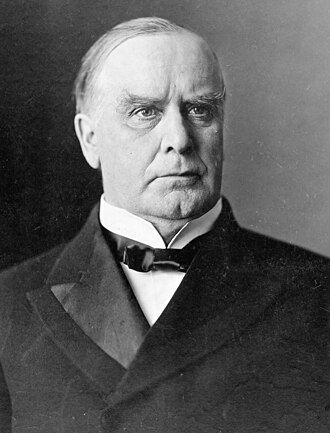
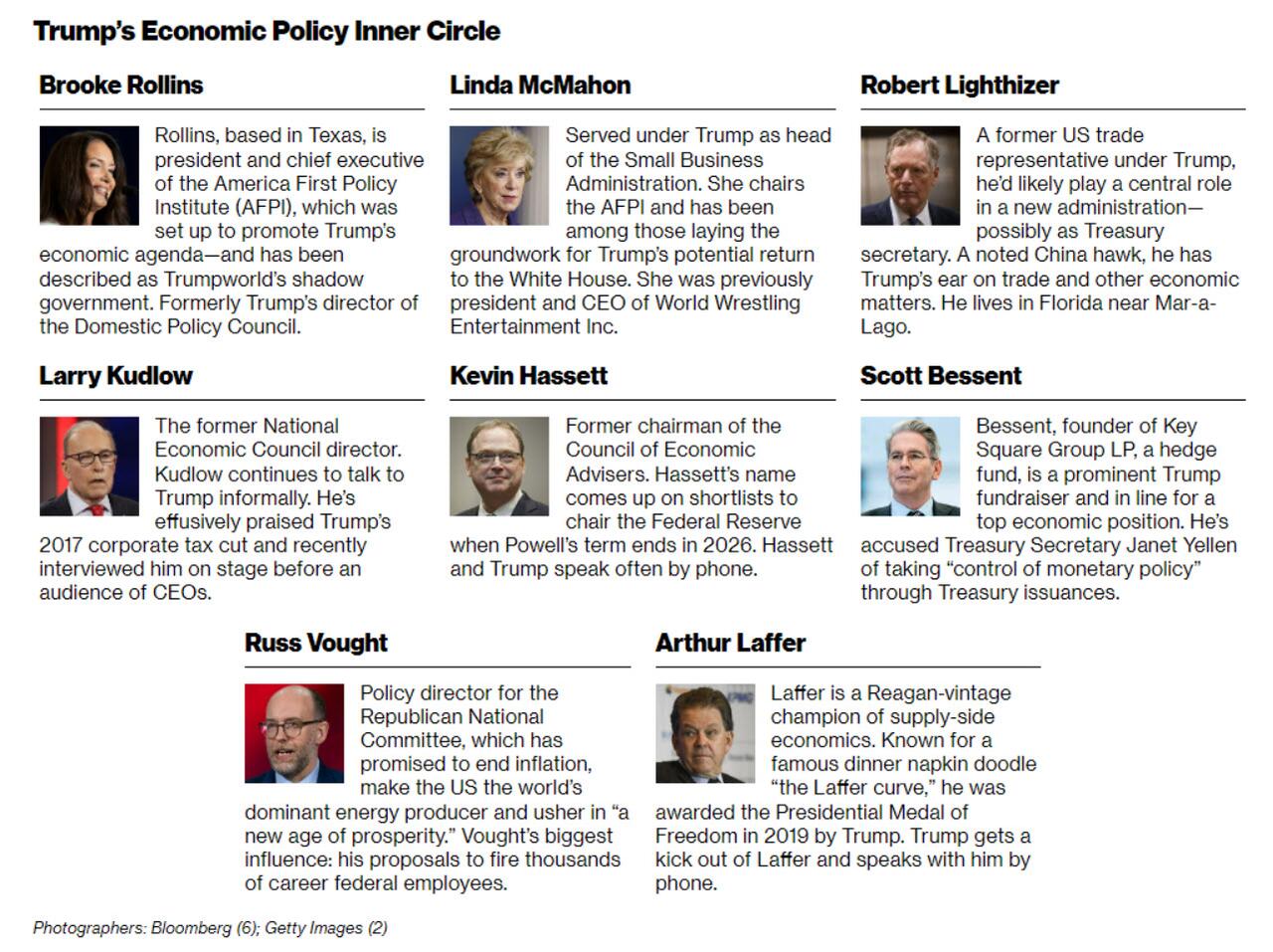
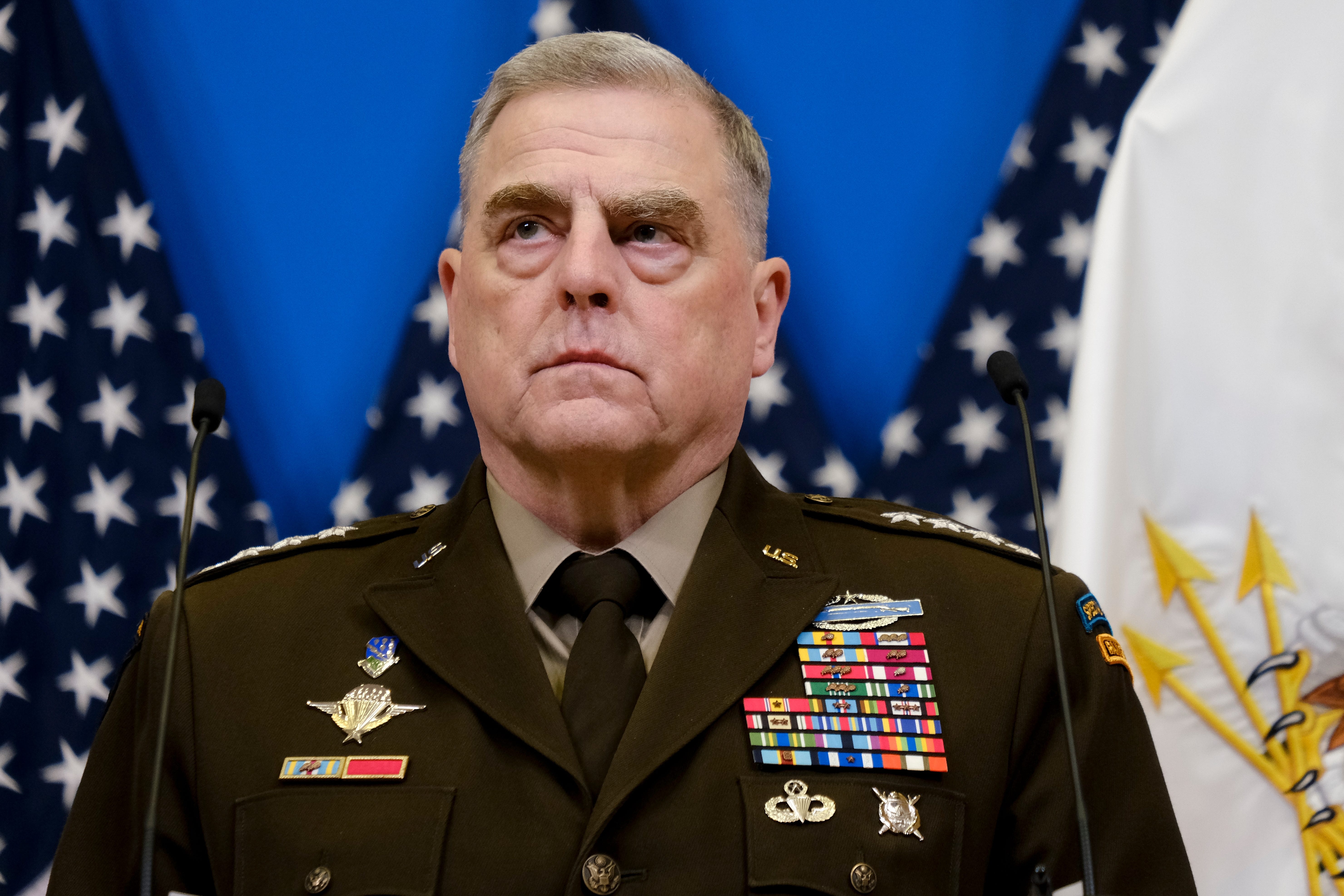
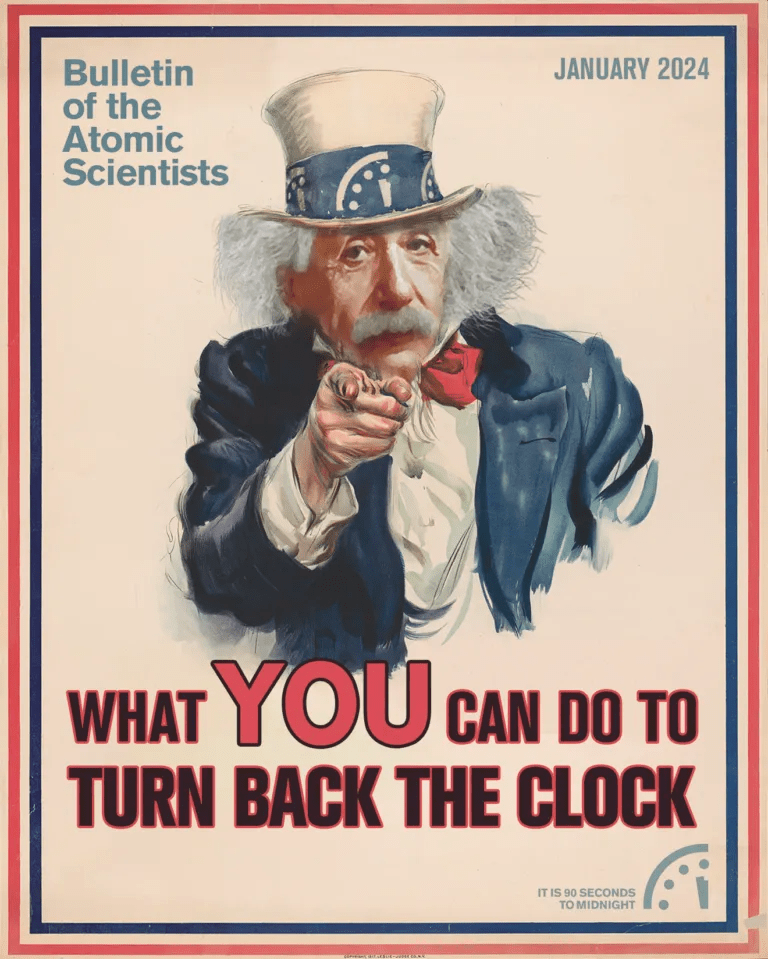



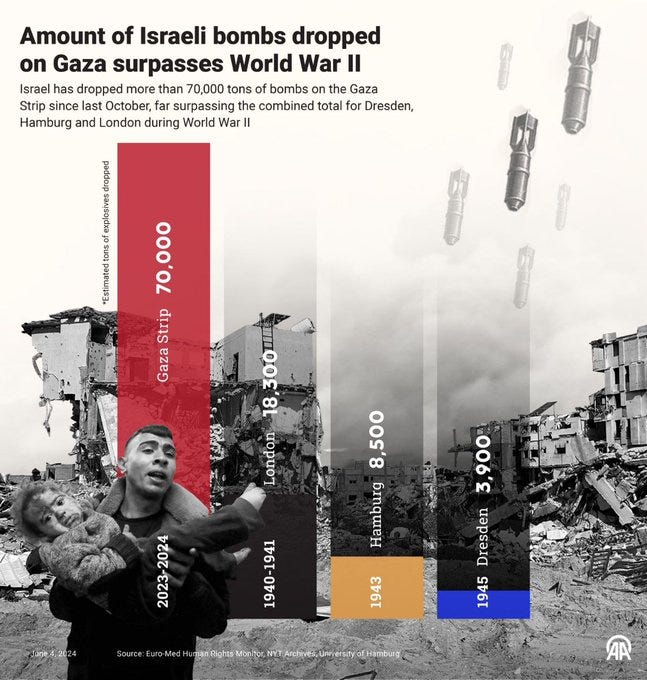

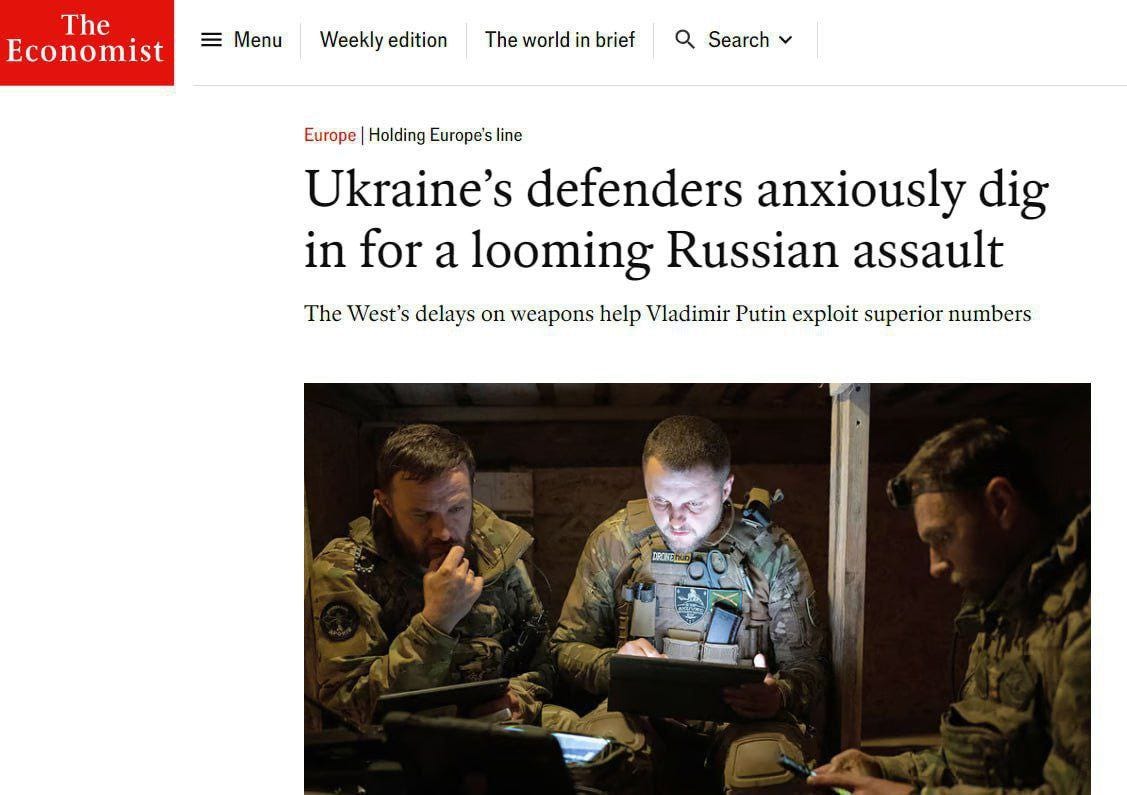
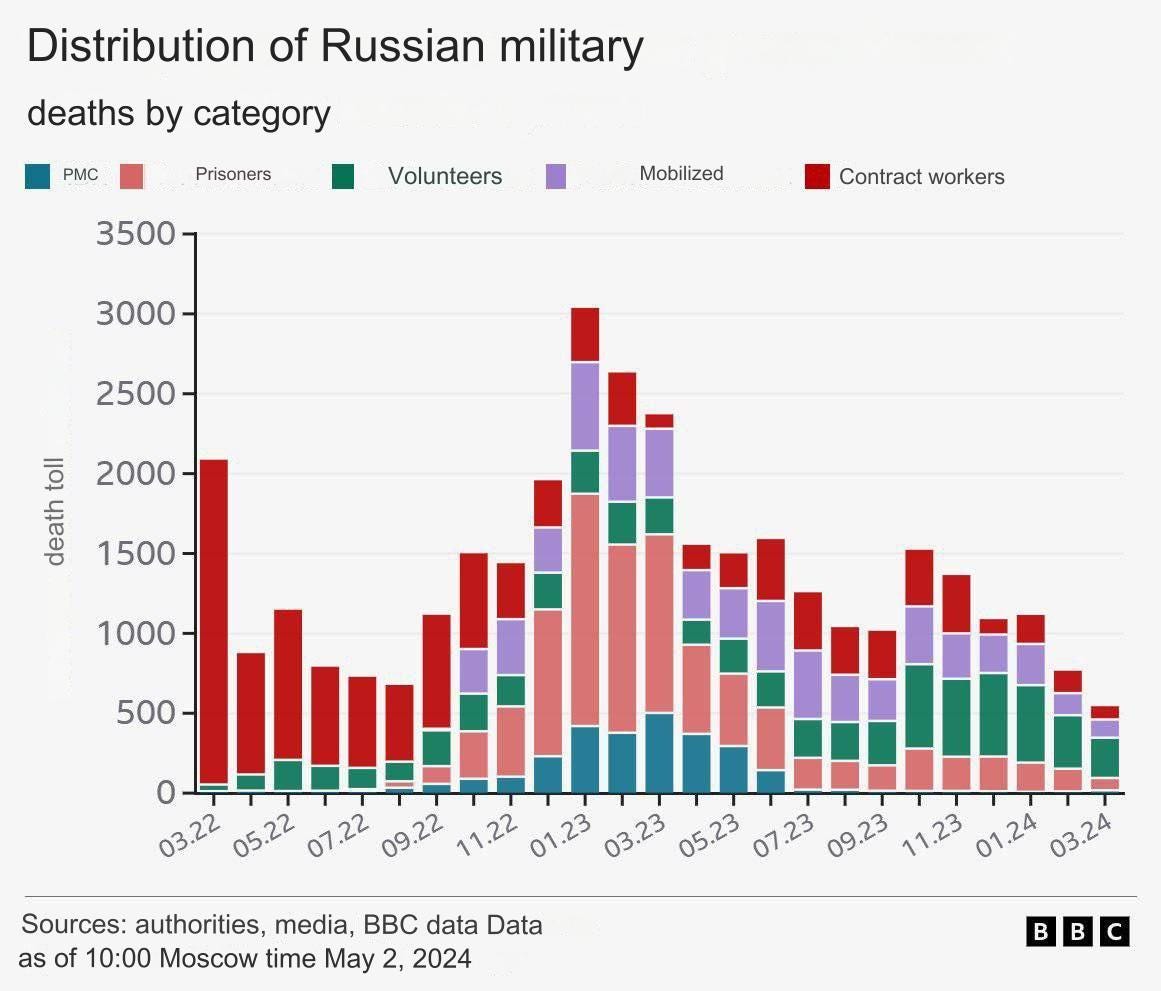
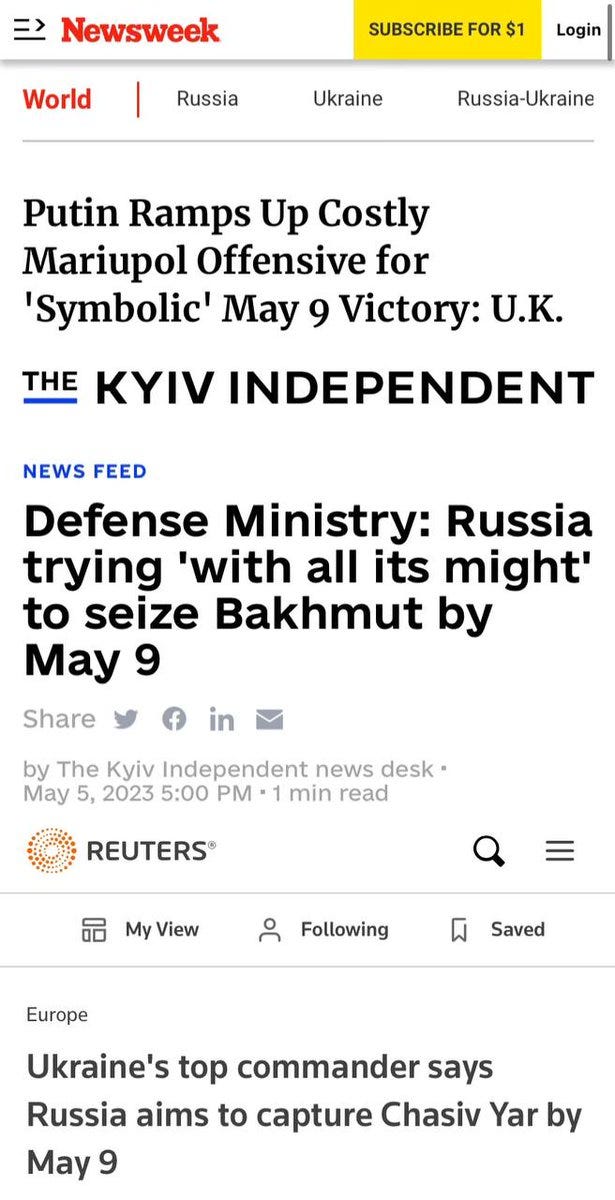
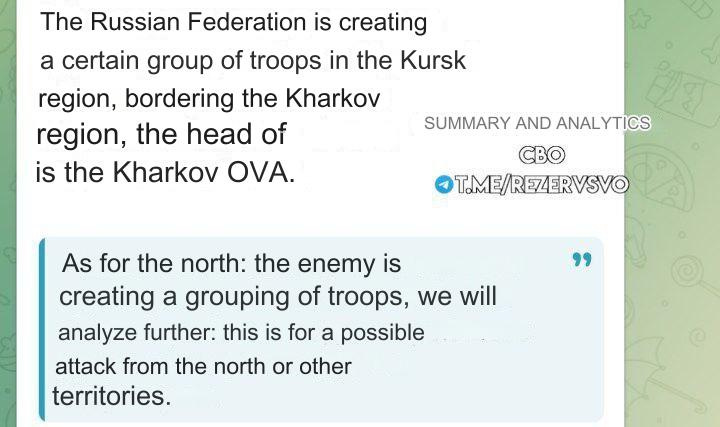
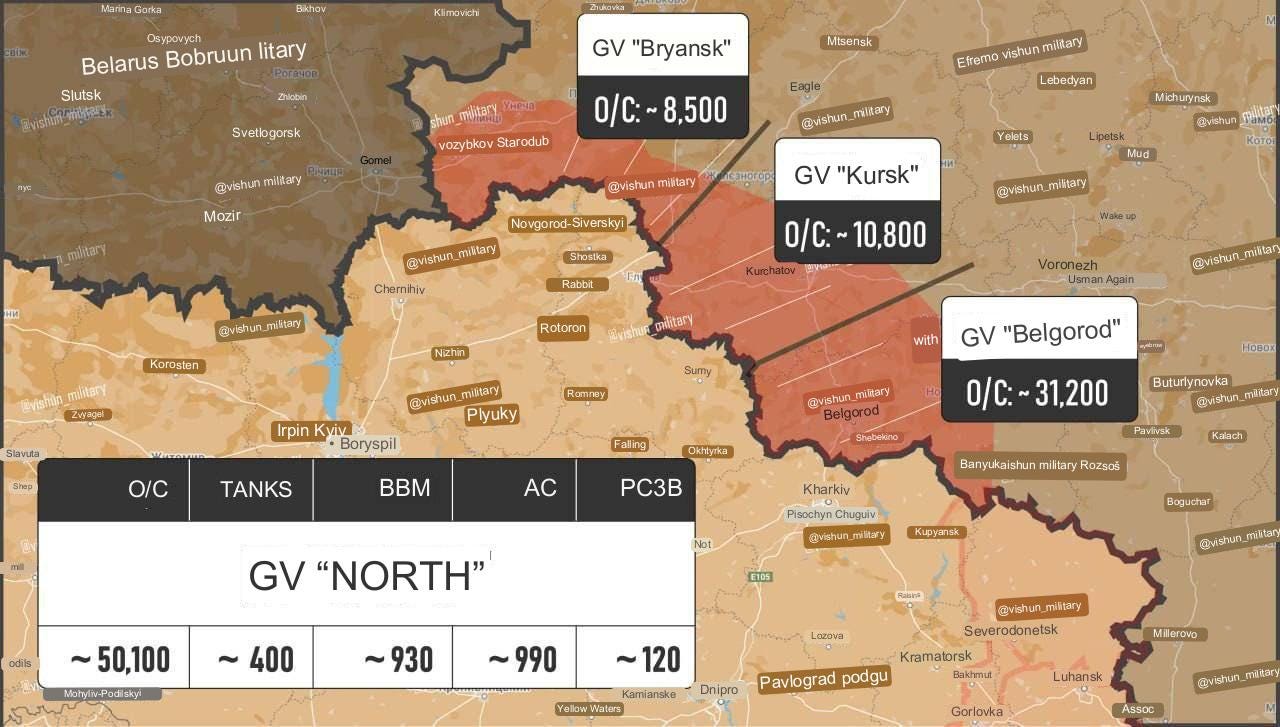


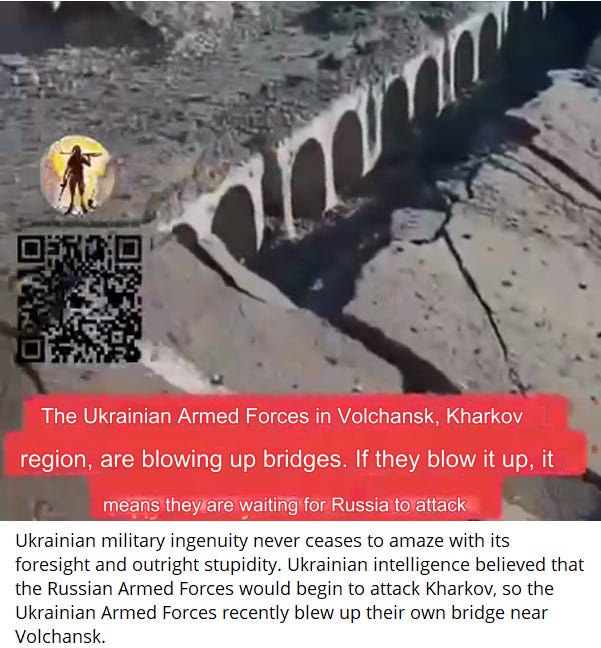
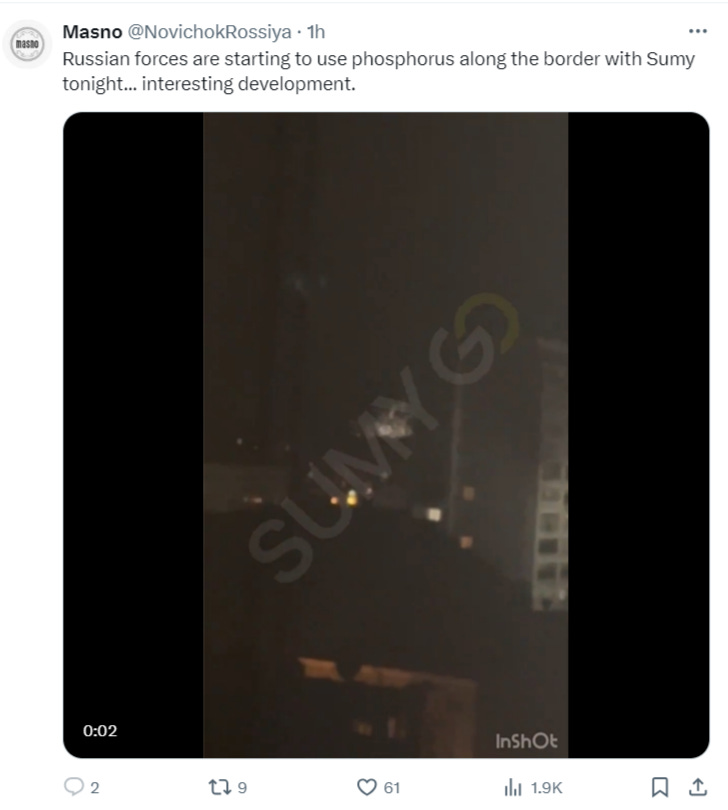
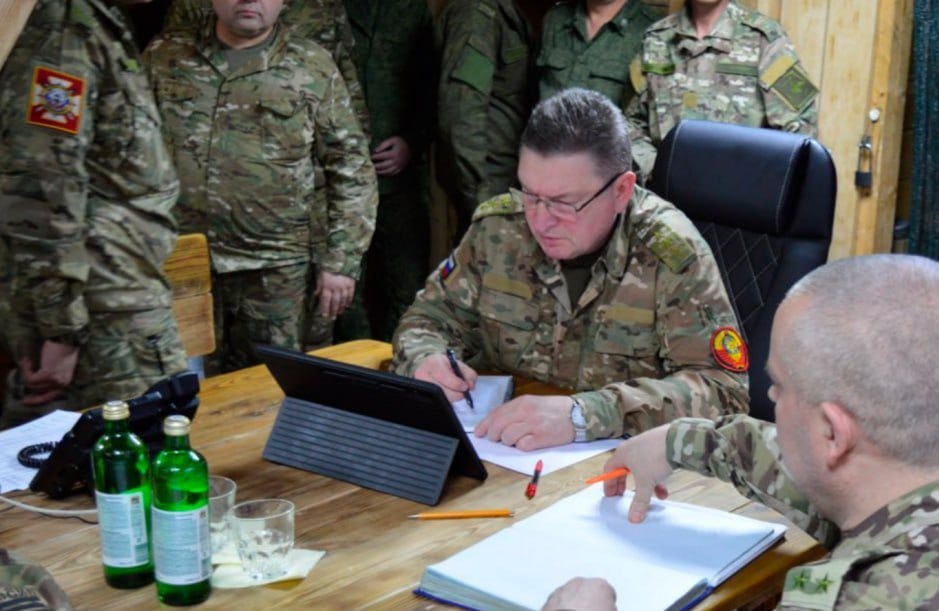
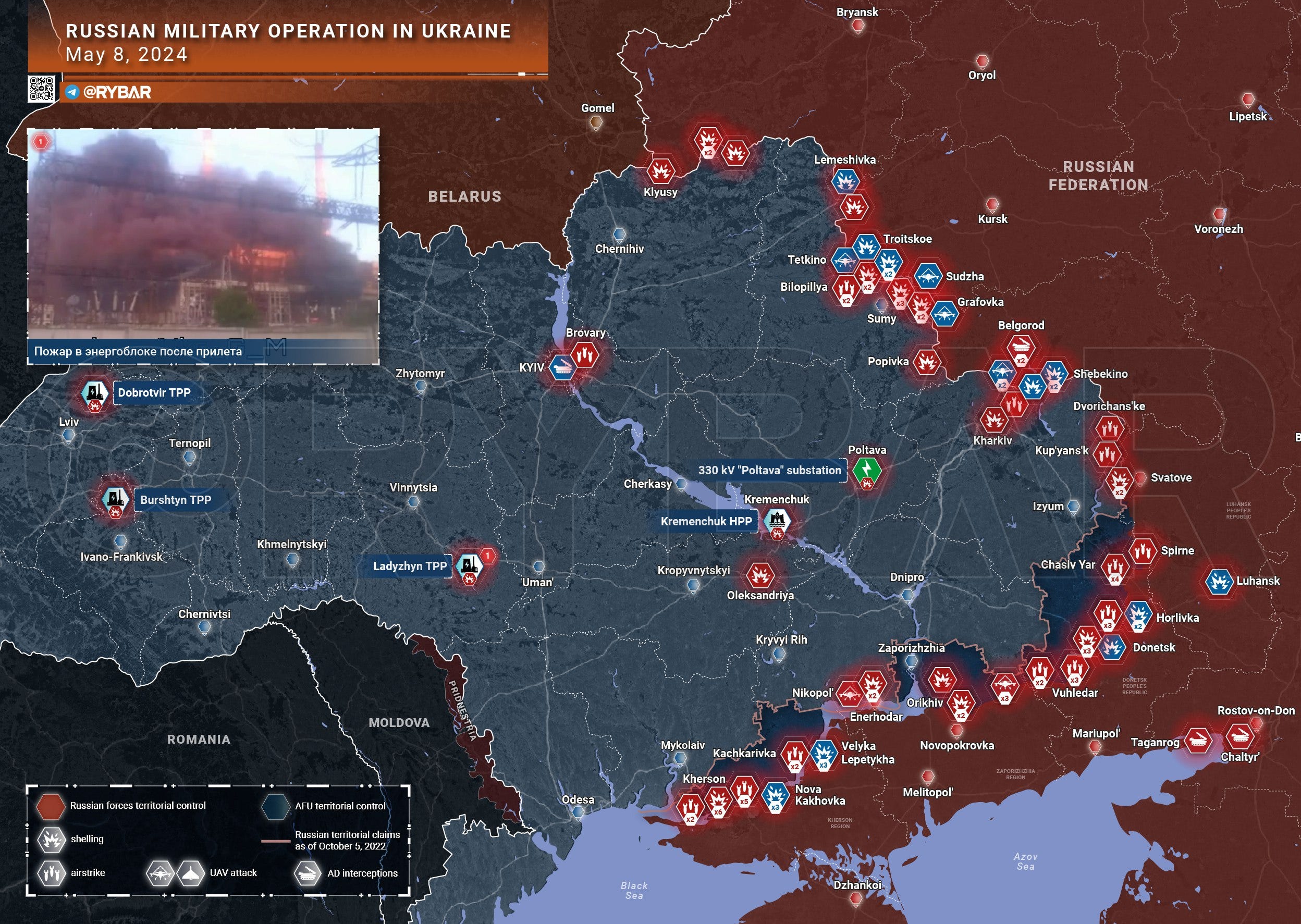

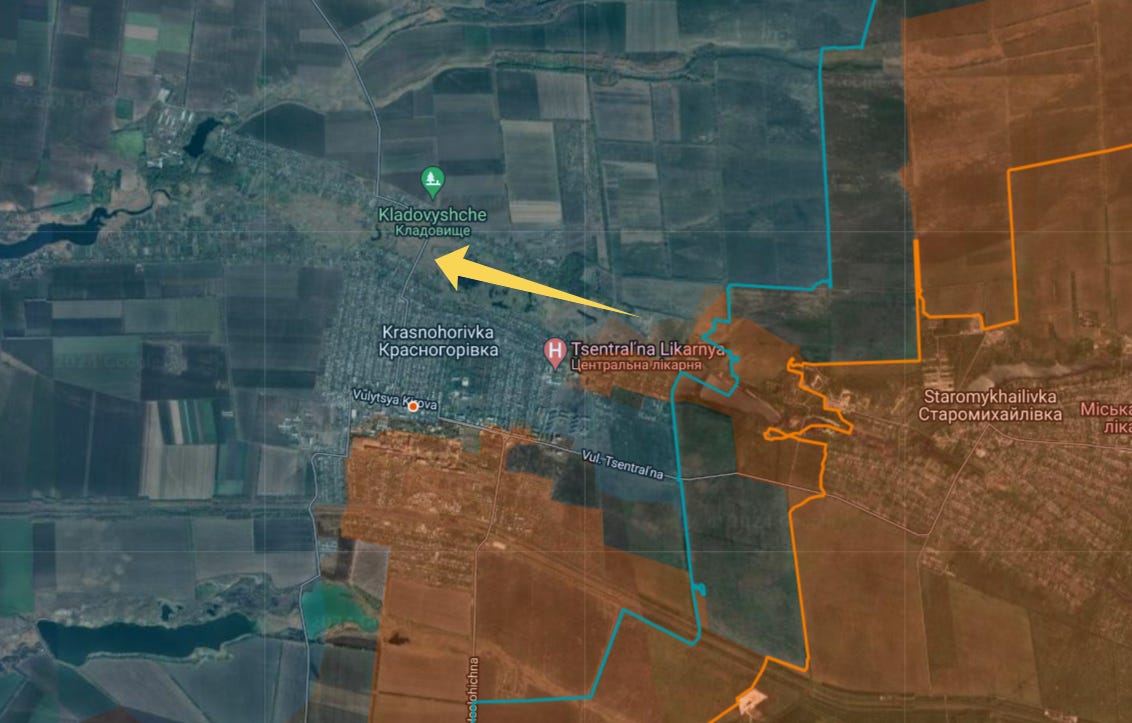
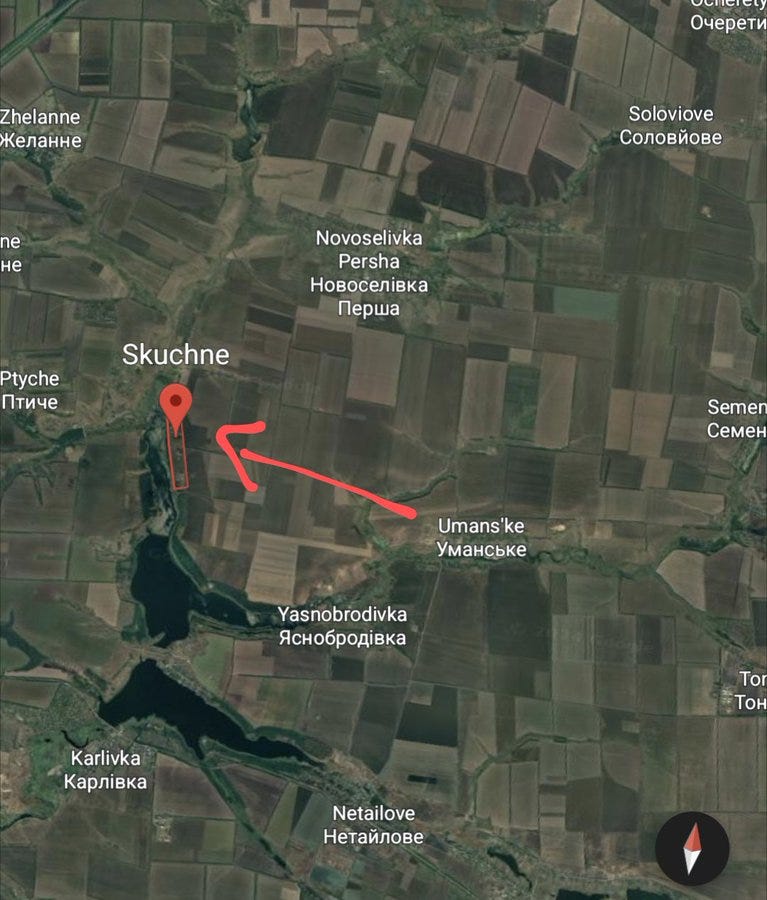


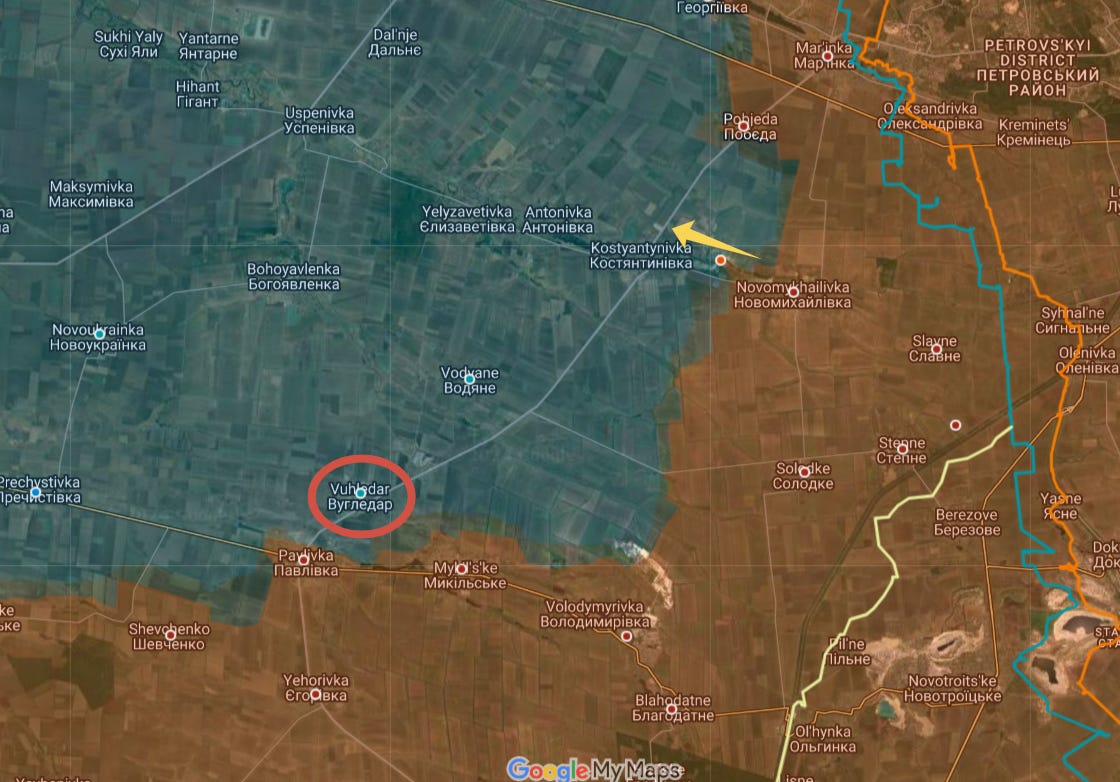
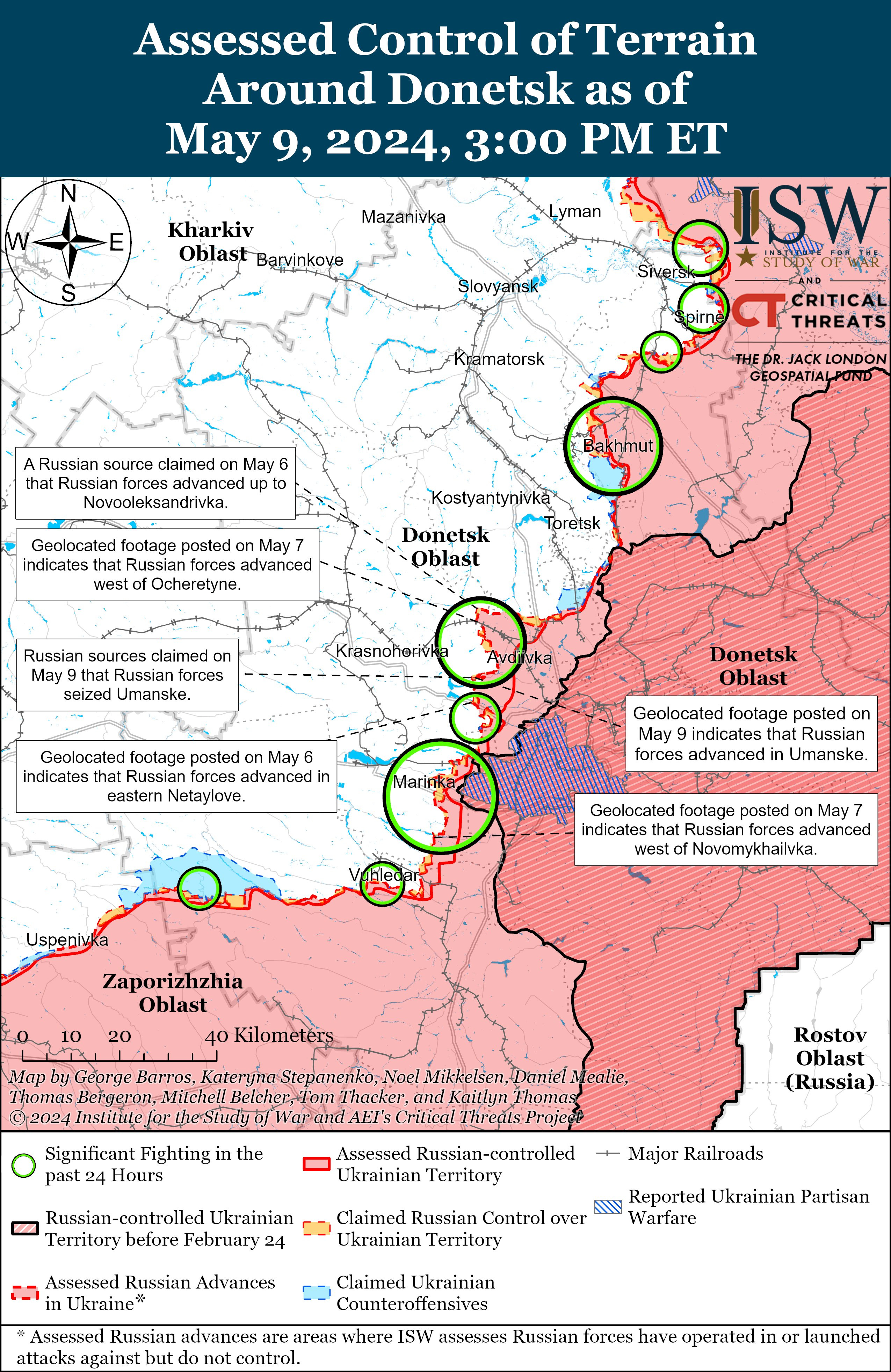
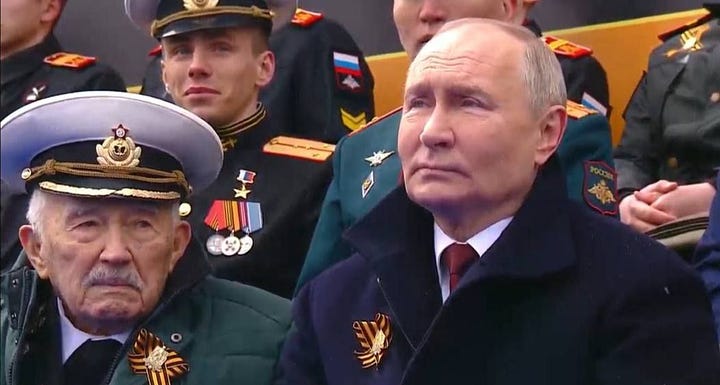
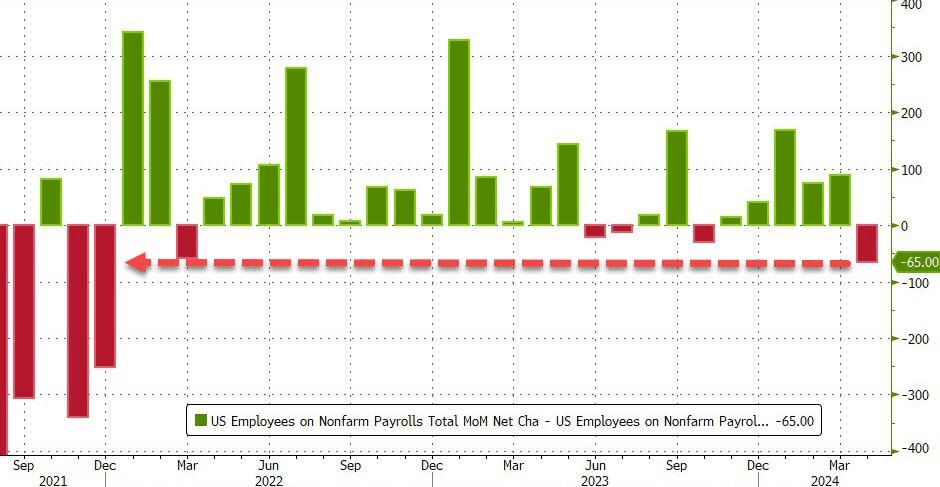
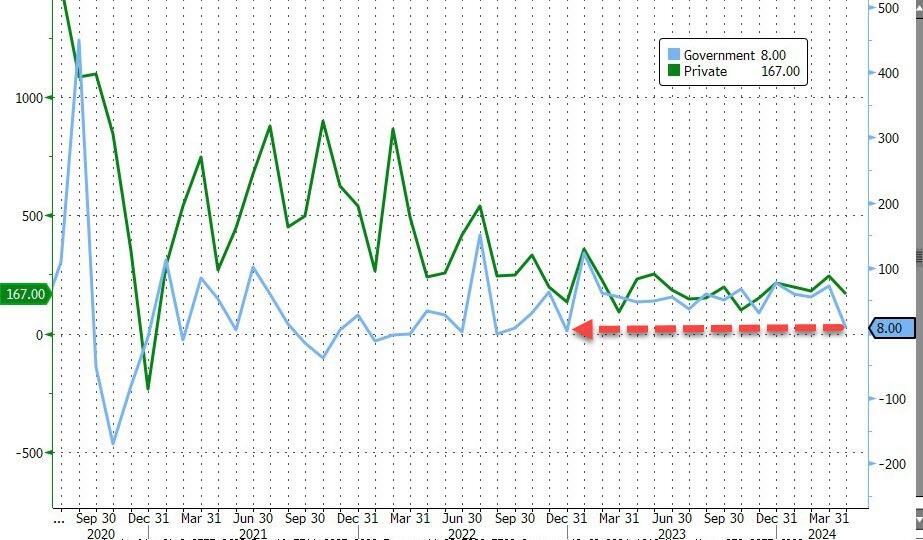

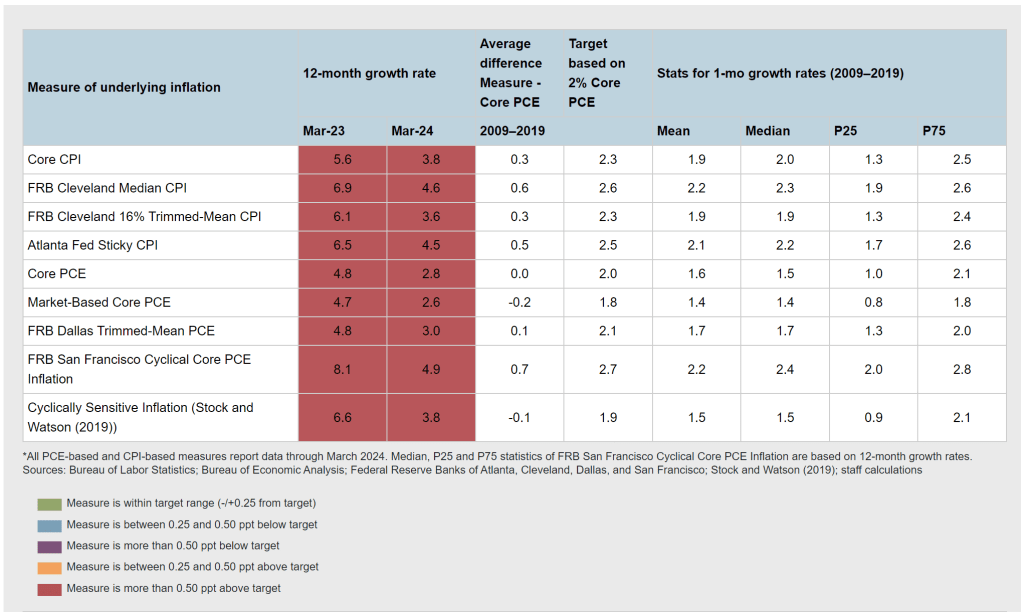
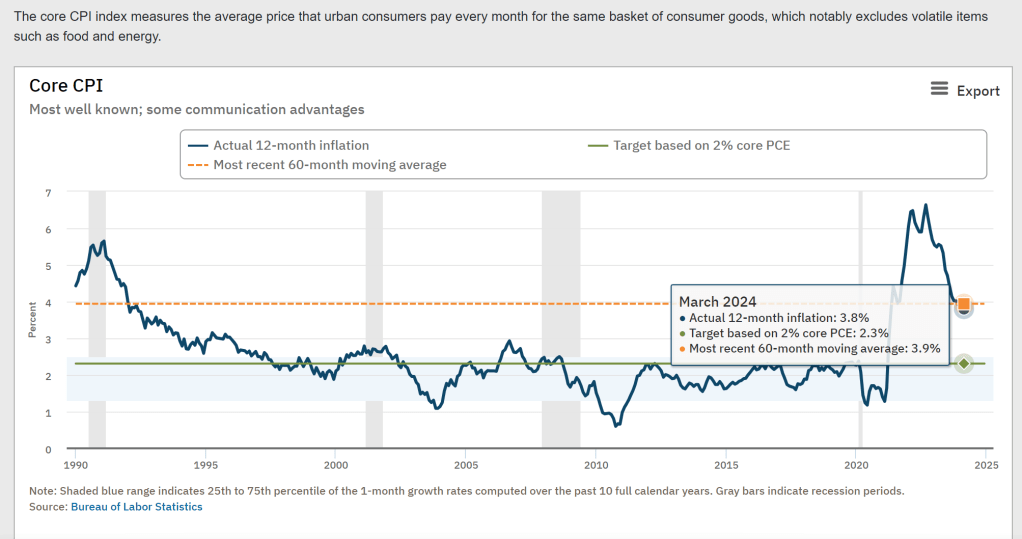
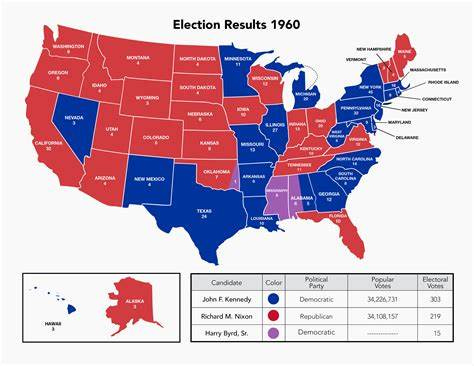
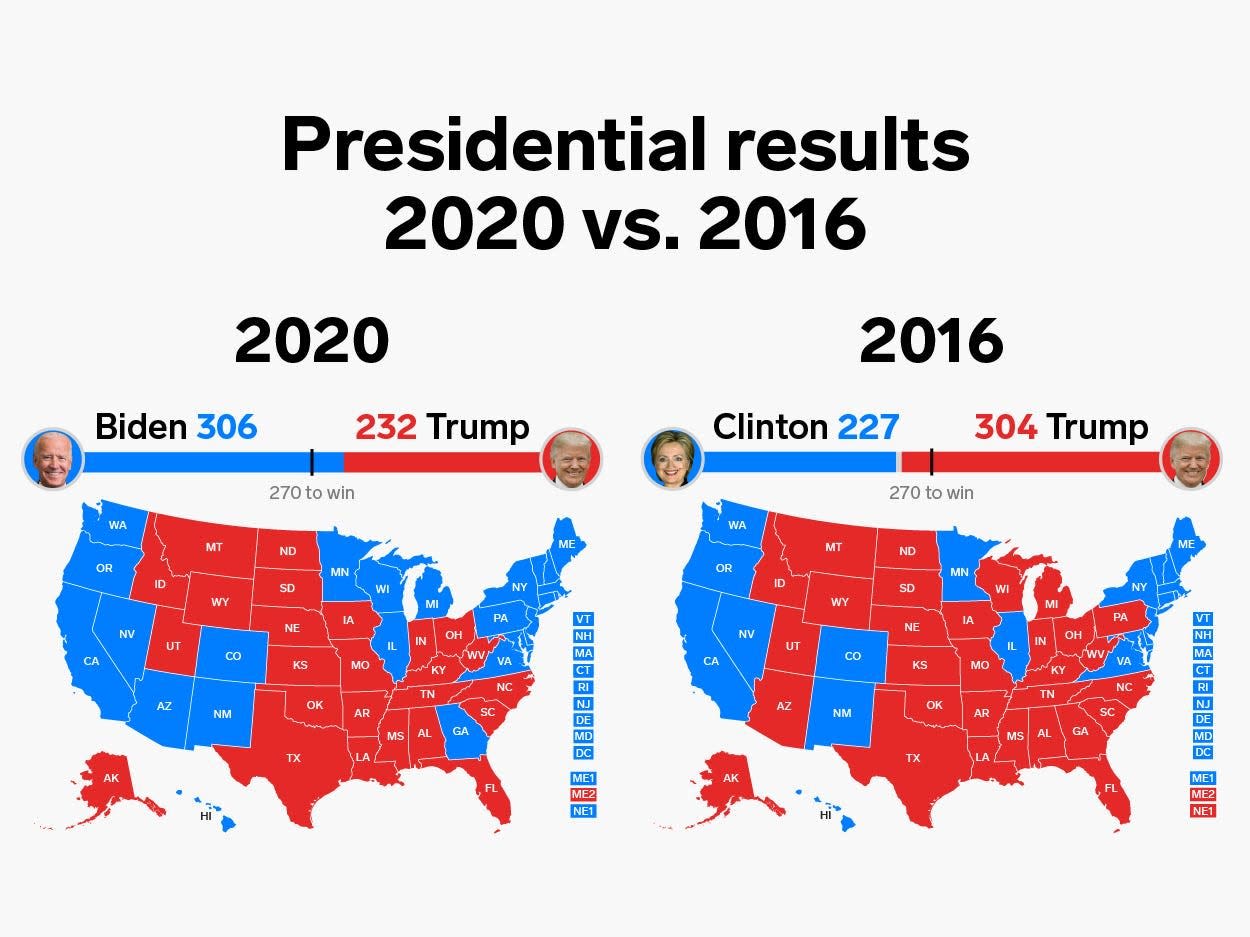
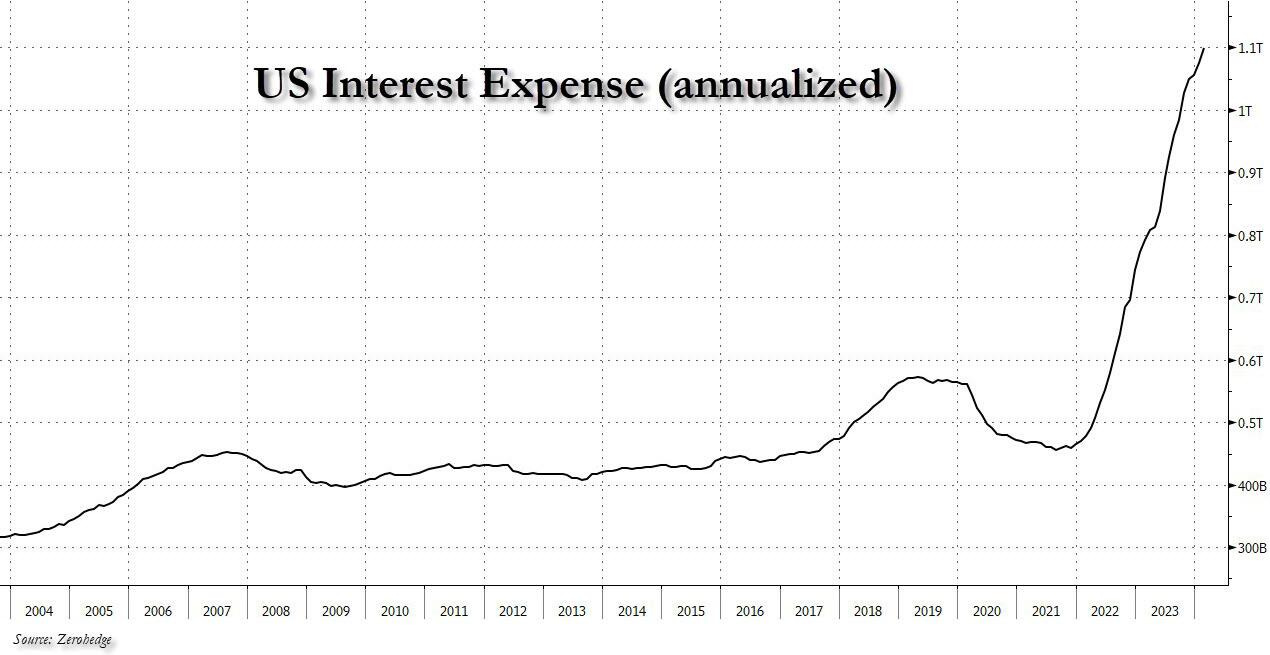
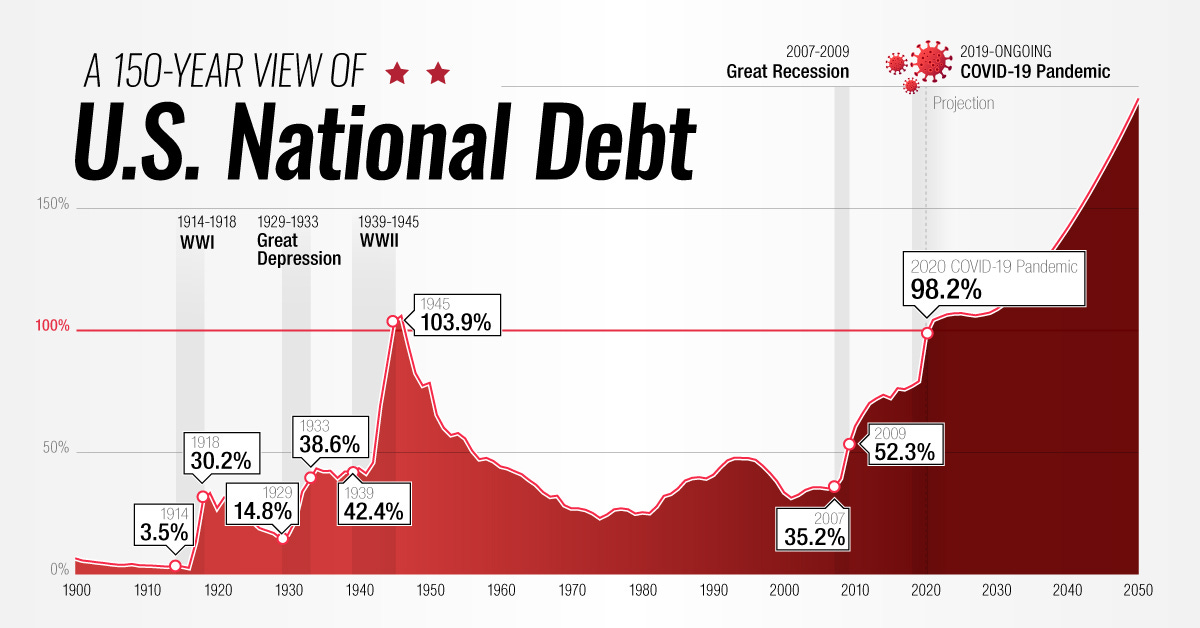
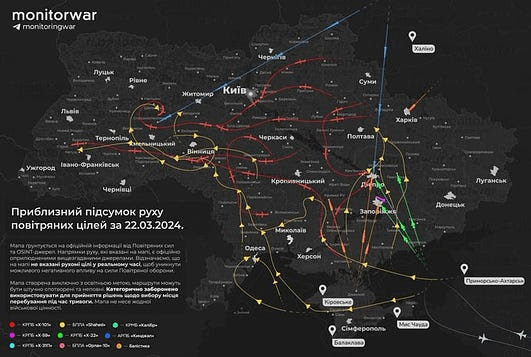


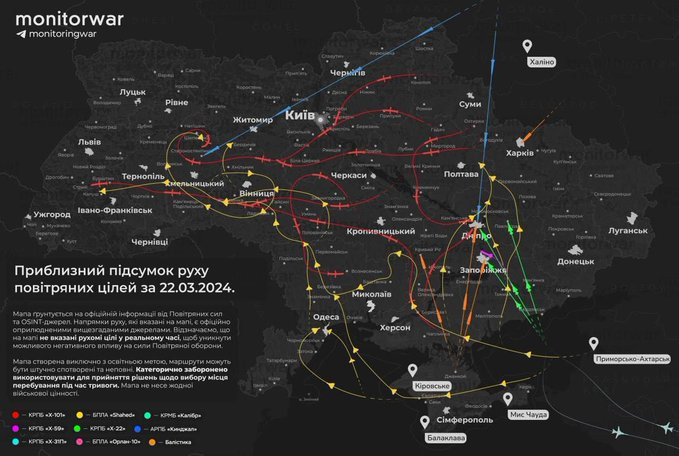
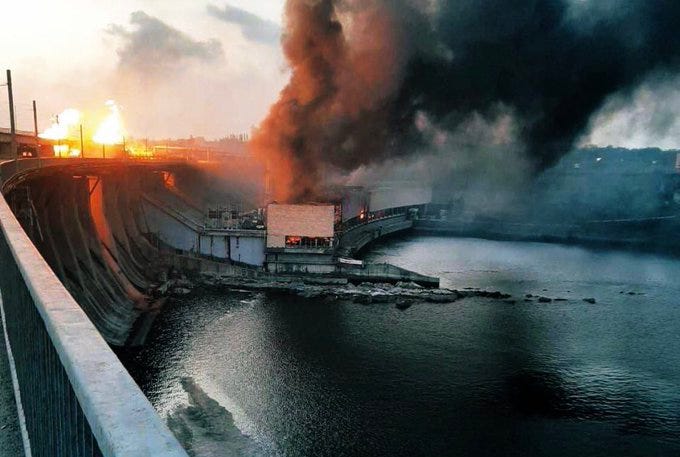
 Econophysics2020

