On 6 October, when the European Union (EU) agreed to impose a Russian oil price cap as part of a new package of sanctions against Moscow, 23 oil ministers from the OPEC+ group of oil-producing countries spoke out in favor of a sharp cut in their joint production quota.
Their collective decision to decrease output by about two million barrels of oil per day elicited strong reactions in the US in particular, and there was even talk of “declarations of war.” The EU feels duped, as the OPEC+ production cuts could drive up fuel prices and dampen their eight sanctions packages. Despite the narrative of the world edging toward a “post-oil era,” it seems there’s life in the old dog yet, as OPEC remains the talk of the town.
OPEC is as relevant as ever
OPEC and ten non-OPEC energy producers – including Russia – have been coordinating their production policy since December 2016. At the time, analysts gave this “OPEC-plus” format little chance of having an impact.
Back then, I recall the mockery of many who scorned the announcement in the press room of the OPEC General Secretariat in Vienna. But OPEC has weathered the storm of the global oil market in recent years, and has emerged as a key player.
Recall the exceptional situation in the spring of 2020 during the global COVID-19 pandemic lockdown, when futures trading for US oil grades were even quoted at negative prices at times, only to rise again to new heights in April 2021.
In contrast to the escapades in the oil market between 1973 and 1985, when there was little consensus among OPEC’s members and many had already written the organization’s obituary – today, former rivals such as Saudi Arabia and Russia are managing to converge their interests into powerful cards.
In those days, it was normal practice for Riyadh to take into account and execute Washington’s interests within OPEC: A single phone call from the US capital was enough. When the US oil company ARAMCO – which acted like an extended arm of the US in the kingdom – was nationalized by Saudi Arabia in the early 1970s as part of the sweeping nationalization trends around the world, compensation was promised to the US on a mere handshake.
The era of the “Seven Sisters,” a cartel of oil companies that divided up the oil market, came to an end then. However, for US policymakers – at least, psychologically – this era still persists. “It’s our oil,” is an expression I often hear uttered in Washington. Those voices were particularly loud during the illegal US-led 2003 invasion of Iraq.
Financial market versus the energy market
To really understand the core of the conflict in Ukraine – where a proxy war rages – one must break down the confrontation thus: The US and its European allies, who represent and back the global financial sector, are essentially engaged in a battle against the world’s energy sector.
In the past 22 years, we have seen how easy it is for governments to print paper currency. In just 2022, the US dollar has printed more paper money than in its combined history. Energy, on the other hand, cannot be printed. And therein lies a fundamental problem for Washington: The commodity sector can outbid the financial industry.
When I wrote my book “The Energy Poker” in 2005, I also dealt with the currency question, i.e. whether oil will be traded in US dollars in the long term. At the time, my interlocutors from the Arab OPEC countries unanimously said that the US dollar would not be changed. Yet, 17 years later, that view has devolved starkly.
Riyadh is warming up to the idea of trading oil in other currencies, as indicated this year in discussions with the Chinese to trade in yuan. The Saudis also continue to purchase Russian like other West Asian and Global South states, they have opted to ignore western sanctions on Moscow, and are increasingly preparing for the new international condition of multipolarity.
Washington, thus, no longer maintains its ability to exert absolute leverage on OPEC, which is now repositioning itself geopolitically as the enlarged OPEC+.
US reacts: Between defiance and anger
The OPEC+ ministerial meeting on 6 October was a clear foreshadowing of these new circumstances. The inherent tensions between two world views unfolded immediately in the post-meeting press room where a Saudi oil minister put the western news agency Reuters in its place, and where US journalists fiercely attacked OPEC for “holding the world economy hostage.”
The next day, a tough policy was grudgingly announced by the White House. The OPEC+ production cuts has Washington vacillating between sulking and seeking revenge – against the once-compliant Saudis, in particular. In a few weeks US midterm elections will be held, and the ramifications of spiking fuel prices will no doubt unfold at the ballot box.
For almost a year, President Joe Biden has been expanding US fuel supply via the Strategic Petroleum Reserve, but has been unable to calibrate either the price of oil or runaway inflation. The US Congress is threatening to use the so-called “NOPEC” bill – under the legal pretext of banning cartels – to seize the assets of OPEC governments.
The concept has been floating around for decades on Capitol Hill, but this time new irrational emotions may own the momentum. But hostile or threatening US actions are likely to backfire and even accelerate the geopolitical shifts taking place in West Asia, which has been edging out of the US orbit in recent years. Many Arab capitals have not forgotten the unseating of Egyptian President Hosni Mubarak in 2011, and how quickly the US abandoned its longterm ally.
“It’s the economy, stupid”
The price of oil is a seismograph of the world economy and also of global geopolitics. With the production cuts, OPEC+ is simply planning in anticipation of upcoming recessionary consequences. Moreover, some producing countries are failing to create new capacities in view of the investment gap that has persisted since 2014: a low price of oil simply cannot be sustained if there is no major capital investment in its sector.
The energy supply situation is expected to further worsen as of 5 December, when the oil embargo imposed by the EU comes into force.
The fundamental laws of supply and demand will ultimately determine the many distortions in the commodity markets. The anti-Russian sanctions created by the EU and other states (a total of 42 states) have disrupted global supply, and that has man-made supply and pricing consequences.
The two major global financial crises – real estate and banks in 2008, and the pandemic in 2020 – led to the excessive printing of paper money. Ironically, it was China that moved the paralyzed global economy out of the first crisis: Beijing stabilized the entire commodity market in 2009/10 by serving as the global locomotive and bringing the yuan into the trading schemes.
China, the well-oiled machine
Until the early 1990s, China satisfied its domestic oil consumption with domestic oil production, ranging from 3-4 million barrels per day. But fifteen years and a rapidly-expanded economy later, China had turned into the world’s number one oil importer.
This status reveals the crucial role of Beijing in the global oil market. While Saudi Arabia and Angola are important oil providers, Russia is the main gas supplier for China. As former Premier Wen Jiabao once aptly observed: “any small problem multiplied by 1.3 billion will end up being a very big problem.”
For the past 20 years, I have argued that pipelines and airlines were moving east not west. Arguably, one of Russia’s biggest mistakes was to invest in infrastructure and contracts for a promising but ungrateful European market. The cancellation of the South Stream project in 2014 should have served as a lesson to Moscow not to enlarge Nord Stream as of 2017. Times, nerves, and money could have been better spent on expanding the grid heading east.
It’s never been about Ukraine
Ever since the start of Ukraine’s military conflict in February 2022, we have essentially been watching the western-led financial industry waging its war against the eastern-dominated energy economy. The momentum will always be with the latter, because as stated above, in contrast to money, energy cannot be printed.
The oil and gas volumes needed to replace Russian energy sources cannot be found on the world market within a year. And no commodity is more global than oil. Any changes in the oil market will always influence the world’s economy.
“Oil makes and breaks nations.” It is a quote that epitomizes the importance of oil in shaping global and regional orders, as was the case in West Asia in the post-World War I era: First came the pipelines, then came the borders.
The late former Saudi oil minister Zaki Yamani once described oil alliances as being stronger than Catholic marriages. If that is the case, then the old US-Saudi marriage is currently undergoing estrangement and Russia has filed for divorce from Europe.
Friend George reminds us that in war games underestimating your opponent and ignoring reality are two sure ways to lose. Unfortunately for the EU crowd, the Ukraine war games are being played for keeps. Here’s a portion of the discussion from a recent missive from Friend George:
Remember when Tom Luongo talked about the war between the Fed and the ECB? But neither side admitted they were at war. No declaration of war. The UN’s Guterres had called upon the Fed to “pivot”, i.e., stop raising rates, and stop squeezing liquidity out of the markets, including in Europe. Great stuff: the UNO chief shows the flag! Now the EU’s foreign policy “chief”, Borrell (Here Comes The Open Revolt: A Reeling Europe Lashes Out At The Fed For “Bringing Us To A World Recession”)
the high representative of the 27-member EU bloc, lashed out all too publicly at the Fed when he said that central banks (across Europe where the recession will be far, far worse than in the US) are being forced to follow the Fed’s multiple rate rises to prevent their currencies from slumping against the dollar, and compared the US central bank’s influence to Germany’s dominance of European monetary policy before the creation of the euro.
As Luongo predicted. And he also predicted that the Fed would ignore the squeals of pain. As the Fed is doing. And Jamie Dimon is offering them no sympathy.
As zerohedge points out,
the last thing central banks need, when they are seeking to effect an extremely unpopular global economic recession that will leave millions without a job (think inflation is bad? just wait until you have no job and inflation is still bad) is growing discord among the ranks of the technocrats who have a simple script: no matter how unpopular or stupid a given policy is, you never, never, disagree in public, as this risks sparking popular outrage and toppling the entire house of cards at the hands of a suddenly very angry public.
So Lagarde at the ECB is going to be mighty pissed off at Borrell, but she agrees with him, because she has to agree, and she will not say so in public, because she can’t. Zerohedge continues,
Of course, back then the solution to the super deutsche mark was simple: pool all nations under a common currency umbrella, even if it means misery for the less productive, and less mercantilist countries (hence the never ending European sovereign debt crisis which remains in hibernation only thanks to the ECB’s bond buying). This time however, there is no simple solution taking advantage of gullible states, instead now that they’ve broken the seal of silence, the “leaders” of Europe admit to just how powerless they truly are when the custodian of the world’s reserve currency has to do what’s best only for itself, allies and friends be damned:
“Everybody has to follow, because otherwise their currency will be [devalued],” Borrell said to an audience of EU ambassadors, the FT reported. “Everybody is running to increase interest rates, this will bring us to a world recession.”
Admitting how powerless you are goes directly to the heart of the EU’s stance on Ukraine at just the time when the Russians are upping the ante and there is a frantic attempt in the US to cut loose from Zelensky to get talks with Russia. That does not at all mean that they know what they want to talk about or what they are willing to talk about. But they are forced to invent a new script. White House “National Security Spokesman” John Kirby: “This war has gone on for too long we are all interested in putting an end to it.”
…
… Two-front wars are rarely won. There are ways out of a “world recession”, but not for Europe, nor for defossilization, not for the Green New Deal, and not for Davos. Inflation, i.e., ECB money-printing, “Euro-bonds” and the like would, according to the delusions of the Euro-elite, enable them to spread the money around and…well, how did that genius; the German Economy Minister Habeck put it? ”Oh, if the fuel and electricity prices rise, it doesn’t mean a company goes bankrupt. It just means it stops producing and selling for a while.” Everyone laughed because they thought he was being stupid. No, not stupid, not at all: just print money and pretend your economy is not collapsing. Jerome Powell at the Fed has put the lid on that fantasy and he can get away with it because even the Biden Administration has to “fight inflation” or lose the mid-term elections and then another two years of revolutionary upheaval if he doesn’t.
Because if you’re the GOP, even of the GOPe variety, what price do you demand from the Dems for doing them the favor of getting rid of Zhou before 2024? As I’ve said before, these are uncharted waters. A GOP Congress is not obligated to confirm a new VP, and a GOP House can name a Speaker who isn’t a US Representative. It can, of course, impeach. That’s a lot of moving parts when you plug them into an unprecedentedly fluid political situation. George posits “two years of revolutionary upheaval”, and who’s to gainsay him?
So you see that we have moved beyond the ideology vs. reality game and into the game of pure power. Not everyone’s currencies are being devalued. The ruble is doing fine. But the dollar is rising against the Euro as a result of capital flight. For other countries, BRICS countries, SCO countries, the rising dollar means to forget about finances and get trade going on a dedollarized basis. Some are chasing interest rates, others are fleeing deindustrialization. It’s all quite easy and you would think some AI – Artificial Intelligence – algorithms would have informed the EU about such connections. That is how to lose war games: underestimate the adversary, underestimate the reality.
Compare and contrast. Zerohedge ran a piece this morning that quoted more of Borrell’s “surprisingly frank and plain-speaking address.” Not to say, amusing, in a black-humor sort of way.
Borrell begins by bemoaning the way the war on Russia has turned into a quagmire of unprecedented proportions for the EU. But he wants his listeners to believe that it was no one’s fault that everything has turned to sh*t. Nobody could have foreseen it, really! Although Vladimir Vladimirovich did warn them:
At this pace, the black swan will be the majority. It will not be white swans – all of them will be black – because one after the other, things have happened that had a very low probability of happening, nevertheless they happened, and they had a strong impact and certainly they happened.
The gambler’s lament. Not my fault. If only …
Then he indulges in a bit of reality, but ends up trying to deny it:
Our prosperity has been based on cheap energy coming from Russia.
…
And the access to the big China market, for exports and imports, for technological transfers, for investments, for having cheap goods.
And he blows a pathetic kiss to the Zhou outfit:
On the other hand, we delegated our security to the United States. While the cooperation with the Biden Administration is excellent, and the transatlantic relationship has never been as good as it is today – [including] our cooperation with the United States and my friend Tony [Anthony] Blinken [US Secretary of State]: we are in a fantastic relationship and cooperating a lot; who knows what will happen two years from now, or even in November?
What would have happened if, instead of [Joe] Biden, it would have been [Donald] Trump or someone like him in the White House? What would have been the answer of the United States to the war in Ukraine? What would have been our answer in a different situation?
In other words, we chose war, everything turned to sh*t, but the war is still great—and, dang, what a great relationship I’ve got with Tony. As we used to say in my youth, that and a quarter will get you a bus ride.
He admits that the world he just described is no longer there. No cheap Russian energy, no China market, and the US security blanket … well, maybe we have to start contributing more. That’ll be a trick, won’t it? Rebuild the EU militaries into something that wouldn’t be a laughing stock to the Russians—while deindustrializing and paying through the nose for super expensive non-Russian energy? Dream on.
Does Borrell have a plan, what to do while waiting for this fantasy to become reality? He does, sorta, and here’s how Zerohedge summarizes it:
So, the EU is planning to jawbone/propagandize its way out of dependence on China for its economic growth (internal cross-border trade?), Russia for cheap energy (by becoming more reliant on US?), and US for security (Macron’s European army rejuvenated?).
As Borrell noted at the very start of his speech: this is a perfect storm indeed… and winter is coming
It’s almost beyond belief, but here are Borrell’s actual words:
Communication is our battlefield: we fight in communication.
We provide you with materials and I have the feeling that you do not transmit the message strongly enough.
I need my delegations to step up on social media, on TV, in debates.
Retweet our messages, our [European] External Action Service materials. Certainly, my blog, which is the everyday “consigna”…
I need you to be much more engaged in this battle of narratives. It is not something secondary. It is not just winning the wars by sending tanks, missiles, and troops. It is a big battle: who is going to win the spirits and the souls of people?
…
Our fight is to try to explain that democracy, freedom, political freedom is not something that can be exchanged by economic prosperity or social cohesion. Both things have to go together.
Otherwise, our model will perish, will not be able to survive in this world.
Again. Just unbelievable.
*********************************
The US Security State and Davos (UK and EU) v. Russia and the Southern Tier while the US Fed takes aim at Davos.
While the rest of us caught in the cross-fire cheer on OPEC+.
There is a growing feeling in markets that a financial crisis of some sort is now on the cards. Credit Suisse’s very public struggles to refinance itself is proving to be a wake-up call for markets, alerting investors to the parlous state of global banking.
This article identifies the principal elements leading us into a global financial crisis. Behind it all is the threat from a new trend of rising interest rates, and the natural desire of commercial banks everywhere to reduce their exposure to falling financial asset values both on their balance sheets and held as loan collateral. And there are specific problems areas, which we can identify:
It should be noted that the phenomenal growth of OTC derivatives and regulated futures has been against a background of generally declining interest rates since the mid-eighties. That trend is now reversing, so we must expect the $600 trillion of global OTC derivatives and a further $100 trillion of futures to contract as banks reduce their derivative exposure. In the last two weeks, we have seen the consequences for the gilt market in London, warning us of other problem areas to come.
Commercial banks are over-leveraged, with notable weak spots in the Eurozone, Japan, and the UK. It will be something of a miracle if banks in these jurisdictions manage to survive contracting bank credit and derivative blow-ups. If they are not prevented, even the better capitalised American banks might not be safe.
Central banks are mandated to rescue the financial system in troubled times. However, we find that the ECB and its entire euro system of national central banks, the Bank of Japan, and the US Fed are all deeply in negative equity and in no condition to underwrite the financial system in this rising interest rate environment.
The Credit Suisse wake-up call
In the last fortnight, it has become obvious that Credit Suisse, one of Switzerland’s two major banking institutions, faces a radical restructuring. That’s probably a polite way of saying the bank needs rescuing.
In the hierarchy of Swiss banking, Credit Suisse used to be regarded as very conservative. The tables have now turned. Banks make bad decisions, and these can afflict any bank. Credit Suisse has perhaps been a little unfortunate, with the blow-up of Archegos, and Greensill Capital being very public errors. But surely the most egregious sin from a reputational point of view was a spying scandal, where the bank spied on its own employees. All the regulatory fines, universally regarded as a cost of business by bank executives, were weathered. But it was the spying scandal which forced the bank’s highly regarded CEO, Tidjane Thiam, to resign.
We must wish Credit Suisse’s hapless employees well in a period of high uncertainty for them. But this bank, one of thirty global systemically important banks (G-SIBs) is not alone in its difficulties. The only G-SIBs whose share capitalisation is greater than their balance sheet equity are North American: the two major Canadian banks, Morgan Stanley, and JPMorgan. The full list is shown in Table 1 below, ranked by price to book in the second to last column. [The French Bank, Groupe BPCE’s shares are unlisted so omitted from the table]
Before a sharp rally in the share price last week, Credit Suisse’s price to book stood at 24%, and Deutsche Bank’s stood at an equally lowly 23.5%. And as can be seen from the table, seventeen out of twenty-nine G-SIBs have price-to-book ratios of under 50%.
Normally, the opportunity to buy shares at book value or less is seen by value investors as a strategy for identifying undervalued investments. But when a whole sector is afflicted this way, the message is different. In the market valuations for these banks, their share prices signal a significant risk of failure, which is particularly acute in the European and UK majors, and to a similar but lesser extent in the three Japanese G-SIBs.
As a whole, G-SIBs have been valued in markets for the likelihood of systemic failure for some time. Despite what the markets have been signalling, these banks have survived, though as we have seen in the case of Deutsche Bank it has been a bumpy road for some. Regulations to improve balance sheet liquidity, mainly in the form of Basel 3, have been introduced in phases since the Lehman failure, and still price-to-book discounts have not recovered materially.
These depressed market valuations have made it impossible for the weaker G-SIBs to consider increasing their Tier 1 equity bases because of the dilutive effect on existing shareholders. Seeming to believe that their shares are undervalued, some banks have even been buying in discounted shares, reducing their capital and increasing balance sheet leverage even more. There is little doubt that in a very low interest rate environment some bankers reckoned this was the right thing to do.
But that has now changed. With interest rates now rising rapidly, over-leveraged balance sheets need to be urgently wound down to protect shareholders. And even bankers who have been so captured by the regulators that they regard their shareholders as a secondary priority will realise that their confrères in other banks will be selling down financial assets, liquidating financial collateral where possible, and withdrawing loan and overdraft facilities from non-financial businesses when they can.
It is all very well to complacently think that complying with Basel 3 liquidity provisions is a job well done. But if you ignore balance sheet leverage for your shareholders at a time of rising prices and therefore interest rates, they will almost certainly be wiped out. There can be no doubt that the change from an environment where price-to-book discounts are an irritation to bank executives to really mattering is bound up in a new, rising interest rate environment.
Rising interest rates are also a sea-change for derivatives, and particularly for the banks exposed to them. Interest rates swaps, of which the Bank for International Settlements reckoned there were $8.8 trillion equivalent in June 2021, have been deployed by pension funds, insurance companies, hedge funds and banks lending fixed-rate mortgages. They are turning out to be a financial instrument of mass destruction.
An interest rate swap is an arrangement between two counterparties who agree to exchange payments on a defined notional amount for a fixed time period. The notional amount is not exchanged, but interest rates on it are, one being at a predefined fixed rate such as a spread over a government bond yield with a maturity matching the duration of the swap agreement, while the other floats based on LIBOR or a similar yardstick.
Swaps can be agreed for fixed terms of up to fifteen years. When the yield curve is positive, a pension fund, for example, can obtain a decent income uplift by taking the fixed interest leg and paying the floating rate. And because the deal is based on notional capital, which is never put up, swaps can be leveraged significantly. The other party will be active in wholesale money markets, securing a small spread over floating rate payments received from the pension fund. Both counterparties expect to benefit from the deal, because their calculations of the net present values of the cash flows, which involves a degree of judgement, will not be too dissimilar when the deal is agreed.
The risk to the pension fund comes from rising bond yields. Despite the rise in bond yields, it still takes the fixed rate agreed at the outset, yet it is committed to paying a higher floating rate. In the UK, 3-month sterling LIBOR rose from 0.107% on 1 December 2021, to 3.94% yesterday. In a five-year swap, the fixed rate taken by the pension fund would be based on the 5-year gilt yield, which on 1 December last was 0.65%. With a spread of perhaps 0.25% over that, the pension fund would be taking 0.9% and paying 0.107%, for a turn of 0.793%. Today, the pension fund would still be taking 0.9%, but paying out 3.94%. With rising interest rates, even without leverage it is a disaster for the pension fund. But this is not the only trap they have fallen into.
In the UK, pension fund exposure to repurchase agreements (repos) led to margin calls and a sudden liquidation of gilt collateral less a fortnight ago. A number of specialist firms offered liability driven investment schemes (LDIs), targeted at final salary pension schemes. Using repos, LDI schemes were able to use low funding rates to finance long gilt positions, geared by up to seven times. When LDIs blew up due to falling collateral values, the gilt market collapsed as pension funds became forced sellers, and the Bank of England dramatically reversed its stillborn quantitative tightening policy. That saga has further to run, and the problem is not restricted to UK pension funds, as we shall see. A fuller description of how these repo schemes blew up is described later in this article.
The LDI episode is a warning of the consequences of a change in interest rate trends for derivatives in the widest sense. We should not forget that the evolution of derivatives has been in large measure due to the post-1980 trend of declining interest rates. With commodity, producer, and consumer prices now all rising fuelled by currency debasement, that trend has now come to an end. And with collateral values falling instead of rising, it is not just a case of dealers adjusting their outlook. There are bound to be more detonations in the $600 trillion OTC global derivatives market.
Central to these derivatives are banks and shadow banks. Credit Suisse has been a market maker in credit default swaps, leveraged loans, and other derivative-based activities. The bank deals in a wide range of swaps, interest rate and foreign exchange options, forex forwards and futures.[i] The replacement values of its OTC derivatives are shown in the 2021 accounts at CHF125.6 billion, which reduces with netting agreements to CHF25.6 billion. Small beer, it might seem. But the notional amounts, being the principal amounts upon which these derivative replacement values are based are far, far larger. The leverage between replacement values and notional amounts means that the bank’s exposure to rising interest rates could rapidly drive it into insolvency.
At this juncture, we cannot know if this is at the root of the bank’s troubles. And this article is not intended to be a criticism of Credit Suisse relative to its peers. The problems the bank faces are reflected in the entire G-SIB system with other banks having far larger derivative exposures. The point is that as a whole, participants in the derivatives market are unprepared for the conditions which led to its phenomenal growth at $600 trillion equivalent, which is now being reversed by a change in the primary trend for interest rates.
Central bank balance sheets and bailing commercial banks
In the event of commercial banking failures, it is generally expected that central banks will ensure depositors are protected, and that the financial system’s survival is guaranteed. But given the sheer size of derivative markets and the likely consequences of counterparty failures, it will be an enormous task requiring global cooperation and the abandonment of the bail-in procedures agreed by G20 member nations in the wake of the Lehman crisis. There will be no question but that failing banks must continue to trade with their bond holders’ funds remaining intact. If not, then all bank bonds are likely to collapse in value because in a bail-in bond holders will prefer the sanctity of deposits guaranteed by the state. And any attempt to limit deposit protection to smaller depositors would be disastrous.
Because the Great Unwind is so sudden, it promises to become a far larger crisis than anything seen before. Unfortunately, due to quantitative easing the central banks themselves also have bond losses to contend with, wiping out the values of their balance sheet equity many times over. That a currency-issuing central bank has net liabilities on its balance sheet would not normally matter, because it can always expand credit to finance itself. But we are now envisaging central banks with substantial and growing net liabilities being required to guarantee entire commercial banking networks.
The burden of bail outs will undoubtedly lead to new rounds of currency debasement directly and indirectly, as vain attempts are made to support financial asset values and prevent an economic catastrophe. Accelerating currency debasement by the issuing authorities will almost certainly undermine public faith in fiat currencies, leading to their entire collapse, unless a way can be found to stabilise them.
The euro system has specific problems
In theory, recapitalising a central bank is a simple matter. The bank makes a loan to its shareholder, typically the government, which instead of a balancing deposit it books as equity in its liabilities. But when a central bank is not answerable to any government, that route cannot be taken.
This is a problem for the ECB, whose shareholders are the national central banks of the member states. Unfortunately, they are also in need of recapitalisation. Table 2 below summarises the likely losses suffered this year so far on their bond holdings under the assumptions in the notes.
Other than the four national central banks for which bond prices are unavailable, we can see that all NCBs and the ECB itself have been entrapped by rising bond yields. Even the mighty Bundesbank appears to have losses on its bonds forty-four times its shareholders’ capital since 1 January. Bearing in mind that the Eurozone’s consumer price index is now rising at about 10% and considerably higher in some member states, 5-year maturity government bond yields between 2% (Germany) and 4% (Italy) can be expected to rise considerably from here. No amount of mollification, that central banks can never go bust, will cover up this problem.
Imagine the legislative hurdles. The Bundesbank, let’s say, presents a case to the Bundestag to pass enabling legislation to permit it to recapitalise itself and to subscribe to more capital in the ECB on the basis of its share of the ECB’s equity to restore it to solvency. One can imagine finance ministers being persuaded that there is no alternative to the proposal, but then it will be noticed that the Bundesbank is owed over €1.2 trillion through the TARGET2 system. Surely, it will almost certainly be argued, if those liabilities were paid to the Bundesbank, there would be no need for it to recapitalise itself.
If only it were so simple. But clearly, it is not in the Bundesbank’s interest to involve ignorant politicians in monetary affairs. The public debate would risk spiralling out of control, with possibly fatal consequences for the entire euro system. So, what is happening with TARGET2?
TARGET2 imbalances are deteriorating again…
Figure 1 shows that TARGET2 imbalances are increasing again, notably for Germany’s Bundesbank, which is now owed a record €1,266,470 million, and Italy’s Banca Italia which owes €714,932 million. These are the figures for September, while all the others are for August and are yet to be updated.
In theory, these imbalances should not exist because that was an objective behind TARGET2’s construction. And before the Lehman crisis, they were minimal as the chart shows. Since then, they have increased to a total of €1,844,815 million, with Germany owed the most, followed by Luxembourg, which in August was owed €337,315 billion. Partly, this is due to Frankfurt and Luxembourg being financial centres for international transactions through which both foreign and Eurozone investing institutions have been selling euro-denominated obligations issued by entities in Portugal, Italy, Greece, and Spain (the PIGS). The bank credit resulting from these transactions works through the system as follows:
An Italian bond is sold through a German bank in Frankfurt. On delivering the bond, the seller has recorded in his favour a credit (deposit) at the German bank. Delivery to Milan against payment occurs with the settlement going through TARGET2, the settlement system through which cross-border settlements are made via the NCBs. Accordingly, the German bank records a matching credit (asset) with the Bundesbank.
The Bundesbank has a liability to the German bank. On the Bundesbank’s balance sheet, it generates a matching asset, reflecting the settlement due from the Banca d’Italia.
The Banca d’Italia has a liability to the Bundesbank, and a matching asset to the Italian bank acting for the buyer of the Italian bond.
The Italian bank has a liability to the Banca d’Italia, matching the debit on the bond buyer’s account, which is extinguishedby the buyer’s payment in settlement.
As far as the international seller and the buyer through the Italian market are concerned, settlement has occurred. But the offsetting transfers between the Bundesbank and the Banca d’Italia have not taken place. There have been no settlements between them, and imbalances are the result.
The situation has been worsened by capital flight within the Eurozone, using dodgy collateral originating in the PIGS posted to the relevant national central bank by commercial banks, against cash credits made to commercial banks in the form of repurchase agreements (repos).
There are two reasons for these repo transactions. The first is simple capital flight within the Eurozone, where cash balances gained through repos are deployed to buy bonds and other assets lodged in Germany and Luxembourg. The payments will be in euros but are very likely to be for bonds and other investments not denominated in euros. The second is that in overseeing TARGET2, the ECB has ignored collateral standards as a means of subsidising the PIGS’ financial systems.
With the PIGS economies on continuing life support, local bank regulators would be put in an awkward position if they had to decide whether bank loans are performing or non-performing. Because increasing quantities of these loans are undoubtedly non-performing, the solution has been to bundle them up as assets which can be used as collateral for repos through the central banks, so that they get lost in the TARGET2 system. If, say, the Banca d’Italia accepts the collateral it is no longer a concern for the local regulator.
The true fragility of the PIGS economies is concealed in this way, the precariousness of commercial bank finances is hidden, and the ECB has achieved a political objective of protecting the PIGS’ economies from collapse.
The recent increase in the imbalances, particularly between the Bundesbank and the Banca d’Italia are a warning that the system is breaking down. It was not an obvious problem when the long-term trend for interest rates was declining. But now that they are rising, the situation is radically different. The spread between Germany’s bond yields and those of Italy along with those of the other PIGS is increasingly being deemed by investors to be insufficient to compensate for the enhanced risks in a rising interest rate environment. The consequences could lead to a new crisis for the PIGS as their precarious state finances become undermined. Furthermore, capital flight out of Eurozone investments generally is confirmed by the collapse in the euro’s exchange rate against the US dollar.
The Eurozone’s repo market
From our analysis of the underlying causes of TARGET2 imbalances, we can see that repos play an important role. For the avoidance of doubt a repo is defined as a transaction agreed between parties to be reversed on pre-agreed terms at a future date. In exchange for posting collateral, a bank receives cash. The other party, in our discussion being a central bank, sees the same transaction as a reverse repo. It is a means of injecting fiat liquidity into the commercial banking system.
Repos and reverse repos are not exclusively used between commercial banks and central banks, but they are also undertaken between banks and other financial institutions, sometimes through third parties, including automated trading systems. They can be leveraged to produce enhanced returns, and this is one of the ways in which liability driven investment (LDI) has been used by UK pension funds geared up to seven times. Presumably UK LDIs are an activity mirrored by their Eurozone equivalents, likely to be revealed as interest rates continue to rise.
According to the last annual survey by the International Capital Market Association conducted in December 2021, at that time the size of the European repo market (including sterling, dollar, and other currencies conducted in European financial centres) stood at a record of €9,198 billion equivalent.[ii] This was based on responses from a sample of 57 institutions, including banks, so the true size of the market is somewhat larger. Measured by cash currency analysis, the euro share was 56.9% (€5,234bn).
Obtaining euro cash through repos is cheap finance, as Figure 2 illustrates, which is of rates earlier this week.
It allows European pension and insurance funds to finance geared bond positions through liability driven investment schemes. Which is fine, until the values of the bonds held as collateral fall, and cash calls are then made. This is what blew up the UK gilt market recently and are doing do so again this week as gilt prices fall. This is not a problem restricted to the UK and sterling markets.
We can be sure that this situation is ringing alarm bells in the ECB’s headquarters in Frankfurt, as well as in all the major commercial banks around Europe. It has not been a concern so long as interest rates were not rising. Now that they are, with price inflation out of control there’s likely to be an increased reluctance on the part of the banks to novate repo agreements.
There are a number of moving parts to this emerging crisis. We can summarise the calamity beginning to overwhelm the Eurozone and the euro system, as follows:
Rising interest rates and bond yields are set to implode European repo markets. The LDI crisis which hit London will also afflict euro-denominated bond and repo markets — possibly even before the ink in this article has long dried.
Collapsing repos in turn will lead to a failure of the TARGET2 system, because repos are the primary mechanism drivingTARGET2 imbalances. The spreads between German and highly indebted PIGS government bonds are bound to widen dramatically, causing a new funding crisis for ever more highly indebted PIGS on a scale far larger than seen in the past.
Commercial banks in the Eurozone will be forced to liquidate their assets and collateral held against loans, including repos, as rapidly as possible. This will collapse Eurozone bond markets, as we saw with the UK gilt market earlier this month. Paper held in other currencies by Eurozone banks will be liquidated as well, spreading the crisis to other markets.
The ECB and the euro system, which is already insolvent, is duty bound to intervene heavily to support bond markets and ensure the survival of the whole system.
Panglossians might argue that the ECB has successfully managed financial crises in the past, and that to assume they will fail this time is unnecessarily alarmist. But the difference is in the trends for price inflation and interest rates. If the ECB is to have the slightest chance of succeeding in keeping the whole euro system and its allied commercial banking system afloat, it will be at the expense of the currency as it doubles down on suppressing interest rates.
The Bank of Japan is struggling to keep bond yields suppressed
Along with the ECB, the Bank of Japan forced negative interest rates upon its financial system in an effort to maintain a targeted 2% inflation rate. And while other jurisdictions see CPI rising at 10% or more, Japan’s CPI is rising at only 3%. There are a number of identifiable reasons why this is so. But the overriding reason is that the Japanese consumer continues to place unshakeable faith in the yen. This means that in the face of higher prices, the average consumer withholds spending, increasing preferences for holding the currency.
Even though the yen has fallen by 26% against the dollar, and dollar prices are rising at 8.5%, the growing preference for holding cash yen relative to consumer purchases in domestic markets holds. But this cannot go on for ever. While domestic market conditions remain stable, the US Fed’s more aggressive interest rate policy relative to the BOJ’s tells a different story for the yen on the foreign exchanges.
The Bank of Japan first started quantitative easing over twenty years ago and has accumulated a mixture of government bonds (JGBs), corporate bonds, equities through ETFs, and property trusts. On 30 September, their accumulated total had a book value — as distinct from a market value — of over ¥594 trillion ($4.1 trillion). But at ¥545.5 trillion, the JGB element is 92% 0f the total.
Since 31 December 2021, the yield on the 10-year JGB (by far the largest component) has risen from 0.17% to 0.25% today. On this basis, the bond portfolio held at that time has lost nearly ¥10 trillion, which compares with the bank’s capital of only ¥100 million. Therefore, the losses on the bond element alone are about 100,000 times greater that the bank’s slender equity.
One can see why the BOJ has drawn a line in the sand against market reality. It insists that the 10-year JGB yield must be prevented from rising above 0.25%. Its neo-Keynesian case is that consumer inflation is subdued so the case for reducing stimulation to the economy is a marginal one. But the consequence is that the currency is collapsing. And only yesterday, the rate to the US dollar began to slide again. This is shown in Figure 3 — note that a rising number represents a weakening yen.
Despite the mess that Japan’s Keynesian policies has created, it is difficult to see the BOJ changing course willingly. But the crisis for it will surely come if one or more of its three G-SIBs needs supporting. And it should be noted (See Table 1) that all three of them have balance sheet gearing measured by assets to shareholders equity of over twenty times, with Mizuho as much as 26 times, and they all have price to book ratios less than 50%.
The Fed’s position
The position of America’s Federal Reserve Board is starkly different from those of the other major central banks. True, it has substantial losses on its bond portfolio. In its Combined Quarterly Financial Report for June 30, 2022, the Fed disclosed the change in unrealised cumulative gains and losses on its Treasury securities and mortgage-backed securities of $847,797 million loss (versus June 30 2021, $185,640m loss).[iii] The Fed reports these assets in its balance sheet at amortised cost, so the losses are not immediately apparent.
But on 30 June, the five-year note was yielding 2.7% and the ten-year 2.97%. Currently, they yield 4.16% and 3.95% respectively. Even without recalculating today’s market values, it is clear that the current deficit is now considerably more than a trillion dollars. And the Fed’s capital and reserves stand at only $46.274 billion, with portfolio losses exceding 25 times that figure.
Other than losses from rising bond yields, instead of pushing liquidity into markets it is withdrawing it through reverse repos. In this case, the Fed is swapping some of the bonds on its balance sheet for cash on pre-agreed, temporary terms. Officially, this is part of the Fed’s management of overnight interest rates. But with the reverse repo facility standing at over $2 trillion, this is far from a marginal rate setting activity. It probably has more to do with Basel 3 regulations which penalise large bank deposits relative to smaller deposits, and a lack of balance sheet capacity at the large US banks.
Repos, as opposed to reverse repos, still take place between individual banks and their institutional customers, but it is not obvious that they pose a systemic risk, though some large pension funds may have been using them for LDI transactions, similarly to the UK pension industry.
While highly geared compared with in the past, US G-SIBs are not nearly as much exposed to a general credit downturn as the Europeans, Japanese, and the British. Contracting bank credit will hurt them, but other G-SIBs are bound to fail first, transmitting systemic risk through counterparty relationships. Nevertheless, markets do recognise some risk, with price-to-book ratios of less than 0.9 for Goldman Sachs, Bank of America, Wells Fargo, State Street, and BONY-Mellon. JPMorgan Chase, which is the Fed’s principal policy conduit into the commercial banking system, is barely rated above book value.
Bank of England — bad policies but some smart operators
In the headlights of an oncoming gilt market crash, the Bank of England acted promptly to avert a crisis centred on pension fund liability driven investment involving interest rate swaps. The workings of interest rate swaps have already been described, but repos also played a role. It might be helpful to explain briefly how repos are used in the LDI context.
A pension fund goes to a shadow bank specialising in LDI schemes, with access to the repo market. In return for a deposit of say, 20% cash, the LDI scheme provider buys the full amount of medium and long-dated gilts to be held in the LDI scheme, using them as collateral backing for a repo to secure the funding for the other 80%. The repo can be for any duration from overnight to a year.
One year ago, when the Bank of England suppressed its bank rate at zero percent, one-month sterling LIBOR was close to 0.4% percent to borrow, while the yield on the 20-year gilt was 1.07%. Ignoring costs, a five-times leverage gave an interest rate turn of 0.63% X 5 = 3.15%, nearly three times the rate obtained by simply buying a 20-year gilt.
Today, the yield differential has improved, leading to even higher net returns. But the problem is that the rise in yield for the 20-year gilt to 4.9% means that the price has fallen from a notional 100 par to 49.95. Since this is the collateral for the cash obtained through the repo, the pension fund faces margin calls amounting to roughly 2.5 times the original investment in the LDI scheme. And all the pension funds using LDI schemes faced calls at the same time, which crashed the gilt market. This is why the BOE had to act quickly to stabilise prices.
Very sensibly, it has given pension funds and the LDI providers until this Friday to sort themselves out. Until then, the BOE stands prepared to buy any long-dated gilts until tomorrow (Friday, 14 October). It should remove the selling pressure from LDI-related liquidation entirely and orderly market conditions can then resume.
This experience serves as an example of how rising bond yields can wreak havoc in repo markets, and with interest rate swaps as well. That being the case, problems are bound to arise in other currency derivative markets as bond yields continue to rise.
Like the other major central banks, the BOE has seen a substantial deficit arise on its portfolio of gilts. But at the outset of QE, it got the Treasury to agree that as well as receiving the dividends and profits from gilts so acquired, it would also take any losses. All gilts bought under the QE programmes are held in a special purpose vehicle on the Bank’s balance sheet, guaranteed by the Treasury and therefore valued at cost.
Conclusions
In this article I have put to one side all the economic concerns of a downturn in the quantities of bank credit in circulation and focused on the financial consequences of a new long-term trend of rising interest rates. It should be coming clear that they threaten to undermine the entire fiat currency financial system.
Credit Suisse’s public problems should be considered in this context. That they have not arisen before was due to the successful suppression of interest rates and bond yields, while the quantities of currency and bank credit have expanded substantially without apparent ill effects. Those ill effects are now impacting financial markets by undermining the purchasing power of all fiat currencies at an accelerating rate.
From being completely in control of interest rates and fixed interest markets, central banks are now struggling in a losing battle to retain that control from the consequences of their earlier credit expansion. That enemy of every state, the market, has central banks on the run, uncertain as to whether their currencies should be protected (this is the Fed’s current decision and probably a dithering BOE) or a precarious financial system must be the priority (this is the ECB and BOJ’s current position).
But one thing is clear: with CPI measures rising at a 10% clip, interest rates and bond yields will continue to rise until something breaks. So far, commercial banks are dumping financial assets to deleverage their balance sheets. The effects on listed securities are in plain sight. What is less appreciated, at least before LDI schemes threatened to collapse the UK’s gilt market, is that the $600 trillion OTC derivative market which grew on the back of a long-term trend of declining interest rates is now set to shrink as contracts go sour and banks refuse to novate them. That means that up to $600 trillion of notional credit is set to vanish, in what we might call the Great Unwind.
This downturn in the cycle of bank credit boom and bust will prove difficult enough for the central banks to manage. But they themselves have balance sheet issues, which can only be resolved, one way or another, by the rapid expansion of base money. And that risks undermining all public credibility in fiat currencies.
[i] Source: Credit Suisse Report and Accounts for 2021
[ii] See ICMA Survey Number 41, published November 2021.
First, Tass on the subject of the arrests ahead of Putin’s meeting with Erdogan.
Saboteurs caught plotting attack on TurkStream pipeline — Kremlin
Dmitry Peskov stressed that “this is an attempt on a route that remains in a functional state, fully loaded, running like clockwork”
ASTANA, October 13. /TASS/. Several saboteurs who plotted to carry out an act of sabotage against the TurkStream gas pipeline have been detained and taken into custody, Kremlin Spokesman Dmitry Peskov told reporters on Thursday.
“They tried to attack the TurkStream, too. The saboteurs were caught, several people were arrested as they sought to blow up our [facility] on our territory,” he said.
Peskov stressed that “this is an attempt on a route that remains in a functional state, fully loaded, running like clockwork.”
Russian President Vladimir Putin said at a meeting with members of the national Security Council on Monday that in response to the Ukrainian authorities’ actions, a massive strike involving long-range high-precision weapons had been carried out on Ukraine’s military, energy and communication sites. According to the head of state, Kiev has long been using terrorist methods, including an attempt to blow up a segment of the TurkStream gas pipeline, strikes on the Zaporozhye Nuclear Power Plant and three terrorist attacks on the Kursk Nuclear Power Plant. Deputy Prime Minister Alexander Novak announced on Wednesday that security measures had been tightened on the TurkStream pipeline following incidents on the Nord Stream 1 and 2 pipelines.
*******************************************
Putin, Erdogan talk gas hub in Turkey, grain deal, and nuclear plant construction
Vladimir Putin stressed that Russia’s natural gas supplies to Turkey are being delivered in full and Ankara has turned out to be the most reliable partner today for deliveries of the natural gas to Europe
Turkish President Recep Tayyip Erdogan and Russian President Vladimir Putin
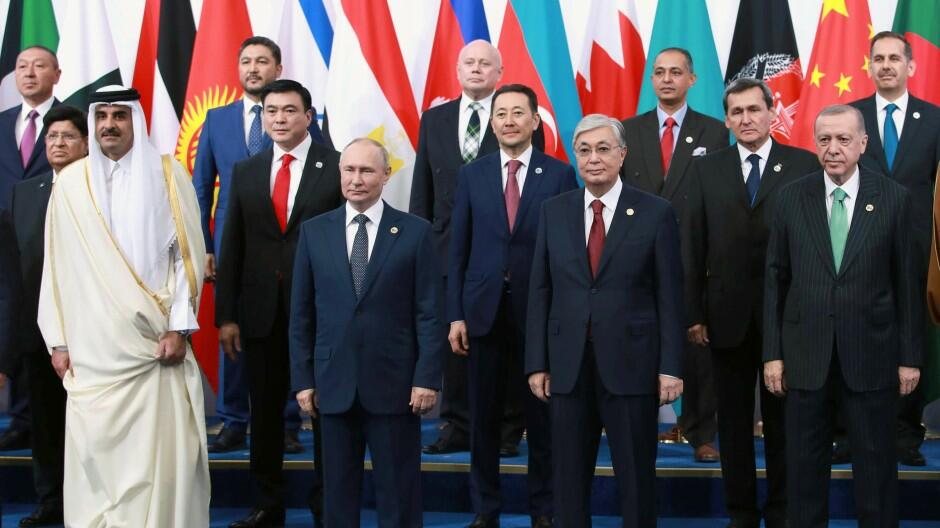
ASTANA, October 13. /TASS/. Creating a gas hub in Turkey, building another nuclear power plant in Sinop, and supporting agreements on the export of grain from Ukraine through the Black Sea became the topics of negotiations between Russian and Turkish Presidents Vladimir Putin and Tayyip Erdogan in Astana.
The leaders, who spoke on the sidelines of the Summit of the Conference on Interaction and Confidence Building Measures in Asia (CICA) in the capital of Kazakhstan, highlighted the high level of relations between the two countries and also announced their intention to expand cooperation in the energy sector.
Putin said that Russia’s natural gas supplies to Turkey are being delivered in full and Ankara has turned out to be the most reliable partner today for deliveries of the natural gas to Europe. “Speaking about hydrocarbon energy, I should say that the deliveries of our hydrocarbons, including natural gas, are being delivered in full volume and according to your requests,” he said.
Meanwhile, Putin’s idea to create a gas hub in Turkey was positively received by Erdogan, the two parties gave instruction to work on it. “Instructions were immediately given by both presidents – right during the negotiations – to work on this issue. Various options have even been discussed,” he said.
Putin and Erdogan also discussed the grain deal during talks, Russian presidential spokesman Dmitry Peskov Kremlin spokesman Dmitry Peskov told reporters. “It was indeed discussed,” the Kremlin spokesman said, answering a question whether this topic had been raised at the meeting. “It was stressed once again that the major, the overwhelming portion of grain is going actually to Europe, that is, to rich countries. And a very small portion of grain goes to poor countries,” Peskov noted.
The first unit of the Akkuyu Nuclear Power Plant (NPP) is likely to be managed to be commissioned in time, Putin told Erdogan. “Our colleagues from governments and companies dealing with the practical work are implementing all the outlined plans. This pertains also to the investment process and construction of the Akkuyu Nuclear Power Plant. The work is on track,” the Russian leader said.
About 20,000 people are currently working on the site, Putin said. “We are getting on track and to all appearance we will manage to honor our agreements on launching the first power unit by the 100th anniversary of the Republic of Turkey,” the President added.
At the same time, the presidents did not touch upon the situation in Ukraine, according to Russian presidential spokesman Dmitry Peskov. According to Peskov, the issue “wasn’t touched upon at all”.
*******************************************
Erdogan Eager To Act On Putin’s Offer To Make Turkey A ‘Gas Hub’
BY TYLER DURDEN
SATURDAY, OCT 15, 2022 – 08:45 AM
“There will be no waiting,” Turkish President Recep Tayyip Erdogan said Friday in his first official statement on the Russian proposal for Turkey becoming a Russian gas hub for Europe.
Both leaders attended and met at a regional summit in Kazakhstan, where Putin floated a plan for exporting more gas – which has been blocked through main European hubs due to the Ukraine invasion and also ‘mystery’ sabotage attacks on the Nord Stream pipelines – through the TurkStream pipeline, which runs under the Black Sea.
Both said they are now quickly moving forward, laying the groundwork for technical plans. “Together with Mr. Putin, we have instructed our Ministry of Energy and Natural Resources and the relevant institution on the Russian side to work together,” Erdogan said following the meeting with Putin.
“They will conduct this study. Wherever the most appropriate place is, we will hopefully establish this distribution center there,” the Turkish leader added. Erdogan had suggested Thrace as an ideal location in his comments to the press.
Separate follow-up comments by Foreign Minister Mevlut Cavusoglu indicated that Turkey sees itself in a position to alleviate Europe’s energy crisis, also at a moment it is putting itself forward as a reliable ‘neutral’ mediator toward ending the war in Ukraine.
“The weakening of Europe in all aspects is not in Turkey’s interest. On the contrary, it is against (Turkey’s interests,)” Cavusoglu said. “This is a matter of supply and demand. How much of Europe … is ready to buy gas from such a project? This needs to be worked out together.”
As for Europe, leaders are likely only to this as another ploy by Moscow to sow division among NATO as well as EU countries in their united stance against Russia, and as they struggle to agree on punitive energy measures against Moscow, yet in a way that doesn’t blow back worse on European populations and the economy.
So far, of course, this delicate tightrope attempt – including also efforts to cap Russian oil prices – have only backfired and exposed inter-EU tensions and fractures, given the strong resistance of countries like Hungary and Bulgaria.
Turkey, in even entertaining the new Putin proposal and now signaling it’s moving forward with studying it, has throughout the Ukraine conflict proven itself to be an outlier when it comes to its Western allies’ united strong stance against Russia.
UK bookmaker William Hill says that the odds are that Truss will have a shorter premiership than Theresa May, who served 1,106 days.
The bookmaker has slashed her odds of departing by the year-end to 7/2 from 40/1 back in September.
Truss’ exit date to be 2022 is the most backed politics market on oddschecker in the past seven days, accounting for 25% (4/1) of total politics bets.
Keir Starmer, Rishi Sunak, Boris Johnson and Michael Gove all have good odds of replacing her at Downing Street, figures from the betting aggregator show.
If Truss does not make it to the end of the year, she will take the title of shortest reign of any Conservative prime minister in the past 50 years from Theresa May.
The former home secretary lasted a little over three years at Number 10.
Odds show that Truss actually risks having the shortest tenure in British political history, as she might fail to reach the 119 days of George Canning’s premiership.
The 47-year-old would have to serve until Wednesday 4 January 2023, to beat the 19th century prime minister’s short stint in office.
Ladbrokes’ odds give Truss an 11/2 chance that she will leave office before the end of the year. However, the odds of her being replaced as prime minister by 2025 or later currently stands at 4/1.
The bookie also has the odds stacked against Truss avoiding a no confidence vote before the next general election, at 4/6 betting yes.
The price of backing Ukraine and imposing sanctions.
“This Is A F**king War”: Jamie Dimon Slams Biden Begging Saudis For Oil, Says Investors “Don’t Give A Shit” About ESG
BY TYLER DURDEN
THURSDAY, OCT 13, 2022 – 05:20 PM
Three days after Jamie Dimon sparked a marketwide selloff which sent stocks to fresh 2022 lows after he predicted a US recession in 6 to 9 months citing drivers including rising interest rates, persistent inflation and Russia’s invasion of Ukraine, and warned stocks could drop another 20%, the JPMorgan CEO who is expected to report earnings tomorrow (and hopefully clarify why his bank refuses to move its deposit rate above 0.01% in the process keeping $2.2 trillion in liquidity locked inside the overnight funding facility), doubled down today saying the Fed can’t cool the red-hot economy without bringing on a recession.
“I don’t know if it could be a soft landing — I don’t think so, but it might,” the JPMorgan chief executive officer said at an industry conference in Washington Thursday, adding that the alternatives would be a mild or a severe recession. “In a tough recession, you could expect the market to go down another 20% to 30%”, adding an additional 10% to the number he first floated on Monday.
It got worse: besides predicting a hard-landing and a 30% crash, the CEO of the largest US bank also said his “gut” tells him that the Fed funds rate will probably have to rise higher than the 4% to 4.5% level many economists are predicting, as inflation persists.
Still, Dimon said he has “total faith and trust” in Fed Chair Jay Powell, and that stagflation is far worse than most of the other potential outcomes as the Fed works to cool price pressures.
And in a sign that markets may be getting ahead of themselves, Dimon also said that the consumer could be strong for another nine months (around the time the recession hits). In other words, Dimon, who has warned about recession and a further stocks crash, has also repeatedly stressed that consumers are still healthy. We are confident that Jamie will tell us when in his view consumers are finally crashing.
Some other notable statements by Jamie include:
JPMorgan is sitting on $1.2 trillion in cash
China can micro-manage growth at 3-4%
CCAR has become untethered from reality (which we know since clearly nobody could have possibly predicted the UK’s pension fund crisis)
Commodity prices around the world are very fragile
Excerpts below:
In separate – and far more provoative -comments made earlier in the day during a JPMorgan investor seminar where he led a fireside chat moderated by JPMorgan’s Gergana Thiel, Dimon made some extremely outspoken comments which however you won’t hear on the mainstream media, telling a small group of listeners that was closed to the press that the “President of the Unites States needs to stand up and say we may not meet our 2050 climate objectives because this is a fucking war”.
He also said “time to stop going hat in hand to Venezuela and Saudi and start pumping more oil & gas in the USA”
Echoing what he has said before, Jamie said this is the way the USA maintains its standing, as the future of the world is by pumping more oil and gas and using energy security to ensure Western unity.
And he did say when it comes to ESG “investors don’t give a shit” warning not to “cede governance to do-gooder kids on a committee”.
Finally, he stressed the need for strong American leadership that is not being provided by either party. His conclusion: the world needs American diplomacy and neither Trump or Biden can lead the USA.
*******************************************
Sooo, what would you guess Jamie thinks about ESG/climate change “risk management” products?
The terror attack on Krymskiy Most – the Crimea Bridge – was the proverbial straw that broke the Eurasian camel’s back.
Russian President Vladimir Putin neatly summarized it: “This is a terrorist attack aimed at destroying the critical civilian infrastructure of the Russian Federation.”
The head of the Russian Investigative Committee, Alexander Bastrykin, confirmed face-to-face with Putin that Terror on the Bridge was carried out by the SBU – Ukrainian special services.
Bastrykin told Putin, “we have already established the route of the truck, where the explosion took place. Bulgaria, Georgia, Armenia, North Ossetia, Krasnodar… The carriers have been identified. With the help of operatives of the FSB, we managed to identify suspects.”
Russian intel leaked crucial info to military correspondent Alexander Kots. The cargo was ordered by a Ukrainian citizen: explosives packed in 22 pallets, in rolls of film under plastic wrap, were shipped from Bulgaria to the Georgian port of Poti. Afterwards, the cargo was loaded onto a truck with foreign license plates and proceeded overland to Armenia.
Clearance at the Armenia-Russia border was smooth – according to the rules of the Eurasian Customs Union (both Russia and Armenia are members of the Eurasian Economic Union, or EAEU). The cargo evidently avoided detection through X-rays. This route is standard for truckers traveling to Russia.
The truck then re-entered Georgia and crossed the border into Russia again, but this time through the Upper Lars checkpoint. That’s the same one used by thousands of Russians fleeing partial mobilization. The truck ended up in Armavir, where the cargo was transferred to another truck, under the responsibility of Mahir Yusubov: the one that entered the Crimean bridge coming from the Russian mainland.
Very important: the transport from Armavir to a delivery address in Simferopol should have happened on October 6-7: that is, timed to the birthday of President Putin on Friday the 7th. For some unexplained reason, that was postponed for a day.
The driver of the first truck is already testifying. Yusubov, the driver of the second truck – which exploded on the bridge – was “blind:” he had no idea what he was carrying, and is dead.
At this stage, two conclusions are paramount.
First: This was not a standard ISIS-style truck suicide bombing – the preferred interpretation in the aftermath of the terror attack.
Second: The packaging most certainly took place in Bulgaria. That, as Russian intel has cryptically implied, indicates the involvement of “foreign special services.”
‘A mirage of cause and effect’
What has been revealed in public by Russian intelligence tells only part of the story. An incandescent assessment received by The Cradle from another Russian intel source is way more intriguing.
At least 450 kg of explosives were employed in the blast. Not on the truck, but mounted inside the Crimea Bridge span itself.The white truck was just a decoy by the terrorists “to create a mirage of cause and effect.” When the truck reached the point on the bridge where the explosives were mounted, the explosion took place.
According to the source, railroad employees told investigators that there was a form of electronic hijacking; the terror operators took control of the railway so the train carrying fuel received a command to stop because of a false signal that the road ahead was busy.
Bombs mounted on the bridge spans were a working hypothesis largely debated in Russian military channels over the weekend, as well as the use of underwater drones.
In the end, the quite sophisticated plan could not follow the necessarily rigid timing. There was no alignment by the millimeter between the mounted explosive charges, the passing truck and the fuel train stopped in its tracks. Damage was limited, and easily contained. The charges/truck combo exploded on the outer right lane of the road. Damage was only on two sections of the outer lane, and not much on the railway bridge.
In the end, Terror on the Bridge yielded a short, Pyrrhic PR victory – duly celebrated across the collective West – with negligible practical success: transfer of Russian military cargo by railway resumed in roughly 14 hours.
And that brings us to the key information in the Russian intel source assessment: the whodunnit.
It was a plan by the British MI6, says this source, without offering further details. Which, he elaborates, Russian intel, for a number of reasons, is shadow-playing as “foreign special services.”
It’s quite telling that the Americans rushed to establish plausible deniability. The proverbial “Ukrainian government official” told CIA mouthpiece The Washington Post that the SBU did it. That was a straight confirmation of an Ukrainska Pravda report based on an “unidentified law enforcement official.”
The perfect red line trifecta
Already, over the weekend, it was clear the ultimate red line had been crossed. Russian public opinion and media were furious. For all its status as an engineering marvel, Krymsky Most represents not only critical infrastructure; it is the visual symbol of the return of Crimea to Russia.
Moreover, this was a personal terror attack on Putin and the whole Russian security apparatus.
So we had, in sequence, Ukrainian terrorists blowing up Darya Dugina’s car in a Moscow suburb (they admitted it); US/UK special forces (partially) blowing Nord Stream and Nord Stream 2 (they admitted and then retracted); and the terror attack on Krymsky Most (once again: admitted then retracted).
Not to mention the shelling of Russian villages in Belgorod, NATO supplying long-range weapons to Kiev, and the routine execution of Russian soldiers.
Darya Dugina, Nord Streams and Crimea Bridge make it an Act of War trifecta. So this time the response was inevitable – not even waiting for the first meeting since February of the Russian Security Council scheduled for the afternoon of 10 October.
Moscow launched the first wave of a Russian Shock’n Awe without even changing the status of the Special Military Operation (SMO) to Counter-Terrorist Operation (CTO), with all its serious military/legal implications.
After all, even before the UN Security Council meeting, Russian public opinion was massively behind taking the gloves off. Putin had not even scheduled bilateral meetings with any of the members. Diplomatic sources hint that the decision to let the hammer come down had already been taken over the weekend.
Shock’n Awe did not wait for the announcement of an ultimatum to Ukraine (that may come in a few days); an official declaration of war (not necessary); or even announcing which ‘”decision-making centers” in Ukraine would be hit.
The lightning strike de facto metastasizing of SMO into CTO means that the regime in Kiev and those supporting it are now considered as legitimate targets, just like ISIS and Jabhat al-Nusra during the Anti-Terror Operation (ATO) in Syria.
And the change of status – now this is a real war on terror – means that terminating all strands of terrorism, physical, cultural, ideological, are the absolute priority, and not the safety of Ukrainian civilians. During the SMO, safety of civilians was paramount. Even the UN has been forced to admit that in over seven months of SMO the number of civilian casualties in Ukraine has been relatively low.
Enter ‘Commander Armageddon’
The face of Russian Shock’n Awe is Russian Commander of the Aerospace Forces, Army General Sergey Surovikin: the new commander-in-chief of the now totally centralized SMO/CTO.
Questions were being asked non-stop: why didn’t Moscow take this decision way back in February? Well, better late than never. Kiev is now learning they messed with the wrong guy. Surovikin is widely respected – and feared: his nickname is “General Armageddon.” Others call him “Cannibal.” Legendary Chechen President Ramzan Kadyrov – also a colonel general in the Russian military – lavishly praises Surovikin as “a real general and warrior, an experienced, strong-willed and far-sighted commander.”
Surovikin has been commander of the Russian Aerospace Forces since 2017; was awarded the title of Hero of Russia for his no-nonsense leadership of the military operation in Syria; and had on the ground experience in Chechnya in the 1990s.
Surovikin is Dr. Shock’n Awe with full carte blanche. That even rendered idle speculations that Defense Minister Sergei Shoigu and Chief of the General Staff Valery Gerasimov were removed or forced to resign, as speculated by the Wagner group Telegram channel Grey Zone.
It is still possible that Shoigu – widely criticized for recent Russian military setbacks – could be eventually replaced by Tula Governor Alexei Dyumin, and Gerasimov by the Deputy Commander-in-Chief of the Ground Forces, Lieutenant General Alexander Matovnikov.
That’s almost irrevelant: all eyes are on Surovikin.
MI6 does have some well-placed moles in Moscow, relatively speaking. The Brits had warned Ukrainian President Volodymyr Zelensky and the General Staff that the Russians would be launching a “warning strike” this Monday.
What happened was no “warning strike,” but a massive offensive of over 100 cruise missiles launched “from the air, sea and land,” as Putin noted, against Ukrainian “energy, military command and communications facilities.”
MI6 also noted “the next step” will be the complete destruction of Ukraine’s energy infrastructure. That’s not a “next step:” it’s already happening. Power supply is completely gone in five regions, including Lviv and Kharkov, and there are serious interruptions in other five, including Kiev.
Over 60 percent of Ukrainian power grids are already knocked out. Over 75 percent of internet traffic is gone. Elon Musk’s Starlink netcentric warfare has been “disconnected” by the Ministry of Defense.
Shock’n Awe will likely progress in three stages.
First: Overload of the Ukrainian air defense system (already on).
Second: Plunging Ukraine into the Dark Ages (already in progress).
Third: Destruction of all major military installations (the next wave).
Ukraine is about to embrace nearly total darkness in the next few days. Politically, that opens a completely new ball game. Considering Moscow’s trademark “strategic ambiguity,” this could be a sort of Desert Storm remixed (massive air strikes preparing a ground offensive); or, more likely, an ‘incentive’ to force NATO to negotiate; or just a relentless, systematic missile offensive mixed with Electronic Warfare (EW) to shatter for good Kiev’s capacity to wage war.
Or it could be all of the above.
How a humiliated western Empire can possibly raise the stakes now, short of going nuclear, remains a key question. Moscow has shown admirable restraint for too long. No one should ever forget that in the real Great Game – how to coordinate the emergence of the multipolar world – Ukraine is just a mere sideshow. But now the sideshow runners better run for cover, because General Armageddon is on the loose.
Gazprom already found NATO explosive devices on Nord Stream in 2015 — spokesman
On November 6, 2015, the NATO Seafox mine disposal unmanned underwater vehicle was found during the scheduled visual inspection of the Nord Stream 1 gas pipeline
MOSCOW, October 10. /TASS/. An incident with NATO explosive devices occurred earlier at the Nord Stream gas pipeline, official spokesman of Gazprom Sergey Kupriyanov said on the air with the Rossiya-24 TV Channel.
“It is necessary to remind about developments at the Nord Stream gas pipeline that were already registered earlier. This case is well known. On November 6, 2015, the NATO Seafox mine disposal unmanned underwater vehicle was found during the scheduled visual inspection of the Nord Stream 1 gas pipeline. It lay in space between gas pipelines, clearly near one of strings,” Kupriyanov said.
“NATO said the underwater mine disposal vehicle was lost during exercises. Such NATO exercises when the combat explosive device turned out to be exactly under our gas pipeline,” the spokesman said.
The explosive device was deactivated by Swedish Armed Forces at that time and gas transport halted due to the emergency resumed, he added.
The Seafox is an anti-mineremotely operated vehicle (ROV) manufactured by German company Atlas Elektronik to locate and destroy ground and moored mines. There are two versions and a training version. The orange Seafox-I “inspection” variant has sonar and an Inertial navigation system, and the black Seafox-C “combat” round has a 1.4 kg shaped charge warhead. The system is in service with eleven navies across seventy platforms.The SeaFox is an advanced design of an Expendable Mine Disposal Vehicle or EMDV. The SeaFox comes with a control panel to help the user locate and destroy the mines. The SeaFox has a low life cycle cost meaning it has very low maintenance costs and does not cost much to rebuild if destroyed. The main target for the SeaFox is unexploded mines that pose a danger to ships and other vessels that might travel along the route. The SeaFox communicates with the ship via a fiber-optic that connects into a TV for the captain to view the mine. The Seafox also has a special launcher and retrieval system that it uses. Together the console and launcher help navy’s around the world conduct damage estimation, route surveys, maritime boundary control, intelligence and harbor surveillance missions. The SeaFox primarily uses a transponder called dead reckoning. Dead reckoning is a pressure sensor on the SeaFox. The Seafox Drone has also been used on the MH-53 helicopter.
Countries operating the Seafox include the United States, United Kingdom, Estonia, Finland, Germany, Netherlands, Sweden, Belgium, and Japan.
Note: the MH-53 helicopter is used by US Navy antimine helicopter squadrons such as HM-12 asn HM-14. These anti-mine helo squadrons were reactivated in 2015.
Here are several US Navy HM-12 and HM-14 websites:
I’ve been holding off commenting on the Russian military response to the Ukrainian truck-bomb terror attack on the Kerch Bridge—the latest in a series of terror style attacks. That response has come, as I’m sure readers have heard, in the form of massive Russian missile strikes throughout Ukraine. Here are a few tweets that provide the general picture of these strikes—apparently largely cruise missile strikes, including from the Russian Black Sea Fleet—in graphical form:
According to Putin, today was just a warning.
Five regions of Ukraine has no water and electricity and the rest have partial supply of electricity.
“Just a warning” is of a piece with Putin’s statement back in July that “everybody knows” that Russia hasn’t really begun its military operations. “Everybody” most prominently includes the United States. For all the propaganda about how Russia is failing, the US knows. Even if some are trying to delude themselves.
The obvious concern is, How far will this escalation go and what might it lead to? There is additional military news that shows that Ukraine is running scared. For example, reports are that Ukraine has blown all bridges between itself and Belarus—this would concern the stretch of the Pripyat River that forms the NW border of Ukraine with SW Belarus—amid Ukrainian fears of a Belarus/Russia invasion via Belarus. In that regard, as I noted in a comment, Douglas Macgregor mentioned very recently that Russian forces are “backed up from Minsk [capital of Belarus, in the center of the country] to western Russia [i.e., just north of Kiev].”
Overall, I expect—based on zero inside info—that Russia’s response will remain measured. It will, in other words, proceed as a “warning” to Ukraine to cease and desist from terrorist acts. That is why I use the word “terrorist”—it’s the word that the Russian government uses and fits in with the speculation, going back some weeks, that the Special Military Operation will be upgraded to an Anti-Terror Operation. Of course, an ATO will proceed pretty much as a full scale war, which is the significance of the Russian change of command at the top. The Russians are shifting to a combined arms approach rather than the SMO, involving all branches of their military under a unified command. That means that similar strikes will probably continue and that, eventually, Russia will launch a massive invasion in a combined arms manner in order to bring this whole episode to a close.
The question, then, is: Will any of this lead to WW3? I think not, and Jordan Schachtel has a smart substack that discusses precisely this question:
None of the major parties involved in this conflict want nuclear armageddon via WWIII.
The bottom line is that the US has been using Ukraine as a proxy, and will abandon Ukraine when it is no longer of any use. Here are the most trenchant paragraphs from Schachtel’s article:
[The NATO] powers remain committed to propping up Kiev as the tip of the spear in what they hope is a long, drawn out conflict with Moscow. They do not seek a Ukrainian victory over Russia, but an Afghanistan-like perpetual war that acts both to weaken their foe and facilitate several forms of laundering for the global elite.
Thankfully, the leaders of Western powers don’t actually believe the hysterical nonsense about Putin being some kind of imperial Hitler-like figure who seeks to conquer the entirety of Europe.
The Russians don’t want World War III either. Their overt goal, as articulated by the Kremlin, is to eliminate the threats to their territorial integrity. Their more unspoken goal, as proven by Russia’s political and military actions, is to secure territory that is both strategically valuable and populated by citizens who welcome or are indifferent to the idea of switching sovereigns. Russia is a minimally expansionist power, in a limited setting that targets friendly populations.
Zelensky has miscalculated, badly, because none of the internationalist players involved in propping up Kiev actually care about Ukraine. If they truly did care about Ukraine, they would seek a cessation to hostilities. Instead, the direct opposite is happening, and Ukraine has become the new gold mine for the military industrial cartel.
Zelensky and his more recent predecessors have completely botched realpolitik. Instead of harnessing Ukraine’s power as a neutral buffer state, his government went all-in on becoming subservient to one coalition while antagonizing its more powerful neighbor. This has had devastating consequences for the Ukrainian people.
Going forward I think we can trust Dmitry Medvedev’s words. He says he’s expressing his “personal” views, but since he is the Deputy Chairman of the Russian State Security Council, his words are undoubtedly intended to have a public significance—as a warning to both the collective West as well as to Ukraine. Russia, as Putin has repeatedly said, remains open to negotiations, but Medvedev is stating bottom line positions. Russia will negotiate how to arrive at that bottom line, but it remains a bottom line:
Medvedev Says Russia Will Conduct More Attacks Against Ukraine
Russian Security Council Deputy Chairman Dmitry Medvedev said that Ukraine will face more attacks after massive missile strikes on Kiev and other cities on Monday morning.
“The first episode is over. There will be others… I will express my personal position… The Ukrainian state in its current configuration with the Nazi political regime will pose a constant, direct and clear threat to Russia. Therefore, in addition to protecting our people and protecting the country’s borders, the goal of our future actions … should be a complete dismantling of the political regime of Ukraine,” Medvedev wrote on his Telegram channel.
Schachtel describes, in conservative terms, the Western bottom line—which will certainly come into play as Russia pursues it’s long and openly stated goals:
While it would certainly be a setback for the NATO coalition if Kiev was lost to Russia’s sphere of influence, their actions showcase that it is not something worth fighting World War III over. This concerns Zelensky, because the game would be up for him and his allies in government. Therefore, hoaxing the world into World War III is the go-to strategy for Kiev. Luckily, for now at least, no major power wants to pursue that route.
Moreover, the collective West is likely to become increasingly preoccupied with its own self-inflicted wounds. With pacifying its own home front.





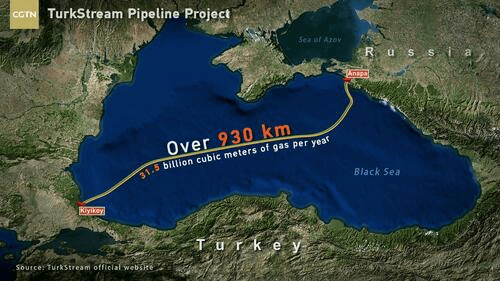

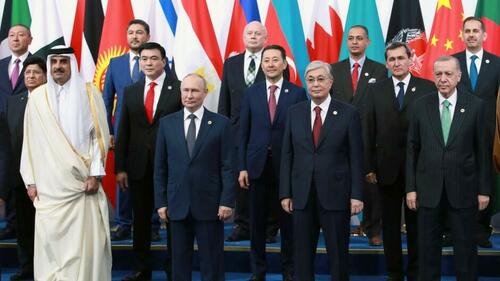



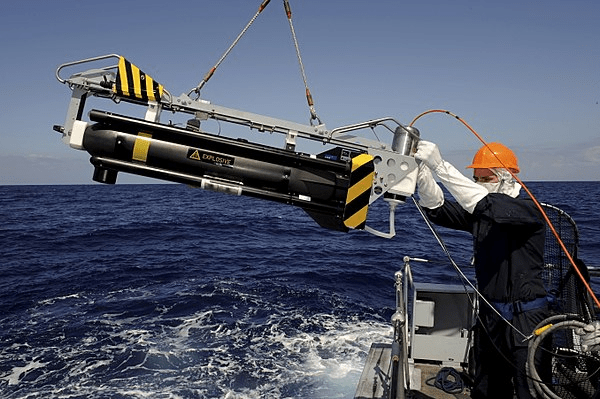
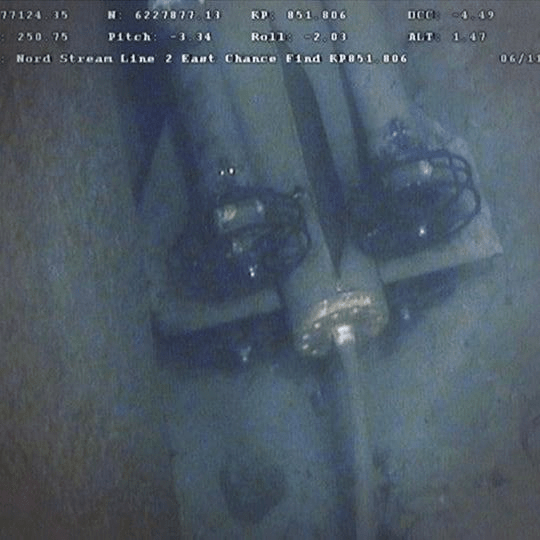

 Econophysics2020