This morning Alex Mercouris featured a fascinating summary of the recent spate of actual communication between Russia and the collective West. For at least four months there had been no contacts that we know of, then—call after call, and all at the same time that the topic of a false flag nuclear event in Ukraine was also in the news, based on Russian accusations. Also in the news at that time was word of a severed cable near the Shetland Islands, and only a bit later did we learn that a Russian ship had been in the immediate vicinity. It followed on Zelensky’s demand that, if Russia should use a “nuclear weapon” of any sort, then the West should launch a “preemptive strike” against Russia. As Mercouris pointed out, although a “dirty bomb” isn’t exactly a nuke, it is something like a “nuclear weapon”.
Mercouris also pointed out the curious series of events that set all this off. The Russian Defense Minister, Shoigu, contacted the UK MoD Wallace, whereupon Wallace declared that US/UK communications had been breached and hopped aboard a plane to DC for an urgent face to face with a variety of muckety mucks there. Mercouris concludes that the most reasonable explanation in the circumstances is that the Russians did, indeed, breach secure US/UK comms and learned something about dirty bombs—or discussions about dirty bombs. Or something very like that.
After this flurry of communications between the Kremlin and the collective West, the collective West formally denied everything. Kind of. But Shoigu says Russia has “double verified” the evidence. It sounds like they have the goods on the collective West plotting a nuclear event. I don’t know about you, but I sure as sh*t didn’t vote for nuclear war.
So consider this
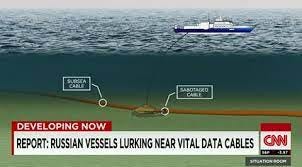
In the past few days there have been public stories about the possibility of cables being severed in the North sea (around Great Britain) and blaming it on Russian submarines. If these were internet cables the Russians do indeed have this ability to "tap" the lines as it where. pic.twitter.com/rJfc2dB4MI
….. and I'm not talking about a Cosmonaut saddling up to a satellite. Think more like a small satellite maneuvering over to one of the larger communication satellites and "plugging into a port".
Looks like Russia was able to intercept and decode conversations between MI6 and the Pentagon. Suspicions are that the conversation was related to the assembly and use of a Dirty Bomb in the Ukraine. The British Defense Secretary had to fly to Washington same day due to breach
For months Defense Sec Shoigu had zero contact with Western counterparts then suddenly he calls the Turkish, British, French and American Defense secretaries in all probability about the dirty bomb findings. That very same day the British defense secretary has to fly to Wash.
Def sec Shoigu the next day confirms to the media that they have double verified evidence of the dirty bomb and have presented it to hie respective counterparts in the Western nations that are possibly involved. Is it an MI6 scheme or did the Ukraine go off the reservation again?
Anyone who discounts this claim as “impossible” is not being sincere. This war is for all the marbles. It is for the direct control over the next Century of economic activity. Just like WW2 was. Folks need to wake up to certain “realities”.
In the past few days there have been public stories about the possibility of cables being severed in the North sea (around Great Britain) and blaming it on Russian submarines. If these were internet cables the Russians do indeed have this ability to “tap” the lines as it where.
Also note that Russian Space forces have the ability to physically “tap” Western satellites in orbit. Not just signals intelligence intercepts. This is a newer field where the West has been developing counters to such activities.
….. and I’m not talking about a Cosmonaut saddling up to a satellite. Think more like a small satellite maneuvering over to one of the larger communication satellites and “plugging into a port”.
The intelligence powers in England are now literally running the country since the political situation is so very screwed up. Nobody is “in charge” at number 10. Not really anyway. This allows for some really nasty shit to happen since nobody will be held accountable.
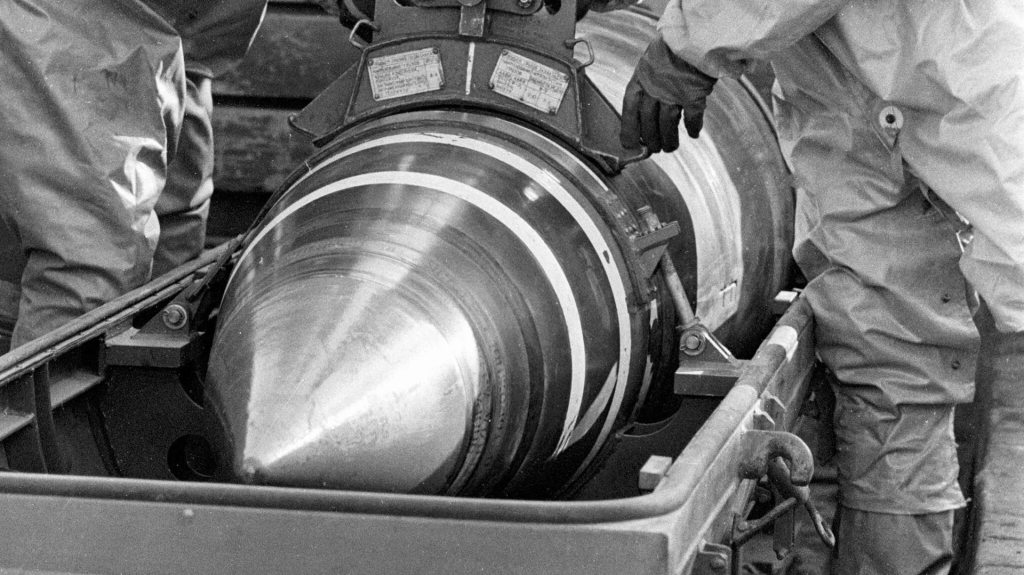
So what exactly constitutes a “Dirty Bomb”. In it’s simplest form all one would need is an old X-Ray unit, extract the radioactive elements contained put it in a container surrounded with explosives then place and detonate.
This is nothing secret nor privileged w/r/t the information. The radioactive isotopes then spread in the wind and activate radiation detectors already in place or with hand held Geiger counters.
The controlled media then rolls into high gear with headlines of “Nuclear explosion” and mushroom clouds. The MIC Psy Op then initiates that Russia used Nukes or the Ukraine used nukes etc. The people panic and it’s another 9/11 scenario where the public lose their freedom.
Just imagine the Covid lock downs on steroids.imagine WW2 levels of control where every letter you write gets read by a human and redacted. Just imagine your neighbor ratting you out for saying something against a politician. (STASI) ….. just imagine.
A dirty bomb is a weapon of terror. The soldiers in such an action are the media. The victims of this terror bombing are you and me no matter how far we are from the event. It is a ploy for total control and domination via fear based mind control. No fear.
Just so I don’t get a visit from some Alphabet agency or 5 eyes man in black here is a public document of what I am talking about. Older X-Ray units like those in Eastern Europe use Radioactive elements. (Cesium-137) media.nti.org/pdfs/NTI_Rad_R…
This morning I asked: Who’s in charge? The Intel agencies, it would seem. Hopefully, however, the actual military is pushing back on this craziness. Thank God for the Russians calling this out.
Next question: Who’s the enemy—and what are we gonna do about the enemy?
Ukrainian ‘Dirty Bomb’ Threat is Real, Up to West Whether They Want to Believe It or Not: Kremlin
On Sunday, Russian Defense Minister Sergei Shoigu warned his French, British, American and Turkish counterparts that Kiev may be preparing a false flag dirty bomb attack on its own territory to blame Moscow for using weapons of mass destruction. Western officials and officials in Kiev have dismissed the warning.
The threat of Ukraine using a ‘dirty bomb’ is real, and it’s up to Western countries whether they want to believe in the danger or not, Kremlin spokesman Dmitry Peskov has said.
“The fact that they do not trust the information which was provided by the Russian side does not mean that the threat of the use of such a dirty bomb ceases to exist. The threat is present. This information was brought to the attention of the [Russian] defense minister’s interlocutors. It’s up to them whether they want to believe it or not,” Peskov told journalists in a briefing Monday.
Separately on Monday, Russian Foreign Minister Sergei Lavrov indicated that Moscow was preparing to raise the issue of Kiev’s possible preparations to use a dirty bomb at the United Nations. The Russian top diplomat emphasized that Moscow’s information on this matter was not an empty claim, and that the foreign ministry has information on the Ukraine-based institutes capable of creating such arms.
“We have specific information about the scientific institutions in Ukraine which have the technology to build a dirty bomb. We have information which we’ve double-checked using the appropriate channels confirming that this is not an empty suspicion, and that there is good reason to believe that such [provocations] can be planned,” Lavrov said.
Russia’s defense ministry reported Sunday that Shoigu had conveyed concerns about Kiev’s potential use of a radioactive dirty bomb in phone calls with his French, British, American and Turkish counterparts. According to Russian military intelligence, the bomb’s development has reached its final stage.
US, European and Ukrainian officials have dismissed Moscow’s concerns, with Ukrainian Foreign Minister Dmytro Kuleba tweeting Sunday that his country was a committed party to the Non-Proliferation Treaty, and “neither ha[s] any ‘dirty bombs’, nor plan[s] to acquire any.” Ukrainian President Volodymyr Zelensky similarly denied the allegations, alleging that “if Russia calls and says that Ukraine is allegedly preparing something, it means one thing: Russia has already prepared all this.”
Moscow’s concerns of Kiev’s possible use of a dirty bomb come amid growing fears a nuclear escalation in Ukraine among Western officials and media, many of them apparently misinformed on (or deliberately fibbing) about Russia’s nuclear doctrine, which prohibits the use of nuclear weapons of any kind in the absence of an existential threat to the nation, or the use of WMDs against Russia.
Russian officials have repeatedly expressed concerns over Ukraine’s potential nuclear ambitions, pointing out that the country has retained nuclear weapons know how since Soviet days, and that Kiev has repeatedly threatened to build such weapons in recent years. On February 19, just days before Russia kicked off its military operation in Ukraine, President Zelensky threatened to revive Kiev’s non-nuclear status. Last year, Ukraine’s ambassador to Germany warned that Ukraine could become a nuclear-armed state again if it wasn’t accepted into NATO. In March, Russian Foreign Intelligence said its information confirmed that Kiev has an active nuclear weapons program.
Ukraine inherited about one third of the USSR’s massive strategic nuclear arsenal after the country’s collapse in 1991, including some 1,700 warheads, but the launch codes remained in Russia’s hands. Ukraine gave up these nukes after signing the 1994 Budapest Memorandum – an agreement which guaranteed Kiev’s security in exchange for its renunciation of nuclear weapons. The agreement was undermined by the February 2014 US-sponsored coup in Kiev in which the country’s democratically-elected government overthrown, sparking a security crisis in eastern Ukraine which ultimately culminated in today’s conflict between Ukraine and Russia.
Earlier in the day, Foreign Minister Sergei Lavrov announced plans to bring up Ukraine’s alleged efforts to stage a dirty bomb provocation up at the United Nations. On Sunday, Russia’s defense minister informed his NATO counterparts on the threat of a Ukrainian dirty bomb false flag attack. Kiev and its sponsors have dismissed the allegations.
The Russian military has information on contacts between Ukrainian President Volodymyr Zelensky’s office and British representatives on the matter of nuclear weapons technology, Igor Kirillov, the head of Russia’s Radiation, Chemical and Biological Defense Troops, has revealed.
“We have information on contacts between the Ukrainian president’s office and representatives of Britain on the possible acquisition of nuclear weapon technology,” Kirillov said in a briefing Monday.
The senior officer echoed concerns outlined by Defense Minister Shoigu on Sunday – namely that Kiev was “planning a provocation involving the detonation of a so-called ‘dirty bomb’, or a low-yield nuclear weapon,” and then claiming that the explosion was caused by a Russian tactical nuclear weapon.
“The purpose of such a provocation is to accuse Russia of using weapons of mass destruction in the Ukrainian theater of operations and thereby launch a powerful anti-Russian campaign throughout the world aimed at undermining global confidence in Moscow,” Kirillov said.
“As a result of such a dirty bomb provocation, Kiev expects to intimidate the local population, increase the flow of refugees across Europe, and ‘expose’ the Russian Federation as a nuclear terrorist,” Kirillov said.
Details
According to the officer, Kiev has the technological potential and industrial base necessary to create a dirty bomb, including three operating nuclear power plants and over 1,500 tons-worth of spent nuclear fuel, plus 22,000 spent fuel assemblies from the defunct Chernobyl Nuclear Power Plant containing Uranium-238, as well as other nuclear materials containing Uranium-235 and Plutonium-239. Radioactive agents from the South Ukrainian, Khmelnitsky and Rivne nuclear plants contain uranium oxide enriched to 1.5 percent, according to the Russian military’s information.
“According to the information we have, two Ukrainian organizations have specific instructions to create a so-called dirty bomb. Work on this project is at the final stage,” Kirillov said.
Addition infrastructure which could aid in the production of a dirty bomb includes the newly built Vector radioactive waste processing plant at the Prydneprovsky Chemical Plant in Kamenskoe, central Ukraine has the capacity to accommodate over 50,000 cubic meters of radioactive materials. Furthermore, the Vostochny Mining and Processing Plant is capable of extracting up to 1,000 tons of uranium ore annually.
On top of that, Ukraine has the necessary scientific base to build a dirty bomb – including the legendary Kharkov Institute of Physics and Technology, whose scientists took part in the Soviet nuclear power program, plus the Uragan experimental nuclear facility, and the Institute for Nuclear Research at the National Academy of Sciences in Kiev, where research involving highly radioactive materials is being carried out using the WWR-M reactor.
The officer warned that the explosion of such a dirty bomb on Ukrainian territory would spread radioactive isotopes into the atmosphere a distance of up to 1,500 km, spreading into neighboring countries, including Poland.
Syria False Flag
Kirillov recalled that Kiev’s suspected preparations to use a dirty bomb are nothing new, and that “similar information warfare technologies have already been used by the West in Syria, where the White Helmets filmed propaganda videos about the use of chemical weapons by government forces,” culminating in US air and cruise missile strikes. The officer warned that a “similar scenario” may be employed in the event of a false flag attack involving the destruction of a radioactive dirty bomb.
He also recalled President Zelensky’s comments at the Munich Security Conference in February, just days before Russia kicked off its military operation in Ukraine, in which he hinted at Kiev’s plans to restore the country’s status as a nuclear weapons state.
Kirillov’s comments on the danger of a Ukrainian dirty bomb false flag were echoed by Kremlin spokesman Dmitry Peskov and Russian Foreign Minister Sergei Lavrov earlier in the day. Peskov told reporters that Russia has presented its findings, and that it was up to Western leaders to chose whether they wanted to believe Moscow or not. Lavrov said the foreign ministry has “specific information” on the Ukrainian scientific institutions that could be used to build a dirty bomb, and vowed to draw attention to the matter at the United Nations.
US and European officials issued a joint statement dismissing Moscow’s concerns on Monday, saying they have “made clear that we all reject Russia’s transparently false allegations that Ukraine is preparing to use a dirty bomb on its own territory.” Ukrainian officials similarly dismissed the Russian dirty bomb allegations, with President Zelensky alleging that “if Russia calls and says that Ukraine is allegedly preparing something, it means one thing: Russia has already prepared all this.” Zelensky called on “the world” to “preemptively” step up pressure on Moscow.
Europe stands amid schizophrenic tensions. On one hand, ‘the Normal’ (high-end ostentatious consumption) is very present, yet, on the other hand, increasing clusters of the ‘Abnormal’ also exist.
Anyone visiting western Europe in recent days will have sensed its febrile cerebral quality. The overload of toxic, sneering propaganda against Russia, now fearmongered up to the threat of a tactical nuke ‘Armageddon’ against Ukraine, has taken collective Europe into a delusory trance.
In the US, the preoccupation with Ukraine seems to be fading (the ‘stats’ suggest), yet within a segment of the European leadership class, ‘war with Russia’ has ignited old revanchist passions (that would have been best left to their slumbers). Pulling Europe out of its deep Ukraine ‘trance’ will not be quick, or easy. Indeed, it may prove to be indeterminate in its outcome.
This Ukraine ‘bubble’, however, is deflating: It was always primarily ‘psy-ops war’ intended, at best, to fracture the Russian peoples’ resolve, and to trigger a backlash against President Putin; and at worst, to evolve into a protracted quagmire. Kiev now has sunk to terrorist-like, one-off military ops, and ‘show’ offensives, amidst implausible calls by Zelensky for NATO to bomb Russia. Dirty war however, exudes the whiff of weakness, rather than strength.
Yet, this alone does not account for the jittery atmospherics in Europe today. The temper is undercut by palpable, but largely unsaid, fears. For, it is not just the Ukraine bubble that is slowly deflating — there exist two separate other major bubbles which are bursting, too.
As a result, Europe stands amid schizophrenic tensions. On one hand, ‘the Normal’ (high-end ostentatious consumption) is very present, yet, on the other hand, increasing clusters of the ‘Abnormal’ also exist: Violent civil clashes in big city outskirts, and examples of state decomposition that are visible as ‘things’ periodically cease functioning. No one knows to where this path leads — hence the under-cutting mood of unstated foreboding.
One of these twin bursting bubbles is that of Europe’s ‘business model’: At the EU centre, is Germany. It has been the economic ‘engine’ both keeping the EU financially ‘liquified’, and at the same time, Germany has profited hugely from an Euro structurally uniquely conceived to give German high-value manufactured exports an otherwise unavailable competitive edge.
The alacrity by which the EU embraced Biden’s sanctions war on Russia, and then vented some unsuspectedly deep veins of Russophobia, has culminated with Germany’s – and by extension – Europe’s decades old, business model collapsing.
German high-quality export surpluses (which lubricated Brussels’ functioning) were only competitive because of the availability of cheap Russian piped Natural Gas. This is now gone (particularly after the sabotage of the Nordstream pipelines). And even were Germany to make a U-turn, it is not certain that Moscow would oblige by restoring the gas supply to Europe. Russia’s attention, maybe irrevocably, has turned East.
The markets for both LNG and oil are tight (because of ‘Green’-promoted under-investment). And even if Europe can get any gas, it is only at nose-bleed prices. US LNG costs approximately seven and a half times more than piped Russian gas.
Much of EU industry simply is now uncompetitive. Simply put: the cost of energy is bankrupting Europe’s industry. And it is now dawning on leaders that energy scarcity may not be ‘transitory’ (to borrow a term from the financial markets’ ‘hopes’ for transitory inflation).
Capping prices won’t work, and subsidising (i.e. protecting) EU industry inevitably will lead to distortions and dysfunctionality. No, Europe’s business model will have to be re-cast (if that is even remotely possible, given the rigidities of the EU political structures).
This prospect would be bad enough on its own — but then there is the third ‘bubble’ that has begun to burst in tandem.
And what is that?
It is the ‘zero inflation – zero interest rate – massive government spending’ bubble that has begun to burst. And it is huge.
For two decades and more, western economists believed they had both the bust-and-boom trade cycle and inflation licked.
It just required Central Banks to operate the monetary policy levers of interest rates, QE and QT appropriately to keep the ‘magic’ of endless deficits, financed through money printing (endorsed as Modern Monetary Theory), chugging the spending out.
It was great while it lasted, but inflation has killed it. The West had enjoyed a period of unparalleled consumer abundance, thanks to low inflation and ultra-low interest rates. Just to be clear, western economic hegemony has rested on these two pillars of low inflation and low or zero interest rates.
The reality is that this comfortable prosperity did not rest on Central Bank wizardry, but owed firstly to China’s cheap manufactures (its export model), and secondly, (for Europe) to Russia’s cheap energy. So when these two pillars fell, the inflationary monster was back.
First came ‘de-coupling’ and US tariffs on China. Then Europe at Biden’s behest sanctioned Russia’s cheap energy (before securing any alternatives). Commodity prices soared, and inflation dug in deep — and we are on an escalatory track.
However, as interest rates spike, asset valuations inversely tumble, and markets risk at best a painfully-hard ‘landing’ as Central Banks have trapped themselves with little alternative but to fight inflation — even at the risk of a market bust.
Is there a way out? Maybe — maybe the EU could revoke sanctions and ask for Russian energy to be restored. Maybe Moscow would agree, but very possibly not. And would the US permit its’ EU acolytes to cosy up to Russia? What happened to Nordstream suggests very strongly it would provoke a ‘no’ from the US. And a ‘no’ — even if it tanks the economy of its closest ally.
This is a moment that evokes an earlier period of Great Power fragility: namely, the initial escalation leading into World War I (as Malcom Kyeyune has noted (see below)) that saw an array of nations dragged into the conflict — all of them disastrously underestimating the length and severity of the conflict. (Sound familiar?):
“The parallels go deeper. The immediate pre-war period saw a structurally weakened Great Power – Austria-Hungary – beset on all fronts… In other words, Austria-Hungary was slowly falling apart. Outside it were various rivals plotting the empire’s demise, and inside, lurked a plethora of nationalist malcontents – each hoping to gain freedom or glory from blowing it up. The result was that Austria-Hungary felt it had no choice but to act extremely tough, especially in the Balkans, and especially against the Serbian nationalists. The Austrians didn’t dare let any enemy be successful.”
“The lead-up to World War I was less a story of hubris [as today] and more one of imperial desperation. There were simply too many leaks that Vienna was trying to plug at the same time. The parallels to the contemporary United States should be obvious at this point … it’s a fine line that the United States is walking. It isn’t easy to permanently scare your enemies while you are also giving off clear signs of weakness. Washington is trying to do just this on two fronts. Sooner or later, bellicose rhetoric may end up backfiring, inspiring not deference but defiance from its intended targets”.
‘Massive New Strikes’ Leave 1.5 Million Ukrainians Without Power, Phased Blackouts In Kiev
BY TYLER DURDEN
SUNDAY, OCT 23, 2022 – 12:00 PM
Now much of Western Ukraine, which lies far away from the front lines of fighting with Russia in the east, is without power due to fresh weekend airstrikes across the country.
Ukrainian President Volodymyr Zelensky in a Saturday night address said new “massive” strikes targeted Dnipropetrovsk, Khmelnytsky, Kirovohrad, Mykolaiv, Odessa, Rivne, Volyn and Zaporizhia regions.
“We continue eliminating the aftermath of today’s terrorist attacks on our infrastructure,” Zelensky said. “The geography of this new massive strike is very wide.”
The past days have already seen power outages in Kyiv, with energy grid authorities warning of rolling blackouts, and urging residents to take power-saving measures such as the avoidance of running large appliances.
On Saturday the national power utility operator Ukrenergo said that damage from the latest round of Russian strikes set a new record. The Saturday air offensive by Russia was bigger than an initial major wave of strikes from earlier this month:
Over 1.4 million Ukrainian households have lost electricity after a morning of repeated Russian air raids, Ukraine President Volodymyr Zelenskyy’s office says.
The Ukrainian General Staff reported that 40 cruise missiles and 16 allegedly Iranian-made drones hit Ukraine throughout the day.
Oleksandr Kharchenko, a Ukrainian energy official, said in an interview with US media that national infrastructure vital for the people is facing “really huge trouble”.
“When you don’t have electricity in a city, it means you have no water, you have no supply of gas, you have nothing,” Kharchenko said. Days prior to the stepped-up Saturday assault the government said one-third of all power stations had been hit or damaged in Russian strikes.
The right bank of Kyiv covered in darkness this evening as the Ukrainian authorities began to implement planned power outages to save energy, due to continued Russian strikes targeting Ukraine's energy infrastructure. pic.twitter.com/QeR6AEvYwG
— Status-6 (Military & Conflict News) (@Archer83Able) October 20, 2022
Most new damage to energy has been recorded in the country’s west, south and center, with some hospitals since reporting they are running on backup generators. Reserves of oxygen and fresh water are also being tapped by hospitals.
Ukrenegro has on Sunday introduced phased blackouts to “avoid accidents”, per The Guardian:
The blackouts began at 11.13am local time (09.30am BST), with households in Kyiv divided into three groups that will be “disconnected for a certain period of time”, DTEK said.
It added that the blackouts should last “no more than four hours” but may be longer “due to the scale of damage to the power supply system”.
According to the latest estimate of the damage reported in Reuters, “Russia has hit at least half of Ukraine’s thermal generation capacity and caused billions of dollars of damage in attacks since Oct. 10, but not all stricken power units have stopped working completely, Ukraine’s energy minister said on Friday.”
⚠️ Confirmed: Live network data show internet outages in south #Ukraine corresponding to new Russian missile attacks this morning targeting critical infrastructure; the bombardment of civilian energy utilities has intensified since 10 Oct.
Further, “Herman Halushchenko told Reuters in an interview that 30-40% of overall national power infrastructure had been hit in attacks that he depicted as intended to destroy Ukraine’s energy system — a goal that he said had not been achieved.”
Note: we are about 3 weeks until ground freeze and the start of the Russian invasion. These attacks will likely continue with occasional respites for after-action damage assessments until V-Day begins.
POPULISM RELOAD: AN INTERVIEW WITH STEPHEN K. BANNON
This interview between IM—1776’s editor Mark Granza and former White House Chief Strategist Steve Bannon recorded on Thursday, September 29th, has been edited for clarity.
— The Editors
“We need a reboot. A populist nationalist reboot. The neocon/neoliberal establishment, which is really both parties, Wall Street, and the corporations, they’re all terrified of this. And that’s because they understand this time we mean business.” — Steve Bannon
Mark Granza: Giorgia Meloni was elected Premier of Italy on Sunday. You’ve worked very closely with her in the past. Did you call her to congratulate her on the victory?
Steve Bannon: Let’s say we communicated our support beforehand and we communicated our great thrill at her amazing victory.
Mark Granza: What do you think her party’s victory signifies for the future of Populism in the West?
Steve Bannon: Oh, it’s a major victory. When I first met her, the party was polling at 2%. So that shows populists the importance of doing the work. She’s a perfect example. Somebody who just grinded through, worked hard, built up, and ended up with 26% of the vote, with virtually no money, right? Brothers of Italy is not a well-funded organization. So I think the lesson for every person out there, particularly in Europe, is: you can do this. But of course it takes hard work and also a real understanding of the issues you’re addressing – and she really does. She’s been going to these conferences around Europe talking about the importance of God, Homeland and Family, and she stuck to it. So I think that’s the biggest lesson for politicians around the world: it’s just not going to happen. It’s not going to be dumped in your lap. You can’t just sit on social media and complain, bitch and moan. You have to do the work.
Mark Granza: You probably already have, but if you could give her one piece of advice, what would that be?
Steve Bannon: Focus on the financial crisis that’s upon Italy and all of Europe. You must get the economics and the financial situation stabilized in Italy to make everything else come together. Obviously, there’s got to be multitasking. But this has to be the first order of business: Italy has a massive debt crisis. A huge underlying economic crisis, a demographic crisis in which many young people and the diaspora of the talent of Italy are leaving for other parts of Europe and the rest of the world because of the lack of opportunities. So all that has to be the number one priority.
Mark Granza: Darren Beattie recently said in an interview with us on populism that it’s also “necessary to cultivate an elite […] and capture the institutions that serve to reinforce your ideas once you get political power so you don’t have to find yourself again in this situation where you nominally have government, but functionally you’re kind of impotent.” Is this what President Trump lacked during his time in Office?
Steve Bannon: Well, I don’t know if I would call it “elite”. Remember, although the populist movement had been building up for a couple of years, we didn’t have a lot of subject matter expertise in certain aspects of the government. The United States has, outside the military, I think over 2 million government employees. It’s a vast apparatus. So the administrative state is what we’re trying to take apart. That being said, there are at least 4000 political appointees that can go in immediately and start to run the government. We never managed to do that under Trump. One of the reasons is that we just didn’t have enough MAGA populists and nationalists ready. But we’re taking care of that now; we’re building those cadres even as we speak. People who know these jobs and understand that the mission is to basically get to a smaller, more efficient, freer and fairer government. And so we’re going to be fully prepared in 2024 – we need to be at every level. With university professors and teachers and also businesses that understand populist/nationalist economics and what the movement really stands for. I think that’s important in every aspect of our culture and society. I don’t know if that’s building a cadre or an elite, but it’s definitely people that can go in and do that.
Mark Granza: Let’s talk about the “Deep State“. The term is widely used by people on the Right to describe the network of bureaucrats and organizations secretly running the country behind the scenes. Is this in your experience an accurate description of what’s going on in Washington?
Steve Bannon: I think the nomenclature is important to get right. I would rather call it the “administrative state”, which is really a fourth branch of government never intended by the founders and, quite frankly, the American people. The Administrative State’s purpose, and really the Progessive Left, is to take over all functions of government through these agencies. Up until now they could issue their own regulations and laws, and now they control even their own law enforcement, whether it’s 87,000 IRS agents or these jackbooted FBI or the EPA, with armed security and guards. So our big focus should be its deconstruction. It needs to be taken apart brick by brick. You saw how out of control this was with the CDC and FDA when the pandemic hit, with Tony Fauci as the face of the administrative state that ruled without permission to be questioned. And it’s not that we don’t need an FDA or CDC, but they definitely have to be heavily repurposed. I would say the national security and the intelligence apparatus and part of the legal one are what we would more traditionally think of as a “deep state”, probably best personified in the first Trump impeachment. If you remember all that kind of fetish about the interagency process and the sacramental nature of the way those things should work when Trump was President, that was really the Deep State saying that Trump was unacceptable because deeply he did not believe in those processes. He did not believe in their function, nor their policies. You can tell this now with Ukraine, these groups have their own goals. It has captured the American national security and foreign policy apparatus, and it needs to be defeated. They don’t believe in the Constitution, they don’t believe that a commander in chief should be able to make his own decisions. You know, I’ve advocated from day one that we need another Church Committee. In the 1970s, after Watergate, after Vietnam, after the assassinations and all the turmoil in the streets, it was determined that the FBI and the CIA had crossed the boundaries of what their mandates were on both surveillance of Americans, infiltration of groups, and all of their tasks really. And so you had the Church Committee set the modern structure for the FBI and CIA as a consequence. But I think that’s been blurred over time. You clearly still have a lot of nefarious activity going on and a lot of stuff that needs to be reviewed. I think we need to get back to that; a total revamping, rethinking and rejuvenation of these apparatuses, whether it’s the NSA, CIA, FBI, DOJ, the military or the armed forces. I’ve spent eight years as a naval officer. My daughter went to West Point. She was with the 101st Airborne Division and deployed to Iraq. So we are all big patriots and huge believers in serving in the military. But things have gone way off track and we definitely need to, not just take a hard look, but have massive reform at those levels.
Mark Granza: Was Trump aware of it before, whether you call it the Deep State or Administrative State, or would you say that he learned about its existence the hard way after entering Office?
Steve Bannon: I think if you look at President Trump, his whole concept of “draining the swamp” was a beginning. But he certainly had an awakening of how really pernicious it is once in office, trying to get out of the Paris Accords, out of TPP, and a lot of these trade deals that were so bad for the United States. I think his Damascene moment was the first impeachment. Looking in hindsight the fact that they tried to have his call with the Ukrainian President twisted into an impeachable offense was absolutely outrageous. And I think that’s when he had a full awakening. So yes, now with people like Kash Patel as his close advisors, there’s no doubt he fully understands its dangers and will be much more ready in 2024. But one more thing I’d say is this: remember, no President, not even Nixon or Reagan, has ever gone after the administrative state like Trump. That also caused a reaction. And I want to caution all your readers and followers to understand that before us populists and nationalists, there are no easy decisions. There are not going to be easy wins. Just watch how tough they’re going to make it for Giorgia Meloni to govern, or how tough they made it for Salvini to try and put together the coalition between the Five Star and la Lega and form a left/right populist government a couple of years ago in Italy. Or even Brexit in the UK. The powers that be, the elites in the world, the financial community and global corporations are not there to validate your victories. They’re there to defeat, first of all, you, but if you somehow win, they’re there to make sure that you can’t govern. So President Trump certainly realized very early in his administration that this was far darker, far deeper, and far more pernicious problem than he ever thought. But I think he’s ready to roll now.
Mark Granza: Can he break the deep state monopoly if re-elected? Does he have enough loyalists on his side?
Steve Bannon: I think he’s got a whole cadre right now, myself included. From Rick Grenell to Kash Patel, he’s got a whole group of what I would call “combat veterans” that saw exactly what happened in the first administration and have been working and setting up think tanks, seminars and training people not just to ensure that he wins again in 2024, but that he’s actually ready to quickly create a government very focused on taking apart the administrative state. This is one of the reasons that the Left is so frantic right now, even about Meloni, calling her a “fascist” and so on. We know that they’re going to fight this every step of the way. But we’re much better trained, a lot more focused, and know exactly what our roles and missions are going to be this time.
Mark Granza: Shortly after the FBI raid at Mar-a-Lago, you and at least other 35 Trump allies also had your homes raided by the FBI. In addition to that, you were held, trialed, and found guilty of Contempt of Congress after refusing to collaborate with the Jan. 6 committee. What’s your opinion today on the state of the US Justice system?
Steve Bannon: Well, first of all, I was never actually raided. In fact, when they tried to put up these phony charges about the Build the Wall campaign, the FBI wouldn’t even get involved. That was the Postal Service. I have no personal grievance with the FBI. In fact, it breaks my heart as a Catholic. When I was growing up many of the federal agents were Catholics and kind of revered in my church circles. The problem is that the Justice Department has been totally politicized and weaponized. Under Biden, it runs like a banana republic and a dictatorship. Let me tell you, Merrick Garland will be impeached early in 2023 once the Republicans take control. I believe he will be removed from office – if he doesn’t quit long before then. Just look at what they’re doing to innocent American civilians, or even President Trump himself. We just find out that the Justice Department was really lying about the Mar-a-Lago raid. They first said it was 184 classified documents. Then they had to admit it was 11,000 documents. Now it’s over 200,000 pages. 200,000 pages! This was truckloads of stuff. They clearly just wanted a fishing expedition. So what do I think? It’s a totally weaponized, totally politicized third-world country. And it will be changed dramatically. But first we must win. There is no substitute for victory.
Mark Granza: For sure. The ultimate way the deep state operates and grows though, as you also pointed out, is regardless of who really is in charge. There’s an inherent selection bias that’s part of the problem in our institutions. So wouldn’t you say this runs deeper than simply replacing the current administration and dismantling its agencies?
Steve Bannon: Look, this is a problem with any country. When you look at your pool of candidates, every politician went to the best schools. I was fortunate enough to go to Georgetown, then to Harvard. And from there you see people get into the best law firms and the best banks and private equities, etc. It’s not that all people are excluded. There are people throughout the country who do it and rise to excellence. Yes, you do have a bias, whether Republican or Democrat, to select those that are already part of the system, which then aren’t really motivated to go against the system because the system’s rewarded them well. But that’s why you need people like the Darren Beatties and the Steve Bannons and others who have been part of the system, have been trained in the system and educated by the system, but can see a bigger picture of where it’s taking the country. And I think we have tens of thousands of those now from some of the best schools in the country who are basically patriots and populists. And that’s how we’ll staff the second Trump term.
Mark Granza: It sounds like you’re for reforming these institutions as opposed to abolishing them?
Steve Bannon: Oh, no. They have to be abolished. But those are all decisions that have to be made in time, right? You don’t want to be too grandiose or too sweeping and say, “hey, this is going to go away.” The FBI is one that I think has to make a very strong case for why we even need an FBI, because it’s been so politicized. But I’m a huge believer in hearings and investigations. Our system is pretty good when it’s focused on getting things done. And Trump will be so much farther up the learning curve than he was the first time. I don’t think there ought to be 16 different intelligence agencies reporting up to the DNI. They should be definitely redone. Number one, just financially, Europe right now is a protectorate of the United States, it has been since World War II and throughout the Cold War. That just can’t continue to exist. European nations have to start to stand on their own two feet, particularly militarily, we just can’t bear the burden of $1 trillion of costs every year. And you don’t want it either because it makes you subservient to the Americans. We want independent, strong nation-states as allies. Our founders never envisioned a federal government as strong and powerful as it is today. Its goal is to take over every aspect of the legislative state and get involved in every aspect of American life. That’s the Leviathan we need to slay. But I’m a huge believer in subsidiarity. It’s the closest government to the level where people actually have a chance to control it. And that’s the essence of populism, or a big part of it. The administrative state has now made the central federal bureaucracy, the Leviathan, the D.C. elite, all-powerful. Take the EU. The EU is essentially the brainchild of a few post-World War II visionaries in Europe, coupled with business interests in the United States, whose goal was to recreate a “United States of Europe”, with Italy, Hungary, etc. as states, not their own independent countries. That’s why you had the United Nations, which obviously has very little power, but the engine room of the United Nations is in Geneva, where they had these massive non-government organizations that really have so much control, and it’s now been infiltrated severely by the CCP. It’s quite frankly the reason I started Breitbart London. There would have been no Brexit without it because Nigel Farage didn’t really have an outlet early on. And the same thing now with War Room and War Room Rome, which we launched a couple of weeks ago ahead of the elections. People need alternative platforms where they can access information other than the globalist propaganda they’re fed every day.
Mark Granza: Yes. Just to circle back one second, though: Giorgia Meloni has been outspoken against the EU but very soft and diplomatic in general towards Washington. Given that the DC elites, as you also just said, are clearly against her vision, shouldn’t she be opposed and equally outspoken against Washington as well?
Steve Bannon: I think, first of all, she has to unify the country around what her plan is. That should be her first priority. Who she calls out, whether it’s the EU or even the Biden administration or aspects of the US, that’s all for her to determine. I think the first thing is to get her hands around the economic and financial crisis. Remember, Italy is about to begin a very cold and bitter winter of incredible expense in energy costs and food costs, not to mention rising inflation and a dramatic increase in debt and the servicing of debt. So the first thing is to put together a government, and then galvanize a very simple but dramatic plan of action so you can then go and execute everything else. That will deem her success. And, furthermore: eventually, she will have to give a very hard look at getting Italy back to the Lira. Without your own currency it’s very difficult to have a nation-state and control over your fate.
Mark Granza: Do you see that happening?
Steve Bannon: I think everything will be on the table. In the last few days, she reinforced her support of the EU. And that’s fine. I mean, she’s a new national leader, the first female premier in history and all that. That’s a lot to go through. But look at the populist parties in Sweden four/five years ago. When I met in London four years ago with the Swedish Democrats, it was preposterous to think that they would ever be in power this quickly, as it was from Meloni, coming from just 2%. This is how rapidly things are changing. But populists and nationalists have to remember that, yes, you have to be bold, but first you have to think through hard about what you’re doing. Liz Truss is a perfect example, she had every opportunity with the Queen’s passing and her handling of it and with a new king to really start off with a fresh mandate and tackle the economic crisis. But she blew it. And don’t get me wrong, she went back to a conservative economic policy of tax cuts and deregulations. But she’s in a circumstance globally that her country doesn’t really have that flexibility anymore. That’s why I would just caution everybody, whether it’s Meloni or the Swedish Democrats or anybody taking power right now, even in the Czech Republic: think hard through your plans before you act. Then once you act, act boldly so.
Mark Granza: I’d like to move to a different subject. Talking about Afghanistan, Julian Assange infamously said that the purpose of US foreign wars isn’t to win, but to have an endless war to facilitate money laundering among the global elites. First of all, do you agree with him? And if yes, is that what’s going on with Ukraine today?
Steve Bannon: I don’t know if I agree with the money laundering part because I don’t really understand the flow very well. I do agree with the first part, however. The initial phases of the Afghan war were fully justified, but already in the spring of 2017, you may recall, I was personally trying to get us out of Afghanistan. We had a plan presented to President Trump. But of course, the military had a very different take on things. They already derailed by then any ability to get us out. So yes, I’ve seen it in action. You know, institutions are set up to promulgate themselves. So it doesn’t surprise me that the military bureaucracy and all the defense contractors want to prolong conflict. We have to be smart enough to demand an end to it – and I think we’re just at the beginning. Ukraine and Russia are a perfect example. If it can’t be resolved by those two parties, it’s a European problem. That’s why you see a dramatic pullback from the European people when it comes to giving more funding for Ukraine adventurism and calls to negotiate and figure out a deal instead. But again, these war apparatuses are set up to continue to promulgate this. Clearly, with the NGOs involved and the defense industry on board, in that way it is taking taxpayer’s dollars to pay for it. But I don’t know if I would call it a “money laundering operation”, like the CCP. I believe in using information war, cyber and economic warfare above all to make sure that we can have peace and security. I’ve got a pretty good record of fighting in Afghanistan and other places to make sure we don’t have kinetic wars. I’m pretty opposed to the latter unless we absolutely have to.
Mark Granza: You’ve called Millennials “nothing more 19th-century Russian serfs […] better fed, better clothed, with more information than anybody in any point in history… but they don’t own anything.” How did that happen?
Steve Bannon: Well it’s clear how it happened: globalization. Globalization was to make particularly the Chinese Communist Party funnel every production out and hand it over to the slave labor of China: drive down labor costs and have everybody else be a provider of raw material and our end user consumer market. Don’t take my word for it. Just go back to Xi Jinping’s speech to the World Economic Forum in Davos a few days before President Trump’s American Carnage speech, which was really a defense of the Westphalian system, a system that’s been with us for 3-400 years now. But they don’t want the nation-state. They want to take your sovereignty and just make you a production/consumption unit that doesn’t really own the underlying assets. I mean, the World Economic Forum couldn’t have been any clearer: “You’ll own nothing and you’ll be happy,” right? You’re not going to create new wealth. You’re not going to have any independence or freedom, because freedom at the end of the day is not just political. It’s also economic and about personal property rights. And so now we’re in a much more dangerous place today. The younger generations today are already Russian serfs. But now with the burning dumpster fire of inflation plus the collapse of asset values throughout the world, you’re essentially going to be debt slaves your entire productive life from the time you’re 30 to the time you’re 74. And in between, you’re basically going to be like a hamster on the wheel, just like your government, just paying off debt and paying the interest payments on that debt, while you’re paying the interest payments on your car loan, your credit cards, all of it. So we’re in a terrible situation. The middle class has essentially been eviscerated. That’s why we need a reboot. A populist nationalist reboot. The neocon/neoliberal establishment, which is really both parties, Wall Street, and the corporations, they’re all terrified of this. And that’s because they understand this time we mean business.
Mark Granza: One last question, Mr. Bannon: If you could go back in time, say to 2015, or even prior to that, what’s the one thing that you’d do differently?
Steve Bannon: [Takes a few seconds to think] I think it is to make sure that we understand the difference between populist and nationalist, and conservative and Republican, which I don’t think I was doing well enough prior to 2016. We definitely changed the Overton Window on that because when I first started talking about this, people on the Right and even people at Fox who I knew were very critical and thought what I was saying was very dangerous – as if what we were going through wasn’t dangerous! And I told them then the only thing that will save the country is populism. But the truth is that I didn’t have the time to do the work that was required to get most of the Right on board. Most of us were just kind of self-organizing in 2016. But now we’re much better organized and really have the opportunity to galvanize an Army of the Awakened that the elites cannot beat.
Confronted by the Biden Regime’s NATO-Proxy War on Russia, the EU has turned into a suicide pact. The first Jonestown batch of KoolAid was to cut off Russian gas and confiscate over $300 billion in Russian assets in the west.
The Progressive lunatics in DC and Brussels thought the Russian “gas station” would collapse without access to Federal Reserve and ECB fiat script.
Well, as Biden demonstrated, sure, you can print trillions in “money” — I mean “fiat script”.
But you can’t print energy.
Especially when Climate Jacobins and ESG racketeers put a bootheel on the oil and gas supply chain.
Anyway, Der Spiegel reported yesterday that Germany does not have enough gas for the winter at current consumption rates.
So Progressive apparatchiks in the EU demand “Jonestown” drink more KoolAid.
Official preliminary gas consumption data for September varies from a decrease of 19% compared to the five-year average, to an increase of 16%, the report explains. “Pre-crisis gas consumption needs to come down by 30%”, Der Spiegel quoted Gunnar Luderer from the Ariadne project at the Potsdam Institute for Climate Impact Research.
They demand 30% more consumption cuts(!)
Meanwhile, German wind turbine implementation rates have fallen through the floor in 2022.
Probably because all that newly printed script only fuels inflation.
While wind turbine vendors are planning layoffs.
Reportedly 20% at GE alone.
Too bad *somebody’s Navy* torpedoed Nord Stream — literally.
As Rabobank’s Michael Every noted this morning – It’s not dull, is it? An average Wednesday nowadays is a little like The Game of Thrones’ infamous Red Wedding.
“Any man who must say ‘I am the King’ is no true King.”
“We’ve had vicious kings and we’ve had idiot kings, but I don’t know if we’ve ever been cursed with a vicious idiot for a king.”
“Power resides where men believe it resides. It’s a trick; a shadow on the wall.”
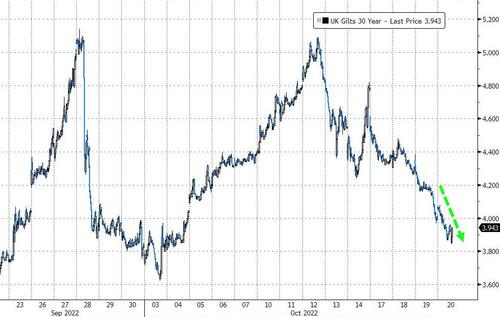
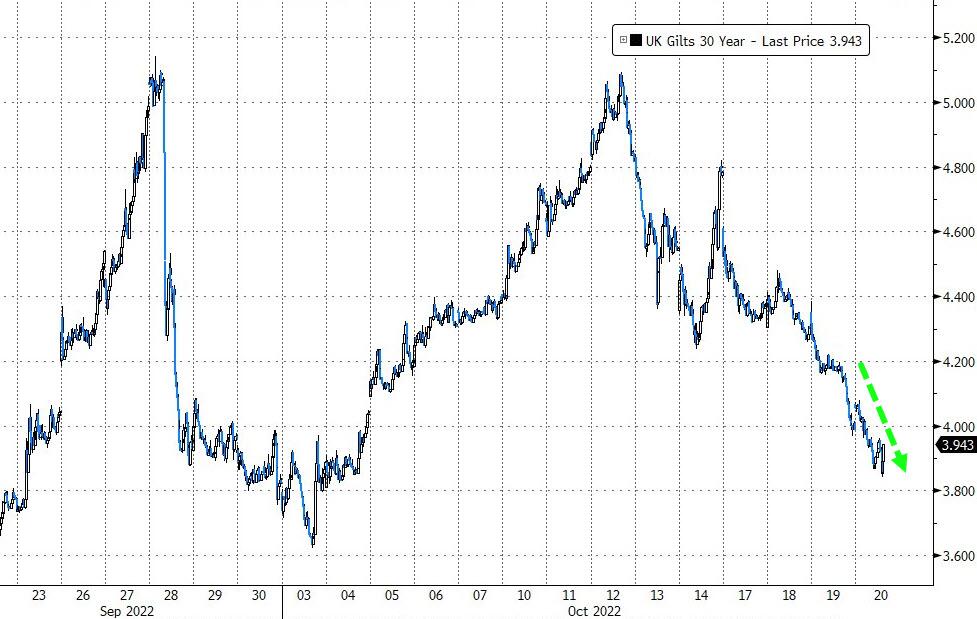
In markets, all the initial attention was on inflation: in the UK a surge to 10.1% y-o-y; a slight rounding down in final Eurozone inflation to 9.9% y-o-y; and another jump in Canadian inflation to 6.9% y-o-y. The Fed also made clear that they see potential US GDP growth as much lower than where it sits now, which implies it is still overheating now, so rates need to be higher for longer. Bullard then reiterated our house view that rates will peak much higher than they are now in Q1 2023, and will only be readjusted slightly rather than being slashed back to ridiculously low levels again. As a result, bond yields soared, with the UK the rare exception. US 10s are now at 4.15%, the highest since 2008; Japanese 10s briefly breached their 0.25% target level (as JPY moves towards 150); German 10s are at 2.37%; and Aussie 10s at 4.07%. That’s what power looks like. Or rather a lack of power to prevent inflation.
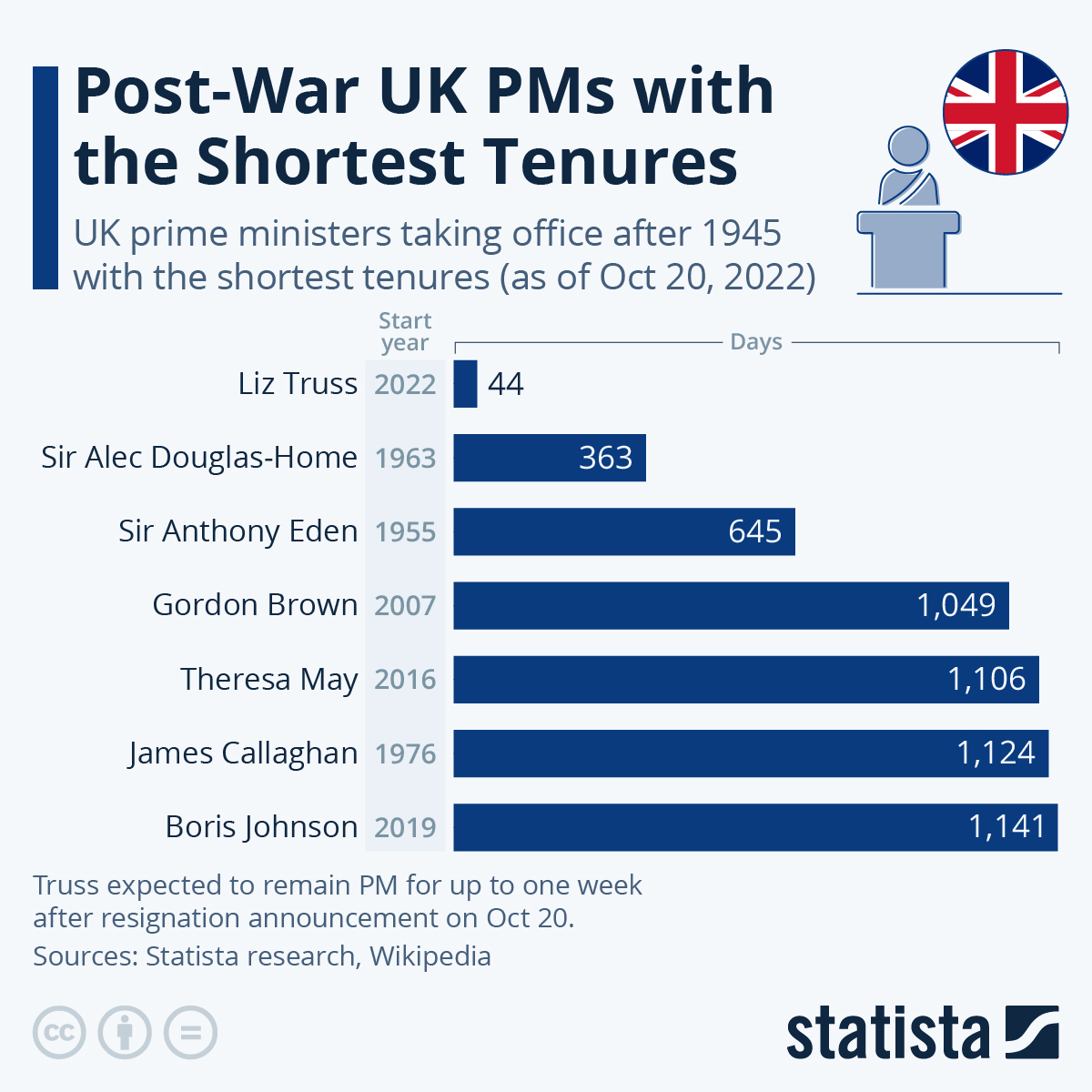
Back to thrones though, as PM Truss’s government implodes further. Yesterday saw reports of MPs being physically manhandled to vote against their manifesto pledge to their constituents; suggestions the Chief and Deputy Chief Whip manhandling them had both resigned; and Home Secretary Braverman forced to go for sending a personal email(!), replaced by Schapps, who is loyal to the new eminence grise, Chancellor Hunt, and former PM candidate Sunak. It was also reported Defence Secretary Wallace, again floated as a possible new PM, stated he would resign too if Hunt slashed the defence budget, forcing a retreat there. Both as a Brit and a global strategist this a farce; a tragicomedy; embarrassing; and a coup by any other name.
Obviously it’s a political coup: resigning over an email in this day and age?! Braverman’s angry out-the-door letter made that clear, but at least contained rare dignity: “Pretending we haven’t made mistakes, carrying on as if everyone can’t see that we have made them, and hoping that things will magically come right is not serious politics. I have made a mistake; I accept responsibility; I resign.” How much those words need to be said by *many* others – especially the ones now grinning as they assume power again.
Any future portrayal of this drama on Netflix will surely show King Charles muttering “Oh, dear” as the Bank of England plots. After all, The Old Lady precipitated this political crisis by triggering the market crisis by saying now was the time to step back from QE, not all the previous times it had bought Gilts when the money was effectively thrown down the drain in terms of boosting the productive potential of the UK economy. For those who protest that hypothetical, consider that despite all that past QE, the UK is exactly where we find it now: deep in an emerging-market rut. The only logical defence to be made is either ‘Brexit’, in which case look at the mess in Europe, or that the UK would have been even worse off if the BOE had not done the QE it already did.
Worse, the cash-strapped UK Treasury is going to give the Bank of England £11bn to cover the operating losses made via QE! An institution that can literally print money is taking a sum of cash that could cover the cost of four aircraft carriers just when the UK needs to be building them. What will the BOE do with it? Nothing. It just needs it to maintain a balanced balance sheet. Which brings us back to the arguments about stable FX and what central banks’ true roles are within political economy.
Let’s be clear, ill-founded as Thatcherism on steroids was a proposed solution to the UK structural problems, at least Truss was trying something. What we get now is a return to guaranteed technocratic institutional failure – because that was what we all agreed we had in place before Covid. Someone thinking that way too is Bloomberg commentator @izakaminska, who tweets:
“This may suit you now because Liz wasn’t your cup of tea. Fine I get it. She wasn’t mine either. But all you have created is a precedent wherein no politician be they left, right, centre or populist will ever be able to wrestle power back from the markets. When the bond vigilantes + a shouty Twitter mob control political decision making (not politicians) we are basically in the hands of mob rule. The result will be the actual destruction of Britain.
Obviously bond markets matter. But the same bull-headed commitment to pleasing the markets regardless of how they hurt the people of Russia is what brought us Putin. Yeltsin’s commitment to shock therapy regardless of the domestic consequences is what killed democracy there.
Instead of a politician who has the actual guts to be political again (regardless of whether you like her politics, the point is you can vote her out right. That’s how democracy works) we have ended up with custodian PM who is basically there as the front man for the “markets”
We have disdain for Putin being under the thumb of the siloviki or Yeltsin the oligarchs, but that is precisely what we have in Jeremy Hunt. A man who will sell out Britain to please “the markets”. Great.”
The irony is that this is happening in the UK just as the global Game of Thrones is shifting elsewhere. As the Financial Times notes today, ‘Containing China is Biden’s explicit goal’. The article makes the point already underlined here, that despite the odd lack of market interest in the White House order to ban China from accessing US tech, the real economy and real world implications are staggering, and really geopolitical – of the aircraft carrier variety.
Likewise, US Republicans, even more hawkish on China, are making clear if they win next month’s mid-term elections –and they are strong favourites to do so– they will stop funding Ukraine’s fight against Russia. That’s as Putin declared martial law and economic mobilization in provinces neighbouring the newly-conquered territory to boost his war effort.
The implications for Ukraine are worrying, but they are not much better for Europe, which would either have a vast amount of military spending to do, both to support Ukraine and re-arm itself, or a lot of kow-towing and eating of very cold, bloody humble pie. (To be clear, it’s going to eat humble pie either way: the only issue is whose. Indeed, will the US keep supporting Europe is the next question to ask.) Such outcomes would shatter what remains of the technocratic view of how Europe operates, as we already see nationalisations, Covid-era subsidies for years to come, rationing, and talk of emergency measures on supply chains. Regardless, there are probably technocratic EU/ECB officials out there already planning how to rein in state spending so we can get interest rates back down again and please markets.
Let me conclude with a link and a quote from a rant from a furious UK Tory MP from last night: “I’ve had enough of talentless people putting their tick in the right box not because it’s in the national interest, but because it’s in their own personal interest.”
The Fed is trapped in a box of their own creation. As a result, they may want to talk tough, but their ability to maneuver is severely restricted. The Fed claims that they’re targeting a terminal rate of 4.6% for Fed Funds, but if they did that for any period of time, they’d only succeed in blowing up the Treasury.
Our government has run obscene deficits over the past two decades. This was only made possible by the Fed suppressing interest rates. Despite a succession of Treasury Secretaries, the US debt was never termed out. The majority of the debt is actually quite short term. During 2021, the Federal government paid $392 billion in interest on $21.7 trillion of average debt outstanding—or an average interest rate of 1.8%.
Now imagine if Fed Funds actually got to the terminal rate and stayed there for any period of time. What would paying an average rate of 4.6% on year-end 2021 debt do to the interest expense? Well, it rises by $636 billion to $1.028 trillion or the more than the cost of our entire military spending of $801 billion in 2021. Ignoring the budget pressure, the interest cost would then be 4.5% of total GDP, up from 1.7% in 2021. That’s like tying a lead weight around the neck of our economy.
Both political parties have engaged in a drunken spending spree. There is zero political desire to reduce spending and it seems almost inevitable that deficits will continue and even expand into the future. The question is, “who then funds the increased cost of interest expense in addition to the already egregious annual deficits?”
Over the past few years, our deficits have increasingly been funded by the Federal Reserve purchasing government bonds through their QE, which is quite inflationary as we’re now learning. Except, QE is now going in reverse as the Fed claims that they’ll be selling off bonds as they conduct QT. If they’re selling bonds while the Treasury needs to accelerate their own debt issuances to cover the increased cost of interest, then rates will be forced higher—potentially much higher. As rates go higher, government interest costs will increase, and the cycle will accelerate the cash drain from the Treasury. At some point, the Fed will be forced to step in and monetize this debt as the buyer of last resort—which is effectively what happens in most Emerging Market crises—often making the crisis much worse. This is a cycle that once started, gets ugly quite fast.
Just look at how fiercely the Japanese are defending the interest rate on their own sovereign debt. The Japanese must know that once rates rise, the whole game is over. The Bank of England belatedly came to a similar conclusion after only testing QT. Over here in the states, I’m not sure if the Fed has actually done any math on the issue.
Look, Powell may want to be Volcker. He may want to crush inflation. However, he’s trapped. The Fed simply cannot take rates up beyond a certain point without blowing up the Treasury and then being forced back into even more aggressive QE to absorb the bonds from the Treasury—which would only accelerate inflation. Besides, despite Powell desiring a recession to crimp inflation, he must realize that a recession will certainly crimp tax receipts—only making the deficits worse.
It’s all quite reflexive and low rates are what’s stopping the snowball from rolling down the hill. Raising rates will set an avalanche in motion. When your debt to GDP exceeds 100%, your ability to maneuver is restricted. The US is on the precipice of an Emerging Markets debt crisis and Powell seems determined to be the one who sets it all in motion, but only after he first blows up every other global Central Bank.
I am always reminded that the Fed is full of useless academics, but in the end, it’s a highly political institution and they’ll craft the white papers to justify whatever idiotic course they choose to take. As the above scenario begins to unfold, the political class will force Powell to back down. They will decide that increased inflation is preferable to detonating the treasury. The Pause is coming and it will send equities parabolic. There will be a few more nasty moments between then and today. The trick is to survive and then max it out when the Fed admits that they’re trapped. It’s going to be one of the great wealth transfers of all time. Who’s ready??