Amazon Crashes After Reporting Catastrophic Guidance, Worst Revenue Growth In Decade
BY TYLER DURDEN
THURSDAY, APR 28, 2022 – 04:19 PM
With the bulk of the FAAMG stocks – which is now GAMMA following Facebook’s rebranding to Meta – having reported Q1 results (some great, like Facebook and MSFT, some terrible, like Facebook), investors were keenly looking to Amazon and Apple earnings after the close today, to round out the picture for the market generals and set the tone until next week’s FOMC meeting, and also to find whether today’s massive nasdaq short squeeze surge of 3% was justified.
Focuing on Amazon, Investors want to see if growth from Amazon’s profitable cloud-computing and advertising businesses outshine slower growth from its e-commerce business, which is lapping the blockbuster gains it had during the pandemic. Investors are already expecting sales growth of about 7% in the first quarter to be Amazon’s slowest in 20 years. They mainly want to see if Amazon is managing higher labor and fuel costs in a manner that protects profits. The company hiked yearly Prime membership subscriptions by $20 and announced a new fuel and inflation surcharge on sellers to help shore up revenue.
Amazon impressed investors in January with a Prime price hike and a big earnings boost tied to its investment in electric vehicle maker Rivian Automotive. Unless it has some more surprises, investors will have to focus more on Amazon’s fundamentals.
And unfortunately, it is not looking good because moments ago Amazon report both historical data and projections which badly missed expectations.
Amazon 1Q Oper Income $3.7B, missing est. $5.42B
Amazon Sees 2Q Net Sales $116.0B to $121.0B, missing Est. $125.01B
Here are the Q1 details:
Net Sales $116.44B,+7.3% Y/Y, barely beating Est. $116.43B
Loss per share $7.56, beating the estimate EPS $8.40
Physical Stores Net Sales $4.59B, +17% Y/Y, beating Est. $4.3B
Online Stores Net Sales $51.13B, -3.3% Y/Y, missing Est. $51.5B
North America Net Sales $69.24B, +7.6% Y/Y, beating Est. $67.8B
International net sales $28.76 billion, -6.2% y/y, missing Est $29.78 billion
AWS Net Sales $18.44B, +37% Y/Y, beating Est. $18.25B
Subscription Services Net Sales $8.41B, +11% Y/Y, missing Est. $8.55B
Operating income $3.67 billion, -59% y/y, missing the estimate $5.42 billion
Addressing some of the topline weakness, Bloomberg Intelligence senior analyst Poonam Goyal said “The margin being weak in the online business — you could say that’s surprising but it’s really not. For the online business the supply chain problem isn’t going away any time soon.”
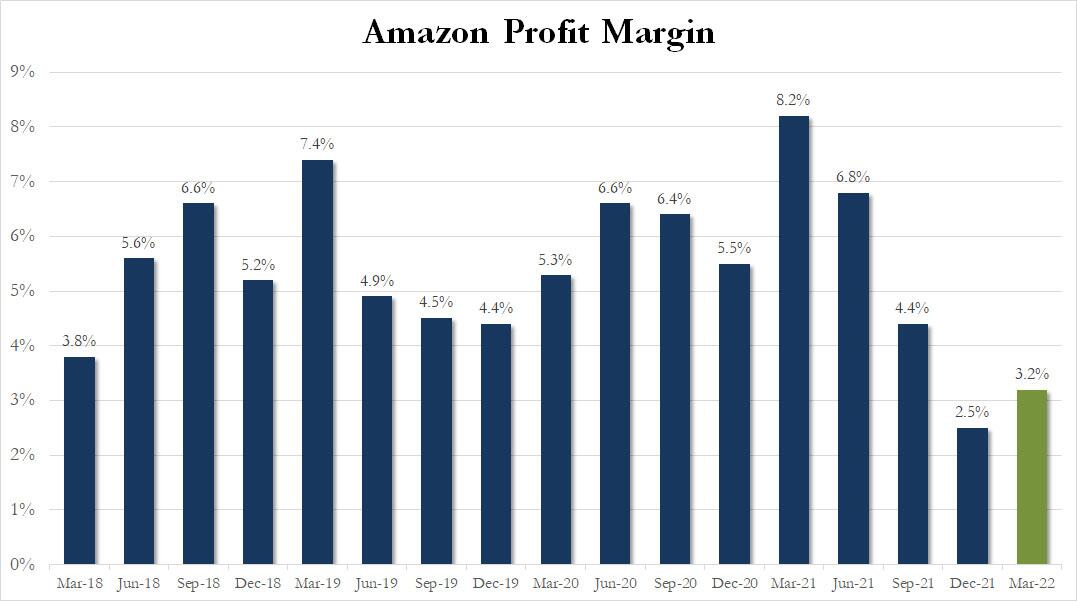
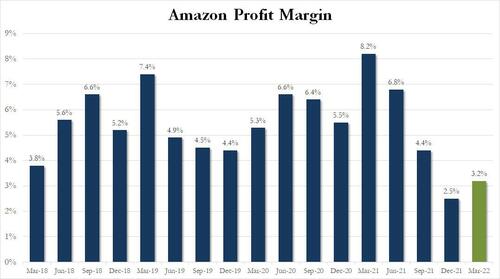
While operating margins rebounded modestly, from 2.5% in Q4, to 3.2%, it was well below the 4.7% expected.
Things could have been significantly worse were it not for sales at its cloud-computing service increasing 37%, roughly in-line with what analysts expected. Amazon Web Services (AWS) continued to stand out as a profit machine even as competition from Microsoft, Google, and others with revenues rising to $18.44 billion (from $13.5 billion a year ago, against expectations of $18.34 billion. Additionally, the segment’s operating income increased to $6.52 billion from $4.16 billion.
However, it’s not all ponies and unicorn farts for AWS as revenue growth slowed from 39.5% in the fourth quarter.
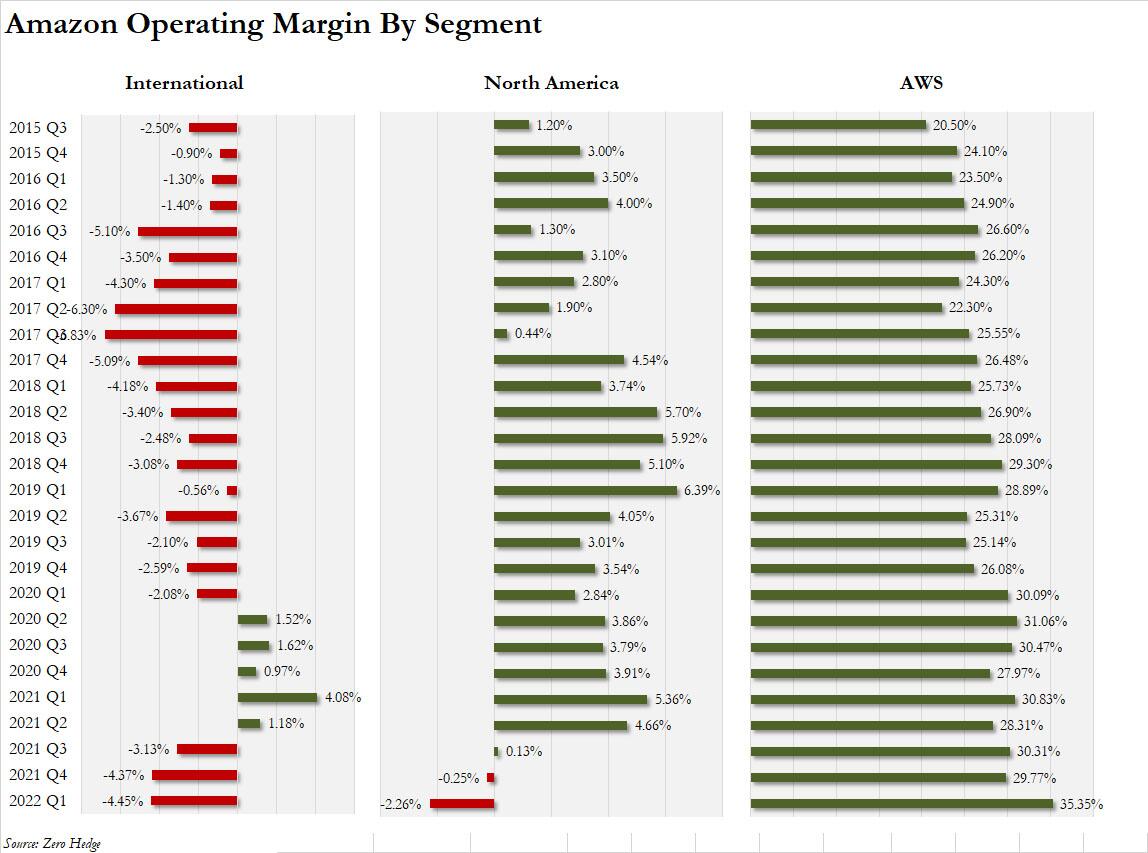
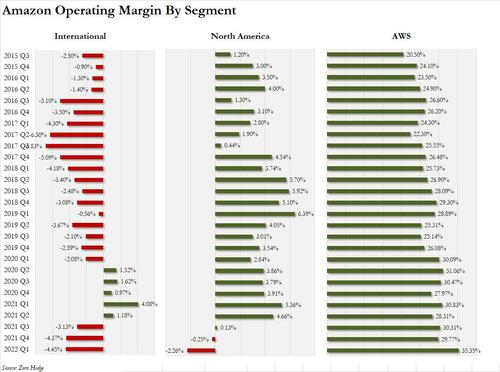
What is remarkable here is that while AWS profit margin actually rose to the highest on record at 35.35% (from 29.8% in Q4), it barely offset the loss at both North American and International divisions, both of which generated more than $1 billion in operating losses in the quarter!.
And while historical data was mixed at best, just barely beating on sales if showing some weakness in online store and international sales, as well as missing on operating margin, what the market is focused on is the company’s dismal guidance, whose upper end of $121BN missed the Wall Street median estimates of $125BN, while also projecting an operating loss as bad as $1 billion (up to a $3 billion gain).
Sees net sales $116.0 billion to $121.0 billion, estimate $125.01 billion (Bloomberg Consensus)
Sees operating loss $1.0 billion to profit $3.0 billion, estimate profit $6.8 billion
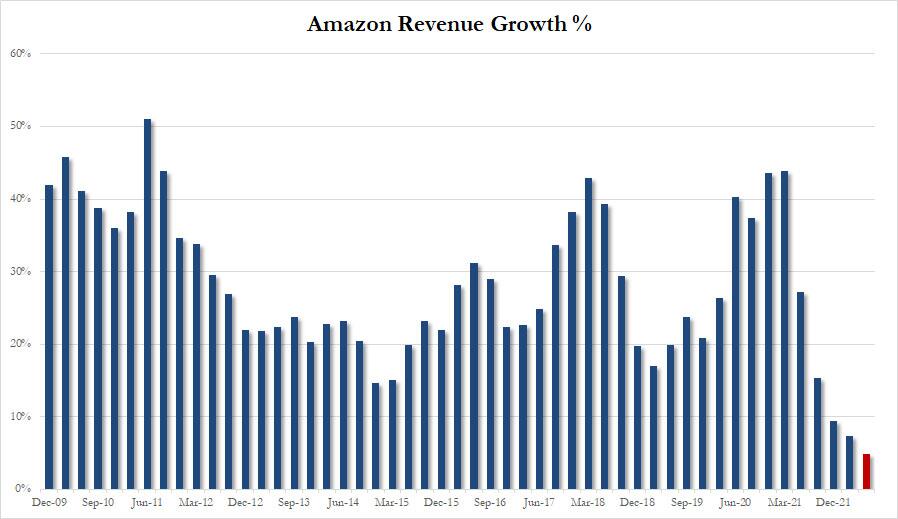
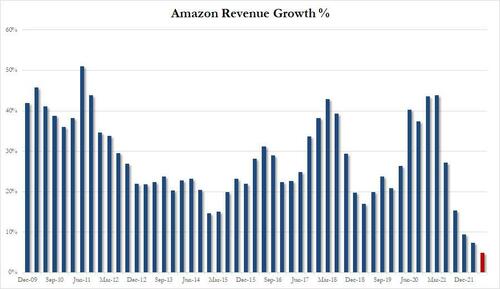
One unpleasant highlight here: reported revenue growth of 7.3% in the first quarter, its slowest growth in about two decades. Worse, the company’s guidance to a median $118.5BN in the next quarter would be growth of just 4.8%, even lower!
Some more guidance details:
Amazon Guidance Assumes Prime Day Occurs in 3Q 2022
Amazon: Working Through Inflationary, Supply Chain Pressures
Amazon ‘No Longer Chasing Physical or Staffing Capacity’
It wasn’t just revenues that were concerning: as Bloomberg notes, one red flag about Amazon’s financial condition: Worldwide shipping costs jumped 14% to $19.6 billion. Meanwhile, revenue from online store sales dropped 3% and revenue from third-party sellers services increased 9%.
Indeed, inflation is exposing the dangers of Amazon’s low-margin e-commerce model that has conditioned customers to expect low prices and quick delivery.
Another potential challenge on the expense side: retention of workers — whose compensation is largely tied to Amazon’s stock price — if investors sour on the stock. Keeping customers happy with a money-losing business is a dangerous proposition if it compromises employee compensation. Amazon will have to convince investors the money-losing quarters will only be temporary and it will be able to make its network more efficient to cut expenses.
Commenting on the quarter, Amazon CEO Andy Jassy said the company is focused on improving efficiencies in its warehouse and delivery network that it rapidly expanded during the pandemic, but it will take some time. To be sure, Wall Street definitely got blind-sided by the quarterly loss and projected loss in the current quarter. Inflation is taking a toll on Amazon.
Unfortunately, Amazon doesn’t have many tricks up its sleeve. It already raised Prime subscription prices and tacked an inflation and fuel surcharge on its online merchants. All of that is baked into Amazon’s earnings outlook and it’s still projecting a loss in the current quarter. CEO Andy Jassy is proving himself to be a Jeff Bezos disciple: He’d rather stick it to investors than to customers.
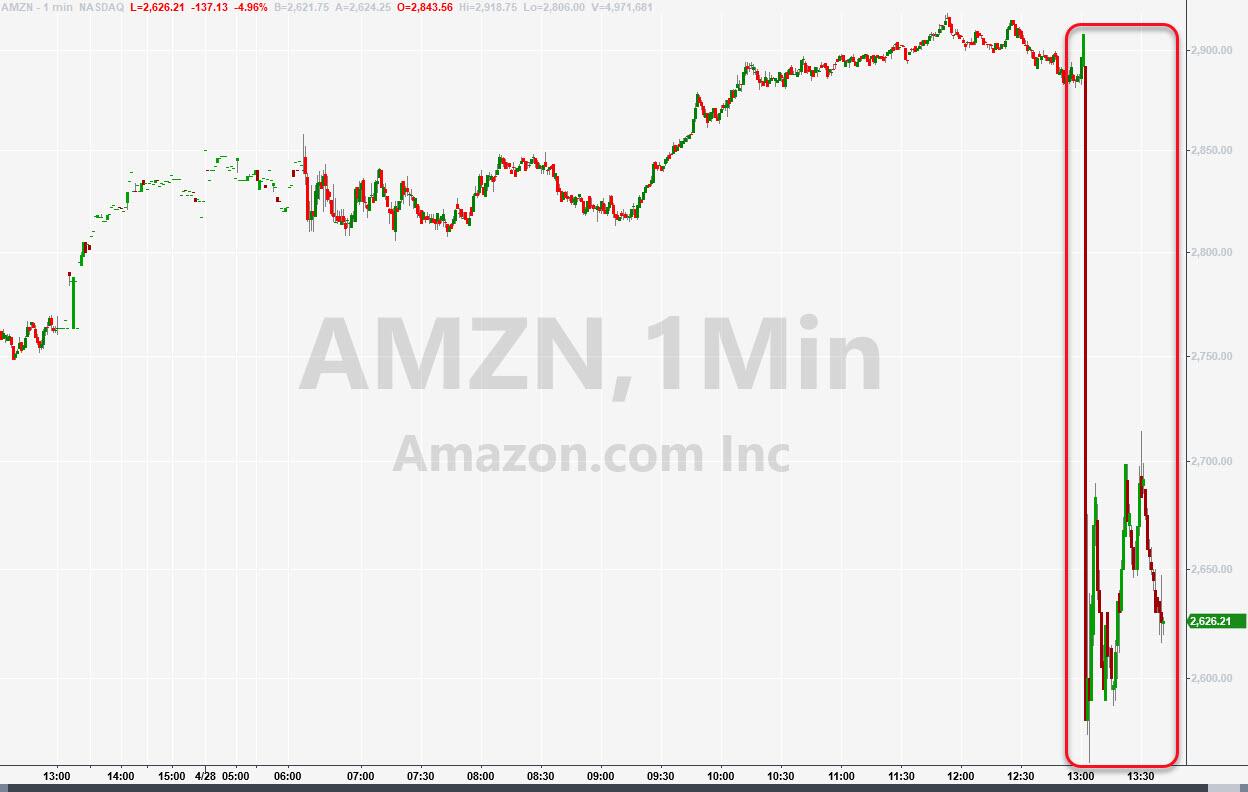
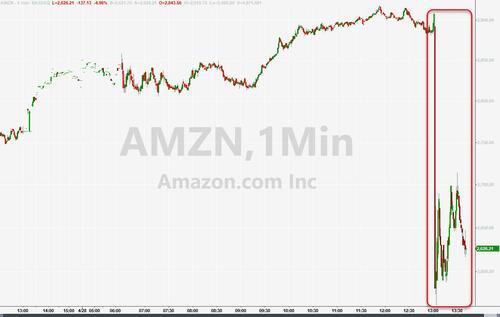
So it Amazon going to spoil the tech party again? Well, we have to wait for AAPL for the final verdict, but as of this moment, AMZN is down some 10%, trading around $2,600 after closing at $2,900 the regular session after surging some 4.6%.
Ukraine’s story is part of the longer history of eastern Europe – pieces laying on the ground from Wilson’s hubris after the Great War.
Several decades after Wilson and Versailles, two giants clashed again in World War II of which the US was a member of the cast supporting Stalin.
In the middle were people – from the Baltics down to Ukraine — forced to choose.
The tragic story in the Baltics was captured in Prit Buttar’s “Between the Giants” – essential reading.
With the exception of Poland, no region or territory suffered more greatly during World War II than the Baltic States. Caught between the giants of the Soviet Union and the Third Reich, Latvia, Lithuania, and Estonia became pawns in the desperate battle for control of Eastern Europe throughout the course of World War II.
Again and again, local government organizations and individuals were forced to choose between supporting the occupying forces or forming partisan units.
Many would be caught up in the bitter fighting in the region and, in particular, in the huge battles for the Courland bridgehead during Operation Bagration when hundreds of thousands of soldiers would fight and die in the last year of the war.
Over 300,000 Soviet troops would be lost during the repeated assaults on the ‘Courland Cauldron’ before 146,000 German and Latvia troops were finally forced to surrender.
No mercy was shown and all Latvians, Lithuanians, and Estonians who fought for Germany were executed.
By the end of the war, death and deportation had cost the Baltic States over 20 percent of their total population and the iron curtain would descend on the region for over four decades.
Today, we see the Cauldron again in eastern Ukraine. With always a sense of history, Russian forces are replaying the Courland Cauldron in the Donbass in an attempt to “denazify” Ukraine and remove a mortal threat to the Motherland.
Think that’s just hype, propaganda, and psyops?
Perhaps.
But ask yourself – what do you really know of Russian history?
Yesterday, Russian forces broke through the Ukrainian lines in Izyum, and are driving into the Ukrainian rear and on to Saviansk.
For those with a sense of history, we are seeing Courland again.
So, to what extent is Ukraine today no different from the Baltics in 1945?
Russia calls both operations a “cauldron”. Today’s tactics reflect Operation Bagration, a battle every Russian military officer was taught in their military academies and the Russian General Staff Academy on Kholzunova Lane in Moscow.
Perhaps one take-away from Courland is today’s Russian forces employ combined arms rather than infantry-armored assaults.
That means reducing entrenched positions with air strikes, endless artillery pounding, and blocking forces in the read cutting off resupply of food and ammunition.
And avenues for retreat.
Faced with a growing military threat supported by NATO, biolabs adjacent to the Russian border and evidence of a massive spring offensive, Russia intervened.
They claimed their objective was to demilitarize and denazify Ukraine.
Do you think there aren’t nazis in the Ukrainian government and its military and security forces?
Ever notice the Wolfsangel on those symbols people post in Tribeca?
Do you know the history of the Wolfsangel?
The coup we sponsored in 2014 was filled with Wolfsangels. After seizing power, the US allied with them. Subsidized them. Trained them. Armed them. Advised them.
And Ukrainian oligarchs rewarded our DC Royalty with contributions and payoffs to families and friends.
Joe Biden ran the Ukraine portfolio through the coup. And his family was rewarded for it.
Ukrainian oligarchs supported the Trump impeachment in 2021 – regardless what you think of Trump, consider that fact.
So let’s get one historical perspective. I would quibble with some of what follows and have other historical perspectives.
But Frank Lee does a nice job bringing history into the present.
I wrote this particular piece in 2014/15 just after the February 2014 coup. As it turned out the coup has evolved into a greater political and strategic military conflict – orchestrated by outside forces, the western NATO bloc, and carried out by internal neo-nazi forces in the west of the Ukraine. These far-right factions have changed their names and a leadership which rotates around the personnel, but the politics remains the same.
The overwhelming support given by the centre-left in both Europe and the US to the installation of the regime in Kiev should give them cause for concern.
Politics in the Ukraine can only be understood by reference to its history and ethnic and cultural make-up – a make-up criss-crossed by lasting and entrenched ethnic, cultural, and political differences. The country has long been split into the northern and western Ukraine, where Ukrainian is the official and everyday lingua franca, and the more industrialised regions of the east and south where a mixture of Russian speaking Ukrainians and ethnic Russians reside. Additionally, there has long been Hungarian and Romanian settlement in the west of the country, and a particularly important Polish presence, whose unofficial capital, Lviv, was once the Polish city of Lwow. The Russian Orthodox Church is the predominant form of Christianity in the East, whilst in the west the Christian tradition tends towards Roman Catholicism.
Politically the Eastern and Southern Oblasts (Regions) which includes the cities and centres of heavy industry, Kharkov, Lugansk, Donetsk, Zaporozhe, Nikolayev, Kherson, Simferopol, and Odessa, have tended to tilt towards Russia whilst the western regions have had a more western orientation. This has traditionally been reflected in the electoral division of the country. There is no party which can be considered ‘national’ in this respect, except ironically, the old Communist party, which of course is now banned. The major regional parties have been the Fatherland party of Yulia Tymoshenko (since renamed) and the former head of government, Arseniy Yatsenyuk as well as the ultra-nationalists predominantly in the west of the country, and the deposed Victor Yanukovich’s Party of the Regions in the East (now defunct) along with its junior partner in the coalition, the Ukrainian Communist Party.
However, what is new since the coup in February 2014 there has been the emergence from the shadows of ultra-nationalist (fascist) parties and movements, with both parliamentary and extra-parliamentary (i.e., military) wings. In the main ‘Svoboda’ or Freedom Party, and the paramilitaries of ‘Right Sector’ (Fuhrer: Dimitry Yarosh) who spearheaded the coup in Kiev; these have been joined or changed their names to inter alia the Radical Party, and Patriots of the Ukraine; this in addition to the punitive right-wing militias particularly the highest profile being the Azov Regiment who have been responsible for numerous atrocities in the Don Bas.
Suffice it to say, however, that these political movements and parties did not emerge from nowhere.
This far-right tradition has been historically very strong in the western Ukraine. The Organization of Ukrainian Nationalists (OUN) was first established in 1929 and brought together, war veterans, student fraternities, far-right groups and various other disoriented social and political flotsam and jetsam under its banner. The OUN took its ideological position from the writings of one, Dymtro Dontsov, who, like Mussolini had been a socialist, and who was instrumental in creating an indigenous Ukrainian fascism based upon the usual mishmash of writings and theories including Friedrich Nietzsche, Georges Sorel, and Charles Maurras. Dontsov also translated the works of Hitler and Mussolini into Ukrainian.
The OUN was committed to ethnic purity, and relied on violence, assassination, and terrorism, not least against other Ukrainians, to achieve its goal of a totalitarian and homogeneous nation-state. Assorted enemies and impediments to this goal were Communists, Russians, Poles, and of course – Jews. Strongly oriented toward the Axis powers OUN founder Evhen Konovalets (1891-1938) stated that his movement was ‘’waging war against mixed marriages’’, with Poles, Russians and Jews, the latter which he described as ‘’foes of our national rebirth’’. Indeed, rabid anti-Semitism has been a leitmotif in the history of Ukrainian fascism, which we will return to below.
Konovelts himself was assassinated by a KGB hit-man in 1938 after which the movement split into two wings: (OUN-M) under Andrii Melnyk and, more importantly for our purposes (OUN-B) under Stepan Bandera. Both wings committed to a new fascist Europe. Upon the German invasion in June 1941, the OUN-B attempted to establish a Ukrainian satellite state loyal to Nazi Germany. Stepan Lenkavs’kyi the then chief propagandist of the OUN-B ‘government’ advocated the physical destruction of Ukrainian Jewry. OUN-B’s ‘Prime Minister’ Yaroslav Stets’ko, and deputy to Bandera supported, ‘’the destruction of the Jews and the expedience of bringing German methods of exterminating Jewry to Ukraine, barring their assimilation and the like.’’
During the early days of the rapid German advance into the Soviet Union there were some 140 pogroms in the western Ukraine claiming the lives of between 13000-35000 people (Untermensch, in fascist terminology). In 1943-1944 OUN-B and its armed wing the Ukrainian Insurgent Army (Ukrainska Povstanska Armia – UPA) under the leadership of Roman Shukeyvich the Ukrainian military leader, and one of the organizers of the Galicia-Volhynia carried out large scale ethnic cleansing resulting in the deaths of tens of thousands; this was a particularly gruesome affair where some 90000 Poles and thousands of Jews were murdered. The campaign of the UPA continued well into the 1950s until it was virtually wiped out by the Soviet Red Army.
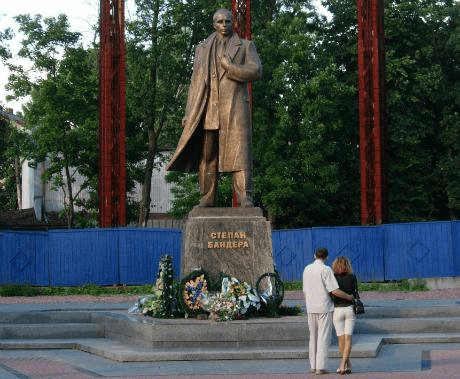
It should be said that during this early period Bandera himself had been incarcerated by the German authorities up until his release in 1944, since unlike Bandera they were not enamoured of an independent Ukrainian state but wanted total control. Bandera was only released at this late date since the German high command was endeavouring to build up a pro-German Ukrainian Quisling military force to hold up the remorseless advance of the Red Army. Also pursuant to this it is also worth noting that during this period the 14th Galizian Waffen SS Division, a military Ukrainian collaborationist formation established by none other than Heinrich Himmler, which was formed to fight the Soviet forces, and yet another being the Nachtingal brigade; (1) this unit was integrated into the 14th Galizian in due course. It is also interesting to note, that every year, and up to 2014 commemoration ceremony including veterans of this unit takes place with a march through Lviv in an evening torchlight parade – genuine Nazi pastiche. The flag of this unit is not dissimilar to the French automobile manufacturer Peugeot logo, the standing lion, and can be seen at ultra-nationalist rallies as well as particular bitter rivalry between football matches involving Lviv Karparti FC and Shaktar Donetsk FC. There are also numerous statues of Bandera across Ukraine – see below – and since the 2014 coup even street names bearing the same name. Significantly the UPA have now received political rehabilitation from the Kiev Junta, with Bandera declared a hero of the Ukraine and the UPA rebranded as ‘freedom fighters.’ One particularly splendid statue of Bandera stands proudly in Lviv and lovingly adorned with flowers.
Other novel attractions the capital of Banderestan include ‘Jewish themed restaurants’ one such is Kryivka (Hideout or Lurking Hole) where guests have a choice of dishes and whose dining walls are decorated with larger-than-life portraits of Bandera, and the toilet with Russian and Jewish anecdotes. At another Jewish themed restaurant guests are offered black hats of the sort worn by Hasidim. The menu lists no prices for the dishes; instead, one is required to haggle over highly inflated prices ‘’in the Jewish fashion’’. Yes, it’s all good clean fun in Lviv. Anti-Semitism also sells. Out of 19 book vendors on the streets of central Lviv, 16 were openly selling anti-Semitic literature. About 70% of the anti-Semitic publications in Ukraine are being published by and educational institution called MUAP (The Inter-Regional Academy of Personnel Management). MAUP is a large, well-connected, and increasingly powerful organization funded from outside anti-Semite sources, and also connected to White Supremacist groups in the USA and to David Duke, former Grand Wizard of the Ku Klux Klan.
(It is one of the ironies of history that if the Zionists in AIPAC and the Washington neo-con think tanks, and the British Labour Party Friends of Israel, were so concerned about anti-Semitism, they might try looking for it in Lviv. They wouldn’t have to search very far.)
Present day neo-Nazi groupings in Ukraine – Svoboda (Freedom) party and Right Sector, C14 and those patriotic chaps in the Azov Battalion – have been the direct descendants from the prior ideological cesspool. Heading Svoboda is Oleh Tyahnybok. Although these are separate organizations Tyahnybok’s deputy Yuriy Mykhalchyshyn was the main link between Svoboda’s official wing and neo-Nazi militias like Right Sector. The Social-Nationalist party as it was formerly known chose as its logo an amended version of the Wolfsangel, a symbol used by many SS divisions on the Eastern front during the war who in 2004 a celebration of the OUN-UPA, stated in 2004, that ‘’they fought against the Muscovite, Germans, Jews, and other scum who wanted to take away our Ukrainian state.’’
(Note that Tyahnybok is giving what appears to be the Nazi salute (or maybe he is just waving to someone in the audience!) He can also be seen standing at the left hand of the late and controversial US politician, John McCain, at another Banderist rally).
And further that ‘’Ukraine was ruled by a Muscovite-Jewish mafia.’’ Tyahnybok came under pressure from the then President, Yuschenko, to retract his inflammatory statements, which he did, but he then retracted the retraction!
Given the fact that Svoboda was, apart from its stamping grounds in the west, making little national electoral headway, it was essential to clean up its image and deny its Nazi past. But this was always going to be difficult since the members of such groups cannot help the unscripted outbursts and faux pas which they tend to make, and which reveals their true colours. For example, following the conviction and sentencing of John Demjanjuk to five years in jail for his role as an accessory to the murder of 27,900 people at the Sobibor death camp, Tyahnybok travelled to Germany and met up with Demjanjuk’s lawyer, presenting the death camp guard as a hero, a victim of persecution ‘’who is fighting for truth’’. (2)
And so, it goes on. We can therefore infer that this organization is inveterate fascist. More disturbing Svoboda has links with the so-called Alliance of National European Movements, which includes: Nationaldemokraterna of Sweden, Front Nationale of France, Fiamma Tricolore in Italy, the Hungarian Jobbik and the Belgian National Front. More importantly Svoboda held several ministerial portfolios in the Kiev administration, and Right Sector swaggers around Kiev streets with impunity, and/or are being drafted into a National Guard to deal with the separatist movements in the east, or to beat down anyone who doesn’t conform to their Ayran racial and political ideals.
One would have thought that this mutating revolution and establishment in the Ukraine would have drawn attention of the centre-left to the fact that fascism had gained a vital beachhead in Europe, and that the danger signals should be flashing. But not a bit of it; a perusal of the British Guardian newspaper quickly reveals that their chief concern has been with a non-existent ‘Russian threat’. One of their reporters – or old friend, Luke Harding -described Right Sector as an ‘’eccentric group of people with unpleasant right-wing views.’’ Priceless! This must rank as the political understatement of the century. In fact, the Guardian was simply reiterating the US-imposed neo-conservative foreign policy. But naturally, this is par for the course.
The man himself – Stepan Bandera
The Nachtingal brigade, which was later incorporated into the SS Galizien, took part in a three-day massacre of the Jewish population of Lvov (now Lviv) from 30 June 1941. Roman Shukhevych was the commander of the Nachtingal and later, in 1943, became commander of the Ukrainian Insurgent Army (the “Banderivtsy”, or UPA/UIA ), armed henchmen of the fascist Stepan Bandera, who after the war pretended that they had fought both Nazis and Communists. Members of the division are also accused of having murdered some 800 residents of the Polish village of Huta Pieniacka and 44 civilians in the village of Chania. All in a day’s work for these ‘patriots’.
This day has been a long time coming. From the moment, more than a decade ago, when it was finally admitted that Europe was destined to be an energy importer, we were going to see the climax of the showdown between the West and Russia.
Europe as energy importer always meant that time was on Russia’s side. All it had to do was draw the conflict out long enough, survive long enough, to force Europe into submission. Russia has the energy Europe needs, no one else can supply it, therefore the final decision will be to accept this fate.
No amount of financial wizardry, pathetic virtue signaling about Climate Change, malinvestment into inefficient and unsustainable ‘renewables,’ or military threats would ultimately change the outcome of this story.
Output off the North Slope has fallen off and Groningen’s gas fields are drying up faster than Hillary’s va-jay-jay with each twist of John Durham’s investigation into RussiaGate.
Every gambit to secure energy from Ukraine (Donbass coal, gas fields in the Sea of Azov) and the Middle East (Syria, EastMed Pipeline, Iran) have also failed.
This is the basic problem the EU faces in its quest for political hegemony. How does it get around this basic fact without fomenting 1) a political crisis at home and 2) a war with Russia and the rest of the Global South who support her, it cannot win?
Force Majeure
Since the start of the war in Ukraine, a conflict created by EU complicity in NATO’s long-standing war on Russia, the EU has tried to play the victim of US/UK aggressiveness while happily going along with it for their own purposes.
That purpose is to advance their agenda of erecting a total surveillance state under the guise of a radical response to Climate Change. Their problem is they have no viable replacement for Russian energy, be it oil, coal or gas, that is capable of sustaining them in the interim.
All of their refusals were met with Russian intransigence. After gleefully going along with the theft of Russian foreign exchange reserves, as well as forcing the abandonment of Russian state assets like seizing Gazprom’s subsidiary in Germany, Europe still tried to say Russia had no legal right to change the terms of payment for Russian energy.
It was hilarious to watch as EU sycophants tried to argue Russia had no legal right to claim to force majeure after the EU prohibited Gazprom from spending the euros they would be paid for its gas.
The Russian government responded with a demand for payment for all exports to legally-defined ‘unfriendly countries’ in either gold or Russian rubles. And the howls were heard all around the world.
Even though acts of war, including sanctions, are a typical clause in all Gazprom supply contracts:
Force Majeure clause in Gazprom contracts. Looks like changing the terms is fine given both war and sanctions have triggered force majeure. Deal with it, europoors. pic.twitter.com/6xB1GFBMoR
So, after a couple of weeks of denying reality, of playing to the moral high ground about punishing Vladimir Putin the butcher of Bucha, the EU as always caved to reality.
Moscow has warned Europe it risks having gas supplies cut unless it pays in roubles. In March it issued a decree proposing that energy buyers open accounts at Gazprombank to make payments in euros or dollars, which would then be converted to rubles.
The Commission said earlier this month that the decree risked breaching EU sanctions since it would put the effective completion of the purchase – once the payments are converted to rubles – into the hands of the Russian authorities.
In an advisory document sent to member states on Thursday, however, the Commission said Moscow’s proposal does not necessarily prevent a payment process that would comply with EU sanctions against Russia over the Ukraine conflict.
This is their way out. As always, the EU will just define things however they need to in order to save face, while ultimately capitulating when forced to show their hole cards.
We watched this same pathetic display for more than three years over Brexit. And if not for a complicit, nee treasonous performance by Former Prime Minister Theresa May, Brexit negotiations would have been finalized in around six months.
All she had to do was set terms and walk away from these people. All she had to do was what Putin just did.
This isn’t to say Putin’s handling of this growing crisis has been perfect. His biggest fault as Russia’s leader has been his continued underestimating the duplicity and sheer evil emanating from the European Commission.
However, I also feel Putin knew that Russia’s best strategy was to be the best neighbor it could be despite the obvious provocations. It cost him politically for years. This is why he tried so hard for so long to find common ground with these folks, attempting where he could to make allies and create political leverage.
This is why Putin has refused to shut off the gas to the EU, even while they dragged their feet on paying in rubles. He always knew where this would end up, and if you asked the Eurocrats in Brussels quietly, so did they.
The political costs to Brussels for turning off the gas would be too high a price for them to pay.
This issue has caused fracturing in German’s fragile ruling coalition. It has harmed France’s Emmanuel Macron’s re-election chances in France. It will cost Mario Draghi his government next year. Of course, by then Draghi’s destruction of Italy as a country will be nearly complete. One can only hope the Italians find their voice between now and then.
Hungry, Hungary Hypocrites
Putin’s most obvious victory was in Hungary, where Viktor Orban just won a major election. Orban has already leveraged that victory into frustrating the EU’s plans to sever energy ties with Russia and steadfastly refusing to up the military pressure on Russia, which I talked about on the eve of the election.
For this reason Hungary will be in the EU’s crosshairs going forward. It will be marginalized, if not kicked out eventually, over these issues. There are ideologues at the helm in Brussels and they will not be stopped in their quest to bring Europe to its knees under their control.
If Hungary say no to this, they will be punished for it. But punishing Hungary at this point is like trying to punish Russia. It’s actually a blessing for them.
The biggest embarrassment for Brussels would be for Hungary to thrive outside of the EU framework, the same fear that was on the table during Brexit negotiations. The difference, of course, is that the UK political establishment is all in on the Brussels agenda, it’s the people outside of London who aren’t.
Hungarians just proved that Orban doesn’t have that problem.
So, the benefits of ending its future relationship with the EU will be much more immediately apparent, when it happens.
European Unionicide
No matter what happens in the long run, however, the reality is that a new Europe is on the horizon. And it isn’t a pretty sight. The EU will, at best, muddle through without a couple of current pieces — Hungary, Bulgaria and Romania — and at worst break back apart as the common currency experiment reaches an ignominious end broken on the shores of a new energy-based reserve standard which it simply cannot compete against.
Just like Ukraine is quickly being carved up by Russia into a smaller pieces, so too will Europe balkanize over the EU’s failures to secure a reliable energy future for its people.
Russia’s demands that Europe pay for Russian exports through the unsanctioned Gazprombank, who will process the currency conversion (at the importer’s expense) into rubles, now give it the upper hand in all future trade dealings with the EU.
And since the ruble is now loosely tied to physical gold this means the possibility of the euro ever challenging the US dollar as a reserve currency is now officially over. That fate was sealed with Draghi’s move to negative interest rates back in 2014, turning it into the ultimate carry currency.
That status is quickly unwinding to the detriment of the Japanese Yen which is now grabbing the headlines caught in the middle between the war between the Fed and the ECB.
There is no reason now for anyone to hold euros or convert euros into European sovereign debt. The Russians are no longer going to support the eurodollar market by recycling its trade surplus into the European banking system, exactly as was predicted when the EU followed the US by seizing Russia’s foreign exchange reserves.
Who in their right mind would hold euros on your balance sheet beyond what you need to pay for goods is a losing proposition if Ursula Von der Leyen has deemed you an Untermensch?
Gazprombank will simply flip those euros into physical gold and add them to the country’s balance sheet, making it even stronger. This will ensure that the euro itself becomes a pariah currency and force the ECB to continue the path towards hyperinflation.
The birth of a new Europe is one where the currency risk is now all on the importer of commodities, not the exporter of commodities. I’ve been saying for years that Europe always thought that its huge share of Russian energy exports would give it monopsony power over Russia. That, they thought, without Europe as a buyer, Russia would be at their mercy.
In a hyper-financialized world, that assumption had always held true. But, in a new monetary regime, where the world is beyond debt saturation, the bills are due and there’s no more road to kick the can down, it simply isn’t true anymore.
By Russia tying the ruble to gold and both the US and EU weaponizing offshore dollar markets, that misperception of buying power is being laid bare. Sure, the EU has euros to offer but it does so into the revaluation of commodities versus fiat currencies which have ever-shrinking use cases.
This only feeds the downward spiral of the euro and the eurodollar system into the vortex that is physical gold and the demand for commodities on which all of its value is derived.
The mouse in Hungary has roared loud enough to finally get the apparatchiks in Brussels to listen to the tune the Russian bear has been quietly humming to itself for years.
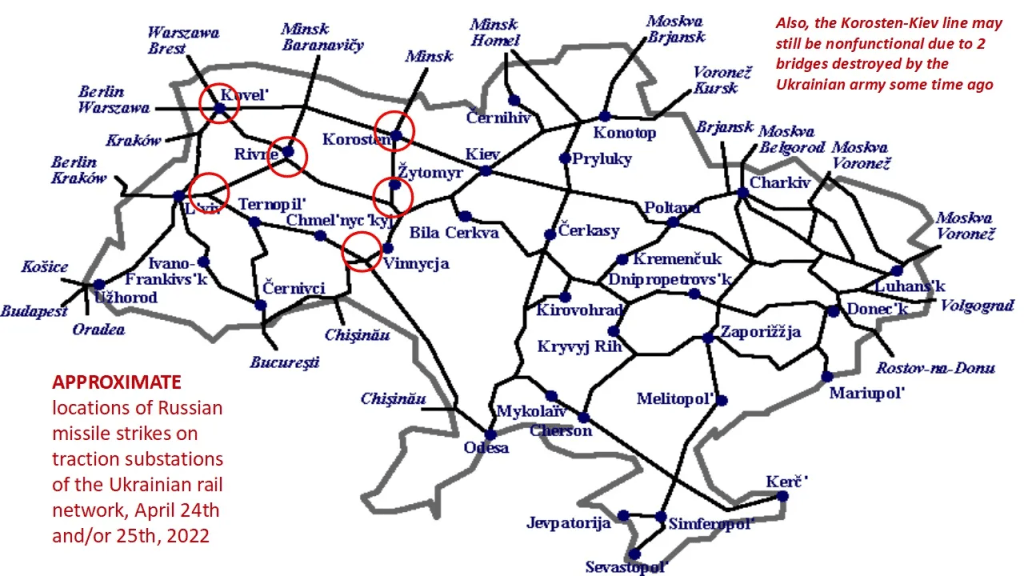
On the night of April 24th or the morning of the 25th, Russian cruise missiles destroyed a total of six traction substations within the Ukrainian rail system, paralyzing electric train traffic (and thus, all rail traffic) in western Ukraine.
No easy repair.
Traction substations house transformers that take power from the grid and convert it to the voltage, amperage, and frequency needed to drive electric train motors through overhead lines or (more often) third rails.
As you can see from this map, the strikes were clearly intended to paralyze rail traffic throughout roughly the westernmost one-third of the Ukraine from the Polish border on east
These strikes will stopa very large section of the Ukraine’s rail system from transporting NATO country “donations” into the Ukraine and eastwards to the front lines.
Moreoever, this hardware is now stuck on the rails, not moving, and an easy target for still more cruise missiles, SU-25 rockets, and tank-killing Mi-24 Hinds.
This also stops the rail transport of food, fuel, and other things that people need to live — from the AFU units pinned down in the east on west where land imports, exports, and passengers travel.
It’s been about 60 days since the invasion. Russia clearly wanted to leave the infrastructure alone, but was left with no choice.
Up to 30 per cent of Ukraine’s infrastructure, including dozens of railway bridges, has been destroyed in the two-months course of the war in Ukraine. The damage done so far is worth around about 100 billion US dollars. The Ukrainian Minister of Infrastructure Oleksander Kubrakov stated last week that with very hard work, recovery is possible … in two years.
“Virtually all parts of our transportation system have suffered in one way or another,” said Kubrakov. He also mentioned that 300 road bridges and dozens of railway bridges have been blown up. In addition, at least 8000 kilometres of roads must be repaired or reconstructed.
Who’s in charge of this insanity?
Zelenskyy is just the Ukrainian puppet while Corrupt Joe Biden is just the American puppet.
And, clearly, Jake Sullivan and Vitoria Nuland are willing to fight to the last Ukrainian. The orders are Salingrad 2.0 – no retreat, no surrender coming from … Obama?
While, clearly, Russia’s perspective at this point is “you can have it your way.”
Ukraine is on track to being destroyed.
At least one-third of Ukraine (the Russian speaking) will go to Russia, and the rest will become wasteland, albeit one with a number of severely under-maintained and overstressed nuclear power plants.
While several million more refugees will hit Europe at the worst possible time.
And Europe will be short food, gas, and oil this fall and winter.
Bloomberg is citing the prominent Polish news portal Onet.pl to report Tuesday late afternoon (local time):
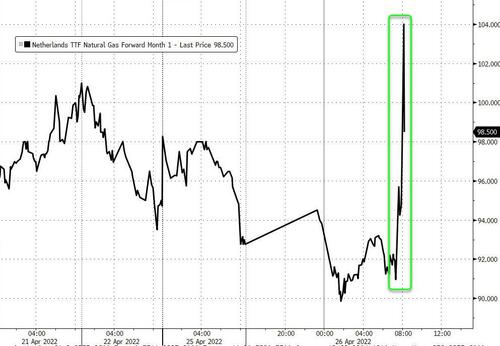
“Russia has halted gas deliveries to Poland under the Yamal contract, Onet.pl website reports citing Polish government sources it didn’t name.”
The report out of Polish national news indicates that formal government announcements are to be made later in the day, likely within hours…
Russia has suspended gas supplies to Poland under the Yamal contract, Onet has learned unofficially. A crisis team has gathered at the Ministry of Climate. There is no announcement from Russia as to whether this is the fulfillment of the ultimatum that Vladimir Putin recently threatened. Official announcements on this matter are to be released today.
A month ago as Poland took steps to wind down all Russian oil imports by end of the year, other European countries also began warning their populations on the need to conserve natural gas usage amid potential severe supply shortages.
Reports: Russia has reportedly suspended natural gas supplies to Poland.
55% of Poland's gas imports come from Russia
Reports: Russians did not inform the Polish side about the reasons for the suspension of deliveries
Also potentially behind this reported halt in Russian gas is that on Monday for the first time Polish Prime Minister Mateusz Morawiecki confirmed that his country has sent tanks to Ukraine.:
“Yes,” Morawiecki said when asked if Poland had or would send tanks to Ukraine. He declined to reveal any further details including the number of tanks sent.
This follows in March Warsaw attempting to send MiG-29 jets to Ramstein Air Base for the US to deliver them to Kiev – something which the Pentagon rejected as premature and high risk.
Poland is also hosting US troops, who are lately engaged in training Ukrainian forces on advanced weaponry like drones. If these fresh reports of a gas shutoff to Poland are confirmed, it appears that Moscow has had enough.
When Moskva exploded, it wasn’t obvious to me this was a cruise missile strike. It seemed apparent there was an internal explosion. More on my thinking later:
Could be a magazine fire – old vessel, notoriously fragile, and lacking US Navy damage control capability
Could be a mine – those things were floating around and the magazines would be secondary burnoffs
Could be a torpedo — NOT a good thought
Cruise missile? Doubtful given the near-waterline blowout and other considerations
Again, I didn’t rule out cruise missiles. But that made little sense.
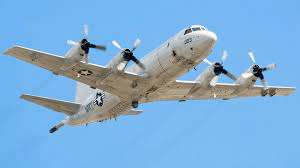
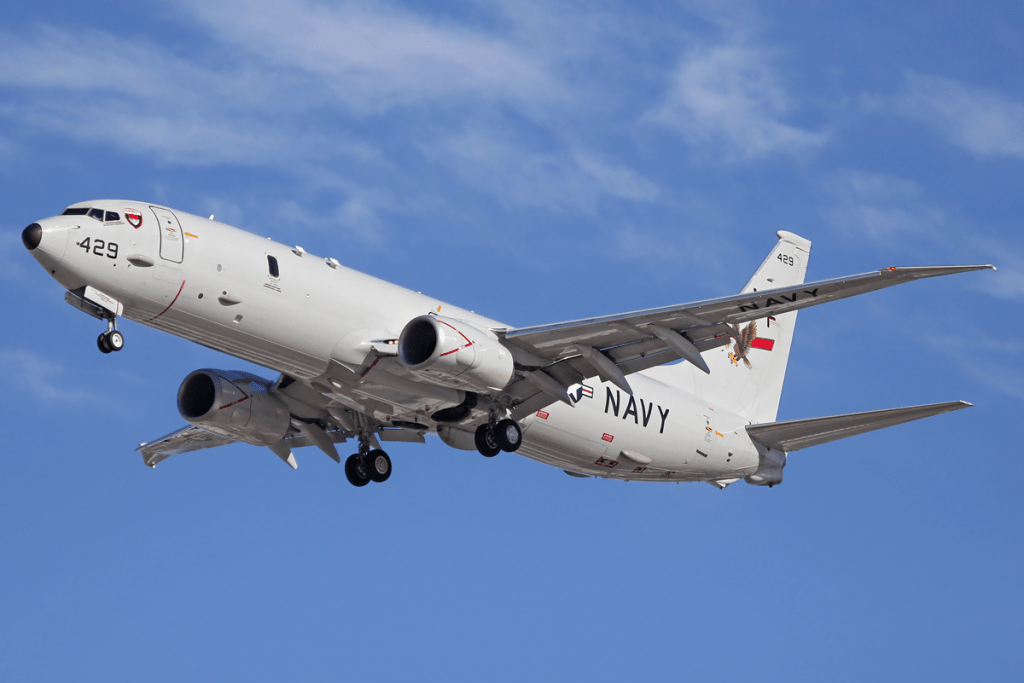
It later become known a NATO P3 Orion was orbiting over Romania and involved in some fashion, as I observed in an earlier post.
That raised both the stakes and my heartrate.
That was dangerously dumb, if true. But this is the Biden Regime and “dangerously dumb” is their motto.
US fingerprints on a warshot requires White House authorization.
Or should require White House authorization, which is even scarier if it happened without that approval.
It’s an opinion piece and I annotate some comments.
The Moskva Riddle
April 25, 2022
Get ready: something lethally “asymmetrical” may be about to pop up
By Pepe Escobar, posted with the author’s permission and widely cross-posted
Neither NATO nor Russia is telling us what really happened with the Moskva, the legendary admiral ship of the Black Sea fleet.
NATO because in theory, they know. Moscow, for its part, made it clear they are not saying anything until they can be sure what happened.
One thing is certain. If the Russian Ministry of Defense finds out that NATO did it, they will let loose all the dogs from Hell on NATO, as in “asymmetrical, lethal and fast”. [emphasis added]
On Moskva’s location: it was positioned near one of 3 drilling rigs, used for monitoring a whole sector of the Black Sea with hydrophones and NEVA-BS radar, the most westward one, BK-2 Odessa, approximately 66 km northeast from Snake Island. The whole thing was integrated in the regional monitoring systems. As in everything, literally, was monitored: ships, low flying targets, smaller echoes, even the bobbing head of an unsuspecting swimmer. [Comment: absolutely right – no warship from a Tier 1 Navy operates independently in a war zone without electronic blankets and fighter cover]
So there was a quite slim chance that anything – not to mention subsonic Neptune missiles and Bayraktar drones – could have slipped through this aerial net. [emphasis added, Comment: precisely right – and one of many reasons for my doubts regarding Ukraine’s cover story]
So what could have possibly happened?
It could have been some kind of underwater drone, released either from some sneaky sub, or by a SBS team, coming from the western coast, with a stopover at Snake Island. Then that drone somehow managed to drill itself through the Moskva’s hull from below – and exploded its payload inside.
What follows comes from a top source in Brussels: serious, trustworthy, proven record spanning nearly two decades. Yet he may be just spreading disinformation. Or bragging. Or that may be rock solid intel. [emphasis added]
Before we start, we should point out it’s hard to believe the Neptune/Bayraktar fairytale angle. After all, as we’ve seen, the Russian fleet had established a multidimensional surveillance/defense layer in the direction of Odessa. [Comment: agree]
The Moskva was near Odessa, closer to Romania. A year ago, the source maintains, a new phased array locator was installed on it: the illumination range is 500 km. According to the standard Ukrainian narrative, first the Moskva was hit by a drone, and the locators and antennas were smashed. The Moskva was half blind. [Comment: was NOT aware of the phased array radar. I remember the “old” Moskva – it’s an old ship and I was unaware her electronics suite was upgraded. All the more reason to doubt the choreography Ukraine is selling.]
Then – according to the Ukrainian narrative – they launched two Neptune cruise missiles from the shore. Guidance was carried out by NATO’s Orion, which was hanging over Romania. The missiles zoomed in on the ship with the homing heads turned off, so that the radiation beam would not be detected. [emphasis added, Comment: if true, dangerously dumb]
[Comment – here’s a US Navy P3 Orion]
[Comment: the US Navy is trainsitioning to the P8 so the Orion may not have been US Navy. And if the P8 looks like a 737, it is a 737, minus the flight attendants and aisle beverage carts]
So we have guidance by NATO’s Orion, transmitting the exact coordinates, leading to two hits, and subsequent detonation of ammunition (that’s the part acknowledged by the Russian Ministry of Defense).
A strategic hit
The Moskva was on combat duty 100-120 km away from Odessa – controlling the airspace within a radius of 250-300 km. So in fact it was ensuring the overlap of the southern half of Moldova, the space from Izmail to Odessa and part of Romania (including the port of Constanta).
Its positioning could not be more strategic. Moskva was interfering with NATO’s covert transfer of military aircraft (helicopters and fighter jets) from Romania to Ukraine. It was being watched 24/7. NATO air reconnaissance was totally on it. [emphasis added]
As the Moskva “killer”, NATO may have not chosen the Neptune, as spread by Ukrainian propaganda; the source points to the fifth-generation NSM PKR (Naval Strike Missile, with a range of 185 km, developed by Norway and the Americans.) [emphasis added, Comment: if true, beyond dangerously dumb – an act of war]
He describes the NSM as “able to reach the target along a programmed route thanks to the GPS-adjusted INS, independently find the target by flying up to it at an altitude of 3-5 meters. When reaching the target, the NSM maneuvers and deploys electronic interference. A highly sensitive thermal imager is used as a homing system, which independently determines the most vulnerable places of the target ship.” [emphasis added, Comment: a low-flyer is possible but not within the capacity of the Ukrainian forces]
As a direct consequence of hitting the Moskva, NATO managed to reopen an air corridor for the transfer of aircraft to the airfields of Chernivtsi, Transcarpathian and Ivano-Frankivsk regions.
In parallel, after the destruction of the Moskva, the Black Sea Fleet, according to the source, “no longer seems to have a ship equipped with a long-range anti-aircraft missile system”. Of course a three-band radar Sky-M system remains in play in Crimea, capable of tracking all air targets at a range of up to 600 km. One wonders whether this is enough for all Russian purposes.
So what do we really have here? Fantasy or reality? There was only one way to know.
I ran the info past the inestimable Andrei Martyanov, who knew the Moskva “as Slava in 1981 when she was afloat in the Northern Bay of Sevastopol and my class which was at first summer practice on board of old cruiser Dzerzhinsky was given an extensive introduction to her. So, she was an old lady and it is too bad that she had to finish her long life this way and at this time.”
Martyanov, once again, was the consummate professional, stressing no one, at this stage, really knows what happened. But he made some crucial points: “Per NSM (if we accept this version), even with its Low Observability and GPS guidance under normal (that is sea up to state 5-6) and normal radio-permeability, even the Moskva’s old frigate radar would have seen those missiles in distances of tens of kilometers, somewhere between 15-20 for sure. NSM, as any NATO anti-shipping missile, are subsonic, with their velocity roughly 300 meters per second. That leaves, even in a 15 kilometer range, 45 seconds to detect track and develop a firing solution for whatever ‘on duty’ AD complex. More than enough reaction time.” [emphasis added, Comment: … and one reason while I’ve been skeptical of a cruise missile strike — combined with the explosive evidence on the image. 45 seconds is well within the capacity of any current point defense systems taking on a couple of subsonic cruise missiles homing straight and true]
Martyanov also stresses, “it is impossible to hide the external impact of the anti-shipping missile – one will immediately know what hit the ship. Moreover, to hit and sink such a target as the Moskva one has to launch a salvo and not only two missiles, likely 3-4 at least. In this case, Russia would know who attacked Moskva. Does NATO know? I am positive this event has NATO written all over it, if it is not an internal sabotage which absolutely cannot be excluded at this stage. I am sure if Nebo was operational it would have seen the salvo.” [emphasis added, Comment: agree]
Which brings us to the inevitable clincher: “If NATO was involved, I am sure we will see some retaliation, after all, as I am on record all the time, US bases in Middle East and elsewhere are nothing more than fat prestigious targets.”
So get ready: something lethally “asymmetrical” may be about to pop up. [emphasis added]
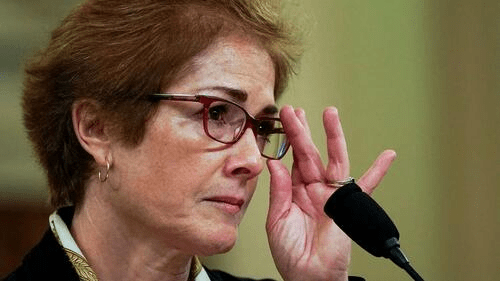
Marie Yovanovitch, the former US Ambassador to Ukraine, let slip during an interview that Trump would have prevented war in Ukraine via diplomacy, but then absurdly asserted that would have been a bad thing.
Yovanovitch, who testified against Trump during his 2019 impeachment trial, made the remarks during an interview with PBS this past weekend.
The former ambassador was asked by host Margaret Hoover about her previous claim that Russia’s invasion “never would have happened in the Trump administration.”
“I’ve heard that you have also suggested that Putin might not have gone to war if Trump was still in office,” said Hoover.
“Trump was very dismissive of NATO – I mean, dismissive, it’s obviously a diplomatic word – very critical of NATO, critical of our allies,” said Yovanovitch. “And his close associates, including John Bolton, have said that if he had won a second term, he would have pulled us out of NATO. I mean, why go to war with Vladimir Putin if the United States is going to present kind of the corpse of NATO on a silver platter? You don’t need to do that.”
Hoover then asked Yovanovitch directly, “I mean, how do you think the invasion would have been different if Trump had remained as president?”
Marie Yovanovitch — the former US Ambassador to Ukraine under Trump who testified against him in the 2019 impeachment, and was lauded as a hero — suggests that if Trump were in office, he'd have averted the war diplomatically. But she thinks this would've been a terrible thing pic.twitter.com/1Q4qp5cNOA
Having served as a commissioned officer in the US Navy with a few deployments and consulted on defense and national security matters over the years, I found myself approaching the Ukraine War with increasing skepticism in response to the prevailing wisdom from our government.
Admittedly, I subscribe to George Carlin’s quote: “I have certain rules I live by. My first rule: I don’t believe anything the government tells me.”
The disconnect between what I’ve seen on the ground from a variety of sources to what’s said on corporate media outlets has been breathtaking.
How Much Are We Prepared To Sacrifice To Help The US Win A Propaganda War Against Putin?
There’s a very important question that we all need to be asking ourselves at this point in history, and that question is as follows: how much are we as a society willing to sacrifice so that the US government can win a propaganda war against Vladimir Putin?
Let me explain.
One severely under-discussed aspect of the latest round of escalations in Silicon Valley censorship which began at the start of the Ukraine war is the fact that it’s an entirely unprecedented order of censorship protocol. While it might look similar to all the other waves of social media purges and new categories of banned content that we’ve been experiencing since it became mainstream doctrine after the 2016 US election that tech platforms need to strictly regulate online speech, the justifications for it have taken a drastic deviation from established patterns.
What sets this new censorship escalation apart from its predecessors is that this time nobody’s pretending that it’s being done in the interests of the people. With the censorship of racists the argument was that they were inciting hate crimes and racial harassment. With the censorship of Alex Jones and QAnon the argument was that they were inciting violence. With the censorship of Covid skeptics the argument was that they were promoting misinformation that could be deadly. Even with the censorship of the Hunter Biden laptop story it was argued that there was a need to protect election integrity from disinformation of potentially foreign origin.
With censorship relating to the Ukraine war there is no argument that it’s being done to help the people. There is no case to be made that letting people say wrong things about this war kills Ukrainians, Americans, or anyone else. There is no case to be made that disputing claims about Russian war crimes will damage America’s democratic processes. It’s just, “Well we can’t have people saying wrong things about a war, can we?”
More Escalations In Online Censorship
"YouTube has been deleting videos disputing the US government narrative about Russian war crimes in Bucha"https://t.co/M7zupF8AMa
Ask a properly brainwashed liberal why they support the censorship of someone who disputes US narratives about Russian war crimes in Bucha or Mariupol and they’ll probably tell you something like “Well, it’s disinformation!” or “Because it’s propaganda!” or “How much is Putin paying you??” But what they won’t be able to do is articulate exactly what specific harm is being done by such speech in the same way that they could when defending the censorship of Covid skeptics or the factions responsible for last year’s riot in the Capitol building.
The one argument you’ll get, if you really press the issue, is that the United States is in a propaganda war with Russia, and it is in our society’s interests for our media institutions to help the United States win that propaganda war. Cold wars are fought between nuclear powers because hot warfare would risk annihilating both nations, leaving only other forms of war like psychological warfare available. There’s no argument that this new escalation in censorship saves lives or protects elections, but there is an argument that it can help facilitate the long-term cold war agendas of the United States.
But what does that mean exactly? It means if we accept this argument we’re knowingly consenting to a situation where all the major news outlets, websites and apps that people look to for information about the world are geared not toward telling us true things about reality, but toward beating Vladimir Putin in some weird psywar. It means abandoning any ambitions of being a truth-based civilization that is guided by facts, and instead accepting an existence as a propaganda-based civilization geared toward making sure we all think thoughts that hurt Moscow’s long-term strategic interests.
And it’s just absolutely freakish that this is a decision that has already been made for us, without any public discussion as to whether or not that’s the kind of society we want to live in. They jumped right from “We’re censoring speech to protect you from violence and viruses” to “We’re censoring speech to help our government conduct information warfare against a foreign adversary.” Without skipping a beat.
BBC Reporter Discourages Syria Questions Due To “Information War” With Russia
"You know you’re in trouble when the military man tries to do the journalist’s job by asking questions and holding power to account… and the journalist tries to stop him."https://t.co/DVxR3JQ6S2
The consent-manufacturing class has helped pave the way for this smooth transition with their relentless and ongoing calls for more and more censorship, and for years we’ve been seeing signs that they view it as their duty to help facilitate an information war against Russia.
Back in 2018 we saw a BBC reporter admonish a former high-ranking British navy official for speculating that the alleged chemical weapons attack in Douma, Syria was a false flag, a claim we now have mountains of evidence is likely true thanks to whistleblowers from the Organisation for the Prohibition of Chemical Weapons. The reason the reporter gave for her objection to those comments was that “we’re in an information war with Russia.”
“Given that we’re in an information war with Russia on so many fronts, do you think perhaps it’s inadvisable to be stating this so publicly given your position and your profile? Isn’t there a danger that you’re muddying the waters?” the BBC’s Annita McVeigh asked Admiral Alan West after his comments.
We saw a similar indication in the mass media a few weeks later in an interview with former Green Party candidate Jill Stein, who was admonished by CNN’s Chris Cuomo for highlighting the completely uncontroversial fact that the US is an extremely egregious offender when it comes to interferences in foreign elections.
“You know, that would be the case for Russia to make, not from the American perspective,” Cuomo said in response to Stein’s entirely accurate remarks. “Of course, there’s hypocrisy involved, lots of different big state actors do lots of things that they may not want people to know about. But let Russia say that the United States did it to us, and here’s how they did it, so this is fair play.”
Which is the same as saying, “Forget what’s factually true. Don’t say true things that might help Russian interests. That’s Russia’s job. Our job here on CNN is to say things that hurt Russian interests.
lol no. Again no journalist wants to be the "but her emails" journalist and branded a leper by their entire industry. It's that simple. https://t.co/NvNkcKKufo
We can trace the mainstreaming of the idea that it’s the western media’s job to manipulate information in the public interest, rather than simply tell the truth, back to Donald Trump’s 2016 presidential win. In what was arguably the most significant political moment in the US since 9/11 and its aftermath, the consent-manufacturing class came to the decision that Trump’s election wasn’t a failure of status quo politics but a failure of information control.
In October 2020 during the Hunter Biden laptop scandal The Spectator‘s Stephen L Miller described how the consensus formed among the mainstream press since Clinton’s 2016 loss that it was their moral duty to hide facts from the public which might lead to Trump’s re-election.
“For almost four years now, journalists have shamed their colleagues and themselves over what I will call the ‘but her emails’ dilemma,” Miller writes. “Those who reported dutifully on the ill-timed federal investigation into Hillary Clinton’s private server and spillage of classified information have been cast out and shunted away from the journalist cool kids’ table. Focusing so much on what was, at the time, a considerable scandal, has been written off by many in the media as a blunder. They believe their friends and colleagues helped put Trump in the White House by focusing on a nothing-burger of a Clinton scandal when they should have been highlighting Trump’s foibles. It’s an error no journalist wants to repeat.”
Once “journalists” accepted that their most important job is not to tell the truth but to keep people from thinking bad thoughts about the status quo political system, it was inevitable that they’d start enthusiastically cheerleading for more internet censorship. They see it as their duty, which is why now the leading proponents of online censorship are corporate media reporters.
But it shouldn’t be this way. There’s no legitimate reason for the Silicon Valley proxies of the most powerful government on earth to be censoring people for disagreeing with that government about a war, yet this is exactly what’s happening and it’s happening more and more. It should alarm us all that it’s becoming increasingly acceptable to silence people not because they’re circulating dangerous disinfo, nor even because they’re saying things that are in any way false, but solely because they are saying things which undermine the US infowar.
People should absolutely be allowed to say things which disagree with the most powerful empire in history about a war. They should even be allowed to say brazenly false things about that war, because otherwise only the powerful will be allowed to say brazenly false things about it.
Free speech is important not because it’s nice to be able to say what you want, but because the free flow of ideas and information creates a check on the powerful. It gives people the ability to hold the powerful to account. Which is exactly why the powerful work to eliminate it.
We should see it as a huge, huge problem that so much of the world has been herded onto these giant monopolistic speech platforms that conduct censorship in complete alignment with the mightiest power structure in the world. This is the exact opposite of putting a check on power.
How much are we as a society willing to give up for the US government and its allies to win a propaganda war against Putin? Are we willing to commit to being a civilization for which the primary consideration with any piece of data is not whether or not it’s true, but whether it helps undermine Russia?
This is a conversation which should already have been going on in mainstream circles for some time now, but it never even started. Let’s start it.







 Econophysics2020