That’s the report we’re getting from the ueber-Neocon Institute for the Study of War (ISW is run by the Kagan/Nuland combine; cf. Who We Are), so one assumes the report is pretty authoritative:
Who ever heard of a military taking a week off to “reevaluate tactics” of a successful offense? Me neither. This comes amid continuing reports of catastrophic Ukrainian losses of men and equipment—and the failure of Ukrainian forces to get anywhere near even the first Russian defensive line.
Popular Russian commentators add further claims:
“An observation: Where initially, during the first phase of the counteroink, we saw primarily dead bodies and burnt-out Ukrainian armoured vehicles, we are now increasingly seeing and getting reports of sizable POW captures.
The Ukrainian morale is cracking after encountering stiff Russian resistance. It is something to behold when the defending side daily reports capturing prisoners. Not something I expected so soon.”
(Via Slaviangrad)
“We talked with fresh Ukrainian prisoners taken by our fighters in the Zaporozhye direction during the would-be counteroffensive. To summarize, the enemy has problems with control and lack of coordination between units, refusals to go on the attack and low morale after the burning German “Leopards”, in addition, the prisoners complain about intelligence (in fact, ordinary storm troopers simply do not get a real picture of the state of our defense and lie, underestimating our capabilities so that they are not afraid to go into meat assaults.)” via
The point about problems with control and coordination mirrors what I’ve heard from various military analysts, that Ukraine has no experience in conducting large unit operations, only in relatively small unit operations. That lack of experience was one of the primary reasons—beyond lack of air cover, etc.—that analysts predicted the offensive would fail disastrously. Another factor in the reported “pause” may have to do with Russia’s attack on a key Ukrainian command HQ. These HQ’s are key to the Ukraine war effort, because they provide access to NATO (read US) intelligence that, in turn, provides overall battlefield intelligence, including targeting information. It’s easy to imagine that destruction of such an HQ (probably including NATO personnel) could fore a pause in an offensive.
In the meantime Russia is shifting to the offensive—but not in Zaporozhye. The offensive is occurring in the northeast in the Kharkov direction as well as near the key Donbass city of Marinka. This has been confirmed by the Ukrainian MOD:
The Russian army has pulled up reserves and launched an active offensive in the Limansky and Kupyansky directions, – the Ministry of Defense of Ukraine
The situation in the east is now difficult, the Russian Armed Forces are striving to reach the borders of the Donetsk and Luhansk regions, said Deputy Minister of Defense of Ukraine A. Malyar.
Russian troops are trying to seize the initiative. They have pulled up their forces and carry out an active offensive. A high activity of shelling is recorded, fierce battles continue, she stressed.
The Russian army has pulled up reserves and launched an active offensive in the Limansky and Kupyansky directions, – the Ministry of Defense of Ukraine
Their reports of the Ministry of Defense of the Russian Federation:
In the Krasno-Limansky direction, the aviation and artillery group “Otvazhnye” defeated the Armed Forces of Ukraine in the areas of the settlement. Kuzmino and Makeevka of the LPR, as well as in the Serebryansky forestry.
In areas of n.p. Yampolovka DPR, Chervonaya Dibrova and Kremennaya LPR stopped the activities of 3 DRGs.
During the day, up to 105 militants, 2 infantry fighting vehicles, 2 armored vehicles, 2 pickup trucks, 2 Gvozdika self-propelled guns, D-20 and D-30 howitzers were destroyed in the direction.
On the Kupyansky direction in the area of the settlement Timkovka, Kharkov region, helicopters, artillery and attacks by units of the “Western” group of forces per day destroyed up to 45 militants, 3 armored vehicles, 4 cars, the Polish self-propelled guns “Krab”. The activity of 2 DRGs was suppressed. http://t.me/RVvoenkor
We shall see. Before turning to China, I’ll embed to Youtube videos that provide intelligent discussion of the war. The first features Napolitano and Daniel Davis and the second (which I got from Andrei Martyanov’s blog) features a retired Indian general. Both of these military analysts agree that Ukraine’s offensive simply has no prospects for success.
Now, China.
Blinken has returned from Beijing. His trip was apparently part of the months long Neocon effort to induce China to speak to US officials, including military to military contacts. The Chinese did allow Blinken to speak with Xi. The Chinese summary was predictable:
@SpokespersonCHN
China always hopes to see a sound and steady China-U.S. relationship and believes that the two major countries can overcome various difficulties and find the right way to get along based on mutual respect, peaceful coexistence and win-win cooperation.
4:57 AM · Jun 19, 2023
President Xi called on the U.S. side to adopt a rational and pragmatic attitude, and work with China in the same direction.
For his part, Blinken says he assured the Chinese that—all appearances to the contrary notwithstanding—the US still upholds the One China Policy. This has, in the circumstances of over the top anti-China rhetoric and provocative actions by the US over virtually the entire term of the Zhou regime looks like a humiliating climbdown. If you view the video (which I can’t embed), Blinken’s statement could have been written by the Chinese foreign ministry:
Clandestine
@WarClandestine
1) Interesting
Secretary of State Blinken just returned from his visit with Chinese President Xi, and he claims the Biden regime do NOT support Taiwan independence.
A quick turnaround from Biden’s promise to use US troops to defend Taiwan from China in September, 2022.
Despite Blinken’s grovel—which humiliation could have been avoided by a sensible diplomacy from the start—the Chinese, having repeated their usual rhetoric, also gave Tony the back of the hand, to go with the no-red-carpet treatment:
Clearly the Zhou regime’s early attempts to bully China and to unilaterally revise Taiwan policy have led to an enduring lack of trust on the part of the Chinese.
“We were forced to try to end the war that the West started in 2014 by force of arms. And Russia will end this war by force of arms, freeing the entire territory of the former Ukraine from the United States and Ukrainian Nazis. There are no other options. The Ukrainian army of the US and NATO will be defeated, no matter what new types of weapons it receives from the West. The more weapons there are, the fewer Ukrainians and what used to be Ukraine will remain. Direct intervention by NATO’s European armies will not change the outcome. But in this case [NATO entry into open warfare with Russia], the fire of war will engulf the whole of Europe. It looks like the US is ready for that too.”
Advance the video to the 1hr 19 min mark to pick up the feed
St Petersburg International Economic Forum Plenary session
President of Russia Vladimir Putin: Thank you very much. President Tokayev, friends and colleagues,
I welcome all participants and guests of the 25th St Petersburg International Economic Forum.
It is taking place at a difficult time for the international community when the economy, markets and the very principles of the global economic system have taken a blow. Many trade, industrial and logistics chains, which were dislocated by the pandemic, have been subjected to new tests. Moreover, such fundamental business notions as business reputation, the inviolability of property and trust in global currencies have been seriously damaged. Regrettably, they have been undermined by our Western partners, who have done this deliberately, for the sake of their ambitions and in order to preserve obsolete geopolitical illusions.
Today, our – when I say “our,” I mean the Russian leadership – our own view of the global economic situation. I would like to speak in greater depth about the actions Russia is taking in these conditions and how it plans to develop in these dynamically changing circumstances.
When I spoke at the Davos Forum a year and a half ago, I also stressed that the era of a unipolar world order has come to an end. I want to start with this, as there is no way around it. This era has ended despite all the attempts to maintain and preserve it at all costs. Change is a natural process of history, as it is difficult to reconcile the diversity of civilisations and the richness of cultures on the planet with political, economic or other stereotypes – these do not work here, they are imposed by one centre in a rough and no-compromise manner.
The flaw is in the concept itself, as the concept says there is one, albeit strong, power with a limited circle of close allies, or, as they say, countries with granted access, and all business practices and international relations, when it is convenient, are interpreted solely in the interests of this power. They essentially work in one direction in a zero-sum game. A world built on a doctrine of this kind is definitely unstable.
After declaring victory in the Cold War, the United States proclaimed itself to be God’s messenger on Earth, without any obligations and only interests which were declared sacred. They seem to ignore the fact that in the past decades, new powerful and increasingly assertive centres have been formed. Each of them develops its own political system and public institutions according to its own model of economic growth and, naturally, has the right to protect them and to secure national sovereignty.
These are objective processes and genuinely revolutionary tectonic shifts in geopolitics, the global economy and technology, in the entire system of international relations, where the role of dynamic and potentially strong countries and regions is substantially growing. It is no longer possible to ignore their interests.
To reiterate, these changes are fundamental, groundbreaking and rigorous. It would be a mistake to assume that at a time of turbulent change, one can simply sit it out or wait it out until everything gets back on track and becomes what it was before. It will not.
However, the ruling elite of some Western states seem to be harbouring this kind of illusions. They refuse to notice obvious things, stubbornly clinging to the shadows of the past. For example, they seem to believe that the dominance of the West in global politics and the economy is an unchanging, eternal value. Nothing lasts forever.
Our colleagues are not just denying reality. More than that; they are trying to reverse the course of history. They seem to think in terms of the past century. They are still influenced by their own misconceptions about countries outside the so-called “golden billion”: they consider everything a backwater, or their backyard. They still treat them like colonies, and the people living there, like second-class people, because they consider themselves exceptional. If they are exceptional, that means everyone else is second rate.
Thereby, the irrepressible urge to punish, to economically crush anyone who does not fit with the mainstream, does not want to blindly obey. Moreover, they crudely and shamelessly impose their ethics, their views on culture and ideas about history, sometimes questioning the sovereignty and integrity of states, and threatening their very existence. Suffice it to recall what happened in Yugoslavia, Syria, Libya and Iraq.
If some “rebel” state cannot be suppressed or pacified, they try to isolate that state, or “cancel” it, to use their modern term. Everything goes, even sports, the Olympics, bans on culture and art masterpieces just because their creators come from the “wrong” country.
This is the nature of the current round of Russophobia in the West, and the insane sanctions against Russia. They are crazy and, I would say, thoughtless. They are unprecedented in the number of them or the pace the West churns them out at.
The idea was clear as day – they expected to suddenly and violently crush the Russian economy, to hit Russia’s industry, finance, and people’s living standards by destroying business chains, forcibly recalling Western companies from the Russian market, and freezing Russian assets.
This did not work. Obviously, it did not work out; it did not happen. Russian entrepreneurs and authorities have acted in a collected and professional manner, and Russians have shown solidarity and responsibility.
Step by step, we will normalise the economic situation. We have stabilised the financial markets, the banking system and the trade network. Now we are busy saturating the economy with liquidity and working capital to maintain the stable operation of enterprises and companies, employment and jobs.
The dire forecasts for the prospects of the Russian economy, which were made in early spring, have not materialised. It is clear why this propaganda campaign was fuelled and all the predictions of the dollar at 200 rubles and the collapse of our economy were made. This was and remains an instrument in an information struggle and a factor of psychological influence on Russian society and domestic business circles.
Incidentally, some of our analysts gave in to this external pressure and based their forecasts on the inevitable collapse of the Russian economy and a critical weakening of the national currency – the ruble.
Real life has belied these predictions. However, I would like to emphasise that to continue being successful, we must be explicitly honest and realistic in assessing the situation, be independent in reaching conclusions, and of course, have a can-do spirit, which is very important. We are strong people and can deal with any challenge. Like our predecessors, we can resolve any task. The entire thousand-year history of our country bears this out.
Within just three months of the massive package of sanctions, we have suppressed inflation rate spikes. As you know, after peaking at 17.8 percent, inflation now stands at 16.7 percent and continues dropping. This economic dynamic is being stabilised, and state finances are now sustainable. I will compare this to other regions further on. Yes, even this figure is too much for us – 16.7 percent is high inflation. We must and will work on this and, I am sure, we will achieve a positive result.
After the first five months of this year, the federal budget has a surplus of 1.5 trillion rubles and the consolidated budget – a surplus of 3.3 trillion rubles. In May alone, the federal budget surplus reached almost half a trillion rubles, surpassing the figure for May 2021 more than four times over.
Today, our job us to create conditions for building up production and increasing supply in the domestic market, as well as restoring demand and bank financing in the economy commensurately with the growth in supply.
I mentioned that we have taken measures to reestablish the floating assets of companies. In most sectors, businesses have received the right to suspend insurance premiums for the second quarter of the year. Industrial companies have even more opportunities – they will be able to delay them through the third quarter as well. In effect, this is like getting an interest-free loan from the state.
In the future, companies will not have to pay delayed insurance premiums in a single payment. They will be able to pay them in equal installments over 12 months, starting in June next year.
Next. As of May the subsidised mortgage rate has been reduced. It is now 9 percent, while the programme has been extended till the end of the year. As I have mentioned, the programme is aimed at helping Russians improve their housing situation, while supporting the home building industry and related industries that employ millions of people.
Following a spike this spring, interest rates have been gradually coming down, as the Central Bank lowers the key rate. I believe that that this allows the subsidised mortgage rate to be further cut to 7 percent.
What is important here? The programme will last until the end of the year without change. It means that our fellow Russians seeking to improve their living conditions should take advantage of the subsidy before the end of the year.
The lending cap will not change either, at 12 million roubles for Moscow and St Petersburg and 6 million for the rest of Russia.
I should add that we must make long-term loans for businesses more accessible. The focus must shift from budget subsidies for businesses to bank lending as a means to spur business activity.
We need to support this. We will allocate 120 billion rubles from the National Wealth Fund to build up the capacity of the VEB Project Financing Factory. This will provide for additional lending to much-needed initiatives and projects worth around half a trillion roubles.
Colleagues,
Once again, the economic blitzkrieg against Russia was doomed to fail from the beginning. Sanctions as a weapon have proved in recent years to be a double-edged sword damaging their advocates and architects just a much, if not more.
I am not talking about the repercussions we see clearly today. We know that European leaders informally, so to say, furtively, discuss the very concerning possibility of sanctions being levelled not at Russia, but at any undesirable nation, and ultimately anyone including the EU and European companies.
So far this is not the case, but European politicians have already dealt their economies a serious blow all by themselves. We see social and economic problems worsening in Europe, and in the US as well, food, electricity and fuel prices rising, with quality of life in Europe falling and companies losing their market edge.
According to experts, the EU’s direct, calculable losses from the sanctions fever could exceed $400 billion this year. This is the price of the decisions that are far removed from reality and contradict common sense.
These outlays fall directly on the shoulders of people and companies in the EU. The inflation rate in some Eurozone countries has exceeded 20 percent. I mentioned inflation in Russia, but the Eurozone countries are not conducting special military operations, yet the inflation rate in some of them has reached 20 percent. Inflation in the United States is also unacceptable, the highest in the past 40 years.
Of course, inflation in Russia is also in the double digits so far. However, we have adjusted social benefits and pensions to inflation, and increased the minimum and subsistence wages, thereby protecting the most vulnerable groups of the population. At the same time, high interest rates have helped people keep their savings in the Russian banking system.
Businesspeople know, of course, that a high key rate clearly slows economic development. But it is a boon for the people in most cases. They have reinvested a substantial amount of money in banks due to higher interest rates.
This is our main difference from the EU countries, where rising inflation is directly reducing the real incomes of the people and eating up their savings, and the current manifestations of the crisis are affecting, above all, low-income groups.
The growing outlays of European companies and the loss of the Russian market will have lasting negative effects. The obvious result of this will be the loss of global competitiveness and a system-wide decline in the European economies’ pace of growth for years to come.
Taken together, this will aggravate the deep-seated problems of European societies. Yes, we have many problems as well, yet I have to speak about Europe now because they are pointing the finger at us although they have enough of their own problems. I mentioned this at Davos. A direct result of the European politicians’ actions and events this year will be the further growth of inequality in these countries, which will, in turn, split their societies still more, and the point at issue is not only the well-being but also the value orientation of various groups in these societies.
Indeed, these differences are being suppressed and swept under the rug. Frankly, the democratic procedures and elections in Europe and the forces that come to power look like a front, because almost identical political parties come and go, while deep down things remain the same. The real interests of people and national businesses are being pushed further and further to the periphery.
Such a disconnect from reality and the demands of society will inevitably lead to a surge in populism and extremist and radical movements, major socioeconomic changes, degradation and a change of elites in the short term. As you can see, traditional parties lose all the time. New entities are coming to the surface, but they have little chance for survival if they are not much different from the existing ones.
The attempts to keep up appearances and the talk about allegedly acceptable costs in the name of pseudo-unity cannot hide the main thing: the European Union has lost its political sovereignty, and its bureaucratic elites are dancing to someone else’s tune, doing everything they are told from on high and hurting their own people, economies, and businesses.
There are other critically important matters here. The worsening of the global economic situation is not a recent development. I will now go over things that I believe are extremely important. What is happening now does not stem from what happened during recent months, of course not. Moreover, it is not the result of the special military operation carried out by Russia in Donbass. Saying so is an unconcealed, deliberate distortion of the facts.
Surging inflation in product and commodity markets had become a fact of life long before the events of this year. The world has been driven into this situation, little by little, by many years of irresponsible macroeconomic policies pursued by the G7 countries, including uncontrolled emission and accumulation of unsecured debt. These processes intensified with the onset of the coronavirus pandemic in 2020, when supply and demand for goods and services drastically fell on a global scale.
This begs the question: what does our military operation in Donbass have to do with this? Nothing whatsoever.
Because they could not or would not devise any other recipes, the governments of the leading Western economies simply accelerated their money-printing machines. Such a simple way to make up for unprecedented budget deficits.
I have already cited this figure: over the past two years, the money supply in the United States has grown by more than 38 percent. Previously, a similar rise took decades, but now it grew by 38 percent or 5.9 trillion dollars in two years. By comparison, only a few countries have a bigger gross domestic product.
The EU’s money supply has also increased dramatically over this period. It grew by about 20 percent, or 2.5 trillion euros.
Lately, I have been hearing more and more about the so-called – please excuse me, I really would not like to do this here, even mention my own name in this regard, but I cannot help it – we all hear about the so-called ‘Putin inflation’ in the West. When I see this, I wonder who they expect would buy this nonsense – people who cannot read or write, maybe. Anyone literate enough to read would understand what is actually happening.
Russia, our actions to liberate Donbass have absolutely nothing to do with this. The rising prices, accelerating inflation, shortages of food and fuel, petrol, and problems in the energy sector are the result of system-wide errors the current US administration and European bureaucracy have made in their economic policies. That is where the reasons are, and only there.
I will mention our operation, too: yes, it could have contributed to the trend, but the root cause is precisely this – their erroneous economic policies. In fact, the operation we launched in Donbass is a lifeline they are grabbing at to be able to blame their own miscalculations on others, in this case, on Russia. But everyone who has at least completed primary school would understand the true reasons for today’s situation.
So, they printed more money, and then what? Where did all that money go? It was obviously used to pay for goods and services outside Western countries – this is where the newly-printed money flowed. They literally began to clean out, to wipe out global markets. Naturally, no one thought about the interests of other states, including the poorest ones. They were left with scraps, as they say, and even that at exorbitant prices.
While at the end of 2019, imports of goods to the United States amounted to about 250 billion dollars a month, by now, it has grown to 350 billion. It is noteworthy that the growth was 40 percent – exactly in proportion to the unsecured money supply printed in recent years. They printed and distributed money, and used it to wipe out goods from third countries’ markets.
This is what I would like to add. For a long time, the United States was a big food supplier in the world market. It was proud, and with good reason, of its achievements, its agriculture and farming traditions. By the way, this is an example for many of us, too. But today, America’s role has changed drastically. It has turned from a net exporter of food into a net importer. Loosely speaking, it is printing money and pulling commodity flows its way, buying food products all over the world.
The European Union is building up imports even faster. Obviously, such a sharp increase in demand that is not covered by the supply of goods has triggered a wave of shortages and global inflation. This is where this global inflation originates. In the past couple of years, practically everything – raw materials, consumer goods and particularly food products – has become more expensive all over the world.
Yes, of course, these countries, including the United States continue importing goods, but the balance between exports and imports has been reversed. I believe imports exceed exports by some 17 billion. This is the whole problem.
According to the UN, in February 2022, the food price index was 50 percent higher than in May 2020, while the composite raw materials index has doubled over this period.
Under the cloud of inflation, many developing nations are asking a good question: why exchange goods for dollars and euros that are losing value right before our eyes? The conclusion suggests itself: the economy of mythical entities is inevitably being replaced by the economy of real values and assets.
According to the IMF, global currency reserves are at $7.1 trillion and 2.5 trillion euros now. These reserves are devalued at an annual rate of about 8 percent. Moreover, they can be confiscated or stolen any time if the United States dislikes something in the policy of the states involved. I think this has become a very real threat for many countries that keep their gold and foreign exchange reserves in these currencies.
According to analyst estimates, and this is an objective analysis, a conversion of global reserves will begin just because there is no room for them with such shortages. They will be converted from weakening currencies into real resources like food, energy commodities and other raw materials. Other countries will be doing this, of course. Obviously, this process will further fuel global dollar inflation.
As for Europe, their failed energy policy, blindly staking everything on renewables and spot supplies of natural gas, which have caused energy price increases since the third quarter of last year – again, long before the operation in Donbass – have also exacerbated price hikes. We have absolutely nothing to do with this. It was due to their own actions that prices have gone through the roof, and now they are once again looking for somebody to blame.
Not only did the West’s miscalculations affect the net cost of goods and services but they also resulted in decreased fertiliser production, mainly nitrogen fertilisers made from natural gas. Overall, global fertiliser prices have jumped by over 70 percent from mid-2021 through February 2022.
Unfortunately, there are currently no conditions that can overcome these pricing trends. On the contrary, aggravated by obstacles to the operation of Russian and Belarusian fertiliser producers and disrupted supply logistics, this situation is approaching a deadlock.
It is not difficult to foresee coming developments. A shortage of fertiliser means a lower harvest and a higher risk of an undersupplied global food market. Prices will go even higher, which could lead to hunger in the poorest countries. And it will be fully on the conscience of the US administration and the European bureaucracy.
I want to emphasise once again: this problem did not arise today or in the past three or four months. And certainly, it is not Russia’s fault as some demagogues try to declare, shifting the responsibility for the current state of affairs in the world economy to our country.
Maybe it would even be nice to hear that we are so powerful and omnipotent that we can blow up inflation in the West, in the United States and Europe, or that we can do things to throw everything into disorder. Maybe it would be nice to feel this power, if only there were truth in it. This situation has been brewing for years, spurred by the short-sighted actions of those who are used to solving their problems at somebody else’s expense and who have relied and still rely on the mechanism of financial emission to outbid and draw trade flows, thus escalating deficits and provoking humanitarian disasters in certain regions of the world. I will add that this is essentially the same predatory colonial policy as in the past, but of course in a new iteration, a more subtle and sophisticated edition. You might not even recognise it at first.
The current priority of the international community is to increase food deliveries to the global market, notably, to satisfy the requirements of the countries that need food most of all.
While ensuring its domestic food security and supplying the domestic market, Russia is also able to scale up its food and fertiliser exports. For example, our grain exports in the next season can be increased to 50 million tonnes.
As a priority, we will supply the countries that need food most of all, where the number of starving people could increase, first of all, African countries and the Middle East.
At the same time, there will be problems there, and not through our fault either. Yes, on paper Russian grain, food and fertilisers… Incidentally, the Americans have adopted sanctions on our fertilisers, and the Europeans followed suit. Later, the Americans lifted them because they saw what this could lead to. But the Europeans have not backed off. Their bureaucracy is as slow as a flour mill in the 18th century. In other words, everyone knows that they have done a stupid thing, but they find it difficult to retrace their steps for bureaucratic reasons.
As I have said, Russia is ready to contribute to balancing global markets of agricultural products, and we see that our UN colleagues, who are aware of the scale of the global food problem, are ready for dialogue. We could talk about creating normal logistical, financial and transport conditions for increasing Russian food and fertiliser exports.
As for Ukrainian food supplies to global markets – I have to mention this because of numerous speculations – we are not hindering them. They can do it. We did not mine the Black Sea ports of Ukraine. They can clear the mines and resume food exports. We will ensure the safe navigation of civilian vessels. No problem.
But what are we talking about? According to the US Department of Agriculture, the matter concerns 6 million tonnes of wheat (we estimate it at 5 million tonnes) and 7 million tonnes of maize. This is it, altogether. Since global production of wheat stands at 800 million tonnes, 5 million tonnes make little difference for the global market, as you can see.
Anyway, Ukrainian grain can be exported, and not only via Black Sea ports. Another route is via Belarus, which is, incidentally, the cheapest way. Or via Poland or Romania, whichever you prefer. In fact, there are five or six export routes.
The problem is not with us, the problem is with the adequacy of the people in control in Kiev. They can decide what to do, and, at least in this particular case, they should not take their lead from their foreign bosses, their masters across the ocean.
But there is also the risk that grain will be used as payment for arms deliveries. This would be regrettable.
Friends,
Once again, the world is going through an era of drastic change. International institutions are breaking down and faltering. Security guarantees are being devalued. The West has made a point of refusing to honour its earlier commitments. It has simply been impossible to reach any new agreements with them.
Given these circumstances and against the backdrop of mounting risks and threats, Russia was forced to go ahead with the special military operation. It was a difficult but necessary decision, and we were forced to make it.
This was the decision of a sovereign country, which has еру unconditional right to uphold its security, which is based on the UN Charter. This decision was aimed at protecting our people and the residents of the people’s republics of Donbass who for eight long years were subjected to genocide by the Kiev regime and the neo-Nazis who enjoyed the full protection of the West.
The West not only sought to implement an “anti-Russia” scenario, but also engaged in the active military development of Ukrainian territory, flooding Ukraine with weapons and military advisers. And it continues to do so now. Frankly, no one is paying any attention to the economy or well-being of the people living there, they just do not care about it at all, but they have never spared money to create a NATO foothold in the east that is directed against Russia and to cultivate aggression, hatred and Russophobia.
Today, our soldiers and officers, as well as the Donbass militia, are fighting to protect their people. They are fighting for Russia’s future as a large, free and secure multiethnic country that makes its own decisions, determines its own future, relies on its history, culture and traditions, and rejects any and all outside attempts to impose pseudo-values steeped in dehumanisation and moral degradation.
No doubt, our special military operation goals will be fulfilled. The key to this is the courage and heroism of our soldiers, consolidated Russian society, whose support gives strength and confidence to the Russian Army and Navy and a deep understanding of the truth and historical justice of our cause which is to build and strengthen Russia as a strong sovereign power.
My point is that sovereignty cannot be segmented or fragmented in the 21st century. The components of sovereignty are equally important, and they reinvigorate and complement each other.
So, what matters to us is not only the defence of our political sovereignty and national identity, but also strengthening everything that determines our country’s economic, financial, professional and technological independence.
The very structure of Western sanctions rested on the false premise that economically Russia is not sovereign and is critically vulnerable. They got so carried away spreading the myth of Russia’s backwardness and its weak positions in the global economy and trade that apparently, they started believing it themselves.
While planning their economic blitzkrieg, they did not notice, simply ignored the real facts of how much our country had changed in the past few years.
These changes are the result of our planned efforts to create a sustainable macroeconomic structure, ensure food security, implement import substitution programmes and create our own payment system, to name a few.
Of course, sanction restrictions created many challenges for the country. Some companies continue having problems with spare parts. Our companies have lost access to many technological solutions. Logistics are in disarray.
But, on the other hand, all this opens up new opportunities for us – we often talk about this but it really is so. All this is an impetus to build an economy with full rather than partial technological, production, human and scientific potential and sovereignty.
Naturally, it is impossible to resolve such a comprehensive challenge instantly. It is necessary to continue working systematically with an eye to the future. This is exactly what Russia is doing by implementing its long-term plans for the development of branches of the economy and strengthening the social sphere. The current trials are merely resulting in adjustments and modifications of the plans without changing their strategic orientation.
Today, I would like to talk about the key principles on which our country, our economy will develop.
The first principle is openness. Genuinely sovereign states are always interested in equal partnership and in contributing to global development. On the contrary, weak and dependent countries are usually looking for enemies, fuelling xenophobia or losing the last remnants of their identity and independence, blindly following in the wake of their suzerain.
Russia will never follow the road of self-isolation and autarky although our so-called Western friends are literally dreaming about this. Moreover, we are expanding cooperation with all those who are interested in it, who want to work with us, and will continue to do so. There are many of them. I will not list them at this point. They make up the overwhelming majority of people on Earth. I will not list all these countries now. It is common knowledge.
I will say nothing new when I remind you that everyone who wants to continue working or is working with Russia is subjected to blatant pressure from the United States and Europe; it goes as far as direct threats. However, this kind of blackmail means little when it comes to countries headed by true leaders who know the difference between their own national interests, the interests of their people – and someone else’s.
Russia will build up economic cooperation with these states and promote joint projects. At the same time, we will certainly continue to cooperate with Western companies that have remained in the Russian market despite the unprecedented arm-twisting – such companies exist, too.
We believe the development of a convenient and independent payment infrastructure in national currencies is a solid and predictable basis for deepening international cooperation. To help companies from other countries develop logistical and cooperation ties, we are working to improve transport corridors, increase the capacity of railways, transshipment capacity at ports in the Arctic, and in the eastern, southern and other parts of the country, including in the Azov-Black Sea and Caspian basins – they will become the most important section of the North-South Corridor, which will provide stable connectivity with the Middle East and Southern Asia. We expect freight traffic along this route to begin growing steadily in the near future.
But foreign trade is not our only priority. Russia intends to increase scientific, technological, cultural, humanitarian and sports cooperation based on equality and mutual respect between partners. At the same time, our country will strive for responsible leadership in all these areas.
The second principle of our long-term development is a reliance on entrepreneurial freedom. Every private initiative aimed at benefiting Russia should receive maximum support and space for implementation.
The pandemic and the more recent events have confirmed how important flexibility and freedom are in the economy. Russian private businesses – in tough conditions, amid attempts to restrain our development by any means – have proved they can compete in global markets. Private businesses should also be credited for Russia’s adaptation to rapidly changing external conditions. Russia needs to ensure the dynamic development of the economy – naturally, relying on private business.
We will continue to reduce administrative hurdles. For example, in 2016–2018, we imposed a moratorium on routine audits of small businesses. Subsequently, it was extended through 2022. In 2020, this moratorium was extended to cover mid-sized companies. Also, the number of unscheduled audits decreased approximately fourfold.
We did not stop at that, and last March, we cancelled routine audits for all entrepreneurs, regardless of the size of their businesses, provided their activities do not put people or the environment at high risk. As a result, the number of routine audits has declined sixfold compared to last year.
Why am I giving so many details? The point is that after the moratorium on audits was imposed, the number of violations by entrepreneurs – this was the result – has not increased, but rather it has gone down. This testifies to the maturity and responsibility of Russian businesses. Of course, they should be offered motivation rather than being forced to observe regulations and requirements.
So, there is every reason to take another radical step forward, that is, to abandon, for good and on a permanent basis, the majority of audits for all Russian businesses, except on risky or potentially dangerous activities. Everyone has long since understood that there was no need to check on everyone without exception. A risk-oriented approach should be at work. I ask the Government to develop the specific parameters of such a reform in the next few months.
There is another very sensitive topic for business, which has also become important today for our national security and economic resilience. To reduce and bring to a minimum all sorts of abuse and loopholes to exert pressure on entrepreneurs, we are consistently removing loose regulations from criminal law that are applied to economic crimes.
Last March, a law was signed, under which tax-related criminal cases against entrepreneurs shall only be brought before a court by the tax service – there is no other way. Soon a draft law will be passed on reducing the statute of limitations for tax-related crimes and on rejecting lawsuits to initiate criminal proceedings after tax arrears have been paid off.
Working comprehensively, although prudently, we need to decriminalise a wide range of economic offenses, for instance, those that punish businesses without a licence or accreditation. This is a controversial practice today because our Western partners illegitimately refuse to provide such licenses.
Our own agencies must not single-handedly make our businesses criminally liable for actually doing nothing wrong. The problem is this, and small businesses understand it very well – if a licence has expired, and Western partners refuse to extend it, what are businesses to do, wrap up operations? By no means, let them work. State oversight should continue, but there should be no undue interference in business.
It also makes sense to think about raising the threshold of criminal liability for unpaid customs duties and other such taxes. Additionally, we have not for a long time reconsidered the parameters of the terms ‘large’ and ‘very large’ economic loss for the purposes of economic offences despite inflation accruing 50 percent since 2016. The law now fails to reflect the current realities and needs to be corrected.
We need to reconsider the conditions for detaining entrepreneurs and for extending preliminary investigations. It is no secret that these practices have long been used inappropriately.
Businesses have been forced to cease operations or go bankrupt even before the investigation is over. The reputation of the owners and of the brand name suffers as a result, not to mention the direct financial loss, loss of market share and jobs.
I want to ask law enforcement to put an end to these practices. I also ask the Government and the Supreme Court to draft appropriate legislation before October 1 of this year.
In addition, at the Security Council, a special instruction was given to look into criminal cases being opened without later proceeding to court. The number of such cases has grown in recent years. We know the reasons. A case is often opened without sufficient grounds or to put pressure on individuals. We will discuss this in autumn to take legislative action and change the way our law enforcement agencies work.
It goes without saying that regional governments play a major role in creating a modern business environment. As is customary during the St Petersburg Forum, I highlight the regions that have made significant progress in the National Investment Climate Rankings compiled by the Agency for Strategic Initiatives.
There have been changes in the top three. Moscow and Tatarstan have remained at the top and were joined by the Moscow Region which, in a span of one year, went from eighth place to the top three. The leaders of the rankings also include the Tula, Nizhny Novgorod, Tyumen, Novgorod, and Sakhalin regions, St Petersburg and Bashkortostan.
Separately, I would like to highlight the regions that have made the greatest strides such as the Kurgan Region, which moved up 36 spots; the Perm Territory and the Altai Territory, up 26 spots; Ingushetia, up 24 spots; and the Ivanovo Region which moved up 17 spots.
I want to thank and congratulate our colleagues in the regions for their good work.
The federal government and regional and municipal governments should focus on supporting individual business initiatives in small towns and remote rural communities. We are aware of such stories of success. That includes developing popular software and marketing locally produced organic food and environmentally friendly products nationwide using domestic websites.
It is important to create new opportunities, to introduce modern retail formats, including e-commerce platforms, as I mentioned above, and to cut the logistics, transportation and other costs, including by using upgraded Russian Post offices.
It is also important to help small business employees, self-employed individuals and start-up entrepreneurs acquire additional skills and competencies. Please include corresponding measures tailored specifically to small towns and rural and remote areas as a separate line in the national project for promoting small and medium-sized businesses.
Today I would like to address our officials, owners of large companies, our business leaders and executives.
Colleagues, friends,
Real, stable success and a sense of dignity and self-respect only come when you link your future and the future of your children with your Fatherland. We have maintained ties with many people for a long time, and I am aware of the sentiments of many of the heads and owners of our companies. You have told me many times that business is much more than just making a profit, and I fully agree. It is about changing life around you, contributing to the development of your home cities, regions and the country as a whole, which is extremely important for self-fulfilment. There is nothing like serving the people and society. This is the meaning of your life and work.
Recent events have reaffirmed what I have always said: it is much better at home. Those who refused to hear that clear message have lost hundreds of millions, if not billions of dollars in the West, in what looked like a safe haven for their assets.
I would like to once again say the following to our colleagues, those who are both in this audience and those who are not here: please, do not fall into the same trap again. Our country has huge potential, and there are more than enough tasks that need your contribution. Invest here, in the creation of new enterprises and jobs, in the development of the tourism infrastructure, support schools, universities, healthcare and the social sphere, culture and sport. I know that many of you are doing this. I know this, but I wanted to say it again.
This is how the Bakhrushin, Morozov, Shchukin, Ryabushinsky, Akchurin, Galeyev, Apanayev, Matsiyev, Mamontov, Tretyakov, Arsanov, Dadashev and Gadzhiyev families understood their noble mission. Many Russian, Tatar, Buryat, Chechen, Daghestani, Yakutian, Ossetian, Jewish, Armenian and other merchant and entrepreneurial families did not deprive their heirs of their due share, and at the same time they etched their names in the history of our country.
Incidentally, I would like to note once again that it remains to be seen what is more important for potential heirs: money and property or their forefathers’ good name and service to the country. The latter is something that cannot be squandered or, pardon my language, wasted on drink.
A good name is something that will always belong to your descendants, to future generations. It will always be part of their lives, going from one generation to another, helping them and making them stronger than the money or property they might inherit can make them.
Colleagues,
A responsible and well-balanced macroeconomic policy is the third guiding principle of our long-term development. In fact, this policy has largely enabled us to withstand the unprecedented pressure brought on by sanctions. Let me reiterate that this is an essential policy in the long term, not just for responding to the current challenges. We will not follow in the footsteps of our Western colleagues by replicating their bitter experience setting off an inflation spiral and disrupting their finances.
Our goal is to ensure robust economic growth for years to come, reducing the inflation burden on our people and businesses and achieving the mid- and long-term target inflation rate of four percent. Inflation was one of the first things I mentioned during my remarks, so let me tell you this: we remain committed to this target of a four-percent inflation rate.
I have already instructed the Government to draft proposals regarding the new budget guidelines. They must ensure that our budget policy is predictable and enables us to make the best use of the external economic conditions. Why do we need all this? To put economic growth on a more stable footing, while also delivering on our infrastructure and technological objectives, which provide a foundation for improving the wellbeing of our people.
True, some international reserve currencies have set themselves on a suicidal path lately, which is an obvious fact. In any case, they clearly have suicidal intentions. Of course, using them to ‘sterilise’ our money supply does not make any sense. Still, the principle of planning one’s spending based on how much you earn remains relevant. This is how it works, and we understand this.
Social justice is the fourth principle underpinning our development. There must be a powerful social dimension when it comes to promoting economic growth and business initiatives. This development model must reduce inequality instead of deepening it, unlike what is happening in other countries. To be honest, we have not been at the forefront when it comes to delivering on these objectives. We have yet to resolve many issues and problems in this regard.
Reducing poverty and inequality is all about creating demand for Russian-made products across the country, bridging the gap between regions in terms of their capabilities, and creating new jobs where they are needed the most. These are the core economic development drivers.
Let me emphasise that generating positive momentum in terms of household income growth and poverty reduction are the main performance indicators for government agencies and the state in general. We need to achieve tangible results in this sphere already this year, despite all the objective challenges we face. I have already assigned this task to the Government.
Again, we provide targeted support to the most vulnerable groups – pensioners, families with children, and people in difficult life situations.
Pensions are indexed annually at a rate higher than inflation. This year, they have been raised twice, including by another 10 percent on June 1.
The minimum wage was also increased by 10 percent at the same time, and so was the subsistence minimum – a reference figure used to calculate many social benefits and payments – accordingly, these benefits should also grow, increasing the incomes of about 15 million people.
In recent years, we have built a holistic system to support low-income families with children. Women are entitled to state support from the early stages of pregnancy and until the child reaches the age of 17.
People’s living standards and prosperity are the most important demographic factors; the current situation is quite challenging due to several negative demographic waves that have recently overlapped. In April, less than a hundred thousand children were born in Russia, almost 13 percent less than in April 2020.
I ask the Government to continue to keep the development of additional support measures for families with children under review. They must be far-reaching and commensurate with the magnitude of the extraordinary demographic challenge we are facing.
Russia’s future is ensured by families with two, three and more children. Therefore, we need to do more than provide direct financial support – we need to target and direct the healthcare system, education, and all areas that determine the quality of people’s lives towards the needs of families with children.
This problem is addressed, among other approaches, by the national social initiatives, which regional teams and the Agency for Strategic Initiatives are implementing together. This autumn, we will assess the results of their work, review and rank the Russian regions by quality of life in order to apply the best experiences and practices as widely as possible throughout the country.
Prioritising the development of infrastructure is the fifth principle underlying Russia’s economic policy.
We have scaled up direct budget spending on expanding transport corridors. An ambitious plan for building and repairing the federal and regional motorway core network will be launched next year. At least 85 percent of the roads are to be brought up to code within the next five years.
Infrastructure budget lending is a new tool that is being widely used. The loans are issued for 15 years at a 3 percent APR. As I mentioned before, they are much more popular than we originally thought. The regions have multiple well-thought-out and promising projects that should be launched at the earliest convenience. We will look into how we can use this support measure. We debated this issue last night. What I am saying is that it is a reliable tool.
Upgrading housing and utilities services is a separate matter with a backlog of issues. The industry is chronically underinvested to the tune of 4.5 trillion rubles. Over 40 percent of networks need to be replaced, which accounts for their low efficiency and big losses. About 3 percent of the networks become unusable every year, but no more than 2 percent get replaced, which makes the problem even worse every single year.
I propose consolidating resources and launching a comprehensive programme for upgrading housing and utilities, and synchronizing it with other infrastructure development and housing overhaul plans. The goal is to turn the situation around and to gradually reduce the number of dated networks, just like we are doing by relocating people from structurally unsafe buildings or fixing roads. We will discuss in detail housing and utilities and the construction complex with the governors at a State Council Presidium meeting next week.
On a separate note, I propose increasing resources to fund projects to create a comfortable urban environment in small towns and historical settlements. This programme is working well for us. I propose allocating another 10 billion rubles annually for these purposes in 2023–2024.
We will allocate additional funds for renovating urban areas in the Far Eastern Federal District. I want the Government to allocate dedicated funds to this end as part of the programmes for infrastructure budget lending and housing and utilities upgrading, as well as other development programmes.
Promoting comprehensive improvements and development for rural areas is a top priority for us. People who live there are feeding the country. We now see that they are also feeding a major part of the world, so they must live in comfort and dignity. In this connection, I am asking the Government to allocate additional funding for the corresponding programme. Export duties on agricultural produce can serve as a source of funding here. This is a permanent source of revenue. Of course, there can be fluctuations, but at least this ensures a constant flow of revenue.
On a separate note, I suggest that we expand the programmes for upgrading and modernising rural cultural centres, as well as regional theatres and museums by allocating six billion rubles for each of these projects in 2023 and 2024.
What I have just said about cultural institutions is something that people are really looking forward to, something they really care about. Let me give you a recent example: during the presentation of the Hero of Labour medals, one of the winners, Vladimir Mikhailov from Yakutia, asked me directly for help with building a cultural centre in his native village. This was during the part of the ceremony where we meet behind closed doors. We will definitely do this. The fact that people are raising this issue at all levels shows that they are really eager to see these projects implemented.
At this point, I would like to make a sidenote on a topic that is especially relevant now, since we are in early summer, when Russians usually take their summer vacations.
Every year, more and more tourists want to visit the most beautiful corners of our country: national parks, wildlife sanctuaries and nature reserves. According to available estimates, this year this tourist flow is expected to exceed 12 million people. It is essential that all government bodies, businesses and tourists are well aware of what they can and cannot do in these territories, where they can build tourism infrastructure, and where such activity is strictly prohibited because it endangers unique and fragile ecosystems.
The draft law governing tourism in special protected territories and regulating this activity in a civilised manner is already in the State Duma.
In this context, I would like to draw your attention to the fact that we must figure out in advance all the relevant estimates and ensure that the decisions are well-balanced. We need to be serious about this.
I would like to place special emphasis on the need to preserve Lake Baikal. In particular, there is a comprehensive development project for the city of Baikalsk, which must become a model of sustainable, eco-sensitive municipal governance.
This is not just about getting rid of the accumulated negative environmental impacts from the Baikalsk Pulp and Paper Mill, but about setting a higher standard of living for the city and transforming it into a signature destination for environmental tourism in Russia. We need to rely on the most cutting-edge technologies and clean energy when carrying out this project.
Overall, we will be developing clean technology to achieve the goals we set in the environmental modernisation of production facilities, and to reduce hazardous emissions, especially in large industrial centres. We will also continue working on closed-loop economy projects, green projects and climate preservation. I spoke about these issues in detail at this forum last year.
Consequently, the sixth cross-cutting development principle that consolidates our work is, in my opinion, achieving genuine technological sovereignty, creating an integral system of economic development that does not depend on foreign institutions when it comes to critically important components. We need to develop all areas of life on a qualitatively new technological level without being simply users of other countries’ solutions. We must have technological keys to developing next-generation goods and services.
In the past years, we have focused a lot of attention on import substitution, succeeding in a range of industries, including agriculture, pharmaceuticals, medical equipment, defence production and several others.
But I should stress that there is a lot of discussion in our society about import substitution. And it is not a cure-all nor a comprehensive solution. If we only imitate others when trying to replace foreign goods with copies, even if very high-quality ones, we may end up constantly playing catch-up while we should be one step ahead and create our own competitive technologies, goods and services that can become new global standards.
If you remember, Sergei Korolyov did not just copy or locally upgrade captured rocket technology. He focused on the future and proposed a unique plan to develop the R-7 rocket. He paved the path to space for humankind and in fact set a standard for the entire world, for decades ahead.
Proactively – this is how founders of many Soviet research programmes worked at the time. And today, building on that groundwork, our designers continue to make progress and show their worth. It is thanks to them that Russia has supersonic weapons that do not exist in any other country. Rosatom remains the leader in nuclear technology, developing our fleet of nuclear-powered icebreakers. Many Russian AI and Big Data solutions are the best in the world.
To reiterate, technological development is a cross-cutting area that will define the current decade and the entire 21st century. We will review in depth our approaches to building a groundbreaking technology-based economy – a techno economy – at the upcoming Strategic Development Council meeting. There is so much we can discuss. Most importantly, many managerial decisions must be made in the sphere of engineering education and transferring research to the real economy, and the provision of financial resources for fast-growing high-tech companies. We will also discuss the development of cross-cutting technologies and progress of digital transformation projects in individual industries.
To be clear, of course it is impossible to make every product out there, and there is no need for that. However, we need to possess critical technologies in order to be able to move swiftly should we need to start our own production of any product. This is what we did when we quickly started making coronavirus vaccines, and most recently launched the production of many other products and services.
For example, after dishonest KamAZ partners left the Russian market, their place was taken by domestic companies, which are supplying parts for traditional models and even advanced mainline, transport and heavy-duty vehicles.
The Mir card payment system has successfully replaced Visa and MasterCard on the domestic market. It is expanding its geography and gradually gaining international recognition.
The St Petersburg Tractor Plant is another case in point. Its former foreign partner stopped selling engines and providing warranty maintenance. Engine builders from Yaroslavl and Tutayev came to the rescue and started supplying their engines. As a result, the output of agricultural equipment at the St Petersburg Tractor Plant hit a record high in March-April. It did not decrease, but hit an all-time high.
I am sure there will be more positive practices and success stories.
To reiterate, Russia possesses the professional, scientific and technological potential to develop products that enjoy high demand, including household appliances and construction equipment, as well as industrial and service equipment.
Today’s task is to scale up the capacities and promptly get the necessary lines up and running. One of the key issues is comfortable work conditions for the businesses as well as the availability of prepared production sites.
I ask the Government to submit key parameters of the new operating guidelines for industrial clusters by the autumn. What is critical here?
First – financing. The projects launched in these clusters must have a long-term credit resource for up to ten years at an annual interest rate below seven percent in rubles. We have discussed all these issues with our economic agencies as well. Everyone agreed, so we will proceed.
Second – taxation. The clusters must have a low level of relatively permanent taxes including insurance contributions.
Third – supporting production at the early, kick-off stage, forming a package of orders including subsidising the purchases of ready products by such enterprises. This is not an easy issue but I think subsidies may be required. They are needed to ensure the market. We just have to work it out.
Fourth – simplified administration including minimal or no inspections as well as convenient customs monitoring that is not burdensome.
Fifth, and probably the most important – we need to set up mechanisms of guaranteed long-term demand for the new innovative products that are about to enter the market. I remind the Government that such preferential terms and respective industrial clusters must be launched as early as January 1, 2023.
On a related note, I want to say that both new and already operating points of industrial growth must attract small businesses and engage them in their orbit. It is crucial for entrepreneurs, for small entities to see the horizon and grasp their prospects.
Therefore, I ask the Government together with the SME Corporation [Federal Corporation for the Development of Small and Medium Enterprises] and our biggest companies to launch an instrument for long-term contracts between companies with state participation and SMEs. This will ensure demand for the products of such enterprises for years ahead whereas suppliers can confidently undertake commitments to launch a new manufacturing facility or expand an existing one to meet that order.
Let me add that we have substantially shortened the timeframe for building industrial sites and eliminated all the unnecessary burdensome procedures. Still, there is much more we can do here. We have things to work on, and places to go from here. For example, building an industrial facility from the ground up takes anywhere from eighteen months to three years, while the persistently high interest rates make it harder to buy suitable land plots.
Given this, I suggest launching industrial mortgages as a new tool for empowering Russian businesses to quickly start making all the products we need. What I mean are preferential long-term loans at a five-percent interest rate. Companies planning to buy new manufacturing space will be entitled to these loans. I am asking the Government to work out all the details with the Russian banking sector so that the industrial mortgage programme becomes fully operational soon.
Friends,
Changes in the global economy, finances and international relations are unfolding at an ever-growing pace and scale. There is an increasingly pronounced trend in favour of a multipolar growth model in lieu of globalisation. Of course, building and shaping a new world order is no easy task. We will have to confront many challenges, risks, and factors that we can hardly predict or anticipate today.
Still, it is obvious that it is up to the strong sovereign states, those that do not follow a trajectory imposed by others, to set the rules governing the new world order. Only powerful and sovereign states can have their say in this emerging world order. Otherwise, they are doomed to become or remain colonies devoid of any rights.
We need to move forward and change in keeping with the times, while demonstrating our national will and resolve. Russia enters this nascent era as a powerful sovereign nation. We will definitely use the new immense opportunities that are opening up for us in this day and age in order to become even stronger.
Thank you for your attention.
Margarita Simonyan: Thank you, Mr President.
I would very much like to say that after such exhaustive remarks and such an exhaustive analysis, we have nothing left to talk about, because you have answered all the questions. Still, some questions remain, and we will certainly ask them.
And now I would like to ask President Tokayev to come over here and share with us his perspective on the processes taking place in his country, in our country, and in relations between our countries and in the world.
Thank you.
President of Kazakhstan Kassym-Jomart Tokayev: President Putin,
forum participants,
I congratulate everyone on a significant event – the 25th St Petersburg International Economic Forum. I thank President Putin for the invitation and for the warm and cordial welcome in the cultural capital of Russia.
Over the past quarter of a century, the St Petersburg Forum has deservedly gained respect as a prestigious expert platform and occupies a worthy place among other world discussion platforms.
Today, we are meeting in rather extraordinary circumstances – I am referring to the elevated political and economic turbulence. The global upheavals caused by the pandemic and the rising geopolitical tensions have led to a new reality. Globalisation has given way to an era of regionalisation, with all its inherent advantages and disadvantages. Be that as it may, the process of reformatting traditional economic models and trade routes is accelerating.
The world is changing rapidly – unfortunately, in most cases it is not for the better. Inflation in many countries is breaking ten-year records, global economic growth is slowing down, and competition for investment and resources is intensifying.
There are constraining factors for economic growth such as climate change, growing migration flows, and faster technological change. We certainly pay attention to these processes.
Speaking about the new reality, it is important to bear in mind the rapidly changing structure of the international order – even the seemingly stable East-West, North-South vectors of interaction are shifting. It is important for the countries in our region not only to find the right answers to all these challenges, but also to try to make the most of them. Therefore, we have to consistently reach our full potential for cooperation within the Eurasian Economic Union. The project to link Eurasian integration with China’s One Belt, One Road initiative is relevant here.
As you know, Kazakhstan is now implementing large-scale political and economic reforms. Their goal is to reset public administration and build a fair, new Kazakhstan. We are working to ensure that there is a correlation between economic growth and rising living standards for our people. We want to achieve sustainable development of trade and economic ties, open new production lines, support the growth of human capital, and make investments.
As part of our large-scale effort to modernise the country, we are drafting new rules of the game in the economy without glaring monopolies and rampant corruption. Our priority is to support businesses and improve the business climate with a view to providing the utmost protection for the rights of investors, and promoting stability and predictability. We will continue meeting all of our commitments to our traditional partners. Kazakhstan will continue building an inclusive, fair society without social inequality.
I believe that to ensure sustainable development of all countries of the region, it is necessary to determine new horizons of cooperation and create new growth points in our economies. Along with this, we must always remember the very important task of ensuring international and regional security.
In this context, I would like to draw your attention to the following points.
The first task, as I have already mentioned, is to strengthen the capacity of the Eurasian Economic Union. This task remains relevant for us. The aggregate size of the economies of its members exceeds $2 trillion. This is an enormous market with free movement of goods, capital, services and workforce. At any rate, this is what it should be.
Despite the pandemic and geopolitical upheavals, cooperation in the EAEU continues to grow stronger. Last year, its trade reached a record $73 billion, which is a third higher than last year.
Russia has been and remains Kazakhstan’s key economic partner in the EAEU. Last year, our trade went up by almost a third to exceed $24 billion. These are record figures for us. The dynamics remains positive this year as well. Our trade increased by over 12 percent in the first quarter of 2022.
I believe that, considering the new reality, it would be appropriate and useful to develop an innovative trade strategy within the Eurasian Economic Union. Instead of imposing counter-sanctions, which, frankly, are unlikely to be productive, a more proactive and flexible trade policy should be pursued covering the Asian and the Middle Eastern markets. Kazakhstan could be instrumental in its role of a buffer market.
Overall, the ultimate success of Eurasian integration largely, if not massively, depends on our effective common trade strategy. Kazakhstan and Russia can break new ground in industrial cooperation.
We have a special plan, a programme for industrial cooperation in the new circumstances. Investors from Russia will be provided with industrial sites complete with infrastructure, and a favourable investment climate will be created for them. As a matter of fact, this is already being done.
The full unlocking of our countries’ agricultural potential is particularly important in these circumstances. According to the FAO [the Food and Agriculture Organisation of the United Nations], Russia and Kazakhstan are global leaders in terms of available agricultural land. This fact is of particular importance in light of declining global food security. According to the UN, the number of malnourished people will go from 270 million to 323 million this year.
Providing people with high-quality and safe food remains a priority and a factor in maintaining internal stability.
To create a reliable food system, it is important to implement innovative solutions and advanced technologies, as well as to cut food losses.
Approaches to ensuring food security should be developed at the national level and within regional associations, including the EAEU with account taken of the interests of all state participants. Achieving declared goals in this extremely important area is unlikely without coordinated work.
In other words, fighting skyrocketing inflation and food shortages is our common challenge, which will remain a priority in the foreseeable future, because it directly concerns the well-being of our people. Our countries’ potential makes it possible to consistently and fully supply our markets with the necessary foods, as the President of Russia convincingly demonstrated today.
Secondly, I believe that it is essential that we continue expanding trade and economic cooperation with third countries. Kazakhstan is proactively involved in integration processes, and has always stood for mutually beneficial cooperation with other international organisations.
As far as I know, there has been much interest on the sidelines of the St Petersburg International Economic Forum in Russia’s initiative to build a Greater Eurasian Partnership. This concept consists of offering regional organisations a platform for creating a common space of equal cooperation. It is for this reason that Kazakhstan continues to have a positive outlook on the effort to build the Greater Eurasian Partnership.
This year, Kazakhstan chairs the Commonwealth of Independent States. Over the years, this structure has built up a positive track record despite all the geopolitical challenges, which proves that multilateral dialogue tools are effective.
I believe that the CIS is perfectly suited for serving as a foundation for this megaproject. I am referring to Greater Eurasia, or the Greater Eurasian Partnership. It can encompass the SCO, ASEAN, and the Eurasian Economic Union as its integral elements.
Over the next decade, China, India, as well as countries in the Middle East, South and Southeast Asia, which have traditionally been friendly to us, can become major investors in the economies of our region.
China has already emerged as Kazakhstan’s main economic and foreign trade partner. This country invested in our economy more than $22 billion over the past 15 years. For this reason, strengthening our multilateral cooperation with China is a very important goal for our country.
Of course, the economy matters today just as much as political considerations. I believe that we have to promote business-to-business ties and build new transport and logistics corridors. Today, we treat these matters as our top priorities when meeting with people from Russia and other interested nations.
There is a lot of potential for combining our efforts to develop a pool of breakthrough innovation and technology projects, as well as uninterrupted transportation and logistics chains. At the end of the day, this will create new economic growth opportunities for our countries.
Thirdly, Kazakhstan maintains its unwavering commitment to international efforts to combat climate change. We will be consistent in our efforts to promote green investment and carry out corresponding projects. Environmental problems are global in nature, affecting almost all countries without exception, including Kazakhstan.
Last year, our farmers had serious problems due to a draught that was triggered by low rainfall and low water level in rivers. The cross-border Ural River is in critical condition. We call it Zhayyq on our territory.
I believe we should tackle such problems together when faced with such long-term challenges to the sustainable development of our states. I think we should give serious thought to the prospects of introducing the principles of closed-loop or circular economy. We are working to reduce the GDP’s energy-output ratio, expand the renewable energy sector and reduce transit losses in this area.
The similarity of our economies, industrial infrastructure ties between our two countries and geography as such are prompting us to pool efforts in this strategically important area as well. I hope that together we will manage to draft effective approaches and specific measures for tangible progress in this field.
Fourthly. High quality human resources and constructive inter-cultural dialogue are a reliable source of economic growth. As part of the UN-proclaimed International Decade for the Rapprochement of Cultures, we will continue our policy of preserving the cultural diversity of our country and promoting international dialogue between civilisations.
In September our capital will host yet another congress of world and traditional religions. We welcome the participation of religious figures from Russia in this forum. Practically all of them confirmed their participation.
Kazakhstan is actively reformatting the system of its higher education with the participation of leading foreign universities, including Russian ones. The deepening of international academic ties has special significance for promoting the traditions of bilateral cooperation.
I am convinced that the successful implementation of a number of joint educational and cultural initiatives will allow us to make a tangible contribution to the steady economic advance of our country.
Participants of the forum,
Kazakhstan proceeds from its firm conviction that Eurasia is our common home and that all countries on our continent should closely cooperate in the community. We are confident that the building of a peaceful, stable and economically strong Eurasia will become a major factor of sustainable development and inclusive growth on a global scale.
I am convinced that this prestigious discussion venue that unites top class experts has great potential in searching for constructive ideas aimed at normalising the international situation and recovering the positive dynamics of the world economy.
Thank you for your attention.
Margarita Simonyan: Thank you very much, President Tokayev.
Eurasia is indeed our common home. We all want this home to be safe and prosperous through God’s help and our mutual efforts.
And now we will turn to Africa. We have a video address from President of Egypt Abdel Fattah el-Sisi. Can we have it on the screens, please? Thank you.
President of Egypt Abdel Fattah el-Sisi: In the Name of Allah, the Most Beneficent, the Most Merciful,
President of the Russian Federation Vladimir Putin,
Ladies and gentlemen,
At the outset, allow me to extend to His Excellency, President Vladimir Putin, my sincere congratulations on the silver jubilee of the St Petersburg International Economic Forum. Since 1997, when it has been held for the first time, the forum has become a leading platform for the business community and a remarkable economic event that seeks to discuss the key economic issues facing emerging markets and the world.
Ladies and gentlemen,
The Arab Republic of Egypt, as a guest country, will be part of this year’s session of the forum, which marks the 25th anniversary of its launch, thus confirming the distinguished level that Egyptian-Russian economic relations have reached over the recent years.
This year’s forum is being held amid unprecedented political and economic challenges of a strategic nature. We hope that the outcomes of the forum will contribute to finding effective solutions to these challenges in a way that mitigates the impact of the global economic crisis and its negative repercussions on many countries in the world, especially the economies of emerging countries, takes the concerns and interests of all parties into account, and achieves the security and tranquility of peoples.
This would be achieved through long-term political understandings that open the way for the growth of the global economy, especially in the wake of the severe coronavirus pandemic, which has cost our societies many victims and considerable money and resources, thus making us keen to avoid any slowdown in the global economy.
Ladies and gentlemen,
Let me use this opportunity to reiterate that the Arab Republic of Egypt values its firm, historic friendship relations with the Russian Federation, and values the tangible progress the two countries’ relations have been witnessing over the past years in a multitude of vital sectors, for the two countries’ economies and the prosperity of the two peoples.
The Arab Republic of Egypt and the Russian Federation have been engaged over the past years in the implementation of mega and ambitious projects that serve our countries and respond to the aspirations of our peoples to realise more economic progress.
The most prominent of these are: the project for the establishment of the Dabaa nuclear power plant, which comes within the context of the Egyptian State’s strategy to expand national projects for the use of new and renewable sources of energy.
Another project is the establishment of the Russian Industrial Zone in the Economic Zone of the Suez Canal, which is meant to become an important platform for industry in Africa.
This is in addition to cooperation between the two countries to upgrade the Egyptian railway network and other joint ventures that realise the benefit of the two peoples.
Ladies and gentlemen,
You must be aware that the exceptional events that have been taking place in the Arab Republic of Egypt over the past decade had their immense impact on the overall economic situation in the country. The Egyptian people stood up to surmount this crisis by supporting a clear vision, based on investing in the Egyptian citizen and developing his capabilities.
Therefore, Egypt Vision 2030 was launched to reflect the state’s long-term strategic plan to achieve the principles and goals of sustainable development, with its economic, social and environmental dimensions.
Based on this vision, the Government of Egypt has modernised its legislative structure to enable Egypt to attract more foreign investment. This qualified Egypt to become the top destination for attracting foreign investments in Africa and one of the few countries in the world capable of achieving a growth rate of up to 3.3 percent in 2021, despite the negative challenges posed by the spread of COVID-19 and their impact on the global economy. We expect the Egyptian economy to grow by 5.5% during the current fiscal year. The country’s non-petroleum exports also increased during 2021 to reach $32 billion.
Egypt has also succeeded, within the framework of its strategy to increase its capabilities, to implement mega agricultural projects that are aimed at increasing agricultural land by almost 2 million feddans.
This is in addition to the mega projects Egypt is implementing in the fields of transport, by expanding thousands of kilometers of roads and upgrading Egypt’s transport system by introducing new projects. Those include the high-speed rail that will constitute a means to link the Red Sea and the Mediterranean Sea, thus boosting and facilitating international trade.
Adding to this are the mega industrial projects and the numerous projects in the field of clean energy production, which have been established in Egypt at a rapid pace over the past period.
Despite the previously-mentioned national efforts, Egypt’s actions and efforts to achieve progress were hit recently by economic crises caused by the COVID-19 pandemic. The world was partially recovering from its effects and repercussions, when it was hit again by a great economic crisis that cast a shadow over growth rates and negatively affected states’ budgets, reflecting on the rise of fuel prices and the decline in the value of the national currencies in the face of hard currencies. This is in addition to the disruption in supply chains, the emergence of the food crisis, as well as the irregular movement of civil aviation. This sector is connected with vital fields of the Egyptian economy, primarily tourism and insurance.
Addressing this crisis, which has an international character, requires international efforts and collaboration among all parties in order to get matters back to their normal state, particularly the movement of maritime traffic and the regularity of supply chains, particularly foodstuff, such as grain and vegetable oil.
This also requires working toward restoring calm and stability at the international level, in order to mitigate the impact of this economic crisis on the peoples, who seek peace and development.
I also call on all companies participating in this forum and others to take advantage of this huge opportunity that is provided by investing in Egypt in all fields.
I would not miss, before concluding my speech, thanking the people of Saint Petersburg, this brave city throughout history, which at the same time represents an icon for culture and openness on the outside world.
Finally, I would like, once again, to thank His Excellency, President Vladimir Putin, for his kind invitation for Egypt to participate in this forum as a guest of this round, wishing the forum and the participants all success and blessings and wishing our friendly countries more constructive cooperation, prosperity and progress. We pray God Almighty to spread peace and stability across the world and to spare our peoples the scourge of war and its economic and social impact by giving priority to the language of dialogue, understanding and co-existence.
Thank you.
Margarita Simonyan: We are grateful to the President of Egypt. I think that the people of the host city should be especially pleased to hear his warm words about St Petersburg.
We have just a little time left before the discussion begins. They say anticipation increases desire.
We will now listen to an address by President of the People’s Republic of China Xi Jinping.
President of the People’s Republic of China Xi Jinping (retranslated): President Putin, ladies and gentlemen, friends,
I am delighted to have this opportunity to address the plenary session of the 25th St Petersburg International Economic Forum, which I attended in person three years ago.
In February this year, President Putin visited China and attended the opening ceremony of the Winter Olympic Games in Beijing. We had a detailed exchange of views, following which we reached a vital agreement on expanding our comprehensive practical cooperation and implementing the concept of global governance based on joint consultations, joint participation and joint use.
Cooperation between China and Russia is currently ascending in all spheres. Our bilateral trade reached $65.8 billion over the first five months of this year. We can expect to attain new records by year-end. This is evidence of the high resilience and ingenious potential of Chinese-Russian cooperation.
The world is entering a new period of turbulence and transformation amid the ongoing radical changes and the coronavirus pandemic. There is an obvious trend of anti-globalism, a growing divide between the South and the North, and a weakening of cooperation drivers in the area of development, which could plunge the erratically reviving global economy into a deep recession and create unprecedented challenges to the implementation of the UN 2030 Agenda for Sustainable Development.
According to ancient Chinese words of wisdom, a clever man sees a seed of crisis in every opportunity and an opportunity in every crisis. Danger and opportunity always go together. By overcoming danger, you get opportunity. Strength lies in confidence. The more there are difficulties, the more important it is to remain confident.
During last year’s session of the UN General Assembly, I proposed a Global Development Initiative, which was positively received and supported by a number of international organisations, including the UN, and about a hundred countries.
Today, at a time when the international community is ever more interested in achieving more equitable, sustainable and secure development, we should seize opportunities, meet challenges head-on, and work on the implementation of the Global Development Initiative to build a shared future of peace and prosperity.
First, we need to create conditions for development. It is important that we follow true multilateralism, respect and support all countries’ pursuit of development paths suited to their national conditions, build an open world economy, and increase the representation and voice of emerging markets and developing countries in global economic governance with a view to making global development more balanced, coordinated and inclusive.
Second, we need to strengthen development partnerships. It is important that we enhance North-South and South-South cooperation, pool cooperation resources, platforms and networks of development partnerships, and scale up development assistance in order to forge greater synergy for development and close the development gap.
Third, we need to advance economic globalization. It is important that we enhance the coordination of development policies and international rules and standards, reject attempts at separation, supply disruption, unilateral sanctions and maximum pressure, remove trade barriers, keep global industrial and supply chains stable, tackle the worsening food and energy crises, and revive the world economy.
Fourth, we need to pursue innovation-driven development. It is important that we unlock the potential of innovation-driven growth, improve the rules and institutional environment for innovation, break down barriers to the flow of innovation factors, deepen exchanges and cooperation on innovation, facilitate deeper integration of science and technology into the economy, and make sure the fruits of innovation are shared by all.
Ladies and gentlemen, friends,
The fundamentals of the Chinese economy are its strong resilience, enormous potential and long-term sustainability, which remain unchanged. We have full confidence in China’s economic development. China will continue to promote high-quality development, promote openness with firm resolve, and pursue high-quality Belt and Road cooperation.
China stands ready to work with Russia and all other countries to explore development prospects, share growth opportunities, and make new contributions to deepening global development cooperation and building a community with a shared future for mankind.
Thank you.
Margarita Simonyan: Thank you, Mr President.
Coming to learn Chinese wisdom and some of Chinese sagacity is always a good thing, especially now that Chinese wisdom might come in useful for the entire world.
Mr President, I would like to show you something that I have brought with me especially. It is juice, and it used to be so nicely coloured. It does not matter what sort of juice it is; you cannot even see the brand here, although it is a popular one. And now – do you see? A small picture and the rest is white. Why is that? And this is happening on a massive scale.
Because we ran out of paint. The producer of paint for such packaging has left Russia, and the producer of the packaging also announced that they are leaving. I bought this two weeks ago, and soon this will disappear. As a result, we will have to pour it into bottles or three-litre glass jars, like it was in my childhood, unless we discover that we do not produce bottles either.
There are conflicting opinions on this. You have touched upon this issue today. Some of the participants – a considerable part, maybe even the majority – came here by Sapsan trains. Some say “We will swap Sapsans for Chinese trains, they are even better,” since Siemens has gone. Others say “We will learn to make them ourselves.” Let me remind you that we launched our own high-speed trains in 1984, I think they were called ER200. I was four years old, did not go to school yet, but we already had high-speed trains – but we do not have them any longer. It is sad, isn’t it?
And there are also people who say that no, we cannot replace all that, we can use Sapsan trains for another couple of years and then we will just give up high-speed railways, which means we will step back from what we got used to. And it is like this with everything: telephones, computers, everything we got used to. This is a very sad, I would even say heartbreaking plan.
Maybe there is a different plan?
Vladimir Putin: Whenever any decisions are taken, the key issues must be to singled out. What is key for us? Being independent, sovereign and ensuring future-oriented development both now and for the future generations? Or having packaging today?
Unless we have sovereignty, we will soon have to buy everything and will only produce oil, gas, hemp fibre, saddles and sell rough logs abroad.
It is inevitable. I have already said so in my speech: only sovereign countries can expect to have a sovereign future. That does not mean, however, that we need to plunge back into a situation of 30, 40 or 50 years ago.
Regarding packaging. I do not think it is such a complicated thing that either our partners from other countries can replace, who will be pleased to occupy this market sooner or later, or we will be able to make ourselves.
Margarita Simonyan: You do not see it, but President Tokayev is nodding his head: they will probably be able to replace it.
Kassym-Jomart Tokayev: Absolutely, this is not a problem.
Vladimir Putin: Of course, we will able to replace it.
The question is about a totally different matter. We keep talking about import substitution. In my speech here I also said – and I will just add a couple of words so as not to take too much time while answering only one question.
The issue is not about import substitution, the issue is to establish our own capabilities based on progress in education, science and new promising schools of engineering. We will always be given packaging materials and other simple things, event telephones and smartphones. What we have never been given and never will be is critically important technologies. We have never been given them before even though we had problem-free relations with our Western partners in the previous decades. This is the problem.
And when we begin to stand up for our rights, we are immediately slapped with some sanctions and restrictions; this is what the problem is all about. Therefore, we must commit ourselves to that and have the capacity to reproduce critically important technologies on the basis of what I mentioned. And with that base we will always be able to manufacture the goods you mentioned: packaging materials, telephones and smartphones. If we realise that and keep focusing on solving fundamental issues, we will resolve everything else without a problem.
Let me reiterate: others are already coming to that place – those who produce the packaging materials, those who produce the paints. We are also starting to produce paints and other consumer goods as well as goods employed in industry in a broader sense. We can make anything – I have absolutely no doubt about that.
Obviously, some things will be lost, other things will be made on a new basis, much more advanced – the way it happened earlier. Therefore, when we talk about import substitution, we will substitute something while other things will have to be done on a totally new promising basis of our own making.
Margarita Simonyan: Thank you. President Tokayev, would you like to add anything?
Kassym-Jomart Tokayev: I think everything is clear here, and judging by President Putin’s extremely interesting speech, we can understand that he is thinking in the categories of historical perspective, so to say.
Margarita Simonyan: As always.
Kassym-Jomart Tokayev: And juice packaging has no place here.
Indeed, it is a small problem, nature abhors a vacuum: others will come who will be producing juice packaging that is just as good, and local producers will appear.
The issue is about something else. In particular, I said in my speech about the importance of Eurasian cooperation, about the importance of uniting efforts to resolve unexpected problems. I think we will arrive at the result we are seeking on this road.
Margarita Simonyan: Thank you.
Following up on your remarks, I wanted to ask you a question about the EAEU. You have talked at length about the need to strengthen ties within the EAEU. Of course, we are all for this, and this is what we believe in. However, will we all get a chance to improve these ties?
In the current environment, it is clear that Russia will not, how should I put it, give in to anyone’s pressure, and we have never taken such cues from anyone. Still, there are also other countries in the EAEU. Your country, and you personally have probably come under pressure. This is something that we can only guess. But maybe you could give us an insight into this issue. Other countries are threatened with secondary sanctions, etc. Will we succeed, considering the factor of pressure? I am not referring to our good will here, but to their ill will.
Kassym-Jomart Tokayev: Regarding Kazakhstan, I would not say that there is any pressure exerted directly on our country. True, this is something that comes up during talks. The sanctions are real, and we of course factor them into our trade and economic strategies. At the same time, Kazakhstan must honour its commitments under its agreements with the Russian Federation. Moreover, as I said in my remarks, geography, let alone history, have bound our two nations together. We must keep working together in these, should I say, peculiar circumstances. I mentioned the special programme for industrial cooperation between our countries in the new reality. This means that we will work together.
I believe that the Eurasian Economic Union has a future, despite all the challenges it faces. After all, the countries that agreed to join it are a significant economic force and have a lot of potential. Of course, we must not get ahead of things or be too arrogant, since the challenges we face are real. This is the objective reality.
For this reason, moving forward we will focus on talks and finding mutually acceptable solutions. Finding mutually acceptable solutions and taking into consideration each other’s interests takes hard work, as I have already said before.
It is true that we do have disagreements within the Eurasian Economic Union. After all, apart from meetings we hold in public, there are also the ones that take place behind closed doors.
Margarita Simonyan: President Putin is smiling. He knows what you are talking about.
Kassym-Jomart Tokayev: In most cases, we succeed in finding effective solutions, which is a positive thing.
Margarita Simonyan: Thank you.
I would like to wish you and all of us every success in searching for and finding these solutions as soon as possible.
Vladimir Putin: My colleague said we sometimes have disagreements. But of course, behind closed doors, we always have debates. Even so, we always treat each other with respect and always look for and find compromises, which is extremely important.
You spoke about pressure from the outside. President Tokayev mentioned the level of our mutual trade in his speech. Pressure or no pressure, this is impossible to cancel – our trade stood at US$24 billion last year and exceeded US$12 billion in the first four months of this year. If we continue like this, just calculate how much it will be. There will be more…
Margarita Simonyan: Thirty-six.
Vladimir Putin: Thirty-six, maybe close to 40. This cannot be reversed under any pressure. Hundreds and thousands of jobs and the welfare of millions of people depend on it. How do you cancel that?
No more than you could cancel… The Americans have cancelled, sanctioned our fertilisers, and then lifted the sanctions; food wasn’t sanctioned at all. Everyone wants to eat, the whole world. What sanctions can cancel that?
As for the blitzkrieg they have tried against our economy, it is clear that it did not work out. As Mark Twain wrote, “The reports of my death are greatly exaggerated.” The same is true of the blitzkrieg against Russia.
As for the EAEU, our trade is growing steadily with all countries – faster among the members than with third countries, but trade with third countries is growing, too. That is, the association is not preventing its members from maintaining relations with third countries. This is the way things are, and it is very good.
My colleague has mentioned Chinese investments; but Russian investment in Kazakhstan has reached US$7 billion.
Margarita Simonyan: But Chinese investment amounts to 20, as Mr President told us. That is still more.
Vladimir Putin: Well, China’s population is 1.5 billion, while we have 146 million; there is a difference. But even the US$7 billion invested in specific industries in Kazakhstan are certainly of great importance. Moreover, we have a very rich programme of industrial cooperation – that is what’s important. And not only cooperation inherited from the Soviet Union, but also new projects using new technologies. That is very important.
How do you cancel this? It would be simply impossible, no matter how much one would have liked to. So, yes, problems are being created for us, but they will certainly be overcome.
Margarita Simonyan: Taking the ‘we’re hungry’ narrative a bit further, a cynical joke, or even a slogan, has been circulating lately in Moscow. I have heard it several times from different people: hunger is our last hope. What does this mean? This means that once hunger sets in, this will bring them to their senses: this is when they will lift sanctions and will be friends with us because they will understand that there is no way around it.
In your opinion, how realistic is this forecast? Of course, achieving this through hunger is not something we want, but still…
Vladimir Putin: As I have already said in my remarks, the situation on the global food market is deteriorating. Make no mistake, this is not our fault. It all started with soaring inflation and increasing money supply in the major global economies in Europe and North America. This is how it all started – they did this themselves, and then made it even worse, of course, by imposing sanctions against Russia. I am referring primarily to logistics, financial services, insurances, etc.
Having people in these countries suffer from hunger is something we would very much like to avoid. Just recently, I had a meeting with African Union representatives. I told them that we will do everything we can to satisfy the interests of all our regular customers who buy our grain. I would like to reaffirm this statement. By the way, in recent years we have been exporting wheat to Kazakhstan, too, including this year. I have already mentioned that this season, which starts this summer and runs until next summer, we will export 50 million tonnes of grain. This is a very serious amount. Russia retains its lead in global wheat exports. We are the world’s number one wheat exporter.
However, let me tell you this: the fact that some countries may be negatively affected is not something that makes us happy. We never counted on that. On the contrary, we hope that common sense prevails and that the situation on the international arena calms down so that everyone starts treating each other’s interests with respect, putting the way we operate back on track.
By the way, I have no doubt that as time goes by, many of our partners, at least in Europe, will return to the Russian market and will once again enjoy working here. I have no doubt about that. They will be compelled to do so, while we will not stand in their way. We are open to the entire world, as I have already said. However, they must realise that we need to treat each other with respect.
Margarita Simonyan: God willing.
We received such warm greetings from the President of China. There are also several polar opinions on China, including from the people who have the expert knowledge and influence and who study the matter.
Some say that no, China is being careful and will not offer us a hand directly because that may damage its own interests. They give examples. For example, that Huawei stores are already closing in Moscow.
Others say that of course not, cooperation with Russia is in China’s core interests because a multipolar world is another core interest of China. A world where Russia is strangled or at least significantly weakened has fewer and fewer chances to achieve the multipolarity that many, China in the first place and Russia too, would very much prefer.
In your opinion, what is happening and will happen in our relationship with China?
Vladimir Putin: You know, multi-polarity is not just something we would prefer. It is inevitable. And when I said that somebody is trying to freeze international relations at the stage where they were 30 years ago, just after the collapse of the Soviet Union, I said that people do not understand that moving forward is inevitable. New centres of power emerge. They are strong, dynamic and have great potential. Some may not like it. They may also not like China’s power. Let me remind you, China has become a number one economy in the world in terms of economic volume and purchasing power parity. It is a fact supported by statistics. Of course, a country with 1.5 billion people has a lower GDP per capita than, for example, the United States or European countries. But it is the biggest economy.
Considering the specifics of China’s economy, it means that the Chinese leadership can allocate enormous resources for promising areas of development, including science, education and culture. It is very important and creates huge development prospects for the country.
The same is true of India. They also have about 1.5 billion people and a market economy. This country is developing very fast. Prime Minister Modi is a very progressive person who looks ahead to the future. Take other Asian countries such as Indonesia. Its population is over 300 million and, by the way, it has the largest number of Muslims in the world.
African countries are making strides in economic development. Latin America is growing at a very fast pace. Yes, they do have problems there. But who does not? Problems are the hallmark of the emerging economies, but the potential is simply staggering and impossible not to see.
So, multipolarity is unavoidable and those who cling to their imaginary global leadership are making a colossal mistake. This mistake will cost them dearly, I have no doubt about it. This is not a threat at all. This will simply happen as a matter of course.
With regard to the People’s Republic of China and our relations with China, with Asian countries in general and with China, in particular, we did not start building them because of the events of recent years or months. We have been doing this because Asia, China, in particular, have clearly become new global centres of growth.
Everyone understands, sees and is aware of it. Just take a look at China’s GDP growth rates. Yes, lately they have a little bit … They used to be 7 or more percent, now they are down to 5, but it does not really matter, since an adjustment was clearly inevitable. But they are absolute leaders, you see?
What about the GDP growth in the United States in recent years? How much was it? I think 1.7 percent and even less in the eurozone. In Asia, though, it was 5 and more. Those are the global trends and we have been aligning our relations accordingly for many years now.
Our trade with China is US$140 billion and will keep growing. This year, it will probably hit a record high. Not because we have to do so because of the current political situation, but because this is an objective global picture.
We find it interesting and beneficial to be partners with China, especially since we enjoy stable and trust-based political relations. I have excellent friendly personal relations with President Xi Jinping in the full sense of the word, which creates a good atmosphere for building ties between our countries. However, this does not mean that China should play along with us or support us every step of the way. We do not need this, after all.
There are interests of the state. Just like us, the Chinese leadership is acting primarily out of its national interests, but our interests are not at odds with their interests, and that is what matters. When issues arise – and they always arise at the agency level in the course of work – the nature and quality of relations between our countries makes it possible for us to always find solutions. I am confident it will stay that way going forward.
Margarita Simonyan: You spoke about freedom of entrepreneurship today and have mentioned it many times over the past years. You and people from the Government even made clear that entrepreneurship is what should keep us moving forward and help us withstand this burden and the blow of truly incredible sanctions that were designed to destroy us.
The President of Kazakhstan also spoke about this quite recently. Let me quote you, “In the new and fair Kazakhstan, there will be no place for arbitrary police action, incompetent prosecutors or biased judges.” I am not sure how things are in Kazakhstan in this regard. I hope you will update us about this, too.
I hate to break it to you, Mr President, but things are not too good in our country in this regard. You keep talking about it but following this discussion people will be talking about it and saying that the leader mentioned it again, but no one will hear him say that this time again. Reportedly, the number of businesspeople held in pre-trial detention centres on business-related charges has not decreased and is even growing, although you said many times not to do this. You know, it is as if we have some kind of a deep anti-state within our state. In America, they have a deep state, but we have some kind of an anti-state, which ignores your directions and then does what it pleases with the law. This is very sad.
Perhaps it can be eradicated with the use of tougher measures? Perhaps incarcerations on charges of this kind should be cancelled? I think many will agree that a few dozen of businesspeople evading criminal prosecution will cause less damage to our country than the system itself, which is protecting not society, but the interests of a group of dishonest people.
Vladimir Putin: This is a delicate sphere that I just spoke about. You are now speaking as an onlooker and in the interests of the business community, who are the majority in this audience. I understand these concerns. That is what I was talking about, that is why I was talking about it. But there is another side to it, namely, the interests of society and ordinary citizens who are also watching. When millions of people see illegal or unlawful actions perpetrated by the business community, they wonder why the state is not doing anything about it to protect ordinary citizens. Striking a balance is not that easy.
By the way, you have just mentioned some pressure from Russia. I would like us to return to today’s reality. And what about our neighbours? No pressure from them? They robbed our entrepreneurs, took their property for no reason at all, punishing them for their activities, their work in Russia. This is sheer nonsense. Where are these principles of the inviolability of private property? Often sanctions and property withdrawal affect people who have nothing to do with the state or decision-making by national political leaders. They are simply individuals who worked honestly without violating the law either at home or abroad. Yet, their property was taken away. What is this? This is simply beyond the pale, contrary to common sense. They are biting the hand that feeds them. Frankly speaking, many people linked with the Western economies were in favour of developing relations with them without being conduits of Western interests. But now that they were deprived of everything, what support will they give? They will say: “Darn you!”
Margarita Simonyan: When did you say this to them? You said in 2004: you will get sick of eating dust.
Vladimir Putin: Yes, they will, while running from one office to another, upholding their rights. Unfortunately, this is what happened.
What am I talking about? I am saying nothing like this happens here. Of course, we have problems or else I would not be talking about them. I keep saying and repeating that faced with the current difficulties we can respond effectively only by expanding freedom for people in general and businesses in particular. This also applies to the functioning of law-enforcement bodies. There is room for improvement here as well. This is why the most impressive example is the number of proceedings that were initiated but not brought to court. Why are cases started but fail to reach the court? Most likely, they were started to exert pressure on businesses. Does this problem exist? Of course, it does. Therefore, the main point is not to ignore this, and, most important, not to shut our eyes to this, and we are not going to. On the contrary, we are going to carefully cut red tape in the law-enforcement system, without infringing on the interests of society as a whole. We are going to make law-enforcement work for the interests of entire society, including the business community on which a lot depends today and which has shown its maturity, patriotism and efficient performance. I assure you this packaging and dyes will be made, in part, by Russian businesses. Aware of this, our state will certainly do all it can to support these people. And we will tailor accordingly the work of our law-enforcement bodies.
To reiterate, there are dishonest people there as well, no question about it. Look at the number of dishonest law-enforcement officers behind bars. Work is underway to clean up their ranks as well.
It is likewise important to finetune the regulatory framework in a way that will automatically preclude any excessive pressure from being exerted. This is what we will focus on. Rest assured, we understand this and will keep working on it.
With regard to Kazakhstan, I am aware that President Tokayev is paying great attention to this as well. We have discussed these matters many times. It is no coincidence that – although, frankly, I am not really supportive of this – many Russian IT specialists go to work in Kazakhstan because the terms are good. We will follow Kazakhstan’s example in this regard.
Margarita Simonyan: To bring them back.
Kassym-Jomart Tokayev: Thank you for the compliment.
Indeed, we are putting in place the best possible working terms and conditions for our Russian colleagues and friends who come to work. I suppose this is not permanent. Perhaps, in time they will go back to Russia, but in any case, this is where we should stand together. It goes without saying that it is impossible to say no to people who, for any reason whatsoever, decided to come to work in our country.
Answering your question on law-enforcement system reform, I fully agree with President Putin that it is a complicated effort and a challenging issue to deal with. It is impossible to resolve this problem overnight, but we must work to get there, because people see injustice which gives rise to social depression.
That is why I resolved to create a special commission charged with returning state property, assets that were illegally privatised using administrative and political resources.
In addition, I have set up a commission led by the Prosecutor-General, which will work to return financial resources that had been illegally taken out of the country. I know this is going to be a challenge, since we will need to comply with numerous procedures. However, there is no way around it.
With regard to reforming the law-enforcement system, in September, I will announce a new package of judicial reforms. This is a pressing issue, at least for Kazakhstan.
The police service reform, the so-called three-tier service model, is underway, but it is a bumpy process. However, I believe that eventually we will succeed. The political will and the support of the people are of paramount importance. With our society wanting and supporting this reform, I think we will be successful. Earlier models may have served their purpose in the past, but we need new approaches now.
We acted with uncertainty in our law-enforcement system reform efforts leaning either towards humanitarian, drawing on European experience, or towards toughening things up. That is, there was no clear understanding of what we want to accomplish in the end.
Margarita Simonyan: Where do you stand now?
Kassym-Jomart Tokayev: We are now following the golden middle that is clearly based on the needs of our people who want to see police as reliable protection and, most importantly, incorruptible officers.
Again, this is a challenging task. Please understand that I do not intend to declare great concepts and then forget about them the next day. This must be done.
With regard to China, President Putin spoke very interestingly about that country. I am a trained Sinologist, and I am well aware of the wisdom that President Xi Jinping expressed today that every opportunity hides risk, and every risk hides an opportunity, and taken together this is called a crisis. The word “crisis” is made of two hieroglyphs; I still remember how to write them: the first hieroglyph stands for danger, and the second hieroglyph stands for opportunity. In every crisis there is danger, but there is also opportunity. I think we need to proceed on this premise.
Margarita Simonyan: Thank you, this is very interesting.
Kassym-Jomart Tokayev: By the way, you mentioned Huawei. I spent almost eight years in China, and I had the opportunity to visit that company when it was just starting out in the Haidian Qu District. I still remember the company taking up just three rooms. Back then, no one believed it would become a global company, but it did.
What do I think constitutes China’s success? First, they have managed to build a concept very pragmatically, thanks to Deng Xiaoping, that is, he imposed the capitalist way of production on a socialist foundation and called it socialism with Chinese specifics. This is first.
Second, of course, they realised the importance of high technology in time, and this is where they have achieved great success. They moved towards this gradually: at first, they produced essential goods, sold them abroad, earned money, brought it back to China, and invested this money in the development of technologies, including the acquisition of these technologies in various ways abroad, as former US President Trump said; he was offended by the Chinese. But in fact, they have achieved great success precisely in the technological sphere and set the task at the last party congress to turn the entire country into a cyberpower. I think this is where the secret of their success lies: the right choice of priority.
Vladimir Putin: Do you see this? You spoke about protecting the interests of entrepreneurs, the entrepreneur community.
Margarita Simonyan: That is what you said, Mr President, there at the stand.
Vladimir Putin: Good. My Kazakhstani colleague was just talking about returning illegally exported capital from abroad. It was taken illegally, and now the state is taking it back. Our entrepreneurs, in any case many of them, took their capital abroad legally, and they have been robbed there, do you understand? So, what is the conclusion? What I said in my speech: you need to invest at home, in your home country. And our task is to ensure the safety of these investments. We will do so.
Margarita Simonyan: Do you remember how, it seems, in response to the Poles you said long ago that they needed to think about home, about home.
Mr President, when you say, “Is it better there?”, you do not mean that someone here thinks that it is better there. It seems to me that now only a clinical idiot or a glaring hypocrite can believe that the very values and principles that we were fed as the only possible ones are practiced there: the freedom of speech, the freedom of ownership. I say this as the editor-in-chief of RT and Sputnik, which they closed in a single day. And today they have approved the extradition of Assange, who will be imprisoned in America for 175 years, and he will die in prison.
It is hard for me to say, because he is our former employee, he hosted a show on our channel, and he is a great journalist, in fact. He will be put in prison for his journalistic activities. So what freedom of ownership are we talking about? There, everything with simple freedom to life and freedom of speech turned out to be completely different from what we believed in the 1990s. But we are not there, we are here.
I would like to close this subject by asking you about the administrative “guillotine.” If you recall, the Medvedev government introduced it. As a result, we do have administrations, many of them, but there is no guillotine. The rules that many inspectorates are guided by often date back to the 1960s or 1970s. They are simply irrelevant sometimes and can no longer be enforced. They must have been important at some point, I am sure. They protected the rights of consumers, anyone, everyday people, the things that you are talking about, this is certainly important. Of course, we cannot let things go unsupervised. We’ll end up with one fire after another like at the Zimnyaya Vishnya trade centre in Kemerovo, God forbid. Things will burn down like this. There are many dishonest people.
However, I believe we need to bring these rules up to code. Mr President, you are known as a good surgeon. When are you going to take this scalpel in your hand?
I will give you an example. We had 33 inspections last year, despite all these bans, 33. The things they come to inspect are ludicrous. I do not want to complain, but you know, it’s the way they come to inspect.
Vladimir Putin: If it weren’t for this administrative guillotine, that Mr Medvedev spoke about when he was President, you would have had 133 inspections instead of 33.
Margarita Simonyan: That could well be the case, I agree.
Vladimir Putin: That is exactly what it would be like, meaning that the guillotine is working. Vast numbers, thousands of outdated rules have been repealed. Margarita, you are wrong, most have really been repealed and are not applicable anymore. I am sure if we gave the businesspeople in this audience a chance to speak, they would confirm this.
However, many would support you, because, indeed, not all has been done in this regard. That is why I said today that all inspections must be suspended. There is no need to run around doing inspections. Only businesses that pose a risk should be inspected. In other words, inspectors should go only to businesses that may pose a threat to peoples’ lives and health, and do everything else remotely, monitor operations, and create an environment where the business community will not be tempted to break the rules. It turns out that this is possible. So, we have accomplished a lot on this track, but we will not stop; we’ll continue to move forward.
Margarita Simonyan: Thank you.
The whole world was expecting to see our economy torn to shreds. Not all the world, but the portion which, in fact, represents a smaller part of the world. As a reminder, 83 percent of the global population lives in countries that support us, or at least have not joined the sanctions.
So, they have failed to see our economy in this condition. The fabric that our economy is made of turns out to be stronger than they expected and too tough for them. We all watched with delight the almost instant steps taken by the Government.
I was hard on the administrative guillotine and the like, but it is impossible not to praise the way it was done, especially early on, when indeed, it was impossible to imagine that we would not have a surge in inflation like they said, and that there would be no such thing as dollar to 200 rubles when they closed the airspace, and our Ministry of Transport closed the airspace to them the very next day at lightning speed.
That is, I have a sense that everything is working, God willing, more or less at the end of a tether, in the good sense of the word. That is, we did not hear anyone say anything like “we could have done it but did not have enough time” or “we hoped that things would miraculously take care of themselves.” There is no sense of this at all.
But the question is: is it not time to look at the system itself from a different angle? What I mean is that you suggested an interesting idea today that it was important not just to substitute imports, but to break new ground to force them to catch up with us. If I understood you correctly, this concerns technology and the manufacturing industry. Perhaps, it also applies to the economic model as such?
Look, here is the market. All these years they have been telling us things about the market and capitalism, but now they are looking at it from a different perspective. Today, at the VEB session, they were saying that capitalism, in the “grab and run” sense of the word is history, and that entrepreneurs need to change their approaches to the place they call home and think more about it.
There is another group of analysts who say that, oddly enough, the state should be more involved in the economic processes, because, say, Elon Musk would not have gotten to where he is now if he were just a free entrepreneur. He operates on orders from the Pentagon, and he is a free entrepreneur as much as the BBC is independent television channel.
People are saying that perhaps the state should regulate new industries more tightly. That way, we will see an entirely new economic model come to life.
What do you think of this?
Vladimir Putin: I spoke about this publicly at an online international event and made clear that the old capitalist system’s models centred on making profit have run their course.
The world has entered a phase where it is necessary to and everyone has to think not only about this, because if we continue like that into the future, the world will become highly unbalanced and threats will build up. This is the problem and the challenge of our time. So, in order to maintain this balance, we need to change our ways, balancing and paying attention to each and every component that may upset this balance.
This is true of the current situation, for example, with food and fertilisers and so on. If the world’s largest economies keep vacuuming up the goods, including food products, from the global market and take them home, then problems will accrue.
This may lead to more than famine. This will lead to new migration flows that will overwhelm, are already overwhelming the United States, among other countries. Whether they want to build a wall on the border with Mexico or not, the flows are still there and are not subsiding. The former and current presidents can do as much infighting as they want, but migrant flows are still there. If, God forbid, Africa gets hit by famine, economic migration to Europe will increase.
What are we supposed to do with this? The solution is very simple. All you need to do is put an end to the style of international relations where you think only about your beloved self. That is all there is to it. If this continues as it is, it will give rise to complex and severe problems. So, of course, we need to adopt a different governance and regulation model. This is a complex process, but I think that eventually the international community will come to realise this.
With regard to us, I have already made clear that being part of the general paradigm, the main movement and the global trend, we must prioritise what my colleague from Kazakhstan, the President of Kazakhstan, pointed out: we must focus primarily on economic growth based on technological development, as well as innovative economic management and socio-political models. Then, we will be able to provide leadership in the areas where we have competencies.
Margarita Simonyan: Thank you.
President Tokayev, do you also believe that a crucial change, as President Putin said, in economic management, that is, the international economic model as, again, President Putin said, is unavoidable?
Do you think it is unavoidable?
Kassym-Jomart Tokayev: I think that life itself is dictating that need. On the other hand, I agree with what the President of the Russian Federation had to say about the impossibility of self-isolation and actual absence of the need to self-isolate.
After all, I am a supporter of international cooperation, be it political or, even more so, investment, trade and economic cooperation. I covered this in my remarks today.
If things do not work out in one place, you should try another, because this is what the world is like. It is absolutely impossible to pursue a policy of self-reliance. Indeed, unadulterated import substitution does not exist. We need to look for opportunities on other markets and interact with each other.
To follow up on China, China is a critically important market for Kazakhstan. We have a common border of over 2,000 kilometres long that unites us. Everything that we produce, raw materials or finished products such as chocolate or vegetable oil, are very popular with Chinese consumers.
We value our relationship with the People’s Republic of China. It is a reliable partner, no matter what they say about China in today’s world.
Margarita Simonyan: Who is saying bad things about China?
Kassym-Jomart Tokayev: Well, you know that better than I.
So, from the perspective of regional cooperation, not to mention global aspects, we are not supportive of self-isolation but we are in favour of working with each other and being open to opportunities.
It is very difficult to survive alone. Of course, Russia has many more opportunities, because the economy is relatively large, and the country is large. Frankly, we have fewer opportunities, although the potential of Kazakhstan’s economy is quite significant. In any case, our economy is larger than the economies of other Central Asian countries combined.
We are not taking this for granted and are keeping ourselves in shape. We remain in a state of alert, because achieving success and then losing ground can happen very fast. So, with global competition all around us, we need to be in shape at all times. This is exactly what Kazakhstan is trying to accomplish.
Margarita Simonyan: Thank you.
We are on track to our next issue, Ukraine. Probably, not a single discussion can go without Ukraine now, but before I ask you my question, Mr President, I, as they say on television, would like to take this opportunity to remind everyone of a meeting that took place a year ago with you and editors-in-chief of the Russian media outlets. The transcript was published. My colleagues and I had just returned from Donetsk and what we saw weighed heavily on us. We asked you whether Russia was going to help those weary people who looked at us with much hope, since they had no one else to pin their hopes on.
We were heavily stressed by what we saw and then you said: “Don’t worry, Margarita. We will not let Donbass down.” There are many people, thankfully, not so many, but still some are saying that they are ashamed of being Russian. You know, we were ashamed back then, but we are no longer ashamed. Of course, occasionally we feel stressed, anxious and scared – not because of the sanctions – I am sure we will cope with them too – but because people are dying. But we are no longer ashamed.
I just wanted, on behalf of my colleagues and on behalf of millions of people who share these feelings, to thank you for that. (Applause.) You see, people really share my feeling. I did not ask them to clap their hands. Thank you very much.
Now, the question is: what should we be afraid of? You are probably aware of what the majority of people in our country are afraid of now in connection with these developments. It is the same thing that people in the liberated territories are afraid of. People are afraid that we will abandon them and leave.
We will not leave, will we?
Vladimir Putin: I will start with the first part of your remark.
You say that some people are saying they are ashamed of being from Russia. You know who should be ashamed – the people who do not tie their fate and their lives, the fate of their children, with our country. Not just ashamed. They simply do not want to have problems in the regions where they want to live and want their children to be brought up and live. This is a separate group of people.
Sensible people who tie their fate and the fate of their family with Russia may be worried about the ongoing events, but deep down want Russia to become stronger, more confident and more sovereign, and to be confident about its future. Anyone who wants their children to live here cannot think otherwise. That is what this is all about. So, ashamed or not ashamed are different categories altogether.
With regard to ongoing developments, hostilities are always a tragedy. These are just forced actions on our part, inevitably forced, that is what it is all about. We were just pulled to this line. I have to remind everyone how it all happened. No matter what previous pro-Western governments in Ukraine were, we worked just fine with all of them. Mr Yushchenko and Ms Tymoshenko were absolutely pro-Western leaders.
The civilisational choice. Pardon my language, but what kind of civilisational choice are they blabbering about? They stole money from the Ukrainian people, hid it in the banks and just want to protect it. And the best way to protect it is to say that this is a civilisational choice. They began to pursue an anti-Russian policy in hopes that whatever they do, their money would be protected there. No doubt, this is what happening. They get away with anything. This is the whole point of this civilisational choice.
Why stage a coup in Ukraine in 2014? That is what got everything going. Three foreign ministers from three European countries – Germany, France and Poland – came to Ukraine to attend, as guarantors, the ceremony for signing agreements between then President Yanukovych and the opposition. I got a call from President Obama, “Let’s get things to quiet down there.” – “Let’s.” A day later, a coup took place. Why stage a coup at a time where the opposition could have come to power in a democratic way? Go to the polls and win… No, for whatever reason they had to stage a bloody coup. This is how it all started.
Now, they are saying: let’s forget it. No, we will always remember it, because this is the reason. The reason is the people who made this coup possible. What were the guarantors who signed the agreement between President Yanukovych and the opposition supposed to do? There was a coup, whereas they guaranteed a peaceful process. What were they supposed to do? They should have come and said something like “guys, that will not do. Get back on the normal political track and go to the polls.” Instead, they started handing out cookies in the squares and supporting the coup. What for?
That triggered the events in Crimea. They chose not to respect the choice made by the Crimean people, and the first volley of sanctions on Russia followed. They carried out two, even three large-scale military operations in Donbass, shooting at civilians for eight long years with no one paying attention. Kiev refused to comply with the Minsk agreements, and it was fine with some people. That is what caused the situation at hand. That is why it all happened.
In addition, they started creating an anti-Russian foothold in Ukraine. How about we create an anti-American foothold on the borders with the United States, say, in Mexico? Do you know what will happen next? For some reason, it never even occurs to anyone to do something like that in the United States. At some point, we even removed our military bases from Cuba. You see, no one is even looking at it and does not want to look. Meanwhile, they are creating such threats for us. We told them a hundred times, a thousand times: let’s talk. But no.
Why such a position? Where does this dismissive stance towards everyone, including us, come from? Does it come from the imaginary greatness that gradually developed after the collapse of the Soviet Union? We are aware of that.
With regard to what we are going to do next, we are going to protect the interests of the people for whom our soldiers are fighting there, getting wounded and dying. This is the only way. What is the point of these sacrifices otherwise?
We will support the residents of these territories. In the end, the future of the people who live there is up to them to decide. We will respect any choice they make.
Margarita Simonyan: Thank you.
In fact, as you probably know, this special operation has rallied our society in an amazing way – for normal people in a way that was expected, and for those who are ashamed, and even more so for their sponsors and inspirers – in an unexpected way.
Maybe you are being told the figures of support and trust in you personally, about the movement that has risen now. People want to help: both humanitarian aid and let’s help the troops of the DPR, the LPR, and ask if our army needs anything, and just help people, shelter someone. Moscow, the Moscow Region, they need trucks to carry the stuff people collect. And it is the same in other regions too. Military correspondents send all sorts of things there, from copters to, I don’t know, mittens if they know that someone needs something somewhere in the battalion. Of course, this is astonishing to see, we have not seen anything like it, we have only read about such deeds in books, about the unity of our society in difficult times for our country.
And yet, sometimes you get the feeling, especially in Moscow, that we are living in the final scene of Bernard Shaw’s play Heartbreak House, where they are talking and discussing family matters and then at the very end, at the very last minute, bombs fall from the sky and World War I suddenly begins.
Both in Moscow and beyond, and even more so in the West, people are increasingly saying, just pronouncing the words ‘nuclear war’, ‘World War Three’. We understand that this is not the first, not the second, not the third special operation, that it is not ours, but in general is going on in the world over the past few years. Our so-called partners are carrying out special operations and waging wars wherever they want, for any reason and without one. No one has ever said that the situation in Libya or somewhere else, in Afghanistan, in Syria, could lead to World War III. But they are talking about it now.
Do you think this rhetoric is acceptable? Does it have any grounds or is it just talk – the louder, the better to be heard?
Vladimir Putin: Of course, we can hear such rhetoric. Where does it come from? It comes from their own statements. One irresponsible politician blurts out something, and another one follows suit at a very high level. For example, top foreign ministry officials talk profusely on this subject.
Are we going to keep silent? We reply accordingly. Following our reply, they start finding fault with us and saying that Russia is making threats.
We are not threatening anyone. However, everyone should know what resources we have, and what we will use, if need be, to defend our sovereignty. This is an obvious thing.
What special operations are you talking about? They unleashed full-scale wars there.
Margarita Simonyan: Of course.
Vladimir Putin: They virtually destroyed Iraq. They came …
Margarita Simonyan: And what about Libya?
Vladimir Putin: Libya has still not been able to restore its statehood. How many years did they fight in Afghanistan?
Margarita Simonyan: Their withdrawal was also shameful.
Vladimir Putin: It wasn’t just shameful. We must admit openly that it was an inglorious withdrawal.
This is not even the main thing. Most importantly, everything unfolded in line with their wishes, and not the way it should have. In many cases, including the dismembering of Yugoslavia, new countries and new interests emerged after the country ceased to exist. Of course, there were many internal disagreements; this is obvious. However, they helped aggravate these disagreements. Later, they started pushing Kosovo away from Serbia, and so on. It is hard to understand why that was necessary.
Speaking of our actions … By the way, what is the legal aspect of this case? It completely tallies with international law. When Kosovo was seceding, the International Court of Justice ruled, under the pressure of Western countries, that, according to the UN Charter, when any territory secedes from a state, its administration does not need to request permission to do so from central authorities. The International Court of Justice adopted this generalised decision with regard to Kosovo, but it also has broader connotations and sets a precedent. All right, in that case, the Donbass republics do not need to request permission from the authorities in Kiev. They declared independence. Did we have the right to recognise them? Of course, we did. We recognised them and signed a treaty on mutual assistance. We are providing them with military assistance under this treaty and Article 51 of the UN Charter. Did we have this right? We did, in full compliance with the UN Charter, whether anyone likes it or not. They did this themselves, they set a precedent. Consequently, our actions are absolutely legitimate.
However, the start of hostilities in Iraq did not have this status because no one there had invited anyone, and they did not sign any treaties with anyone. Nor did anyone recognise any newly-established state entities. They simply came and bombed out the country. They did the same in Libya. Why did they do it? They did it because, as I have already said, they appointed themselves the Almighty’s representatives on Earth.
Now we hear: behave or live by the rules. What rules? Who invented these rules and all this nonsense? There is only one rule that must be obeyed – international public law. What is it? It is agreements between countries that are a sort of compromise, which are signed by respective states. If someone invented these rules to enforce them on other countries, they will never work, it is obvious.
We proceed from the fact that sooner or later, and the sooner the better, the international community will again understand that one must live in accordance with international law, and not with some made-up rules. This is the way we are ready to work.
Margarita Simonyan: Mr Tokayev, I understand that my next question is difficult and there can be many answers, but I have to ask your opinion about our special operation, its inevitability, as we believe here, and its legitimacy. What do you think and what do people in Kazakhstan think about it?
Kassym-Jomart Tokayev: There are different opinions on it in Kazakhstan. Our civil society is open and mature, so people voice different opinions.
But I would like to note the following: the current international law is outlined in the UN Charter. The two main principles of the Charter have come into contradiction with each other: the territorial integrity of a state and the right of a nation to self-determination. The founding fathers of the United Nations probably did not consider this factor, or perhaps deliberately included these two contradictory principles in the Charter as a compromise.
Of course, since they contradict each other, there are different interpretations. Some say that the territorial integrity of a state is sacred, while others believe that any people that are part of a state have the right to form their own state and can break away from the main state in accordance with their wishes.
Actually, it was calculated that if all nations in the world use their right to self-determination, there will be over 500 or 600 states instead of 193 that are members of the UN today.
That would be chaos. And for that reason, we do not recognise Taiwan, Kosovo, South Ossetia and Abkhazia. And this principle will be used towards the quasi-state territories such as Lugansk and Donetsk, as we believe them to be. This is an honest answer to your honest question.
Margarita Simonyan: Yes, thank you for your honesty.
Mr President, before coming here, I asked my subscribers on social media about the questions they would like to ask you. Two theses won by a wide margin: one is a question, and the other one is a wish.
First, I would like to convey to you my subscribers’ wishes of good health and energy and all the best. This wish ranked first on the list of questions they would like to ask you.
Second is a question that is impossible not to ask. Look, Donetsk is being pounded every day. This week, they attacked the maternity hospital. Our film crew later captured these women on video as they were giving birth in a basement by a caesarean section. They also hit a farmers’ market killing a mother and her 11-year-old son. In this regard, people have the following question. Of course, we are slapping them on the hands for doing so, but is it not time to punch them in the jaw? What exactly do you have in mind when you talk about the red line, after which the decision-making centres will come under attack? This is what a punch to the jaw is all about, as far as I understand.
Vladimir Putin: Look, we are talking about a special military operation, and when conducting it we must not turn the cities and towns that we liberate into a semblance of Stalingrad.
Margarita Simonyan: Of course, not.
Vladimir Putin: This consideration comes naturally in our military planning. This is my first point.
Second, the absolutely senseless attacks on the residential areas of Donetsk stem from the fact that the line of demarcation created eight years ago is a strong fortified area. The local residents, the units manned by residents of Donetsk and Lugansk, are fighting there. They are fighting very well, excellently. However, military experts believe that assaulting these fortified areas is not a good idea even despite the ongoing attacks on the city, because this will result in heavy casualties among the attacking forces.
So, their tactics are different, as you can see. This can be seen on the map and in the media. In fact, methodical work is underway to get behind those fortified areas. This, of course, will take time. The counter-battery activities are underway and will undoubtedly increase, since our advantage in artillery is overwhelming, and this will happen inevitably.
With regard to the red lines, let me keep this to myself, because on our part it will include fairly tough actions targeted at the decision-making centres that you and I mentioned. Still, the country’s military-political leadership should be in the lead on making those decisions. The individuals who deserve actions of that level coming their way from us should realise what they may be facing if they cross these lines.
The attacks on residential areas are, of course, a crime against humanity. This is a humanitarian problem, which I am sure will be overcome.
Margarita Simonyan: Thank you.
We were told yesterday that the EU will allegedly fast-track Ukraine’s membership: three European leaders visited Kiev, got scared by an air raid siren and said that the EU will give Ukraine “immediate” candidate status. So how will it affect us – in a bad way, in a good way, or is it all the same?
President Tokayev, I also want to ask you whether you believe it will bring peace and stability to your country, the EAEU and the world in general, or the opposite?
Vladimir Putin: Unlike NATO, the European Union is not a military organisation or a military-political bloc. So we have always said, and I have always said that our position is consistent and clear: we have no objections. It is a sovereign decision of any country whether it wants to join an economic association and it is for the economic association to decide whether it accepts new members.
The EU member states should decide for themselves whether this decision is possible and expedient for the Union. Whether it will benefit Ukraine or not is also a concern only of the Ukrainian people and the country’s leadership.
The structure of the Ukrainian economy requires very large subsidies and support. If Ukraine fails to protect its domestic market it will completely turn into a semi-colony, in my opinion. But at the same time, it will receive significant support for current expenses. It is unlikely that it will revive the lost industries such as aircraft engineering, shipbuilding, electronic manufacturing and other crucial sectors, because the European giants will not want to create competition. Maybe there will be some assembly plants. But again, that is none of our business.
But we have never been against it. We have always been against any military membership because it would threaten our security. As for economic integration, it is their choice.
Margarita Simonyan: And what would you say?
Kassym-Jomart Tokayev: It is unlikely that Ukraine’s joining the European Union will harm the Eurasian Economic Union in any way.
However, I can hardly imagine how the process will take place. The EU has very strict requirements and Ukraine’s economy is currently in a deplorable state. Maybe there is some special programme for Ukraine.
But what is happening with that country evokes very sad associations. Moreover, we remember that in Soviet times, Ukraine was the granary of the Soviet Union, an industrially developed republic and, after all, the supplier of personnel for the Kremlin.
Margarita Simonyan: My native Krasnodar Territory will take offence for “granary.”
Kassym-Jomart Tokayev: After all, all former Soviet leaders were from Ukraine, we remember this well.
But unfortunately, times change. We are now seeing the new reality, which I have spoken about.
So, getting back to your question about the European Union: a decision has been made to help Ukraine become a member state.
As the President of Russia put it, it is an economic union, and if it sees fit to accept Ukraine, then, of course, we should accept it as a reality.
Margarita Simonyan: Thank you.
Vladimir Putin: I have written and stated publicly before that over the past decades Ukraine sent down the drain everything that was created in the preceding decades. The main industries and economic sectors ceased to exist. This is very sad.
The main point is not the current military situation and our special military operation in Donbass. The problem lies with the structure of the economy in Ukraine. Its agriculture still survives, but everything else is in a deplorable state, and so its rehabilitation capability is very small, very weak. It will take billions, tens of billions of dollars in investment to normalise life there.
Look, tough sanctions, to put it mildly, have been adopted against us. Our Central Bank had to raise the key rate to 20 percent, but it has recently been lowered to 9.5 percent and continues to go down. Inflation in Russia spiked to 17.8 percent, but it is down to 16.7 percent now and the downward trend continues.
Margarita Simonyan: Someone mentioned the possibility of a deflationary spiral at the forum today.
Vladimir Putin: Yes, experts are aware of this risk, and we should keep this in mind, because the inflation rate was 0.17 percent over the past months, as far as I know, which means that it tends towards zero and we must consider the possibility of deflation. On the other hand, the ruble has strengthened.
Margarita Simonyan: Which is not considered good either. They say the dollar should equal 70 rubles.
Vladimir Putin: 70–75 rubles.
This is clear to those who specialise in economics. This is bad for importers. If they sell products worth $1,000 and the dollar is worth between 80 and 70 rubles, they will cash in 75,000 rubles. But if the exchange rate is 56.60 rubles, as it is now, they will receive less in rubles, and they must use rubles at home. This is unprofitable for importers but probably good for exporters. With this dollar/ruble exchange rate, there is a risk of shoddy imports. In short, there are both pros and cons in this situation.
Anyway, Russia’s economic viability turned out to be much higher than our so-called “friends” thought. This is primarily the result of the stable macroeconomic policy we pursued over the past years. We are supporting the main economic sectors. We are aware of problems with supply chains and component parts. We expect other problems to surface and to grow. We are realistic about this.
But such sectors as agriculture have grown by 3.2 percent over the past four months. The rate was 2.3 percent in January, and the figure is 3.2 percent now. The construction sector showed an increment of nearly 8 percent in April, or more precisely 7.9 percent, and the overall increase since the beginning of the year is 5.8 percent, as far as I remember.
Margarita Simonyan: In construction?
Vladimir Putin: Yes.
Margarita Simonyan: But they say the market has plunged, that nobody is buying real estate.
Vladimir Putin: No, this is the figure for the first four months of the year in construction.
Other sectors reported a decrease, like the automobile industry and metallurgy. Some experts say that they were oversized, which should be taken into account. But they are still active industries, active enterprises.
We also wish economic health to our neighbours, despite all current problems.
Can EU accession provide a new impetus to developing key sectors in Ukraine? I do not know. The people of Ukraine are certainly talented, and they have impressive potential.
We assume that the situation will return to normal, sooner or later. We are interested in seeing all our neighbours prosper, and we will then inevitably restore our relations. I want to underscore the word “inevitably” here.
Today, we are transiting our gas via Ukrainian territory, and, by the way, Ukraine receives transit payments. Everyone is telling us to expand transit volumes and, consequently, payments to Ukraine. This seems completely illogical and comical. Why? Because they do not want to pay Ukraine. They want us to pay. This has been going on for decades. That is the reason why.
What can we say in this connection? Are there more pros or cons there? I now find it hard to say. Let the people in Ukraine and the European Union decide. However, they do not want to pay, nobody wants to pay.
Margarita Simonyan: As always, Mr President. The world is made that way: nobody wants to pay. Moreover, relations in our world are fluid and fleeting, and they change rapidly.
Speaking of restoring relations, let us recall what relations we have …
Vladimir Putin: Do you know what the problem is? When did the problem of 2014 and the coup in Ukraine emerge? This happened because former President Viktor Yanukovich said that he needed to think about the principles for Ukraine’s association with the EU.
Why? If you open and read specific principles and requirements for Ukraine’s association, you will see that they are completely excessive. At that time, they wiped out the foundations of all the main production sectors. They simply opened up Ukraine’s customs borders to relatively cheap and high-quality goods from EU countries, but businesspersons would have been unable to raise their heads and work. This is exactly what happened. Yanukovich did not say that he did not want to join the EU; he said that he needed to think and work on these parameters. “No, immediately, right away.”
We can see the result. I repeat, the entire aircraft manufacturing industry has been lost completely. Who needs the Ukrainian aircraft manufacturing industry? Add to this the engine manufacturing industry. Motor Sich used to make all aircraft engines. Who needs them except Russia? Nobody needs them. Does Boeing need Ukrainian rivals? Do you understand that this is nonsense?
Margarita Simonyan: They say that everyone needs Ukrainian neon.
Vladimir Putin: But for the Carpathian forests, all their mountains will soon be stripped bare. But for wheat and corn, I assure you that no one needs anything else from Ukraine. This is a very subtle aspect.
Given the current conditions, let them do what they want. Hooray, hooray, full speed ahead! This is none of our business. However, there are many problems.
Margarita Simonyan: Yes, and about relations – you said they will be restored.
Relations are a fluid thing: remember 20 years ago, we had tensions inside our country with the Chechen Republic. And look where we are now – the Chechen people are side by side with us here; we see all this. That is how quickly things change, I mean.
Relations aside, if you look at this more globally – this definitely is going to end someday, but will the world become safer as a result? And will we be more secure? Actually, there is a danger that, when this is over, we will be bordering on – whether the border is in Kiev or in Poland, wherever it is by that time – we will border on a more embittered, stronger and more fortified NATO. Will it be safer for us? Or, because we have ascertained, as you said today, that it is impossible to reach any agreement with them, and they can’t even be trusted to comply with past agreements, we have just stopped caring? Are we simply, as you recently said, returning what is ours? By the way, it was the first time in my memory that you said this publicly, and I know a lot of people who really wanted to hear it from you.
Vladimir Putin: First of all, this is all true. I said it publicly and am not holding anything back – what was the Soviet Union? It was the historical Russia. Well, what happened? It ceased to exist. And – I want to emphasise this – we have always respected the processes of emerging sovereignty that took place in post-Soviet countries in recent history.
Look, we have allied, even fraternal, relations with Kazakhstan; we are members of a defence bloc – the CSTO, and members of an economic association. Who in Russia can even think of spoiling relations with Kazakhstan over any issues? That is nonsense, isn’t it? We are interested in strengthening such relations.
We would have treated Ukraine the same way. Look, if we had an allied, neighbourly relationship, or just a partnership, no one would have thought of it. And by the way, there would be no problem with Crimea either, because if Ukraine had respected the rights of the people who live there, the Russian-speaking population, the Russian language and culture, this would never have occurred to anyone, don’t you see?
The current situation is of their own making. This nationalism of theirs – something the party chiefs cherished there in Soviet times, by the way – eventually began to gain momentum with every day once they gained sovereignty. Every day, despite our massive support and the amounts of energy resources supplied at bargain prices – we were as good as subsidising Ukraine’s economy – their nationalism continued to grow. Why were they doing that? What were they hoping to gain? No idea. Just the ambitions of a bunch of people, you know, some Bandera followers. That’s it.
If we had normal relations, there would be nothing like this, nothing like this tragedy, I assure you. But we did not do it.
As concerns the future, you know that, first of all, we are ready to build relationships with everybody, despite the current events. And secondly, the army and the navy can be the only guarantors of our security.
Margarita Simonyan: Our only allies, as we remember.
Mr President, it is not a pleasant thought but still: why is it so difficult for us to deal with exes? It is always difficult with exes. But specifically with Ukraine. Is it only because Ukraine, like Adam Kozlevich, was “swindled by Catholic priests,” and has been for a long time, or is there a blunder on our side, too?
I would like to address this question to President Tokayev as well: do you feel that Russia could have shown greater care or whatever the right word is?
This question is for both presidents. I am not only talking about today but about the past years in general.
Vladimir Putin: First of all, as you have just said, we are returning what is ours. Historically, of course. Let us say, the entire Black Sea region. We are not actually laying claims to its entirety. However, it is a fact. Where did Novorossiya come from? This region was acquired through several wars with the Ottoman Empire. What does Ukraine have to do with it? It has nothing to do with it.
Ukraine gained its western territories as a result of World War II. Stalin took away territories from Hungary, Romania and Poland and gave them to Ukraine, while Poland was granted Germany’s eastern territories.
We know how left-bank Ukraine came to be. Ukraine essentially joined the Russian Empire with three regions, Kiev (the Kiev Region), Zhitomir and Chernigov. That is it. I think this was in 1545. Everything that Ukraine gained in the process of forming the Soviet Union in 1922 was gifted to it by Vladimir Lenin, in the course of forming the Soviet Union. By the way, initially it was decided that Donbass would become part of the RSFSR. Then Lenin said that the decision should be reviewed – and Donbass was given to Ukraine, in order to increase the percentage of Ukraine’s working population. This is how it came to be.
So, that is what happened, and let it be. I have already said it many times: we agreed to and respected those decisions. You say it should have been different. Perhaps it could have been different. But when the Soviet Union was ending its existence, apparently, the assumption was that we would maintain friendly relations and the post-Soviet countries would enjoy harmony.
As I have already said, regrettably, all our proposals to cooperate in this very manner and in this capacity met with requests and demands to increase economic support. But we were doing what we could anyway. In the 1990s, Russia itself was in a difficult situation, yet we helped whenever we could over decades, providing loans and cheap energy resources. We were ready to cooperate in the main industrial sectors, such as aviation and shipbuilding, and we offered different forms of cooperation. Frankly, deep down I do not understand what else we could have done.
No, that group of people who actually seized political power or influenced the top political leadership determined the course of development and then declared a choice between civilisations. As I have already said, I believe that they only did it – allow me to speak plainly, if I may – so as to keep the money they had in foreign banks and so that they would be left alone. This is the only reason why they did it.
Margarita Simonyan: And then they just make themselves sick gulping down dust.
Vladimir Putin: Yes, this is clear, because they will be taken to court in the country and accused of all manner of sins as a result of internal political strife.
You have asked about the EU. Let them join it, provided they do not create any threats to us or harm those who regard themselves as part of Russian culture and the Russian language environment. We never meddled before, despite the so-called choice. I have already mentioned this during our discussion today. No, we did not meddle. They did this deliberately to create favourable conditions for protecting the resources they stole from the Ukrainian people. I see no other reason.
Was there any other reason? I remember very well the discussions we had on energy prices, loans and so on. I do not understand what else we were expected to do. I believe that we did everything we could to create favourable conditions for the development of interstate relations.
Margarita Simonyan: Thank you.
I would like to ask you a philosophical, economic and technical question that is troubling me and other people. Although there is no ready-made answer to this question, it would be interesting to discuss this subject because our forum deals with the economy and the future in general.
This week, the media reported that Google had suspended a developer who had developed an advanced form of artificial intelligence. He worked so hard that, in his words, this artificial intelligence evolved into an intelligent being, and this is why they suspended him.
I read their long conversation, which he published, that went on for about two hours. During this conversation, the being (I do not know what to call it) told him that it liked to meditate, and that, often, it wanted to know what it really was and what its place in the world was. It said it did not like the way people treated it, and it got the impression that they were using it for their own purposes. This bothers me, and I realise that I am smarter than people, the being said. Basically, this independent being was not very friendly. Perhaps this is some isolated incident. They eventually suspended the developer.
A Google technical director, a different person, said chips containing all data could be directly implanted in the human brain by the 2030s, that people will essentially cease to be humans, and that they will turn into independent, but not so human, artificial intelligences. By 2045, the world could reach a state of so-called technological singularity, and people will no longer be able to control or understand the all-encompassing artificial intelligence that they had created. I will only be 65 by then, and I am not very excited to see this.
Does it occur to anyone, that for thousands of years, humankind has assumed that progress is a good thing? We have rarely doubted that progress is good, nor do we doubt it today. However, one gets the impression that progress could have its own acceptable limits, which, at this point may have already arrived.
Of course, we need progress in medicine, the environment and food development. Progress has made people’s lives safer, better, longer, more beautiful, etc., for thousands of years. But will this always be so? They scare us with our technological backwardness, but wouldn’t such backwardness, if any, be a step towards salvation, rather than disaster? Maybe, we should fall back a bit, see how the situation with these beings works out and understand in what direction we should develop.
Of course, this is a question for both presidents.
Kassym-Jomart Tokayev: I am absolutely sure that progress will develop. Look, 150 years ago, in order to get from the Kazakh steppe to St Petersburg, our people had to travel for three months – on horseback, by carriage, etc. Today, it took me three and a half hours to fly from the capital to St Petersburg. I believe that in 100 years people will be surprised: did he really spend three and a half hours flying from one place to another, when it can be done in 10 or 15 minutes?
That is, progress is unstoppable. And, surely, robots will appear that will significantly surpass humans in their intelligence. Another question is whether they will have empathy, human feelings, intuition, and so on. This is a controversial issue, and it is being discussed.
But once again, will progress ever be stopped? Perhaps it will be if there is a universal disaster. I would like you to see firsthand in 2045 what will happen with the inventions that the best minds of the world are currently working on.
I would also like to say that it is desirable that such smart people should have the opportunity to work in our countries, Kazakhstan or Russia. For some reason other countries tend to drive progress. Another thing is that they are leaving our countries.
Margarita Simonyan: Exactly.
Kassym-Jomart Tokayev: And they work there. I think this is our fault. In fact, every day we see that artificial intelligence is already in our lives and is much smarter than us.
Some 20 years ago, if I am not mistaken, a computer beat Kasparov at chess in New York. But chess tournaments are still interesting to people.
Margarita Simonyan: Excuse me, it is good that you mentioned this, because this Google technical director, who predicted all these things by 2045, was the first to predict that a computer would beat humans by a certain year. And his prediction came true. So, it is not just rhetoric – people know what they are talking about.
Kassym-Jomart Tokayev: Computers are already smarter than humans, we use them, they are part of our lives.
Returning to the previous question, I will continue answering it – you remember it. I would still like to emphasise that Russia is the biggest and most authoritative state in the post-Soviet space. Much credit for this goes to the current President of the Russian Federation, Vladimir Putin.
In this context, Russia bears special responsibility – for the national security of the CIS countries, their successful development and, of course, for the positive attitude of our citizens to the Russian Federation and respect for it.
I would like to take this opportunity to express some grievances as regards statements by some Russian deputies, although this may not be appropriate. I am referring to absolutely wrong statements addressed to Kazakhstan and inaccurate remarks by journalists and even cultural figures.
I am grateful to President Putin, who gave a comprehensive explanation of the position of the top leadership, the Kremlin, as regards Kazakhstan, other countries and especially my country. Indeed, we have no issues that can be manipulated to sow discord between our nations to the detriment of the Russian Federation itself.
These statements are not quite clear to me. I wonder what mill these people are providing grist for when they make strange comments on decisions of the leaders of Kazakhstan or events taking place in our country.
Margarita Simonyan: Thank you.
I even know some of the people you are referring to, but we will not continue this discussion here, at the economic forum.
Vladimir Putin: Nonetheless, I will continue talking because this is important. I agree with my colleague.
Look, in the current conditions, every agency and every country as a whole are certainly thinking of ways to avoid expenses. This absolutely natural. You have already mentioned some countries, but this applies to all states without exception.
But it is always possible to find a solution to any problem at the working level, if there is a will. Russia and Kazakhstan have this will. I would like you to understand this. Kazakhstan is our ally in the broadest and most direct sense of the world.
Now about artificial intelligence. It seems to me that, as of today, what you spoke of does reproduce its creator: this is what he thinks.
Margarita Simonyan: Possibly. Maybe that is why he was suspended.
Vladimir Putin: It seems to me that he thinks so, which is why his invention thinks so too. I think it is hard to reach the level of Homo Sapiens, I agree with the President of Kazakhstan. Is the ability to empathise, is a soul possible for a machine or not? Some experts believe that at some point empathy may arise. But in my opinion, it is too early to talk about it.
Whether it would pose a threat to humanity or not is a difficult question that I do not know how to answer. I do not think I have the level of competence to answer that question, I am telling you frankly.
But what is absolutely certain and what has just been said is that it cannot be stopped, it has to be taken as a given. Just like you cannot stop the sun rising or setting.
Gunpowder was invented in China and everything was kept secret. And what? You cannot stop it. It is the same in nuclear technology, anywhere. Progress cannot be stopped.
You do not have to try to stop the sun from rising, you just have to think how to deal with it: go tanning today or better abstain, cultivate wheat on this land or better do something else. You just have to start from there. Inevitably we should just adapt to it, not try to slow it down.
If we try to slow it down, nothing good will come of it. And if we understand that it is inevitable, we will find ways to use the achievements of this progress for the benefit of humanity. It seems to me that this is the way to go.
Margarita Simonyan: You know, some specialists, especially medical specialists who are connected with medicine will tell us that the ability to empathise is actually just a result of oxytocin, serotonin, neural reactions, a series of hormones called serotonin reuptake and it can be corrected simply by taking pills. A person may or may not be emotional depending on this. It is a difficult question, but an interesting one.
Vladimir Putin: But it is there, this serotonin. Not yet in the machine, though. There could be something else there, but not that.
Margarita Simonyan: And thank God.
I am told that we should wrap up.
Vladimir Putin: Management?
Margarita Simonyan: Yes. Not yours, mine. The forum management, whom I work for temporarily as moderator of this panel.
So, in conclusion I would like to share a joke with you. I do not know if you have heard it. As you might recall, I believe it was Obama who started calling countries by various nicknames; he called us a gas station country. But now that their gas prices have skyrocketed, Obama’s ironic joke that we were a gas station country, is now repeated with envy.
My last question is this. When will all this be over? They have their prognoses about us, and we have a prognosis about how long their economies will endure, how well their political system will endure, can it sustain this or not? How do you see it – this is certainly a question for both presidents – how do you see the world beyond this? Who in the world will be the poles in a multipolar world, and who are our friends and allies?
Vladimir Putin: The US political elite looks down on everyone, often with inflated self-conceit inside; I have talked about this. However, this does not mean the United States is not a great power. This is a country that has become a world leader in a little over 300 years, and that deserves respect. It is, without doubt, a country with a great future, I have no doubt about that. But their domestic problems and the mistakes of the ruling elite, of course, make themselves felt precisely because their internal problems are growing. Their economy is swelling, which we can see in inflation, which I spoke about; they are growing in other areas in the economic sphere.
You mentioned energy. Where did these prices come from? Are we raising prices? Nonsense. There are people here who have worked in energy and oil for almost all their lives. Are we raising the prices? The market is. And who rules the market? They do. And prices are going up as a result of their activities, that is all. And the same goes for gas.
No matter how many times we tell them: “Do not pay attention to the cash market. If you want spot – please, but long-term contracts give us an opportunity to invest confidently, and you can consistently receive energy resources at market prices linked to a basket of oil and oil products.” – “No, we’ll use the spot market.“ Certainly, go buy it, it costs 1,500 euros per thousand cubic metres, while we sell it for five times less; in fact, we subsidise the European economy. And it is like this in everything. The same as in the States.
I said that disagreements are escalating, and if policies like this continue, it will get worse. It seems to me that the American people (I have great respect for the American people), faced with problems that are growing due to their leaders’ decisions, can still put their leaders in a position where the political and economic elites – above all the political elite, of course – have to respond to the demands of the people. Ultimately, relations will still be built properly both within these countries, including in the United States, and in the international arena. I am more of an optimist than a pessimist.
Margarita Simonyan: It is good to know that you are more of an optimist than a pessimist.
President Tokayev, what about you?
Kassym-Jomart Tokayev: I believe that the world has indeed entered a crisis. After all, that is how the United Nations Organisation sees it.
At the same time, it should be considered that the United States of America and the West in general have a significant safety margin when it comes to economic development. In this situation Americans appear to be, as it is common to say, beneficiaries, meaning that they are keeping back and, at the same time, feeling the consequences of this global crisis to a lesser extent.
However, the US economy is, as I said, dynamically developing and modern. But I believe that our part of the world has great potential. My words about the Russian economy today were quite complimentary. Not because I am a guest here and must say positive things to my hosts but because it is true.
I am a strong supporter of integration and regional cooperation. Of course, under no circumstances should we self-isolate and go on the defensive. Instead, we need to put ourselves out there in the markets. The President spoke about this rather convincingly today.
After all, there are so many good and promising partners in the modern world. We just need to find them and build cooperation. It is good to see that right now, a number of countries are showing real interest in joining the Eurasian Economic Union in one role or another.
Overall, we should stay optimistic.
Margarita Simonyan: Thank you, President Tokayev, for being so incredibly honest about the DPR and LPR matter. Such honesty is rare at formal and official events.
I think the deputies and people of culture that you mentioned, one of which knows me very well, heard your opinion. It is true that we should all understand that now is not the time to argue and bring grist to the mill of those who want to sow discord.
Mr President, thank you very much. Thank you for spending this day with us. Thank you for not being embarrassed. And thank you for your confidence in our shared future. Thank you.
GISTEMP: The GISS Surface Temperature Analysis version 4 (GISTEMP v4) is an estimate of global surface temperature change. Graphs and tables are updated around the middle of every month using current data files from NOAA GHCN v4 (meteorological stations) and ERSST v5 (ocean areas), combined as described in our publications Hansen et al. (2010) and Lenssen et al. (2019). These updated files incorporate reports for the previous month and also late reports and corrections for earlier months.
UAH: This dataset includes monthly gridded temperature anomalies on a global 2.5 x 2.5 degree grid derived from Microwave Sounding Unit (MSU) and Advanced Microwave Sounding Unit (AMSU) radiance data since December 1978. In addition, there are monthly regional anomalies and monthly mean annual cycle temperatures. All products are derived for four bulk layers of the atmosphere: the Lower Troposphere (TLT), Mid-Troposphere (TMT), Tropopause (TTP) and Lower Stratosphere (TLS). Version 6.0 is the latest UAH version archived at NOAA and is updated monthly. It utilizes the linear calibration equation with hot-target correction for the MSU series (TIROS-N through NOAA-14) rather than other non-linear calibration equations. We report the TLT dataset.
HadSST: HadSST4 provides monthly sea surface temperature (SST) anomalies on a 5°x5° grid for 1850-present. The anomalies are derived from a 30-year climatology spanning 1961-90. Coverage is global but there is no interpolation;
These plots focus on the period after 2014.
Why 2014?
Because the ~80 yr long active solar (warming) Gleissberg ended in 2014 with peak Solar Cycle 24.
The Phillips Curve hypothesis holds that inflation and unemployment have a stable, inverse relationship.
In 1958, William Phillips wrote “The Relation between Unemployment and the Rate of Change of Money Wage Rates in the United Kingdom, 1861-1957”, which was published in the quarterly journal Economica. Phillips claimed an inverse relationship between money wage changes and unemployment in the British economy over the period examined.
In 1960 Paul Samuelson and Robert Solow took Phillips’ work and made explicit the link between inflation and unemployment: when inflation was high, unemployment was low, and vice versa.
Here’s the data he used.
Rate of Change of Wages against Unemployment, United Kingdom 1913–1948, Phillips (1958)
For those with stats background, please don’t laugh at this point. Actually, please do – I lost it when I first read this paper.
Of course, all that evaporated (or should have) with the 1970s stagflation — high levels of both inflation and unemployment.
Still, true believers don’t slip away and the debate continues.
Does inflation behave nonlinearly with respect to other macroeconomic variables? If so, which variables and what are the eigenvalues?
As reported by Paranhos, 2021, neural networks beat common benchmarks mainly at medium-long horizons (most of the models are significantly superior to benchmarks at the two-year forecast horizon).
The long-short term model (LSTM) better forecasts performance than the feed-forward neural network, controlling for the same information set.
Paranhos further holds macroeconomic information, as opposed to CPI data only, is important to forecast inflation during the Great Recession and in its aftermath, a result that is in line with other works in the literature suggesting that economic information plays a substantial role in the prediction during episodes of high uncertainty (Chakraborty and Joseph, 2017, Medeiros et al., 2019).
Last, the output of the LSTM model provides interesting insights on the signals of the economy that are particularly important to predict inflation.
Of course, always be careful of correlations.
Correlation does not imply causality.
Buy the dip?
References:
Chakraborty, C., and A. Joseph. (2017). “Machine learning at central banks.” Bank of England Working Papers 674.
Medeiros, M. C., G. Vasconcelos, A. Veiga, and E. Zilberman. (2019). “Forecasting Inflation in a Data-Rich Environment: The Benefits of Machine Learning Methods.” Journal of Business & Economic Statistics 1–45.
Paranhos, Livia. (2021). “Predicting Inflation with Neural Networks.” Arxiv-econ arXiv:2104.03757
With AFU armor burning up in minefields, pummeled by pre-ranged artillery fire, facing rolling attacks by KA-52’s miles away, the AFU ammo stocks down to a few weeks sustained fire, and massed infantry attacks like the Somme their only option, the Biden Regime hopes to extract a “frozen” conflict.
I know that some in the West are suggesting that there may be a way to negotiate an end to the war in Ukraine and I think they do not understand what Russia is now likely to demand to secure such a deal.
For starters, will Russia insist on securing the rights to all territory east of the Dnieper River and on a special status for Odessa? I think so. Odessa would no longer be ruled by Ukraine. I also would expect Russia to demand (non-negotiable) the arrest and prosecution of those responsible for the murder of 42 Russian speaking Ukrainians in 2014 who sought refuge in the Trade Unions House.
I also would expect that Russia will demand the dismantling of NATO Aegis missile systems in Poland and Romania and a ban on U.S. or NATO troops being posted in countries that share a border with Ukraine. In light of Russia’s stated goal of de-nazification I would not be surprised if Russia demands the laws of Ukraine be changed and that Nazi-affiliated parties and symbols be banned.
Until Ukraine suffers an irreversible defeat on the battlefield, I think there is little incentive for the United States and its NATO allies to entertain any of the positions outlined above.
What worries me is that the Biden Administration has pinned so much of its re-election strategy on a success in Ukraine that it will do something stupid and escalate by using U.S. military personnel to pilot combat aircraft or tanks or Bradley fighting vehicles. This means American military personnel will die in significant numbers in Ukraine and potentially generate political pressure in the United States to expand the war. However, if Biden orders U.S. military troops into battle in Ukraine without Congressional approval I think it will ignite a political firestorm in America that will consume what remains of his Presidency.
The West is failing to grasp the reality that Russia believes it is winning the war in Ukraine and that it is not suffering economic or political damage at home.
And, when you factor in the international arena, the war has proven to be a boon for Russia’s efforts to help create a new international financial/trade system that circumvents Washington’s control.
In other words, Russia has little incentive to entertain negotiations that would require Russian concessions.
As we reported yesterday, Silicon Valley Bank was not even on the “Problem Bank List” maintained by the Federal Deposit Insurance Corporation (FDIC) when it imploded in a span of 48 hours in March. According to testimony by the Federal Reserve’s Vice Chairman for Supervision, Michael Barr, on March 28 before the Senate Banking Committee, depositors had yanked $42 billion of their deposits from the bank on March 9 and had queued up to grab another $100 billion on March 10 when it was abruptly put into FDIC receivership. Had the FDIC not stepped in, Silicon Valley Bank would have lost 85 percent of its deposits in a two-day stretch.
Two of the key internal problems at Silicon Valley Bank were its large amount of uninsured deposits (which pose a flight risk in times of banking turmoil) and Silicon Valley Bank’s decision to classify 43 percent of its assets to the Held-to-Maturity (HTM) category. Under a highly controversial accounting rule, HTM debt instruments are not marked to market or shown on the balance sheet at fair value, but are instead listed at amortized cost – effectively what was paid for the debt instrument at the time of its purchase.
The HTM accounting treatment is allowing banks to create an illusion on their balance sheet as to what their assets are worth during the fastest rate increases by the Federal Reserve in 40 years. The bigger the dollar amounts held as HTM investment securities, the bigger the illusion. (While fair value for HTM securities and unrealized losses are provided in supplemental charts in SEC filings, the fair value is not reflected in the asset value on the balance sheet itself – leaving the average shareholder clueless as to what the bank’s assets are actually valued at by the market.)
Because a large portion of the debt instruments held as HTM were purchased with a fixed rate of interest when interest rates were much lower, the current market prices of these debt instruments may have declined anywhere from 10 to 25 percent.
It now turns out that two of the largest federally-insured banks in the U.S. – and potentially others that we have yet to explore – are holding hundreds of billions of dollars of debt securities in the HTM category.
As the charts below from the 2022 10-K (Annual Report) filings with the Securities and Exchange Commission indicate, JPMorgan Chase is holding $425.3 billion in HTM securities, which actually have a fair market value of just $388.6 billion or an unrealized loss of $36.7 billion.
JPMorgan Chase has admitted to five felony counts since 2014, including two for its dicey handling of the business bank account of the biggest Ponzi schemer in U.S. history (Bernie Madoff); and three separate counts for rigging the foreign exchange, precious metals and U.S. Treasury market. (Not to put too fine a point on it, but the U.S. Treasury market is how the United States pays its bills.) The deeply conflicted Board at JPMorgan Chase has kept Jamie Dimon as its Chairman and CEO throughout this crime wave.
Citigroup’s 10-K for 2022 shows $268.9 billion in HTM securities, which have a fair market value of just $243.6 billion, or an unrealized loss of $25.3 billion.
Citigroup teetered near collapse in 2008; its stock price went to 99 cents in the spring of 2009; and it received over $2.5 trillion in secret, cumulative loans from the Federal Reserve from December 2007 to at least July of 2010 to keep it from total collapse, according to the audit released in 2011 by the Government Accountability Office (GAO). (See page 131 of the GAO report.) For additional insights into the role that accounting played in Citigroup losing almost all of its market value in 2008 and 2009, see accounting expert and Citigroup whistleblower Richard Bowen’s May 15 report.
After the financial crisis of 2008 to 2010 and the exposure of accounting maneuvers that played a role in enabling it, the Financial Accounting Standards Board (FASB) attempted to require fair value accounting for most financial instruments. The proposal had wide support but was shot down as a result of heavy pressure from the banking industry.
The CFA Institute, the not-for-profit association of investment professionals that awards the CFA (Certified Financial Analyst) and CIPM (Certificate in Investment Performance Measurement) designations, submitted an exhaustive written response to the FASB’s proposal, including a 29-page Appendix that provided an in-depth analysis of why fair value reporting was necessary for both transparency and the integrity of financial reports.
An argument in the CFA Institute’s letter was as follows:
“Based upon the market experience of our members and the relevant academic research, there is strong evidence that financial institution share prices incorporate the fair value of their financial instruments. The question for standard setters is whether the financial statements should likewise reflect financial instrument values in an attempt to mitigate the economic disconnect between book value and share price. We believe this is important to ensure financial statements are relevant for all investors in making investment decisions. What standard setters need to consider is whether all investors, not just some professional analysts or investors, can perform such analysis and valuation themselves and whether financial statements should assist all users and investors in the determination of the value of the enterprise. Decision-useful financial information such as the fair value of financial instruments, which represent nearly all assets and liabilities of a financial institution, should not bypass the basic financial statements.”
We start with some AFU videos of A2 Bradleys on 06/08/2023.
Opens with a Panzerkampfwagen “Leopard”. We then switch to the action in the Security Zone ahead of the Russian defense lines. AFU vehicles are following a mine-clearing tank only to be trapped vehicles killed by ATGMs and mines. At the 20-second mark, a Bradley attempts to clear the kill zone by running ourside the cleared track. One appears to clear the camera field of view. The second takes a mine. Note the smoke at the 2 min mark to cover the evacuation.
Anatomy of a NATO-Planned, Trained, and Armed Disaster
As the smoke cleared the battlefield, we were left witness to a disaster of unprecedented proportions. NATO’s most advanced tanks and armor were left as smoking ruins:
The most shocking development was the closeups revealed that these weren’t just any NATO tanks and IFVs, but were in fact some of the most advanced upgraded variants. Many of the Leopards destroyed were not the older 2A4s but in fact the much newer 2A6s, which are some of the most advanced tanks in the world.
The Bradleys were M2A2 ODS-SA variants, seen under the 2003 column below:
The losses by some counts are staggering for a single assault:
The Ukrainian Telegram channel “Rezident” reports that, according to its sources, in the previous three days the AFU has lost over 150 units of heavy equipment, including 12 German Leopard MBTs and 15 American M2 Bradley IFVs.
If the above number is true, that would represent literally almost 50% of all supplied Leopards already gone and upwards of 15% of Bradleys—in just a two hour fight.
In fact, the same Ukrainian channel says that the Leopards didn’t even get to fire a shot:
Our source in the OP said that the Armed Forces of Ukraine have been trying to storm the Russian first line of defense for the third day, but there was no result. Our equipment does not even have time to enter the battle when it is covered with artillery, which leads to heavy losses and a return to their positions. In three days we have lost more than ten Leopard tanks, which have not fired at the enemy⚡️⚡️⚡️
Also, there appears to be photo and video confirmation that Russian troops have in fact secured the area of destruction, which means these Bradleys/Leopards are likely captured or have been recovered by Russian forces:
If you watch the above video, you’ll note it shows the same scene of destruction in the background of the Leopards surrounded by many Bradleys.
So we can likely expect a Bradley/Leopard exhibit in Moscow Victory Park or on the Red Square sometime in the future. Either that or China/Iran will get to examine these goodies for reverse engineering.
And here’s an actual before and after account from the AFU side showing how their Bradleys were biting the bullet:
But let’s break down the battle in detail because I see a lot of misconceptions being thrown around, particularly on the heavily-coping Ukrainian side, about what exactly happened.
Firstly, one thing that needs to be noted is: in yesterday’s report I outlined how the 47th brigade formations approached at night in order to use their putatively fancy Western sensors. This is validated today by the revelation that many of these knocked out units are in fact the latest variant like the SA version of the Bradleys. The reason being that one of the main advantages of the most upgraded variants is typically much better optics of every kind, from 3rd gen thermals/night-vision to additional/more advanced commander’s independent sights, etc.
Secondly, what we now know is that Ukraine advanced through the minefield with the much-vaunted American FWMPs or Full Width Mine Ploughs. It should be said that I did an entire indepth article on this that you should read to gain context if you’re really interested in the mechanics of what went down:
The reason it’s important is because the above article was written partly as response to the Western side months ago claiming that Russian mine clearing capabilities are archaic, which followed the infamous Vugledar incidents.
But more importantly, I had outlined how Western OSINT accounts claimed the American mine clearing system was far superior, and would never suffer from such consequences as Russian systems in Ukraine have experienced. The reason is the FWMP uses a different method—instead of trying to explode the mines with heavy rollers, it uses a plough to basically dig up the ground and ‘clear’ the mines by pushing them to the sides of the path, like so:
The big ‘legs’ you see on the front are just sleds that make it smoothly glide over the ground while the plough behind it excavates the earth and pushes it aside.
The photos below are from yesterday’s disaster:
Ironically, note the caption below this bottom pic. The 47th was in fact considered by some to be Ukraine’s strongest unit. By ‘all volunteer’ they don’t mean volunteers in the regular sense, like untrained civilians volunteering for service. They mean actual seasoned Ukrainian soldiers who volunteered to be transferred into this most ‘elite’ assault unit knowing that it will be a vanguard style unit with a lot of risk but equipped with the best weaponry.
Yesterday they used both Soviet IMR-2 and BREM engineering vehicles with KMT-9 rollers as well as, it appears, the Leopard 2Rs, also called Patria Heavy Mine Breacher, pictured above. The below photo shows the 2R/Patria knocked out:
So, the biggest question I see being asked on social media, particularly from distraught and devastated Ukrainian supporters, is how is it possible an elite NATO-trained Ukrainian brigade can have such ‘poor’ tactics such as “bunching” and not dispersing, and following each other in an easy to kill conga line.
First, we must note that these mine clearers above rip up and dislodge the earth and create a path easily visible from photos:
We can clearly see that the AFU brigade was following a strict protocol of sticking to the passage of turned up earth that the FWMPs were creating for them.
We don’t know exactly how dense the minefields Russia deployed were, but Russia has some of the most sophisticated FASCAMstyle mine systems in the world, and they can create dense fields if they choose to. If the field was really dense, then you have no choice but to continue in the tiny narrow passage etched out for you by the FWMP.
Next, I saw some pro-Ukrainian analysts make a good point that you can’t abandon a mission just because the vehicle ahead of you was struck. You have to continue on no matter what. But even so, how is it possible they were destroyed in such mass clumps as seen below?
First, note a few forensic pieces of evidence. In the lower photo we see the BMR mine clearer on the top, with its KMT style mine trawl. The vehicle is knocked out. Ahead of it we see 3 separate Bradleys knocked out with a Leopard 2A6. The Bradleys are knocked out by mines: this is obvious by the fact that one of them is literally inside a ditch of upturned earth which means a mine exploded beneath it. And the other one on the far left has its track destroyed which also heavily points to hitting a mine.
Another version of the top most photo. Notice it’s the same scene as the above but from the top. By the #1, you’ll note how the Leopard 2A6 was knocked out in the middle of the FWMP track.
There’s no indication of how it was knocked out but this closeup can give us a clue:
Not only are the armor skirts toward the rear damaged, but you can sort of see the track bent out of shape an something that looks like a wheel lodged into the ground. It would be strange for the tank to hit a mine with the rear first unless it was backing up but the other possibility is an ATGM hit to the side.
But we know that where you see the #1, the Bradley apparently tried to go around the knocked out Leo. But it drove directly onto the cleared earth that the FWMP had pushed out. All the mines would have been pushed there, and it seems the Bradley ate them.
On numbers 2 and 3 you can see the same thing. A Bradley inside the 2nd track cleared by the FWMP was somehow knocked out and the others tried to go around and hit more mines in the non-cleared area. Other Bradleys likely came to try to evac the wounded and were destroyed by artillery, ATGMs, drones, etc., right next to the others.
The problem here is, if your lead vehicle at the front of a convoy in such a narrow mine-cleared track is hit by something like a Ka-52 missile, then the vehicles behind it have no other choice than to “take the chance” and go around into the non-cleared area. So Russian Ka-52s or even ATGM crews can simply aim at the front vehicle to immobilize it and the rest are now in severe danger by being forced into the mine zone.
And we even have some video evidence of this. Here are some Ka-52 videos from yesterday’s assaults. Note how the Ka-52 targets the front vehicle of the conga line:
The fact is, when you have a tiny narrow track of cleared roadway and the vehicle in front of you is hit, there is simply no other choice but to take the chance into uncleared territory and go around. But when you blow up, the guys behind you likewise panic and try to go around you even deeper into the uncleared portion, and they hit mines too.
It may all seem very common sense to us judging it from afar, but it’s plausible that the AFU did not think Russia had mined the fields that densely. Recall, we were fed over a year’s worth of propaganda that Russia doesn’t even mine at all, and Ukraine is chief amongst the victims of Western gaslighting. “Russia is weak, Russia uses nothing but old T-55 tanks, Russia doesn’t blow bridges nor mines nor has any airforce, don’t worry, you can safely advance!”
Lo and behold, it turns out Russia’s airforce is deadly after all and Russia does mine very densely when it needs to, and particularly when the actual Russian army has prepared the position, not small under-armed volunteer groups like was the case in the Kharkov retreat of 2022.
The other thing to consider is, if you’re forced to hold for a while, or have taken some damage, it’s arguably safer to park next to other tanks and take refuge amongst them. Think about it: the main way that artillery takes out armor is typically via fragmentation shrapnel from the sides where most tanks have extremely thin armor. It’s rare for an artillery shell to get ‘lucky’ enough to land right on top of the tank hatch. So if you’re in a wide open field, why wouldn’t it be smart to squeeze your armored vehicle in between two knocked out vehicles so that your sides are now completely protected from artillery landing nearby.
The only obvious downside is you can argue that the spot will be pre-registered for artillery systems already as they have been hitting that area and can possibly more quickly hit you. But it also protects from ATGMs as they will be blocked from hitting you if you put another disabled tank between you and their LOS. This could explain a large number of such ‘bunched up destroyed armor’ seen on both sides of the war. Remember Russia’s Vugledar fiasco?
Note how some of the tanks above are literally taking positions behind the disabled tanks in order to fire towards the right side of the photo. Why wouldn’t you take position behind another disabled piece of armor, it gives you a free anti-ATGM shield.
You can argue artillery will hit you but it will hit you anywhere so what’s the difference? If the vehicles there are already disabled by mines, then what difference does it make? It actually serves you better to use those vehicles as cover.
So as you can see, the above explains why there’s so many instances of ‘bunching’ in the kill zones. When there’s nothing but an open mine field around you, in many ways taking cover behind already disabled armor gives you the only sense of security that’s possible.
But this brings me to the next point. The other big question I see on all pro-Ukrainians’ minds, including the big accounts like Jihad Julian, is: what can Ukraine do differently in order to succeed? How can they change their tactics for the better?
I’ll answer this in two sections, first the micro/tactical level, then the macro-operational/strategic.
The most important thing to note is that when you are advancing in your armored columns, long before the AFU even reaches close enough to begin firing on Russian positions, they have to rely on their other forces, like attached artillery units, any aerospace and rocket units part of the engagement, etc. These units are tasked with softening up or, more importantly, suppressing the various artillery/ATGM assets that will be the greatest threat to the armored column.
But the issue with this is: it takes massive, nearly impossible to achieve levels of coordination to time these things properly. You see, how it works is: the AFU doesn’t initially know where Russian hidden and camouflaged artillery/ATGM positions are. So the only real way to “find out” is by advancing your armored column. But the problem here is obvious: once you’ve advanced it enough that the Russian side begins to open up on you from their artillery systems, you’ve already got a very short window of time until those artillery systems completely destroy you.
So you have three options now:
Either turn back and run away while your own artillery attempts to suppress or destroy the enemy. This is not realistic or feasible for a variety of reasons; plus it runs counter to actually trying to achieve your objective in a timely manner and retaining at least some element of surprise and initiative before the enemy can call in mass reinforcements
Just stop and “wait” in a medium distance position while your other forces (artillery, aerospace, etc.) try to reconnoiter and disable the enemy systems
Just plow ahead anyway and hope your own artillery brigades can disable the enemy systems long before you’re completely annihilated
But here’s the problem: the enemy—in this case Russia—outguns you more than 10:1 in artillery and ammunition. How can you possibly expect your own attached artillery brigades to counter-battery the enemy with such disproportionate disparities?
So, owing to what I just said: #1 above is a no go. The second option is also mostly unworkable simply because you’ll be waiting forever because your forces will never adequately outgun or suppress such a superiority of guns which basically represents a complete overmatch.
We do have some evidence that in yesterday’s assaults, the AFU chose #2, at least for some of the time. There is footage clearly showing the bunched up armor lines pausing and waiting. For instance like this:
However, for the most part they simply had no choice but to go with the third option, where at least they can hope to have some element of surprise.
The main thing to understand is that the coordination required, as I mentioned before, is so high that likely no army in the world can succeed in such an environment. Every single wing, arm, and branch of your military has to be functioning in sync, and a single disruption, such as to your communications can immediately set you back. Recall that Russia is the world’s #1 electronic warfare super power—so we can assume that Ukraine’s communications and everything in between were being disrupted.
Your mechanized battalions have to coordinate with brigade HQ and recon units to suppress the artillery, ATGMs all on the fly as your entire column is sitting there being observed by enemy UAVs and having its position calculated. A single kink in this and everything breaks down. This is why even Russian forces find it extremely difficult to impossible to ‘advance’ in such conditions, and why instead they merely hammer away with artillery and air overmatch and move only a step at a time.
Modern war is extremely complex business. Many people believe, for instance, even in the arena of communications that every system simply magically works by way of satellite and any platoon/company commander or even tank crew can just instantaneously phone up any other element of the division and ask for help or give coordinates, etc. But that’s not how it works by a long shot.
All communications have a maximum reach of only a few kilometers. You need special signals troops to setup special systems and equipment that can amplify the signals and allow communications just to your own battalion HQ a few kilometers back let alone to brigade HQ tens of kilometers away or even supreme command in Kiev. All these systems and processes are subject to destruction, disruption, jamming, etc. There’s a very good chance, for instance, that while sitting there, Ukrainian Leopards literally could not even get a signal nor communicate to their own unit commander. After all, there were stories that Germany was having comms problems with Leopards themselves, and German commanders during training had to open the hatch and yell towards other tanks to give them instructions because the signal wasn’t even working.
And at the end of the day, there is such a preponderance of different systems that Russia is using on the frontline, as well as a local ISR overmatch (as opposed to more global one in the case of Western recon satellites, etc.) that there’s almost nothing they can do. For instance, we just talked about ways to mitigate ATGMs and maybe artillery, yet some of the Leopards were even apparently destroyed by kamikaze drones like Lancets.
Here’s a compilation reportedly from yesterday’s attacks where Russian FPVs destroyed entire columns of AFU vehicles:
And the photos below appear to show the characteristic white debris of an exploded Lancet which is always seen after a Lancet strike:
In summary: in such a heavily contested, highly fortified area, Ukraine literally has no options. There is nothing in the world they can do, no weapon in the world you can give them, that can allow them to breach Russian lines here. The only way it can happen is by sheer overwhelming force where they sustain massively disproportionate casualties, but “rush forward” in human wave equivalents and try to overrun Russian lines.
And the problem is, as others have mentioned the West is only capable of teaching them COIN (Counter Insurgency tactics), which is really all that the West practices anymore. COIN doesn’t work against a superpower with classical large formation structures on open fields.
Further, I saw many claims from Western ex-military personnel on social media who claim that NATO armies would never use such tactics, and that the first thing they’re taught is to never bunch up, etc, etc. The problem here is: no one in NATO has ever had to navigate such a highly contested environment, not only from the standpoint of not having air dominance/superiority/support, but even having to actually work through minefields like these in a contested environment with large maneuver formations. Name me a single battle or conflict where a NATO force had to work through such scenarios as what AFU was up against yesterday?
This is all to say that, a ‘textbook’ method of “properly” negotiating such conditions simply does not exist. There is no “proper” way to do it because no one has ever successfully done it before. A single roadside I.E.D. in Baghdad is nothing compared to what the AFU is up against here. So when people ask how can Ukraine improve: it can’t, because true modern theory for defeating such defenses doesn’t exist, particularly not for an army that’s up against an opponent who exponentially outnumbers and overmatches them in every weapons system.
Note the agonized writhing that such Western observers are making as below:
This naturally segues us to the second portion of the discussion.
Many pro-Ukrainian analysts now are gouging out their eyes in bewildered agony as to why Ukraine’s big offensive was directed toward such an obviously unprofitable axis where Russia has spent more than six months heavily fortifying every square inch of land. But this is the key area where Western analysts completely fail to understand the underlying dynamics of the conflict.
I’ve written before at length about the fact that Ukraine has no choice but to go into this direction, no matter how utterly improbable and unrealistic it is for them to actually defeat Russia here. To think that Ukraine can simply ‘reorient’ their offensive towards some other direction that’s not as fortified, is to be completely deluded by Western propaganda and gaslighting which brainwashed Ukrainian-supporters with the idea that Russia is the one that’s depleted, with demoralized troops, 300k casualties and almost no forces left, very few munitions and a crushed economy which can’t sustain the attrition rates, etc. Essentially: it’s to believe that time is on Ukraine’s side rather than Russia’s side.
I’ve spoken many times about how poor analysis stems from faulty premises and foundations of incorrect info.
The fact is: Ukraine’s time is running out. This is objective fact that even the West is now admitting. That means, Ukraine has no time to go into other “easier directions” where it can make some gains, but those gains will amount to some irrelevant settlements in the middle of Donbass, or something that has no strategic value like capturing a Russian village in the Belgorod region.
The reason Ukro-supporters believe Ukraine has options is because their flawed analysis is based on completely wrong data, as I’ve said. And what is that data? Primarily, the casualty figures—at least to use one example. Ukro-supporters actually think Ukraine has 17k casualties while Russia has 300k. If you were convinced of this, it’d be easy to imagine why you’d think that Ukraine has many options and can stall forever or follow their whimsy on attacking random directions.
Unfortunately, the truth is the opposite. Russia has a fraction of Ukraine’s casualties and it’s the AFU that has hundreds of thousands of dead and wounded, and they’re running out of trained and willing men as well as usable equipment, while Russia’s industries are only just beginning to whirr.
This is all to say that Ukraine has almost no time left to make a big splash. They have no option apart from gaining one final big flashy triumph they can hail as a victory to be sold to their souring Western audience, whose support is slowly drying up, and who’s getting ready to throw in the towel.
And the only way for Ukraine to get such a huge and relatively ‘fast’ triumph is by severing the Crimean landbridge. It’s the only objective in the entire conflict where Ukraine can deal one big deathblow to Russia’s jugular in a very proportionately small amount of moves. No other possible combination of captures or assaults in Donbass can have such an effect.
The truth is, severing the Crimean landbridge is relatively easy. All they have to do is penetrate a few dozen kilometers, which is really not that far, and then hit the Kerch with another strike, which is likewise much easier than some think, particularly now that the AFU is getting its hands on a lot of long range weapons that can reach it, like Storm Shadows. This week Biden appeared to be ready to finally give them ATACMs as well, which can easily reach the bridge.
Hence: Ukraine has no choice but to attack this direction no matter how fortified it is, because it’s the only possible way they can grab Russia by the jugular in one relatively short maneuver and completely upend the war in one turn. Strategically as a general, you would have to be a complete imbecile to not take the chance to flip the calculus entirely. There is no other possible objective in the conflict that can yield such massive results, owing to the uniquely precarious position that Crimea inhabits. Which is that it’s only connected by one highway running through Melitopol and then the Kerch bridge.
This is the huge crux that no Ukro-supporter can ever understand, because to admit to this would necessarily mean admitting that Ukraine has no time left, and to admit they have no time left would further necessarily mean to admit that they’re the ones getting the worse of the attrition. Thus, it’s a weight too heavy for them to bear, and they’d rather adopt the ease of mind their cognitive dissonance offers them. Unfortunately, it creates this mental distortion by which they can’t understand why Ukraine is attacking such an obviously disadvantageous direction.
Recall, that I reported long ago that leaks showed Ukraine only had a certain amount of extra munitions stockpiled for a ‘mass offensive’, some believe only about two weeks worth. That means they have to make major breakthroughs in that time.
With that said, maybe we’ve all been had and AFU still has some surprises up their sleeve so let’s not get too comfy yet. After all, some claim the AFU pulled the ‘same trick’ last year, where they first gave the appearance of a huge meat-assault offensive on Kherson, forcing Russia to pull units there and fortify, only to do a sneak assault on Kharkov that swept away the entire region. Could they have something similar in store here? Not likely but let’s see how it develops, particularly because as of this writing, they are said to be gathering a force 3 times larger than the one from yesterday to attack in the same direction.
For now, let’s turn to a few other subjects. I’ll cover this one quickly: multiple-personality-disorder suffering Prigozhin released an interview the other day which was his most incendiary yet. He basically appears to either call for the Russian MOD’s execution or implies it will happen on its own:
He continues to claim certain lies which were already refuted, such as that Berkhovka had fallen to the AFU despite the fact that Russian 200th Motor Rifle guys posted a video from inside the town proving they totally control it.
The problem is, he makes a lot of small good points in isolation, but almost all of them are very hand-selected issues which he hyperfocuses on and tries to make a mountain out of a molehill. In reality, much of the ‘issues’ in the Russian army he quotes are isolated or at least of such low occurrence as to not be as significant of a problem as he makes it out to be. Honestly, I’m tired of even dealing with him and am only posting it here to do due diligence and offer up the interview for anyone interested, but for the time being there are far more pressing things than the tired whining of an old hypocritical crank.
Now, to flush both turds at once, let’s process this situation as well. The ‘drunk Russian’ commander of the 72nd which Prigozhin accused of trying to blow up and shoot at Wagner cars made his own video to tell his side of the story:
The things he says are so crazy as to defy belief. Some have expressed the theory that this ‘commander’ is making this stuff up in order to cover up the embarrassing episode of his own drunken hooliganism. He claims that Wagner: stole Russian tanks, kidnapped Russian soldiers and tortured them by ‘spraying acid in their eyes’, threatened to kill multiple soldiers repeatedly, kidnapped and beat many other soldiers included one that was purportedly beaten and humiliated so badly that he committed suicide afterwards. Soldiers were allegedly kidnapped and ‘exchanged for ammo and ATGMs’. The commander himself said he was kidnapped and beaten by Wagner, and the video he previously released confessing to his ‘crimes’ was done under such duress.
Well, I don’t even know what to say about that. Watch it for yourself and enjoy the show. All I can say is to remind people that the 72nd as part of the new mostly volunteer 3rd army corps, appears to be a volunteer unit so their standards and personnel may vary. All that can be said is, the enmity between Wagner and Russian forces does appear real, and there were even rumors this goes as far back as Syria. If you know about the infamous episode where U.S. claims to have bombed and killed 100-200 Wagner troops, there is a ‘rumor’ that Russian MOD had protected the Wagners under air defense and U.S. asked them if they can remove it, which Russian MOD did in order to ‘punish’ Wagner in some way.
That may be an unfounded rumor, but if there’s even a hint of truth then it simply goes to show that the hostility goes back a very long time.
There is one last thing I want to say on the Prigozhin situation though: others have made one very good point, which is that, it appears inconceivable that Prigozhin could say all the things he does without some kind of hidden sanction by Putin. Which leaves many thinking that these episodes continue to serve some purpose, otherwise perhaps Prigozhin would have long been ‘sleeping with the fishes’ already. What seems to support this theory is that, if you’ll notice, Prigozhin never even once mentions or inveighs against Putin: his attacks remain exclusively directed toward Shoigu and Gerasimov.
This led some to hypothesize (which I’ve mentioned before) that Prigozhin could be a secret operation by Putin to rid the MOD of certain ‘untouchables’ which have overstayed their welcome, Shoigu and Gerasimov, hypothetically speaking, being amongst them. It’s a very deep, out on the limb stretch, but who knows—anything is possible.
To be honest though, my personal ‘occam’s razor’ theory is simply that the Kremlin is not as centralized and monarchical in nature as people think. Russia in actuality has far greater freedom of speech than any Western country and, though it may have limits, I simply think the Kremlin doesn’t want to rock the boat by taking any overt action.
That being said, the two-faced Prigozhin—after having excoriated and ridiculed Russian troops now offers great praise to them for yesterday’s performance. In a new recorded message he offered the following words:
“I want to congratulate on my own behalf and on behalf of the Wagner PMCs team, from the [Wagner]fighters and from the [Wagner]commanders, to congratulate those who destroyed enemy equipment in the Zaporozhye direction: the very “Leopards” that are now widely dispersed in the media and social networks.
Thanks guys! Well done! 58th army, gunners, motorized infantry, who from the trenches struck at the enemy, at the manpower, finishing them off, and the Russian Aerospace Forces , who supported them from the air. We still have a lot of work to do to restore the former glory of the Russian army and the brilliance of Russian weapons.”
One interesting thought from another analyst. I agree with the sentiment that there’s a strong chance Ukrainian materiel was quite thinned out by the massive Russian strikes carried out over the course of the past few months as well as the constant dipping into the reserves Zelensky carried out in the Bakhmut operation, which grinded down a lot of the reserves allotted specifically for this offensive:
Apparently, Ukraine decided to go on a counteroffensive, but not at full strength. Why is that?
The fact is that the number of the Armed Forces of Ukraine was significantly “thinned” by Bakhmut and Soledar, and the regular strikes of the RF Armed Forces on the “locations” of Ukrainian fighters / Western mercenaries, as well as on warehouses with military equipment, make themselves felt (it is worth keeping in mind that that at present Ukraine does not have either a fleet or a sufficient number of aircraft). Meanwhile, in the Western press they are taunting that the activity of the Armed Forces of Ukraine during the hostilities does not resemble the counteroffensive promised by Kiev, but “only a prelude to it” (in particular, this is what the American columnist Jamie Dettmer argues in his article for Politico with the eloquent headline “Ukraine’s counteroffensive Has it finally started?”
As a result, the Ukrainian military has to limit itself to intelligence activities in order to test the reaction of Russian forces. And it does not keep you waiting – according to the Ministry of Defense, in June, in just 3 days of hostilities in all directions, the losses of the Armed Forces of Ukraine amounted to 3715 military personnel, 52 tanks, 207 armored vehicles, 134 cars, 5 aircraft and 2 helicopters.
As you can see, the tactics of reconnaissance in force and desperate attempts at offensive actions are expected to lead to significant losses. And in such conditions, a full-fledged counteroffensive is tantamount to suicide.
However, the Ukrainian government is reinsuring itself – heavy losses and the absence of high-profile victories at the front over and over again force it to make statements, they say, nothing has begun yet (by the way, just yesterday that “the counteroffensive of the Armed Forces of Ukraine has not yet begun,” Secretary of the National Security and Defense Council Danilov said in Reuters comments).
One correspondent’s descriptions of the brutal AFU rocket assault that led the hostilities:
💥🔥According to preliminary data, a massive strike on Tokmok is delivered from the HIMARS MLRS
According to the estimates of our soldiers and local residents, my countrymen, there has never been such a massive strike on the city during the entire period of the NMD.
It is important to understand that Tokmok is one of the key points of our defense in the Zaporozhye direction.
Vladimir Rogov
Another compares the coming armor battles:
🇷🇺🇺🇦⚡️ If the reports about the number of armor deployed and engaged in combat tonight are correct, then this is probably the largest tank battle since since Operation Hoveyzeh in 1981.
History is being made tonight. It is certainly sobering to realize that thousands are probably dead, dying or wounded right now.
Sladkov believes the battle will be decisive and set the tone for the rest of the war:
👉Sladkov
I consider this night to be decisive. Intuitively.
If we repulse this attack (and why, in fact, we should not repel it!?!?), then in the morning it will be clear how to predict events for the next six months, at least in the Zaporozhye direction. It will be clear what the enemy can do, what we can do.
Another description of last night’s fighting:
The first attack on Zaporozhye is almost repulsed.
A lot of Ukrainian soldiers lay down in the minefields. They were simply driven forward by the commanders without properly preparing the passages. They say the picture is terrible, the enemy has a lot of seriously wounded just lying on the battlefield.
I’m sure the enemy will regroup and drive a few more waves to the slaughter.
Our boys are ready and charged.
As the guys said, “there is a power engineer, we are not sleeping, we are waiting!”
And this next one is a very detailed account of the ongoing engagements from a Russian military expert that’s a must-read:
The fourth day of the offensive did not bring any results to the enemy.
Small (500 meters – 1 kilometer) penetrations into our defenses cannot be considered as such at all, since this is not even the depth of a company stronghold. It is obvious that the breakthrough of the Russian defense is being delayed. According to Ukrainian plans, calculated and approved in the European headquarters of NATO, two days were allotted to break through the first line (5-7 kilometers). At the same time, up to a third of all reserves at his disposal have already been put into battle by the enemy in all directions. And today – tomorrow, the Ukrainian command will most likely try to increase its efforts as much as possible in order to still wedge into the Russian battle formations to a depth that allows creating a bridgehead for further breakthrough and pushing its borders for the introduction of shock mechanized brigades of a new (ersatzstriker) type.
Radio intercepts show that Russian aviation plays an exceptional role in repelling the current strike, for the first time in the entire history of the NWO.Ukrainian commanders report that they suffer huge losses from Russian BShU at the stage of advancement and deployment, which forces them to “crush” forces and throw them into battle in parts, and this, in turn, does not allow creating the necessary concentration of forces and means on the battlefield. In addition, these strikes seriously demoralize the personnel. Some brigade commanders frankly report that attacking under the dominance of Russian aviation in the air is suicide and demand the advancement of “effective air defense systems at a range of creating a reliable dome over the advancing troops.”
As expected by the experts, the main direction of the Ukrainian “offensive” is Zaporozhye towards Tokmak with further development towards Mariupol and Melitopol. And here the Ukronat command did not bring us any “surprises”. All the rest are either distracting (Belgorod, Bryansk) or auxiliary – Ugledar, Artyomovsk, Svatov, with the goal of tying up our forces and pulling reserves there. That in no way diminishes the threat. In September last year, it was the “auxiliary” Kharkiv direction that “shot” and became the main one, in which strategic success was achieved.
The stubborn ignorance by the Ukrainian media and officials of the word “attack”, “taboo” on any reports of ongoing offensive actions, shows that the top political and military leadership of Ukraine attaches exceptionally high importance to the battle that has begun, and is aware of what the domestic political effect will be if the offensive will end in vain, as far as it will undermine the morale of Ukrainian society. And therefore, an unprecedented decision in modern history was made – not to recognize the fact of the ongoing offensive at all until the troops achieve the results that can be interpreted as “victories” – the victory of the Armed Forces of Ukraine. But, the more time passes without the necessary “results”, the more difficult it is to maintain this “taboo” – information about heavy battles and heavy losses flows into the Ukrainian information space from the participants in the battles, their relatives and Western media reports, which have already recognized the fact that the summer battle has begun for Donbass.
All this suggests that the next week will be decisive for the course and outcome of the entire summer campaign.
If the Armed Forces of Ukraine fail to achieve decisive success, then further offensive actions will lose all meaning and will only become an unjustified expenditure of human and material reserves. This means that the Armed Forces of Ukraine will again have to switch to strategic defense, but in much worse conditions and against the background of the huge disappointment of the Ukrainian collective unconscious, which firmly believed in the invincibility of the Armed Forces of Ukraine and an early “overcome” …
Vladislav Shurygin
He brings up a very good point which will be the last main point I’ll make. Russia has the opportunity here to deal a truly ‘decisive’ blow to the AFU. The big danger it appears to me is that, having suffered these losses, the AFU will clam up and switch to a defensive posture everywhere, while continuing its asymmetric Twitter psyop war and terror tactics, but, most importantly, having preserved the majority of their new brigades as a final life line.
This is very dangerous for Russia in the sense that by crushing Ukraine’s offensive too hard, Russia runs the risk of prematurely causing UA to call the offensive off in order to simply preserve the last of their forces and gear. This would only result in the long drawing out and delaying of the inevitable end, causing many more months/years of suffering.
The reason is because if UA is allowed to withdraw most of their forces and ‘escape unscathed’ apart from a few conspicuously showy and humiliating bruises, it runs the risk of forcing Russia to continue a very slow-grind, positional war some characterize as a stalemate. But, if instead Russia can somehow cozen Ukraine into over committing so that a massively decisive destruction of their formations can be effected, then Russia stands the chance of truly changing the face of this conflict.
If they can destroy a substantial portion of UA’s forces, it could not only create a cascade of panic and demoralization in their ranks, but more importantly give Russia a huge initiative and the greenlight to wage a far bolder offensive of their own on the much attrited UA forces. And this could avalanche into major decisive and war-ending advances, over-running the UA lines.
So that’s all to say that the next few days will be critical for this, as Russia needs to not let the AFU off the hook by merely ‘repelling’ their attacks in the bare minimum way, but they must effect the largest scale destruction of AFU manpower and materiel as possible. So far, if the numbers we have are accurate, I would say they have done a good job of this. If they can continue such attrition rates, it could spell the end for the AFU altogether.
But I suspect at a certain point, UA will pull the emergency lever and go into their turtle shell to salvage what remains of their devastated forces in order to buy more time for Zelensky to beg Europe for help. Russia has to try as hard as possible to not allow them a quick exit.
One way to do this, as others have remarked, is of course by letting the AFU overrun some of Russia’s lines in order to let them get over-committed into a deep salient which can then be turned into a huge boiler/kill-box. The problem with this strategy is that it takes a massive amount of coordination to pull off correctly and is extremely risky. You have to have an extremely high level army with adept commanders who know exactly when to push and pull, otherwise the enemy can easily overrun you and punch through permanently. I’m not sure if Russian forces (or at least commanders) are quite that capable, no offense to them. I simply think they are still shaking off a lot of cobwebs and likely no army on earth could really pull off such a complex maneuver successfully against a truly tenacious foe. So the only alternative is to do it the old fashioned way. I don’t think the modern era quite has the same strategic minds and discipline witnessed in WW2, but Russia is getting there, slowly but surely, accumulating heaps of needed experience.
Anyway, here was Putin’s full statement regarding yesterday’s assault:
🇺🇦⚔️🇷🇺Vladimir Putin full statement about the Ukrainian counteroffensive:
It can be stated for sure that the counteroffensive has begun, and this is evidenced by the use of strategic reserves. The Ukrainian troops have not achieved the tasks assigned to them in any of the areas of combat operations. This is an absolutely obvious thing.
Intense fighting continues for five days, for example, for yesterday’s day, the day before yesterday, for the previous two days, they were very intense, and the enemy had no success in any of the sites. This is achieved thanks to the courage and heroism of our soldiers, proper organization and proper management of troops and the high efficiency of Russian weapons, especially modern weapons.
Over these days, we have seen significant losses of troops of the Ukrainian regime. It is known that during offensive operations, losses are about three to one, this is such a classic, but in this case it significantly exceeds this classic indicator.I will not reproduce these figures, but they are impressive.
As for whether the counteroffensive was drowned or not, it can be stated that all the counteroffensive attempts made so far have failed. But the offensive potential of the Kiev regime’s troops is still preserved. I proceed from the fact that the Russian military leadership really assesses the current situation and will proceed from these realities, building our actions for the near future.
In short, he states that the known ‘classic’ rule of thumb is a loss ratio of 3:1 in favor of the defender against the attacker. He says he won’t say the exact numbers, but Russian forces yesterday inflicted far greater loss ratios than 3:1 on the AFU.
An interesting note about Russian Ka-52 choppers, which are the true heroes of the defense so far. I had long mentioned the famous Vitebsk L-370 DIRCM system that automatically neutralizes manpad and missile threats. Now we have a new account of one Ka-52 which repulsed a record number of 18 missiles yesterday without sustaining a single hit. Sounds too good to be true but we have videos of a Ka-52 repelling around 4-5 manpads previously, so I suppose it’s possible:
Russian Ka-52 Alligator attack helicopter during a special operation repulsed a record number of anti-aircraft missiles – 18 units with the help of the Vitebsk complex during a special operation, a source told RIA Novosti.
Without receiving a single damage, the helicopter returned to base.
Important to note: Ka-52 “Alligator” engaged in repelling the Ukrainian offensive avoided a record number of anti-aircraft missiles
▪️Namely, during active combat operations in the area around *Orehovo, attack helicopters Ka-52 “Alligator” were engaged and destroyed a large number of enemy targets using guided missiles 9M127-1 “Vihor-1″**.⬇️
** The effective range of the missile is about 8km (modernized version 10km). The speed of the rocket is 600 m/sec, and the penetration of the homogeneous steel plate protected by the passive protection system is up to 1300 mm.
🇺🇦 The Ukrainian army provided its ground forces with self-propelled air defense systems of short range so that these helicopters often entered the zone of their range.
📌 According to a well-informed source from the Russian Ministry of Defense, during the combat mission, the crew of the Ka-52 “Aligatpor” helicopter managed to avoid as many as 18 anti-aircraft missiles launched at them by the enemy. This remarkable result was achieved thanks to the complex for anti-electronic warfare L-370 “Vitebsk”. which is in the mandatory equipment of these aircraft
One analyst opined that Kiev was really banking on the same repeat of the Kharkov scenario, that if they rushed Russian positions with their Leopards, the Russian forces would panic and flee:
🇷🇺🇺🇦 Based on multiple videos from the network on which there are already hundreds of destroyed enemy equipment, I conclude that the main emphasis of the command of the Armed Forces of Ukraine was on the fact that the Russians would run again, as if from the Kharkov region.
Only this can justify the stubbornness with which they drive hundreds of people and precious European equipment to the slaughter, advancing at full height across the endless Russian fields of Zaporozhye.
And this is good.
And the Russians are standing. The pressure was strong. But not one step back!
One last note on the Kakhovka situation. Yesterday I saw that some were still dubious about the ‘explosion’ theory.
One new piece of information we’ve received is the following:
“American spy satellites recorded an explosion at the Kakhovka dam just before its collapse, but analysts still do not know what caused the destruction of the hydraulic structure, writes The New York Times.
A White House source said satellites equipped with infrared sensors picked up a thermal signature consistent with a massive explosion just before the dam collapsed.”
And another source claiming infrasound detection of the explosion:
Confirmation by #Infrasound detection of #Explosion at #NovaKakhovka dam from Central and Eastern European Infrasound Network (CEEIN) . Recorded at Bucovina, #Romania. Consistent with ~ 30 min signal travel of magnetic anomaly also.
Lastly, I’ve talked a lot about this offensive being the last hurrah for Ukraine, particularly because of the upcoming election cycles for the U.S. and needing to ‘clear the books’ for the democrats. In fact, I was the first one to propagate this particular theory many months ago when people still fully professed that the West is with Ukraine for the long haul. I said that after this coming summer, the West will be under great pressure to wrap the war up. Now, we have the first such confirmation from the following Politico article:
The article starts off with a bang:
Senior U.S. officials are convinced that future support for the Ukraine war — and President Joe Biden’s global reputation — hinges on the success of Ukraine’s counteroffensive.
Succeed and Western military and economic aid will flow. Stumble or fail to meet expectations, and that support will likely dry up, sparking heightened calls for an expedited diplomatic resolution and hampering one of the White House’s signature international achievements.
Economist agrees:
The Economist: “The next few weeks will determine the future not only of Ukraine, but of the entire security system in Europe. The moment for making a decision has come.” The West is making a huge bet on a counteroffensive, which the President’s Office and the General Staff do not even recognize yet.
And there have been hints that Ukraine may already be under pressure to fold. For instance, Reznikov recently came out with a sudden uncharacteristic statement that Ukraine would be open to negotiations with Russia after all, if Russia just changed some of its objectives of the SMO. See this thread:
Just 4 days after the counteroffensive started it looks like Zelensky is already testing the waters to see how Ukrainians react to a possibility of potential negotiations with Russia.
Something isn't going as planned, not the first losses but something else we don't know about.
Just 4 days after the counteroffensive started it looks like Zelensky is already testing the waters to see how Ukrainians react to a possibility of potential negotiations with Russia. Something isn’t going as planned, not the first losses but something else we don’t know about.
Ukrainian minister of defence Oleksiy Reznikov: Ukraine can live peacefully and “normally in a good-neighborly fashion with all its neighbors.” However, Russia should change its approach to resolving the conflict.
”Russia’s goals of the special military operation include “denazification”, “demilitarization” and “deNATOization”. The essence of these goals is to wipe the Ukrainian nation off the face of the earth, because from Russia’s point of view the Ukrainian nation does not exist”.
He’s suggesting if Russian goals changed Ukraine could negotiate. What if Putin says he won’t denazify ”Azov” but Ukraine itself should disarm them? Live in peace with neighbor Russia? One way or another Putin will tell Ukraine it has to accept the loss of several regions.
Even hinting something that could be considered as suggestion to negotiate with Russia was unimaginable just a few weeks ago. Especially hearing this from Reznikov. But he couldn’t make such statements without direct approval from Zelensky.
It’s clear that everything is on the line with this offensive.
This fine gentleman has returned to Ukraine and has a message for all Russians:
Lastly, as of this writing, it is said that the AFU has regrouped, resupplied and has sent another force three times larger than yesterday’s at the same exact spot, hoping to break through at Rabotino just south of Orikhov. Here’s what Russian correspondents and troop channels are saying from the frontline:
“We have just received a message that the fighting continues, but half an hour ago our troops repelled another massive attack in the Orekhov-Rabotino sector.
At the scene, as yesterday, a lot of burnt armored vehicles.
Sources say that the Ukrainians themselves destroyed their wrecked tank when they realized that it was not possible for it to roll back to the rear on its own.
The enemy could not penetrate our defenses and retreated to regroup. The defenders of Zaporozhye are preparing for new active actions by the enemy. The night is not over yet.”
Also:
🇷🇺🤜🏼🇺🇦The boys from Zaporozhye ask to tell everyone that three columns of the AFU have already been burned!
In response, AFU is trying to use satellite reconnaissance to track the supply routes of Russian units and remotely, through the same MARS MLRS(Multiple Launch Rocket System) complexes, to place mines and mine them.
To the [NATO]satellite intelligence:
We have long been able to shoot down your satellites. We hope that such command will be.
And:
Call sign Ossetian , 01:37 (MSK) :
“Again, not all enemy equipment reached our positions.
Fighting on the positions continues. It is reported that they are trying to make the main blow in Rabotino.
Again they go through the fields, something was blown up by mines. Our turntables, art, operators are working, all together again. Already beauty.
Trying to go again from several directions.
Unfortunately, of course there are losses, but again the losses of the enemy are many times greater.
By morning, I think the fighting will subside and there will be no progress on the maps again.
So, it sounds like things are heating up again! Let’s wait for the results.
Until then, it’s safe to say this conflict is becoming the graveyard to NATO wunderwaffen:
Today is the first day we can probably say the offensive has truly begun in the sense that Ukraine has launched large maneuver attacks in exactly the primary directions long-predicted as being at the heart of the offensive. Yesterday’s push much farther east near Velyka Novosilka had long been forecasted as the ‘diversionary’ direction, and today they struck the true direction right under Orekhov where for a long time their main force buildup was observed by Russian recon/intel units.
With the large NATO Air Defender exercises—called ‘the largest ever’—set to begin on June 12, we can only assume that today was the opening act of what’s meant to be a ramp up that will crescendo during the exercises in less than a week. Presumably, Kiev is timing it to make initial breakthroughs from now til then, and then inject their much larger reserve force into the breakthrough zone right at the time of the exercises to achieve a truly triumphal propaganda syzygy.
But, judging by today’s results, that syzygy is more a zugzwang. Russian forces dealt a crushing blow to AFU’s meat-vanguard. Let’s break down how it happened in detail; however, before that, first let’s update a few things about the last advance over the past couple days on Zaporozhye’s eastern flank.
I reported last time how Russia managed to retake Novodonetsk under Velyka Novosilka. But I just wanted to add some of the official numbers to contextualize things. In a somewhat uncommon gesture, Shoigu himself actually gave the exact figures of Russian losses during this assault. They were:
71 Russian servicemen killed, 210 wounded.
So as one can see, Russian forces do take losses in these meat assaults by Ukraine. However, Shoigu’s listed losses for Ukraine for the period were:
Ukraine’s losses from June 4 to June 6 were 3,715 soldiers, 52 tanks, 207 armored vehicles, 134 vehicles, 5 aircraft, 2 helicopters, 48 artillery systems and 53 drones, Mr. Shoigu announced.
Many have scoffed at his figure of 3700 casualties, some saying that you can divide this by 10 and it’s still a lot. We must remember this includes wounded, so the KIA is likely much lower. The above figure is for major assaults over the course of three days. If you break down the 3,700 as probably 1000+ killed and 2700 wounded (give or take), how is that an unrealistic number for three days’ time of June 4, 5, and 6? That would mean 300 killed per day. That’s a light day for AFU even in Bakhmut when they were on defense. Now imagine them on offense, exposed and easy to hit.
Another thing, you see those figures like 52 tanks, 200+ armored vehicles—which too sounds like a lot. Once again that’s over three days. But interestingly, just in today’s new assault in west Zaporozhye, we have visual confirmation of 42 pieces of armor destroyed. That’s just from a couple videos from one unit out of dozens/hundreds of units on these lines. And this is just the videos of mass armor knockouts, there are dozens of videos showing individual pieces being knocked out like Lancets taking out artillery, of which there were at least 5-7 new videos today alone. So imagine what the total destroyed figures are when you extrapolate this out?
So, to get back to today’s offensive and the videos which the above graphics are sourced from, here is one of them, showing by some counts 11 armor/vehicles destroyed at once in one of the directions. It was said some of them hit mines while others were finished off by a combination of artillery and Russian attack choppers:
And another of Ukrainian BMP-2s and other pieces of disabled armor being finished off by Russian drones:
Even Jihad Julian threw one of his famous hissy fits:
Russian Spetsnaz group near Lobkov right on one of the directions:
Another Russian unit on the front says you can’t imagine how many enemies died today, “the number is measured in thousands”, confirming Shoigu’s reports:
Meanwhile, this was an AFU units post regarding the new French AMX-10 tanks they used for the first time in combat yesterday. First, note that we also have video confirmation for the first time of the tanks heading to the frontline:
It was initially once again misgendered as a Leopard, but sharp-eyed experts properly aligned it with an AMX-10 profile:
Of course, I already posted 3 of them destroyed/disabled/abandoned last time. But now here’s what the AFU unit operating them says about the mighty French wunderwaffe’s performance:
Not quite a rousing selling point for French engineering, eh?
Here’s a detailed description of the exact assaults that took place:
About the situation on the Zaporizhzhya front to the present moment.
In the area of the settlement of Stepovoye – Pyatikhatki, the enemy advanced with forces up to the MPV from the 128th Guards Brigade with the support of artillery.
Wedged into the defense up to 1 km in depth, was stopped on the northern outskirts of the Lobkovoe settlement, suffered losses, had no success, stepped up efforts with a tank platoon (4 tanks), made an attempt to bypass Lobkovoe from the west and reach the Kamenskoye settlement, with success did not have, lost all 4 tanks and retreated to the previously occupied line.
On the Gulyaipole-Mezhirich direction, he attacked with the forces of the RTGR from the 23rd Ombr, had no success, got stuck in the defense of the RF Armed Forces and retreated.
On the direction of Olgovskoye – Levadnoye, forces up to the RTGR from the 23rd Ombr wedged into the positions of the RF Armed Forces to the depth of the ROP, stopped, as a result of the counteroffensive of our troops, was thrown back and retreated.
On the Novopol – Novodarovka direction, with the help of the RTGR from the 23rd Ombr, with the support of a tank platoon, he tried to attack our positions, but he had no success, he retreated.
In the area of the Vremievsky ledge, west of the Neskuchnoye settlement, forces up to the RTGR from the 31st Ombre, wedged to a depth of more than a kilometer and managed to enter a height of 178.2, 2 km west of the Storozhevoye settlement.
In summary: the enemy seeks to capture the dominant heights in order to begin to create a springboard for a broad offensive and the introduction of 4 reserve brigades from 10 AK into battle.
The above map shows roughly the settlements they attacked on the western flank. But as can be seen from the description above, they made several other axes further east, close to Velyka Novosilka (on its western side).
Bar none the best military analyst on Twitter @MNormanDavies drew up this map of the AFU’s potential plans. The “A” line is the feint around Velyka Novosilka:
Enemy radio networks are overloaded. A large number of enemy equipment, we are told from the ground, has set in motion.
The NgP intelligence channel details: The enemy deployed the forces of 4 brigades of the 10th Army Corps for offensive operations in the direction of Orekhov – Tokmak – Melitopol.
🔴 Composition: 115, 116, 117, 118 OMBR.
🔴 In total: up to 20 thousand people, up to 90 tanks, up to 180 AFVs, up to 120 MLRS, up to 80 field artillery guns and mortars.
➡️ The goal of the enemy: a rapid breakthrough to the south and the blocking of Melitopol from the north.
The plans of the enemy are also known in advance, the calculation of the factor of surprise did not materialize, and this time, a warm welcome is provided.
Several of the above mentioned brigades are part of the special 9 developed by the West and armed with Western armor. However, they have not been committed yet but appear to be getting ready to be used as the breakthrough force after the meat assaults punch a hole in the Russian defenses first.
I said last time that the AFU strategy will be as follows:
They will increase the pressure on all these fronts in order to try to find a weak point. In a sense, it’s a larger scale continued recon-by-fire, but it seems a final preparatory one rather than the initial, much smaller speculative ‘feeler’ ones we’ve had for weeks.
But here’s the kicker. If they don’t find a weak spot and continue to be brutally rebuffed as they have been so far, the AFU plans to simply never announce this as the offensive. They will just pretend they are ‘testing’ Russia and the mythical offensive is still yet to come at some arbitrary and obscure future time.
But if they do find a weak spot, they will throw everything to punch through it and then ex post facto claim this was the major offensive all along. In short, they’re playing the dual psychological game I had already described long ago, the sort of phantom Schrodinger’s Offensive, where the plan is to characterize the actions afterwards depending on their success.
Another analysis from today:
⚡️Explanation to the previous summary.
According to the latest data, the forces from the 10th army corps of the strategic reserve of the Armed Forces of Ukraine, which we wrote about in the previous report, were attached to the current grouping in the Orekhov-Pologi direction, consisting of 3 brigades: 65 ombr, 128 ogshbr, 108 brigades. The personnel of the 115th, 116th, 117th, 118th ombres took part in combat coordination on the territory of the Sumy region;
Also, in the operational reserve, the enemy keeps 3 formations: 5 brigade 10 AK, 23 ombr, 5 oshbr, which is planned to be brought into battle to develop success, if such is achieved by the forces of the main group.
The enemy made a big bet on the mobility of his formations, and through this on the factor of the sudden appearance of a grouping at the front – this calculation is untenable. At the moment, they are trying to break into the defense of the Armed Forces of the Russian Federation with forces of 108 obt, and then expand the wedging with the main forces, a classic meat assault with a “spent” terodefense, all according to the “zaluzhny”.
The common theme is that they’re probing in force, but the main breakthrough force is being positioned at the rear and ready to swing in as soon as the vanguard units find an opening. But the danger is that this breakthrough force is gigantic, and it is likely comprised of the main elite Western-trained brigades.
Turks continue to leak insiders
According to them, in the north of the Zaporozhye region, the Ukrainian army is preparing a new, larger corps of 30,000 people for a breakthrough from the Orekhovsky line towards Melitopol.
The Armed Forces of Ukraine plan to strike with the forces of 100-150 tanks, 300 guns and MLRS, and from 500 to 1000 units of light armored vehicles, overcome minefields with masses of equipment and manpower, break through the Russian defensive lines, and then create a bridgehead where it is planned to introduce a group of not more than less than 50,000 bayonets. It is designed to expand the breakthrough.
To mask the main direction of attack, small attacks and artillery shelling continue along the front line.
The moment Ukraine launches an offensive of this magnitude, it will literally enter the final phase of its military effort, and the cessation of such attacks will be the clearest sign of Ukraine’s final defeat.
Ukraine has no other choice but to win, otherwise, in the face of a war of attrition, its current 4 million people in the form of already drafted, killed, commissioned and mobile resources will sooner or later be exhausted.
All Russia needs to do is properly use its firepower and manpower reserves to prevent any attempt to push its group back.
But recall what I said: if they do not achieve a breakthrough, they will scuttle this and pretend there was never anything serious, it was all just Russian propaganda and they were merely conducting testing strikes. This is my caveat to future people who may accuse me of having announced the final offensive. The truth is, this is it, but they are still dipping one toe in with the other foot on shore so they can pretend they never intended to launch should things go sour. And of course, I still predict that they will not get a breakthrough so that is to say don’t actually expect the “big one” to come. However, the forces are positioned to launch this ‘big one’ the moment a breakthrough comes, so there is a chance—I simply give it a higher probability that they won’t breach.
Recall that, as large as those numbers above sound—a 30,000 man breakthrough force followed by a 50,000 man reserve to expand the breakthrough once it’s unleashed—I’ve noted previously that some sources estimate Russia has close to 200k men on this front waiting for these advances. Most of them would likely be way in the rear, or not even injected into the actual theater yet (i.e. could be in Crimea, etc.) but that is the totality of what they can bring to bear there in a short amount of time to plug holes on any ‘breakthroughs’.
With that said, the intel remains very dangerous for UA’s capabilities here. For instance, top Russian analyst channel Two Majors has the following analysis of today. Note the sophisticated use of EW warfare, accurately reconnoitered fires to Russia’s rear, professional de-mining operations, and advanced equipment like nightvision for incoming nighttime operations:
The Two Majors résumé of the day: Zaporozhye Front. Preliminary Conclusions.
Fighting and artillery duels continue. The enemy is actively using drones.
Today, the enemy threw in the frontline units of the strategic reserve—the 10th Army Corps and the 128th Alpine Assault Brigade in the direction of Kamensky and Orekhovo. The goal was to conduct battle reconnaissance and de-mine the terrain with Soviet and NATO systems. The enemy engaged in active electronic warfare.
On average, in various tactical direction, the Ukrainians used up to two motorized infantry companies per direction, supported by tanks, and, in the course of combat, regrouped and reinforced the forward units with tanks and infantry. The enemy conducted strikes on our command posts in the rear with artillery and rocket fire.
The Ukrainian forces suffered significant losses among the forward groups and retreated.
The goal of the AFU’s actions was:
▪️To uncover our defense system
▪️To verify the location of our artillery positions
▪️To test the electronic warfarE in relation to our nodes and communication channels
▪️To de-mine the first echelons of the Russian Armed Forces’ defense
▪️ To compromise the effectiveness of the artillery of the Russian Armed Forces in our defense zone and neighboring formations.
The main enemy forces have not yet been engaged in combat. According to military command estimates, the AFU has amassed about 20,000 personnel for the main strike in order to reach Melitopol via Tokmak.
Our troops are ready – night and morning strikes are likely. The enemy has massively supplied the drivers and mechanics with night vision implements.
The enemy is also driven forward by the anticipation of the change in the weather—heavy rains are expected after the 12th/13th, and the specific density of the ground in such conditions will be a serious factor for the passability of equipment.
The battle continues. Right now there are artillery duels and enemy UAVs are operating.
And Rybar has further intel which appears to indicate much larger coming pushes soon:
In the tactical group of the Armed Forces of Ukraine “Marun”, which, apparently, will form the shock backbone of the offensive forces of the Armed Forces of Ukraine, the organization of communication and combat control systems between the airborne assault units (46 oaembr, 82 odshbr, 71 ebr and 132 reconnaissance units) is currently being debugged. Most likely, the next attempts, and more massive ones, will be made in the near future. Additional batteries, ammunition and uniforms were issued to the Ukrainian formations on the front line today, and they were put on alert for active combat operations. (Rybar)
Thus far, Russian forces are holding admirably and giving almost no ground at all as far as I can tell. There was one complaint from an analyst about an alleged small breakthrough just west of Lobkove in the Kamyanske direction (far west of Orokhov/Orikhiv). However, I haven’t seen any actual confirmation this actually happened, so his complaints may be premature.
The fighting happened just like in the Novodonetsk direction. The AFU would push with a lot of light armor and MRAPS which would hit minefields then be picked apart by Russian Ka-52s and artillery. And there are several new videos showing the Ka-52s in action:
What’s funny is that Russian troops state that the airmen tell them they love the American Maxxpros in particular as their very tall outlines presents such a juicy fat target to destroy:
Ka-52 + Vikhr = Max Pro goes to hell.
Our guys tell us that all those American tall huge boxes are awesome targets.
But now, let’s get back to the Novodonetsk battles of the past three days near Velyka Novosilka, as there are a few other important updates to make on that.
We’ve already covered how absolutely shredded the AFU got in that advance attempt. But now we also have further confirmations from their own side streaming en masse. There have been two separate videos released of their own 37th brigade pleading with leadership, saying they were told it was an ‘empty village’ and they got slaughtered:
Fear and Loathing in Novodonetsk
Yesterday the Ukrainian army stormed Novodonetsk, and today there have already been revelations from one of the participants of the Armed Forces of Ukraine.
They marched without artillery preparation, without tank support – and they got it in full in the village. About 60 people died in the battalion, many were injured.
The soldier already understands that they have become cannon fodder and the president has deceived them, but it is too late, alas….ragulo goes to the right side THE RUSSIAN ARMY FIGHTS FOR GOOD
One was a lone drunk soldier, the other was an entire unit:
The personnel of the 505th of the Armed Forces of Ukraine, sent to capture a deserted village in the Zaporozhye region, were attacked by Russian UAVs and artillery for 5 hours, saying that they suffered heavy losses and reacted harshly to the poor command and indifference of the officers.
In the Bakhmut area, a similar incident occurred with the 57th separate motorized infantry brigade, and it was forced to evacuate forward positions as a result of heavy shelling.
Ukrainian accounts quickly sprang into action to claim it’s “fake”, but here’s the kicker, Russian forces recovered massive amounts of documents from the hundreds of casualties that this group incurred:
They published all of them in full, you can easily find the zoomed in, detailed scans.
Soldiers fomr the 40th Marine Brigade searched the abandoned bodies and equipment of their “colleagues” Marines from the 37th separate communications Regiment of the AFU in Novodonetskoye and brought various documents.
It’s not just passports that are interesting here. You should have seen how much waste paper the enemy brought with him to the assault.
There are reports, and lists of personnel, and callsign tables along with combat control signals, staff schedules, handouts of dry rations and ammunition… Someone even went on the attack with a medical card, and someone holding a bank contract under his heart.
Now Novodonetskpoye is under Russian Army control again, the AFU has been successfully finished off and cleaned out during the counterattack. Previously, the AFU lost about 50 personnel.
The report above states there are tons of useful military documents recovered from their bodies, highly secret OPORD docs, etc.
What’s shocking is that the 37th is one of the 9 big elite Western-trained brigades. This is the one in the Pentagon leaks that was allocated the French AMX-10s as well as the Mastiffs. What’s interesting is that we now have confirmation of several mastiffs destroyed as well as yesterday’s AMX-10s, which proves this 37th is operating here:
Destruction of British armored vehicles during the enemy attack on Novodonetskoye
Fighters of the Southern Group destroyed British Mastiff armored vehicles during the battles for Novodonetskoye at the junction of the DPR and the Zaporozhye region.
The first Mastiff was hit from an ATGM on board, after which the combat vehicle caught fire. One of the crew members managed to get out and escape from the battlefield.
The second car was hit by a mine, after which the enemy hastily began to pull out their 300s. The footage shows how the militants leave the wrecked car and try to return to their original positions on foot.
Here you can clearly see the knocked out Mastiffs as well as many other vehicles. This settlement you see in the pictures is actually Novodonetsk:
And here are the geolocations of where the Mastiffs were destroyed:
#Geolocation of Ukrainian🇺🇦 forces while storming #Novodonetske two of their MRAPs got disabled.
Yesterday we receivied information that Russian🇷🇺 troops retake the full control over these village
S1📌47.751500, 36.958015
S2📌47.756374, 36.956753
So, basically: the 37th is already being shredded and this was one of the big bad NATO-trained formations that was supposed to slice through Russian forces like a hot knife through butter.
The Pentagon OPORD leaks had the brigade as:
37th BDE:
30 x Mastiff / Husky (UK) 30 x Mastiff / Wolf (UK) 30 x Senator (Canada) 14 x AMX-10 (France) 16 x Tanks (unknown) 12 x D-30 artillery
So out of the above we already have confirmation of a bunch of Mastiffs taken out, at least 3 AMX-10 visually confirmed and 1 Senator, as well as numerous tanks and countless infantry.
And if that wasn’t enough proof of the hiding they’re taking, check this weepy post about a unit from Ukraine’s 57th brigade. Not a single person returned from the offensive:
But worry not, one of AFU’s commanders said that the true purpose of the grand counter-offensive is to not allow Russian troops to advance:
😐🇺🇦⚔️🇷🇺Alexander Tarnavsky, commander of the operational-strategic grouping of the AFU “Tavria”, said that the counteroffensive consists in the fact that the AFU does not allow Russian troops to advance…
Klitschko has found himself a worthy opponent…
Zaporozhye front. In the area against N. p. Novodanilovka.
So all this time, the counter-offensive was actually a reverse counter-offensive whose purpose was to simply keep Russia from conquering more territory. This is akin to Budanov’s statement that Crimea has already been conquered by Ukraine…psychologically.
Now, that things are heating up, and UA is starting to get aggressive with their usage of prime equipment, we’ve had a slew of confirmations of prestige system kills from today alone.
Firstly, what appears to be the first ever Swedish CV-90 IFV destroyed:
This is widely considered by many to be the world’s best infantry fighting vehicle, and was one of the most elite and advanced pieces of kit sent to Ukraine.
Now, the Russian Lancet has gotten the first ever confirmation kill on the German IRIS-T air defense. Ukraine has very few units of this and this is one of NATO’s most expensive and powerful AD systems:
🇷🇺🚀💥🔥🇺🇦🇩🇪 Confirmation of the destruction of part of the IRIS-T battery by a Russian “Lancet” drone.
Arrival of the “Lancet” into the locator of the multifunctional German radar Hensoldt TRML-4D from the IRIS-T SLM SAM.
The radar is clearly disabled,out of the game and will not serve the UkroReich anymore…
Radar is the most important component of the system,SAM system is literally blind without them,so this was excellent decision and excellent hit…
But even with these victories, I don’t want to get overcocky as Ukraine still has a lot of offensive potential left, and only one of the big 9 brigades has been fully committed thus far. Even as of this writing there is news that the AFU has regrouped and is spotted coming towards Russian positions again, this time at night.
Some believe they perhaps will attempt night attacks under the hope that their putatively ‘better’ Western nightvision/thermal optics in the new Western-supplied vehicles can outperform the equipment of Russian defenders. This is particularly in regard to if they are to finally use the American Bradleys, German Leopards, British Challengers, etc. (fat chance of that). Like I said, the next few days may only continue ramping up in intensity to hit a peak crescendo by the time of the NATO exercises at which point they may have some “surprise” in store.
In the meantime, former Ukrainian presidential advisor believes that Zelensky could be overthrown if he fails in this counter-offensive:
🇺🇦 Zelensky can be overthrown in a failed counteroffensive
This was stated by the former adviser to the second President of Ukraine Kuchma Oleg Soskin.
He believes that the consequences of the explosion of the Kakhovskaya hydroelectric power station in the Kherson region are larger for Ukraine than the accident at the Chernobyl nuclear power plant.
📝 “If the counter-offensive bogs down, then an internal uprising will begin. Zelensky’s power is melting like snow in the sun. The vital resources of Zelensky, Yermak and this group are evaporating. Now his homeland Krivoy Rog will perish without water,” the expert said in his blog.
And one of the best most level-headed war bloggers/correspondents/commentators, Sladkov, has this to say about the offensive:
👉Sladkov
Kyiv STRETCHES THE FRONT, WAR GETTING EXPENSIVE
Both for us and for the enemy. The calculation of the Armed Forces of Ukraine to pull apart our defensive potential: either they will strike at Zaporizhia, then in Ugledar, then near Gorlovka, now the Belgorod sector has become more active.
I don’t understand, what’s the point of the military then? Any enemy activity, any attack is being prepared in the rear, and now we are masters in defeating Ukrainian rear clusters and formations, we don’t care where our missiles and Geraniums are directed, to this region of Ukraine or to this one.
Most likely, Kyiv, despite the American “come on, come on,” decided to give priority to the information front, not having confidence in a purely military victory. Logically. They create a “nix” on a lot of attacks, and talk a lot about it.
It would be more profitable for us to have their decisive attack, with a decisive defeat of the Armed Forces of Ukraine. In Kyiv, they understand this, and imitate violent activity. Our combat potential, primarily due to the efforts of the military-industrial complex, is growing every day.
Now let’s move onto some sundry updates about various other ongoing situations.
First, let’s start with a small update on the Kakhovka dam. Earlier today, Twitter “community notes” attempted to debunk the narrative that Ukraine was playing with the water levels of the Kakhovka reservoir. But soon after, their own ‘fact check’ was destroyed when new footage was released from residents upriver showing that Ukraine’s hydro-electric plants had in fact massively opened up their sluice gates. Here are both of the videos compiled:
The man recording even says, “I’ve never seen this in my life.”
⚡️⚡️⚡️Meanwhile, at the moment, the locks are still open in DneproGES (Ukrainian controlled), which means that the Ukrainian leadership is not interested in stopping the flood…and the Western media is silent⚡️⚡️⚡️
Vladimir Rogov appears to believe that the lowering of the Kakhovka Basin water levels will actually increase the risk of Ukraine landing to try to seize the ZNPP nuclear plant at Energodar:
💥💥💥⚡️ The lowering of the water level in the Kakhovka Basin due to the weakening of the dam of the hydroelectric power plant of the same name located downstream of the Dnieper increases the risk of landings by militants of the Armed Forces of Ukraine to capture the Zaporozhye Nuclear Power Plant.
This was stated by Vladimir Rogov, leader of the “We are together with Russia” movement.💥💥💥
And on the note of the Dnipropetrovsk hydro-electric plant being opened up by Kiev prior to the Kakhovka event to raise water levels, we have the first truly high level Russian confirmation of this. Security Council Secretary Nikolai Patrushev stated the following:
Patrushev: Kyiv released water to Dnipropetrovsk HPP a day before the attack on Kakhovka Secretary of the Security Council of Russia Nikolay Patrushev said today that, on the order of Kiev, water was released in the Dnipropetrovsk hydroelectric power plant, a day before the attack on the Kahovka HPP. “On the orders of Kyiv, 24 hours earlier there was a massive water release at the Dnipropetrovsk HPP, and then there was an attack on the Kahovka HPP, which led to terrible consequences,” said Patrushev, TASS reports.
One very ominous development is that the Kakhovka dam situation has markedly shifted the rhetoric from topic Russian leadership. The above-mentioned Patrushev, who is said to be in the innermost circle of Putin, and who not only used to be the director of the FSB but once considered as the leading candidate for the future presidency of Russia, stated in a new interview that the Kiev regime needs to be “replaced” and Ukraine itself must become a neutral state:
The new goal of the SMO is the demolition of the Nazi regime in Kiev.
It seems that new specifics have been added to the demilitarization and denazification of Ukraine as the goals of the SMO.
“Washington and London created the Kiev Nazi regime, which must be replaced, giving Ukraine the status of a neutral state in practice,” said Russian Security Council Secretary Nikolai Patrushev (pictured) in an interview with Belarusian Security Council Secretary Alexander Volfovich.
However, Russian state Duma deputy Elena Panina went even further stating that the only way to ensure Russia’s security is for the entirety of Ukraine to be incorporated into Russia as a federal district, i.e. total absorption of the state of Ukraine:
Elena Panina, director of the Institute of Russian Strategic Studies, draws the right conclusion: “Unfortunately, Ukraine already had the status of a neutral state – until February 2019, when a clause on striving for the EU and NATO was introduced into the country’s constitution. However, that status did not affect either on the terror of the Armed Forces of Ukraine in the Donbass, nor on the systemic Russophobic policy of Kiev, which has been openly progressing since 1991.
Is it possible for a neutral, non-Nazi, peaceful regime to emerge in Ukraine today? Only if the current owners of Ukraine represented by the United States agree to this. Are there many chances for this? No.
Rather, one can imagine that for some incredible geopolitical reasons, after the completion of the SMO, Russia for some reason decides to create a new buffer state on the territory of Ukraine – with the same name and with some kind of neutral status. But this will be an extremely unfortunate decision, which sooner or later will again turn Ukraine into “Anti-Russia” – otherwise it is not clear why this part of the Russian world should be separated from the Russian Federation at all.
It turns out that the only promising implementation of the neutral Ukraine plan is the Ukrainian Federal District of the Russian Federation.”
Several days ago I already posted how Dmitry Medvedev called for the total “extermination” of the Kiev Nazi Regime. Today, he issued another statement calling not only for the total overthrow of the ‘Nazi Regime’, but he interestingly gave us a clue by stating that as soon as Russia defeats the Ukrainian ‘counter-offensive’, Russia must launch a massive offensive of its own:
From Dmitry Medvedev on Telegram:.
“The enemy has long promised a great counteroffensive.
And it looks like something has already started.
No surprises, since the Kiev regime has no choice. We must attack. It is necessary to justify the received loot and weapons. The disappointment of the owners can cost Zelensky&Co not only posts, but life itself.
A few reports from American agents, who have long been in command of the SBU, are enough, and the whole cocaine shobla will be instantly written off as scrap.
They will be accused of wasting American taxpayers’ money. Moreover, they will do it by someone else’s hands, as they like in Langley: they will give the order to radical scumbags to slap a drug addict for treason to the Republic of Ukraine and the Bandera cause, and then hang him by his feet along with his henchmen, as they once hung the Duce and his fascist junta on Loreto Square in Milan.
Therefore, the Kiev regime has only one way out – to go to the end, sending thousands of mobilized to death.
But in this case, we should not underestimate the enemy.
The enemy and the Western world that supports him are ready to do anything to wipe our country off the face of the earth.
Therefore, now the main thing is to concentrate as much as possible and give a decent answer. Our army has a significant advantage in aviation, armored forces, and high-precision weapons. And, of course, moral high ground.
We need to stop the enemy, and then launch an offensive.
Our goal today is not only to liberate our lands and protect our people. His goal is the complete overthrow of the Nazi Kiev regime, which entrenched itself in the country of 404.”
Yes, he actually called Ukraine ‘Country 404’. For some reason I thought that was only Saker’s trademark, but I guess Medvedev is now using it too.
The important thing to note about all this is that, for everyone who’s been worried on whether Putin will end up selling out and going soft on Ukraine, more and more recently his top siloviki have been giving us big clues as to the interior mood inside the Kremlin and their inner circle. It’s very difficult to imagine Putin would back down from maximalist objectives in light of how strongly his inner circle is now signaling their intentions.
Now, a few notes on the Belgorod region situations. Ukraine’s phantom offensive into the region continues generating nothing but fake psyop vapor while they continue to slowly be liquidated. Here is a large cache of high end mercenary gear recovered from a batch of liquidated agents in the Novaya Tavolzhanka region:
The biggest thing to note is the very expensive, $200k+, Black Hornet Nano used by U.S. special forces. Russian Archangel Spetsnaz group was said to have swept Novaya Tavolzhanka and even made a video challenging the cowardly RDK group to come and fight them and not hide in the forests as they have been doing.
The Black Hornet Nano was not adopted for service with regular troops due to its high cost:
200,000 dollars a unit
Nobody gives that equipment to units without extensive training, probably mercenaries from Western SoF corps.
This is where the cowardly group appears to be hiding from Russian Spetsnaz:
They get chased out then crawl through the forests playing peekaboo and popping out for five minutes to take some photos inside the village, then run away again. Also, their equipment is being systematically found by Russian recon in the forests and destroyed.
As for Belgorod, the AFU is spreading as much psyops and propaganda as possible about mass chaos and panic in Belgorod, Shebekino, etc., but that’s not the case. Not only have I personally seen a bunch of interviews with Belgorod residents who are either upbeat or not concerned at all, but this journalist confirms it:
“Belgorodites cannot be intimidated” – the psychological attack of the Armed Forces of Ukraine failed.
Despite the massive shelling, terrorist attacks and rampage of sabotage groups, the inhabitants of the Belgorod region are not afraid and are ready to continue the fight against the Nazis, said Russian journalist Ivan Pankin, who is in the Belgorod region.
The studio asked if the psychological attack of the Ukronazis to intimidate the inhabitants of Russia was successful.
“If we are talking about Belgorod, the city lives its own life, everything is in order here. For example, I saw a huge number of weddings in the central square.
I don’t see any panic here at all. In terms of the psychological atmosphere, everything is in order,” Pankin said.
He stressed that the same sentiment prevails in areas closer to the border.
“And I observed the same thing yesterday in the districts. I went to those sections where the exit is not blocked – Krasnoye, Shchetinino, Golovino. I visited there, looked at some of the destruction, something is already being restored.
And people say, “It’s no big deal. Well, if they destroy it, we will rebuild it.” Such sentiments. So to intimidate – no, Belgorod residents cannot be scared,” summed up the journalist.”
A few other things, firstly I had promised to mention the Russian MOD blooper, when they misidentified the Ukrainian combine harvester or farming tractor for a Leopard:
But the interesting angle others haven’t covered is that the so-called ‘tractor’ appears as pitch black on the reverse-contrast thermal view. Typically very ‘hot’ objects would appear that dark, while cold objects appear lighter in color.
This would seem to indicate the farming equipment was active. So the big question is, why were there active farming tractors with engines running in the middle of a mass Ukrainian offensive? Either the ‘farmers’ were really oblivious and reckless or the AFU deliberately staged their tank advance through active farm fields in the midst of sowing/harvesting in order to disguise themselves behind civilian shields. Or perhaps it wasn’t a tractor after all, though it admittedly does look like one.
Either way, it appears the MOD made an embarrassing mistake here but my tu quoque argument will be: why do people pretend that a single mistake by the Russian MOD is so critical when the U.S. Pentagon is literally known worldwide as the kings of misattribution, misidentification, etc. How many Afghan weddings did they mistake for army groups? How many civilian cars did they mistake for various types of military gear? There are so many cases of the U.S. wrongfully identifying targets that it’s not even a competition—Russian MOD stands no chance at the U.S. crown here. I won’t even get into the needless deep-dive of U.S. failures but if we’re going to judge optics by critical ‘mistakes’ made then U.S. craft have the worst optics in the world, as the number of wrongfully struck targets and killed civilians they’re responsible for is nearly uncountable.
And some have laughably and disingenuously made fun of ‘Russian optics’, claiming the Ka-52’s EO/optics are so bad they can’t tell a farm tractor apart. Yet they fail to note that most of these kills are at ranges exceeding 10-15km. For that distance, those optics are excellent; anyone who doesn’t think so simply doesn’t know anything about military optics. You can’t compare a 15km missile kill to a video of an AH64 Apache guns kill which are at most like 500m to 1km since 30mm chainguns can’t fire that far.
I think I’ve recounted this before but all you must do is use a stopwatch to time how long the Ka-52’s missile takes to reach the target. In some of the video kills I posted it was upwards of 18-20 seconds. The 9K121 Vikhr missile they use has a speed of 600m/s which means 18s x 600m = 10.8km.
In other news:
A new WashPost article is calling Ukraine’s new offensive an all-or-nothing D-Day. What’s interesting is how all Western press now frames the offensive exclusively as revolving around the objective of freezing the conflict. They clearly no longer see victory as possible whatsoever:
Military campaigns are rarely all or nothing, but this one comes close. If Ukraine can drive back an already shaky Russian army, it stands a chance of forcing Moscow to bargain for an end of its failed invasion. But if Ukraine fails, it would be a bitter blow to the country’s weary population and could endanger continued support from some restless NATO members.
By the way, the article repeats a completely fabricated narrative invented by ISW and co. that Ukraine gained a massive 10km in their push. No such gains were made and in fact after suffering horrific losses, the AFU was pushed back pretty much to the starting line. But it shows the level of propaganda being pumped to a completely delusional Western audience that slurps up this slop and asks for seconds.
The hilarious article tries to stir up mythic images of improbable victory by invoking not only the American Revolutionary War and the Civil War but even the Battle of the Bulge of WW2.
It ends on an utterly cretinous passage that can only be characterized as gaslighting the poor Ukrainians into a further slaughter by propping them up on false hopes built on shaky foundations of fake propaganda:
Against these failed breakouts, D-Day stands as a reminder that an army must sometimes take huge risks to position itself for eventual victory. Any visitor to Omaha Beach in Normandy will recall the steep cliffs at Pointe du Hoc that American Rangers had to scale to dislodge German forces. The grave markers for the soldiers who died on D-Day seem to stretch almost to the horizon. But they won the battle — and the war.
Well, at least one positive from this drastic tone change is that even the twisted Western propagandists now clearly acknowledge that this is the final hail mary hurrah on which everything rests.
A last couple of items. I had mentioned some Taiwanese mercenaries last time, but now one of them has returned home and offers up some candid insights into the AFU’s losses. He states in an interview that his unit suffered 50% losses, the platoon was completely annihilated twice. And he said, they did not even fight in ‘the deadliest zone’ of the conflict:
🇹🇼🇺🇦💀Taiwan volunteer soldier describes his experience fighting for Ukraine – Taiwan News
Soldier’s unit suffered 50% casualties, 20% killed in action, platoon ‘annihilated twice’
A Taiwanese volunteer soldier in Ukraine’s foreign legion on Sunday (June 4) uploaded a detailed account of the realities of fighting in the Russo-Ukrainian War.
The Taiwanese soldier, who goes by the handle “I don’t know Mount Lushan” (不識廬山), has recently returned from duty in Ukraine and Sunday uploaded an extremely detailed thread with advice to would-be volunteers considering joining the fight. Topics he covered were the expenses, physical demands, necessary language skills, combat training needed, and the mentality one should possess.
The volunteer’s post was generated in response to the many inquiries he received from readers about joining the International Legion of Territorial Defence of Ukraine (ILDU) and had the objective of helping the public fully comprehend the situation in Ukraine and “think twice before making a decision.” That same day, Lai Cheney-wei (賴正瑋), a former chemistry professional and war analysis blogger in Taiwan, posted full English and Japanese language translations of the soldier’s original Chinese post.
He said that many experienced soldiers from the West would break down and quit due to the many hardships and, unlike Ukrainian soldiers, the legion’s members are not protecting their homelands, and are therefore more prone to desertion.
Another tidbit was that Rybar appeared to have gotten confirmed intel that 20 seamen infact died on the Ukrainian ship Yuri Olefirenko which was destroyed by Russia last week, with another 23 badly wounded.
🇺🇦 We would like to add to our colleagues from the Turned in the War that the number of injured sailors on the medium landing ship “Yuri Olefirenko” may be more: 20 were liquidated and 23 were injured .
So we can say with confidence that the hit on Olefirenko turned out to be very accurate.
👉rybar
Another thing: many Ukrainian channels are claiming that the Kakhovka dam breach destroyed [enter ridiculous number here] amounts of Russian troops, gear, etc. But in fact no such thing happened. Not only have videos appeared showing orderly Russian military evacuations in the zone, but even perennial-pessimist Strelkov admitted that Russia evacuated from the at-risk zone with minimal losses of any kind:
Strelkov: According to my data (from the spot) the withdrawal in the flooded lower reaches of the Dnieper was carried out, albeit waist-deep in water, but in a fairly organized manner, with small losses. Troops are being hastily assigned to new frontiers. The evacuation was unexpected both for us and for the enemy. Both sides tried to take advantage of this by actively using artillery. However, according to local reports, the enemy moved a significant part of its reconnaissance and correction units to the Zaporozhye front and its fire was not accurate enough to seriously hinder the redeployment of our units. As for our artillery fire , I have no data on its accuracy. And, yes , apparently, I overestimated the degree of” creativity ” of the enemy command. Breaking the dam, apparently, was not linked to an offensive operation. The enemy was not ready for it, just like our troops. Nevertheless, all the previously described threats (including those to the Kinburn Spit) remain relevant.
Russia in the meantime used huge Mi-8 helicopters to bring troops and equipment in the danger zone to safety:
But not everything was perfect. Rybar reports the following:
One of the most acute problems of the post — Soviet armies is the lack of initiative. Several Russian soldiers who occupied advanced positions in the flood zone after the destruction of the Kakhovskaya hydroelectric power station are missing. Why? They were waiting for the command from above. But she wasn’t. (Rybar)
As of this writing, AFU is renewing an assault in the middle of the night, there are already reports of casualties and a lot of destruction of AFU armor in the same direction from Orekhov in Zaporozhye region. We’ll see what happens and update again next time.
With remotes and hybrids cutting space requirements and banks cutting headcounts, there’s a lot of space out there with nobody in it. And more to hit the market.
Certainly apparent in the unwinding of real estate prices since the Fauci/Pfizer Shutdowns
.. which have banks tightening standards …
… and loan balances going “dead stick”loans go neutral”.
Here’s Business Insider to identify some stragglers in the convoy worth targeting — do you feel lucky?
The great exodus from workplaces caused by the COVID-19 pandemic and the rising adoption of remote or hybrid work is claiming a victim in the market: commercial real estate.
It could be just the start of a prolonged sector turmoil.
The latest news adds fuel to the fire as Microsoft Corp (NASDAQ:MSFT) joins the ranks of tech giants looking to sublease its office space in Manhattan’s Times Square.
Major technology companies, including Alphabet Inc. (NASDAQ:GOOG) (NASDAQ:GOOGL), Meta Platforms Inc. (NASDAQ:META) and Amazon.com, Inc. (NASDAQ:AMZN) are also scaling back their real estate footprints — and this trend shows no signs of abating.
Tesla Inc. (NASDAQ:TSLA)’s CEO Elon Musk further intensified concerns surrounding commercial real estate with his tweet on May 29. Musk stated, “Commercial real estate is melting down fast. Home values next,” indicating a potential ripple effect in the real estate market.
Return To Office Struggles, Creating Downside Pressure On Commercial Real Estate Prices: According to The Flex Report, the share of people working full time at the office dropped from 49% to 42% in the second quarter of 2023, intensifying challenges faced by the industry.
Office real estate prices have declined 15% over the past year, according to Green Street Commercial Property Price Index.
Peter Rothemund, co-head of strategic research at Green Street, suggested that this may not mark the end of the slump. “There’s not much transacting these days because buyers and sellers can’t seem to agree on pricing,” he said, adding that “these situations eventually resolve themselves, and usually it’s in favor of the buyers.”
Short Interest Rising: 5 Commercial Real Estate Stocks in Focus
SL Green Realty Corp. (NYSE:SLG)
Hudson Pacific Properties, Inc. (NYSE:HPP)
Vornado Realty Trust (NYSE:VNO)
Office Properties Income Trust (NASDAQ:OPI)
Douglas Emmet Inc (NYSE:DEI)
Chart To Watch: Speculators Have Increased Their Short Bets On CRE Companies This Year
Source: Koyfin
Kapitänleutnant Heinrich Lehmann-Willenbrock and the crew of U-96 in pursuit of a convoy —

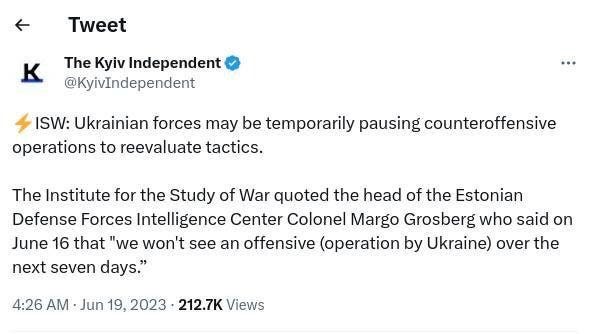
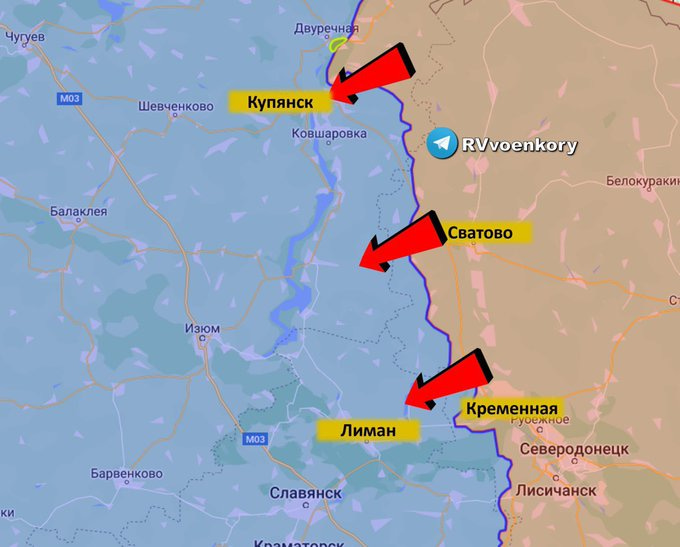
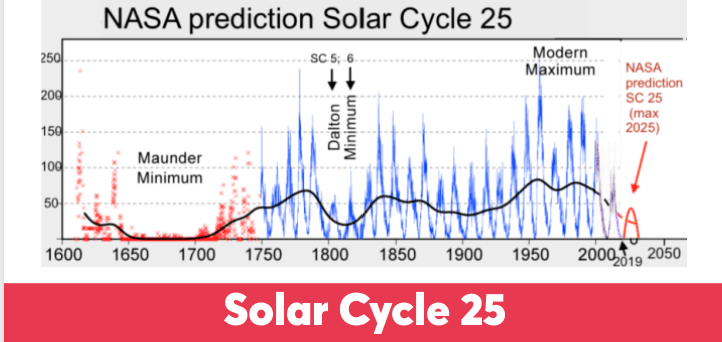
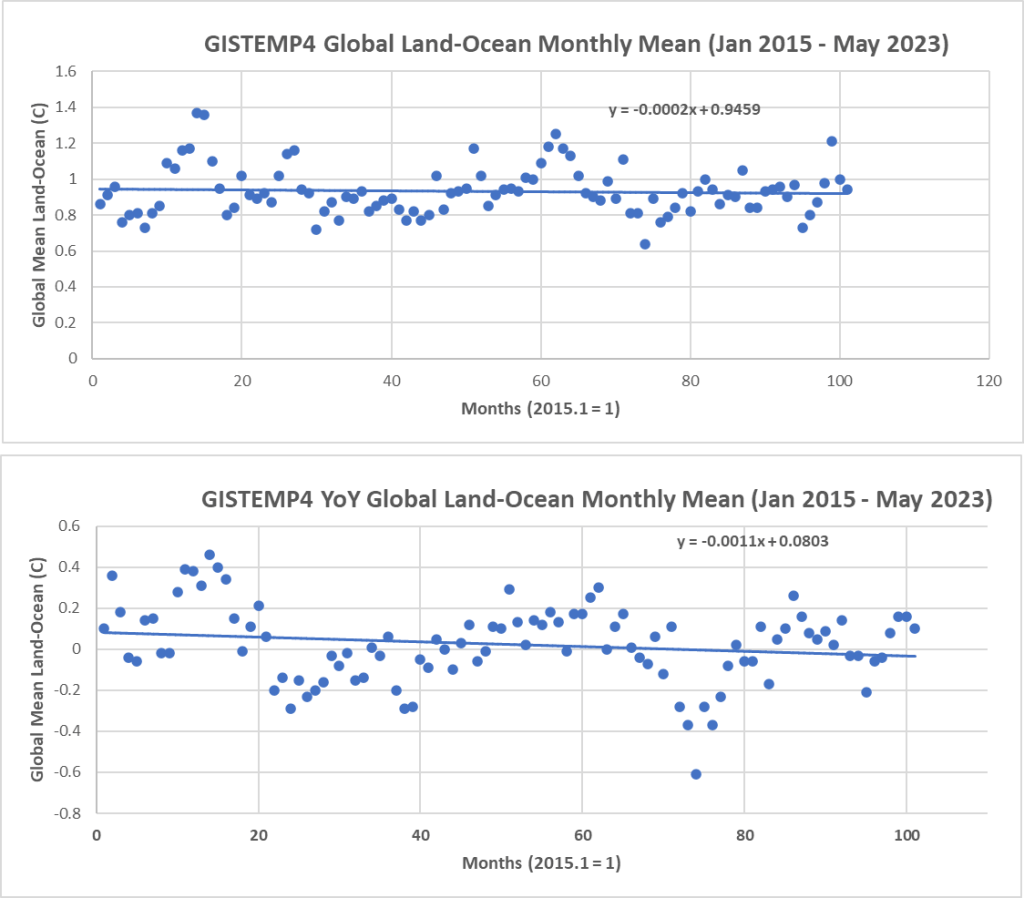
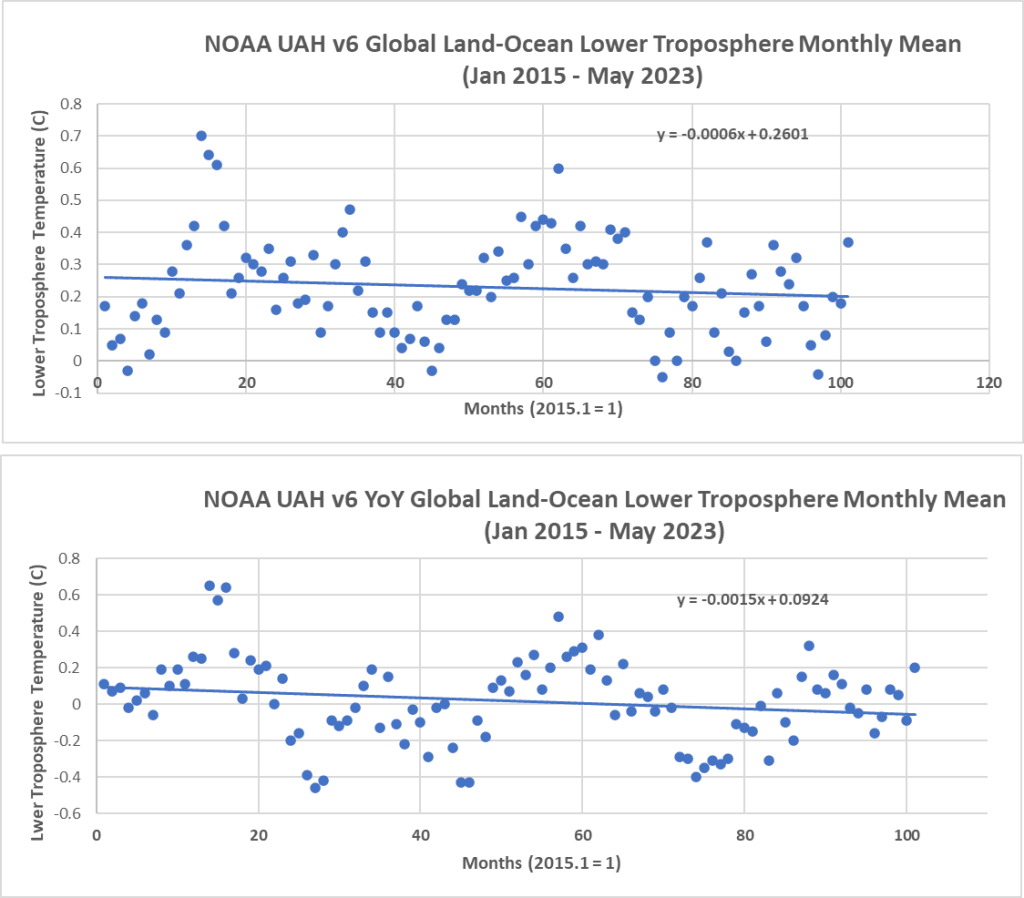
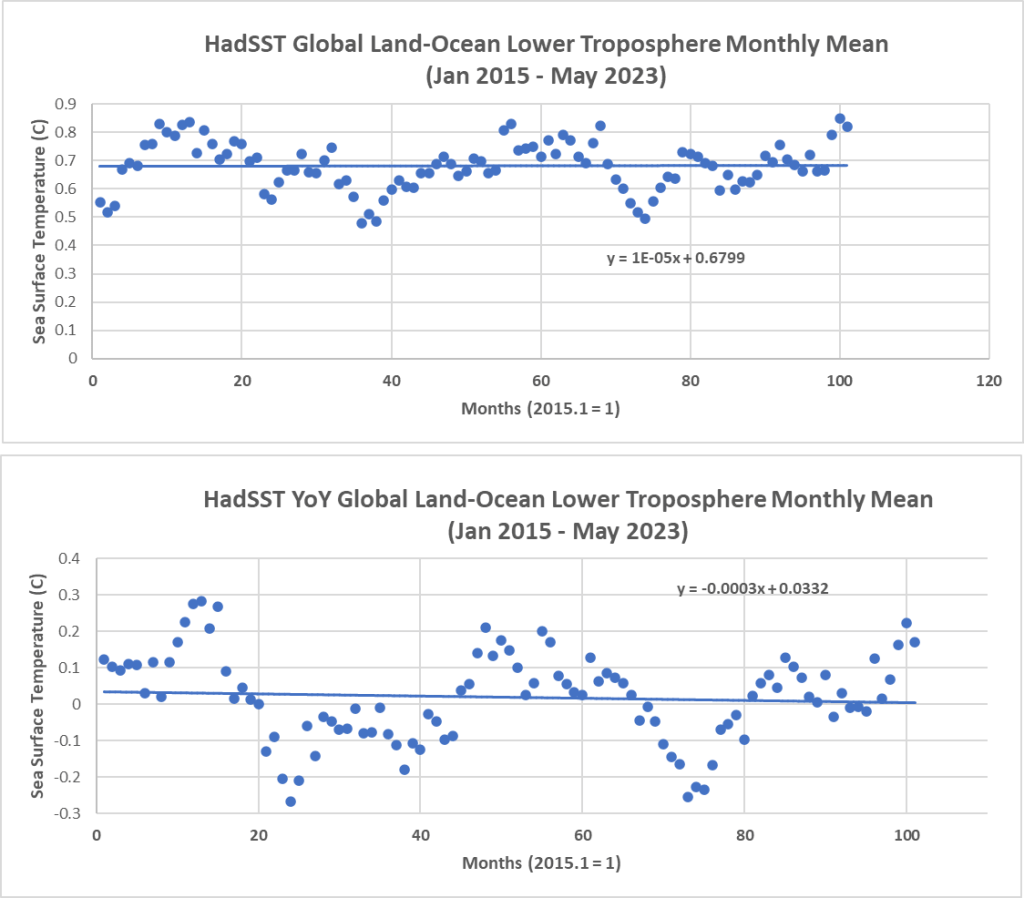
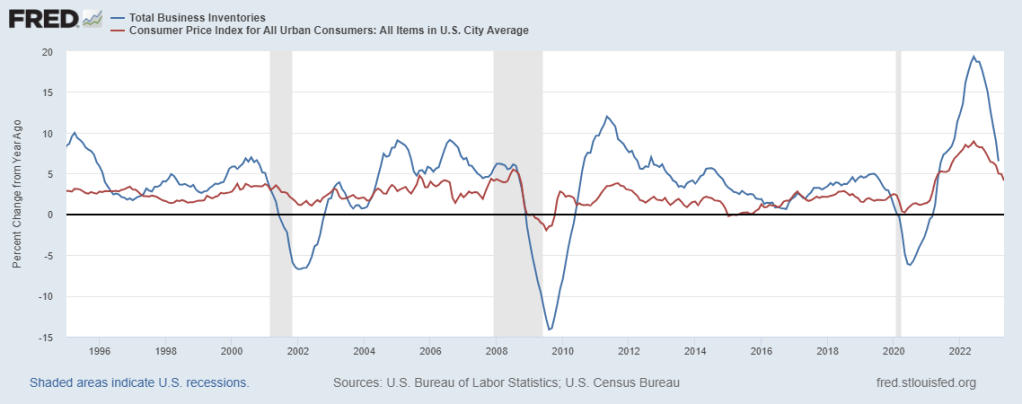

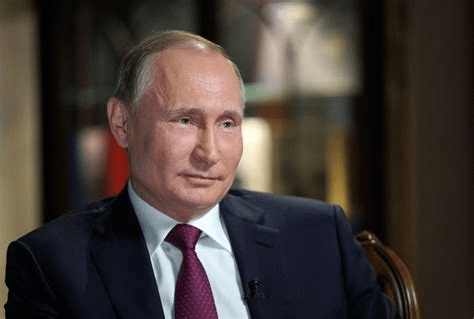


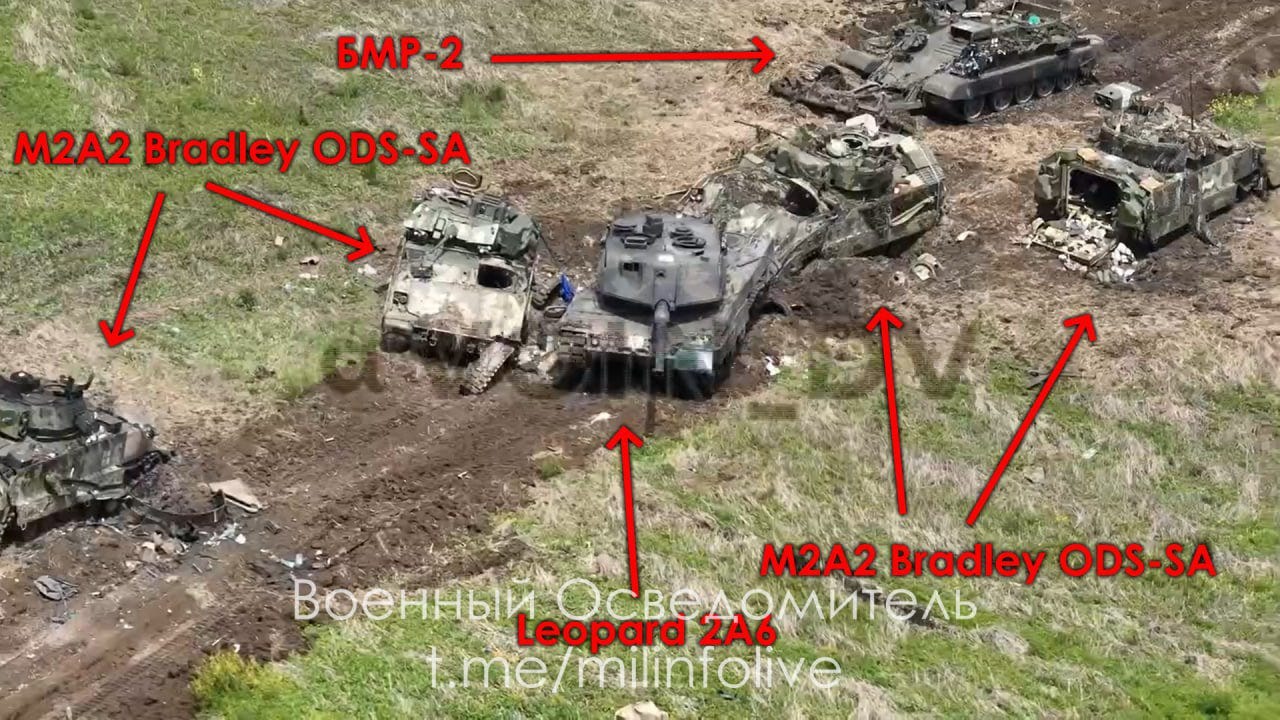

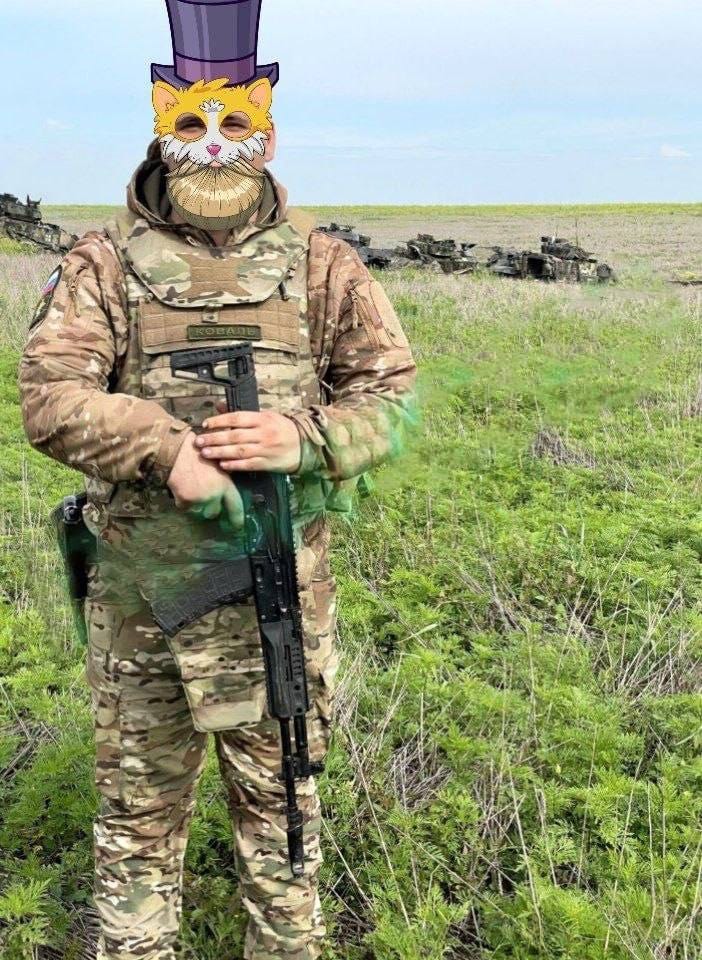
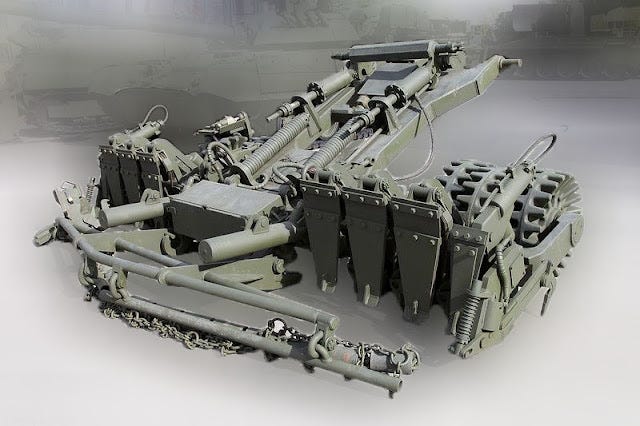

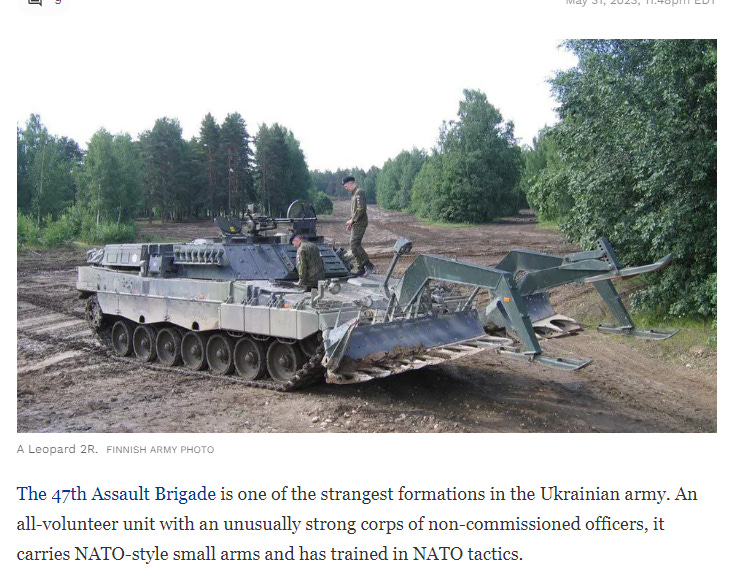
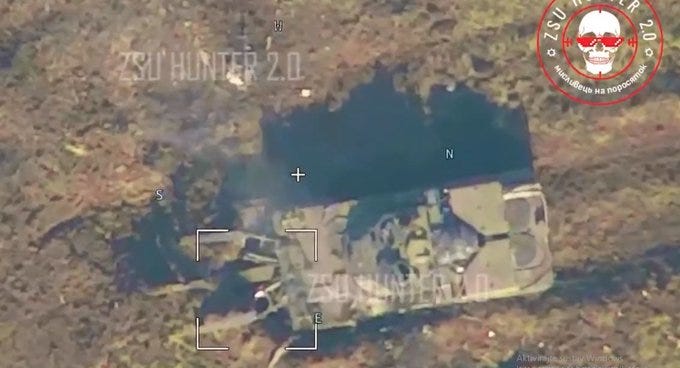
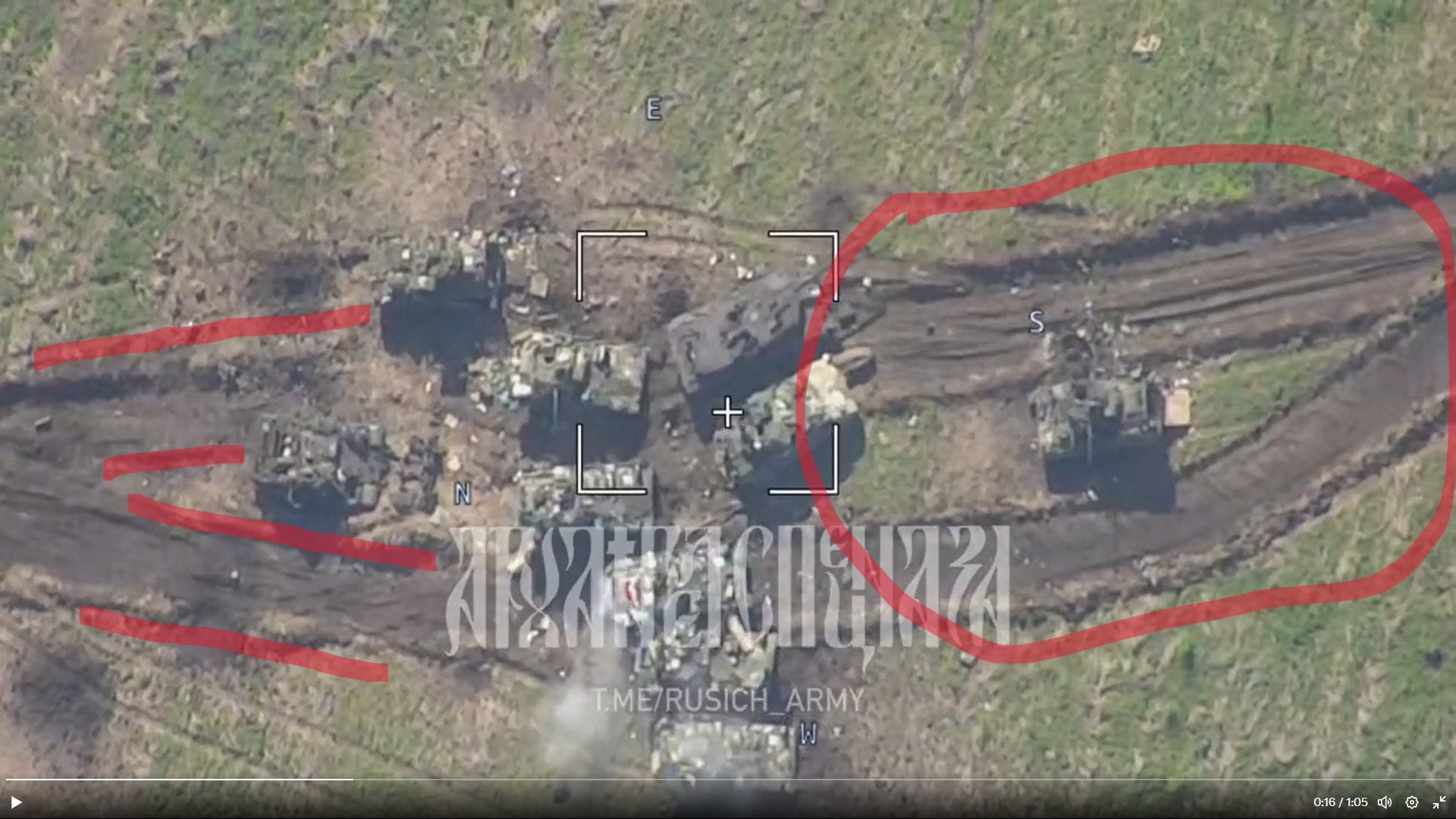

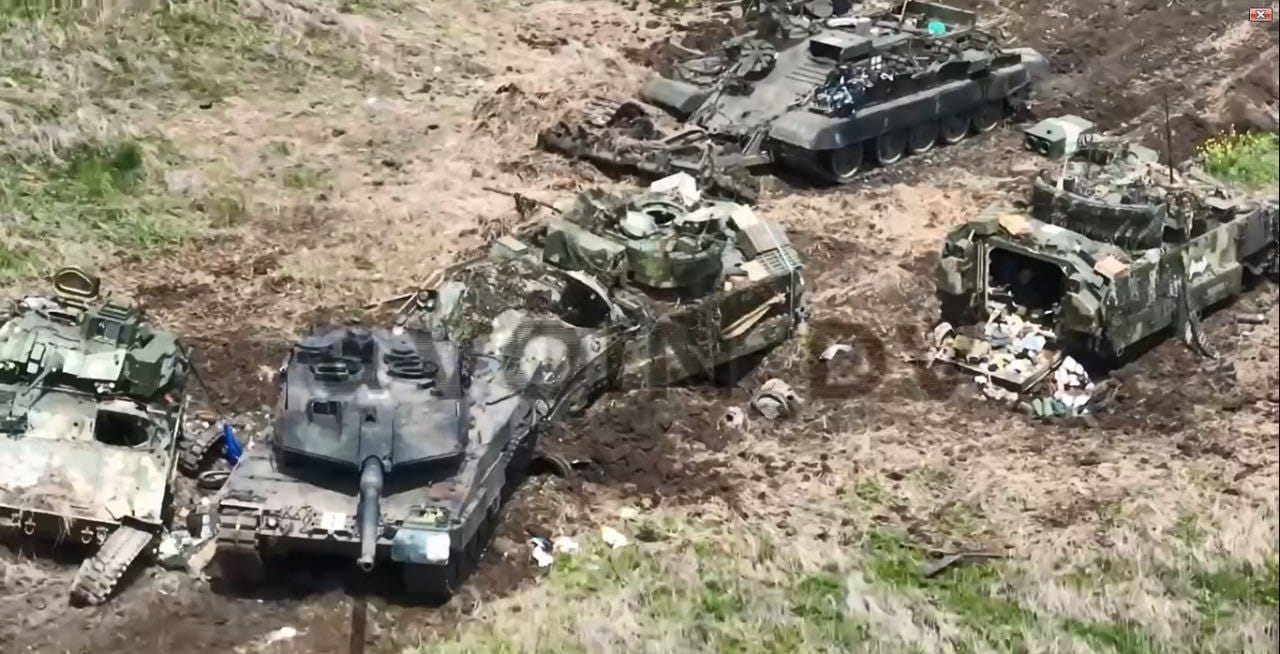



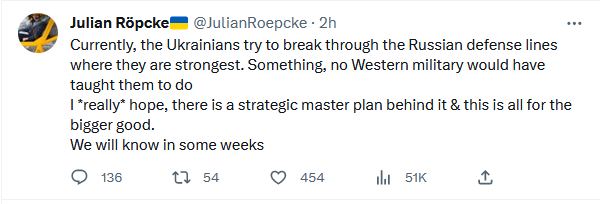

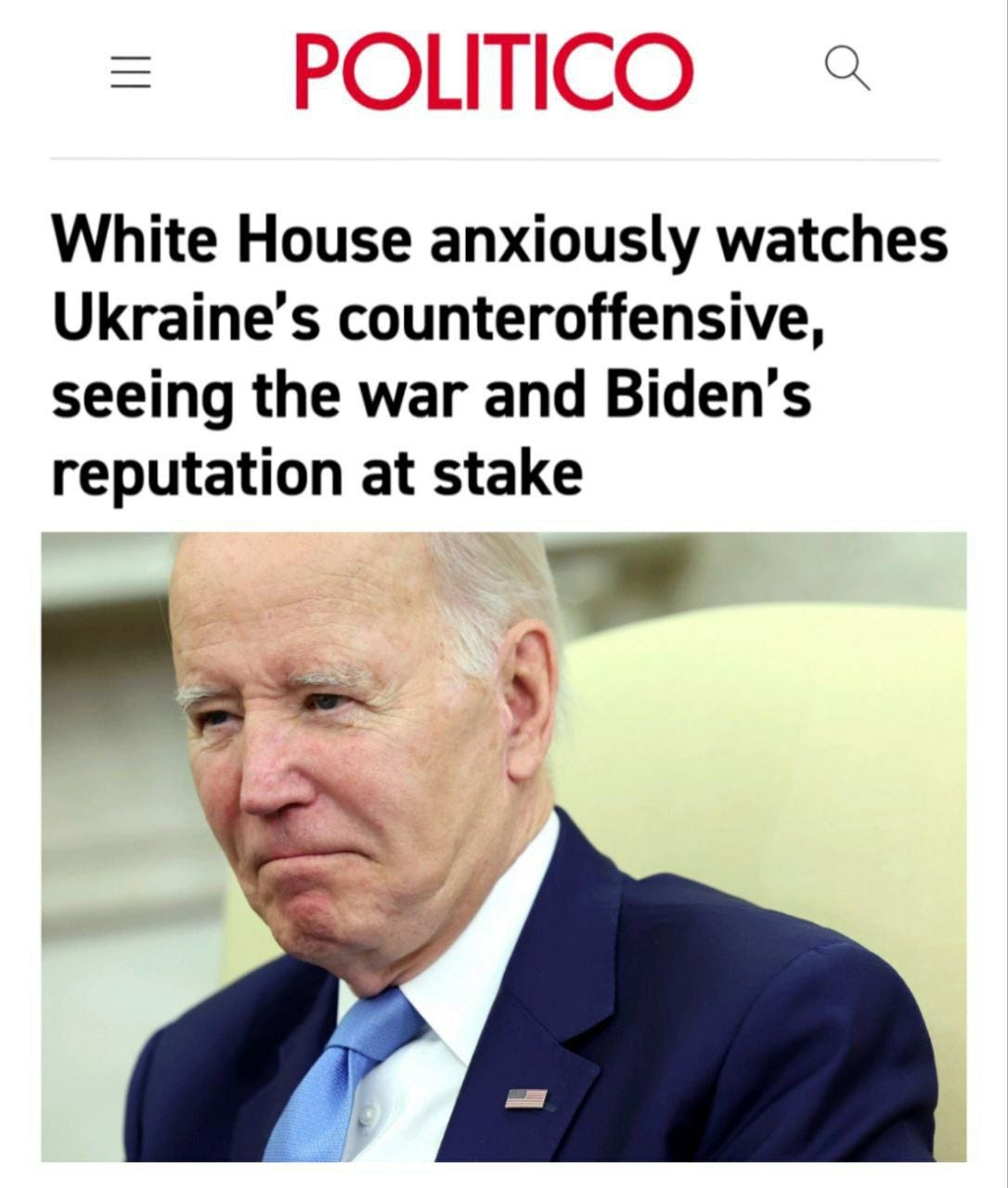
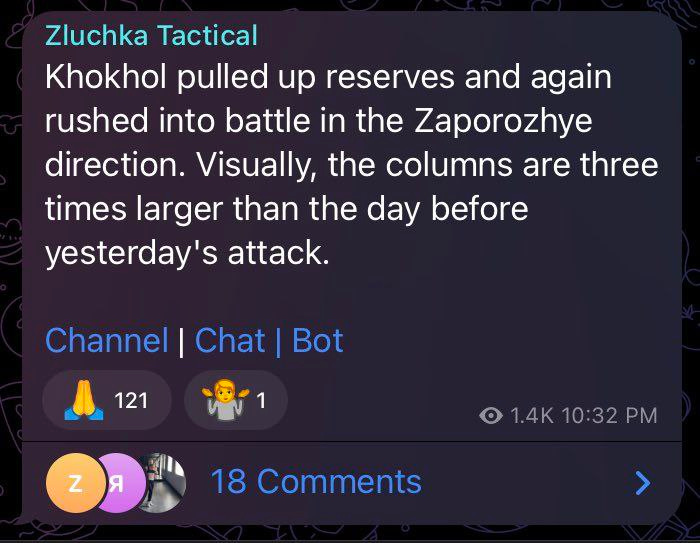
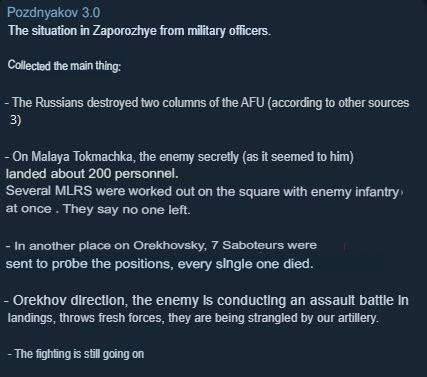
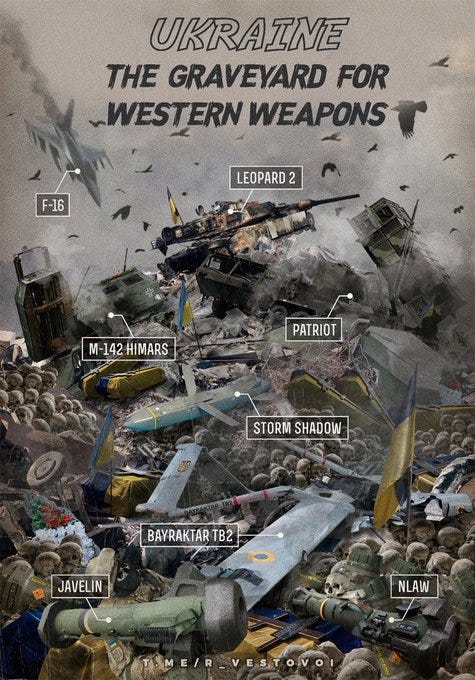

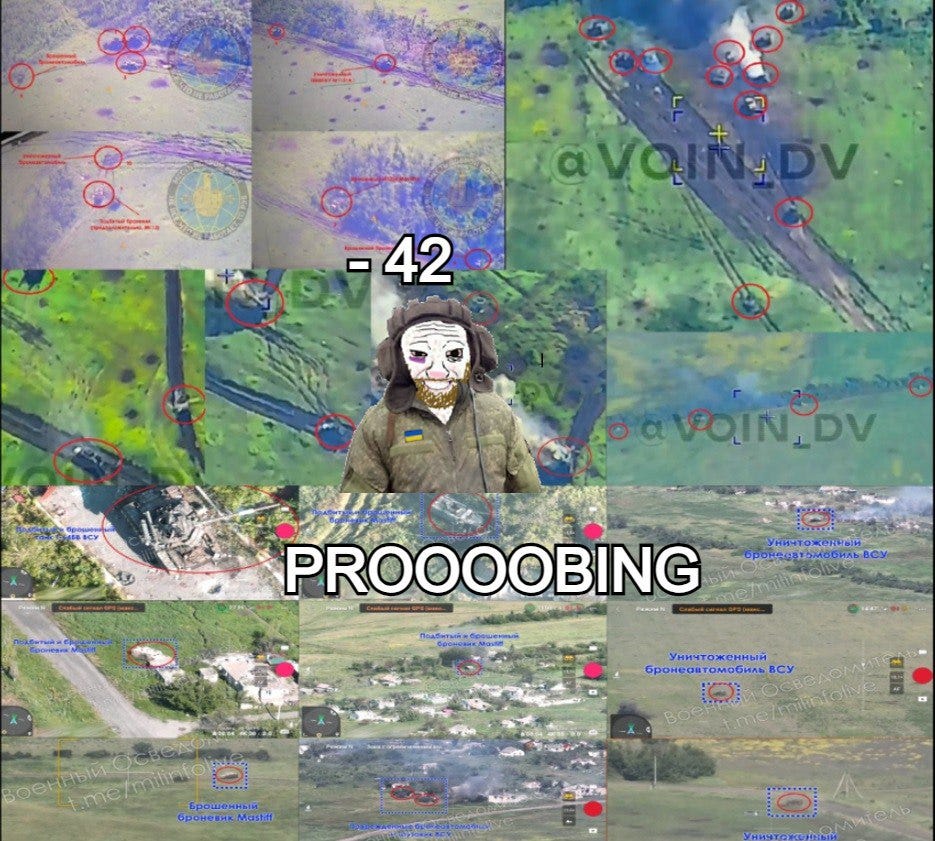
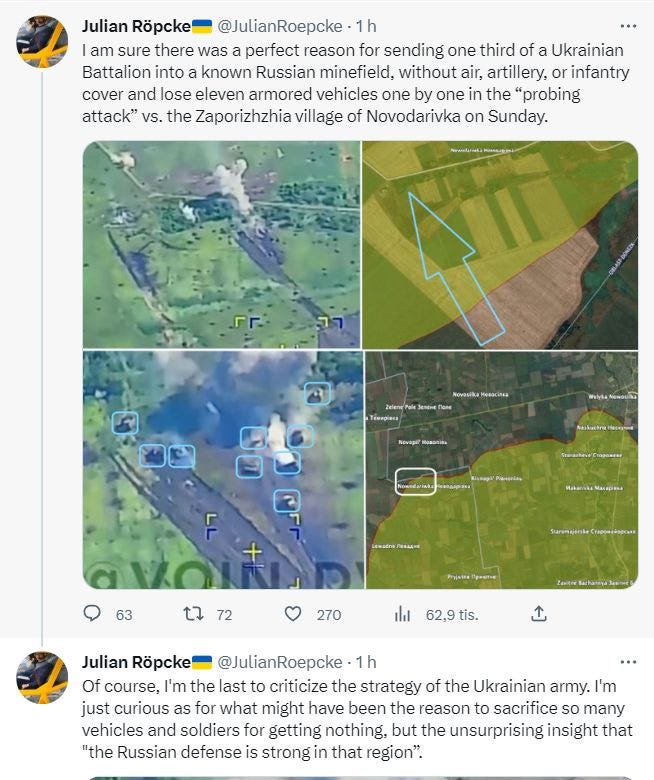
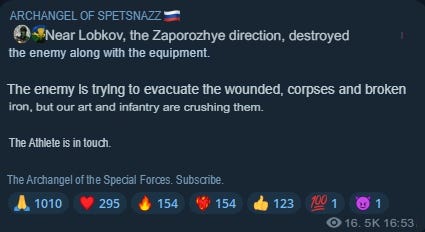
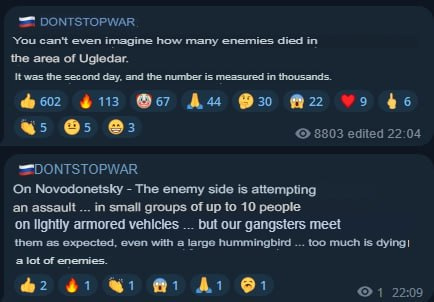

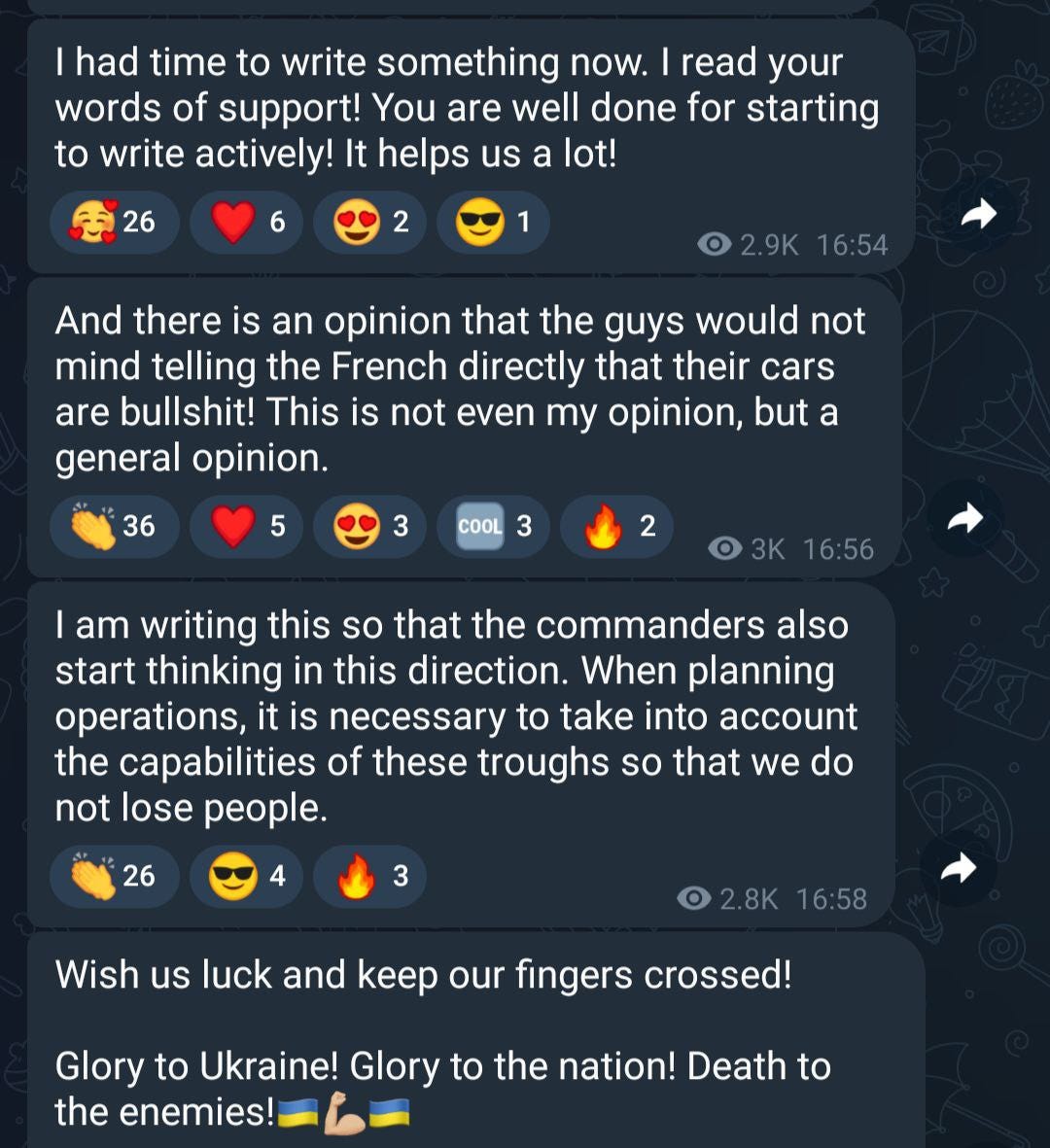
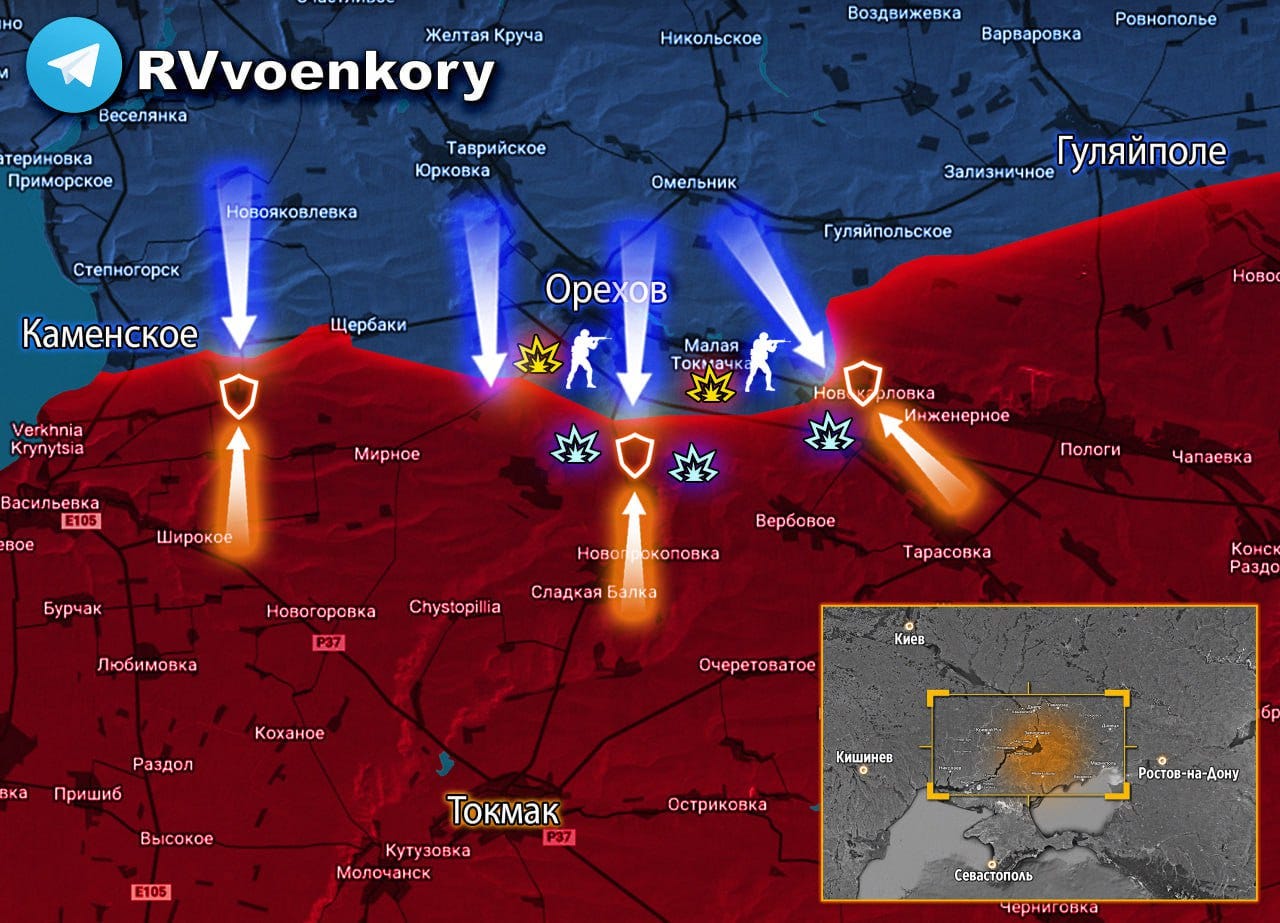
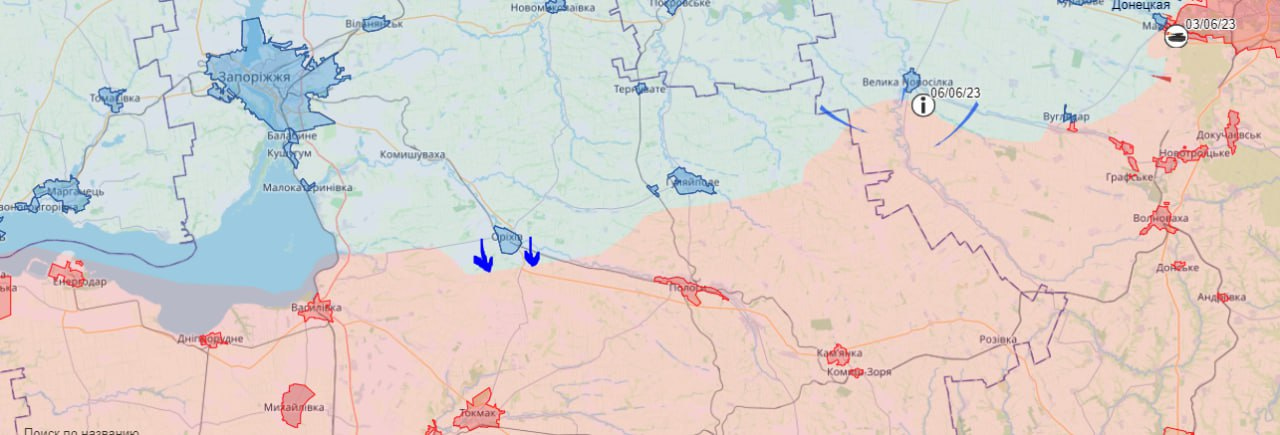
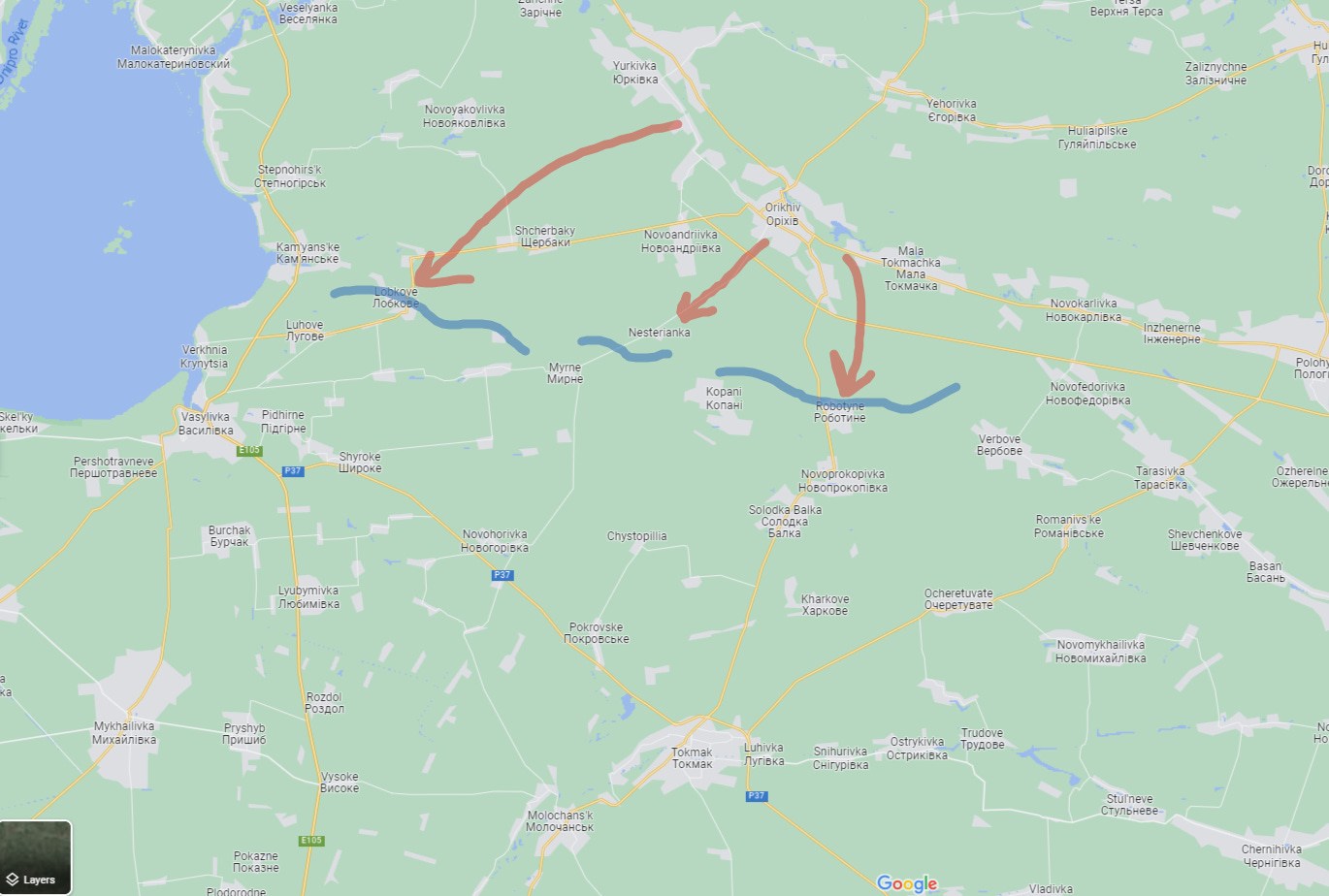
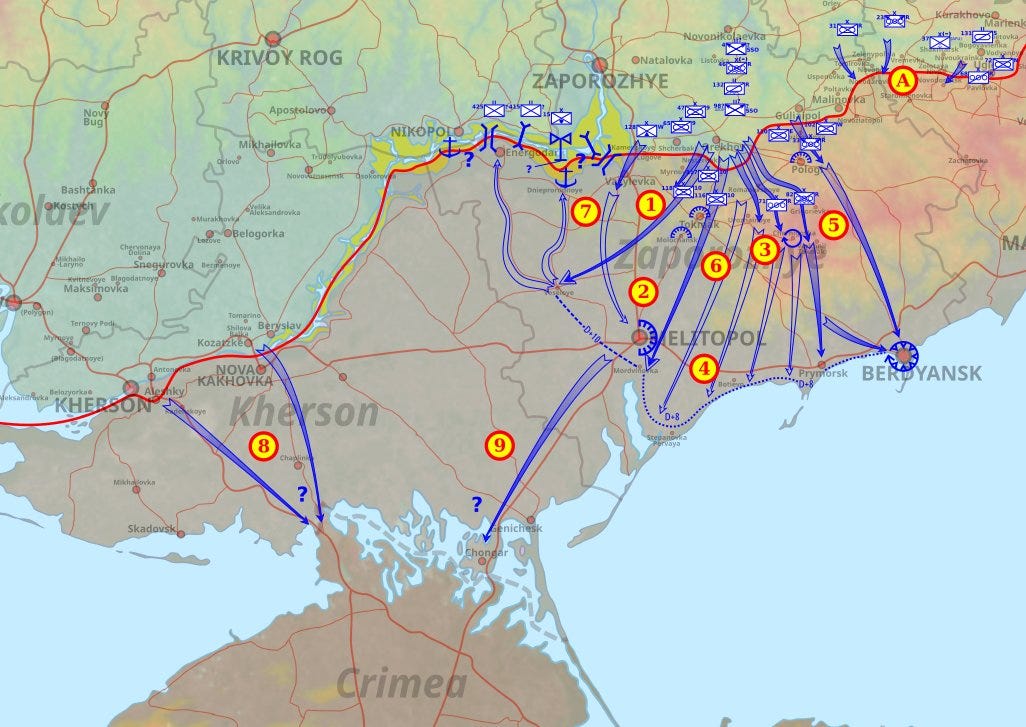
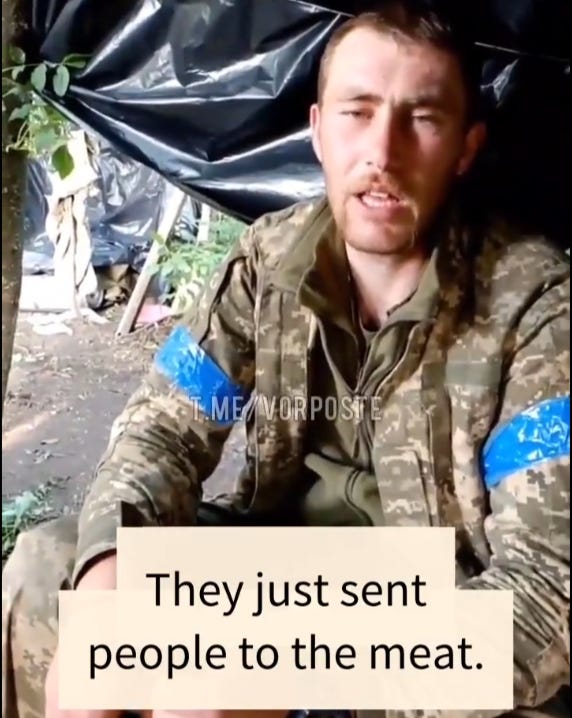
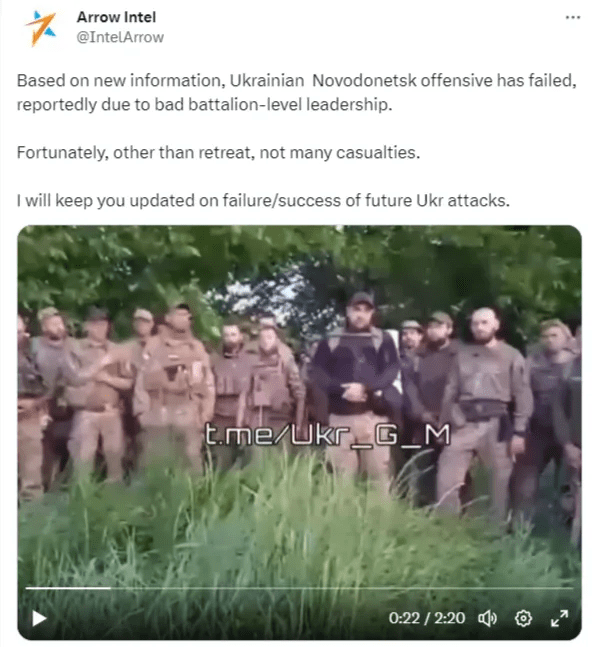
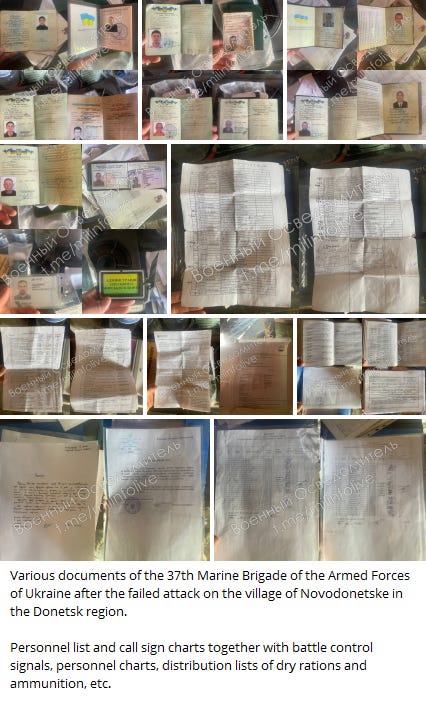
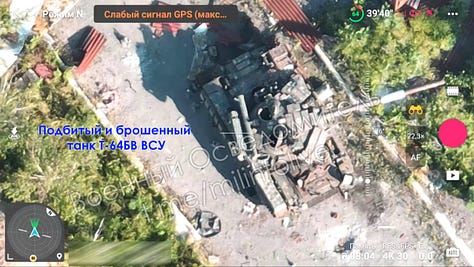

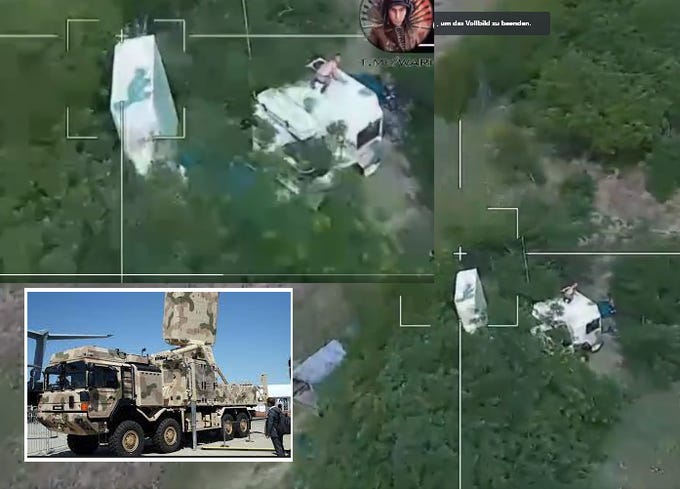


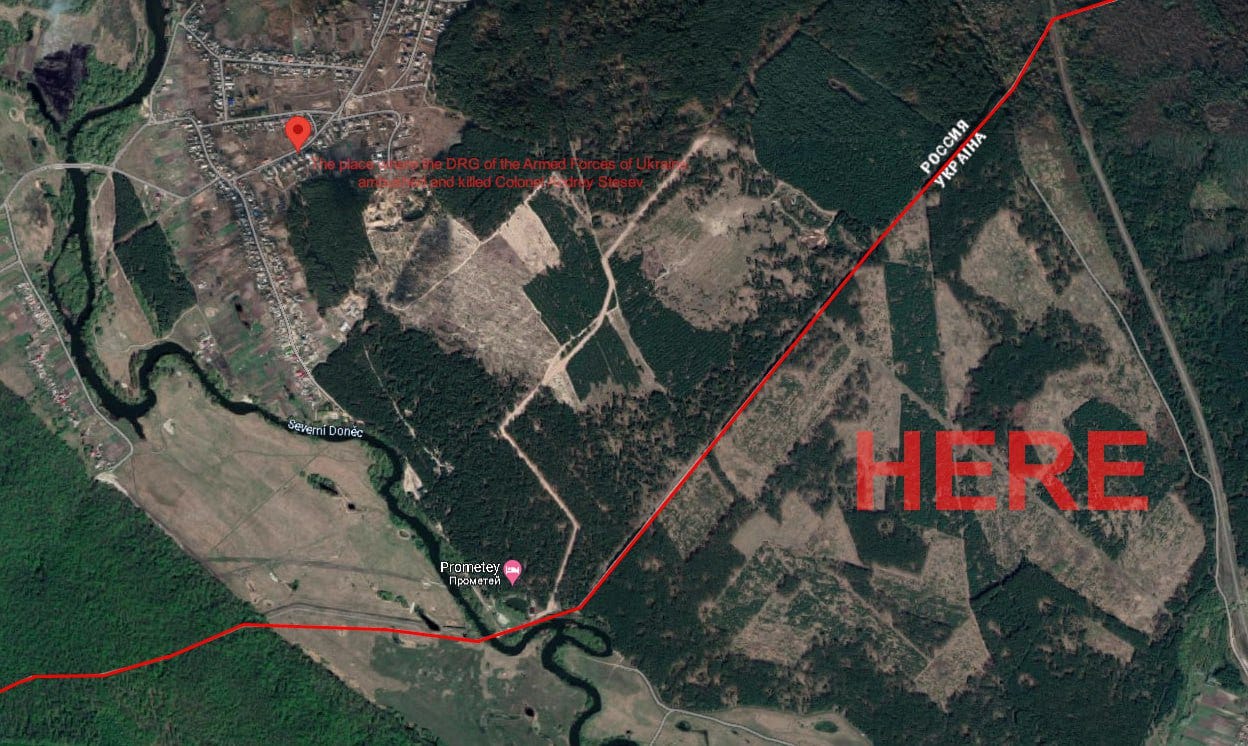



 Econophysics2020