A New Cold War Turning Hot
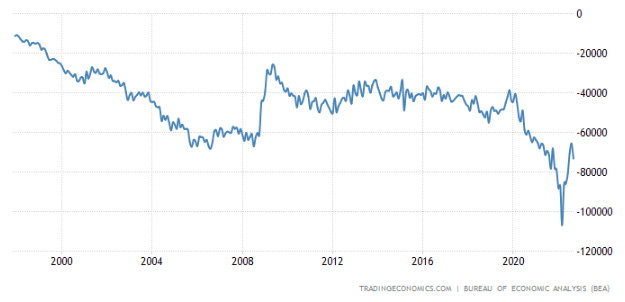
US dependency on China and Russia have long been building. Those dependencies deepened with the CoVid lab leak in late-2019 resulting in a doubling of our trade deficit under the Biden Regime.
Amidst rising fragility, the Biden Regime amped-up the confrontation. In 2021, the Regime redeployed from Afghanistan to confront Russia — China’s ally — through its Ukrainian proxy which the DC Establishment has been arming, supplying, and financing since the CIA-backed coup in 2014.
Ukraine launched the first strike on break-away Russian nationals in Donbass on February 17, 2022. Russia responded with military intervention a week ago.
The Biden Regime further upped the ante in March with sanctions aimed at breaking Russia.
That didn’t go as planned as Russia responded to the shock.

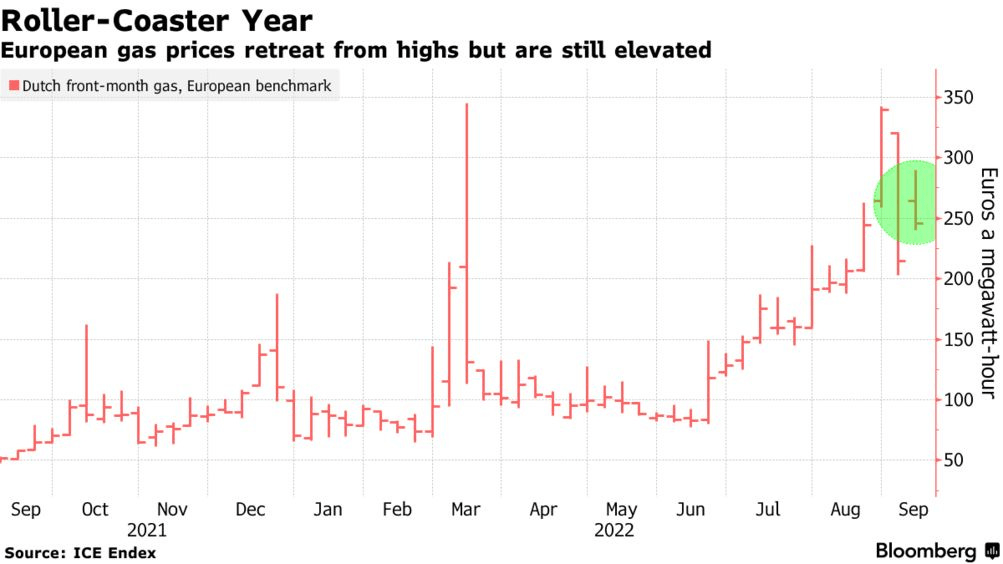
Instead of “regime change” in Moscow by the mid-terms, we now have US and Europe facing ever higher energy prices as Saudi Arabia, Iran, India and others increasingly align with China and Russia against the Biden Regime.
It wasn’t supposed to be that way since the USD has long been the reserve currency and our banking system (SWIFT) can admit and block anyone at will.
But the game has changed.
A key element to the dollar remaining the global reserve currency is its demand, much of which globally is driven by transactions in oil. This started back in 1974, when the U.S. promised the Saudi kingdom protection in exchange for the Saudis pricing oil in U.S. dollars.
“…Saudi Arabia, which had the world’s largest proven reserves of oil, was to price and sell its oil only in dollars and was also obliged to invest its surplus oil proceeds in US debt securities…”
But that four decade-old deal is starting to slip away, it appears.
First, the Biden Regime kneecapped US oil production upon seizing power in hopes of accelerating a shift to renewables. That shifted power back to OPEC and Saudia Arabia.
But instead of obeying the Biden Regime, the Saudis had their own ideas.
In March 2022, the Wall Street Journal first reported that the Saudis were considering stepping away from the dollar in exchange for – you guessed it – the Chinese yuan.
The talks with China over yuan-priced oil contracts have been off and on for six years but have accelerated this year as the Saudis have grown increasingly unhappy with decades-old U.S. security commitments to defend the kingdom, the people said.
Other countries are already beating Saudi Arabia to the punch. Russia is selling gas to China in roubles and yuan as of earlier this year. Debt laden Ghana, though not a powerhouse on the global GDP stage, has just agreed to buy oil with gold instead of U.S. dollar reserves to held secure its currency.
Elsewhere among BRIC nations and BRIC nation-candidates, Turkey and Qatar are tying themselves up financially. Qatar is sealing long-term LNG deals with China.
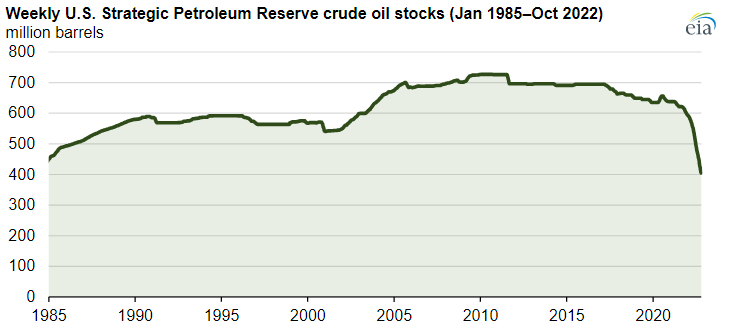
Over here in the United States, distillate stocks are running at their lowest in decades and the Biden Regime depleted our strategic petroleum reserve to buy votes in the mid-terms.
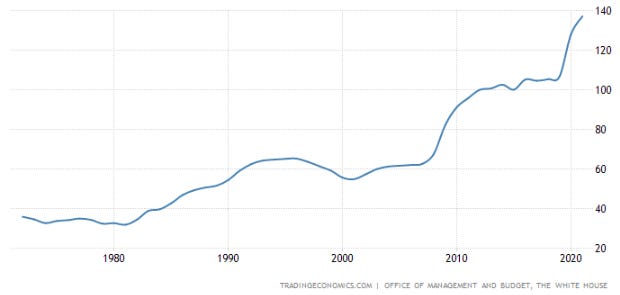
While at the same time, our national debt continues to run higher, faster. Our national debt currently stands at $31.3 trillion, but more alarmingly our national debt to GDP has scorched to 50 year highs and is now near 140%.
The second alarm bell that should be going off is that Central Banks elsewhere in the world are in a rush to stockpile gold and one “mystery buyer” has been confirmed to be China.
Bloomberg called the buyers “mystery whales” at the time and postulated that it was likely either China, Russia, Saudi Arabia or India. That buyer was revealed last week by Nikkei to likely be China, who was said to be buying gold to cut their dependence on the U.S. dollar. Nikkei wrote:
Central banks bought a net 399.3 tonnes of gold in the July-September period, more than quadrupling on the year, according to the November report by industry group the World Gold Council. The latest amount marks a steep jump from 186 tonnes in the preceding quarter and 87.7 tonnes in the first quarter, while the year-to-date total alone surpasses any full year since 1967.
The article continued:
“Seeing how Russia’s overseas assets were frozen after its invasion of Ukraine, anti-Western countries are eager to accumulate gold holdings on hand,” said Emin Yurumazu, a Japan-based economist from Turkey.
“China likely bought a substantial amount of gold from Russia,” said market analyst Itsuo Toshima.
China has made similar moves in the past. After staying mum since 2009, Beijing stunned the market in 2015, disclosing it had boosted gold holdings by about 600 tonnes. It has not reported any activity since September 2019.

(Chart: Zero Hedge, who had a great writeup on China’s reveal as the mystery buyer)
And also noted that these purchases are coming while China dumps U.S. treasuries and strengthens its trade relationship with Russia:
China has been unloading U.S. bonds. It sold $121.2 billion in U.S. debt , the equivalent of roughly 2,200 tonnes of gold, between the end of February — immediately after Russia’s first attack on Ukraine — and the end of September, according to the U.S. Treasury Department.
Chinese imports of gold from Russia surged in July, soaring more than eightfold on the month and roughly 50 times the year-earlier level, according to China’s customs authorities.
Bloomberg noted in its original article about a week ago that the Central Bank purchases were nearly double the previous record.
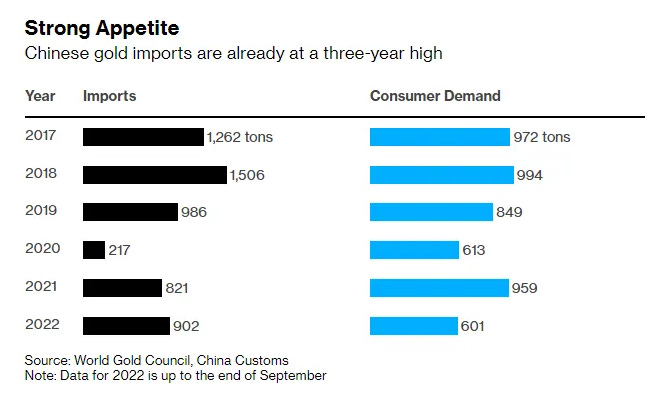
This isn’t just a move by China you would make if trying to shore up your relationship with Russia. It’s also a move you would make if you were preparing for war, economic or otherwise.
It’s also not definitive proof that China is going to back its currency with gold, but it would certainly be a large step in the right direction, should China want to head in that direction.
A third red flag worth keeping an eye on is China’s constant espionage efforts in the United States.
It was reported last Wednesday that U.S. Senators were warned that “hundreds of Chinese-manufactured drones have been detected in restricted airspace over Washington, D.C., in recent months, a trend that national security agencies fear could become a new means for foreign espionage.”
Politico reported last week:
The recreational drones made by Chinese company DJI, which are designed with “geofencing” restrictions to keep them out of sensitive locations, are being manipulated by users with simple workarounds to fly over no-go zones around the nation’s capital.
Federal officials and drone industry experts have delivered classified briefings to the Senate Homeland Security, Commerce and Intelligence committees on the development, three people privy to the meetings said.
This comes at a time when the U.S. is mostly standing idly by while popular phone software TikTok, described as a “national security threat” by many analysts, continues to send information from the U.S. back to China.
FBI director Christopher Wray testified last week before the House that the FBI had a “number of concerns” about the software: “They include the possibility that the Chinese government could use it to control data collection on millions of users or control the recommendation algorithm, which could be used for influence operations if they so chose, or to control software on millions of devices, which gives it an opportunity to potentially technically compromise personal devices.”
It’s a new Cold War that has already begun:
- The U.S. is economically in its most precarious state in decades and has depleted a fair amount of its oil reserves
- Saudi Arabia is openly floating the idea of stepping away from the U.S. dollar and switching the Chinese yuan for oil payments, pressuring a key item of support for the dollar as global reserve currency
- China and Russia have openly floated the idea of challenging the dollar as global reserve currency
- Other countries are buying oil in roubles, yuan and gold
- Central Banks are hoarding gold to the tune of quadrupling purchases from the year prior, including China acting as a “mystery whale” with large purchases
- China is also dumping U.S. dollar denominated treasury bonds
- New espionage efforts may have emerged with Chinese-made drones flying in restricted airspace over the Capitol, following confirmed reports of China attempting to spy on the Fed and shake down U.S. economists
- Popular Chinese software like TikTok has been called a “national security threat” by the FBI.
We may have a ruling class led by Bozo, but Russia has a serious leader who finally realizes what the game is for and their role in it.
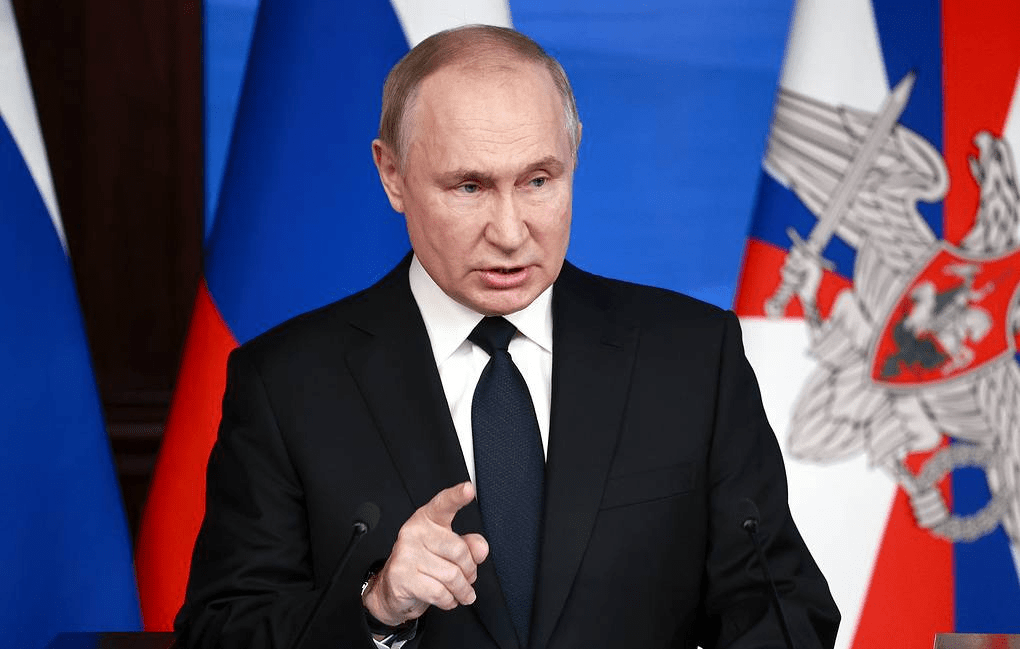
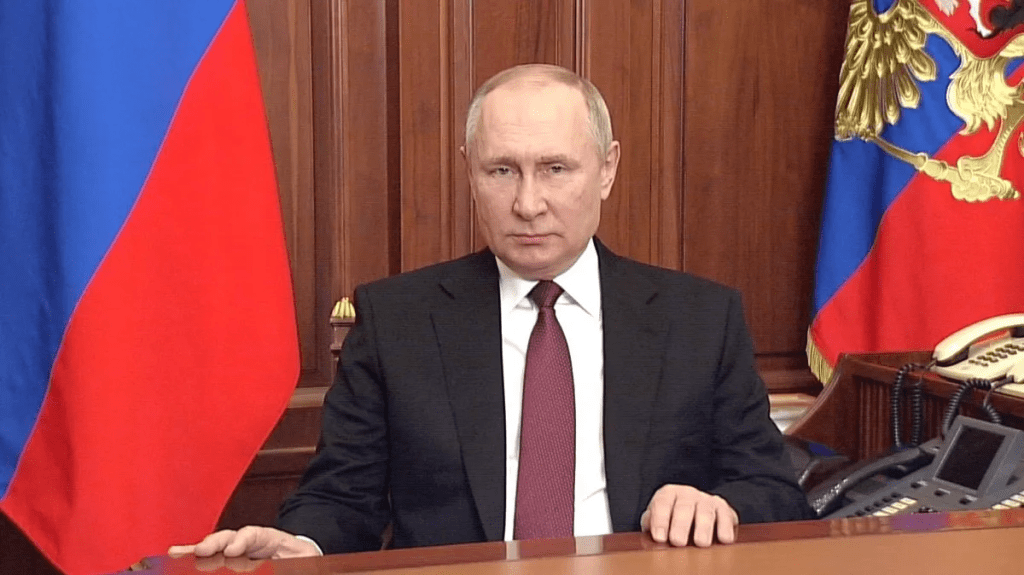
His recent address is well worth reviewing. Putin knows that this global war is one for all the marbles, and so does Xi in Beijing—”either Russia wins or China loses”. Negotiations will take place only from a position of Russian strength, as Putin made clear at the end of 2021 in his draft treaties:
Yet, despite Russia going all-in and holding the initiative in Ukraine, the Biden Regime is intent on pursuing its mad war on Russia, doubling-down at each juncture.
The latest madness, already noted a few days ago, featured Senator Graham calling for some anonymous actor on the world stage to “take out” President Putin of Russia link. That followed a Newsweek article that cited anonymous “military sources” in the US who stated that the US is contemplating a “decapitation strike” against Russia—presumably a strike at the Kremlin that would kill Russia’s top leadership.
Russia was not amused.
Russian Foreign Minister Sergey Lavrov on Tuesday lashed out at what he described as threats coming out of the US to assassinate President Vladimir Putin, apparently in response to a slew of anonymously sourced reports.
“There are some ‘anonymous officials’ from the Pentagon who have actually enunciated threats to deliver a ‘decapitating strike’ on the Kremlin, which is in fact an assassination threat against the Russian president,” Lavrov said, according to TASS.

“If someone really has such ideas, then this someone should think long and hard about the possible consequences of such plans,” the top Russian diplomat warned.
It appears Lavrov specifically had in mind a September report published in Newsweek which relied on anonymous US defense officials describing that the Biden administration was mulling plans for a “decapitation strike to kill Putin in the heart of the Kremlin.”
Below is the relevant section from that September 29 Newsweek article:
Details about what “decisively” means have not been publicly revealed. The military sources tell Newsweek that there are subtle moves being made with regard to nuclear threats, including moving submarines and aircraft and drilling B-52 bombers. But they stress that non-nuclear military options—the use of conventional weapons and special operations, as well as cyber and space attack—are front and center, to include a decapitation strike to kill Putin in the heart of the Kremlin.
Continuing his Tuesday response to this and more recent threats emanating from the West, Lavrov said that “It seems that they have shed all vestiges of respectability.”
He added: “The notorious [ex-British PM] Liz Truss is a vivid example given that she directly and publicly said during her pre-election campaign that she was ready to order a nuclear strike,” he recalled.
Lavrov also addressed a growing atmosphere of dangerous nuclear rhetoric and confrontation. “It is no secret to anyone that the strategic goal of the United States and its NATO allies is to defeat Russia on the battlefield as a mechanism for significantly weakening or even destroying our country,” he said.
Worse – the Regime is in double-down mode.
As reported Antiwar this week, the CIA has been using a European NATO country’s intelligence services to conduct sabotage attacks inside Russia since the February invasion of Ukraine, investigative journalist Jack Murphy reported on Saturday, citing unnamed former US intelligence and military officials.
The report said that no US personnel are on the ground in Russia but that the operations are being directed by the CIA. The US is using an ally’s intelligence services to add an extra layer of plausible deniability, and a former US special operations official told Murphy that layer was a major factor in President Biden signing off on the attacks.

Murphy said he didn’t name the NATO country whose intelligence services were being used in the report because “doing so might endanger the operational security of cells that are still operational inside of Russia.”
The report appeared on Murphy’s personal website, and in a note at the end of the piece, he explained why it wasn’t published by a media outlet. “While working with editors at mainstream publications I was asked to do things that were illegal and unethical in one instance, and in another instance I felt that a senior CIA official was able to edit my article by making off the record statements, before he leaked a story to The New York Times to undermine this piece,” he wrote.
According to the report, the covert campaign inside Russia has been years in the making. Two former military officials said that the NATO country’s spy services had hidden a cache of explosives and equipment in Russia more than a decade ago, and some of the gear has been used recently.
A former US special operations official and US person briefed on the campaign said that the CIA didn’t get involved with the NATO country’s operations inside Russia until 2014. The first time sleeper cells entered Russia that were directed by both the CIA and the NATO ally’s spy service was in 2016, and more entered the country in the following years.
The NATO ally provided the undercover operatives with stories to explain their presence in Russia and documents to back them up. The report said that around the time Russia invaded Ukraine on February 24, the NATO ally’s spy service activated its sleeper cells inside Russia using covert communication, and they were ready for orders on what targets to strike.
It’s not clear how many attacks the sleeper cells have been responsible for, but there has been a series of mysterious explosions at Russian military facilities, powerplants, and railways since the invasion. The report suggested that the saboteurs could have been behind an April fire at the research institute of Russia’s Aerospace Defense Forces, which killed over 20 people.
The sabotage operations that the CIA is overseeing require a presidential finding. President Obama signed a finding before he left office that allowed covert action against Russia over allegations that Moscow interfered in the 2016 election, a claim that has never been proven.
According to The Washington Post, Obama’s finding allows “planting cyberweapons in Russia’s infrastructure, the digital equivalent of bombs that could be detonated if the United States found itself in an escalating exchange with Moscow.” Murphy cited a former CIA official who said the finding also allowed sabotage operations against Russia, although other former officials he spoke with said the current operations would have required an amendment or an entirely new finding.
A CIA spokesperson denied the allegations made in the report, but Murphy pointed out that the spy agency can legally deny the existence of its covert operations.
The CIA directing sabotage inside Russia risks a major escalation between NATO and Russia and could lead to a nuclear escalation. Ukraine has recently stepped up its own attacks inside Russian territory, and according to The Times, the Pentagon tacitly endorsed recent drone strikes that hit air bases deep inside Russian territory, adding to the risk of escalation.
In his note at the end of the report, Murphy said that he published the story to inform the public:
“Indeed, the Russian government knows perfectly well who is sponsoring these sabotage strikes. Moreover, the intelligence community wants them to know. The only party left in the dark is the public at large, left unaware of the shadow war taking place behind the scenes,” he wrote.
Happy Christmas to Our Drill Instructors Everywhere
Officer Candidate School or Boot Camp, they are unforgettable.
In It to Win It – Now and in the Future
https://tass.com/defense/1554075
Putin backs initiative to boost army size, raise conscription age
Defense Minister Sergey Shoigu proposed calling up Russian citizens aged 21-30 for active duty, building up the personnel strength by another 30% and deploying 20 new divisions
MOSCOW, December 21. /TASS/. Russian President Vladimir Putin backed the Defense Ministry’s initiative to increase the size of the Army and raise the conscription age. Speaking at the Defense Ministry’s end-of-the-year board meeting, the head of state said that the Russian authorities would not repeat mistakes of the past and would not engage in the militarization of the country and the economy.
Defense Minister Sergey Shoigu proposed calling up Russian citizens aged 21-30 for active duty, building up the personnel strength by another 30% and deploying 20 new divisions. He also spoke for re-establishing the Moscow and Leningrad Military Districts and setting up a new combat group in the country’s northwestern regions in response to the potential accession by Finland and Sweden to NATO.
TASS has put together the board meeting’s highlights.
Changing conscription age, boosting army size
The lower limit of the conscription age needs to be raised gradually from the current 18 years to 21 years and the upper limit from 27 years to 30 years, Shoigu said.
The defense chief proposed increasing the size of the Russian Armed Forces to 1.5 million. [Note: that’s a 50% increase(!)]. At the beginning of the year, the Russian Army had about 1 million personnel and its numerical strength was intended to reach 1.15 million from next year.
Contract-enlisted personnel should be increased to 695,000, with their numerical strength reaching 521,000 already by the end of next year, the defense minister said. In the spring of 2021, Shoigu said that 380,000 Russians were serving on contract.
The potential accession by Finland and Sweden to NATO will require creating “the corresponding group of forces” in Russia’s northwestern regions, the defense chief said. In particular, an army corps is expected to be deployed in the Republic of Karelia.
Shoigu also proposed re-establishing the Moscow and Leningrad Military Districts and setting up ten new divisions: five artillery, two air assault and three motorized infantry formations (with two of the latter to be stationed in the Zaporozhye and Kherson Regions). The existing brigades will be used as the basis for deploying another seven motorized infantry and five marine infantry divisions, the defense minister said.
Shoigu also spoke for setting up three operational commands of aviation divisions, one fighter and eight bomber aviation regiments and six army aviation brigades in the Russian Aerospace Forces. Each combined arms army and tank army should have a composite aviation division and an army aviation brigade of 80-100 combat helicopters, he said.
Putin backed the defense chief’s proposals. He assured that the Russian Armed Forces would be developing “calmly, rhythmically, without any haste and persistently” while the country would not repeat mistakes of the past. “We will not engage in militarization of the country and militarization of the economy,” he stressed.
Special military operation in Ukraine
The objectives of the special military operation in Ukraine will undoubtedly be achieved and security will be ensured on the entire territory of Russia, including its new regions, Putin said.
The combat operations revealed problems, which need “to be addressed specially,” including the issues of communications and automated troop command and control and also counter-battery warfare, the Russian leader said. Putin also pointed to the problems exposed during the partial mobilization and the need to modernize the system of military commissariats.
The head of state instructed the Defense Ministry “to pay attention to all civilian initiatives” and also to respond to criticism “rightly and timely.”
The Ukrainian military suffered “heavy losses” and “a considerable part” of the weapons it had at the beginning of the special military operation had already been destroyed, Shoigu said, without giving exact figures.
As a whole, the special military operation has demonstrated “commanders’ high professionalism” and the readiness of the military personnel “for accomplishing the most difficult combat missions,” the defense minister said. He also highlighted “the exceptional reliability and efficiency of Russian weapons and materiel.”
Confrontation with West
Putin called Western countries Russia’s “strategic enemies,” which have been striving for centuries to weaken and disintegrate it: “The country, it seems to them, is too big and menacing for someone, so it needs a bit of splitting up, dividing,” he said.
Russia has sought to be part of “the so-called civilized world” but it turned out “we weren’t welcome there” while the standoff with the hostile forces in Ukraine was inevitable, the Russian leader stressed.
Now the military potential of practically all the major NATO countries is engaged against Russia, the head of state emphasized. In Shoigu’s estimate, 27 countries have spent already $97 billion on military aid to the Kiev regime and the alliance’s specialists are present in the zone of combat operations while over 500 Western satellites are operating for the Ukrainian military.
Russia’s nuclear triad
Russia will maintain and raise the combat readiness of its nuclear triad, Putin said. “This is the primary guarantee of preserving our sovereignty and territorial integrity and, as a whole, the balance of power in the world.” In particular, the most advanced Sarmat intercontinental ballistic missiles will be placed on combat alert in Russia shortly, despite some schedule adjustment, the head of state said.
As Shoigu pointed out, the Russian nuclear triad is maintained at the level that ensures “reliable strategic deterrence.” The Russian nuclear triad is already 91.3% provided with modern weapons (compared to 89% a year ago) and another 22 missile launchers, including for Sarmat ICBMs, will go on combat alert in the Russian Strategic Missile Force alone next year, the defense chief said.
Army’s provision with weapons
Russia’s defense procurement plan for the basic types of armaments has been 91% fulfilled this year, Shoigu said. The deliveries of the most needed types of military hardware and weapons scheduled for 2024-2025 have been rescheduled for their supplies already in 2023, he said.
The Russian president handed down instructions to provide the troops with all the necessary items – not only weapons but also medical aid kits, rations and footwear “at the most advanced and highest level” because “there can be no trifles on the battlefield.”
Putin stressed that the Russian Armed Forces were receiving all the required means: “We have no financing constraints and the country and the government give all that the Army requests. I hope that the response will be formulated accordingly and the corresponding results will be achieved.”
All In – You Can Take It to the Bank
https://imetatronink.substack.com/p/in-for-a-pound
In for a Pound
Russia is in it to win it, and will settle for nothing less.
I have been following the excellent war historian Michael Vlahos for a good portion of the ongoing Ukraine War. I have benefited from his perspectives on history and his well-considered geopolitical insights. Dr. Vlahos’ formal credentials and subject matter expertise are unimpeachable – and unquestionably shade the autodidactic musings of an obscure voice speaking from a rural backwater at the southern rim of the Great Basin.
But with that deservedly flattering preface, I shall now presume to critique and rebut his latest hypothesis in relation to what he seems to believe would be a mutually acceptable resolution to that war on the part of the United States (ostensibly “NATO”) and the Russian Federation.
I will be responding to the latest brief discussion in a podcast series featuring John Batchelor and Dr. Vlahos.
The discussion begins with Mr. Batchelor articulating a series of hypotheticals apparently founded on an assumption that Vladimir Putin is operating from a tenuous position of power and full control over both his generals and the fundamental strategic aims driving the prosecution of this war.
In my studied opinion, there is emphatically zero basis for the assertion that Vladimir Putin is not securely in control of both the Russian military and Russian foreign policy. Nor is there any credible evidence that powerful elements within the Russian military oppose Putin and have even remotely contemplated the idea of deposing him. Indeed, to the extent these notions have any traction in the west, I attribute it entirely to the #EmpireAtAllCosts cult, the arms industry-funded think tank propagandists, and the unbridled intrigues of quasi-supranational western intelligence agencies.
Nevertheless, parting from the premise described above, Batchelor and Vlahos proceed to hypothesize a “peaceful solution” to the war in Ukraine founded in a Russia/NATO partition of Ukraine, with an undefined NATO-controlled western portion juxtaposed against what they indeterminately denominate “Novorossiya” in the east.
Frankly I was shocked by the proposition. In my judgment, it is not only geopolitically incoherent, but inexplicably naïve.
To their credit, both Mr. Batchelor and Dr. Vlahos appear to acknowledge that the only meaningful parties to this war (and its eventual cessation) are those of the waning American Empire (“NATO”) and a Russian Federation that long-resisted and has now decisively rejected assimilation into the hegemon-dictated “rules-based international order”; a Russia that is convinced the brief epoch of American global hegemony has ended, and that a return to a balance-of-powers multipolar world is both inexorable and imminent.
But I am thoroughly persuaded that the “solution” Batchelor and Vlahos propose would be utterly unacceptable to both parties – and would represent not only an unearned victory for NATO, but an unmitigated defeat for both Russian geostrategic interests and Vladimir Putin’s domestic political support.
Many geopolitical analysts have commented to a limited degree on Putin’s bold address to the world delivered even as Russian forces had commenced their “Special Military Operation” in Ukraine on February 24, 2022, but few, if any, have focused their attention on the equally portentous address Putin delivered three days earlier.
In his February 21, 2022 speech, Putin meticulously recounted the relevant history of the region dating back multiple centuries, and focused specifically on the events that followed in the wake of the dissolution of the Soviet Union. (see End Note below)
In addition to Putin’s history lesson, he makes particular reference to a detailed proposal Russia delivered to the United States and its NATO allies in mid-December 2021 – a proposal that effectively amounted to a “final warning”; a last-ditch effort to avoid war in Ukraine.
Consider his words carefully, and particularly in light of how Russia has unswervingly adhered to the three primary war objectives Putin articulated in his February 24th speech.
Last December, we handed over to our Western partners a draft treaty between the Russian Federation and the United States of America on security guarantees, as well as a draft agreement on measures to ensure the security of the Russian Federation and NATO member states.
The United States and NATO responded with general statements. There were kernels of rationality in them as well, but they concerned matters of secondary importance and it all looked like an attempt to drag the issue out and to lead the discussion astray.
We responded to this accordingly and pointed out that we were ready to follow the path of negotiations, provided, however, that all issues are considered as a package that includes Russia’s core proposals which contain three key points. First, to prevent further NATO expansion. Second, to have the Alliance refrain from deploying assault weapon systems on Russian borders. And finally, rolling back the bloc’s military capability and infrastructure in Europe to where they were in 1997, when the NATO-Russia Founding Act was signed.
Vladimir Putin, Address by the President of the Russian Federation, February 21, 2022
(emphasis added)
I submit we can confidently assume Putin was as deadly serious on February 21, 2022 as he was on February 24, 2022; that he was not bluffing; that he was resolved to “raise the stakes” commensurate to whatever was required to achieve the objectives he had so carefully articulated.
I submit that his domestic popularity AND the support of his generals correlates closely to the perception that he will not waver from those objectives, and that it has only been the misplaced sense that he might be failing, or at least stumbling, or that he might even pull back from his stated objectives that has resulted in meaningful criticism arising from his domestic supporters, be it in government, the military, or the general public.
I further submit that, in my estimation, it is precisely the burgeoning faith that Putin will resolutely pursue and achieve his stated objectives that has resulted in the unprecedented willingness of China, Iran, India, and other geostrategically important Eurasian and Global South nations to not only openly support Russia in this conflict, but to also, in many instances, openly defy imperial decrees forbidding military and commercial relations with Russia.
Indeed, I submit that a large proportion of the support Russia continues to command in Europe is directly correlated to a pervasive perception that the Russians “really meant it” when they solemnly, formally, and explicitly informed the United States and NATO that peace would henceforth be contingent on them “… rolling back the bloc’s military capability and infrastructure in Europe to where they were in 1997, when the NATO-Russia Founding Act was signed.”
Now, of course, many will automatically retort that it is one thing to demand such a thing, and another altogether to be able to “make it happen”. But I would argue (as I have since January 2022) that the folly of arrogantly dismissing Russia’s legitimate security demands, and the cynical act of using Ukraine as a proxy army to harm Russia – and ultimately attempt to effect its dismemberment – would, in the end, result only in the end of American hegemony, the end of NATO, and the rebirth of a multipolar world.
It has been my observation that many “veterans” of the empire’s peak period (1991 – 2003) cannot grasp the cold hard reality that we are well into the story arc of an irreversible historical hinge-point.
The lucre-drunken bankers are now gnawing at the carcass of the goose that laid the golden eggs: the hegemonic global dollar system which permitted the US to conjure ex nihilo unlimited amounts of “money” which they then used to purchase and consume the products of the world, and thereby export the inflationary monetary consequences across the globe.
The imperial legions – both on the ground and in the air – never really were the Nephilim warriors of popular legend, and now the severely depleted force has its remaining strength diluted in hundreds of foreign bases dotting the planet.
The imperial navy is an anachronistic relic – a surface fleet not meaningfully dissimilar to the one that sailed into Tokyo Bay in 1945 … except in terms of its radically reduced numbers.
Speaking in the context of the vulnerability of surface ships to 21st century missile capabilities, one US Navy admiral is reported to have observed, “We have two kinds of ships in the navy: submarines and targets.” I discuss the issue at length in this essay from July 2022: Dinosaurs of the Deep Blue Sea.
And yet a great many still cling to the fond delusion of American military supremacy, and are unshakably convinced that, were the US to directly employ its conventional forces against Russia, it would overwhelm their defenses in a matter of days.
I address this American exceptionalist fantasy in another essay from July 2022: The United States Could Not Win and Will Not Fight A War Against Russia.
And yet three decades of flying effectively unopposed strike missions against vastly inferior adversaries have imbued most of the western world with the belief that American air power is impregnable – a myth that ought to have already been dispelled by the unprecedented demonstration of Russian air defense capabilities in Ukraine.
Even so, it is clear the Russians are fully cognizant of both American weaknesses and the capability of Russian defenses to defeat perceived American strengths.
It is for this reason I am convinced Putin’s Russia would never consider for a moment a proposal to bring this war to an end on the basis of a partition of Ukraine into NATO-controlled and Russian-controlled sections. Quite to the contrary, it is clear to me and a great many observers that Russia is now poised to win this war in a decisive fashion, and to then dictate to Ukraine and its western handlers the terms of surrender, the disposition of territories, and the conditions upon which peace in the region can be maintained going forward.
There is also very good reason to conclude Russia “really meant it” when they demanded that NATO pull back to its pre-1997 borders in Europe, and that they will not accede to any agreement with NATO that does not meet that precondition. That said, Russia need not reconquer the Warsaw Pact nations in order to achieve this objective. They need only to refuse to do business with them and the rest of Europe until they themselves shake off their vassal chains, exert their sovereignty, and construct a pan-European security structure independent of American hegemony.
End Note:
In relation to Putin’s description of the events of the last three decades, I would strongly recommend this essential recent interview of former US ambassador to Russia Jack Matlock, wherein he recounts these matters from his uniquely authoritative vantage point, and thereby confirms most of Putin’s perspectives on those same events.
I would however note that, although Matlock’s interpretations of events in which he participated are essential pieces of the larger puzzle, I disagree with several of his interpretations of recent and current events, and consider most of his remedial proposals to be effectively impossible.
Progressive Bail – $250 million of Stolen Client Dough
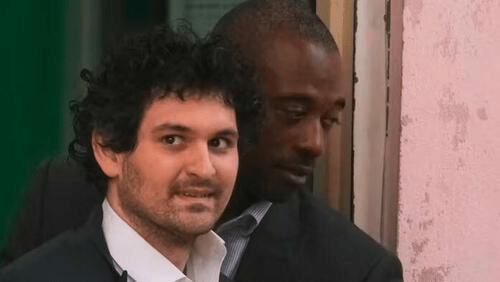
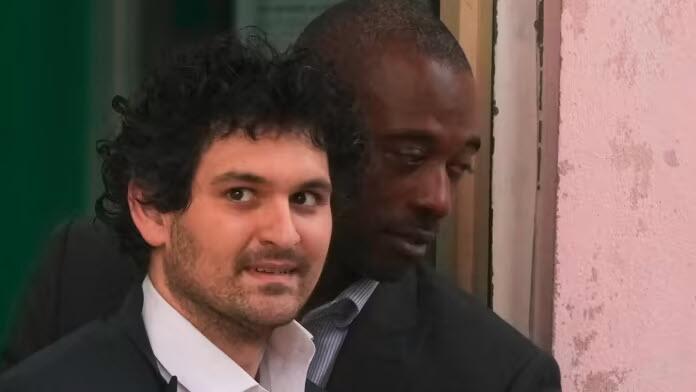
Update (1330ET, December 22, 2022): After spending nine days in Bahamian jail, Sam Bankman-Fried arrived in a Manhattan federal courtroom to face fraud charges over the collapse of FTX. Handcuffed and dressed in a blue suit, he appeared at a bail hearing after entering a plea ahead of the hearing.
And then the shocker came: SBF – who is arguably the biggest flight risk in US criminal history – will be released on $250 million bond after consenting to a bail package that include a $250 Million bond, house arrest at his parent’s house in Palo Alto, location-monitoring, and the surrender of his passport.
According to Assistant U.S. Attorney Nicolas Roos, Bankman-Fried was responsible for perpetrating a “fraud of epic proportions.” However, he chose to allow for bail given that Bankman-Fried opted to waive extradition; furthermore, according to prosecutors the $250MM is the “largest-ever pre-trial bond” although in SBF’s case it is just more stolen client funds. That means it won’t be a problem to procure it even though just two weeks ago Sam claimed he only has $100,000 left to his name.
When agreeing on the bail, US Magistrate Judge Gabriel Gorenstein said that “the risk that Bankman-Fried would flee was small” and said he presented no danger to the public in terms of future financial crimes.
As part of his bail agreement, besides his monetary penalty, Bankman-Fried will have to wear an electronic monitoring bracelet, and be disallowed from leaving the Northern District of California. Judge Gabriel Gorenstein added that Bankman-Fried would require “strict” supervision during his stay.
He will also have to submit to mental health counseling. The ex-CEO has previously claimed to be depressed and “sad” for an extended period of time and required medication to cope.
The former FTX boss will be prevented from taking out any new lines of credit while he awaits trial.
Bankman-Fried’s “effective altruist” mother, who personally benefited from her son’s crimes, was also at the court hearing.
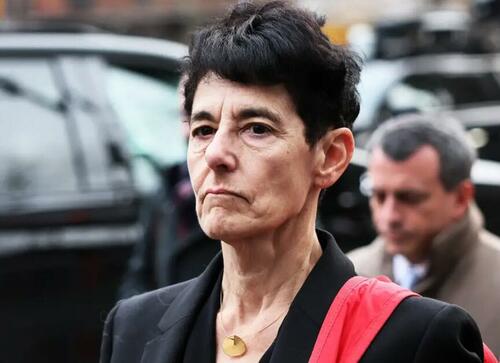
Barbara Fried, a professor emerita at Stanford Law School, was seen laughing during Bankman-Fried’s hearing earlier this month in the Bahamas when her son was called a “fugitive.” At other times, during that hearing, she “clenched her jaw and chewed on the frames of her glasses,” according to a report in the New York Times.
Well she isn’t laughing any more as she is forced to cosign the bail agreement, placing her properties as collateral.
Bankman-Fried, who faces eight counts — including conspiracy to commit wire fraud on customers and lenders, money laundering and violations of campaign finance laws — could spend the rest of his life in prison if convicted.
As reported last night, Caroline Ellison, who ran FTX’s trading affiliate Alameda, and Gary Wang, a co-founder of FTX itself whom authorities accuse of writing the underlying code that disadvantaged the exchange’s regular customers, both agreed to co-operate with federal prosecutors, Damian Williams, the US attorney in Manhattan, said. The announcement of the guilty pleas came shortly after Bankman-Fried flew to New York from the Bahamas, where he was living and had been arrested, having earlier waived his right to challenge extradition.
Legal experts have said the money being transferred to Alameda is very hard to explain as mismanagement rather than fraud, and his former associates’ testimony would be devastating for Bankman-Fried. Confronted by such witnesses, defendants in other cases have tried to turn the tables and cast them as the true bad actors.
Bankman-Fried could try to make a deal himself, but he may not get much leniency since he’s likely at the top of the prosecution’s target list, so unless he dangles a much higher profile target, he will be out of luck (or be ignored, since any “target” SBF could rat on is most likely some powerful Democrat politician whose favor he tried to bribe). Meanwhile, more cooperators could emerge. Williams issued a warning to potential witnesses in a statement Wednesday night.
“If you participated in misconduct at FTX or Alameda, now is the time to get ahead of it,” Williams said. “We are moving quickly and our patience is not eternal.”
* * *
Update (1045ET): As part of the recently unsealed plea agreement with the US Attorney’s Office of the Southern District of New York, CoinDesk reports that if Ellison fully cooperates with the SDNY’s investigation (in throwing her boyfriend under the bus), as well as any other law enforcement agency designated by the office, she won’t be further prosecuted criminally.
While the deal does not guarantee that other agencies will not pursue prosecution at a later date, it appears the former Alameda exec will be spared of all major charges, which could have seen her sentenced to up to 110 years in prison.
Ellison was accused of seven counts.
Two accused her of committing wire fraud on customers of FTX and engaging and conspiring to do so.
Another two alleged she committed wire fraud on the lenders of Alameda Research and conspired to do so.
Count five charged her with conspiracy to commit commodities fraud, and count six alleged conspiracy to commit securities fraud on FTX’s equity investors.
The seventh count accused her of conspiring to commit money laundering.
The Attorney’s Office agreed not to prosecute Ellison on any of those seven counts in exchange for her cooperation — the complete disclosure of all the information and documents demanded by prosecutors.
Ellison will be permitted bail, provided she can provide a $250,000 personal recognizance bond and restrict travel to the continental United States.
She will also need to surrender any travel documents she has.
Finally, CoinDesk points out one interesting side-note in that the plea deal also contains language that says if Ellison is not a US citizen, it is very likely that her removal from the US will be mandatory. While it’s assumed that Ellison is a US national, it is possible she may have abandoned her nationality for a citizenship of convenience for tax reasons which is a popular trend among some crypto traders living abroad, as the US taxes non-residents.
It appears Bankman-Fried’s girlfriend found a way to screw him one last time.
* * *
Two weeks ago, when amid reports that the former CEO of Alameda Capital (which as a reminder was ground zero of the FTX implosion after it blew up $8 billion in FTX client funds on trades gone horribly wrong), Caroline Ellison, was spotted in New York just after retaining Clinton superlawyer, Jamie Gorelick of Wilmer Hale, which as readers may recall was the former No. 2 ranking member in the Clinton Justice Department, and in a recent interview, she referred to current AG Merrick Garland as her “wingman”, we asked if Caroline had rolled on Sam Bankman-Fried, who was also her former lover.

Fast forward to today when we just got confirmation that Caroline Ellison has fucked Bankman-Fried one final time by indeed rolling on him, and “turning states” in the criminal prosecution of the corpulent “Hairy Plotter“, who commingled and stole the client money in his FTX exchange to fund a series of terrible crypto bets at his personal hedge fund Alameda, fund tens of millions in donations to democrats and buy up prestigious real estate for himself and his “altruistic” progressive lawyer parents.

According to a Manhattan Federal prosecutor, two of FTX founder Sam Bankman-Fried’s closest associates have pleaded guilty to fraud and agreed to co-operate with US authorities investigating the collapse of the bankrupt cryptocurrency exchange. In other words, they took a plea deal to avoid even more prison time in exchange for serving SBF on a silver platter to the Feds.
Damian Williams, the US attorney for the Southern District of New York, announced the guilty pleas and criminal charges against Caroline Ellison and Zixiao “Gary” Wang, the low profile co-founder of FTX, in a short video statement. His office had brought eight charges against Bankman-Fried last week.
Ellison pleaded guilty to seven counts, including wire and securities fraud and conspiracy to commit money laundering, which carry a maximum sentence of 110 years in prison, while Wang pleaded guilty to four counts of fraud, with a maximum 50-year sentence.
The documents said prosecutors would not oppose bail requests from both defendants under certain conditions, including posting a bond and handing in their travel documents, as they awaited formal sentencing.
Concurrently, the Securities and Exchange Commission and the Commodity Futures Trading Commission also filed civil lawsuits against the 28-year-old Ellison and 29-year-old Wang, accusing them of fraud.
“As part of their deception, we allege that Caroline Ellison and Sam Bankman-Fried schemed to manipulate the price of FTT, an exchange crypto security token that was integral to FTX, to prop up the value of their house of cards,” said SEC chair Gary Gensler. Furthermore, as CEO of the FTX trading affiliate, Ellison “used FTX’s customer assets to pay Alameda’s debts” and diverted billions of dollars of depositors’ money to the company to fill a hole caused by a crypto market crash in May, the SEC’s complaint alleges.
The CFTC said Wang had a hand in creating some of the algorithms that underpinned FTX, which allowed Alameda “to maintain an essentially unlimited line of credit” on the exchange, giving it an “unfair advantage” over regular depositors. “These critical code features and structural exceptions allowed Alameda to secretly and recklessly siphon FTX customer assets from the FTX platform.”
Both defendants are co-operating with the SEC, the agency said. The CFTC said they were not contesting their liability. Which means that SBF is looking at a lot of prison time, unless he too can throw someone even more important and powerful under the bus…
… although if that is the case, he probably will be Epsteined within hours of arriving at MDC Brooklyn, singe MCC New York where Epstein “killed himself”, has been closed since August 2021 due to deteriorating conditions.
While Ellison’s superlawyers have yet to make a statement, a lawyer for Wang, Ilan Graff, said: “Gary has accepted responsibility for his actions and takes seriously his obligations as a co-operating witness.”
Last week, the DOJ filed charges against Bankman-Fried and accused him of orchestrating “one of the biggest financial frauds in American history” by misappropriating customer assets from FTX to Alameda Research. He was arrested in the Bahamas, where he lives. He is also facing parallel civil cases from the SEC and CFTC.
Williams reiterated his call for others who worked with Bankman-Fried to come forward. “If you participated in misconduct at FTX or Alameda, now is the time to get ahead of it,” he said. “We are moving quickly and our patience is not eternal.” One of them is former Alameda CEO Sam Trabucco, best known for quietly bailing on Sam just as everyone was about to blow up and fleeing on his multi-million dollar new yacht.
The announcement from Williams comes just after a plane carrying Bankman-Fried took off from the Bahamas, where he waived his right to challenge extradition to the US. He is due to appear in a Manhattan court as soon as Thursday, where his bail request will be considered, although in light of Caroline’s plea, it is safe to say it won’t be granted.
The details in the SEC’s complaint have been laid out nicely by the following twitter account…
Does SBF rat out someone bigger?
And who?
Or maybe the scam really is not Sam’s fault. Here’s “mom” back in 2013:
Here’s the NY Post on the parents’ potential liability and exposure: https://nypost.com/2022/12/12/sam-bankman-frieds-parents-fear-his-legal-fees-will-wipe-them-out/
The parents “have told friends that their son’s legal bills will likely wipe them out financially,” the Wall Street Journal reported on Monday, citing sources close to the family.
“We hope this gives us some wisdom,” Bankman recently said, according to those sources. “Otherwise, it would be too hard to take.”
A spokesperson for Bankman-Fried’s parents reportedly declined to say whether they are actively advising their son on legal matters.
Bankman reportedly served as a paid employee at FTX for nearly a year before the company’s collapse. He accompanied his son to key meetings on Capitol Hill and helped guide the firm’s philanthropic efforts.

Additionally, Bankman purportedly introduced his son to his former law student, tech investment kingpin Orlando Bravo, whose firm later poured $130 million into FTX.
As The Post reported last month, Bravo admitted to investors that he was “shocked” by FTX’s sudden plunge into bankruptcy.
Bankman-Fried’s parents were also tied up in FTX’s dubious Bahamas real estate empire. In bankruptcy court, FTX’s new leaders have accused Bankman-Fried and his allies of pillaging company resources to snap up $300 million in ritzy real estate on the island.

Bankman and Fried are reportedly listed on the deed for a beach house within the exclusive Old Fort Bay gated community.
Reuters obtained documents showing the property was intended as a “vacation home” for the family. A spokeswoman for Bankman-Fried’s parents said they have since vacated the property.
“Joe and Barbara never intended to and never believed they had any beneficial or economic ownership in the house,” the spokeswoman said. “Over the summer, they requested FTX counsel and outside counsel take steps to clarify the company’s beneficial ownership of the house.”
So, where’s the $250 million?
Well, here’s Decrypt to explain: https://decrypt.co/117814/how-sam-bankman-frieds-250-million-bond-works
Disgraced crypto mogul Sam Bankman-Fried today was released from custody by a New York judge under a $250 million bond agreement.
That led to one big question across Crypto Twitter: Where did the money come from? Didn’t SBF lose billions of dollars? Is he tapping into FTX funds to pay his own bail?
The short answer is this: no one had to pay anything for his release, nor is any cash owed—not yet, anyway.
Bankman-Fried’s release agreement is an “appearance bond,” a promise to comply with specific restrictions while awaiting trial, and to show up when the time comes. He had to put up 10% of the bail amount as collateral for the bond, but no actual payment was required.
The appearance bond, as filed with the court, establishes a $250,000,000 “personal recognizance bond” guaranteed by four people, at least one of them not a member of Bankman-Fried’s family. For now, though, the only two signatures are those of Allan Joseph Bankman and Barbara Fried, SBF’s father and mother.
At Thursday’s hearing in New York, federal prosecutors said that Bankman-Fried’s bond was “the highest ever pre-trial bond.”
Under U.S. law, “recognizance” means a release in which no upfront payment nor bail bond arrangement is required, and that is based solely on a written promise by the defendant to appear in court when required to do so.
“When a loved one or family member co-signs a recognizance bond, the offender’s failure to appear in court impacts additional people—namely the co-signers who are also on the bond,” explained Miriam Baer, vice dean and centennial professor of law at Brooklyn Law School.
A court could also require an up front security payment,” Baer adds. “But in some ways requiring family members to co-sign the recognizance bond—especially one with a very high dollar number—is a more powerful way to ensure a wealthy person’s return to court.”
The bond document also establishes other requirements, including house arrest with electronic location monitoring, as well as restrictions on spending, business activities, and firearms.
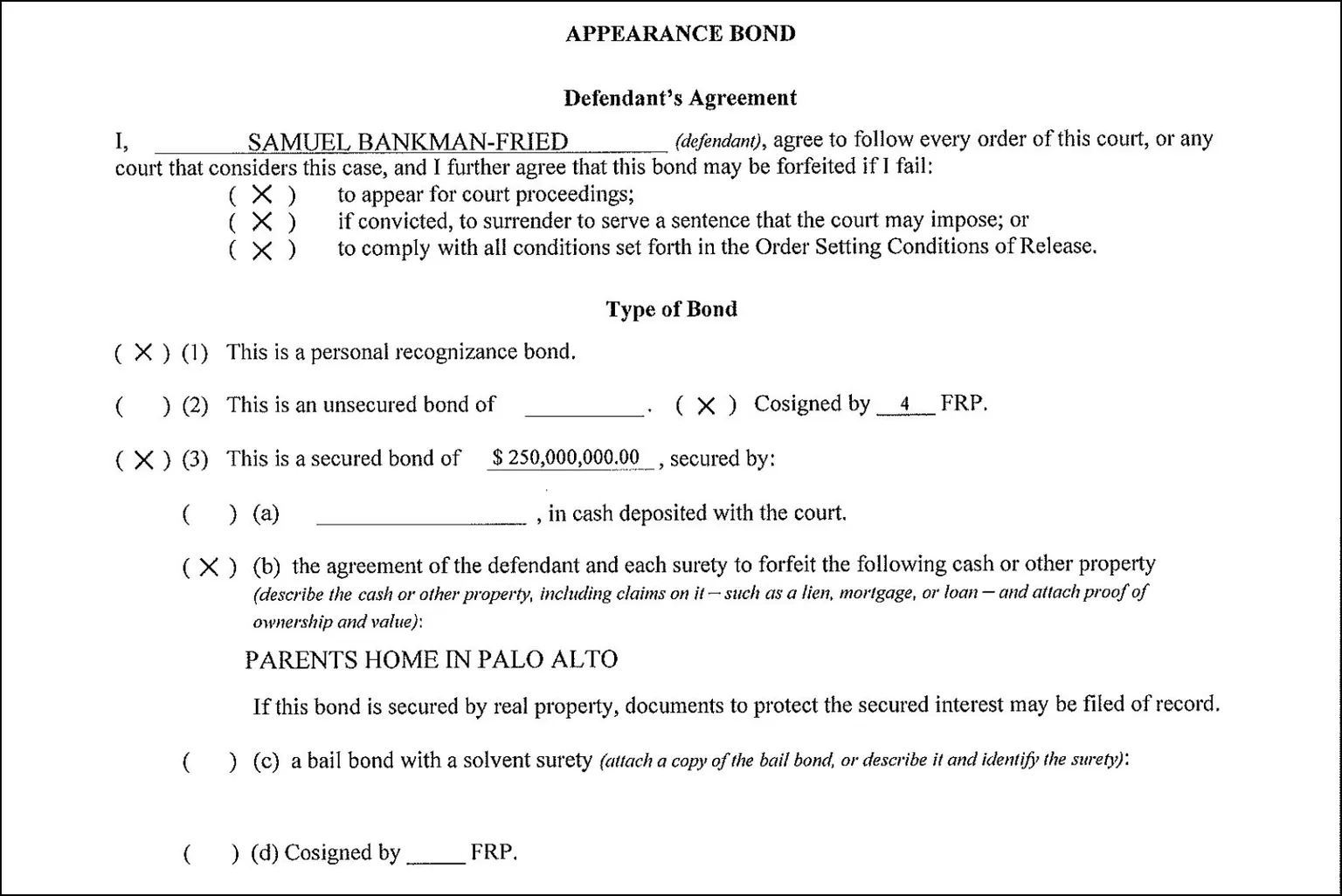
If Bankman-Fried doesn’t remain in compliance, or fails to show up for his trial, then the $250,000,000 will be called due. And the first item of collateral offered up to cover that amount is his parents’ home in Palo Alto.
Neither the address of the property nor its value are included in the court document.
One known family home on Cooksey Lanes in Stanford, however, is worth about $4 million, according to a notoriously inaccurate Zillow estimate. Speculation as to the value of the Palo Alto residence is rampant.

Where would Bankman-Fried’s bond signatories, including his parents, come up with the rest of the $250 million, should it come to that? According to Reuters, they—along with FTX company executives—bought $300 million in property in the Bahamas over the past two years. It’s unclear who currently has custody of those assets.
Bankman-Fried—also known as SBF—is facing eight criminal charges after U.S. prosecutors requested his extradition from the Bahamas.
The former boss of collapsed crypto exchange FTX allegedly committed fraud by using customer funds to place bets via his trading house Alameda Research—which he also founded.
Prosecutors from the U.S. Attorney’s Office for the Southern District of New York also charged Bankman-Fried with conspiracy to defraud the United States and violate the campaign finance laws.
The celebrity crypto mogul was famous for donating to Democratic political campaigns, though it was later revealed he gave money to Republicans, too. Now, some lawmakers are giving those funds back.
Why EU Leaders Dread a Ukraine Peace Process
After the 2008 financial crash, the European Union only papered over the internal North-South conflict that emerged, and the war in Ukraine has produced a new East-West divide. Once peace arrives, both fault lines will only grow deeper, uglier, and impossible to ignore.
This is not a polemic about whether Russia can be trusted to respect any future peace treaty with Ukraine. Nor is it a commentary on the merits of ending the war by diplomatic means. It is, rather, a reflection on the latest European paradox: While peace in Ukraine would help stem Europe’s economic hemorrhaging, the moment any peace process begins, the European Union will be divided by an internal East-West fault line, which is bound to reawaken the EU’s earlier North-South conflict.
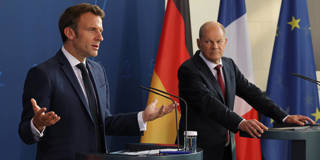
A credible peace process will require difficult negotiations involving the world’s great powers. Who will represent Europe at that high table? It is hard to imagine Polish, Scandinavian, and Baltic leaders ceding that role to their French or German counterparts.
In the EU’s eastern and northeastern flanks, French President Emmanuel Macron is considered a Putin appeaser ready to impose on Ukrainians a reprehensible (to them) land-for-peace agenda. Likewise, setting aside Germany’s long-term reliance on Russian energy, Chancellor Olaf Scholz’s standing as a torchbearer of Europe’s collective interest has been damaged further by his €200 billion ($212 billion) fiscal defense of German industry – the type of tax-funded protective shield which Germany vetoed at the EU level.
Meanwhile, French and German elites pour scorn on the idea that the EU might be represented in any peace process by the likes of Kaja Kallas, Estonia’s Prime Minister, or Sanna Marin, her Finnish counterpart. “The moral crusades of the Ukraine war maximalists are fashionable now but they will hinder, not help, any peace process,” was how a German official put it to me.
So, the question remains: Who will represent the EU in any future peace process?
Had the EU seized upon the massive banking-cum-debt crisis of the post-2008 era to democratize its institutions, Europe might now be credibly represented by its president and foreign minister. Alas, as things stand, European citizens and national leaders would cringe at the thought of being represented by Charles Michel, the EU Council President, and Josep Borrell, the EU foreign policy supremo. Macron and Scholz, alongside almost every other European president or prime minister, would surely object.
The optimistic view in Brussels is that, despite its lack of legitimate envoys and military weakness, the EU will carry considerable weight in any negotiations because it is the economic powerhouse that will pay for Ukraine’s reconstruction and be the arbiter of any process by which Ukraine joins the EU single market, customs union, or even the EU itself. But is such optimism justified?
The EU will undoubtedly pay huge sums and orchestrate any postwar Ukraine accession process. But there is no reason to think this will guarantee the EU an influential role during the peace process. In fact, there are good reasons to think that the EU’s role as the main funder of Ukraine’s reconstruction will divide and weaken the Union more than even the crisis a decade ago.
The EU’s own European Investment Bank estimates the cost of Ukraine’s reconstruction to be around €1 trillion – the amount of the EU’s budget over the 2021-27 period and 40% higher than its post-pandemic recovery fund, NextGenerationEU. Already hamstrung by its domestic €200 billion plan to shore up Germany’s collapsing industrial model, and the €100 billion Scholz has earmarked for defense spending, Germany lacks the fiscal space to provide even a fraction of that sum.
If Germany can’t pay, it is clear that the other EU member states can’t, either. The only way to pay for Ukraine would be for the EU to issue common debt, retracing the painful steps that led to the recovery fund’s creation in 2020.
Pressed to deliver the cash, the EU might well go down that path, only to find it leads to vicious acrimony. True, EU leaders agreed on common debt during the pandemic. But inflation was negative at the time, and all EU members were facing an economic implosion as lockdowns killed demand across Europe. Once peace prevails in Ukraine, they will need to agree to even more common debt to fund Ukraine’s reconstruction at a time when interest rates have quadrupled, inflation is rampant, and the economic benefits to EU members are bound to be grossly uneven.
Spain will question the fairness of shared debt when German companies get the lion’s share of Ukraine’s reconstruction business. Poland will protest loudly when Germany and Italy announce that, with peace restored, they will be buying energy from Russia again. Hungary will sell its acquiescence to any Ukraine fund dearly, demanding even more exemptions from the EU’s rule-of-law and transparency conditionalities. In the midst of this bedlam, the old North-South (or Calvinist-Catholic) divide, on the merits of fiscal union, will return with a vengeance.
Germany already fears that France will insist on permanent, and fairly regular, issuance of common debt, which the German political class will resist, and not only because the German Constitutional Court has already ruled against the idea. The deeper reason is that the fiscal union France seems to favor would require German conglomerates to abandon a practice that is in their DNA: accumulating US assets that they purchase on the back of the large net exports to America made possible by stagnant German wages and underpriced natural gas.
So, unless President Joe Biden’s Inflation Reduction Act changes Germany’s mindset by raising a protectionist barrier around the United States that kills off German net exports to America, any negotiations to end the Ukraine war are bound to aggravate the EU’s East-West divide – and then reignite the old North-South divide.
None of this should be surprising. After the 2008 financial crash, the EU only papered over the North-South fault line that emerged. The war in Ukraine inevitably produced a new East-West fault line. Once peace arrives, both fault lines will only grow deeper, uglier, and impossible to ignore.
Sweet Caroline Good Times Never Seemed So Good

Before we begin, remember the connections here:

Two weeks ago, when amid reports that the former CEO of Alameda Capital (which as a reminder was ground zero of the FTX implosion after it blew up $8 billion in FTX client funds on trades gone horribly wrong), Caroline Ellison, was spotted in New York just after retaining Clinton superlawyer, Jamie Gorelick of Wilmer Hale, which as readers may recall was the former No. 2 ranking member in the Clinton Justice Department, and in a recent interview, she referred to current AG Merrick Garland as her “wingman”, we asked if Caroline had rolled on Sam Bankman-Fried, who was also her former lover.
Fast forward to today when we just got confirmation that Caroline Ellison has fucked Bankman-Fried one final time by indeed rolling on him, and “turning states” in the criminal prosecution of the corpulent “Hairy Plotter“, who commingled and stole the client money in his FTX exchange to fund a series of terrible crypto bets at his personal hedge fund Alameda, fund tens of millions in donations to democrats and buy up prestigious real estate for himself and his “altruistic” progressive lawyer parents.
According to a Manhattan Federal prosecutor, two of FTX founder Sam Bankman-Fried’s closest associates have pleaded guilty to fraud and agreed to co-operate with US authorities investigating the collapse of the bankrupt cryptocurrency exchange. In other words, they took a plea deal to avoid even more prison time in exchange for serving SBF on a silver platter to the Feds.

Damian Williams, the US attorney for the Southern District of New York, announced the guilty pleas and criminal charges against Caroline Ellison and Zixiao “Gary” Wang, the low profile co-founder of FTX, in a short video statement. His office had brought eight charges against Bankman-Fried last week.
Ellison pleaded guilty to seven counts, including wire and securities fraud and conspiracy to commit money laundering, which carry a maximum sentence of 110 years in prison, while Wang pleaded guilty to four counts of fraud, with a maximum 50-year sentence.
The documents said prosecutors would not oppose bail requests from both defendants under certain conditions, including posting a bond and handing in their travel documents, as they awaited formal sentencing.
Concurrently, the Securities and Exchange Commission and the Commodity Futures Trading Commission also filed civil lawsuits against the 28-year-old Ellison and 29-year-old Wang, accusing them of fraud.
“As part of their deception, we allege that Caroline Ellison and Sam Bankman-Fried schemed to manipulate the price of FTT, an exchange crypto security token that was integral to FTX, to prop up the value of their house of cards,” said SEC chair Gary Gensler. Furthermore, as CEO of the FTX trading affiliate, Ellison “used FTX’s customer assets to pay Alameda’s debts” and diverted billions of dollars of depositors’ money to the company to fill a hole caused by a crypto market crash in May, the SEC’s complaint alleges.
The CFTC said Wang had a hand in creating some of the algorithms that underpinned FTX, which allowed Alameda “to maintain an essentially unlimited line of credit” on the exchange, giving it an “unfair advantage” over regular depositors. “These critical code features and structural exceptions allowed Alameda to secretly and recklessly siphon FTX customer assets from the FTX platform.”
Both defendants are co-operating with the SEC, the agency said. The CFTC said they were not contesting their liability. Which means that SBF is looking at a lot of prison time, unless he too can throw someone even more important and powerful under the bus…
… although if that is the case, he probably will be Epsteined within hours of arriving at MDC Brooklyn, singe MCC New York where Epstein “killed himself”, has been closed since August 2021 due to deteriorating conditions.
While Ellison’s superlawyers have yet to make a statement, a lawyer for Wang, Ilan Graff, said: “Gary has accepted responsibility for his actions and takes seriously his obligations as a co-operating witness.”
Last week, the DOJ filed charges against Bankman-Fried and accused him of orchestrating “one of the biggest financial frauds in American history” by misappropriating customer assets from FTX to Alameda Research. He was arrested in the Bahamas, where he lives. He is also facing parallel civil cases from the SEC and CFTC.
Williams reiterated his call for others who worked with Bankman-Fried to come forward. “If you participated in misconduct at FTX or Alameda, now is the time to get ahead of it,” he said. “We are moving quickly and our patience is not eternal.” One of them is former Alameda CEO Sam Trabucco, best known for quietly bailing on Sam just as everyone was about to blow up and fleeing on his multi-million dollar new yacht.
The announcement from Williams comes just after a plane carrying Bankman-Fried took off from the Bahamas, where he waived his right to challenge extradition to the US. He is due to appear in a Manhattan court as soon as Thursday, where his bail request will be considered, although in light of Caroline’s plea, it is safe to say it won’t be granted.
The details in the SEC’s complaint have been laid out nicely by the following twitter account…
… and the full complaint can be found below (link here)
Where it began
I can’t begin to know when
But then I know it’s growing strong
Was in the spring
And spring became the summer
Who’d have believed you’d come along
Hands, touchin’ hands
Reachin’ out, touchin’ me, touchin’ you
Sweet Caroline
Good times never seemed so good
I’ve been inclined
To believe they never would

Red Line Crossed
Tass: https://tass.com/politics/1551605
Moscow has data confirming US’, Poland’s involvement in terror attacks in Russia — agency
According to the specialists’ assessments, a number of facts “confirm the direct involvement of the US and Poland in the massive military-logistical support of the Kiev regime, in preparation and implementation of joint terror attacks on the Russian Federation territory”
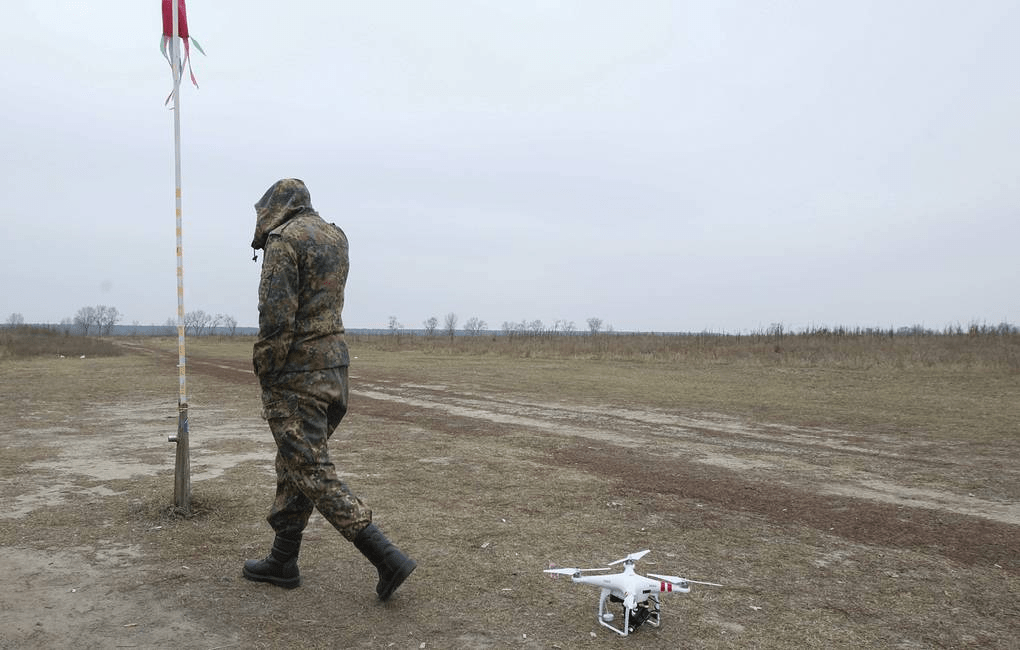
MOSCOW, December 16. /TASS/. Data from intercepted drones confirm the involvement of the US and Poland in preparation of terror attacks on the Russian territory, a source in Russian security agencies told TASS Friday.
“Relevant agencies of the Russian Federation analyzed electronic components of the intercepted unmanned aerial vehicles, used by Ukraine for attacks on Russian infrastructure objects – in particular, in Sevastopol, in Crimea, in Kursk, Belgorod and Voronezh Regions,” the agency said.
According to the specialists’ assessments, a number of facts “confirm the direct involvement of the US and Poland in the massive military-logistical support of the Kiev regime, in preparation and implementation of joint terror attacks on the Russian Federation territory.”
The agency noted that “the avionics and drone control stations were produced by US’ Spektreworks, a company that performed the initial tuning and check of the drones at the Scottsdale airport in Arizona.”
In addition, the relevant agencies pointed out that “the final assembly and flight trials of these drones were carried out on the Polish territory, near the Rzeszow airport, used by the US and NATO as the main supply node for Ukrainian armed forces.”
“The installation of payload, flight mission and the launch itself were carried out near Odessa and Krivoy Rog,” the statement says.
Make Them An Offer They Can’t Refuse
Pepe Escobar: https://thecradle.co/Article/Columns/19565
Xi of Arabia and the petroyuan drive
Xi Jinping has made an offer difficult for the Arabian Peninsula to ignore: China will be guaranteed buyers of your oil and gas, but we will pay in yuan.
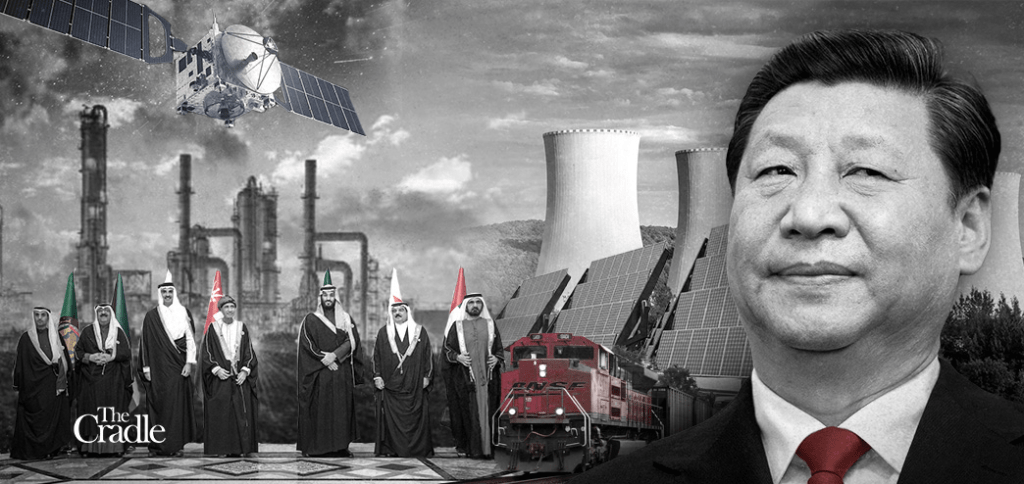
It would be so tempting to qualify Chinese President Xi Jinping landing in Riyadh a week ago, welcomed with royal pomp and circumstance, as Xi of Arabia proclaiming the dawn of the petroyuan era.
But it’s more complicated than that. As much as the seismic shift implied by the petroyuan move applies, Chinese diplomacy is way too sophisticated to engage in direct confrontation, especially with a wounded, ferocious Empire. So there’s way more going here than meets the (Eurasian) eye.
Xi of Arabia’s announcement was a prodigy of finesse: it was packaged as the internationalization of the yuan. From now on, Xi said, China will use the yuan for oil trade, through the Shanghai Petroleum and National Gas Exchange, and invited the Persian Gulf monarchies to get on board. Nearly 80 percent of trade in the global oil market continues to be priced in US dollars.
Ostensibly, Xi of Arabia, and his large Chinese delegation of officials and business leaders, met with the leaders of the Gulf Cooperation Council (GCC) to promote increased trade. Beijing promised to “import crude oil in a consistent manner and in large quantities from the GCC.” And the same goes for natural gas.
China has been the largest importer of crude on the planet for five years now – half of it from the Arabian peninsula, and more than a quarter from Saudi Arabia. So it’s no wonder that the prelude for Xi of Arabia’s lavish welcome in Riyadh was a special op-ed expanding the trading scope, and praising increased strategic/commercial partnerships across the GCC, complete with “5G communications, new energy, space and digital economy.”
Foreign Minister Wang Yi doubled down on the “strategic choice” of China and wider Arabia. Over $30 billion in trade deals were duly signed – quite a few significantly connected to China’s ambitious Belt and Road Initiative (BRI) projects.
And that brings us to the two key connections established by Xi of Arabia: the BRI and the Shanghai Cooperation Organization (SCO).
The Silk Roads of Arabia
BRI will get a serious boost by Beijing in 2023, with the return of the Belt and Road Forum. The first two bi-annual forums took place in 2017 and 2019. Nothing happened in 2021 because of China’s strict zero-Covid policy, now abandoned for all practical purposes.
The year 2023 is pregnant with meaning as BRI was first launched 10 years ago by Xi, first in Central Asia (Astana) and then Southeast Asia (Jakarta).
BRI not only embodies a complex, multi-track trans-Eurasian trade/connectivity drive but it is the overarching Chinese foreign policy concept at least until the mid-21st century. So the 2023 forum is expected to bring to the forefront a series of new and redesigned projects adapted to a post-Covid and debt-distressed world, and most of all to the loaded Atlanticism vs. Eurasianism geopolitical and geoeconomic sphere.
Also significantly, Xi of Arabia in December followed Xi of Samarkand in September – his first post-Covid overseas trip, for the SCO summit in which Iran officially joined as a full member. China and Iran in 2021 clinched a 25-year strategic partnership deal worth a potential $400 billion in investments. That’s the other node of China’s two-pronged West Asia strategy.
The nine permanent SCO members now represent 40 percent of the world’s population. One of their key decisions in Samarkand was to increase bilateral trade, and overall trade, in their own currencies.
And that further connects us to what has happening in Bishkek, Kyrgyzstan, in full synchronicity with Riyadh: the meeting of the Supreme Eurasia Economic Council, the policy implementation arm of the Eurasia Economic Union (EAEU).
Russian President Vladimir Putin, in Kyrgyzstan, could not have been more straightforward: “The work has accelerated in the transition to national currencies in mutual settlements… The process of creating a common payment infrastructure and integrating national systems for the transmission of financial information has begun.”
The next Supreme Eurasian Economic Council will take place in Russia in May 2023, ahead of the Belt and Road Forum. Take them together and we have the lineaments of the geoeconomic road map ahead: the drive towards the petroyuan proceeding in parallel to the drive towards a “common paying infrastructure” and most of all, a new alternative currency bypassing the US dollar.
That’s exactly what the head of the EAEU’s macroeconomic policy, Sergey Glazyev, has been designing, side by side with Chinese specialists.
Total Financial War
The move towards the petroyuan will be fraught with immense peril.
In every serious geoeconomic gaming scenario, it’s a given that an enfeebled petrodollar translates as the end of the imperial free lunch in effect for over five decades.
Concisely, in 1971, then-US President Richard “Tricky Dick” Nixon pulled the US from the gold standard; three years later, after the 1973 oil shock, Washington approached the Saudi oil minister, notorious Sheikh Yamani, with the proverbial offer-you-can’t-refuse: we buy your oil in US dollars and in return you buy our Treasury bonds, lots of weapons, and recycle whatever’s left in our banks.
Cue to Washington now suddenly able to dispense helicopter money – backed by nothing – ad infinitum, and the US dollar as the ultimate hegemonic weapon, complete with an array of sanctions over 30 nations who dare to disobey the unilaterally imposed “rules-based international order.”
Impulsively rocking this imperial boat is anathema. So Beijing and the GCC will adopt the petroyuan slowly but surely, and certainly with zero fanfare. The heart of the matter, once again, is their mutual exposure to the Western financial casino.
In the Chinese case, what to do, for instance, with those whopping $1 trillion in US Treasury bonds. In the Saudi case, it’s hard to think about “strategic autonomy” – such as what’s enjoyed by Iran – when the petrodollar is a staple of the Western financial system. The menu of possible imperial reactions includes everything from a soft coup/ regime change to Shock and Awe over Riyadh – followed by regime change.
Yet what the Chinese – and the Russians – are aiming at goes way beyond a Saudi (and Emirati) predicament. Beijing and Moscow have clearly identified how everything – the oil market, global commodities markets – is tied to the role of the US dollar as reserve currency.
And that’s exactly what the EAEU discussions; the SCO discussions; from now on the BRICS+ discussions; and Beijing’s two-pronged strategy across West Asia are focused to undermine.
Beijing and Moscow, within the BRICS framework, and further on within the SCO and the EAEU, have been closely coordinating their strategy since the first sanctions on Russia post-Maidan 2014, and the de facto trade war against China unleashed in 2018.
Now, after the February 2022 Special Military Operation launched by Moscow in Ukraine and NATO has devolved into, for all practical purposes, war against Russia, we have stepped beyond Hybrid War territory and are deep into Total Financial War.
SWIFTly drifting away
The whole Global South absorbed the “lesson” of the collective (institutional) west freezing, as in stealing, the foreign reserves of a G20 member, on top of it a nuclear superpower. If that happened to Russia, it could happen to anyone. There are no “rules” anymore.
Russia since 2014 has been improving its SPFS payment system, in parallel with China’s CIPS, both bypassing the western-led SWIFT banking messaging system, and increasingly used by Central Banks across Central Asia, Iran and India. All across Eurasia, more people are ditching Visa and Mastercard and using UnionPay and/or Mir cards, not to mention Alipay and WeChat Pay, both extremely popular across Southeast Asia.
Of course the petrodollar – and the US dollar, still representing under 60 percent of global foreign exchange reserves – will not ride into oblivion overnight. Xi of Arabia is just the latest chapter in a seismic shift now driven by a select group in the Global South, and not by the former “hyperpower.”
Trading in their own currencies and a new, global alternative currency is right at the top of the priorities of that long list of nations – from South America to Northern Africa and West Asia – eager to join BRICS+ or the SCO, and in quite a few cases, both.
The stakes could not be higher. And it’s all about subjugation or exercising full sovereignty. So let’s leave the last essential words to the foremost diplomat of our troubled times, Russia’s Sergey Lavrov, at the international interparty conference Eurasian Choice as a Basis for Strengthening Sovereignty:
“The main reason for today’s growing tensions is the stubborn striving of the collective West to maintain a historically diminishing domination in the international arena by any means it can… It is impossible to impede the strengthening of the independent centers of economic growth, financial might and political influence. They are emerging on our common continent of Eurasia, in Latin America, the Middle East and Africa.”
All aboard…the Sovereign Train.
 Econophysics2020