Might have been a Hammerhead or Hawk torpedo — NOT C4
Sputnik, the Russian state-owned news agency and radio broadcast service, analyzed Flightradar 24 data showing US and German Navy aircraft regularly circling the sites during Baltops 24 between June 8 and June 16, 2022. The ASW aircraft descended to low altitudes and disabled their transponders in almost every flight to disguise their trajectories.
On June 8, a US Navy P8 Poseiden circled the sites of three future explosions northeast of Bornholm Island. A German Navy P3 Orion flew over the future blast site east of the island.
On June 9, the Poseiden flew over the sites northeast and east of Bornjolm.
From June 11 to June 15, the Poseiden repeatedly circled over the attack sites every day.
Intense fighting in Ukraine has caused its military to almost run out of ammunition, with stocks not being replenished in time, Igor Zhovkva, Deputy Head of Ukrainian President Vladimir Zelensky’s office, told Bloomberg. The official also called on the West to provide Kiev with long-range artillery systems, tanks and fighter jets.
In an interview with the outlet on Thursday, Zhovkva lamented that “now we are having like almost zero ammunition,” a situation that makes it harder for the Ukrainian military to respond to Russian shelling.
“We are running [out] of the ammunition very quickly because the fighting is intensive,” he explained, adding that Russian forces boast more firepower.
Zelensky’s staffer also noted that Kiev needs long-range missiles to “de-occupy Ukrainian territory,” as opposed to hitting targets inside Russia. According to the official, this type of weaponry would be crucial to launch a counteroffensive against Moscow’s forces.
Commenting on the military aid already provided by the West, Zhovkva said that it was “too late, too little, and too slow.”
On Thursday, Kremlin spokesperson Dmitry Peskov reacted to the news that the British government was considering donating some of its warplanes to Ukraine, by warning that the UK and several other European nations are becoming increasingly involved in the conflict.
“The line between indirect and direct involvement is gradually disappearing,” he stressed, adding that this fuels further escalation.
Peskov pointed out, however, that while unnecessarily prolonging the fighting, Western arms shipments will not be able to change the outcome of the conflict or prevent Russia from achieving its goals.
“The U.S. defense industrial bas is not adequately prepared for the competitive security environment that now exists. It is currently operating at a tempo better suited to a peacetime environment.”
“Nevertheless, battlefield consumption rates in Ukraine have strained the defense industrial base to produce sufficient quantities of some munitions and weapons systems. Since many of the weapons systems and munitions have come directly from U.S. inventories, U.S. assistance has depleted some stockpiles that could be used for training, future contingencies, or other operational needs.”
The U.S. Navy’s Diving and Salvage Center can be found in a location as obscure as its name—down what was once a country lane in rural Panama City, a now-booming resort city in the southwestern panhandle of Florida, 70 miles south of the Alabama border. The center’s complex is as nondescript as its location—a drab concrete post-World War II structure that has the look of a vocational high school on the west side of Chicago. A coin-operated laundromat and a dance school are across what is now a four-lane road.
The center has been training highly skilled deep-water divers for decades who, once assigned to American military units worldwide, are capable of technical diving to do the good—using C4 explosives to clear harbors and beaches of debris and unexploded ordinance—as well as the bad, like blowing up foreign oil rigs, fouling intake valves for undersea power plants, destroying locks on crucial shipping canals. The Panama City center, which boasts the second largest indoor pool in America, was the perfect place to recruit the best, and most taciturn, graduates of the diving school who successfully did last summer what they had been authorized to do 260 feet under the surface of the Baltic Sea.
Last June, the Navy divers, operating under the cover of a widely publicized mid-summer NATO exercise known as BALTOPS 22, planted the remotely triggered explosives that, three months later, destroyed three of the four Nord Stream pipelines, according to a source with direct knowledge of the operational planning.
Two of the pipelines, which were known collectively as Nord Stream 1, had been providing Germany and much of Western Europe with cheap Russian natural gas for more than a decade. A second pair of pipelines, called Nord Stream 2, had been built but were not yet operational. Now, with Russian troops massing on the Ukrainian border and the bloodiest war in Europe since 1945 looming, President Joseph Biden saw the pipelines as a vehicle for Vladimir Putin to weaponize natural gas for his political and territorial ambitions.
Asked for comment, Adrienne Watson, a White House spokesperson, said in an email, “This is false and complete fiction.” Tammy Thorp, a spokesperson for the Central Intelligence Agency, similarly wrote: “This claim is completely and utterly false.”
Biden’s decision to sabotage the pipelines came after more than nine months of highly secret back and forth debate inside Washington’s national security community about how to best achieve that goal. For much of that time, the issue was not whether to do the mission, but how to get it done with no overt clue as to who was responsible.
There was a vital bureaucratic reason for relying on the graduates of the center’s hardcore diving school in Panama City. The divers were Navy only, and not members of America’s Special Operations Command, whose covert operations must be reported to Congress and briefed in advance to the Senate and House leadership—the so-called Gang of Eight. The Biden Administration was doing everything possible to avoid leaks as the planning took place late in 2021 and into the first months of 2022.
President Biden and his foreign policy team—National Security Adviser Jake Sullivan, Secretary of State Tony Blinken, and Victoria Nuland, the Undersecretary of State for Policy—had been vocal and consistent in their hostility to the two pipelines, which ran side by side for 750 miles under the Baltic Sea from two different ports in northeastern Russia near the Estonian border, passing close to the Danish island of Bornholm before ending in northern Germany.
The direct route, which bypassed any need to transit Ukraine, had been a boon for the German economy, which enjoyed an abundance of cheap Russian natural gas—enough to run its factories and heat its homes while enabling German distributors to sell excess gas, at a profit, throughout Western Europe. Action that could be traced to the administration would violate US promises to minimize direct conflict with Russia. Secrecy was essential.
From its earliest days, Nord Stream 1 was seen by Washington and its anti-Russian NATO partners as a threat to western dominance. The holding company behind it, Nord Stream AG, was incorporated in Switzerland in 2005 in partnership with Gazprom, a publicly traded Russian company producing enormous profits for shareholders which is dominated by oligarchs known to be in the thrall of Putin. Gazprom controlled 51 percent of the company, with four European energy firms—one in France, one in the Netherlands and two in Germany—sharing the remaining 49 percent of stock, and having the right to control downstream sales of the inexpensive natural gas to local distributors in Germany and Western Europe. Gazprom’s profits were shared with the Russian government, and state gas and oil revenues were estimated in some years to amount to as much as 45 percent of Russia’s annual budget.
America’s political fears were real: Putin would now have an additional and much-needed major source of income, and Germany and the rest of Western Europe would become addicted to low-cost natural gas supplied by Russia—while diminishing European reliance on America. In fact, that’s exactly what happened. Many Germans saw Nord Stream 1 as part of the deliverance of former Chancellor Willy Brandt’s famed Ostpolitik theory, which would enable postwar Germany to rehabilitate itself and other European nations destroyed in World War II by, among other initiatives, utilizing cheap Russian gas to fuel a prosperous Western European market and trading economy.
Nord Stream 1 was dangerous enough, in the view of NATO and Washington, but Nord Stream 2, whose construction was completed in September of 2021, would, if approved by German regulators, double the amount of cheap gas that would be available to Germany and Western Europe. The second pipeline also would provide enough gas for more than 50 percent of Germany’s annual consumption. Tensions were constantly escalating between Russia and NATO, backed by the aggressive foreign policy of the Biden Administration.
Opposition to Nord Stream 2 flared on the eve of the Biden inauguration in January 2021, when Senate Republicans, led by Ted Cruz of Texas, repeatedly raised the political threat of cheap Russian natural gas during the confirmation hearing of Blinken as Secretary of State. By then a unified Senate had successfully passed a law that, as Cruz told Blinken, “halted [the pipeline] in its tracks.” There would be enormous political and economic pressure from the German government, then headed by Angela Merkel, to get the second pipeline online.
Would Biden stand up to the Germans? Blinken said yes, but added that he had not discussed the specifics of the incoming President’s views. “I know his strong conviction that this is a bad idea, the Nord Stream 2,” he said. “I know that he would have us use every persuasive tool that we have to convince our friends and partners, including Germany, not to move forward with it.”
A few months later, as the construction of the second pipeline neared completion, Biden blinked. That May, in a stunning turnaround, the administration waived sanctions against Nord Stream AG, with a State Department official conceding that trying to stop the pipeline through sanctions and diplomacy had “always been a long shot.” Behind the scenes, administration officials reportedly urged Ukrainian President Volodymyr Zelensky, by then facing a threat of Russian invasion, not to criticize the move.
There were immediate consequences. Senate Republicans, led by Cruz, announced an immediate blockade of all of Biden’s foreign policy nominees and delayed passage of the annual defense bill for months, deep into the fall. Politico later depicted Biden’s turnabout on the second Russian pipeline as “the one decision, arguably more than the chaotic military withdrawal from Afghanistan, that has imperiled Biden’s agenda.”
The administration was floundering, despite getting a reprieve on the crisis in mid-November, when Germany’s energy regulators suspended approval of the second Nord Stream pipeline. Natural gas prices surged 8% within days, amid growing fears in Germany and Europe that the pipeline suspension and the growing possibility of a war between Russia and Ukraine would lead to a very much unwanted cold winter. It was not clear to Washington just where Olaf Scholz, Germany’s newly appointed chancellor, stood. Months earlier, after the fall of Afghanistan, Scholtz had publicly endorsed French President Emmanuel Macron’s call for a more autonomous European foreign policy in a speech in Prague—clearly suggesting less reliance on Washington and its mercurial actions.
Throughout all of this, Russian troops had been steadily and ominously building up on the borders of Ukraine, and by the end of December more than 100,000 soldiers were in position to strike from Belarus and Crimea. Alarm was growing in Washington, including an assessment from Blinken that those troop numbers could be “doubled in short order.”
The administration’s attention once again was focused on Nord Stream. As long as Europe remained dependent on the pipelines for cheap natural gas, Washington was afraid that countries like Germany would be reluctant to supply Ukraine with the money and weapons it needed to defeat Russia.
It was at this unsettled moment that Biden authorized Jake Sullivan to bring together an interagency group to come up with a plan.
All options were to be on the table. But only one would emerge.
PLANNING
In December of 2021, two months before the first Russian tanks rolled into Ukraine, Jake Sullivan convened a meeting of a newly formed task force—men and women from the Joint Chiefs of Staff, the CIA, and the State and Treasury Departments—and asked for recommendations about how to respond to Putin’s impending invasion.
It would be the first of a series of top-secret meetings, in a secure room on a top floor of the Old Executive Office Building, adjacent to the White House, that was also the home of the President’s Foreign Intelligence Advisory Board (PFIAB). There was the usual back and forth chatter that eventually led to a crucial preliminary question: Would the recommendation forwarded by the group to the President be reversible—such as another layer of sanctions and currency restrictions—or irreversible—that is, kinetic actions, which could not be undone?
What became clear to participants, according to the source with direct knowledge of the process, is that Sullivan intended for the group to come up with a plan for the destruction of the two Nord Stream pipelines—and that he was delivering on the desires of the President.
THE PLAYERS Left to right: Victoria Nuland, Anthony Blinken, and Jake Sullivan.
Over the next several meetings, the participants debated options for an attack. The Navy proposed using a newly commissioned submarine to assault the pipeline directly. The Air Force discussed dropping bombs with delayed fuses that could be set off remotely. The CIA argued that whatever was done, it would have to be covert. Everyone involved understood the stakes. “This is not kiddie stuff,” the source said. If the attack were traceable to the United States, “It’s an act of war.”
At the time, the CIA was directed by William Burns, a mild-mannered former ambassador to Russia who had served as deputy secretary of state in the Obama Administration. Burns quickly authorized an Agency working group whose ad hoc members included—by chance—someone who was familiar with the capabilities of the Navy’s deep-sea divers in Panama City. Over the next few weeks, members of the CIA’s working group began to craft a plan for a covert operation that would use deep-sea divers to trigger an explosion along the pipeline.
Something like this had been done before. In 1971, the American intelligence community learned from still undisclosed sources that two important units of the Russian Navy were communicating via an undersea cable buried in the Sea of Okhotsk, on Russia’s Far East Coast. The cable linked a regional Navy command to the mainland headquarters at Vladivostok.
A hand-picked team of Central Intelligence Agency and National Security Agency operatives was assembled somewhere in the Washington area, under deep cover, and worked out a plan, using Navy divers, modified submarines and a deep-submarine rescue vehicle, that succeeded, after much trial and error, in locating the Russian cable. The divers planted a sophisticated listening device on the cable that successfully intercepted the Russian traffic and recorded it on a taping system.
The NSA learned that senior Russian navy officers, convinced of the security of their communication link, chatted away with their peers without encryption. The recording device and its tape had to be replaced monthly and the project rolled on merrily for a decade until it was compromised by a forty-four-year-old civilian NSA technician named Ronald Pelton who was fluent in Russian. Pelton was betrayed by a Russian defector in 1985 and sentenced to prison. He was paid just $5,000 by the Russians for his revelations about the operation, along with $35,000 for other Russian operational data he provided that was never made public.
That underwater success, codenamed Ivy Bells, was innovative and risky, and produced invaluable intelligence about the Russian Navy’s intentions and planning.
Still, the interagency group was initially skeptical of the CIA’s enthusiasm for a covert deep-sea attack. There were too many unanswered questions. The waters of the Baltic Sea were heavily patrolled by the Russian navy, and there were no oil rigs that could be used as cover for a diving operation. Would the divers have to go to Estonia, right across the border from Russia’s natural gas loading docks, to train for the mission? “It would be a goat fuck,” the Agency was told.
Throughout “all of this scheming,” the source said, “some working guys in the CIA and the State Department were saying, ‘Don’t do this. It’s stupid and will be a political nightmare if it comes out.’”
Nevertheless, in early 2022, the CIA working group reported back to Sullivan’s interagency group: “We have a way to blow up the pipelines.”
What came next was stunning. On February 7, less than three weeks before the seemingly inevitable Russian invasion of Ukraine, Biden met in his White House office with German Chancellor Olaf Scholz, who, after some wobbling, was now firmly on the American team. At the press briefing that followed, Biden defiantly said, “If Russia invades . . . there will be no longer a Nord Stream 2. We will bring an end to it.”
Twenty days earlier, Undersecretary Nuland had delivered essentially the same message at a State Department briefing, with little press coverage. “I want to be very clear to you today,” she said in response to a question. “If Russia invades Ukraine, one way or another Nord Stream 2 will not move forward.”
Several of those involved in planning the pipeline mission were dismayed by what they viewed as indirect references to the attack.
“It was like putting an atomic bomb on the ground in Tokyo and telling the Japanese that we are going to detonate it,” the source said. “The plan was for the options to be executed post invasion and not advertised publicly. Biden simply didn’t get it or ignored it.”
Biden’s and Nuland’s indiscretion, if that is what it was, might have frustrated some of the planners. But it also created an opportunity. According to the source, some of the senior officials of the CIA determined that blowing up the pipeline “no longer could be considered a covert option because the President just announced that we knew how to do it.”
The plan to blow up Nord Stream 1 and 2 was suddenly downgraded from a covert operation requiring that Congress be informed to one that was deemed as a highly classified intelligence operation with U.S. military support. Under the law, the source explained, “There was no longer a legal requirement to report the operation to Congress. All they had to do now is just do it—but it still had to be secret. The Russians have superlative surveillance of the Baltic Sea.”
The Agency working group members had no direct contact with the White House, and were eager to find out if the President meant what he’d said—that is, if the mission was now a go. The source recalled, “Bill Burns comes back and says, ‘Do it.’”
“The Norwegian navy was quick to find the right spot, in the shallow water a few miles off Denmark’s Bornholm Island . . .”
THE OPERATION
Norway was the perfect place to base the mission.
In the past few years of East-West crisis, the U.S. military has vastly expanded its presence inside Norway, whose western border runs 1,400 miles along the north Atlantic Ocean and merges above the Arctic Circle with Russia. The Pentagon has created high paying jobs and contracts, amid some local controversy, by investing hundreds of millions of dollars to upgrade and expand American Navy and Air Force facilities in Norway. The new works included, most importantly, an advanced synthetic aperture radar far up north that was capable of penetrating deep into Russia and came online just as the American intelligence community lost access to a series of long-range listening sites inside China.
In return, the Norwegian government angered liberals and some moderates in its parliament last November by passing the Supplementary Defense Cooperation Agreement (SDCA). Under the new deal, the U.S. legal system would have jurisdiction in certain “agreed areas” in the North over American soldiers accused of crimes off base, as well as over those Norwegian citizens accused or suspected of interfering with the work at the base.
Norway was one of the original signatories of the NATO Treaty in 1949, in the early days of the Cold War. Today, the supreme commander of NATO is Jens Stoltenberg, a committed anti-communist, who served as Norway’s prime minister for eight years before moving to his high NATO post, with American backing, in 2014. He was a hardliner on all things Putin and Russia who had cooperated with the American intelligence community since the Vietnam War. He has been trusted completely since. “He is the glove that fits the American hand,” the source said.
Back in Washington, planners knew they had to go to Norway. “They hated the Russians, and the Norwegian navy was full of superb sailors and divers who had generations of experience in highly profitable deep-sea oil and gas exploration,” the source said. They also could be trusted to keep the mission secret. (The Norwegians may have had other interests as well. The destruction of Nord Stream—if the Americans could pull it off—would allow Norway to sell vastly more of its own natural gas to Europe.)
Sometime in March, a few members of the team flew to Norway to meet with the Norwegian Secret Service and Navy. One of the key questions was where exactly in the Baltic Sea was the best place to plant the explosives. Nord Stream 1 and 2, each with two sets of pipelines, were separated much of the way by little more than a mile as they made their run to the port of Greifswald in the far northeast of Germany.
The Norwegian navy was quick to find the right spot, in the shallow waters of the Baltic sea a few miles off Denmark’s Bornholm Island. The pipelines ran more than a mile apart along a seafloor that was only 260 feet deep. That would be well within the range of the divers, who, operating from a Norwegian Alta class mine hunter, would dive with a mixture of oxygen, nitrogen and helium streaming from their tanks, and plant shaped C4 charges on the four pipelines with concrete protective covers. It would be tedious, time consuming and dangerous work, but the waters off Bornholm had another advantage: there were no major tidal currents, which would have made the task of diving much more difficult.
After a bit of research, the Americans were all in.
At this point, the Navy’s obscure deep-diving group in Panama City once again came into play. The deep-sea schools at Panama City, whose trainees participated in Ivy Bells, are seen as an unwanted backwater by the elite graduates of the Naval Academy in Annapolis, who typically seek the glory of being assigned as a Seal, fighter pilot, or submariner. If one must become a “Black Shoe”—that is, a member of the less desirable surface ship command—there is always at least duty on a destroyer, cruiser or amphibious ship. The least glamorous of all is mine warfare. Its divers never appear in Hollywood movies, or on the cover of popular magazines.
“The best divers with deep diving qualifications are a tight community, and only the very best are recruited for the operation and told to be prepared to be summoned to the CIA in Washington,” the source said.
The Norwegians and Americans had a location and the operatives, but there was another concern: any unusual underwater activity in the waters off Bornholm might draw the attention of the Swedish or Danish navies, which could report it.
Denmark had also been one of the original NATO signatories and was known in the intelligence community for its special ties to the United Kingdom. Sweden had applied for membership into NATO, and had demonstrated its great skill in managing its underwater sound and magnetic sensor systems that successfully tracked Russian submarines that would occasionally show up in remote waters of the Swedish archipelago and be forced to the surface.
The Norwegians joined the Americans in insisting that some senior officials in Denmark and Sweden had to be briefed in general terms about possible diving activity in the area. In that way, someone higher up could intervene and keep a report out of the chain of command, thus insulating the pipeline operation. “What they were told and what they knew were purposely different,” the source told me. (The Norwegian embassy, asked to comment on this story, did not respond.)
The Norwegians were key to solving other hurdles. The Russian navy was known to possess surveillance technology capable of spotting, and triggering, underwater mines. The American explosive devices needed to be camouflaged in a way that would make them appear to the Russian system as part of the natural background—something that required adapting to the specific salinity of the water. The Norwegians had a fix.
The Norwegians also had a solution to the crucial question of when the operation should take place. Every June, for the past 21 years, the American Sixth Fleet, whose flagship is based in Gaeta, Italy, south of Rome, has sponsored a major NATO exercise in the Baltic Sea involving scores of allied ships throughout the region. The current exercise, held in June, would be known as Baltic Operations 22, or BALTOPS 22. The Norwegians proposed this would be the ideal cover to plant the mines.
The Americans provided one vital element: they convinced the Sixth Fleet planners to add a research and development exercise to the program. The exercise, as made public by the Navy, involved the Sixth Fleet in collaboration with the Navy’s “research and warfare centers.” The at-sea event would be held off the coast of Bornholm Island and involve NATO teams of divers planting mines, with competing teams using the latest underwater technology to find and destroy them.
It was both a useful exercise and ingenious cover. The Panama City boys would do their thing and the C4 explosives would be in place by the end of BALTOPS22, with a 48-hour timer attached. All of the Americans and Norwegians would be long gone by the first explosion.
The days were counting down. “The clock was ticking, and we were nearing mission accomplished,” the source said.
And then: Washington had second thoughts. The bombs would still be planted during BALTOPS, but the White House worried that a two-day window for their detonation would be too close to the end of the exercise, and it would be obvious that America had been involved.
Instead, the White House had a new request: “Can the guys in the field come up with some way to blow the pipelines later on command?”
Some members of the planning team were angered and frustrated by the President’s seeming indecision. The Panama City divers had repeatedly practiced planting the C4 on pipelines, as they would during BALTOPS, but now the team in Norway had to come up with a way to give Biden what he wanted—the ability to issue a successful execution order at a time of his choosing.
Being tasked with an arbitrary, last-minute change was something the CIA was accustomed to managing. But it also renewed the concerns some shared over the necessity, and legality, of the entire operation.
The President’s secret orders also evoked the CIA’s dilemma in the Vietnam War days, when President Johnson, confronted by growing anti-Vietnam War sentiment, ordered the Agency to violate its charter—which specifically barred it from operating inside America—by spying on antiwar leaders to determine whether they were being controlled by Communist Russia.
The agency ultimately acquiesced, and throughout the 1970s it became clear just how far it had been willing to go. There were subsequent newspaper revelations in the aftermath of the Watergate scandals about the Agency’s spying on American citizens, its involvement in the assassination of foreign leaders and its undermining of the socialist government of Salvador Allende.
Those revelations led to a dramatic series of hearings in the mid-1970s in the Senate, led by Frank Church of Idaho, that made it clear that Richard Helms, the Agency director at the time, accepted that he had an obligation to do what the President wanted, even if it meant violating the law.
In unpublished, closed-door testimony, Helms ruefully explained that “you almost have an Immaculate Conception when you do something” under secret orders from a President. “Whether it’s right that you should have it, or wrong that you shall have it, [the CIA] works under different rules and ground rules than any other part of the government.” He was essentially telling the Senators that he, as head of the CIA, understood that he had been working for the Crown, and not the Constitution.
The Americans at work in Norway operated under the same dynamic, and dutifully began working on the new problem—how to remotely detonate the C4 explosives on Biden’s order. It was a much more demanding assignment than those in Washington understood. There was no way for the team in Norway to know when the President might push the button. Would it be in a few weeks, in many months or in half a year or longer?
The C4 attached to the pipelines would be triggered by a sonar buoy dropped by a plane on short notice, but the procedure involved the most advanced signal processing technology. Once in place, the delayed timing devices attached to any of the four pipelines could be accidentally triggered by the complex mix of ocean background noises throughout the heavily trafficked Baltic Sea—from near and distant ships, underwater drilling, seismic events, waves and even sea creatures. To avoid this, the sonar buoy, once in place, would emit a sequence of unique low frequency tonal sounds—much like those emitted by a flute or a piano—that would be recognized by the timing device and, after a pre-set hours of delay, trigger the explosives. (“You want a signal that is robust enough so that no other signal could accidentally send a pulse that detonated the explosives,” I was told by Dr. Theodore Postol, professor emeritus of science, technology and national security policy at MIT. Postol, who has served as the science adviser to the Pentagon’s Chief of Naval Operations, said the issue facing the group in Norway because of Biden’s delay was one of chance: “The longer the explosives are in the water the greater risk there would be of a random signal that would launch the bombs.”)
On September 26, 2022, a Norwegian Navy P8 surveillance plane made a seemingly routine flight and dropped a sonar buoy. The signal spread underwater, initially to Nord Stream 2 and then on to Nord Stream 1. A few hours later, the high-powered C4 explosives were triggered and three of the four pipelines were put out of commission. Within a few minutes, pools of methane gas that remained in the shuttered pipelines could be seen spreading on the water’s surface and the world learned that something irreversible had taken place.
FALLOUT
In the immediate aftermath of the pipeline bombing, the American media treated it like an unsolved mystery. Russia was repeatedly cited as a likely culprit, spurred on by calculated leaks from the White House—but without ever establishing a clear motive for such an act of self-sabotage, beyond simple retribution. A few months later, when it emerged that Russian authorities had been quietly getting estimates for the cost to repair the pipelines, the New York Times described the news as “complicating theories about who was behind” the attack. No major American newspaper dug into the earlier threats to the pipelines made by Biden and Undersecretary of State Nuland.
While it was never clear why Russia would seek to destroy its own lucrative pipeline, a more telling rationale for the President’s action came from Secretary of State Blinken.
Asked at a press conference last September about the consequences of the worsening energy crisis in Western Europe, Blinken described the moment as a potentially good one:
“It’s a tremendous opportunity to once and for all remove the dependence on Russian energy and thus to take away from Vladimir Putin the weaponization of energy as a means of advancing his imperial designs. That’s very significant and that offers tremendous strategic opportunity for the years to come, but meanwhile we’re determined to do everything we possibly can to make sure the consequences of all of this are not borne by citizens in our countries or, for that matter, around the world.”
More recently, Victoria Nuland expressed satisfaction at the demise of the newest of the pipelines. Testifying at a Senate Foreign Relations Committee hearing in late January she told Senator Ted Cruz, “Like you, I am, and I think the Administration is, very gratified to know that Nord Stream 2 is now, as you like to say, a hunk of metal at the bottom of the sea.”
The source had a much more streetwise view of Biden’s decision to sabotage more than 1500 miles of Gazprom pipeline as winter approached. “Well,” he said, speaking of the President, “I gotta admit the guy has a pair of balls. He said he was going to do it, and he did.”
Asked why he thought the Russians failed to respond, he said cynically, “Maybe they want the capability to do the same things the U.S. did.
“It was a beautiful cover story,” he went on. “Behind it was a covert operation that placed experts in the field and equipment that operated on a covert signal.
“The only flaw was the decision to do it.”
******
And now for the “smoking gun” — SkyGlass capturing the Navy P8 track on the attack run.
First, here is Hersh:
The C4 attached to the pipelines would be triggered by a sonar buoy dropped by a plane on short notice, but the procedure involved the most advanced signal processing technology. Once in place, the delayed timing devices attached to any of the four pipelines could be accidentally triggered by the complex mix of ocean background noises throughout the heavily trafficked Baltic Sea—from near and distant ships, underwater drilling, seismic events, waves and even sea creatures. To avoid this, the sonar buoy, once in place, would emit a sequence of unique low frequency tonal sounds—much like those emitted by a flute or a piano—that would be recognized by the timing device and, after a pre-set hours of delay, trigger the explosives. (“You want a signal that is robust enough so that no other signal could accidentally send a pulse that detonated the explosives,” I was told by Dr. Theodore Postol, professor emeritus of science, technology and national security policy at MIT. Postol, who has served as the science adviser to the Pentagon’s Chief of Naval Operations, said the issue facing the group in Norway because of Biden’s delay was one of chance: “The longer the explosives are in the water the greater risk there would be of a random signal that would launch the bombs.”)
On September 26, 2022, a Norwegian Navy P8 surveillance plane made a seemingly routine flight and dropped a sonar buoy. The signal spread underwater, initially to Nord Stream 2 and then on to Nord Stream 1. A few hours later, the high-powered C4 explosives were triggered and three of the four pipelines were put out of commission. Within a few minutes, pools of methane gas that remained in the shuttered pipelines could be seen spreading on the water’s surface and the world learned that something irreversible had taken place.
Monkey Werx opens up with a review of nuclear fuel markets. You can pick up the P8 attack run ~2 minutes into the video
You and I in a little toy shop Buy a bag of balloons with the money we’ve got Set them free at the break of dawn ‘Til one by one, they were gone Back at base, bugs in the software Flash the message, “Something’s out there!” Floating in the summer sky Ninety-nine red balloons go by
Ninety-nine red balloons Floating in the summer sky Panic bells, it’s red alert! There’s something here from somewhere else! The war machine springs to life Opens up one eager eye Focusing it on the sky When ninety-nine red balloons go by
99 Decision Street Ninety-nine ministers meet To worry, worry, super-scurry Call the troops out in a hurry This is what we’ve waited for This is it, boys, this is war The president is on the line As ninety-nine red balloons go by
Ninety-nine knights of the air Ride super high-tech jet fighters Everyone’s a superhero Everyone’s a “Captain Kirk” With orders to identify To clarify and classify Scramble in the summer sky Ninety-nine red balloons go by As ninety-nine red balloons go by
Ninety-nine dreams I have had In every one, a red balloon It’s all over and I’m standin’ pretty In this dust that was a city If I could find a souvenir Just to prove the world was here And here is a red balloon I think of you, and let it go…
Russia’s top diplomat issued a chilling warning Thursday that Moscow “will do everything” to “gain the world’s attention” on the first anniversary of the war in Ukraine — as the Kremlin was said to be preparing to launch a new offensive with up to 500,000 conscripts.
Russian Foreign Minister Sergey Lavrov warned that Moscow would take great measures to overshadow anti-Russia events allegedly being planned by the West to mark the war’s anniversary on Feb. 24.
“Our diplomacy will do everything to ensure that the anti-Russian sabbaths planned for the end of February — as if timed to coincide with the anniversary of the special military operation, both in New York and at other sites that the West is now actively working on together with the Kyiv regime — so that this will not turn out to be the only events that will gain the world’s attention,” the country’s top envoy said in a wide-ranging interview to state TV Russia 24 and RIA Novosti.
Vladimir Putin’s chief representative revealed that Russia is working on “reports” detailing the events of the past year surrounding the invasion of Ukraine, including allegations of “direct participation” of the US in the sabotage of the Nord Stream pipeline linking Russia to Germany under the Baltic Sea.
Russian Foreign Minister Sergey Lavrov said Thursday that Moscow will do everything to “gain the world’s attention” on the first anniversary of the war in Ukraine.Currently, there are five Ukrainian territories that have been captured by Russia.
Russia has captured five Ukrainian territories, including:
Kramatorsk – Russian rocket strikes Thursday hit residential buildings, a children’s clinic, and a school, leaving at least five civilians wounded. The latest attacks came as rescuers were searching through debris after a missile strike destroyed an apartment building in the city overnight, killing at least three people and injuring 21 others.
Bakhmut – Russian forces are trying to encircle the key city of Bakhmut in the east which has seen some of the fiercest fighting of the war over the past months. Moscow’s troops are said to be attacking the bombed-out city from both the north and the south to cut off Ukraine’s supply lines.
Vuhledar & Pavlivka – The Kremlin’s forces are advancing on the towns of Vuhledar and Pavlivka in the western Donetsk region, but U’’s Ministry of Defense said they are “unlikely” to secure a breakthrough there.
Kherson – Russian shelling killed two people in Ukraine’s Kherson region overnight, including a 25-year-old man and a 44-year-old woman.
Lyman – Russian troops are said to be trying to gain ground near the strategic logistics hub of Lyman in the east, from which they were pushed out by Kyiv’s forces back in October.
Lavrov provided no evidence of American involvement in the pipeline explosions, which Russia had previously blamed on the UK.
Lavrov’s saber-rattling comes just three weeks before the world marks the first anniversary of Russia’s full-scale invasion of Ukraine.
Vladimir Putin is said to be plotting a massive offensive in Ukraine, which could involve up to 500,000 troops.
According to Reznikov, Russia has massed “close to 500,000 troops” in preparation for the looming onslaught, which the minister said could take place on two fronts: in the Donbas region in the east and in the south.
“Officially, they announced 300,000 (conscripts) but when we see the troops at the borders, according to our assessments it is much more,” Reznikov said during the TV interview Wednesday night.
The minister said the Ukrainian military will work to prepare for a counter-offensive ahead of Russia’s push, adding that Ukraine “cannot lose the initiative” on the battlefield.
He stressed Kyiv’s urgent need to obtain new weapons from its Western allies without delay.
“We are telling our partners that we too need to be ready as fast as possible,” Reznikov said.
President Biden has ruled out providing F-16 fighter jets to Ukraine, which the country has sought. Defense Secretary Lloyd Austin said Thursday that the focus of American aid is to increase Ukraine’s military capabilities by sending artillery, armor, and air defense, and training Ukrainian troops.
The US is “focused on providing Ukraine the capability that it needs to be effective in its upcoming anticipated counteroffensive in the spring,” Austin said.
“And so we’re doing everything we can to get them the capabilities that they need right now to be effective on the battlefield,” he said.
Washington was reportedly preparing a new package of military aid for Ukraine worth $2.2 billion, which is expected to include longer-range rockets for the first time.
Ukrainian Defense Minister Oleksii Reznikov said Kyiv is in urgent need of weapons to make sure its forces do not lose the initiative on the battlefield.
Lavrov said Russian forces would respond to the delivery of the long-range weapons by trying to push Ukrainian troops farther away from the borders.
“We’re now seeking to push back Ukrainian army artillery to a distance that will not pose a threat to our territories,” he added. “The greater the range of the weapons supplied to the Kyiv regime, the more we will have to push them back from territories which are part of our country.”
The Institute for the Study of War, a Washington, DC-based think tank, said in its latest update Wednesday that Ukrainian top military brass anticipates that Russian forces will try to capture Donetsk and Luhansk provinces, which make up the contested Donbas region.
Emergency workers and local residents clear the rubble after a Russian rocket hit an apartment building in Kramatorsk, Ukraine, on Thursday.
According to ISW analysts, Putin may also be eyeing cross-border raids into northeastern Ukraine to pin Kyiv’s forces against border areas in the north in order to distract them from the front lines in the east.
The think tank previously said that Russia’s offensive in eastern Ukraine, where the fighting has been the bloodiest in recent months, was “imminent.”
Oleksiy Danilov, secretary of the National Security and Defense Council of Ukraine, said in a sit-down with Sky News Tuesday that the next two to three months will be “defining” in the war.
“Russia is preparing for maximum escalation,” Danilov said. “It is gathering everything possible, doing drills and training.”
Russians on Thursday marked the 80th anniversary of the Soviet victory at the Battle of Stalingrad during World War II.
Meanwhile, on Thursday, Putin marked the 80th anniversary of the World War II Soviet victory over Nazi German forces in the battle of Stalingrad and invoked the long and grueling fight — regarded as the bloodiest in history — as justification for the conflict in Ukraine.
Putin laid a wreath at the eternal flame of the memorial complex to the fallen Red Army soldiers in Volgograd, the current name of the city, where some 2 million people lost their lives in the course of five months between August 1942 and February 1943.
Afterward, he said: “Now, regrettably, we see that the ideology of Nazism, in its modern guise, in its modern manifestation, once again poses direct threats to the security of our country. Again and again, we are forced to repulse the aggression of the collective West.”
Russians supporting the war in Ukraine have invoked the bloody Battle of Stalingrad as justification for the conflict in Ukraine.
Referring to Germany’s recent decision to supply advanced Leopard battle tanks to Ukraine, Putin warned that “a modern war with Russia will be quite different for them.”
“It’s incredible, but it’s a fact: They are threatening us again with German Leopard tanks with crosses painted on their armor,” Putin said.
“And they are again going to fight Russia on the territory of Ukraine with the hands of Hitler’s followers, the Banderites,” he said, referring to WWII-era Ukrainian nationalist leader Stepan Bandera, who was widely considered to be a Nazi collaborator.
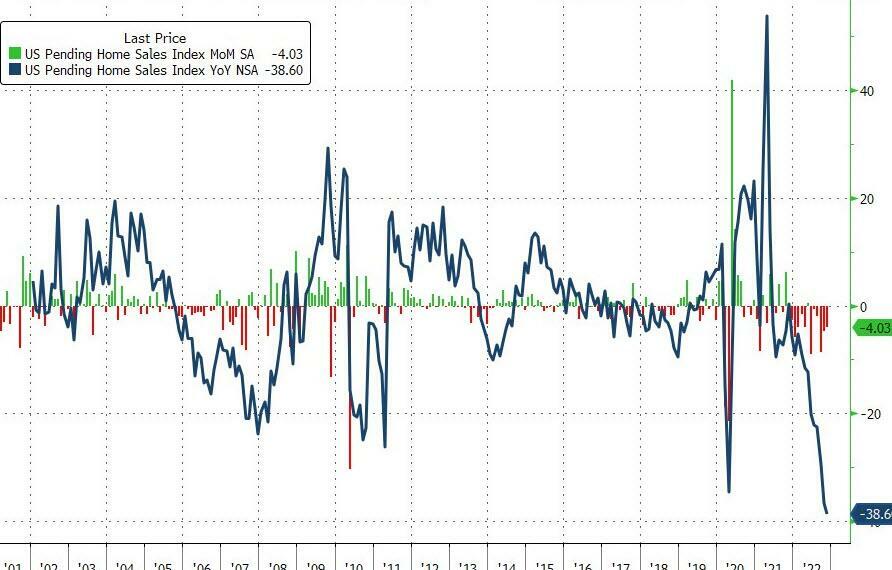
It may come as a bit of a shock to those who have been following the creeping freeze in housing transactions as the bid-ask spread grows to monstrous proportions, leading to a record crash in pending home sales…
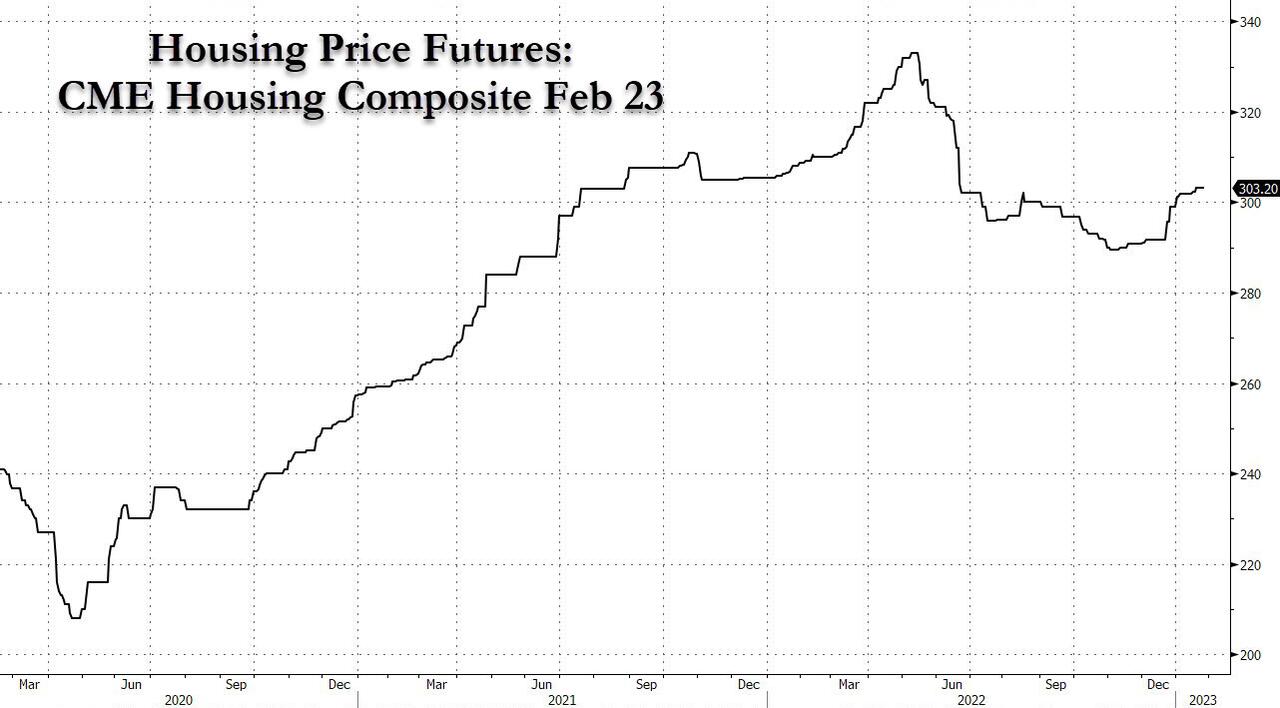
… but even though mortgage rates ticked higher back to 6% in January, there is growing speculation that the housing market has bottomed. Why? Because as Goldman’s Rich Provorotsky notes, “bet you didn’t know there were housing price futures…they bottomed in Q4 and have been rallying.” Indeed, the Housing Composite Index traded on the CME is up decidedly in the past month after hitting a 16 month low in November.
Why this surprising bounce? A big reason for the unexpected rebound may be a recent report from real estate company Redfin which last Wednesday reported that “the housing market has begun to recover from a trough in the second week of November with buyers returning at a faster pace than sellers. The number of Redfin customers asking for first tours has improved by 17 percentage points from the November low, and the number of clients contacting.”
Furthermore, according to the report, Redfin agents to begin the home-buying process has improved by 13 points: “I’ve seen more homes go under contract this month than in the entire fourth quarter,” Angela Langone, a San Jose, California, agent, said in the report.
Among notable market moves, Redfin points to mortgage applications which are up 28% from early November as the average 30-year-fixed mortgage rate has dropped to 6.15% from its peak of 7.08% in November, the biggest decline since 2009. Pending home sales rose 3% in December from November.
Preliminary data on the share of Redfin agents’ offers facing bidding wars points to small upticks in the Seattle and Tampa markets this month (however, since this is an uneven trend, expect it to take some time before bidding wars nationally show an upward trend).
“Bidding wars are back in Seattle,” said local Redfin real estate agent Shoshana Godwin. “One of our Issaquah listings got 12 offers and is under contract for $155,000 over the $1.4 million list price. The buyer waived every contingency, handed over $300,000 of earnest money and is letting the seller stay for free for two months after closing. Another home in Seattle’s popular Ballard neighborhood was recently delisted after sitting on the market for over three months. The seller relisted it last week and it went pending in under a day.”
Eric Auciello, Redfin’s team manager in Tampa, has seen three modest single-family homes priced around $300,000 wind up in bidding wars in central Florida this month, with 16, 17 and 23 competing offers, respectively.
But while one can accuse Redfin of bias – after all the company recently laid off some 13% of its employees due to the housing market collapse so it is certainly interested in sparking some animal spirits in the sector – it is not alone in predicting a housing recovery. One week ago, Goldman’s Jan Hatzius published the bank’s Housing Outlook for 2023 in which he predicted that “home sales appear set to turn higher.” That’s because “mortgage purchase applications have averaged 9% above their October trough so far in January and survey-based measures of purchasing intentions have rebounded sharply” and while Goldman expects that existing home sales could decline slightly further “but will likely bottom in Q1 (GS forecast: Q1 average of 3.85mn saar vs. 4.02mn in December) before rebounding modestly by year-end (GS forecast: Q4 average of 4.1mn).”
Here are some more observations from the Goldman note (full report available to pro subs):
We forecast that housing starts will take longer to stabilize, declining to a trough pace of 1¼mn in 2023Q4 (vs. 1.4mn in 2022Q4) before recovering next year. We expect completions to total 1½mn this year, the most since 2007, which will help to clear the backlog of homes under construction and contribute to a modest increase in the homeowner vacancy rate (GS forecast of 1.2% in 2023Q4 vs. 0.9% now and 1.4% in 2019Q4).
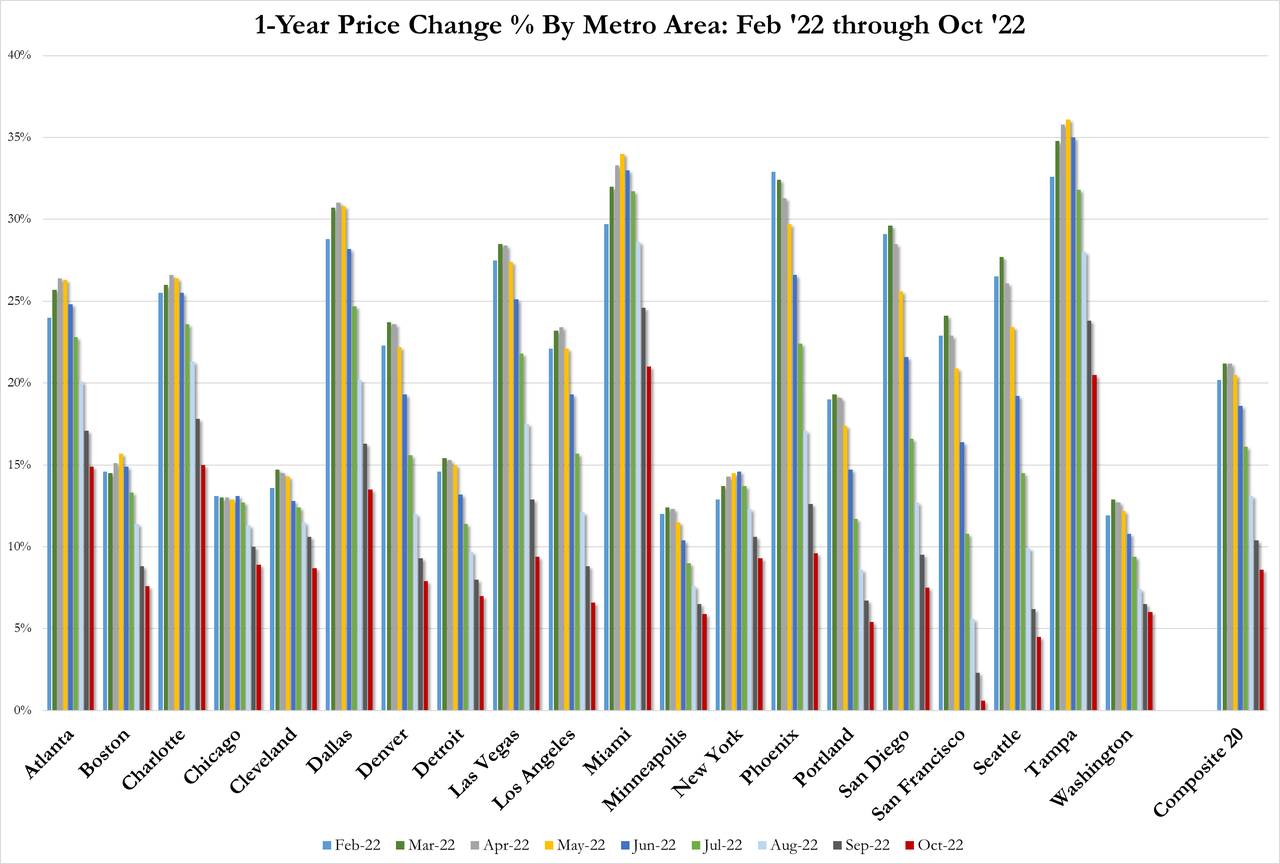
We expect a peak-to-trough decline in national home prices of roughly 6% and for prices to stop declining around mid-year.
On a regional basis, we project larger declines across the Pacific Coast and Southwest regions—which have seen the largest increases in inventory on average—and more modest declines across the Mid-Atlantic and Midwest—which have maintained greater affordability over the past couple years.
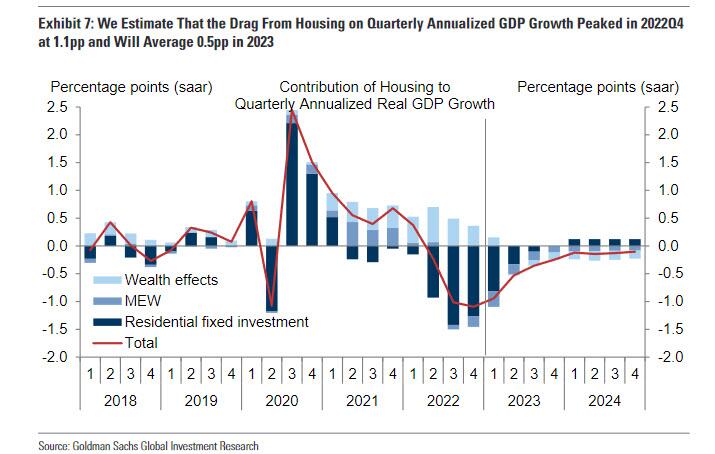
Higher rates and lower home prices will increase the drag on GDP growth from negative wealth effects and declining mortgage equity withdrawal, but we believe that the aggregate drag on GDP growth from the housing sector peaked in 2022Q4 at 1.1pp and will moderate to just 0.25pp by 2023Q4.
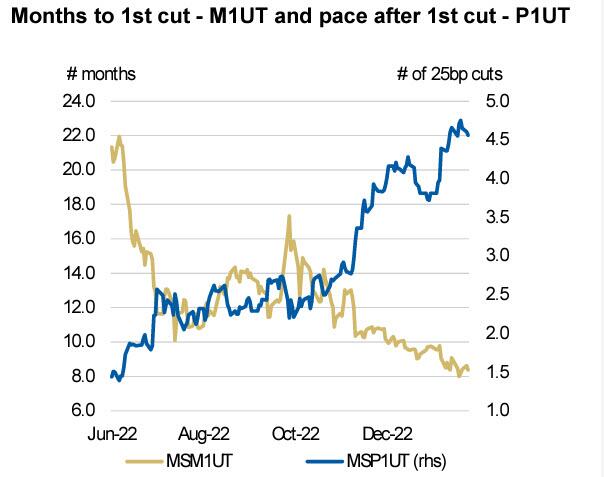
If the housing price futures market – and Goldman – is right in pricing in a housing trough than the consequences could confound markets: on one hand, a stabilization in housing will likely make any coming recession less severe; on the other, since housing is the primary channel by which the Fed can slowdown the economy, any failure to cripple this key US asset, could mean that Powell will be stuck in a “higher for longer” mode for, well, longer than the market expects. As a reminder, as the following Morgan Stanley chart shows, consensus is that the Fed is about 8 months away from its first rate cut, which will be promptly followed by ~4.5 25bps rate cuts.
David Ignatius (lead image, left) has been a career-long mouthpiece for the US State Department. He has just been called in by the current Secretary of State Antony Blinken (right) to convey an urgent new message to President Vladimir Putin, the Security Council, and the General Staff in Moscow.
For the first time since the special military operation began last year, the war party in Washington is offering terms of concession to Russia’s security objectives explicitly and directly, without the Ukrainians in the way.
The terms Blinken has told Ignatius to print appeared in the January 25 edition of the Washington Post. The paywall can be avoided by reading on.
The territorial concessions Blinken is tabling include Crimea, the Donbass, and the Zaporozhye, Kherson “land bridge that connects Crimea and Russia”. West of the Dnieper River, north around Kharkov, and south around Odessa and Nikolaev, Blinken has tabled for the first time US acceptance of “a demilitarized status” for the Ukraine. Also, US agreement to restrict the deployment of HIMARS, US and NATO infantry fighting vehicles, and the Abrams and Leopard tanks to a point in western Ukraine from which they can “manoeuvre…as a deterrent against future Russian attacks.”
This is an offer for a tradeoff – partition through a demilitarized zone (DMZ) in the east of the Ukraine in exchange for a halt to the planned Russian offensive destroying the fortifications, rail hubs, troop cantonments, and airfields in the west, between the Polish and Romanian borders, Kiev and Lvov, and an outcome Blinken proposes for both sides to call “a just and durable peace that upholds Ukraine’s territorial integrity”.
Also in the proposed Blinken deal there is the offer of a direct US-Russian agreement on “an eventual postwar military balance”; “no World War III”; and no Ukrainian membership of NATO with “security guarantees similar to NATO’s Article 5.”
Blinken has also told the Washington Post to announce the US will respect “Putin’s tripwire for nuclear escalation”, and accept the Russian “reserve force includ[ing] strategic bombers, certain precision-guided weapons and, of course, tactical and strategic nuclear weapons.”
President Putin has offered a hint of the Russian reply he discussed with the Stavka and the Security Council last week.
Putin told a meeting with university students on Wednesday, hours after Blinken’s publication. “I think that people like you,” the president said, “most clearly and most accurately understand the need for what Russia is now doing to support our citizens in these territories, including Lugansk, Donetsk, the Donbass area as a whole, and Kherson and Zaporozhye. The goal, as I have explained many times, is primarily to protect the people and Russia from the threats that they are trying to create for us in our own historical territories that are adjacent to us. We cannot allow this. So, it is extremely important when young people like you defend the interests of their small and large Motherland with arms in their hands and do so consciously.”
Read on, very carefully, understanding that nothing a US official says, least of all through the mouths of Blinken, Ignatius, and the Washington Post is trusted by the Russians; and understanding that what Putin and the Stavka say they mean by Russia’s “adjacent historical territories” and the “small and large Motherland” has been quite clear.
Follow what Blinken told Ignatius to print, before Putin issued his reply. The propaganda terms have been highlighted in bold to mean the opposite — the public positions from which Blinken is trying to retreat and keep face.
January 25, 2023 Blinken ponders the post-Ukraine-war order By David Ignatius
The Biden administration, convinced that Vladimir Putin has failed in his attempt to erase Ukraine, has begun planning for an eventual postwar military balance that will help Kyiv deter any repetition of Russia’s brutal invasion.
Secretary of State Antony Blinken outlined his strategy for the Ukrainian endgame and postwar deterrence during an interview on Monday at the State Department. The conversation offered an unusual exploration of some of the trickiest issues surrounding resolution of a Ukraine conflict that has threatened the global order.
Blinken explicitly commended Germany’s military backing for Ukraine at a time when Berlin is getting hammered by some other NATO allies for not providing Leopard tanks quickly to Kyiv. “Nobody would have predicted the extent of Germany’s military support” when the war began, Blinken said. “This is a sea change we should recognize.”
He also underlined President Biden’s determination to avoid direct military conflict with Russia, even as U.S. weapons help pulverize Putin’s invasion force. “Biden has always been emphatic that one of his requirements in Ukraine is that there be no World War III,” Blinken said.
Russia’s colossal failure to achieve its military goals, Blinken believes, should now spur the United States and its allies to begin thinking about the shape of postwar Ukraine — and how to create a just and durable peace that upholds Ukraine’s territorial integrity and allows it to deter and, if necessary, defend against any future aggression. In other words, Russia should not be able to rest, regroup and reattack.
Blinken’s deterrence framework is somewhat different from last year’s discussions with Kyiv about security guarantees similar to NATO’s Article 5. Rather than such a formal treaty pledge, some U.S. officials increasingly believe the key is to give Ukraine the tools it needs to defend itself. Security will be ensured by potent weapons systems — especially armor and air defense — along with a strong, noncorrupt economy and membership in the European Union.
The Pentagon’s current stress on providing Kyiv with weapons and training for maneuver warfare reflects this long-term goal of deterrence. “The importance of maneuver weapons isn’t just to give Ukraine strength now to regain territory but as a deterrent against future Russian attacks,” explained a State Department official familiar with Blinken’s thinking. “Maneuver is the future.”
The conversation with Blinken offered some hints about the intense discussions that have gone on for months within the administration about how the war in Ukraine can be ended and future peace maintained. The administration’s standard formula is that all decisions must ultimately be made by Ukraine, and Blinken reiterated that line. He also backs Ukraine’s desire for significant battlefield gains this year. But the State Department, Pentagon and National Security Council are also thinking ahead.
Crimea is a particular point of discussion. There is a widespread view in Washington and Kyiv that regaining Crimea by military force may be impossible. Any Ukrainian military advances this year in Zaporizhzhia oblast, the land bridge that connects Crimea and Russia, could threaten Russian control. But an all-out Ukrainian campaign to seize the Crimean Peninsula is unrealistic, many U.S. and Ukrainian officials believe. That’s partly because Putin has indicated that an assault on Crimea would be a tripwire for nuclear escalation.
The administration shares Ukraine’s insistence that Crimea, which was seized by Russia in 2014, must eventually be returned. But in the short run, what’s crucial for Kyiv is that Crimea no longer serve as a base for attacks against Ukraine. One formula that interests me would be a demilitarized status, with questions of final political control deferred. Ukrainian officials told me last year that they had discussed such possibilities with the administration.
As Blinken weighs options in Ukraine, he has been less worried about escalation risks than some observers. That’s partly because he believes Russia is checked by NATO’s overwhelming power. “Putin continues to hold some things in reserve because of his misplaced fear that NATO might attack Russia,” explained the official familiar with Blinken’s thinking. This Russian reserve force includes strategic bombers, certain precision-guided weapons and, of course, tactical and strategic nuclear weapons.
Blinken’s refusal to criticize Germany on the issue of releasing Leopard tanks illustrates what has been more than a year of alliance management to keep the pro-Ukraine coalition from fracturing. Blinken has logged hundreds of hours — on the phone, in video meetings and in trips abroad — to keep this coalition intact.
This cohesiveness will become even more important as the Ukraine war moves toward an endgame. This year, Ukraine and its allies will keep fighting to expel Russian invaders. But as in the final years of World War II, planning has already begun for the postwar order — and construction of a system of military and political alliances that can restore and maintain the peace that Russia shattered.
Click to follow Putin’s remarks in the official Kremlin translation.
Highlighted in bold type in Blinken’s text is the phrase, “a strong, noncorrupt economy and membership in the European Union”. This is Blinken’s message to the Kremlin that the US wants to preserve Ukraine’s agricultural economy, its grain export ports, and the trade terms agreed with the European Union before the war. It is also Blinken’s acknowledgement that Vladimir Zelensky’s move early this week to force the resignations and dismissals of senior officials means the US is calling the shots in Kiev and Lvov.
Nothing is revealed in Blinken’s offer “for the Ukrainian endgame and postwar deterrence” of how, and who on the US and Russian sides, to negotiate directly on the particulars. Instead, there is the hint that if the Russians agree to trust the Americans and delay the planned offensive, and if they allow the rail lines to remain open between Poland and Lvov, the Americans will reciprocate by keeping the Abrams and Leopard tank deliveries in verifiable laagers west of Kiev.
As Russian officials have been making clear for months, no US terms of agreement can be trusted on paper, and nothing at all which Blinken says. A well-informed independent military analyst comments on the Russian options:
“The best response is continue the special military operation, destroy the Ukrainian military in their present pockets, complete de-electrification and destruction of the logistics, then either take everything east of the Dnieper or establish a de facto DMZ, including Kharkov. Blinken and the others cannot be trusted to follow through if they think they have a chance to stall for time. The Ukrainian Nazis are conspicuously absent from this proposal – and they remain to be dealt with. We know there will be no end to trouble if the Russian de-nazification objective against them stops now.”
The decline of a currency’s world reserve status is often a long process rife with denials. There are numerous economic “experts” out there that have been dismissing any and all warnings of dollar collapse for years. They just don’t get it, or they don’t want to get it. The idea that the US currency could ever be dethroned as the defacto global trade mechanism is impossible in their minds.
One of the key pillars keeping the dollar in place as the world reserve is its petro-status, and this factor is often held up as the reason why the Greenback cannot fail. The other argument is that the dollar is backed by the full force of the US military, and the US military is backed by the US Treasury and the Federal Reserve – In other words, the dollar is backed by…the dollar; it’s a very circular and naive position.
These sentiments are not only pervasive among mainstream economists, they are also all over the place within the alternative media. I suspect the main hang-up for liberty movement analysts is the notion that the globalist establishment would ever allow the dollar or the US economy to fail. Isn’t the dollar system their “golden goose”?
The answer is no, it is NOT their golden goose. The dollar is just another stepping stone towards their goal of a one-world economy and a one-world currency. They have killed the world reserve status of other currencies in the past, why wouldn’t they do the same to the dollar?
Globalist white papers and essays specifically outline the need for a diminished role for the US currency as well as a decline in the American economy in order to make way for Central Bank Digital Currencies (CBDCs) and a new global currency system controlled by the IMF. I warned about this years go, and my position has always been that the derailment of the dollar would likely start with the end of its petro status.
In 2017 I published an article titled ‘Saudi Coup Signals War And The New World Order Reset’. I noted at the time that the sudden power shift over to crown prince Mohammed Bin Salman indicated a change in Saudi Arabia’s relationship to the US. I stated that:
“To understand how drastic this coup has been, consider this — for decades Saudi Kings maintained political balance by doling out vital power positions to separate, carefully chosen successors. Positions such as Defense Minister, the Interior Ministry and the head of the National Guard. Today, Mohammed Bin Salman controls all three positions. Foreign policy, defense matters, oil and economic decisions and social changes are now all in the hands of one man.”
The rise of MBS was backed by the Public Investment Fund (PIF), a fund comprised of trillions of dollars supplied by globalists within Carlyle Group (Bush family, etc.), Goldman Sachs, Blackstone and Blackrock. MBS garnered the favor of the globalists for one specific reason – He openly supported their “Vision For 2030”, a plan for the dismantling of “fossil fuel” based energy and the implementation of carbon controls. Yes, that’s right, the head of Saudi Arabia is backing the eventual end of oil based energy, and part of that includes the end of the dollar as the petro currency.
In exchange for their cooperation, the Saudis are being given access to ESG-like funding as well as access to AI advancements and the so-called “digital economy.” It sounds crazy, but there is much talk of AI developments to cure numerous health problems and extend lifespan. With those kinds of promises, it’s not surprising that Saudi elites would be willing to dump the dollar and even oil.
In 2017 I noted that:
“I believe the next phase of the global economic reset will begin in part with the breaking of petrodollar dominance. An important element of my analysis on the strategic shift away from the petrodollar has been the symbiosis between the U.S. and Saudi Arabia. Saudi Arabia has been the single most important key to the dollar remaining as the petrocurrency from the very beginning.”
I believed that the threat to petro status would ultimately be spurred on by a proxy war between East and West:
“World economic war is the real name of the game here, as the globalists play puppeteers to East and West. It is a geopolitical crisis they will have created to engineer public support for a solution they predetermined.”
Back then I thought that such a proxy war would be initiated in the Middle East, possibly in Iran. However, it’s clear that Ukraine is the powderkeg the globalists have chosen, at least for now, with Taiwan being the next shoe to drop.
In the years since I made these predictions the relationship between Saudi Arabia, Russia and China has grown very close. Arms deals and energy deals are becoming a mainstay of trade and this has led to a quiet but steady distancing of the Saudis from the dollar. This past week, the dominoes were set in motion for dollar collapse when Saudi Arabia announced at Davos that they are now willing to trade oil in alternative currencies.
In response, Xi Jinping pledged to ramp up efforts to promote the use of the Chinese yuan in energy deals. This falls in line with another article I wrote in 2017 titled ‘The Economic End Game Continues,’ in which I described how conflict with Eastern nations (China and Russia) would be exploited to create a catalyst for the end of the dollar’s petro status.
The importance of the Saudi announcement cannot be overstated; this is the beginning of the end of the dollar. The dollar’s world reserve status is largely dependent on its petro-status. Without one, you cannot have the other. This is almost the exact same dynamic that led to the implosion of the British Sterling decades ago as the global petro currency which resulted in the rise of the dollar to take its place.
This time, though, it will not be a single foreign currency that takes on the role of world reserve, it will be a basket currency system controlled by the IMF called Special Drawing Rights, along with a single global digital currency that is yet to be named but is now under development.
The consequences of the loss of reserve status will be devastating to the US economy. It is the only glue holding our system together – The ability to defer inflation by exporting it overseas is a superpower only the US enjoys. The Fed can print money perpetually if it wants to in order to fund the government or prop up US markets, as long as foreign central banks and corporate banks are willing to absorb dollars as a tool for global trade. If the dollar is no longer the primary international trade mechanism, the trillions upon trillions of dollars the Fed has created from thin air over the years will all come flooding back to the US through various avenues, and hyperinflation (or hyperstagflation) will be the result.
This dynamic is already in play, as foreign holders of US debt and dollars have been dumping them at record pace since 2017. The process continues at a time when the Federal Reserve is cutting it’s balance sheet and raising interest rates, which means there is no longer a buyer of last resort.
This may be why multiple foreign central banks have renewed their purchases of gold reserves and are once again stockpiling precious metals. They seem to be well aware of what is about to happen to the dollar, while the American public is kept in the dark.
The effects of the decline of the dollar may not be immediately felt, or become obvious for another year or two. What will happen is consistent inflation on top of the high prices we are already dealing with. Meaning, the Federal Reserve will continue to hold interest rates higher and prices will barely budge or they may climb in spite of monetary tightening. Even in the face of a major recessionary contraction, which I predict will be triggered starting in April, prices will STILL remain higher.
All the while the mainstream media and government economists will say they have “no idea” why inflation is so persistent, and that “nobody could have seen this coming.” Some of us saw it coming, but only because we accept the reality that the dollar’s days are numbered.
By the summer of 1963, there were growing doubts about the ability of the Diem government to prosecute the war against the Vietcong. With the war turning badly, the CIA overthrew Diem, then President of the Republic of Vietnam, and installed a military government in his place.
3 weeks later, some say a CIA “Dirty Tricks” team participated in the Kennedy assassination.
Hold that thought a moment.
Right, so there’s a big purge going on in Kiev today—and ongoing purge that will ripple through the Ukro-Nazi regime for a few days. It began under the heading of an anti-corruption drive. An anti-corruption drive in Ukraine is something like a classified documents security crackdown in the US (h/t GT640Z)—a traditional way of removing officials who are viewed, for one reason or another, as a nuisance:
Here’s Babylon Bee with breaking news reporting on “nuisance removal””
Batch Of Classified Documents Found On Walmart Clearance Shelf
SMYRNA, DE — Biden is once again embroiled in scandal after yet another box of his classified documents was found on the clearance shelf of a local Walmart.
The top secret documents were seen next to a $1 clearance bin filled with DVDs of Alexandria Ocasio-Cortez’s documentary on the Green New Deal.
“The investigation into President Biden’s misplacement of classified documents has reached a tipping point in which our agency is unable to cover for him by blaming Trump,” said FBI spokesman Herf Derfler while agents hauled off boxes of classified documents from the location.
“We’re poring over security footage,” continued Derfler, “While we cannot divulge much, we are seeing video evidence that Hunter Biden frequented this location to make random purchases of pseudoephedrine, ether, paint thinner, ammonia, drain cleaner, and batteries. Totally random buys.”
At publishing time, President Biden had made a visit to the local Walmart to assure citizens that the investigation of classified documents was over, then donned a Walmart vest and began greeting customers entering the store.
Hilarious.
Anyway, back to the present in Vietnam, err, Ukraine and Meaning in History
**********
The purge began within days of CIA Director Burns’ crash visit to Kiev, supposedly to brief Zelensky on Russia’s planned moves. The reality is that many of the purged officials constitute Zelensky’s inner circle of advisers. Presumably Burns went to Kiev to inform Zelensky that the US was taking over direct direction, and to brief Zelensky on what his new role would be. Interestingly, the last I heard of Zelensky’s whereabouts he was in Boca Raton. Maybe he’s back in Kiev today, but he was out of country for a while.
What it actually looks like is the US’s traditional reaction to foreign wars going badly—take control of the proxy government via some sort of coup. In retrospect, we probably could have seen see this one coming. The US recently ordered Zelensky to withdraw Ukrainian forces from Bakhmut—a “death pit” created by Russia for the Ukrainian forces. That order was supported by the Ukrainian military chief, General Zaluzhny, and Zelensky’s refusal to follow orders followed a pattern of such behavior. My speculation is that Zelensky was following the advice of his inner circle of advisers in defying US orders and the US Deep State got fed up.
At this stage, going full Diem on Zelensky isn’t really an option. Instead, as the two Alexes—Mercouris and Christoforou—suggest, the US is moving to isolate Zelensky from his former advisers and to ring him round with officials who will follow orders and will make sure Zelensky does, too. The new in-crowd will probably include Zaluzhny. Here’s their hour long discussion:
Here’s the core of what they’re saying:
Mercouris: [5:20] Whatever explanation there is for all these moves, … one way or another it does suggest growing instability in Kiev. … in the early 60s in Saigon, as the Americans got more and more involved we saw some signs of instability there, eventually leading to a coup against the president of the country, President Diem. There’s beginning to be a feel something like that about this in Ukraine now. Purge–massive purge, I think purge is not the wrong word–of the entire military, political, security structure of Ukraine going on in the middle of a war. When the news from the battlefields is turning bad, and when the Americans are incredibly heavily involved, something is going on, something BIG is clearly going on, and it suggests growing instability in Kiev.
Christoforou: Yeah, the excuse they gave for Burns visit was that they wanted to brief Zelensky on Russia’s next military moves, which is absolutely ridiculous. …
Mercouris: Absolutely. It’s nonsense. …
Christoforou: So the question is, what’s going on? When stuff like this happens, does this mean that they’re trying to consolidate control around Zelensky, or are they looking to remove control from around Zelensky and perhaps fill it with some sort of new government? …
Mercouris: I don’t think this is a good look for Zelensky. [The people who were sacked] were people who were very close to him. … It looks to me like somebody is trying to tighten control of the Ukrainian government because they feel that things are going badly wrong … [Goes on to speculate that Zelensky will ultimately be purged, like Diem.]
There’s lots more interesting discussion, including Boris Johnson’s recent visit and the somewhat mysterious recent helicopter crash which removed the top security leadership. Mercouris states that there are theories that the UK is supportive of Zelensky, not so much of Zaluzhny—so, a difference between the US and the UK.
Obviously we’ll need to see how this plays out. It doesn’t bode well for Ukraine. Purges in the middle of a war? Rarely a good idea, no matter what, and especially when the purge is directed by a foreign power.
But here’s what interests me more particularly. This is all going on at a time when Zhou is under sustained fire—from sources unknown. Liz Peek was speculating on who’s behind Garage Gate—the great new parlor game in DC—but it seems that nobody has any really good theory. My view remains that, the way this is going, suggests coordination among several influential players. We started with improper storage of classified docs. That was followed by more discoveries over a period of days. We’re now moving into the discovery of possible connections between those docs and the activities of the Biden Family Criminal Enterprise. Influential senators are cutting loose from Zhou, and the drip, drip, drip continues.
Readers will recall that my original theory was that the Deep State, understanding that the Ukraine proxy war against Russia is an existential crisis for the US, with ramifications around the world—especially for the hegemony of King Dollar, on which the American Empire’s dominance rests. That war on Russia was supposed to be over in weeks, leaving Russia—and Putin, most particularly—utterly crushed. A waste of space POTUS like Zhou might have been serviceable in that scenario, but we all know that that’s not what has transpired. Russia is going from strength to strength—militarily, politically, and above all economically. Saudi Arabia chose the Davos Forum as the venue to, basically, announce the end of the petro-dollar. My view was that the Deep State decided that they couldn’t address this metastasizing crisis with Zhou in the Oval Office. At some point, in a world war, from a constitutional standpoint, you cannot do without an effective CinC.
I still believe that something like this is driving the move to remove Zhou. If so, that’s not necessarily good news—depending on who’s behind it. If the civilian national security structure—the Neocons—are driving the move against Zhou, that could presage a doubling down of US involvement in Ukraine against Russia. That’s what unfolding events in Kiev suggest. How will the uniformed US military react? We don’t really know.
Later in the Duran video, Mercouris points out that all the tanks being talked up won’t be ready for deployment until summer—but Ukraine faces an operational crisis in the war RIGHT NOW. This is undoubtedly true, and lends credence to my theory—whoever is the moving force behind it all. Now, today MoA discusses some of this:
**********
Ukraine SitRep – No Southern Push Yet, Kiev Government Trouble, Tanks And Escalation
Last week, following two days of heavy fighting along the southern front in Ukraine, I concluded that the expected push from the south into the back of the Ukrainian forces at the Donetzk frontline, was finally happening.
I was wrong. I, and other analysts following the war, had been deceived by the sudden rush of news from that frontline. It said that Russian forces made progress in a large number of towns. But nearly as soon as I had published my peace that news died down. In the following days nothing happened but the usual exchange of artillery fire and minor local clashes.
I am not sure what happened. But the Ukrainian army also seemed to have believed that something big was coming as it had rushed an additional mechanized brigade to that line.
While the big one has not happened yet there are several probing attacks in the area with some successes around Vuhledar.
Dima of the Military Summary channel noted (vid) a Russian report which said that two Ukrainian officers had crossed the southern frontline and surrendered to Russian forces. He speculates that the whole fluff up in the news was created as a diversion to allow for a secure extraction of those officers. We have no evidence for that but it may well have happened that way.
It is interesting that this was followed by additional government turmoil in Kiev as another senior advisor of president Zelensky, the deputy head of his office Kyrylo Tymoshenko, resigned. Additionally several deputy ministers and oblast governors were fired:
Deputy Defence Minister Vyacheslav Shapovalov also resigned, following reports he oversaw the purchase of military food supplies at inflated prices from a relatively unknown firm. The department called this a “technical mistake” and claimed no money had changed hands.
The defence minister himself – Oleksii Reznikov – has been under scrutiny for the same reason.
A host of other top officials were dismissed on Tuesday, including:
Deputy Prosecutor General Oleskiy Symonenko
Deputy Minister for Development of Communities and Territories Ivan Lukerya
Deputy Minister for Development of Communities and Territories Vyacheslav Negoda
Deputy Minister for Social Policy Vitaliy Muzychenko
And the regional governors of Dnipropetrovsk, Zaporizhzhia, Kyiv, Sumy and Kherson
I urge people to be careful with corruption allegations in Ukraine. These often come from the extralegal National Anti-Corruption Bureau of Ukraine (NABU). The bureau was setup in 2014, after the Maidan coup. It was created and controlled by the U.S. embassy. NABU was used in various power plays to remove people who the embassy disliked.
In 2020 the supreme court of Ukraine ruled that NABU was outside of the law and should not have the investigative powers it assumed. This came after NABU had investigated several supreme court judges in anti-corruption cases. That fight between two camps of power in Ukraine led to a constitutional crisis.
A year later Zelensky fired the leading supreme court judge who had written the opinion on NABU. The judge appealed the decision and the court took his side. The conflict remains unresolved. The judge fled to Austria where he is now threatened with arrest under a Ukrainian warrant.
There are many of such little reported power plays in Kiev with Zelensky moving more and more into a dictatorial role. Over time his position will become very lonely.
But in the east the battle continues and Ukraine keeps losing the war. The Telegram channel Intel Slava Z notes:
Prigozhin on the objectives of the actions of PMC “Wagner” in the Artemovsk region.
“The task of taking Bakhmut is to destroy the Ukrainian army in the vicinity of the city and prevent any offensive actions in any direction of the front. All of their combat-ready units of the Armed Forces of Ukraine are sent to Bakhmut. And PMC “Wagner” destroys them, opening up operational opportunities in other areas”
I count the equivalent of some 27 brigade size formations in that area. The usual size of a brigade is some 3,000 to 4,000 men with hundreds of all kinds of vehicles. If all brigades had their full strength that force would count as 97,500 men. In a recent interview the Ukrainian military commander Zaluzhny said that his army has 200,000 men trained to fight with 500,000 more having other functions or currently being trained. The forces which are currently getting mauled in the Bakhmut area constitute 50% of Ukraine’s battle ready forces.
Russian forces took control of the city of Bakhmut almost a year ago after Moscow opened a phase of the war that focused on territories in the Donbas, the far eastern corner of Ukraine comprised of the Luhansk and Donetsk oblasts.
Recent successes by Ukrainian fighters in the Bakhmut area have prompted Moscow to send in reinforcements, said the senior U.S. military official who spoke on condition of anonymity. U.S. and Ukrainian officials have said Ukrainian troops are presently in control of Bakhmut, though Moscow claimed this week that its forces have taken control of a nearby salt-mining town, Soledar.
“Ukraine forces continue to successfully hold and defend Bakhmut,” the U.S. military official said, adding the new Russian troops are being “rushed” to the battlefield “ill trained” and “ill equipped.”
To read such nonsense in the Stars and Stripes, a newspaper for the U.S. military, is quite revealing. Can these people even read a map?
Bakhmut has never been under the Russian forces control. This was the situation near Bakhmut 6 months ago. The Russian held territory is red.
This is the current situation around Bakhmut. The city is nearly encircled. All major roads leading in and out are under Russian artillery control.\
It is a big meat grinder. The German intelligence service BND says that the Ukrainian forces lose hundreds of soldiers per day in that city alone. The Russian defense ministry does not report on Bakhmut as that is Wagner’s territory. But it daily reports if additional hundreds of losses on the Ukrainian side.
In a useless attempt to stop the steady drain of Ukrainian forces the ‘west’ is moving additional weapons into Ukraine. The U.S. wants to unlock the transfer of tanks by other countries to Ukraine by delivering parts of its own tank reserves:
The Biden administration is leaning toward sending a significant number of Abrams M1 tanks to Ukraine and an announcement of the deliveries could come this week, U.S. officials said.
The announcement would be part of a broader diplomatic understanding with Germany in which Berlin would agree to send a smaller number of its own Leopard 2 tanks and would also approve the delivery of more of the German-made tanks by Poland and other nations. It would settle a trans-Atlantic disagreement over the tanks that had threatened to open fissures as the war drags into the end of its first year.
The White House declined to comment. … The shift in the U.S. position follows a call on Jan. 17 between President Biden and German Chancellor Olaf Scholz in which Mr. Biden agreed to look into providing the Abrams tanks against the judgment of the Pentagon. A senior German official said that the issue had been the subject of intense negotiation between Washington and Berlin for more than a week and appeared to be on the way to resolution. … Previously, the Pentagon had ruled out providing the tanks to Ukraine, saying they were too complicated for the Ukrainians to maintain and operate. But White House and State Department officials were described as being more open to providing Abrams to break the diplomatic logjam holding up Leopard deliveries.
U.S. Joint Chiefs Chair Milley and Defense Secretary Austin have been against any tank delivery. They are afraid of the consequences of this steady mission creep. The Biden administration steadily blows through each of its own red lines. Biden had started out by declaring that the U.S. would only deliver defensive weapons. Then came HIMARS and other longer range weapons that hit targets in Russia. Delivering tanks was a red line. What will come next? Fighter planes that have no chance to defeat superior Russian air defenses?
They military are not alone in their fear. The Science and Security Board Bulletin of the Atomic Scientists moved the hands of its Doomsday Clock:
The Clock now stands at 90 seconds to midnight—the closest to global catastrophe it has ever been.
Biden is in a bind. He started a war that he is not allowed to lose because losing in Ukraine will come with the loss of U.S. financial hegemony:
The Biden Team cannot withdraw its fantastical narrative of Russia’s imminent humiliation; they have bet the House on it. Yet it has become an existential issue for the U.S. precisely because of this egregious initial miscalculation that has been subsequently levered-up into a preposterous narrative of a floundering, at any moment ‘collapsing’ Russia. … This evolving New Order existentially threatens dollar hegemony – the U.S. created its hegemony through demanding that oil (and other commodities) be priced in dollars, and by facilitating a frenetic financialisation of asset markets in the U.S. It is this demand for dollars which alone has allowed the U.S. to fund its government deficit (and its defence budget) for nothing. … Team Biden thus has painted the U.S. into a tight Ukraine ‘corner’. But at this stage – realistically – what can the White House do? It cannot withdraw the narrative of Russia’s ‘coming humiliation’ and defeat. They cannot let the narrative go because it has become an existential component to save what it can of the ‘Ponzi’. To admit that Russia ‘has won’ would be akin to saying that the ‘Ponzi’ will have to ‘close the fund’ to further withdrawals (just as Nixon did in 1971, when he shut withdrawals from the Gold window).
Commentator Yves Smith has provocatively argued, ‘What if Russia decisively wins – yet the western press is directed to not notice?’ Presumably, in such a situation, the economic confrontation between the West and New Global Order states must escalate into a wider, longer war.
The U.S. government is hostage to its financial hegemony in a way that is rarely fully understood.
As is usual, the article is fairly lengthy, but I want to quote several especially telling passages. What Crooke is talking about is America’s existential crisis—which is also, please note, a crisis of identity. If I’m correct, then what’s driving events both in DC and Kiev, is the realization on the part of the Neocons that they’ve screwed up—egregiously. But they’re fighting against that realization.
Washington dares not – indeed cannot – yield on dollar primacy, the ultimate signifier for ‘American decline’. And so the U.S. government is hostage to its financial hegemony in a way that is rarely fully understood.
The Biden Team cannot withdraw its fantastical narrative of Russia’s imminent humiliation; they have bet the House on it. Yet it has become an existential issue for the U.S. precisely because of this egregious initial miscalculation that has been subsequently levered-up into a preposterous narrative of a floundering, at any moment ‘collapsing’ Russia.
Yes, that’s the worldview of the smarty pants Neocons. Simplistic. Betraying the triumph of ideology over insight into reality—the hallmark of the modern West. The triumph of Will over Reason: we want it to be true, so it must be true.
So why does this ‘failed expectation’ constitute such a world-shaking moment for our era? It is because the West fears that its miscalculation might well lead to the collapse of its dollar hegemony. But the fear extends well beyond that too – (bad as ‘that’ would be from the U.S. perspective).
Note that Crooke states the “the West fears … collapse of ITS dollar hegemony.” This dollar crisis is an existential crisis for the entire West, and NOT just the US, because King Dollar—until very recently—included a US beholden to the “offshore dollar” that is central to Tom Luongo’s Theory of Everything. That’s all changing, too, if Luongo is right—but the existential crisis in Ukraine is happening RIGHT NOW.
[Arch Neocon] Robert Kagan has outlined how external forward motion and the U.S.’ ‘global mission’ is the lifeblood of American internal polity – more than any equivocating nationalism, Professor Paul suggests. From the founding of the country, the U.S. has been an expansionary republican empire; without this forward motion, civic bonds of domestic unity come into question.If Americans are not united for expansionary republican greatness, by what purpose Professor Paul asks, are all these fissiparous races, creeds, and cultures in America, bound together? (Woke culture has proved no solution, being divisive rather than any pole around which unity can be built).
The point here is that Russian Resilience, at a single stroke, shattered the plate-glass floor to western convictions about its ability to ‘manage the world’. After the several western debacles centred on regime-change by military shock-and-awe, even hardened neo-cons – by 2006 – had conceded that a weaponised financial system was the only means to ‘secure the Empire’.
King Dollar weaponized—The key to Global Empire. There you have it. But please reread what Crooke is writing about the fragile unity of American society.
‘War – is the ultimate test – and Great Revealer’ (per Todd).
…
Here, we return to the ‘Egregious Miscalculation’. This evolving New Order existentially threatens dollar hegemony – the U.S. created its hegemony through demanding that oil (and other commodities) be priced in dollars, and by facilitating a frenetic financialisation of asset markets in the U.S. It is this demand for dollars which alone has allowed the U.S. to fund its government deficit (and its defence budget) for nothing.
In this respect, this highly financialised dollar paradigm possesses qualities reminiscent of a sophisticated Ponzi scheme: It pulls in ‘new investors’, attracted by zero-cost credit leverage and the promise of ‘assured’ returns (assets pumped ever upwards by Fed liquidity). But the lure of ‘assured returns’ is tacitly underwritten by the inflation of one asset ‘bubble’ after another, in a regular sequence of bubbles – inflated at zero cost – before being finally ‘dumped’. The process then, is ‘rinsed and repeated’ ad seriatim.
Here is the point: Like a true Ponzi, this system relies on constant, and ever more, ‘new’ money coming into the scheme, to offset ‘payments out’ (financing U.S. government expenditure). Which is to say, U.S. hegemony now depends on constant overseas dollar expansion.
And, as with any pure Ponzi, once ‘money in’ falters, or redemptions spike, the scheme collapses.
…
Washington [the Neocons] clearly made a stratospherically bad error in thinking that sanctions – and the assumed collapse of Russia – would be a ‘slam dunk’ outcome; one so self-evident that it required no rigorous ‘thinking through’.
Team Biden thus has painted the U.S. into a tight Ukraine ‘corner’. But at this stage – realistically – what can the White House do? It cannot withdraw the narrative of Russia’s ‘coming humiliation’ and defeat. They cannot let the narrative go because it has become an existential component to save what it can of the ‘Ponzi’.
There’s lots more at the link. However, note that, according to Luongo’s Theory of Everything, the Fed and the NY Guys are consciously aiding this process of unwinding the Ponzi. Remember, Powell has openly stated that he is open to multiple reserve currencies. What they understand is that the US does, in fact, possess the resources to come through a drastic economic restructuring and find itself on a firmer foundation. We can hope. Hope is based on reason. There are reasons to believe that this is possible, but the human factor is the real problem.
**********
Recall Kennedy was gunned down 3 weeks after the CIA overthrew Diem. Legend has it Kennedy resisted escalating in Vietnam and overthrowing Diem which caught up with him in Dallas.
LBJ stepped in and
And on that note, here’s a little Country Joe for you.
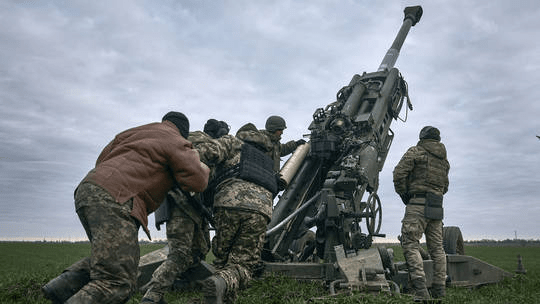
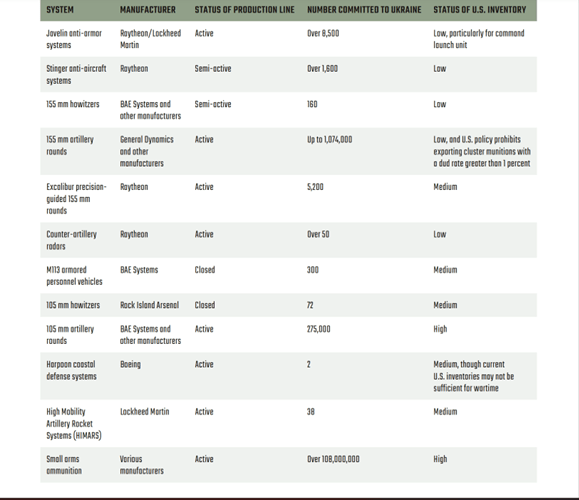


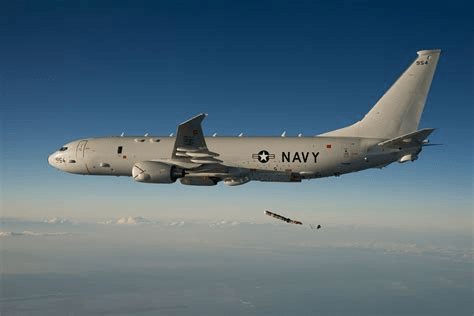
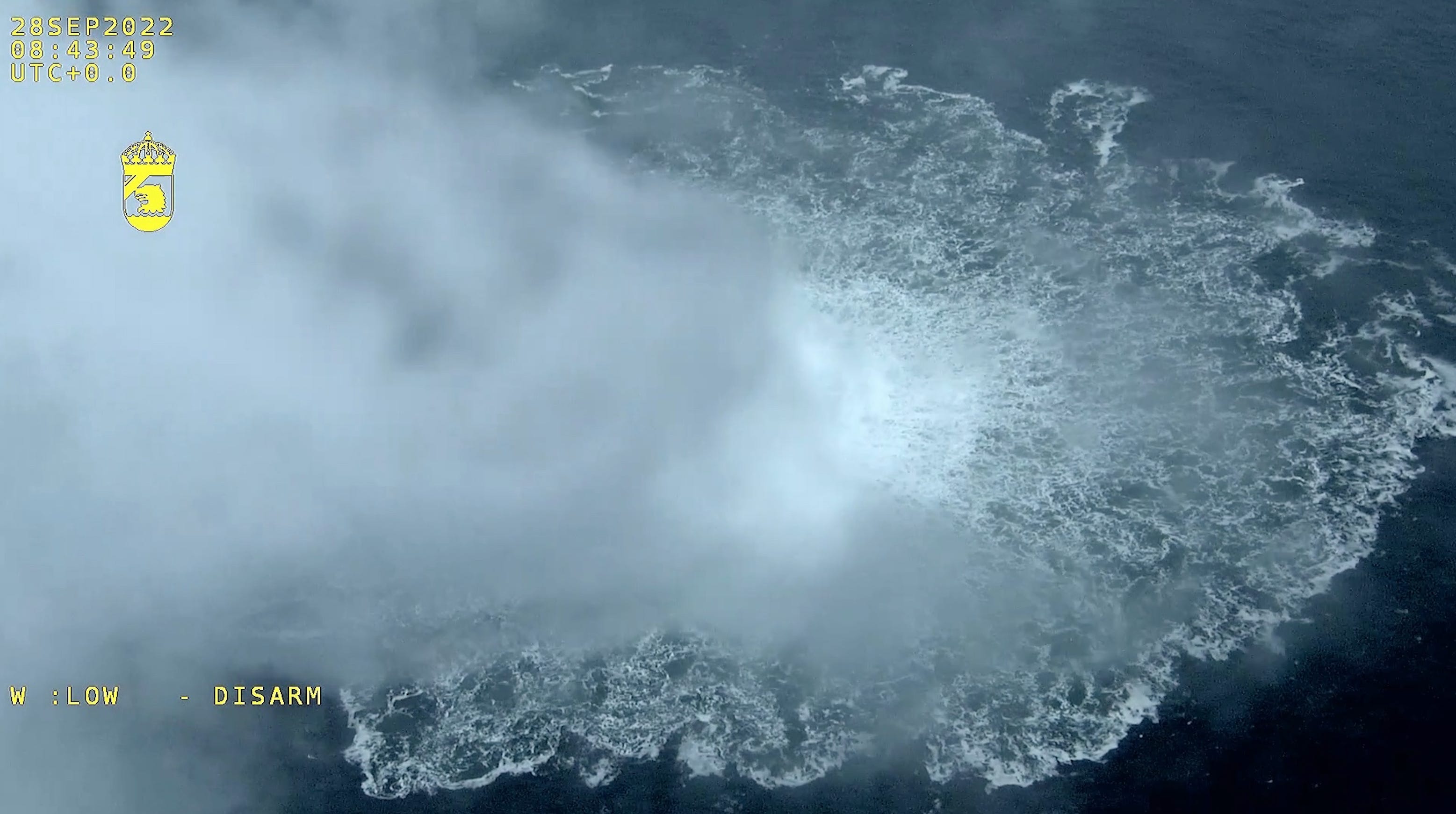
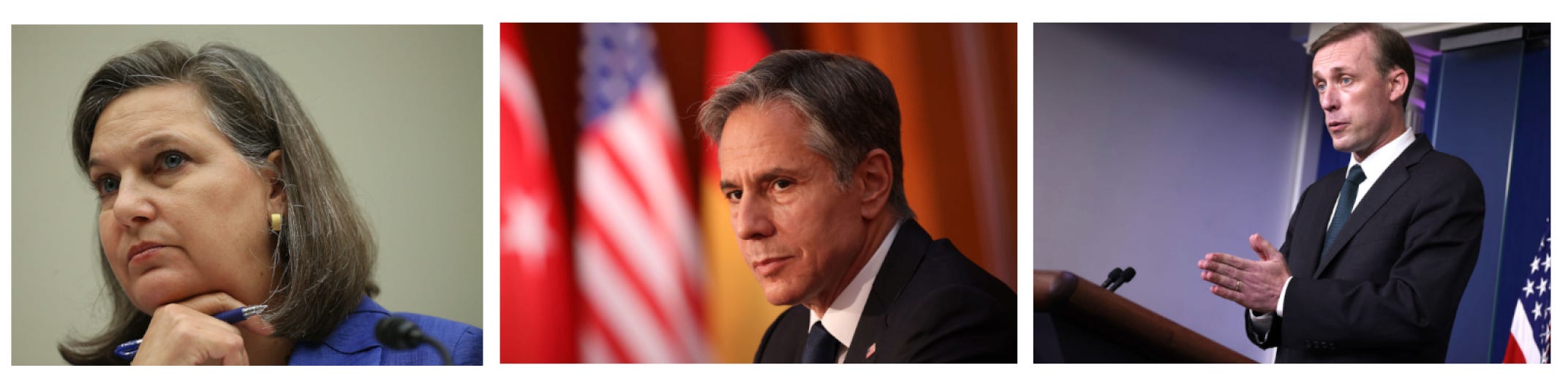
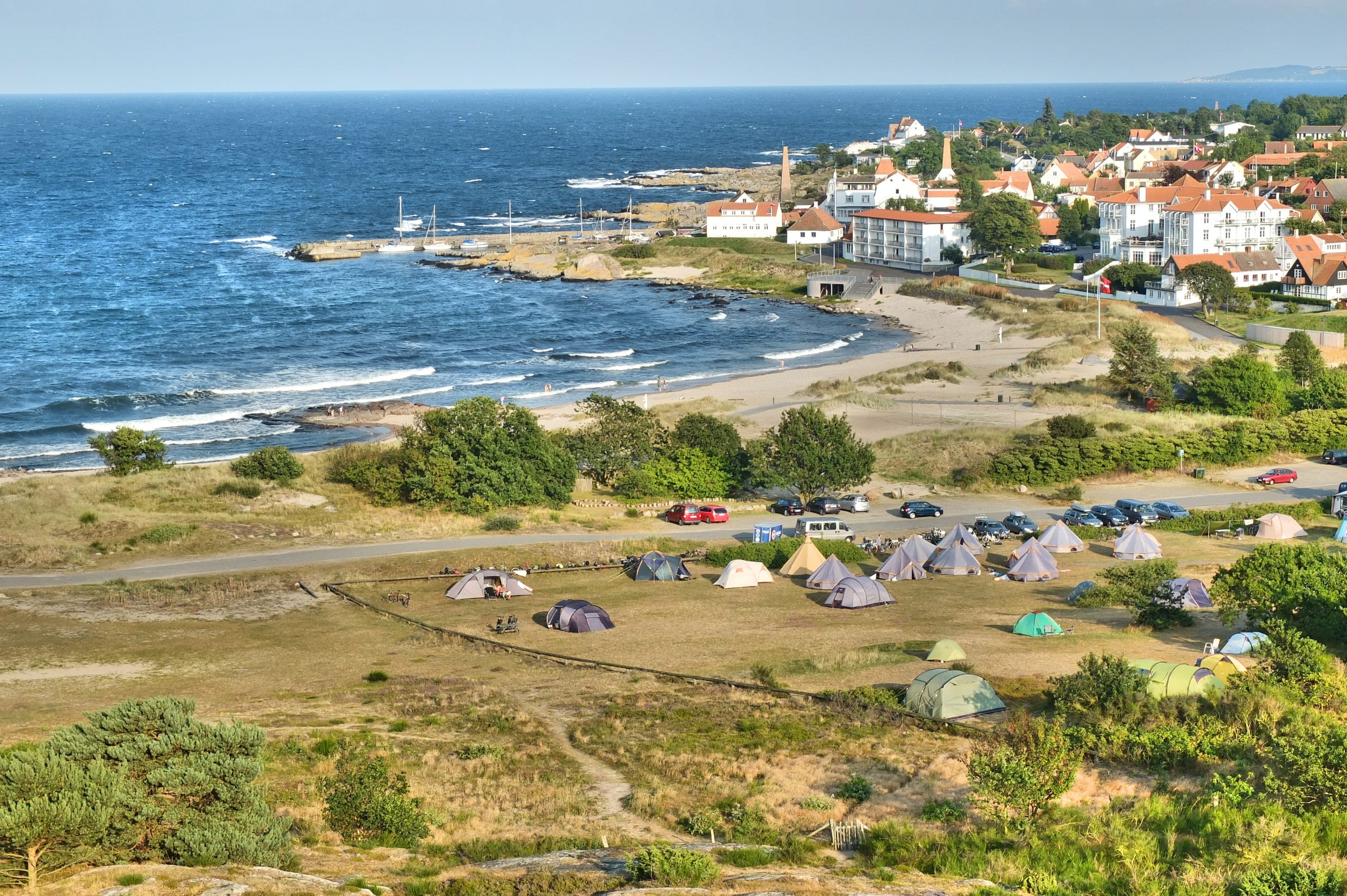
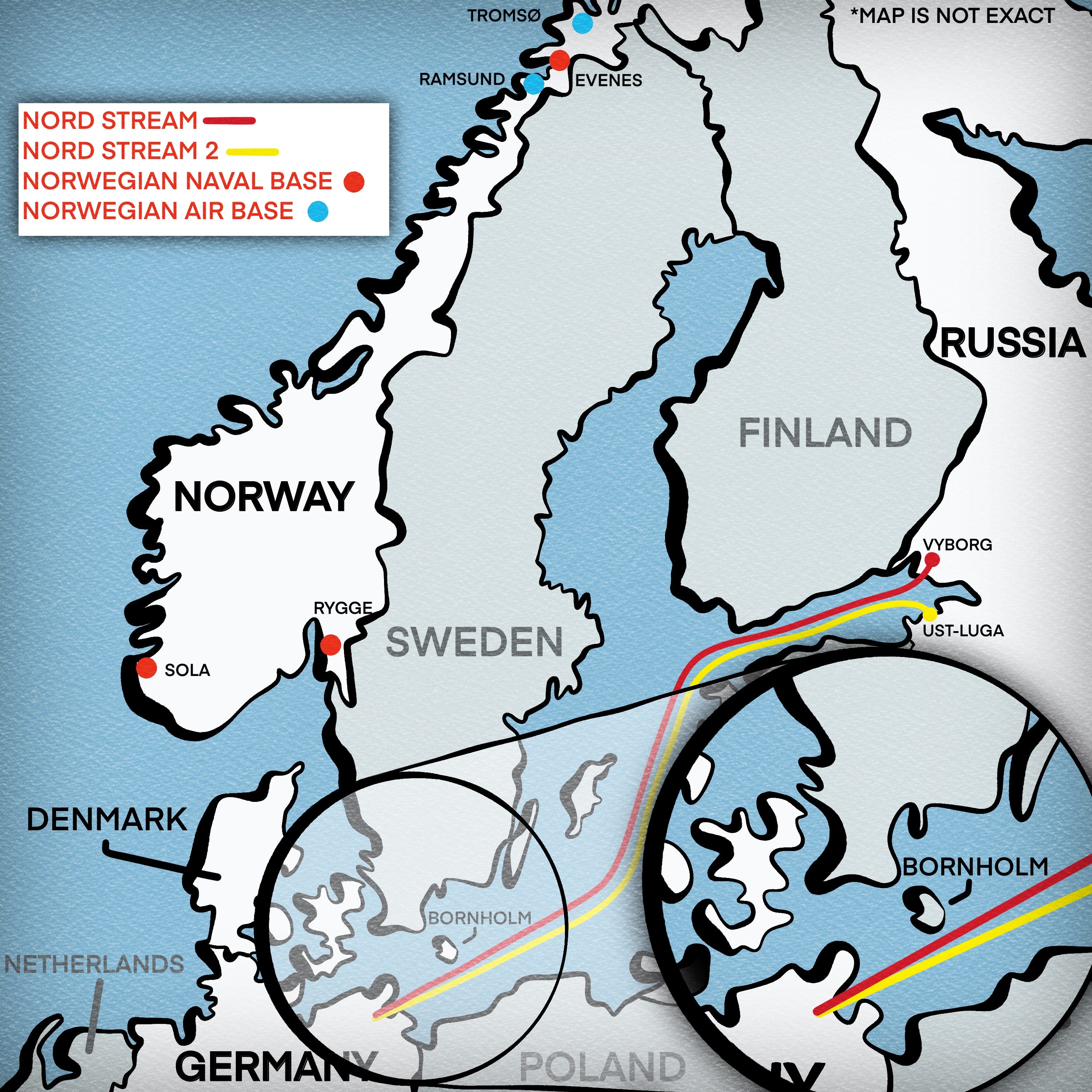



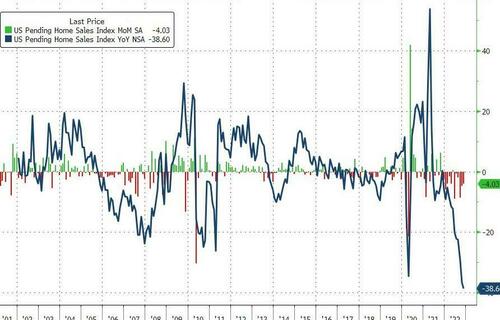
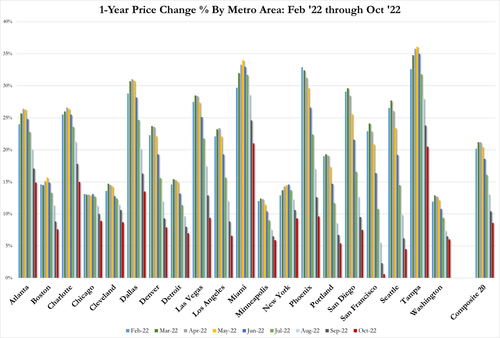
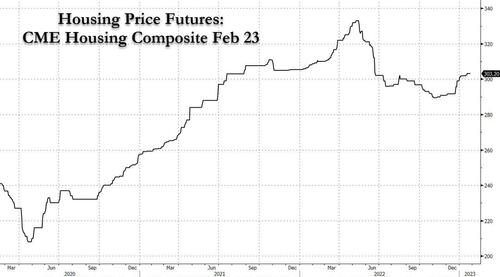
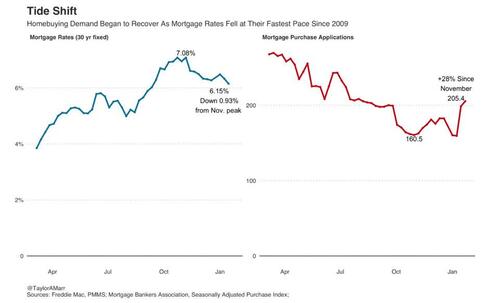




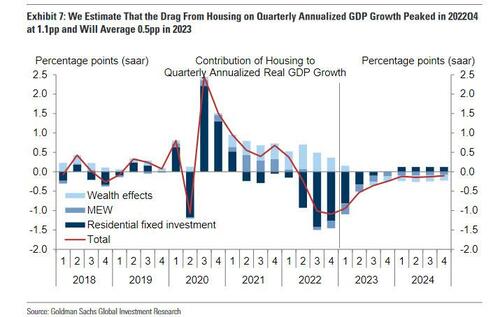
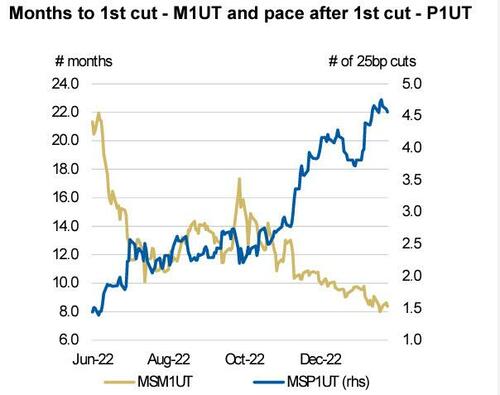





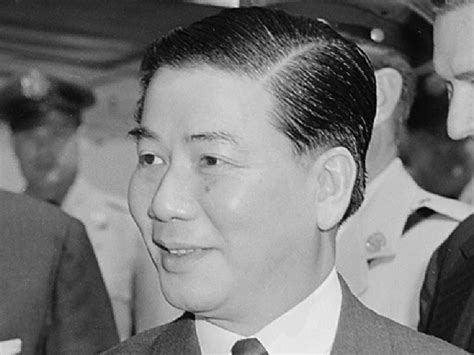


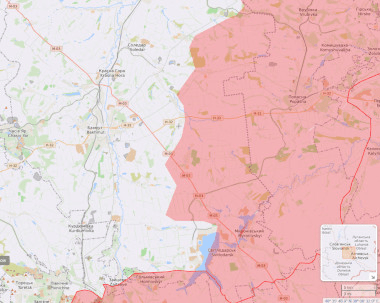

 Econophysics2020