Inside The “Strong” Jobs Report: Full-Time Workers -1K; Part-Time Workers +679K
BY TYLER DURDEN
FRIDAY, JAN 06, 2023 – 11:20 AM
Reading the mainstream media’s reaction to today’s payrolls report, one would be left with the impression that it was generally on the goldilocks side and indicative of a possible soft-landing – consider this from Bloomberg: “the US labor market stayed resilient last month while wage gains cooled, raising hopes that the economy may dodge a recession and the Federal Reserve will further slow its aggressive campaign of interest-rate hikes.”
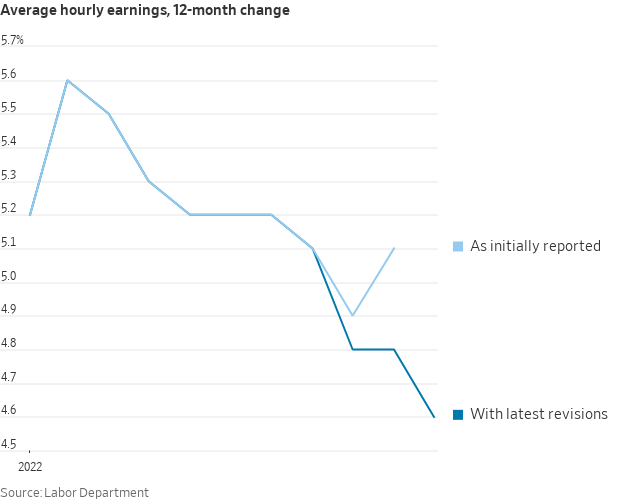
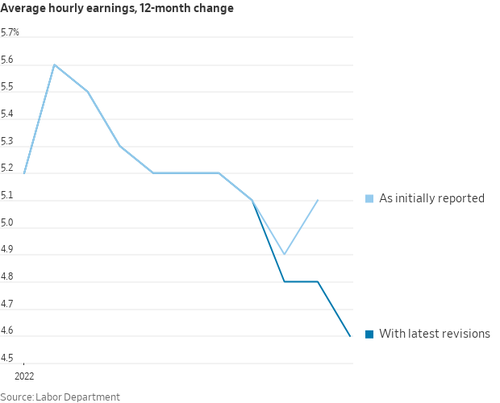
Which is accurate: wage growth indeed slowed down following a major revision to the data (remember that 0.6% M/M jump in average hourly earnings that freaked out the market last month? Well, it was quietly revised to 0.4% today), and as a result – as even Fed mouthpiece Nick Timiraos pointed out earlier – “Revisions to average hourly earnings data paint a marginally less worrisome picture for the Fed on wages than the Nov report. The upturn in wage growth in Nov (originally reported as +0.6%) was revised (to +0.4%). The 4.6% annual wage growth in Dec was the lowest since Aug ’21.“
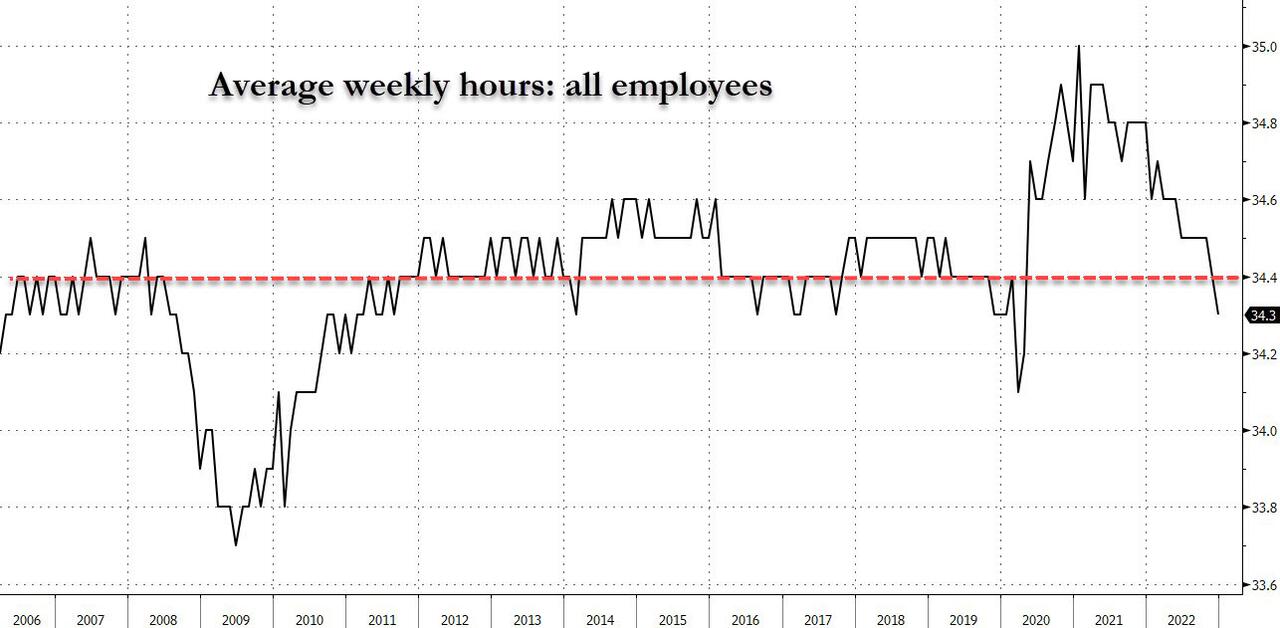
There was more: not only did average hourly earnings drop, but so did average hours worked, which has a major impact on the average wages, and had hours been flat, the decline in average wages would have been even more pronounced.
Ok, so wages are finally starting to reflect reality – and indicating that inflation pressures are clearly easing, which is to be expected for any economy sliding into a recession.
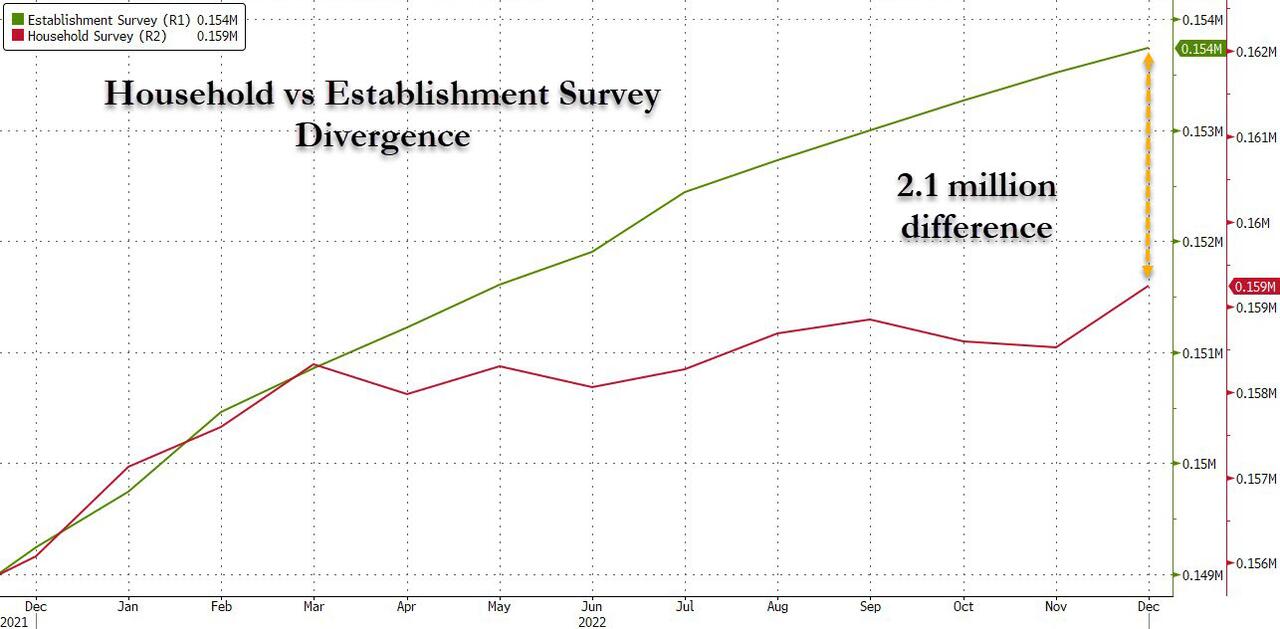
But what about the underlying issues with the jobs data? What about that massive divergence between the employment number (from the Household Survey) and the monthly payrolls change (from the Establishment survey). Recall that it was just last month that we reported that divergence between these two data sets hit a record 2.7 million, a difference which got added focus just a few days later after the Philadelphia Fed reported that its own calculations found that in Q2 the US added just 10,000 jobs, not the 1.1 million reported by the BLS.
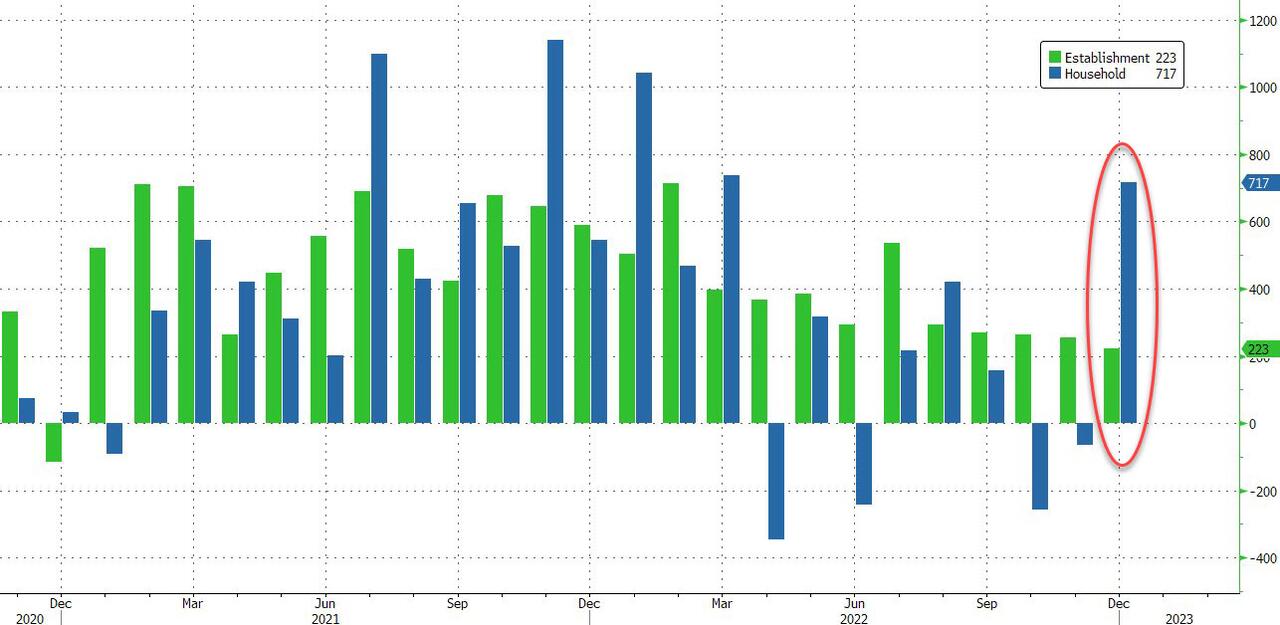
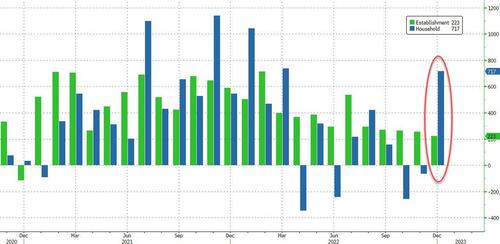
The answer is that today, the BLS decided to finally shrink the record difference between the Household and Establishment surveys, and while 223K payrolls were added (a number which was actually down 244K on an seasonally unadjusted basis), the Household survey outdid itself, and its matching Employment number soared by a whopping 717K.
There is a reason for that: we have entered the BLS’s annual revisions season, and to start the year the Bureau revises all of its historical series, starting with the Household Survey, as follows:
Seasonally adjusted household survey data have been revised using updated seasonal adjustment factors, a procedure done at the end of each calendar year. Seasonally, adjusted estimates back to January 2018 were subject to revision. The unemployment rates for January 2022 through November 2022 (as originally published and as revised), appear in table A at the end of this news release, along with additional information |about the revisions.
Whatever the specific reason behind the historical adjustment, however, the cumulative record difference between Payrolls and Employment shrank from the all time high 2.7 million hit last month to “only” 2.1 million.
Luckily, unlike the Establishment survey which gives us shotgun job estimates with little to no granularity, the Household survey provides several layers of detail and we can find just how the BLS managed to trim this gaping difference.
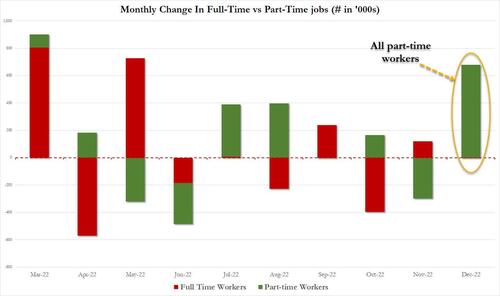
The answer, it will come as little surprise to anyone, is that once again the surge in employment was entirely a function of part-time workers and multiple job-holders.
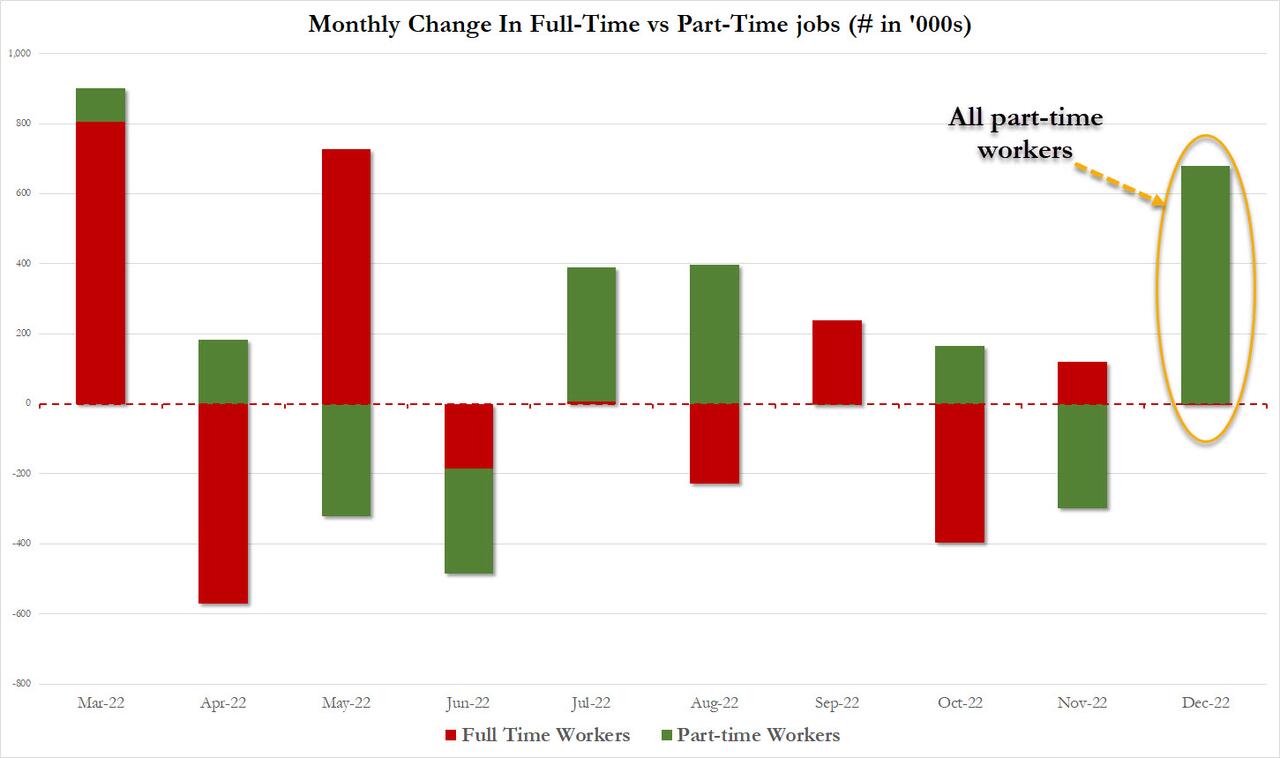
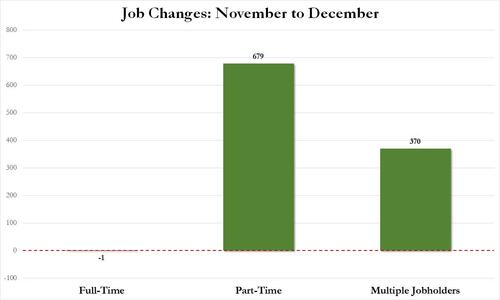
Here are the facts: in December, the number of full-time workers was 132.299 million, down exactly one 1K workers from the month before; at the same time, the number of part-time workers exploded by 679K, from 26.115 million to 26.794 million (source). Finally, adding insult to injury, the number of multiple jobholders, or those workers who need to hold more than 1 job to make ends meet yet who are double-counted for Payroll (establishment survey) purposes, surged by 370K (which means that the 223K payrolls number is really negative if adjusted for how many people actually got new jobs).
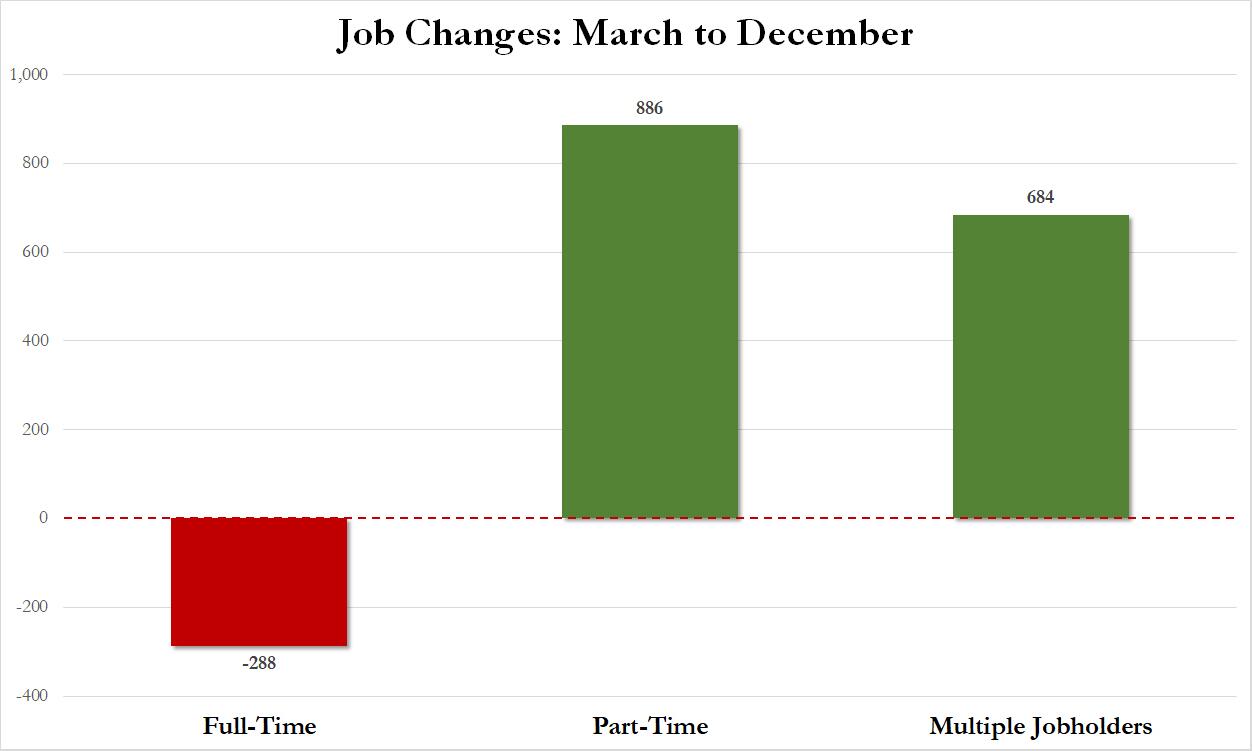
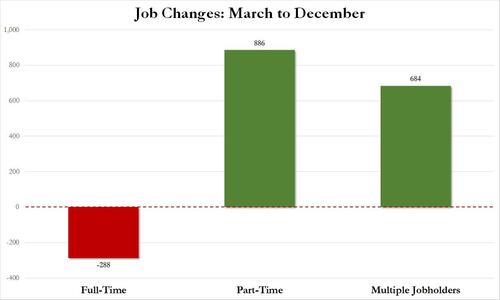
What does this mean on a longer-term basis, i.e., going back to that infamous month of March which we first flagged as the moment when something broke in the jobs data, and extending through Dec 31? Here too we find something striking: the total number of full-time jobs has declined by 288K in the past ten months, which however has been more than offset by the 886K increase in part-time jobs.
And the punchline: multiple jobholders have increased by a massive 684K over this period.
This means that contrary to conventional wisdom, some 684K jobs added in the past 10 months were not the equivalent of 684K workers finding a job, but 684K workers finding more than one job to afford life during this latest episode of soaring inflation.
What does this mean in the grand scheme of things? Well, the Philadelphia Fed’s observations still stand, and while the BLS may claim that payroll prints were accurate (at least until next month’s wholesale Establishment survey revision), digging deeper reveals once again that the quality composition of these jobs was far more dubious. In fact, we know that in December, the entire employment increase was thanks to part-time workers, and we don’t have to tell readers that part-time jobs pay far less, have zero benefits and generally are far worse quality than full-time. It also means that the bulk of job growth since March has been in the multiple jobholder category, and that instead of 684K jobs having been given, what really happened is that 684K workers found more than one job to be able to afford living under the Biden administration.
Now, as readers will know, I believe Tom Luongo is on to something very deep with his Theory of Everything—which is, briefly, that the Fed is engaged in a war with the ruling globalist elite of the collective West—”Davos”—fronted by the World Economic Forum. It’s not a question of whether the Fed and its backers (the big NY commercial banks led by JPMorgan Chase) are on our side in all important matters, but they are opposed to the Great Reset as they see it developing. McConnell’s move makes best sense as part of the Globalist effort to force the Fed to knuckle under—the interest rate rises, if maintained in the face of the Omnibus bill, threaten economic catastrophe for the US. The Omnibus bill is, among other things, a move to force the Fed to back down and return to QE, along with the EU. Thus, Luongo tweeted this today:
And you wonder why we are bombarded with nonsense about the Fed NEEDING to pivot all day, everyday?https://t.co/t1FPKeA8wL
— Tom Luongo (Give Deflation a Chance!) (@TFL1728) January 5, 2023
I’d like to add Karl Denninger’s voice to this mix. He’s not into geopolitics, but he has consistently insisted that the Fed will not “pivot”. Since his post today was uncharacteristically brief, but joins several major themes—Sanctions, the Fed, and the Omnibus (the reference to September 30), I want to quote it in full:
Don’t kid yourself — the minutes yesterday made clear The Fed will not be cutting rates in the back half of 2023, and in fact likely won’t be done raising them.It does not matter if you like it or not. In fact I do not expect any material change in their outlook until after September 30th of this year, and then it will be six months to a year before inflation can back off.
Why?
Omnibus.
Simply put Powell sees that rising labor costs are driving the bus now, which is the second impulse and wage-push inflation is very hard to knock down. Congress did this with the Russian Sanctions plus the continued deficit spending which is now locked in through September as a result of what Congress did in the last days of 2022.
That was stupid on the part of Congress but they did it and they can’t take it back because to repeal that you’d need the House, Senate and Biden’s signature to do so and you won’t get either the Senate or Biden. So we’re stuck with it through the end of the fiscal year which is September 30th.
This is McConnell’s Great Betrayal. This is why “the market is trying to browbeat the Fed”, it’s part of the plan to force the Fed to back down:
Everyone is trying to evade this fact, but you can’t and The Fed knows it.
The market is trying to browbeat The Fed on this, particularly on the longer end of the curve. They’ve got it wrong here folks; even a release of the Russian sanctions, which are highly unlikely, won’t restore the trade sequestration those sanctions destroyed. The Omnibus can’t be reversed as there’s no political path to do so.
If you’re bullish on anything but rates IMHO you’re due for a serious problem in your account balance.
Luongo and KD are in agreement on this. Yes, Powell went along with QE in order to get himself reelected, but it’s a different ball game now. And this is the game to be watching. More than ever, it’s all related.
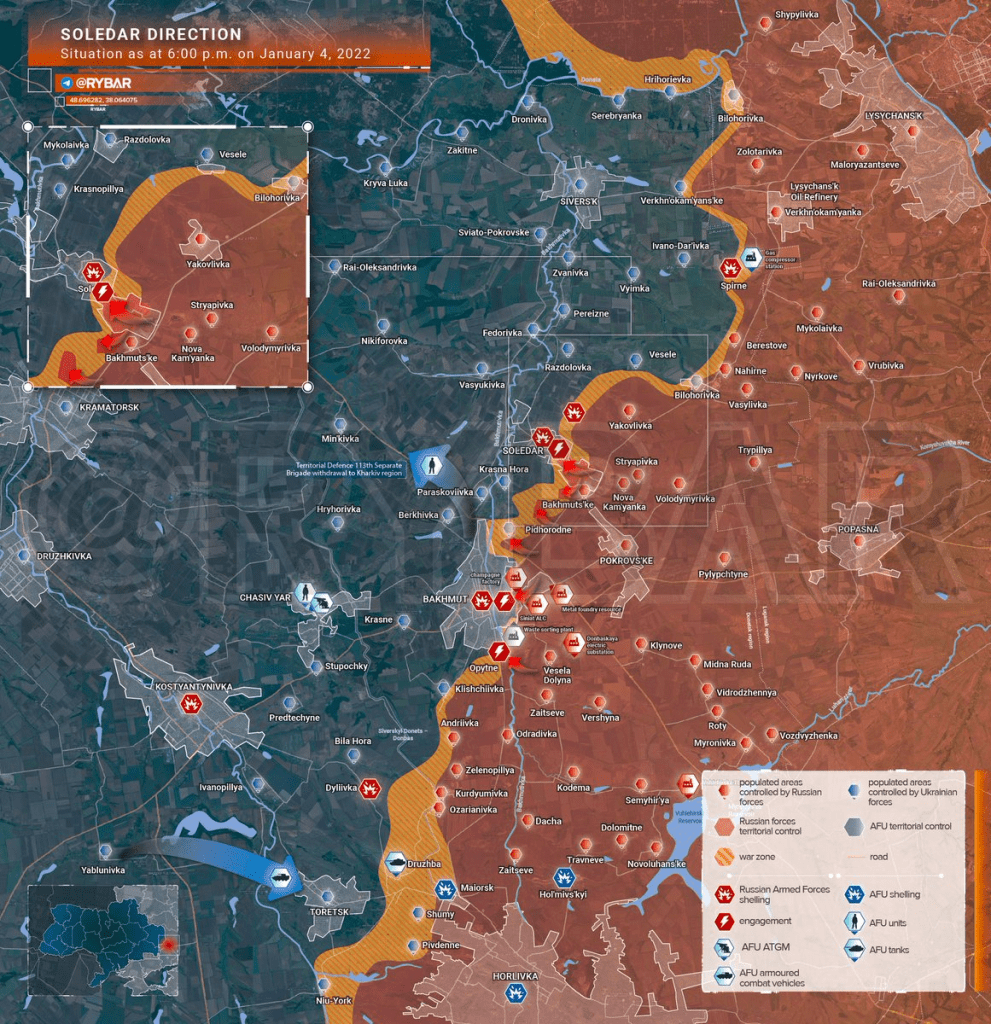
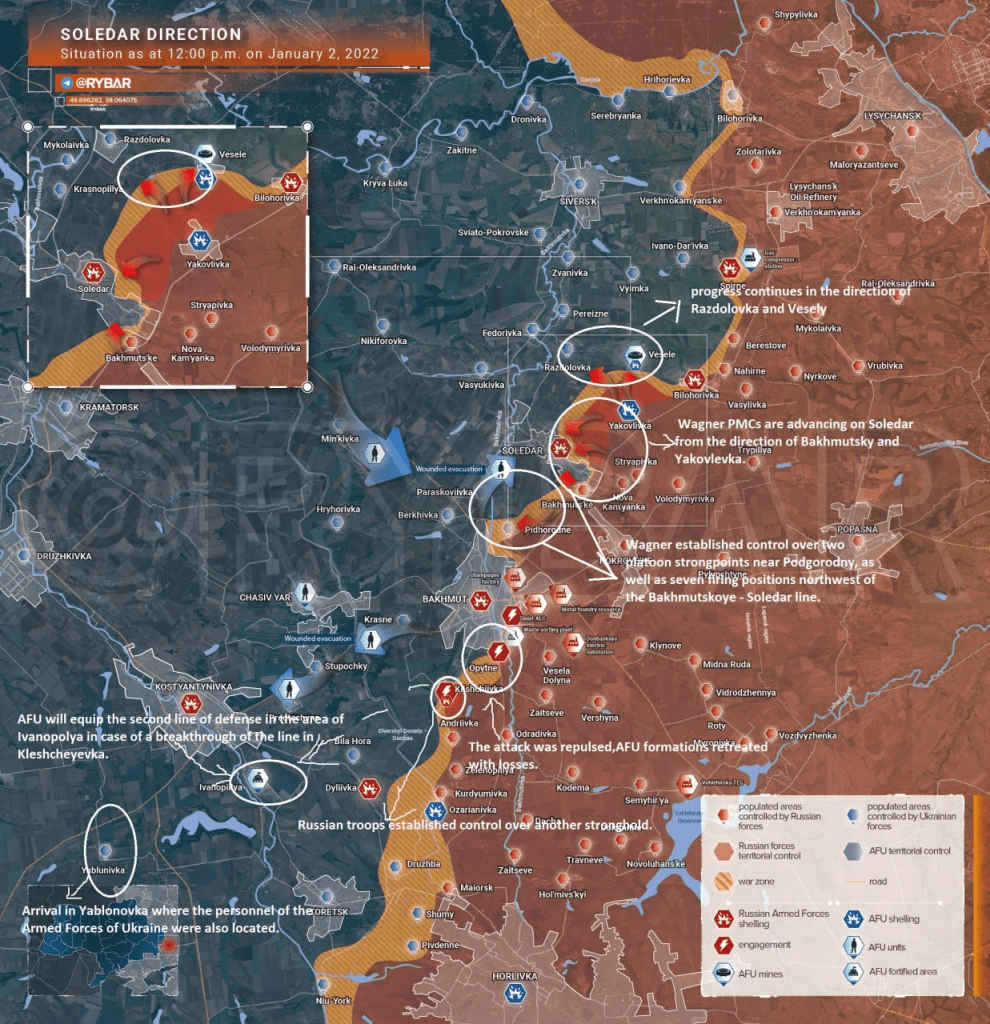
The Armed Forces of the Russian Federation are developing their success on the outskirts of the Pidhorodne The situation in Artemovsk on the morning of January 5 from Ukraine sources,even the AFU General Staff confirms the Russian offfensive in Bahmut.
The capture of Pidhorodne makes it possible for Russian troops to enter the northern part of Artemovsk and develop an offensive along the M-03 highway in the direction of Krasnaya Gora and Berkhovka.
Meanwhile, Russian President Vladimir Putin on Wednesday ordered a warship armed with new hypersonic Zircon cruise missiles to be deployed on a mission to the Atlantic and Indian Oceans, in what could be a message and warning aimed at the West against escalating or intervening in Ukraine.
The deployment of the frigate appears intended to make maximum possible public impact, given the announcement was made by Putin himself in a televised conference call with his defense minister, Sergei Shoigu.
Admiral Gorshkov frigate, via Wiki Commons
Along with Shoigu, Putin addressed Igor Krokhmal, commander of the frigate which bears the name “Admiral of the Fleet of the Soviet Union Gorshkov” – and reminded him the ship while on mission is armed with Zircon hypersonic weapons – again in a coordinated message which unveiled the deployment to the public for the first time.
“This time the ship is equipped with the latest hypersonic missile system – ‘Zircon’ – which has no analogs,” Putin said. “I would like to wish the crew of the ship success in their service for the good of the Motherland.”
The ship is expected to also enter the Mediterranean Sea at some point while on its Atlantic mission, though the timeline of the voyage remains unclear.
“This ship, armed with ‘Zircons’, is capable of delivering pinpoint and powerful strikes against the enemy at sea and on land,” Shoigu had responded to the Putin announcement. The defense chief also stressed the Zircon is undefeatable, able to evade any anti-air defense system in the world due to its purported ability to fly at nine times the speed of sound.
According to The Telegraph, it’s already making its way into the Atlantic, based on the publication’s Wednesday reporting that “a warship armed with new hypersonic cruise missiles on a training mission [went] past Britainto the Atlantic and Indian Oceans and the Mediterranean.”
All of this follows last year’s test launches of Sarmat – an intercontinental missile capable of carrying nuclear warheads – launches which were confirmed in highly publicized videos.
Here is the test launch of Sarmat, dubbed as the world’s longest range ballistic missile pic.twitter.com/LbHy9SW1IG
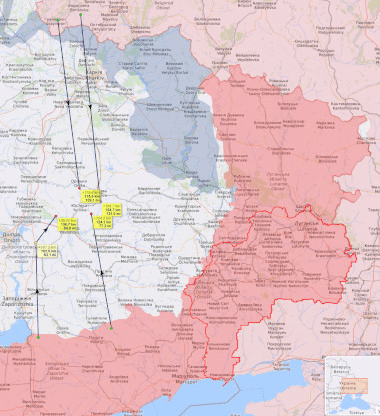
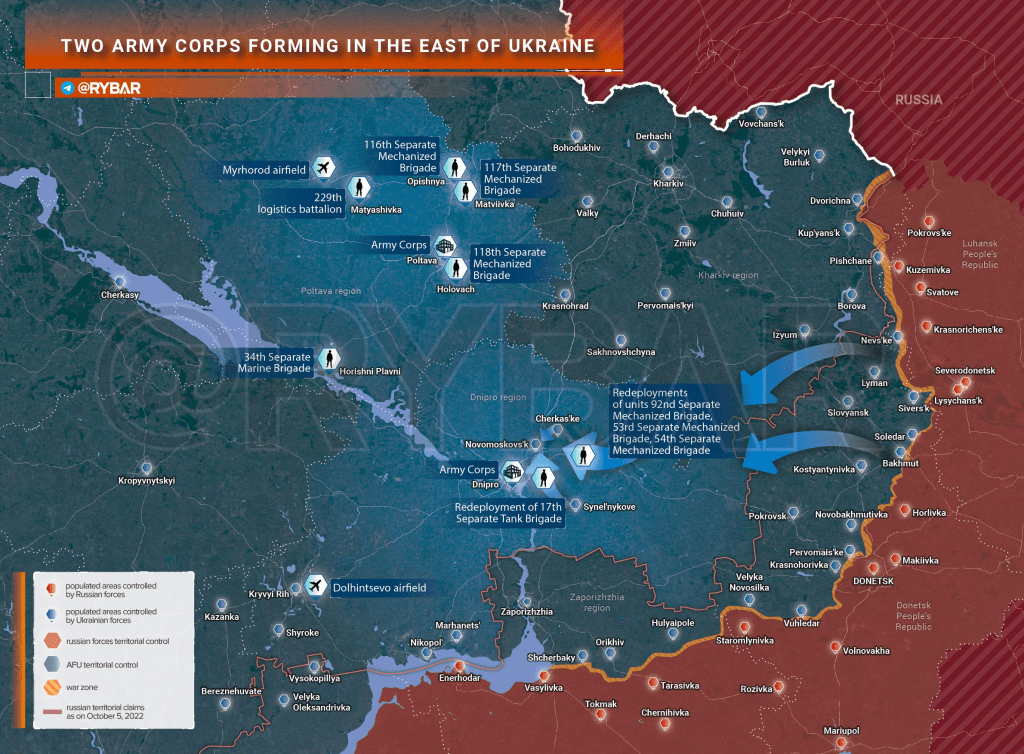
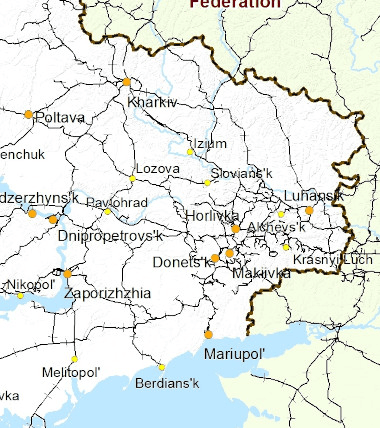
Dima of the Military Summary Channel discussed yesterday how two big moves, one up from the Mariupol area and one down west of Kharkiv, can cut all railroad lines that connect west Ukraine with the eastern frontline where some 80+% of the Ukrainian army is now deployed.
I agree that the move from the south will happen but I am less sure about the northern branch.
The Ukrainian army, just like the Russian one, depends on railroads for medium and long range transport. Neither has enough trucks to move the big amount of supplies that are needed to support the war.
Ukrainian railways.
To be able to supply its forces any Russian move must follow the rail lines and create some safety corridor left and right of them. Some railways will be damaged by fighting but Russia has special railroad regiments that are trained and equipped to do repairs under war conditions. The move from the south would go to Pavlovgrad (Pavlovhrad) while the move from the north would pass Kharkiv in the west and aim at Lozova. When both are taken the Ukrainian army at the eastern front will be completely cut off from the rest of Ukraine and, without supplies, will have to surrender or die.
Both are big 200 kilometer (120 miles) long moves that require significant amounts of forces. But after its mobilization and with volunteers Russia has 350,000 additional forces it can move in. 75 to 100,000 are sufficient for each push while the rest can keep the Ukrainian troops in the east very busy and fixed in their position.
Then comes the question of when.
Due to currently warmer than normal weather the ground in Ukraine is not yet frozen and the mud will return in March and April. That gives only a two months window to move forward. If I were the Russian commander I would probably wait and use the six dry months during the summer. But there are other criteria, like politics and economics, that will come into play and which may require an earlier move.
If the plan works the war will largely be over. Russian troops will be free to move anywhere in Ukraine with only little resistance. A move to retake Kherson and Odessa will then be a rather easy and short affair.
The big question is how the U.S. will respond. If the Ukraine falls the U.S. and NATO will have lost their war against Russia. That will cause serious political damage.
Thomas H. Lipscomb writes that war will be lost because it was badly planned and in a way that could never have changed its direction:
American military planning was once world class. But who would plan a proxy war against Russia, one of the acknowledged masters of artillery with far better air defense technology than any in the West, and then equip our puppet Ukraine with inferior weapons and only enough ammunition to last six months? And surely American planners couldn’t help knowing that there was no longer a manufacturing base for resupply, and NATO warehouses were practically empty?
This will have wide ranging consequences:
[T]he United States current leadership is a bunch of total idiots, blinded by ideology, arrogance and illusions of pursuing a “rule-based” global hegemony, an opportunity long passed, as our performance in this proxy war shows. The United States may have won the Cold War but it lost the peace. Its strategic thinking and its military is obsolete and configuration of both forces and equipment is based on assumptions from the past millennium. The battle for a Great Global Reset under a unipolar American hegemony has been lost as well. The World Economic Forum is now about as relevant as the Holy Roman Empire. All they can continue to do is terrorize the increasingly authoritarian states of the West with asinine policy proposals.
The attempt to destroy Russia prodded it to a burst of brilliant diplomacy and leadership by Putin and his team that has quietly established that the rest of the world prefers sovereignty and a multi-polar world. The post Cold War “Pox Americana” as Larry Johnson has called it, is over. Historians of the future will study this period of history with fascination. Few times in history has such immense change happened so fast.
The effect of losing the war will be noticed in global and domestic politics. ‘Western’ global standing will be degraded and the leadership of the war party will receive some well deserved bashing.
But will the U.S. let that happen? Can it allow itself to lose this war? Or will it escalate? Even when that is likely to only worsen its situation?
I have confirmed that the Defense Intelligence Agency is relying solely on Ukraine for the intelligence on Russian and Ukrainian casualties. In other words, if Ukraine tells its DIA liaison officer that Ukraine killed 400 Russians in its latest HIMARS strike then that is what DIA tells the U.S. General commanding EUCOM. This is more than troubling. This is dangerous.
There are six basic types of intelligence that a good analyst should consult in preparing an assessment:
Intelligence from foreigners recruited to spy for the United States,
Intelligence produced by foreign governments that is passed to the United States,
Reports produced by U.S. Government organizations, e.g. State Department cables sent from US embassies and Defense Attache reports based on information the attache collected in a particular country,
Electronic intercepts, which includes communications collected and analyzed by the National Security Agency,
Imagery from satellites and air craft (including drones)
Open source, e.g. press, media, and social media
What DIA and CIA ought to be doing is to scour all source intelligence to come up with an accurate report on the casualty rate for Ukraine and Russia. For example, surely the United States has intercepted communications between Russian military commands discussing killed and wounded. Ditto with respect to Ukraine.
Here is what we know with certainty from open source reports.
Russia is firing a staggering 20,000 artillery rounds per day, a senior U.S. defense official estimated, while Ukraine is firing from 4,000 to 7,000 rounds daily.
Those rounds translate into casualties on both sides. Put simply, Ukraine is suffering at least four times the number of killed and wounded than Russia.
U.S. journalists are a lazy lot and are regurgitating to the public the official line presented to them by the White House, the Department of Defense and the Department of State. The same applies to most of Europe. But once in a while, a reporter stumbles on to the truth. Maria Senovilla, who writes for the Spanish magazine Atalayer, committed an act of journalism:
What is happening in the battle of Bakhmut? The news we are receiving is of the death of very many people.
Yes, we have to look to the Donbas because Bakhmut is precisely the blackest point of the war in Ukraine. This week, both the Institute for the Study of War, which is a prestigious American think tank, and other international thin tanks, have agreed that up to 400 Ukrainian soldiers a day are being killed and wounded in Bakhmut.
And beyond the number, which is just a figure, I have been able to talk in recent days with different military sources, both official and combatants who have been there, and what they say makes one’s hair stand on end. The city is for the moment under Ukrainian control, but the Russian troops have stationed their artillery close enough to fire there, but far enough away so as not to expose their troops too much. Meanwhile, the Ukrainian army, as it has to defend the terrain, has a lot of infantry, light units, paramilitary units that can do little against the bombs. This combat front has become today a real human meat grinder. That’s how crude I can say it.
Right now it is one of the most, if not the most, worrying point for Zelenski’s armed forces. Our listeners are probably wondering what is the importance of Bakhmut to take such a commitment to defend the position with such a very high cost of living. Bakhmut is not an iconic city like Severodonetsk was, where one of the great battles of this war also took place. Bakhmut is not that kind of iconic city. However, it is a communications hub that is key to the supply lines of Ukrainian troops in Donetsk province, and it is also the buffer that contains the advance of Kremlin troops towards Sloviansk and Kramatorsk. If the Russian Army were to take these two cities, it would gain almost total control of the Donetsk province and, therefore, of the entire Donbas, something that Putin could already sell as a great victory. So you can imagine the effort that the Kremlin is putting right now in taking Bakhmut and what it is costing the Ukrainians to defend it.
I understand why politicians will lie about a failing policy. But it is inexcusable for intelligence professionals to enable that lying. The best antidote is factual, objective analysis. Especially analysis based on multiple sources. Politicians need a Dutch Uncle who will tell them uncomfortable truths. That is not happening. One of these days the reality of the carnage Ukraine is suffering will become impossible to cover up and the Kabuki theater of looking for a scapegoat will kick off in Washington. Guess what? It will be called an intelligence failure. The politicians will be frantic to escape any blame for the debacle of “losing Ukraine” and the intelligence community will be the culprit. In this case, the intelligence community will have earned its culpability. They are cowards who refuse to stand up and tell the truth.
Comment: And so, Russia announced a 36-hour ceasefire (https://tass.com/defense/1417117). After that, we’ll see what happens. The last time Russia ordered a cease-fire was just before the final assault on Mauriupol
Update (1015ET): Shortly after Erdogan spoke with Putin this morning, the Russian leader has ordered a temporary cease-fire in Ukraine Friday and Saturday to mark Orthodox Christmas.
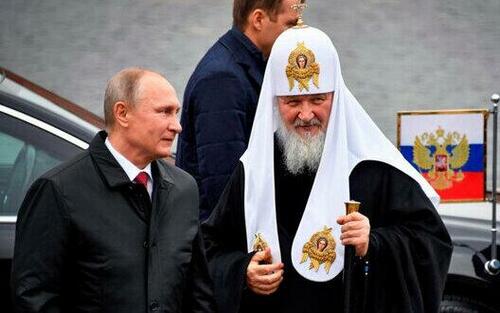
The statement from the Kremlin cites earlier appeal from Patriarch Kirill for ceasefire over the holiday. Russian Orthodox Church leader Patriarch Kirill had previously said in a statement posted to the church’s official website:
“I, Kirill, Patriarch of Moscow and of all Rus, appeal to all parties involved in the internecine conflict with a call to cease fire and establish a Christmas truce from 12:00 on January 6 to 00:00 on January 7 so that Orthodox people can attend services on Christmas Eve and on the day of the Nativity of Christ.”
There’s been no response so far from Ukrainian officials.
KREMLIN: RUSSIA TO ANNOUNCE TRUCE IN UKRAINE FROM 1200 JAN.6 TO 2400 JAN.7 – IFX
KREMLIN: RUSSIA CALLS ON UKRAINIAN SIDE TO DECLARE A CEASEFIRE AND ALLOW PEOPLE TO ATTEND SERVICES ON CHRISTMAS EVE, AS WELL AS ON CHRISTMAS DAY – IFX
Russian and Ukrainian Orthodox Christians celebrate Christmas on Jan. 7th, and is a major holiday just as in the West during December (the Orthodox Church’s Julian calendar December 25 falls on January 7 on the West’s Gregorian calendar).
Bloomberg has meanwhile hinted at a negative response from Ukrainian leaders, given their initial reaction to Patriarch Kirill’s Christmas truce call:
Russian President Vladimir Putin ordered his forces to cease fighting in Ukraine for 36 hours starting Friday at noon, Moscow time, in what appeared to be a rare sign of conciliation in an invasion that’s heading for its second year.
The Kremlin said Putin gave the order Thursday for Russian Orthodox Christmas. It follows an appeal by the patriarch of that church, which has close ties to the Kremlin. Ukrainian officials denounced that as a trap. Kyiv has demanded Russia remove its troops from Ukraine as a condition for any ceasefire.
This was the reaction of a Zelensky advisor to Patriarch Kirill’s ceasefire call, in reference to the Russian Orthodox Church (ROC):
ROC is not an authority for global Orthodoxy & acts as a "war propagandist". ROC called for the genocide of Ukrainians, incited mass murder & insists on even greater militarization of RF. Thus, ROC's statement about "Christmas truce" is a cynical trap & an element of propaganda.
As we detailed earlier, Turkish President Recep Tayyip Erdogan urged Russian leader Vladimir Putin in a Thursday phone call to implement a unilateral ceasefire in order to jumpstart negotiations toward ending the war with Ukraine. “President Erdogan said that calls for peace and negotiations should be supported by a unilateral ceasefire and a vision for a fair solution,” a statement from his office said.
Erdogan said future peace talks should be guided by a “vision for a fair solution”; however, the Russian leader repeated his red line and ultimately what it will take to get Moscow to the negotiating table: Kiev must give up the annexed territories in the east.
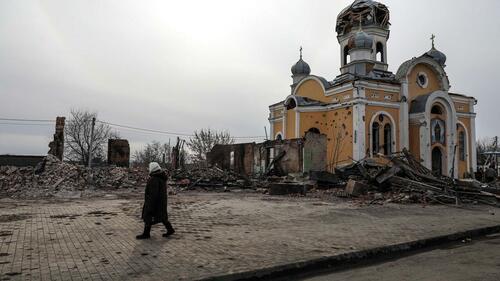
Damaged church in Ukraine, via EPA
Putin stressed in the call that Ukraine must acknowledge “new territorial realities” for talks to happen. Additionally the Russian president “acknowledged the destructive role of the West, pumping weapons into Kyiv, providing information and guidance,” according to a Kremlin statement.
Erdogan is expected to also hold a phone call with Ukrainian President Volodymyr Zelensky later on Thursday. Zelensky has of late stressed that Ukraine will not make any territorial concessions for the sake of peace and reiterated his country’s stance that no talks can happen until all Russian troops withdraw to their pre-Feb.24 positions.
Turkey has vowed to continue strengthening infrastructure that facilitates the grain export deal out of the Black Sea . The grain deal has been the only successfully negotiated major agreement of the war thus far which has actually held (in addition to various prisoner swaps).
Also on Thursday, a call for peace was issued by Patriarch Kirill, head of the Russian Orthodox Church, who is urging both sides to observe a Christmas ceasefire.
Russian and Ukrainian Orthodox Christians celebrate Christmas on Jan. 7th, and is a major holiday just as in the West during December (the Orthodox Church’s Julian calendar December 25 falls on January 7 on the West’s Gregorian calendar).
Patriarch Kirill said in a statement posted to the church’s official website:
“I, Kirill, Patriarch of Moscow and of all Rus, appeal to all parties involved in the internecine conflict with a call to cease fire and establish a Christmas truce from 12:00 on January 6 to 00:00 on January 7 so that Orthodox people can attend services on Christmas Eve and on the day of the Nativity of Christ.”
While the majority of churches and people inside Ukraine still have ties to the Russian Orthodox Church, the Ukrainian government has unleashed a crackdown, seeking to hand these churches over to a local church hierarchy that Moscow sees as schismatic. Kirill early in the war generated controversy by appearing to support the invasion amid calls from the West for him to condemn it as the seniormost clergyman in Russia.
If the Russian church’s call for a Christmas truce is observed and holds, it could increase the chances of the two sides eventually seeking a more permanent ceasefire and negotiated settlement. But as is stands now, given Ukrainian forces have over the past months seen battlefield successes, this possibility still looks remote.
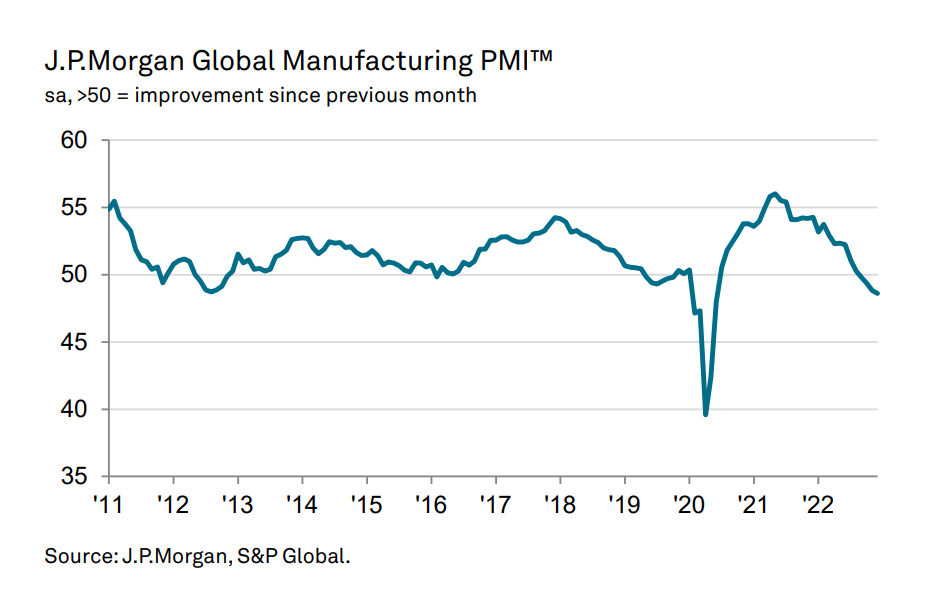
“The December Manufacturing PMI® registered 48.4 percent, 0.6 percentage point lower than the 49 percent recorded in November. Regarding the overall economy, this figure indicates contraction after 30 straight months of expansion.”
“The U.S. manufacturing sector again contracted, with the Manufacturing PMI® at its lowest level since the coronavirus pandemic recovery began. With Business Survey Committee panelists reporting softening new order rates over the previous seven months, the December composite index reading reflects companies’ slowing their output.
Demand eased, with the (1) New Orders Index remaining in contraction territory, (2) New Export Orders Index markedly below 50 percent, (3) Customers’ Inventories Index in ‘just right’ territory, and (4) Backlog of Orders Index recovering slightly but still in strong contraction.
“Of the six biggest manufacturing industries, one — Petroleum & Coal Products — registered moderate growth in December.”
Matt Taibbi has a new substack out on the Twitter Files. This one concentrates on how Twitter found itself under political pressure from the Deep State to, in essence, lend support to the Russia Hoax. This, as usual, was an evidence free operation. Twitter looked but couldn’t find evidence of Russian “meddling”. Twitter execs said so to one another, but buckled to Deep State pressure. Overall, what we’re seeing from the Twitter File revelations is that the anti-Trump campaign was the biggest gaslighting of the public population ever witnessed since lower tech operations by the likes Stalin, Mao, and Hitler. It was all done with the appearance of an open society, but nothing could have been further from the truth. And it happened under a Republican administration. This will all be red meat for Sundance, as you’ll see the central role of Mark Warner and the Senate Intel Committee. Nevertheless, you can be sure that political masters higher up the food chain were directing all of this.
What I’ve done here is simply pasted in the text of Taibbi’s tweets—sans documentation, which you can find at the link.
1.THREAD: The Twitter Files
How Twitter Let the Intelligence Community In
2.In August 2017, when Facebook decided to suspend 300 accounts with “suspected Russian origin,” Twitter wasn’t worried. Its leaders were sure they didn’t have a Russia problem.
3.“We did not see a big correlation.”
“No larger patterns.”
“FB may take action on hundreds of accounts, and we may take action on ~25.”
4.“KEEP THE FOCUS ON FB”: Twitter was so sure they had no Russia problem, execs agreed the best PR strategy was to say nothing on record, and quietly hurl reporters at Facebook:
5.“Twitter is not the focus of inquiry into Russian election meddling right now – the spotlight is on FB,” wrote Public Policy VP Colin Crowell:
6.In September, 2017, after a cursory review, Twitter informed the Senate it suspended 22 possible Russian accounts, and 179 others with “possible links” to those accounts, amid a larger set of roughly 2700 suspects manually examined.
Note the “possible”. That suggests that Twitter believed it best to offer up some meager results, whether there was real evidence or not.
7.Receiving these meager results, a furious Senator Mark Warner of Virginia – ranking Democrat on the Intelligence Committee – held an immediate press conference to denounce Twitter’s report as “frankly inadequate on every level.”
8.“#Irony,” mused Crowell the day after Warner’s presser, after receiving an e-circular from Warner’s re-election campaign, asking for “$5 or whatever you can spare.”
“LOL,” replied General Counsel Sean Edgett.
9.“KEEP PRODUCING MATERIAL” After meeting with congressional leaders, Crowell wrote: “Warner has political incentive to keep this issue at top of the news, maintain pressure on us and rest of industry to keep producing material for them.”
So, Twitter execs weren’t stupid. They knew exactly what this was about—politics. Evidence free political gaslighting, but of the entire country.
10.“TAKING THEIR CUES FROM HILLARY CLINTON” Crowell added Dems were taking cues from Hillary Clinton, who that week said: “It’s time for Twitter to stop dragging its heels and live up to the fact that its platform is being used as a tool for cyber-warfare.”
11. In growing anxiety over its PR problems, Twitter formed a “Russia Task Force” to proactively self-investigate.
So joining the gaslighting party had nothing to do with evidence—it was to handle a “PR problem”, which was really a problem with the political masters who regulated, or might regulate, their platform.
12.The “Russia Task Force” started mainly with data shared from counterparts at Facebook, centered around accounts supposedly tied to Russia’s Internet Research Agency (IRA). But the search for Russian perfidy was a dud:
Despite their best gaslighting intentions, there just wasn’t anything that could be plausibly called evidence.
13. OCT 13 2017: “No evidence of a coordinated approach, all of the accounts found seem to be lone-wolf type activity (different timing, spend, targeting, <$10k in ad spend).”
14.OCT 18 2017: “First round of RU investigation… 15 high risk accounts, 3 of which have connections with Russia, although 2 are RT.”
What to do? Cast the net more widely! But—still no fish in the net.
15.OCT 20 2017: “Built new version of the model that is lower precision but higher recall which allows to catch more items. We aren’t seeing substantially more suspicious accounts. We expect to find ~20 with a small amount of spend.”
16.OCT 23 2017: “Finished with investigation… 2500 full manual account reviews, we think this is exhaustive… 32 suspicious accounts and only 17 of those are connected with Russia, only 2 of those have significant spend one of which is Russia Today…remaining <$10k in spend.”
Basically, a total bust. But that was good enough to generate MSM headlines to gaslight the populace and spread Russia hysteria.
17.Twitter’s search finding “only 2” significant accounts, “one of which is Russia Today,” was based on the same data that later inspired panic headlines like “Russian Influence Reached 126 Million Through Facebook Alone”:
18.The failure of the “Russia task force” to produce “material” worsened the company’s PR crisis.
That sure has a Stalinesque show trial ring to it, doesn’t it? If you can’t prove guilt, you may be the guilty party! You may be a “wrecker”, a saboteur, … a, a, AGENT OF PUTIN!
19.In the weeks after Warner’s presser, a torrent of stories sourced to the Intel Committee poured into the news, an example being Politico’s October 13, “Twitter deleted data potentially crucial to Russia probes.”
20.“Were Twitter a contractor for the FSB… they could not have built a more effective disinformation platform,” Johns Hopkins Professor (and Intel Committee “expert”) Thomas Rid told Politico.
21.As congress threatened costly legislation, and Twitter [again] was subject to more bad press fueled by the committees, the company changed its tune about the smallness of its Russia problem.
Fake confession time.
22.“Hi guys.. Just passing along for awareness the writeup here from the WashPost today on potential legislation (or new FEC regulations) that may affect our political advertising,” wrote Crowell.
23. In Washington weeks after the first briefing, Twitter leaders were told by Senate staff that “Sen Warner feels like tech industry was in denial for months.” Added an Intel staffer: “Big interest in Politico article about deleted accounts.”
24.Twitter “pledged to work with them on their desire to legislate”:
25.“Knowing that our ads policy and product changes are an effort to anticipate congressional oversight, I wanted to share some relevant highlights of the legislation Senators Warner, Klobuchar and McCain will be introducing,” wrote Policy Director Carlos Monje soon after.
It’s bipartisan.
26.“THE COMMITTEES APPEAR TO HAVE LEAKED” Even as Twitter prepared to change its ads policy and remove RT and Sputnik to placate Washington, congress turned the heat up more, apparently leaking the larger, base list of 2700 accounts.
27.Reporters from all over started to call Twitter about Russia links. Buzzfeed, working with the University of Sheffield, claimed to find a “new network” on Twitter that had “close connections to… Russian-linked bot accounts.”
28.“IT WILL ONLY EMBOLDEN THEM.” Twitter internally did not want to endorse the Buzzfeed/Sheffield findings:
29. “SENATE INTEL COMMITTEE IS ASKING… POSSIBLE TO WHIP SOMETHING TOGETHER?” Still, when the Buzzfeed piece came out, the Senate asked for “a write up of what happened.” Twitter was soon apologizing for the same accounts they’d initially told the Senate were not a problem.
30.“REPORTERS NOW KNOW THIS IS A MODEL THAT WORKS”
This cycle – threatened legislation, wedded to scare headlines pushed by congressional/intel sources, followed by Twitter caving to moderation asks – would later be formalized in partnerships with federal law enforcement.
The desired result has been achieved—Twitter is transformed into the PR gaslighting arm of the Intel Committee, censoring information that might lead the public to become suspicious of what its masters were up to.
31.Twitter soon settled on its future posture.
In public, it removed content “at our sole discretion.”
Privately, they would “off-board” anything “identified by the U.S.. intelligence community as a state-sponsored entity conducting cyber-operations.”
32.Twitter let the “USIC” into its moderation process. It would not leave.
Wrote Crowell, in an email to the company’s leaders:
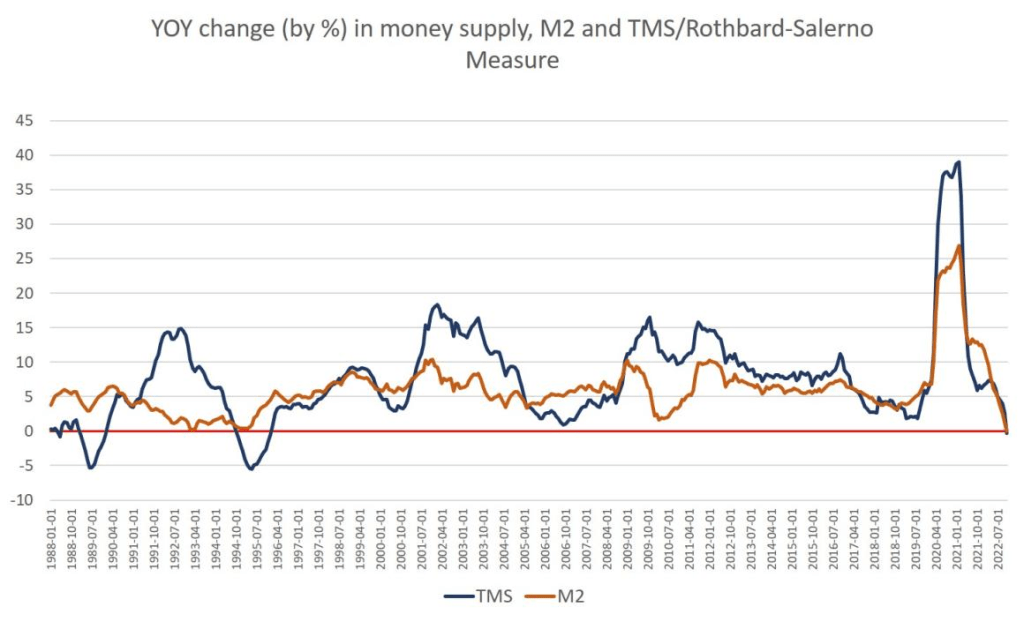
Money supply growth fell again in November, and this time it turned negative for the first time in 28 years. November’s drop continues a steep downward trend from the unprecedented highs experienced during much of the past two years. During the thirteen months between April 2020 and April 2021, money supply growth in the United States often climbed above 35 percent year over year, well above even the “high” levels experienced from 2009 to 2013.
Since then, the money supply growth has slowed quickly, and we’re now seeing the first time the money supply has actually contracted since the 1990s. The last time the year-over-year change in the money supply slipped into negative territory was in November of 1994. At that time, negative growth continued for 15 months, finally turning positive again in January of 1996.
During November 2022, year-over-year (YOY) growth in the money supply was at -0.28 percent. That’s down from October’s rate of 2.59 percent, and down from November 2021’s rate of 6.66 percent.
The money supply metric used here—the “true” or Rothbard-Salerno money supply measure (TMS)—is the metric developed by Murray Rothbard and Joseph Salerno, and is designed to provide a better measure of money supply fluctuations than M2. The Mises Institute now offers regular updates on this metric and its growth. This measure of the money supply differs from M2 in that it includes Treasury deposits at the Fed (and excludes short-time deposits and retail money funds).
In recent months, M2 growth rates have followed a similar course to TMS growth rates. In November 2022, the M2 growth rate was -0.03 percent. That’s down from October’s growth rate of 1.25 percent. November’s rate was also well down from November 2021’s rate of 12.40 percent.
Money supply growth can often be a helpful measure of economic activity, and an indicator of coming recessions. During periods of economic boom, money supply tends to grow quickly as commercial banks make more loans. Recessions, on the other hand, tend to be preceded by slowing rates of money supply growth. However, money supply growth tends to begin growing again before the onset of recession.
Another indicator of recession appears in the form of the gap between M2 and TMS. The TMS growth rate typically climbs and becomes larger than the M2 growth rate in the early months of a recession. This occurred in the early months of the 2001 and the 2007–09 recession. A similar pattern appeared before the 2020 recession.
Notably, this has happened again beginning in May this year as the M2 growth rate fell below the TMS growth rate for the first time since 2020. Put another way, when the difference between M2 and TMS moves from a positive number to a negative number, that’s a fairly reliable indicator the economy has entered into recession. We can see this in this graph:
In the two “false alarms” over the past 30 years, the M2-TMS gap reverted to positive territory fairly quickly. However, when this gap firmly enters negative territory, that is an indicator that the economy is already in recession. The gap has now been negative for 6 of the past 7 months. Moreover, in both September and October, the gap was greater than -1. There is only one case—1998—in more than 30 years during which the gap was greater than -1 and the US not in recession.
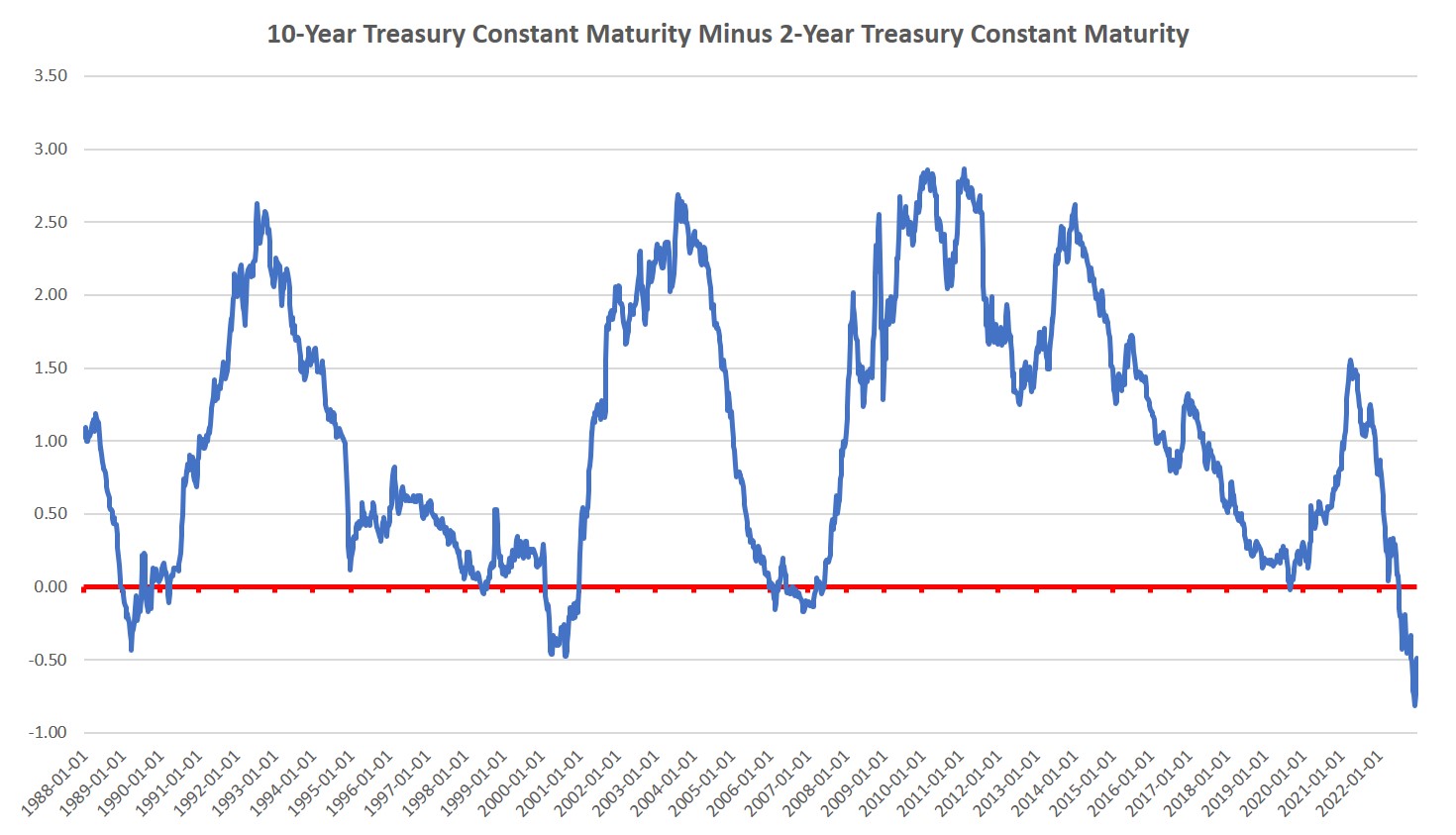
Interestingly, this indicator also appears to follow the pattern of yield curve inversion. For example, the 2s/10s yield inversion went negative in all the same periods where the M2-TMS gap pointed to a recession. Moreover, the 2s/10s inversion also fell into negative territory in 1998. This is not surprising because trends in money supply growth have long appeared to be connected to the shape of the yield curve. As Bob Murphy notes in his book Understanding Money Mechanics, a sustained decline in TMS growth often reflects spikes in short-term yields, which can fuel a flattening or inverting yield curve.
It’s not especially a mystery as to why short-term interest rates are headed up fast, and why the money supply is decelerating. Since January of 2022, the Fed has raised the target federal funds rate from .25 percent up to 4.0 percent.
This means fewer injections of Fed money into the market through open market operations. Moreover, although it has done very little to sizably reduce the size of its portfolio, the Fed has nonetheless stopped adding to its portfolio through Quantitative Easing, and allowed a small amount (about $358 billion out of $8.9 trillion) to roll off.
It should be emphasized that it is not necessary for money-supply growth to turn negative in order to trigger recession, defaults, and other economic disruptions. With decades marked by the Greenspan put, financial represssion, and other forms of easy money, the Federal Reserve has inflated a number of bubbles and zombie enterprises that now rely on nearly constant infusions of new money to stay afloat. For many of these bubble industries, all that is necessary is a slowing in money-supply growth, brought on by rising interest rates or a confidence crisis.
Thus, a growth rate in money supply turning negative is not in itself an especially meaningful metric. But the drop into negative territory does help illustrate just how far and how rapidly money-supply growth has fallen in recent months. That is generally a red flag for economic growth and employment. It also serves as just one more indicator that the so-called “soft landing” promised by the Federal Reserve is unlikely to ever be a reality.
From Anagnostopoulos, G., Spyroglou, I., Rigas, A. et al. The sun as a significant agent provoking earthquakes. Eur. Phys. J. Spec. Top.230, 287–333 (2021). https://doi.org/10.1140/epjst/e2020-000266-2:
In this paper we provide significant evidence that the sun is a principal agent provoking seismic activity. In particular the aim of the studies presented is to examine the possible relation of the coronal hole (CH) driven high speed solar wind streams (HSSs) with seismicity We performed several statistical studies of solar space and seismological data between 1980 and 2017 as well as a study for a long time interval from the year 1900 until the year 2017. (A1) Concerning the period 1980–2017 among other results we found that the earthquakes (EQs) with M ≥ 83 between 2010–2017 (including the catastrophic earthquakes of Japan 2011 (M91) Sumatra 2012 (M86) and Chile 2015 (M83)) occurred during times of large coronal holes as seen by the Solar Dynamics Observatory (SDO) satellite and were related with CH-driven HSSs observed by the ACE spacecraft several weeks or a few months before the EQ occurrences. (A2) Further research on the hypothesis of the possible HSS-EQ relationship revealed a surprising novel finding: a power spectrum analysis suggests that during the decay phase of the SCC22 and SC23 and at the maximum of SC23 the values of the global seismic (M ≥ 6) energy output shows a periodic variation of ~27 days, which is the mean rotational period of the Sun. (A3) Moderate (not strong) storms in general precede the great EQs. (B) The study of the data for the time interval 1900–2017 revealed that: (1) all of the giant (M ≥ 85) EQs occurred during the decay minimum and the rising phase of the solar cycle or in the maximum phase but at times of a strong reduction of the monthly averaged sunspot number: Chile M95 1960 EQ – Alaska M92 1964 EQ – Sumatra M91 2004 EQ (decay phase) Japan M91 2011 EQ (rising phase of the “strange” SC24) (2) the global energy release of all EQs with magnitudes M ≥ 55 show the highest values during the decay phase of the solar cycle and in particular three years after the solar maximum and (3) a very significant negative correlation (rS = −042p < 10−4) was found between the SSN and the number of earthquakes with M ≥ 7 during the period 1930–2010 during times of moderate and high amplitude solar cycles. (C) Another result of our study is that the comparison of the yearly numbers of great (M ≥ 7) EQs with the SSN fails to provide correct statistical results whereas this is possible for the global seismic energy or the giant EQs. (D) Finally we infer that the case and statistical studies presented in this paper strongly suggest a close relation between CH-associated HSSs and seismic activity. We present some observational evidence that most probably Alfvèn waves mediate the interaction of CH-driven HSSs with seismicity.










 Econophysics2020