After taking Popasnaya over the weekend, the head of Chechnya special forces explains to Ramzan Kadyrov actively covering the work of Chechen units in Ukraine provided the following comments to the videos:
“Almost every house and every street here is littered with modern weapons, which the nationalists abandoned at the first threat.
Machine guns, javelins, dry rations and even Bandera food storages are now at our disposal. Thus, the vaunted assistance to the Ukrainian army, provided by the countries of Europe and America, ultimately benefits us. ⠀ I thank Mr. Biden for his firm position on the issue of equipping the Bandera forces. Thanks to his integrity, our fighters are provided with additional food and weapons.”
The military of the Luhansk People’s Republic officially claimed control of the town of Popasnaya and the village of Nizhny on May 9. According to local reports, the mop up operation in Popasnaya was completed two days ago. The Ukrainian military confirmed the loss of Popasnaya on May 8.
The Ukrainian Armed Forces withdrew from their positions in the area of the town. Some clashes were reported in residential areas on the outskirts.
On May 9, the Russian Ministry of Defence reported that high-precision air-based missiles of the Russian Aerospace Forces destroyed two control points and a Ukrainian battery of multiple rocket launchers Grad in the area of Popasnaya settlement during the night.
After the Russian-led forces secured the town of Popasnaya from the AFU’s 24th Mechanized Brigade, the Chechen advance towards a major transport hub in the city of Bakhmut (aka Artemovsk) should be expected.
The map below shows the threat axes towards Bakhmut and Severodnoetsk (2nd Guards Tank Army).
Reportedly, AFU units are trying to retreat before the escape route closes.
In the last 24 hours, the Russian Federation forces took two towns threatening the AFU position in and south Severodnetsk:
Voronove to the south-east (circled on the right above)
Bilohorivka (circled on the left above in the AFU’s rear)
The AFU supply line is the blue-highlighted road ~3000 meters south of the town — well within artillery and rocket range.
Presently, the AFU has 3-5 days of supplies. Cut the supply line and those inventories quickly run out.
Like Guderian through the Ardennes in the 1940 Battle of France, the Russians 2nd Guards Tank Army successfully cleared the woods to the northwest of Bilohivka, and successfully forced a crossing of the Siversky Donetz River and broke through the AFU defenses.
From here on is open country.
Similarly, the successful assault on Voronove further east leaves AFU forces in rifle pits and trenches north of the airport just west of town – out in the open.
To put this action in perspective, here are the battle lines — including the vise applied to the left flank of the AFU line:
Viewed at a high level, 5th Guards Combined Army is punching through from the East. The AFU’s 24th Mechanized has been regrouping around Bakhmut when it was hit with a missile attack.
Meanwhile, the 2nd Guards Tank Army is dropping down behind Severodonetsk from the north, and 1st Guards Tank Army is poised to drive into the AFU rear west of 2nd Guards while covering its right flank.
As AFU units attempt to reform, they are taking missile strikes near Pyatikhatka, Artsyz, and Krasnopolie.
The problem AFU faces is their units have insufficient fuel to maneuver, and cannot easily disengage from the Russian Federation forces facing them.
On the Donesk front, the AFU is dug into fortified positions. If they try to move, they get hit. And if they move, they can’t move quickly enough.
Their air force is at risk – 2 Su-24’s were destroyed over the past 24 hours.
The cadence should begin to accelerate over the next 2 weeks – slowly, at first, and then ever faster.
NYET MEANS NYET: RUSSIA’S NATO ENLARGEMENT REDLINES Date:2008 February 1, 14:25 (Friday) Canonical ID:08MOSCOW265_a Original Classification:CONFIDENTIAL Current Classification:CONFIDENTIAL Handling Restrictions– Not Assigned — Character Count:9713 Executive Order:– Not Assigned — Locator:TEXT ONLINE TAGS:NATO – North Atlantic Treaty Organization | PREL – Political Affairs–External Political Relations | RS – Russia | UP – Ukraine Concepts:– Not Assigned — Enclosure:– Not Assigned — Type:TE – Telegram (cable) Office Origin:– N/A or Blank — Office Action:– N/A or Blank — Archive Status:– Not Assigned — From:Russia Moscow Markings:– Not Assigned — To:Joint Chiefs of Staff | NATO – European Union Cooperative | National Security Council | Russia Moscow Political Collective | Secretary of Defense | Secretary of State Linked documents or other documents with the same ID:08MOSCOW2653_a 08MOSCOW2655_a 08MOSCOW2656_a
C O N F I D E N T I A L MOSCOW 000265
SIPDIS
SIPDIS
E.O. 12958: DECL: 01/30/2018 TAGS: PREL, NATO, UP, RS SUBJECT: NYET MEANS NYET: RUSSIA’S NATO ENLARGEMENT REDLINES
REF: A. MOSCOW 147 B. MOSCOW 182
Classified By: Ambassador William J. Burns. Reasons 1.4 (b) and (d).
(C) Summary. Following a muted first reaction to Ukraine’s intent to seek a NATO Membership Action Plan (MAP) at the Bucharest summit (ref A), Foreign Minister Lavrov and other senior officials have reiterated strong opposition, stressing that Russia would view further eastward expansion as a potential military threat. NATO enlargement, particularly to Ukraine, remains “an emotional and neuralgic” issue for Russia, but strategic policy considerations also underlie strong opposition to NATO membership for Ukraine and Georgia. In Ukraine, these include fears that the issue could potentially split the country in two, leading to violence or even, some claim, civil war, which would force Russia to decide whether to intervene. Additionally, the GOR and experts continue to claim that Ukrainian NATO membership would have a major impact on Russia’s defense industry, Russian-Ukrainian family connections, and bilateral relations generally. In Georgia, the GOR fears continued instability and “provocative acts” in the separatist regions. End summary.
MFA: NATO Enlargement “Potential Military Threat to Russia”
(U) During his annual review of Russia’s foreign policy January 22-23 (ref B), Foreign Minister Lavrov stressed that Russia had to view continued eastward expansion of NATO, particularly to Ukraine and Georgia, as a potential military threat. While Russia might believe statements from the West that NATO was not directed against Russia, when one looked at recent military activities in NATO countries (establishment of U.S. forward operating locations, etc. they had to be evaluated not by stated intentions but by potential. Lavrov stressed that maintaining Russia’s “sphere of influence” in the neighborhood was anachronistic, and acknowledged that the U.S. and Europe had “legitimate interests” in the region. But, he argued, while countries were free to make their own decisions about their security and which political-military structures to join, they needed to keep in mind the impact on their neighbors.
(U) Lavrov emphasized that Russia was convinced that enlargement was not based on security reasons, but was a legacy of the Cold War. He disputed arguments that NATO was an appropriate mechanism for helping to strengthen democratic governments. He said that Russia understood that NATO was in search of a new mission, but there was a growing tendency for new members to do and say whatever they wanted simply because they were under the NATO umbrella (e.g. attempts of some new member countries to “rewrite history and glorify fascists”).
(U) During a press briefing January 22 in response to a question about Ukraine’s request for a MAP, the MFA said “a radical new expansion of NATO may bring about a serious political-military shift that will inevitably affect the security interests of Russia.” The spokesman went on to stress that Russia was bound with Ukraine by bilateral obligations set forth in the 1997 Treaty on Friendship, Cooperation and Partnership in which both parties undertook to “refrain from participation in or support of any actions capable of prejudicing the security of the other Side.” The spokesman noted that Ukraine’s “likely integration into NATO would seriously complicate the many-sided Russian-Ukrainian relations,” and that Russia would “have to take appropriate measures.” The spokesman added that “one has the impression that the present Ukrainian leadership regards rapprochement with NATO largely as an alternative to good-neighborly ties with the Russian Federation.”
Russian Opposition Neuralgic and Concrete
(C) Ukraine and Georgia’s NATO aspirations not only touch a raw nerve in Russia, they engender serious concerns about the consequences for stability in the region. Not only does Russia perceive encirclement, and efforts to undermine Russia’s influence in the region, but it also fears unpredictable and uncontrolled consequences which would seriously affect Russian security interests. Experts tell us that Russia is particularly worried that the strong divisions in Ukraine over NATO membership, with much of the ethnic-Russian community against membership, could lead to a major split, involving violence or at worst, civil war. In that eventuality, Russia would have to decide whether to
intervene; a decision Russia does not want to have to face.
(C) Dmitriy Trenin, Deputy Director of the Carnegie Moscow Center, expressed concern that Ukraine was, in the long-term, the most potentially destabilizing factor in U.S.-Russian relations, given the level of emotion and neuralgia triggered by its quest for NATO membership. The letter requesting MAP consideration had come as a “bad surprise” to Russian officials, who calculated that Ukraine’s NATO aspirations were safely on the backburner. With its public letter, the issue had been “sharpened.” Because membership remained divisive in Ukrainian domestic politics, it created an opening for Russian intervention. Trenin expressed concern that elements within the Russian establishment would be encouraged to meddle, stimulating U.S. overt encouragement of opposing political forces, and leaving the U.S. and Russia in a classic confrontational posture. The irony, Trenin professed, was that Ukraine’s membership would defang NATO, but neither the Russian public nor elite opinion was ready for that argument. Ukraine’s gradual shift towards the West was one thing, its preemptive status as a de jure U.S. military ally another. Trenin cautioned strongly against letting an internal Ukrainian fight for power, where MAP was merely a lever in domestic politics, further complicate U.S.-Russian relations now.
(C) Another issue driving Russian opposition to Ukrainian membership is the significant defense industry cooperation the two countries share, including a number of plants where Russian weapons are made. While efforts are underway to shut down or move most of these plants to Russia, and to move the Black Sea fleet from Sevastopol to Novorossiysk earlier than the 2017 deadline, the GOR has made clear that Ukraine’s joining NATO would require Russia to make major (costly) changes to its defense industrial cooperation.
(C) Similarly, the GOR and experts note that there would also be a significant impact on Russian-Ukrainian economic and labor relations, including the effect on thousands of Ukrainians living and working in Russia and vice versa, due to the necessity of imposing a new visa regime. This, Aleksandr Konovalov, Director of the Institute for Strategic Assessment, argued, would become a boiling cauldron of anger and resentment among the local population.
(C) With respect to Georgia, most experts said that while not as neuralgic to Russia as Ukraine, the GOR viewed the situation there as too unstable to withstand the divisiveness NATO membership could cause. Aleksey Arbatov, Deputy Director of the Carnegie Moscow Center, argued that Georgia’s NATO aspirations were simply a way to solve its problems in Abkhazia and South Ossetia, and warned that Russia would be put in a difficult situation were that to ensue.
Russia’s Response
(C) The GOR has made it clear that it would have to “seriously review” its entire relationship with Ukraine and Georgia in the event of NATO inviting them to join. This could include major impacts on energy, economic, and political-military engagement, with possible repercussions throughout the region and into Central and Western Europe. Russia would also likely revisit its own relationship with the Alliance and activities in the NATO-Russia Council, and consider further actions in the arms control arena, including the possibility of complete withdrawal from the CFE and INF Treaties, and more direct threats against U.S. missile defense plans.
(C) Isabelle Francois, Director of the NATO Information Office in Moscow (protect), said she believed that Russia had accepted that Ukraine and Georgia would eventually join NATO and was engaged in long-term planning to reconfigure its relations with both countries, and with the Alliance. However, Russia was not yet ready to deal with the consequences of further NATO enlargement to its south. She added that while Russia liked the cooperation with NATO in the NATO-Russia Council, Russia would feel it necessary to insist on recasting the NATO-Russia relationship, if not withdraw completely from the NRC, in the event of Ukraine and Georgia joining NATO.
Comment
Russia’s opposition to NATO membership for Ukraine and Georgia is both emotional and based on perceived strategic concerns about the impact on Russia’s interests in the region. It is also politically popular to paint the U.S. and NATO as Russia’s adversaries and to use NATO’s outreach to Ukraine and Georgia as a means of generating support from Russian nationalists. While Russian opposition to the first round of NATO enlargement in the mid-1990’s was strong, Russia now feels itself able to respond more forcefully to what it perceives as actions contrary to its national interests.
Note the proper handling of this Izhmash AN-94 (Abakan) (successive to the AK-47). The safety and the fire selector are two separate controls. The safety is mounted inside the triggerguard, and the fire selector is a small switch above the triggerguard at the left side of the receiver. The fire selector has 3 positions, for single shots, 2-round bursts and for full-auto. Safety has 2 positions – Safe and Fire.
On May 7, the Armed Forces of Ukraine (AFU) units reportedly retreated from the town of Popasnaya in the Luhansk People’s Republic (LPR), where violent clashes continued for several weeks. Russian troops together with the LPR People’s Militia continue the offensive.
According to the reports from the area, the 24th Mechanized Brigade of the AFU was defeated and withdrew from the city towards the town of Bakhmut. The mop-up operation continues on the north-western outskirts of Popasnaya.
Chechens inside the town (see map above for the location).
According to the head of Chechnya Ramzan Kadyrov, Popasnaya is 80% controlled by Russian forces. Chechen units are also deployed in the area.
Russian-led forces mopped-up the industrial zone and destroyed the Ukrainian strongholds around Popasnaya.
“Almost all strongholds around the city have been destroyed, Popasnaya is blocked, and is 90% in the ring, only one road needs to be closed. Popasnaya was a very fortified village, it was impossible to go there, but our specialists found the key, opened the door, went in and destroyed…” – Ramzan Kadyrov claimed
At the same time, units of the LPR PM are advancing from the south towards Lisichansk. An important road junction of the settlement of Svetlichnoye has been taken under the Russian control. Earlier, clashes were reported in the villages of Nizhny and Orekhovo.
According to Ramzan Kadyrov, Russian forces took control of the town of Nizhny on May 7. The report is yet to be confirmed by the LPR military officials.
The breakthrough around Popasnaya marks the collapse of the northern flank of the grouping of Kyiv’s forces in the sector. This will likely lead to the collapse of Kyiv’s defense in Severodonetsk and Seversk and will open route towards Bahmut.
The advance from Nizhny and Orekhovo will let LPR forces cut off another road leading to the Severodonetsk-Lisichansk area.
**********************************************
As reported above by Southfront, the AFU’s 24th Mechanized Brigade was defeated and pushed north-northwest as the cauldron continues to close.
~20 miles away to the rear of the 24th Mech are southbound forces of the Russian Federation’s 1st Guards Tank Army.
Here’s a little history regarding the 1st Guards Tank Army. 1st Guards was formed twice: once in July 1942 and reformed in January 1943. It was subsequently upgraded to an elite “Guards” unit in January 1944.
1st Guards fought in the early defense during the Battle of Stalingrad, and Operation Uranus. 1st Guards also participated in the historic Battle of Kursk, as well as the Proskurov-Chernovtsy Operation, Lvov-Sandomierz Operation, Vistula-Oder Offensive and the Battle of Berlin.
During the Cold War, 1st Guards was designated to race to the Fulda Gap outside Frankfurt and seize the Rhine crossings.
Notably, in light of its history and after the 2014 Maidan coup in Kiev, 1st Guards Tank Army was reassembled as a unit in 2015 by President Vladimir Putin.
Over the past few days, 1st Guards made some progress towards clearing the north bank of Siverskyi Donets and appears to be preparing to seize a bridgehead south of Kreminna to envelop Ukraine’s defense in Sievierodonetsk.
In some respects, 1st Guards is a replay of the Battle of 73 Easting during the Gulf War. fought on February 26, . 1991, during the Gulf War.
In the Gulf War, Coalition armored forces (US VII Corps and UK 1st Armoured Division) engaged the Iraqi armored forces (Republican Guard and Tawakalna Division) in the final battle of that war. The lead unit was 2nd US Armored Cavalry Regiment.
2nd ACR faced the 1st Guards Tank during the Cold War.
In the way of 1st Guards on the road to Siversk and playing the role of the Republican Guard is the AFU’s 95th Air Assault Brigade.
Here is fighting outside Lyman on the road to Siversk involving Russian Spetsnaz (special forces). Under Russian Combined Arms theory, Spetsnaz work ahead of main units and operate as light infantry. Their role is to locate, engage, and fix the positions of enemy units for destruction by artillery, helicopter gunships, tactical aviation:
Currently inside the envelopment east of Siversk are 4 AFU brigades:
17th Separate Tank Brigade
79th Air Assault Brigade (positioned east of Siversk, possibly as a combat reserve in case of a breakthrough)
111th Territorial Defense Brigade (light infantry, comparable to a US Army Reserve unit)
4th National Guard Brigade (also light infantry)
When Siversk is taken, the last supply road will be cut.
Ukrainian Luhansk governor stated that he expect a significant Russian offensive to begin in the three days at either Sievierodonets or outside Popasna.
Three days will be May 9 — Victory Day of the Great Patriot War against Germany.
A satellite image shows loading of probable Kalibr missiles on a Kilo-class submarine in the Black Sea port of Sevastopol, Crimea, April 29, 2022. Satellite image 2022 Maxar Technologies/Handout via REUTERS
Per Reuters
May 4 (Reuters) – Russia said on Wednesday it had fired two Kalibr cruise missiles at Ukrainian targets from a submarine in the Black Sea and reiterated a warning that it would seek to hit shipments of NATO weapons to Ukraine.
The defense ministry published video footage of the cruise missiles being launched from the Black Sea, and said they had hit unspecified ground targets in Ukraine.
Russia previously said it had mounted similar strikes from a submarine on April 29.
Earlier on Wednesday, Defence Minister Sergei Shoigu reiterated a warning that Russia would seek to destroy convoys of arms shipments to Ukraine from Western countries, which in recent weeks have stepped up these supplies.
“The United States and its NATO allies are continuing to pump weapons into Ukraine,” Shoigu told a conference of defense ministry officials on day 70 of what Russia calls its special military operation in Ukraine.
“We view any transport of the North Atlantic Alliance arriving on the territory of the country with weapons or materials destined to the Ukrainian army as a target to be destroyed.”
Russia’s defense ministry said earlier that it had disabled six railway stations in Ukraine used to supply Ukrainian forces with Western-made weapons in the country’s east by bombing their power supplies.
It was not possible to independently verify the claim, which did not say which Western-made weapons were supplied to Ukrainian forces via those stations. There was no immediate reaction from Kyiv.
Chief of Staff Valery Gerasimov was shown at Shoigu’s side during the meeting of defense officials. On Monday, the United States said it believed Gerasimov visited Ukraine’s eastern Donbas region last week but could not confirm media reports that he was wounded during fighting.
Russia’s quiet and improved Kilo-class submarines are patrolling the Black Sea, carrying deadly Kalibr cruise missiles that they have used to destroy targets in Ukraine. These subs are conventionally powered. But despite lacking nuclear propulsion, they can sneak around the coast of Ukraine and create mischief without being detected. The Rostov-na-Donu is the most recent submarine of this class to enter the Black Sea. It arrived in the area earlier this year from the Dardanelles, bringing the total of improved Kilo-class boats in the theater of operations to four.
A curious silence
The Russian Navy ordered six of the improved Kilo-class subs (Project 636.3) , which are built at St. Petersburg’s Admiralty Shipyard.
In October 2021, the Magadan became the latest submarine in this class to enter Russian service. Project 636.3 subs are built on the original Kilo-class from the early 1980s. The newer subs are believed to be some of the quietest in the world. So difficult are they to detect that they have earned the nickname “Black Hole.”
That silent quality is a curiosity. The improved Kilo-class still relies on non-nuclear, diesel-electric propulsion. Compare that to the U.S. Navy: America’s last diesel-electric boat retired more than 30 years ago. But a number of features help the improved Kilo-class run silent. The engine plant is placed away from the hull, which eliminates some noise. The vessel also has a rubber-like coating to reduce sound.
Built to attack
The Project 636.3 boats are 243 feet long and displace 3,900 tons. They have a small crew of 52 sailors. The subs can cruise at a depth of 787 feet, with a maximum depth of 984 feet, and they have a range of 7,500 miles. A considerable shortcoming is that they can only sail for 45 days before they need to be resupplied.
These are attack submarines. Their purpose is to eliminate enemy subs and destroy surface ships. Their cruise missiles also give them land-attack capabilities. And since they are so quiet, they can also patrol close to shore and collect reconnaissance and intelligence data.
The new Kilo subs are improved in other ways. They have enhanced internal navigation, a modern fire control system, and better torpedoes. The subs can only steam 10 to 20 knots with two diesel engines. Each submarine carries six torpedo tubes with 18 torpedoes. These same tubes can launch the Kalibr.
Popular Sub for Export
The 636.3 subs have been exported to China, Vietnam, and Algeria. This is an interesting mix of clients. China and Vietnam are maritime rivals, with competing claims to islands in the South China Sea. This means the Kilo boats might try to track each other in that area of operations.
A Russian-built, Kilo-class diesel submarine recently purchased by Iran, is towed by a support vessel in this photograph taken in the central Mediterranean Sea during the week of December 23. The submarine and the support ship arrived at Port Said, Egypt, on Tuesday and were expected to begin transiting the Suez Canal today, Jan. 2, 1996. Ships and aircraft from the U.S. NavyÕs Sixth Fleet are tracking the submarine, which has been making the transit on the surface. This is the third Kilo-class submarine the Iranians have purchased from Moscow. DoD photo
The Kilo has served the Russians well over the years, and exports of the boats have been successful. But they do have weaknesses. They are small, and they do not carry many torpedoes. They are also slow, and they cannot stay out to sea very long compared to nuclear-powered boats. But they are some of the world’s quietest submarines. Expect them to continue to play a land-attack role in the Black Sea, launching Kalibr cruise missiles while submerged. There is nothing Ukraine can do to stop them.
I have no inside information. This thread is speculation, based almost entirely on publicly available information. I could easily be wrong.
Cool? Cool.
Her academic background isn’t that uncommon for Supreme Court clerks. Yale undergrad, Yale law, and 2 British Master’s degrees, from LSE and Cambridge.
Do note the Master’s degree in Gender.
Here’s where things start to get interesting. Every law student has to write a note – a long legal research paper, usually making a novel argument about the law.
Elizabeth Deutsch wrote hers about reproductive rights and abortion.
Specifically, she argued that Obamacare’s non-discrimination provision should be interpreted to *force* Catholic hospitals to perform “emergency abortions.”
Aggressive argument – and hey, law students make aggressive arguments.
While in law school she wrote a NYT op-ed about reproductive rights. Sensing a theme here.
Her career page on LinkedIn doesn’t reveal that much…until we start digging a little further.
First, thanks to her NYT wedding announcement (of course), we know that she clerked for judge Nina Pillard.
Pillard was one of the DC Circuit judges appointed by Obama and forced through by Harry Reid blowing up the filibuster.
She’s stridently pro-choice. Perhaps not shocking.
After her clerkships, she got a Gruber fellowship at the ACLU for a full year.
What was she working on?
You guessed it. Abortion and reproductive rights.
But none of this proves anything. Yes, Deutsch’s career seems pretty focused on abortion. But without some connection to Josh Gerstein (the journalist who received the leak opinion) there would be no reason to suspect her.
Let’s go back to that NYT wedding announcement.
“The bride and groom met at Yale. She is a lawyer. He is a journalist.
Isaac Arnsdorf just got hired by the Washington Post as a national political reporter. (Of course he’s on the Trump beat).
But where has he written in the past?
Oh, look. He wrote for POLITICO.
SHARING A BYLINE WITH JOSH GERSTEIN.
Looks like Gerstein and they are still bros – chatting on Twitter, interacting as recently as last year.
So, to conclude:
We have a currently-serving Supreme Court law clerk whose career has been almost solely focused on abortion.
She wrote her law school note on abortion. She wrote op-eds about reproductive rights. She spent a year working on abortion for the ACLU.
She clerked for a stridently pro-choice appellate judge.
And it just so happens that her husband is a journalist, who shared bylines with Josh Gerstein at Politico, and it looks like they are still buds.
I don’t know that Elizabeth Deutsch leaked the draft opinion.
But I certainly think someone who has spent much of their academic and professional life fighting to expand the right to get an abortion could be desperate enough to do so.
On May 3, 2022, the situation in Ukraine did not change significantly. However, there are noticeable successes in the advance of Russian and LDPR military forces in some areas.
Northern direction:
The Russian Armed Forces conducted retaliatory strikes against Ukrainian military facilities in the Sumy region. These actions were revenge for the sabotage of late April and early May.
In the Kharkiv direction, an attempt by the Ukrainian military to push the front line further north and east of Kharkiv ended in failure: Russian forces repulsed attacks by the AFU, and carried out their own artillery and air strikes. The Russian Armed Forces also foiled attempts by the AFU to destroy crossings in the vicinity of Izyum. Thus, the counterattack promised by Alexey Arestovich ended in failure.
Furthermore, in Kharkiv Region, Members of the Russian National Guard servicemen prevented an attack by Ukrainian militants on a convoy of Russian troops. They discovered a large cache of weapons and ammunition of a Ukrainian saboteur’s group in the Izyum region. Among other things, they found two Turkish, two Swedish and three American anti-tank grenade launchers. The cache also contained a large amount of combat gear and food supplies for several days.
Russian National Guard confiscates NATO weapons
Members of the Russian National Guard prevented a strike on a convoy of Russian troops.
Luhansk direction:
An offensive by the Russian Armed Forces and the LPR military forces to the south of Izyum continues. The main successes are in the area of Liman, Donetsk Region. Allied forces blocked the Ukrainian grouping in this area, forcing them to blow up the Seversky Donets River crossings. Thus, they actually sacrificed their lives and left themselves only one way to retreat along the road leading through Sviatogorsk, Donetsk Oblast, which is already practically under the control of Russian troops. With the defeat of the Liman garrison, the entire left bank of the Seversky Donets River will be cleared of the AFU. A large amount of military equipment was repulsed.
Ukrainian tank repulsed by the LPR’s People’s MilitiaUkrainian APC repulsed by the LPR’s People’s Militia
In the city of Popasna, Allied forces continue to mop up the southeastern districts of the city. Once this operation is completed, the Russian and LPR Armed Forces will be left to clear only the northwestern districts of the city. Then they will reach the boundaries of the Lisichansk-Severodonetsk agglomeration. The LPR People’s Militia released 20 hostages, civilians held in basements by Ukrainian radicals. The punishers used the people as human shields, and not only that, Lieutenant Colonel Andrei Marochko of the MN LNR told Donbass Resolves.
“Young people were used as slave labor: forced to build fortifications. Under the fear that close relatives would be shot, they were given weapons. Hostages were forcibly armed and forced to shoot. In this way the Ukrainian Nazis covered their escape.”
Donetsk direction:
Compared to the previous days of May, the fighting in the vicinity of Gorlovka has subsided. However, shelling of the city by the Ukrainian military continues. According to the Mayor of Horlivka, 39 shelling of the city’s territory has been recorded to date. In the southern districts of Avdeevka, there is an intensive exchange of blows. The DPR units (including “Somali” detachment deployed to that area) are effectively fighting against the Ukrainian fortified areas. However, in response to the intense attacks by the Donetsk people, the Ukrainian forces are literally razing the outskirts of Yasinovataya, DPR.
Near Mariupol, a new UN and Red Cross convoy was formed under the protection of allied DPR and Russian forces. It includes 48 buses and several ambulances, as well as escort vehicles.
It is reported that the storming of Azovstal has begun. Russian Army and DPR forces began to destroy Azov’s firing positions after the militants came out of hiding, taking advantage of the silence regime.
Southern direction:
There is fierce fighting in the vicinity of Gulyaypole, Zaporizhzhia region, according to Ukrainian media. The Ukrainian Armed Forces in this direction have to repel attacks by the Crimean grouping of the Russian Armed Forces.
In the Odessa region, the bridge in Zatoka was hit for the 3rd time today. At this point, according to both the Russian and Ukrainian media, confirmed by military sources, the crossing has been permanently destroyed. Reconstruction will be complicated. There have also been strikes against military (AFU and territorial defense) positions concentrated in and around Odessa.
According to the Russian Defense Ministry, high-precision airborne missiles struck 38 military facilities in Ukraine overnight. Among them: four command posts, 30 strongholds, areas of concentration of manpower and Ukrainian military equipment, and three missile and artillery weapon depots in the areas of Pervomayskoye and Illichivka settlements (Donetsk region). They also destroyed an Osa AKM surface-to-air missile system and a battery of multiple rocket launchers near Arkhangelivka (Kharkiv region).
Russian air defenses destroyed three Bayraktar-TB2 unmanned aerial vehicles near Snake Island. Four Ukrainian unmanned aerial vehicles were also shot down in the areas of Chervony Oskol and Nevskoye (Kharkiv region), as well as Veseloye (Donetsk People’s Republic). In addition, five Smerch rockets were intercepted in the districts of Izyum, Topolskoye and Malaya Kamyshevakha.
However, according to the command of the AFU, two Russian Raptor boats were destroyed by Bayraktar TB2 UAV strikes near Snake Island at dawn today.
Secretary of the National Security and Defence Council of Ukraine Danilov accused Hungary of attempting to annex Ukrainian territory In a broadcast of the Ukrainian telethon, Danilov said that Hungary had been warned by Moscow about an attack on Ukraine and was planning to annex part of Ukrainian territory.
“Hungary was warned by Putin that there would be an attack on our country. You saw her position. She thought she could take some of the territory away. Well, we’ll see what the consequences will be for this country,” Danilov said.
According to the Pentagon, the U.S. has sent 14 planes with military aid to Ukraine in 24 hours, and another 23 flights were made by five other countries. Moreover, there were announced deliveries of another 5,000 Javelin anti-tank missiles to Ukraine
Thus, the allied forces continue a steady offensive in several directions. Moreover, as of today it is clearly visible that the AFU grouping in Donbass is gradually falling into encirclement. At the same time, Kyiv is sending more and more forces to the blockaded areas. Kyiv’s concept, imposed by Western countries, of conducting a war “to the last Ukrainian” continues to be enforced. The increase in arms deliveries is a consequence of this.
****************************************
Here is ZeroHedge reporting on the intensified strikes on NATO weapons deliveries into western Ukraine.
Barrage Of Cruise Missiles Rock Western Ukraine, Plunging Lviv Into Darkness
BY TYLER DURDEN
TUESDAY, MAY 03, 2022 – 03:44 PM
On Tuesday multiple media correspondents reporting from the western Ukrainian city of Lviv said they heard several large blasts in the evening hours. It has since emerged that railway power substations are coming under attack, after the Kremlin last week indicated its military would ramp up efforts to thwart Western arms deliveries into Ukraine.
Ukrainian Railways has announced Tuesday night that a number of trains are delayed after the blasts. “In particular, trains have been detained at the entrance to Lviv, information is being updated,” a statement from the rail authority quoted by CNN said. The attacks, which are being called the biggest cruise missile strikes on Lviv and perhaps across Ukraine since the war’s start, have knocked out power and internet to parts of the city. Vital power and train stations have also been hit in other key areas of the country Tuesday night (local time).
Confirmed: An internet disruption has been registered in Lviv, western Ukraine, amid reports of explosions and power outages following a Russian missile strike; real-time network data show connectivity down to 87% https://t.co/VD8tMFSwEG via @netblockspic.twitter.com/rUsWPdOyKo
Traffic throughout the city also came to a halt, correspondents on the ground noted. Largescale strikes on Lviv have been a rarity throughout Russia’s over 2-month long invasion, given the major Western city’s distance from the frontlines of fighting, which remains in Donbas as well as to the south.
Lviv Mayor Andrii Sadovyi said that parts of the city are without power. Sadovyi also said that “as a result of the missile strikes, two power substations were damaged.”
Explosions were reported in multiple locations across the city, including in positions south, east and west.
It’s believed though unconfirmed that at least five cruise missiles slammed into Lviv – and there were many more across other parts of the country.
Blasts heard in Lviv, Ukraine, coming from east, south and west of the city center. One site is close to the city center. From another, a huge plume of black smoke can be seen billowing across sky. All the lights across city appear to be out.
The moment of one of the missile strikes on Lviv #Ukraine. According to local officials, three electrical substations were damaged. pic.twitter.com/JQGutUNNbl
Multiple Russian cruise missile strikes on infrastructure targets across Ukraine tonight, parts of Lviv without power. Likely the biggest barrage since the beginning of the war.
Ukraine’s military command previously commented that targeting rails has been part of ongoing Russian efforts to completely disable the country’s military transport infrastructure, specifically with an eye on foreign arms transfers as what the Kremlin previously dubbed “legitimate targets”. Kiev and the UN have also condemned attacks on civilians and vital civilian transport at a time of unprecedented numbers of internally displaced war refugees.
A Ukrainian military statement published last week alerted the public that the Russians “are trying to destroy the supply routes of military-technical assistance from partner states. To do this, they focus strikes on railway junctions.
#Russia has hit an "infrastructure facility" in the mountains of Zakarpattia Oblast, the governor says. The 1st strike in the westernmost region. Tonight 🇷🇺 targeted railways system. I'm afraid, they hit the Beskydy Tunnel in the Carpathian between Zakarpattia and Lviv Oblasts. https://t.co/jbWkhY8rP0
— Alexander Khrebet/Олександр Хребет (@AlexKhrebet) May 3, 2022
And further attacks on railway and power infrastructure are being reported into the Tuesday night hours in various parts of the country.
🚨 Alert is over in Western Ukraine but not everywhere: Cherkasy, Kropyvnytskyi, Mikolaiv & Odesa in Central Ukraine, & Luhansk in the East, are still on high alert.
In Lviv, there are power & water outages in some parts of the city, officials say they're working on fixing it. pic.twitter.com/LxyZRKB0tb
A number of cities continue to be on high alert as the Russian military is apparently increasing its targeting of power and transport infrastructure sites.
There is increasingly a consensus in Beijing that China’s excessive reliance on surging debt in recent years has made the country’s growth model unsustainable. Aside from the economy’s current path, there are only four other paths China can follow, each with its own requirements and constraints.
April 27, 2022
The first quarter GDP numbers that China’s National Bureau of Statistics released last week have renewed what was already an aggressive debate about whether or not China would be able to meet the 5.5 percent GDP growth target it set for itself this year. Two weeks ago, for example, for the second time in three months, the International Monetary Fund lowered its GDPgrowth forecast for the country to 4.4 percent from 4.8 percent in January 2022 and 5.6 percent last October. Given the serious headwinds the economy is facing, many analysts question whether China can achieve even this rate of growth.
But it’s a mistake to view China’s growth in terms of whether it can or cannot achieve a particular GDP target. China’s GDP growth is not a measure of the country’s economic output and performance in the same way the statistic is for other major economies. China’s GDP growth target is an input decided by Beijing at the beginning of the year. Its fulfillment depends on the extent to which the economic authorities are able and willing to use the country’s resources and debt capacity to achieve the required amount of economic activity.
Higher GDP growth for China, in other words, doesn’t mean a better economic outcome than lower GDP growth, as it does for most other economies. It just means that the authorities were more willing to employ resources for creating economic activity, whether or not that activity is productive or sustainable. System inputs cannot indicate anything about the performance of that system. Because GDP growth in China is such an input, it cannot be a measure of how well the economic system performs. Only an output measure can gauge its performance.
That being the case, what matters is not the level of GDP growth China manages to reach in 2022 but rather the way in which that growth, whatever its level, is achieved. Beijing has already long distinguished between “high quality” growth and “other” growth, a distinction that seems to be reflected in an important essay last year by President Xi Jinping in which he calls for more “genuine,” not “inflated,” growth:
I said that we needed to shift the focus to improving the quality and returns of economic growth, to promoting sustained and healthy economic development, and to pursuing genuine rather than inflated GDP growth and achieving high-quality, efficient, and sustainable development.
Broadly speaking, genuine growth can be thought of as sustainable growth generated largely by consumption, exports, and business investment (with the last of these elements aimed mostly at serving the first two), whereas “inflated” growth consists mainly of nonproductive, or insufficiently productive, investment in infrastructure and real estate. The purpose of inflated growth is to bridge the gap between genuine growth and the GDP growth target deemed necessary to achieve the Chinese leadership’s political objectives.
To simplify matters, a better economic outcome for China is not more GDP growth but rather more genuine growth and less inflated growth, whereas a worse outcome is the opposite. In that sense, whether or not China achieves a GDP growth target that exceeds the economy’s underlying genuine growth only reveals how determined Beijing is to achieve that level of economic activity, and how much debt it is willing to allow and how many resources it opts to sacrifice, to achieve a politically acceptable level of economic activity as measured by GDP. This GDP target says little about how healthy the economy is.
The rise in debt itself is not necessarily a problem, but while an accurate measure of the problem of wasted resources in the Chinese economy would be fairly complex, a disproportionate share of Chinese debt goes to fund investment. This means that, in principle, the country’s debt-to-GDP ratio is a reasonable proxy for the amount of inflated growth in China’s GDP numbers. For example, in 2020, when the onset of the coronavirus pandemic caused consumption to collapse, which in turn drove a contraction in genuine growth, more than 100 percent of China’s GDP growth was explained by the consequent surge in investment in infrastructure and property. It is therefore perhaps no surprise that China’s official debt-to-GDP ratio rose that year from about 247 percent to 270 percent.
In 2021, however, there was a major reversal of the previous year’s collapse in consumption, along with a surge in exports, a combination that also caused business investment to rise. At the same time, Beijing came down hard on the property sector and restrained growth in infrastructure investment. The result was that most, if not all, of the growth that year represented genuine growth and, not surprisingly, China’s debt-to-GDP ratio did not rise.1 This reinforces the idea that the surge in China’s debt burden in the past decade, among the fastest in history, is a result of the economy’s overdependence on nonproductive investment in property and infrastructure to balance out its structurally high savings rate and to bridge the gap between genuine growth and the GDP growth target.
FROM PRODUCTIVE TO NONPRODUCTIVE INVESTMENT
Investment in property and infrastructure doesn’t inherently cause an economy’s debt burden to rise. If the investment is broadly productive—that is to say, if the direct and indirect economic value it creates exceeds the cost of the investment—then any increase in debt will be more than matched in the short term to medium term by an increase in GDP, which is usually a proxy for the value of goods and services produced by the economy. If the created value outweighs the cost of the investment, the country’s debt-to-GDP ratio will not rise.
This was the case in China from roughly the late 1970s until the mid-2000s, when Chinese debt rose sharply, but GDP rose at least as rapidly. The relationship changed between 2006 and 2008, after which there was an observable acceleration in debt and a deceleration, gradual at first, of GDP growth.
While it is possible for productive debt to rise faster than GDP for short periods of time, when the growth benefits associated with the investment are postponed, this is unlikely to be the case when debt surges relative to GDP year after year for many years—as happened for the past fifteen years in China’s case. When that happens, it becomes obvious that the value of resources employed in the investment, for which debt is a proxy, is less than the value of productive capacity generated by the investment, for which GDP is a proxy. This creates a strong case for a claim of systematic malinvestment.
Investment in China can broadly be divided into two categories that mirror the distinction between genuine and inflated growth.
private business investment: investment by entities that operate under hard budget constraints, activity that tends to be productive because nonproductive investment eventually lead to insolvency
investment by entities without hard budget constraints: investment by local governments, state-owned enterprises, and, until recently, the property sector—whereby loss-causing activities can be subsidized or ignored for long periods
It is mainly this latter category that accounts for the surge in China’s debt-to-GDP ratio. To the extent that much of China’s investment in property and infrastructure in recent years cannot be justified economically, in other words, it explains the sharp rise in the country’s debt burden.
It is worth repeating that China’s overdependence on investment by entities that operate under soft budget constraints hasn’t always resulted in a rising debt burden. China began its reform period in the late 1970s after five decades punctuated by the Second Sino-Japanese War, civil war, and Maoism, all of which left the country hugely underinvested in infrastructure, logistics, and manufacturing capacity for its level of social development. Until the mid-2000s, while the Chinese economy remained underinvested relative to the capacity of Chinese businesses and workers to absorb investment productively, most investment tended to be productive.
Even with a substantial and rising amount of wasted investment, which showed up in the staggering amount of nonperforming loans in China’s banks that were cleaned up between 2000 and 2010, China’s high investment levels were nonetheless productive in the aggregate and resulted in rapid, sustainable growth. By 2006 to 2008, however, like every other country that has followed a similar high savings, high investment growth model—most notoriously the Soviet Union in the 1950s and 1960s, Brazil during those same decades, Japan in the 1970s and 1980s, and perhaps a dozen other countries—China seemed to have closed the gap between its level of capital stock and the level that its workers and businesses could productively absorb, after which China’s debt burden began to rise rapidly.2
CHINA’S FIVE PATHS
The problem with this stage of the development model—and it is worth repeating that this also happened to every other country that followed a similar approach—is that the continued high levels of growth generated by systemic investment misallocation are not sustainable. Once it reaches that stage, such a country must shift to a new growth model, perhaps a much more bottom-up one in which the authorities abandon their previous supply-side orientation in favor of income redistribution and demand-side support.
Until the country begins its difficult adjustment, it can continue to grow rapidly only with the piling on of more nonproductive investment, creating more inflated growth. Because this fictitious growth isn’t sustainable, it must eventually be amortized, and in every previous case the period of adjustment reversed much of the previous growth. Unfortunately, the more fictitious growth that is created, the more politically difficult and economically costly the amortization of this growth tends to be.
Once it is recognized that China’s surging debt burden is a function of nonproductive investment, and that this investment must eventually be curtailed, it turns out that there are a limited number of ways the economy can continue growing. Any economy broadly speaking has only three sources of demand that can drive growth: consumption, investment, and trade surpluses. For that reason, there are basically five paths that China’s economy could take going forward.
China can stay on its current path and keep letting large amounts of nonproductive investment continue driving the country’s debt burden up indefinitely
China can reduce the large amount of nonproductive investment on which it relies to drive growth and replace it with productive investment in forms like new technology
China can reduce the large amount of nonproductive investment on which it relies to drive growth and replace it with rising consumption
China can reduce the large amount of nonproductive investment on which it relies to drive growth and replace it with a growing trade surplus
China can reduce the large amount of nonproductive investment on which it relies to drive growth and replace it with nothing, in which case growth would necessarily slow sharply
These are the same five paths, by the way, faced by every other country that has followed the high savings, high investment model. Each of these paths creates its own systemic difficulties and each, except for the first, implies substantial changes in economic institutions that, inevitably, must be associated with substantial changes in political institutions. This may be why in the end every previous country followed the last of the five paths.
It is nonetheless worthwhile to examine each of the five paths in turn. Doing so will underscore the constraints that Beijing must accept or overcome in pursuing each path.
PATH 1: CAN CHINA KEEP DOING WHAT IT HAS BEEN DOING?
For China to stay on its current path of high-level growth fueled by nonproductive investment, the country would need to allow a persistent, indefinite increase in its debt burden.
There have been many attempts to argue that rising debt isn’t a problem for China. Some commentators argue, rather foolishly, that debt is only a problem if it involves external debt and is not funded by domestic savings. But surging debt funded by domestic savings rather than foreign savings just means that the country accumulating the debt is running a current account surplus. It should be enough to point out that the surge in U.S. debt in the 1920s and the surge in Japanese debt in the 1970s and 1980s—both countries with persistent current account surpluses, high domestic savings, and no external debt—turned out to be among the two greatest debt-related calamities of the past century.
Others argue that as long as China is monetarily sovereign, there is no limit to the amount of debt it can create and absorb. This is basically the same argument as the one above, couched in slightly different terms, but (as I’ve discussed elsewhere) it is based on a naïve misunderstanding of modern monetary theory. An expansion in debt that results in an expansion in demand relative to supply must be resolved by implicit or explicit transfers that, in turn, always undermine economic growth, whether the debt is funded domestically or externally.
More importantly, however, it has become clear that the majority of economic policymakers and economic advisers in Beijing do not believe that a persistent increase in the country’s debt burden is sustainable. They have stated many times that they are determined to get off this particular path and have tried to implement policies seeking to restrict nonproductive investment and the growth in the country’s debt burden, even if none of these attempts have been successful. That is because of how difficult it is, or how unwilling they are, to accept the consequences of any of the four remaining paths.
PATH 2: CAN CHINA REPLACE NONPRODUCTIVE INVESTMENT WITH PRODUCTIVE INVESTMENT?
Beijing could bring debt under control while maintaining high growth rates by replacing nonproductive investment with investment in more productive economic sectors. Chinese authorities have been proposing this for many years as the most likely path to follow, but they have been unable to fulfill these promises.
This shouldn’t be a surprise. Every country that has followed this growth model has, in the model’s later stages, proposed the same solution, but there are at least three important reasons this solution is difficult to implement.
The first hurdle is the sheer size of the required transfers relative to the potential size of the would-be recipient sectors of the economy. China currently invests 40 to 45 percent of GDP every year, the highest figure ever recorded by any country, even if this number is down from earlier levels; a little more than roughly 30 percent of this amount has been channeled into infrastructure investment and a little less than 30 percent has been allocated for property investment.3 In contrast, the Chinese economy’s high-tech sectors, in which so many place their faith, represent less than 10 percent of GDP according to the most generous of definitions.4 The idea that there are highly productive sectors in the Chinese economy that can easily absorb even a fraction of the investment in nonproductive or low-productivity sectors is pretty far-fetched.
That leads to the second problem. It is not at all obvious that these presumably more-productive sectors are starved for capital. China’s private-equity and venture-capital sectors have grown explosively in the past two decades, and it is widely mentioned by practitioners that raising capital to fund new ideas is far easier than finding profitable new ventures to fund. This is not just an issue in China—Apollo CEO Marc Jeffrey Rowan recently noted, for example, “Our market sometimes loses sight of what’s in short supply; capital as a general matter is plentiful, and it is assets that offer appropriate risk rewards that are in short supply”—but it has been a bigger concern in China than elsewhere. That being the case, diverting large amounts of additional investment into these sectors is likely to replace one kind of nonproductive investment with another.
The third problem, one that crops up in any discussion of how the Chinese economy is to adjust, is probably the most difficult to resolve. An economy that has invested between one- quarter and one-third of its GDP in property and infrastructure for three decades or more, and one that has seen the amount of wealth accounted for by property and infrastructure investment soar, will have developed social, economic, financial, and—most importantly— political institutions that were constructed around this method of investment. Such a tradition of investment misallocation is also likely to result in a household sector for whom home ownership is a disproportionately large share of total household savings—up to 70 percent by some measures.
Such a radical transformation of a country’s investment process cannot help but disrupt these social, economic, financial, and household institutions. It is hard to imagine that such shifts would not also require or result in fairly radical transformations of political institutions in ways that have historically been extremely difficult to absorb and predict. While economists rarely—with few exceptions, like Albert Hirschman or the dependencia theorists of the 1960s and 1970s—discuss these institutional constraints, historically they have always been the most important constraints that have prevented successful adjustments.
None of this means, of course, that it is impossible for China to follow this path, but it does indicate that doing so would be extremely difficult and would inevitably require institutional changes that are hard to predict. At the very least, such a path would require that the authorities in Beijing have a clear understanding of why other countries that followed this growth model found this form of adjustment so difficult to implement.
PATH 3: CAN CHINA REPLACE NONPRODUCTIVE INVESTMENT WITH RISING CONSUMPTION?
Beijing could bring debt under control while maintaining high growth rates by replacing nonproductive investment with a rising consumption share of GDP. This is what Beijing has been proposing since at least March 2007, when (during his closing press conference at the Two Sessions parliamentary meetings) then premier Wen Jiabao announced that the rebalancing of domestic demand toward consumption would be a top priority of Beijing’s economic policymakers.
Household consumption composed less than 40 percent of China’s GDP as of 2020, versus a global average in other countries of roughly 60 percent. With other consumption (such as government consumption) adding 10 to 15 percentage points, an amount in line with the figures for other countries, China has by far the lowest consumption share of GDP of any economy in the world.
There’s no mystery as to why the Chinese consumption share of GDP is so low. Chinese households retain a very low share—in the form of salaries and wages, other income, and transfers—of what they produce, so they are unable to consume more than a low share of what they produce. Beijing’s new common prosperity policies focus on redistributing income from the wealthy to the poor and the middle class, but even if the program is successful, this will only help at the margins.
That is why there is also no mystery about how to sustainably raise the consumption share of GDP: Chinese households must retain a larger share of what they produce, which of course also means that some other sector of the economy—either businesses, the government, or foreigners (although this last category is too small to matter)—must retain a reduced share.
With businesses in China retaining roughly the same share of GDP as in other countries, it would be costly for Beijing to force businesses to absorb the extent of the necessary transfer, which leaves only the government sector (mainly meaning local governments). The only way to rebalance consumption in China meaningfully and sustainably, in other words, requires substantial transfers from local government to households.
But this is also why it has been so difficult for Beijing to manage the rebalancing process and why, the consumption share of GDP has only risen a few percentage points, even fifteen years after Wen first promised to rebalance demand. It is inconceivable that a transfer of 10 to 20 percentage points of GDP from local governments to households wouldn’t also imply a huge shift in the relative political power of different sectors of the economy and a major transformation in the country’s relevant social, political, and economic institutions.
Again, none of this means that it is impossible for China to follow this particular path, but recall Hirschman’s insight that the constituencies that have benefited disproportionately from the older model—and have amassed a disproportionate share of political power in the process—are likely to block an adjustment to this model that requires them to absorb a disproportionate share of the adjustment costs. Put differently, it is easy to figure out the arithmetic of the rebalancing adjustment, but it is difficult to absorb the political consequences.
PATH 4: CAN CHINA REPLACE NONPRODUCTIVE INVESTMENT WITH A RISING TRADE SURPLUS?
Another way that Beijing could bring debt under control while maintaining high growth rates would be by replacing nonproductive investment with a rising trade surplus. While this option is possible in theory, in practice it isn’t.
China’s trade surplus, at roughly 4 to 5 percent of China’s GDP at the end of last year, was already equal to nearly 1 percent of the GDP of the rest of the world, and by my calculations it would need to increase the surplus every year by at least 3 percentage points of Chinese GDP to replace domestic nonproductive investment. This is a possible strategy for a small economy, but China’s trade surplus is already unacceptably high for such a large economy. The rest of the world would not (and probably could not) accept a system in which China depends for growth mainly on its ability to absorb a larger and larger share of scarce global demand.
PATH 5: WHAT HAPPENS IF CHINA DOES NOTHING TO REPLACE NONPRODUCTIVE INVESTMENT?
Given that investment accounts for 40 to 45 percent of GDP in China, with investment in infrastructure and property accounting for nearly two-thirds of that amount, it is clear that a significant reduction in nonproductive investment—if it is not replaced with another equivalent source of growth—must result in a sharp contraction in China’s GDP growth. My back-of-the-envelope calculation suggests that the upper limit of GDP growth for many years, should that prove to be the case, would likely be 2 to 3 percent.
Unfortunately, historical precedents suggest that such adjustment costs tend to be underestimated. This growth model is highly pro-cyclical, with massive infrastructure spending causing rapid growth, and rapid growth in turn justifying more infrastructure spending. If the adjustment is not carefully managed, an initial slowdown can become—and has become in every previous case—self-reinforcing. That may be because the more the economy slows, the more it undermines the value of previous investment in infrastructure and manufacturing capacity, which only increases the amount of fictitious wealth (bezzle) that must ultimately be written down, a process that in turn depresses growth further.
Historically, there have been two ways (or some combination of ways) in which the adjustment to much slower growth occurs. One way is for this shift to happen rapidly, usually in the form of a financial crisis along with a sharp contraction in GDP. The other way is through lost decades of very low growth. The first way may be more costly in the short run but less costly over the long run, unless it leads to political and social disruption.
Whether the Chinese economy is likely to adjust in the form of a financial crisis or in the form of lost decades of sluggish growth is probably mainly a factor of the stability of the country’s domestic balance sheets and the financial system and the ability of financial authorities to control and restructure systemic liabilities. In my opinion, domestic financial conditions are such that China is still unlikely to have a financial crisis or a sharp economic contraction. It is much more likely, in my opinion, that the country will face a very long, Japan-style period of low growth.
THE OUTLOOK FOR THE REST OF 2022
Beijing is trying to reduce nonproductive investment as rapidly as it can while trying to make progress toward the second, third, and fourth paths outlined above. But for political reasons, Chinese policymakers have never been able to accept the extent of the necessary slowdown, which is why debt continues to surge. As long as increases in fixed asset investment continue to be Beijing’s main lever for maintaining politically acceptable growth rates much above 2 to 3 percent, there is no way to prevent the country’s debt burden from ballooning.
While Chinese economic policymakers and advisers increasingly recognize that China’s existing growth model is reaching its limits, the political importance of the year 2022 for the country’s leadership is likely to mean at least one last year of rapid growth driven by investment excesses, even though the economy has been badly hurt by the March and April 2022 pandemic-related lockdowns of significant parts of the economy.
Once the decision has finally been made, however, to regain control of the country’s balance sheet, eliminate or sharply reduce nonproductive investment, and accept the consequences in terms of slower growth, the question then becomes how much slower growth can Beijing accept? My best guess is that growth must slow to below 2 to 3 percent, but I suspect that even the Chinese policymakers and advisers that most agree with my analysis don’t expect the sustainable growth rate to drop much below 4 percent, in which case they will have trouble accepting the required adjustment and debt will continue to rise for many years even as growth slows sharply.
Whatever Beijing decides, one way or another China will be forced to shift from the first path to one or more of the other four paths listed above, although because of the size of the Chinese economy the fourth path (replacing bad investment with surging current account surpluses) is extremely implausible. But at the same time because the first path isn’t sustainable, this also means that either Chinese policymakers will find some way to overcome the historical difficulties associated with the second and third paths, or they will be forced eventually onto the fifth path. Historical precedents suggest that the longer it takes for Beijing to make this decision, the more economically difficult and politically disruptive the ultimate adjustment is likely to be.
Aside from this blog, I write a monthly newsletter that focuses especially on global imbalances and the Chinese economy. Those who would like a subscription to the newsletter should write to me at chinfinpettis@yahoo.com, stating their affiliations. My Twitter handle is @michaelxpettis.
NOTES
1 In fact, while the outstanding amount of debt roughly stabilized, it fell as a share of GDP by six percentage points, to 264 percent, mainly because part of that year’s economic activity had been funded by the previous year’s surge in debt.
2 It is probably not just a coincidence that China’s debt-to-GDP figure rose especially rapidly in periods during which Beijing had to rely more heavily than usual on property investment and public-sector investment in infrastructure—such as from 2009 to 2010 and in 2020—to achieve GDP growth targets that otherwise exceeded the capacity of the private sector.
3 These are my own calculations based on data from the National Bureau of Statistics. Given last year’s crackdown on the property sector, the property share has almost certainly declined in recent months while the infrastructure share is rising. See Chinese National Bureau of Statistics, “Statistics Database,” Chinese National Bureau of Statistics, http://www.stats.gov.cn/english/.
4 The technology input subindex represents 25 percent of the Caixin New Economy Index, which itself represents less than 30 percent of China’s overall economic input activities. Even then, I suspect that this index overstates the useful new technology sector by including security operations (which comprise the bulk of AI activities) and retail operations that have moved online. In such cases, it will be hard to squeeze extra productivity from increased investment. See Guo Yingzhe, “Shrinking Capital Investment Drives Down Caixin New Economy Index,” Caixing Global, September 9, 2021, https://www.caixinglobal.com/2021-09-02/shrinking-capital-investment-drives-down-caixin-new-economy-index-101767858.html.
Empire of Lies Eager to Receive Mr. Sarmat’s Business Card
April 29, 2022
The only antidote to propaganda dementia is served by sparse voices of reason, which happen to be Russian, thus silenced and/or dismissed.
By Pepe Escobar, posted with the author’s permission and widely cross-posted
Especially since the onset of GWOT (Global War on Terror) at the start of the millennium, no one ever lost money betting against the toxic combo of hubris, arrogance and ignorance serially deployed by the Empire of Chaos and Lies. [Note: Pepe is talking about the DC War Party]
What passes for “analysis” in the vast intellectual no-fly zone known as U.S. Think Tankland includes wishful thinking babble such as Beijing “believing” that Moscow would play a supporting role in the Chinese century just to see Russia, now, in the geopolitical driver’s seat.
This is a fitting example not only of outright Russophobic/Sinophobic paranoia about the emergence of peer competitors in Eurasia – the primeval Anglo-American nightmare – but also crass ignorance about the finer points of the complex Russia-China comprehensive strategic partnership.
As Operation Z methodically hits Phase 2, the Americans – with a vengeance – have also embarked on their symmetrical Phase 2, which de facto translates as an outright escalation towards Totalen Krieg, from shades of hybrid to incandescent, everything of course by proxy. Notorious Raytheon weapons peddler reconverted into Pentagon head, Lloyd Austin, gave away the game in Kiev:
“We want to see Russia weakened to the degree that it can’t do the kinds of things that it has done in invading Ukraine.”
So this is it: the Empire wants to annihilate Russia. Cue to War Inc.’s frenzy of limitless weapon cargos descending on Ukraine, the overwhelming majority on the road to be duly eviscerated by Russian precision strikes. The Americans are sharing intel 24/7 with Kiev not only on Donbass and Crimea but also Russian territory. Totalen Krieg proceeds in parallel to the engineered controlled demolition of the EU’s economy, with the European Commission merrily acting as a sort of P.R. arm of NATO.
Amidst the propaganda dementia cum acute cognitive dissonance overdrive across the whole NATOstan sphere, the only antidote is served by sparse voices of reason, which happen to be Russian, thus silenced and/or dismissed. The West ignores them at their own collective peril.
Patrushev goes Triple-X unplugged
Let’s start with President Putin’s speech to the Council of Legislators in St. Petersburg celebrating the Day of Russian Parliamentarism.
Putin demonstrated how a hardly new “geopolitical weapon” relying on “Russophobia and neo-Nazis”, coupled with efforts of “economic strangulation”, not only failed to smother Russia, but impregnated in the collective unconscious the feeling this an existential conflict: a “Second Great Patriotic War”.
With off the charts hysteria across the spectrum, a message for an Empire that still refuses to listen, and doesn’t even understand the meaning of “indivisibility of security”, had to be inevitable:
“I would like to emphasize once again that if someone intends to interfere in the events taking place from the outside and creates threats of a strategic nature unacceptable to Russia, they should know that our retaliatory strikes will be lightning fast. We have all the tools for this. Such as no one can boast of now. And we won’t brag. We will use them if necessary. And I want everyone to know about it – we have made all the decisions on this matter.”
Translation: non-stop provocations may lead Mr. Kinzhal, Mr. Zircon and Mr. Sarmat to be forced to present their business cards in select Western latitudes, even without an official invitation.
[Note: if you don’t know these references, Mr. Sarmat is up top – here are the others]
Arguably for the first time since the start of Operation Z, Putin made a distinction between military operations in Donbass and the rest of Ukraine. This directly relates to the integration in progress of Kherson, Zaporozhye and Kharkov, and implies the Russian Armed Forces will keep going and going, establishing sovereignty not only in the Donetsk and Luhansk People’s Republics but also over Kherson, Zaporozhye, and further on down the road from the Sea of Azov to the Black Sea, all the way to establishing full control of Nikolaev and Odessa.
The formula is crystal clear: “Russia cannot allow the creation of anti-Russian territories around the country.”
Now let’s move to an extremely detailed interview by Secretary of the Security Council Nikolai Patrushev to Rossiyskaya Gazeta, where Patrushev sort of went triple-X unplugged.
The key take away may be here: “The collapse of the American-centric world is a reality in which one must live and build an optimal line of behavior.” Russia’s “optimal line of behavior” – much to the wrath of the universalist and unilateralist hegemon – features “sovereignty, cultural and spiritual identity and historical memory.”
Patrushev shows how “tragic scenarios of world crises, both in past years and today, are imposed by Washington in its desire to consolidate its hegemony, resisting the collapse of the unipolar world.” The U.S. goes no holds barred “to ensure that other centers of the multipolar world do not even dare to raise their heads, and our country not only dared, but publicly declared that it would not play by the imposed rules.”
Patrushev could not but stress how War Inc. is literally making a killing in Ukraine: “The American and European military-industrial complex is jubilant, because thanks to the crisis in Ukraine, it has no respite from order. It is not surprising that, unlike Russia, which is interested in the speedy completion of a special military operation and minimizing losses on all sides, the West is determined to delay it at least to the last Ukrainian.”
And that mirrors the psyche of American elites: “You are talking about a country whose elite is not able to appreciate other people’s lives. Americans are used to walking on scorched earth. Since World War II, entire cities have been razed to the ground by bombing, including nuclear bombing. They flooded the Vietnamese jungle with poison, bombed the Serbs with radioactive munitions, burned Iraqis alive with white phosphorus, helped terrorists poison Syrians with chlorine (…) As history shows, NATO has also never been a defensive alliance, only an offensive one.”
Previously, in an interview with the delightfully named The Great Game show on Russian TV, Foreign Minister Sergei Lavrov had once again detailed how the Americans “no longer insist on the implementation of international law, but on respect for the ‘rules-based world order’. These ‘rules’ are not deciphered in any way. They say that now there are few rules. For us, they don’t exist at all. There is international law. We respect it, as does the UN Charter. The key provision, the main principle is the sovereign equality of states. The U.S. flagrantly violates its obligations under the UN Charter when it promotes its ‘rules’”.
Lavrov had to stress, once again, that the current incandescent situation may be compared to the Cuban Missile Crisis: “In those years, there was a channel of communication that both leaders trusted. Now there is no such channel. No one is trying to create it.”
The Empire of Lies, in its current state, does not do diplomacy.
The pace of the game in the new chessboard
In a subtle reference to the work of Sergei Glazyev, as the Minister in Charge of Integration and Macroeconomics of the Eurasia Economic Union explained in our recent interview, Patrushev hit the heart of the current geoeconomic game, with Russia now actively moving towards a gold standard: “Experts are working on a project proposed by the scientific community to create a two-circuit monetary and financial system. In particular, it is proposed to determine the value of the ruble, which should be secured by both gold and a group of goods that are currency values, to put the ruble exchange rate in line with real purchasing power parity.”
That was inevitable after the outright theft of over $300 billion in Russian foreign reserves. It may have taken a few days for Moscow to be fully certified it was facing Totalen Krieg. The corollary is that the collective West has lost any power to influence Russian decisions. The pace of the game in the new chessboard is being set by Russia.
Earlier in the week, in his meeting with the UN secretary-general Antonio Guterres, Putin went as far as stating that he’d be more than willing to negotiate – with only a few conditions: Ukrainian neutrality and autonomy status for Donbass. Yet now everyone knows it’s too late. For a Washington in Totalen Krieg mode negotiation is anathema – and that has been the case since the aftermath of the Russia-Ukraine meeting in Istanbul in late March.
So far, on Operation Z, the Russian Armed forces have used only 12% of its soldiers,10% of its fighter jets, 7% of its tanks, 5% of its missiles, and 4% of its artillery. The pain dial is set to go substantially up – and with the total liberation of Mariupol and the resolution one way or another of the Donbass cauldron there is nothing the hysteria/propaganda/weaponizing combo deployed by the collective West can do to alter facts on the ground.
That includes desperate gambits such as the one uncovered by SVR – Russian foreign intel, which very rarely makes mistakes. SVR found out that the Empire of Lies/War Inc. axis is pushing not only for a de facto Polish invasion to annex Western Ukraine, under the banner of “historical reunification”, but also for a joint Romanian/Ukrainian invasion of Moldova/Transnistria, with Romanian “peacekeepers” already piling up near the Moldova border.
Washington, as the SVR maintains, has been plotting the Polish gambit for over a month now. It would “lead from behind” (remember Libya?), “encouraging” a “group of countries” to occupy Western Ukraine. So partition is already on the cards. Were that ever to materialize, it will be fascinating to bet on which locations Mr. Sarmat would be inclined to distribute his business card.
**********************************************
Oh, by the way, here’s the ruble trade – we’re now taking the long-view.
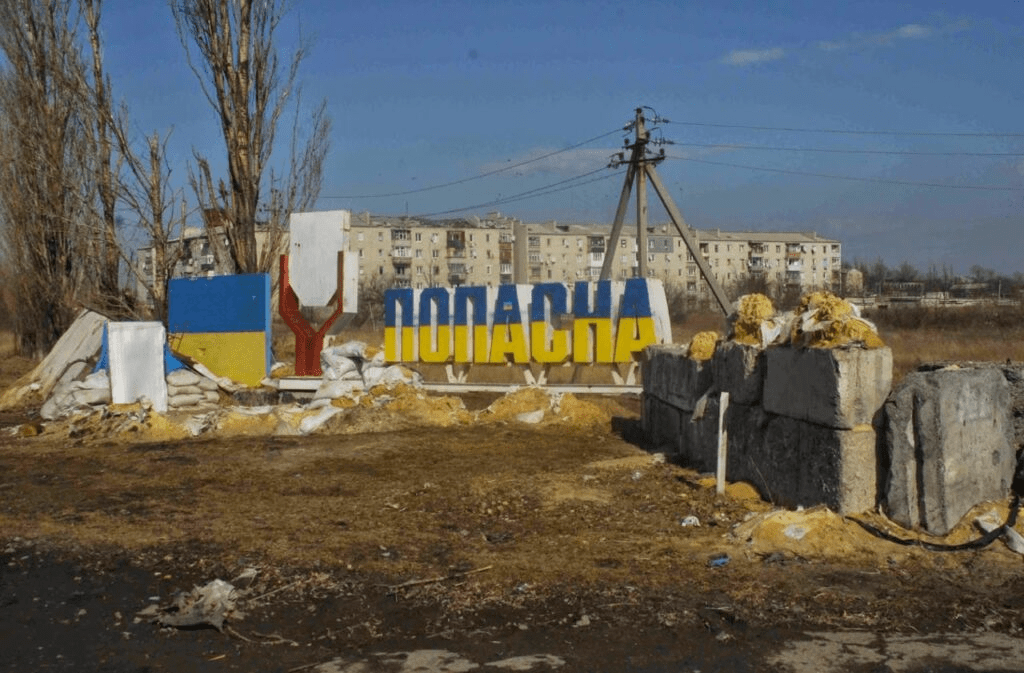
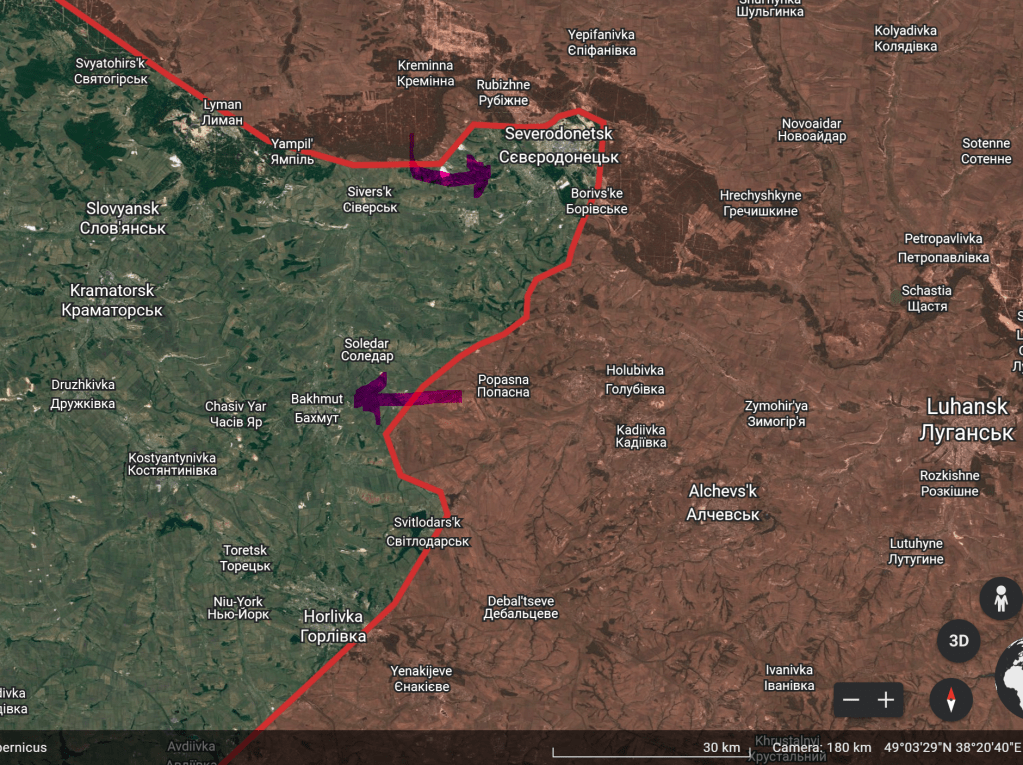

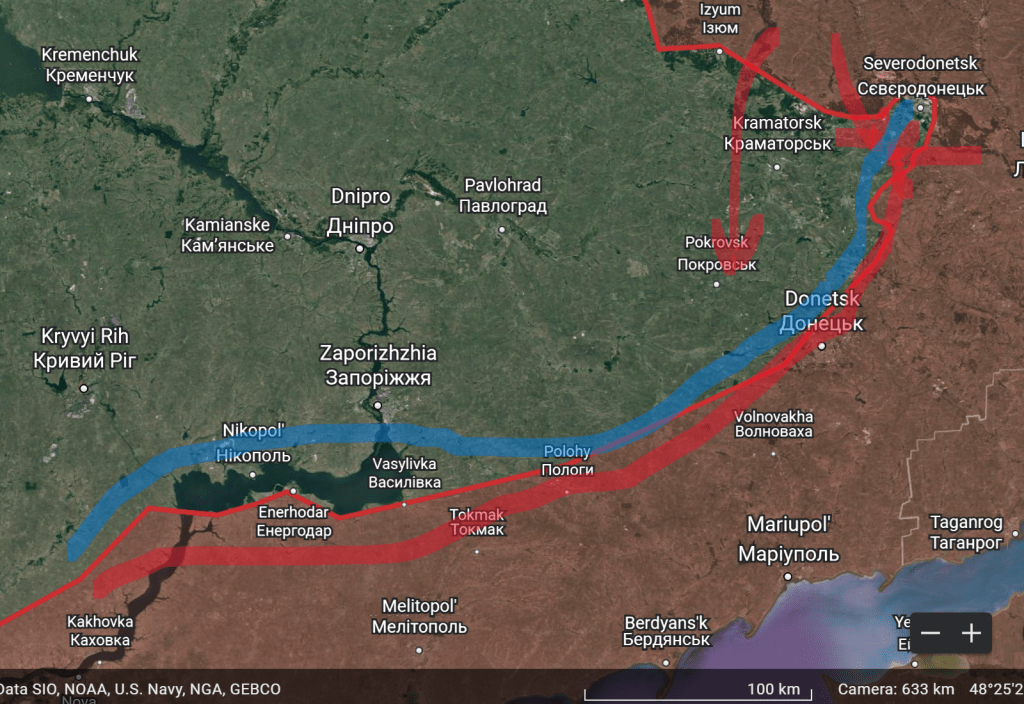

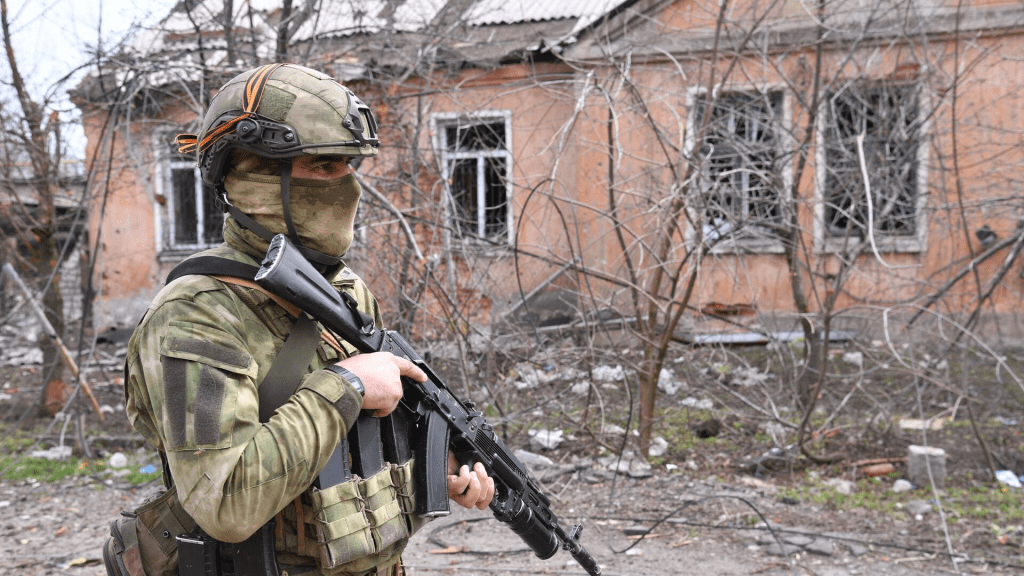
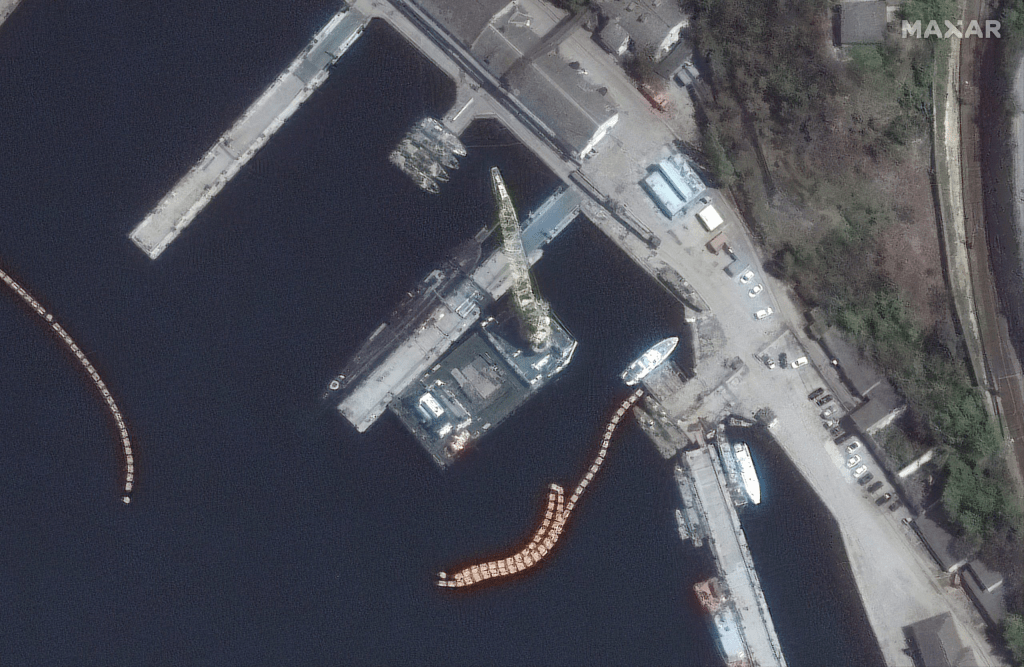

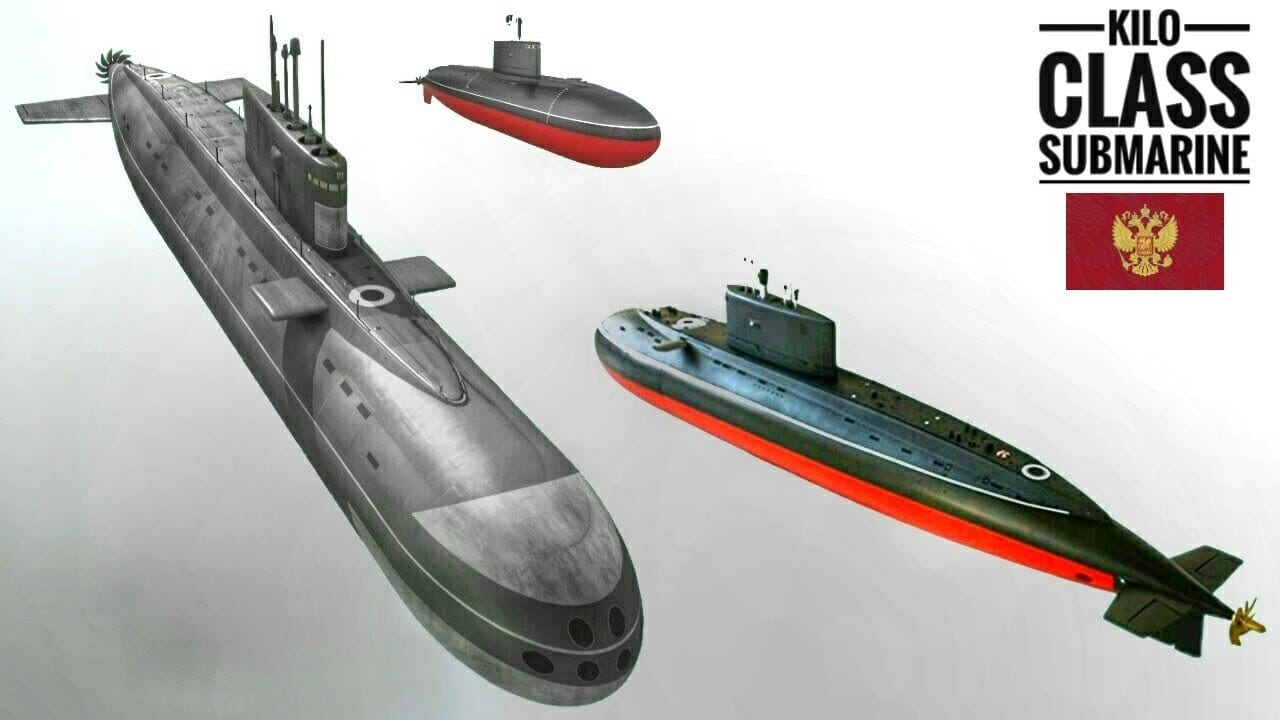
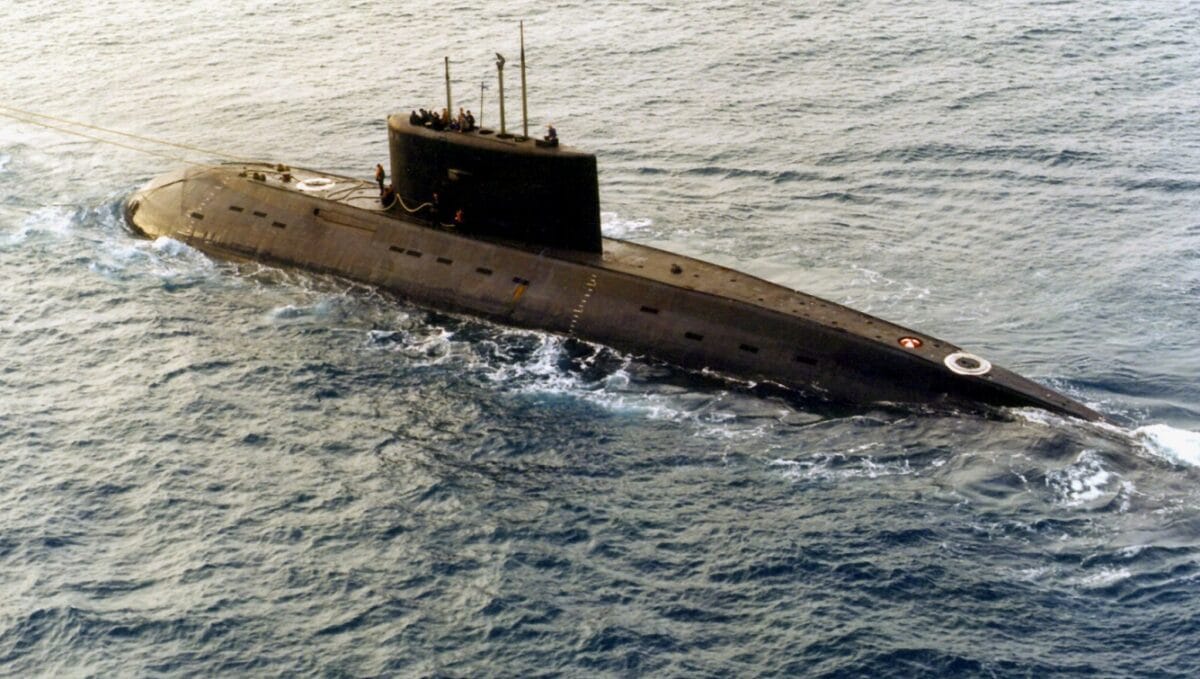
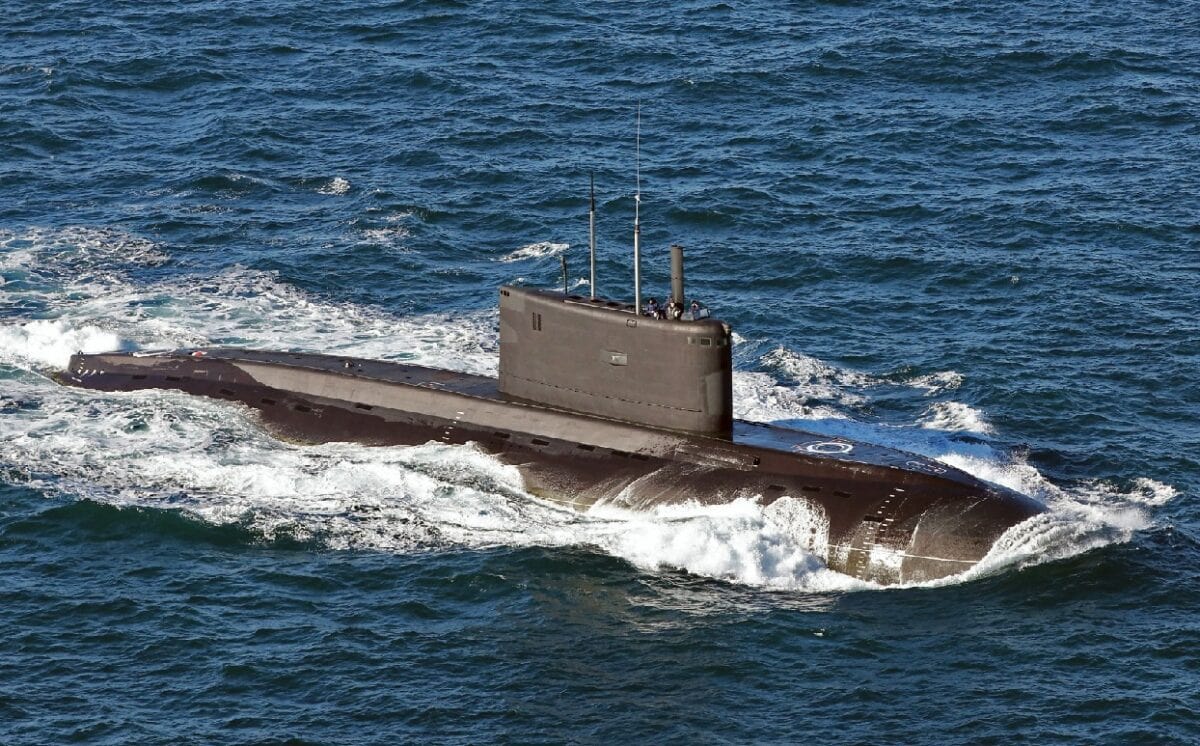
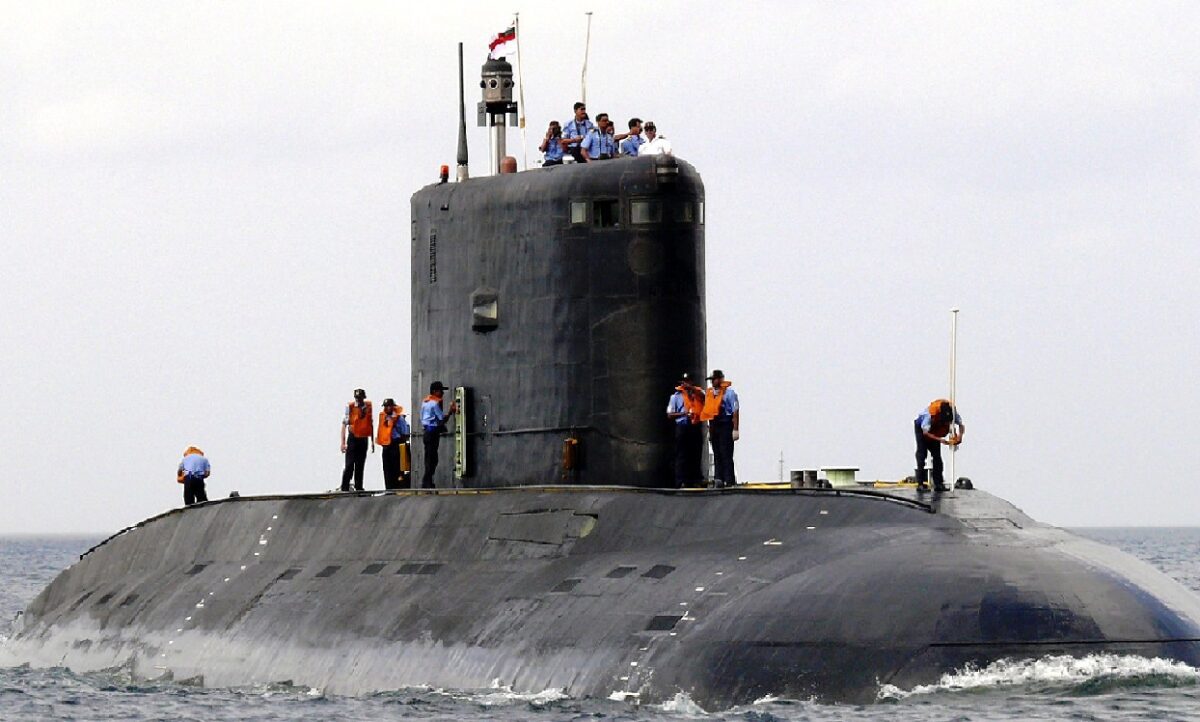

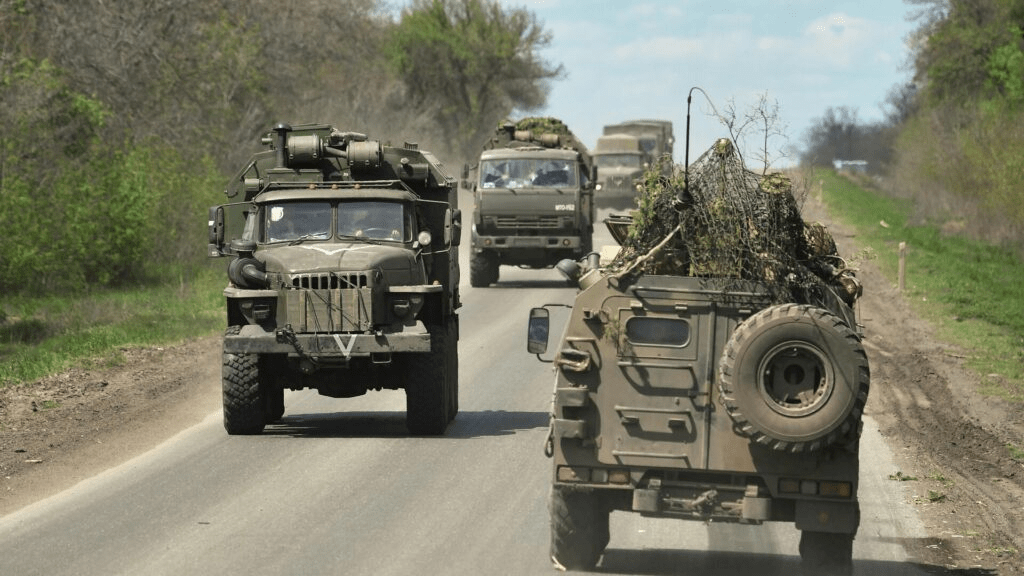
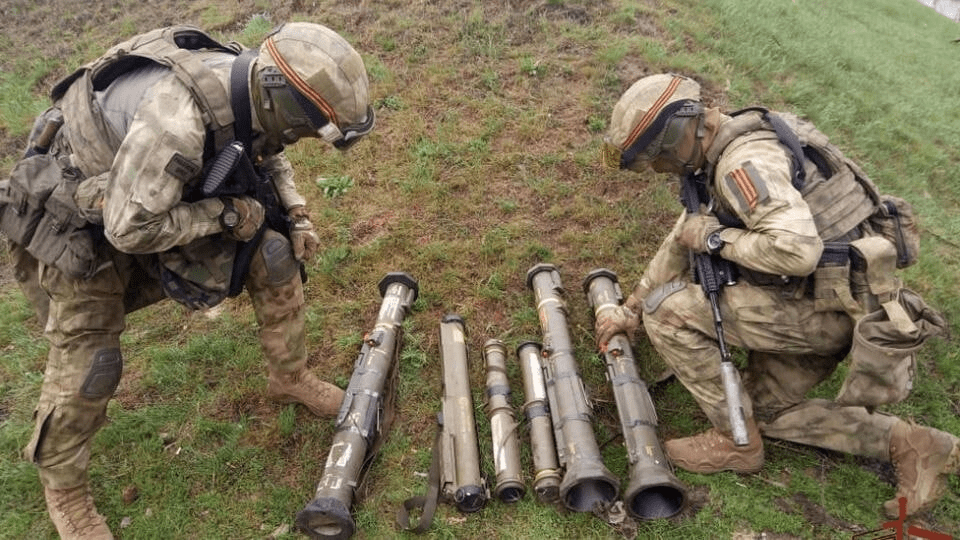
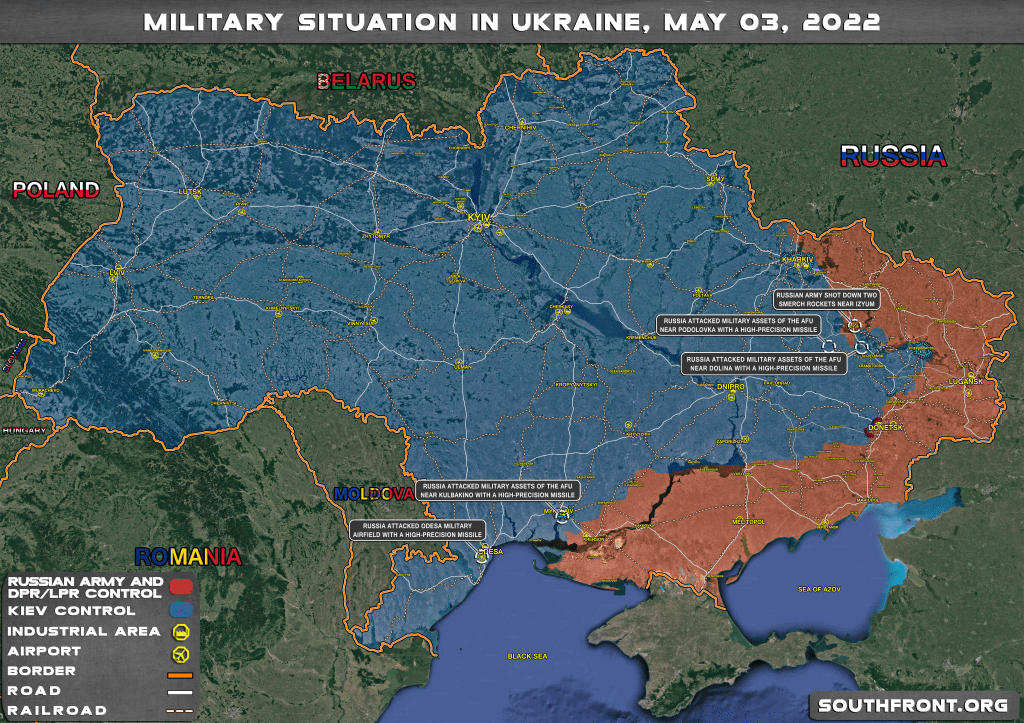
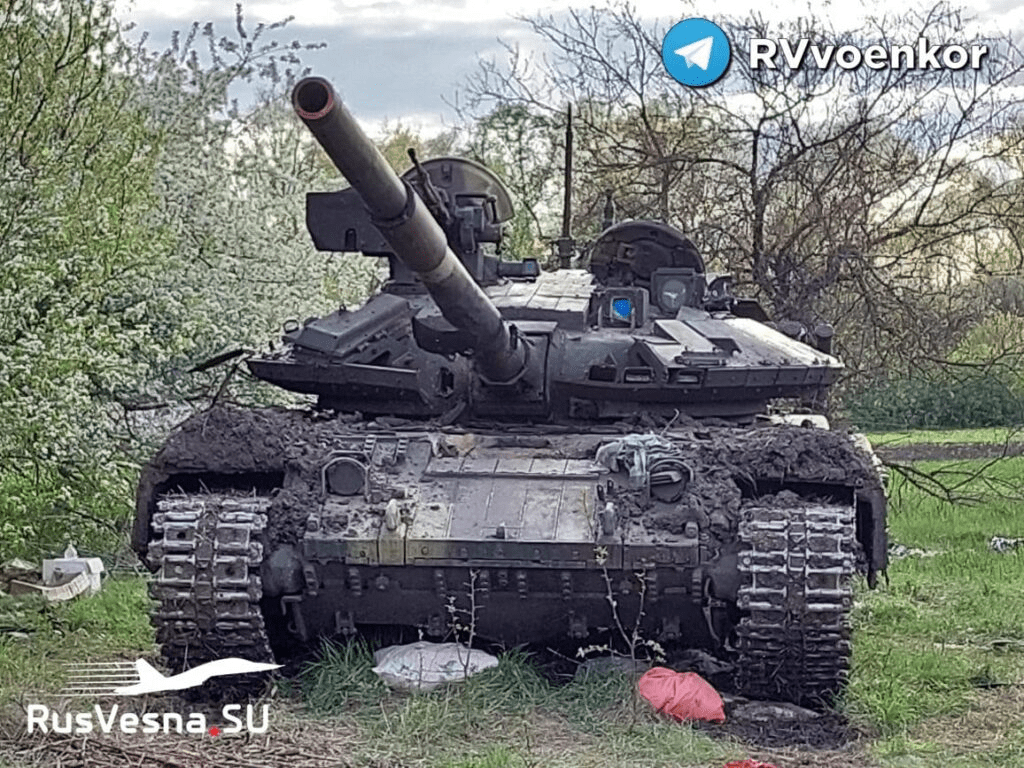

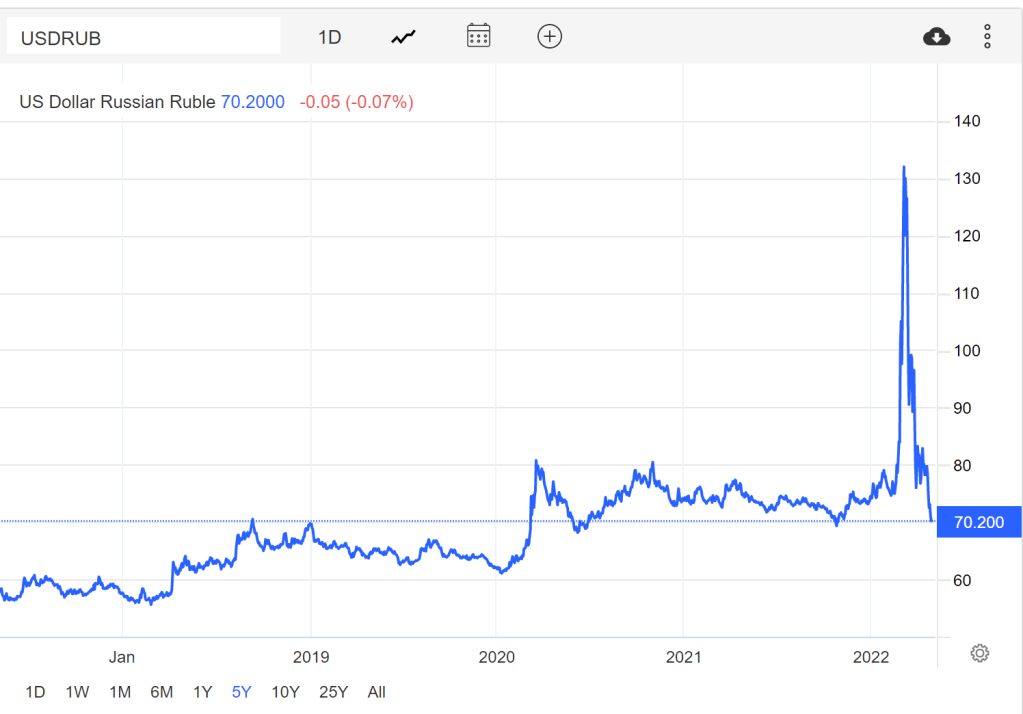
 Econophysics2020