Just Say No to Drugs
Well, they say he’s been into the blow.
Whatever – and this guy wanted to restore Ukraine as a nuclear power?
Russian Psyops and Their Point of View

We’ve seen fabricated atrocities such as in Bucha and the railway missile strike in Kramatorsk.
In the former case, bodies wearing white armbands (signaling “noncombatants”, but also signaling Russian) — not blue armbands (signaling Ukrainian backers) — appeared days after Russian troops departed and just after the usual second-line Ukrainian troops arrived and started “mopping up.”
We’ve seen locals interviewed telling different tales about what happened – not picked up in US media.
Similarly, with the railway station, the remains of a Ukrainian Tochka-U missile fell nearby – again, not explained by US media. We’ll leave it at that.
Our point is truth is always the first casualty of war.
And we’ve also seen the US government concede their involvement in propaganda and psyops. (see https://www.rt.com/russia/553428-spies-fake-news-ukraine-nbc/).
So here is a Russian video pitching their point of view internally – you don’t have to understand Russian to get the message they want to convey about what they achieved in Syria — or are capable of doing now:
Perhaps less theatric (and more to the point) are the press interviews.
Here’s Foreign Minister Lavrov explaining the Russion point of view:
Foreign Minister Sergey Lavrov’s interview with India Today television channel, Moscow, April 19, 2022
April 20, 2022
https://www.mid.ru/en/foreign_policy/news/1810023/
Question: The big question that most are asking is the reason for this operation, the reason for President Putin to take the country to war at a time when we have seen negotiations and talks taking place. What was the reason? We know that America said that Russia was going to carry out operations. New Delhi certainly was not aware of it. Many countries said that it is not something that is going to happen, but it did happen.
Sergey Lavrov: The real reason is the complacency of most countries of the world after the end of World War II, when our Western colleagues, led by the United States, declared themselves winners and in violation of the promises to the Soviet and Russian leadership started moving NATO eastward. They kept saying: “Don’t worry, this is a defensive alliance, it is not a threat to Russian security.” It was a defensive alliance when there were NATO and the Warsaw Treaty, and there was the Berlin Wall, as you remember, both physical and geopolitical. It was very clear what was the “line of defence” for this “defensive alliance.”
When the opponent disappeared, both the Warsaw Treaty disappeared and the Soviet Union disappeared, they decided that they will move the “line of defence eastward.” They did this five times without explaining against whom they are going to defend themselves, but in the process building up their advanced assault capacities and choosing the former Soviet republics, especially Ukraine, as the springboard against the Russian interests.
As early as 2003, for example, when they had a presidential election in Ukraine, the West was publicly and blatantly demanding Ukrainians: you must choose, are you with Russia or with Europe? Then, of course, they started pulling Ukraine into the European Union Association Agreement. The agreement provided for zero tariffs for Ukrainian goods in Europe, and European goods in Ukraine. We had a free trade area agreement with Ukraine in the context of the Commonwealth of Independent States. So, we told our Ukrainian neighbours: guys, we have zero tariffs with you, but we have protection with the European Union, because we negotiated WTO entry for 18 years. For some time, we did manage to protect some sectors of the Russian economy – agriculture, insurance, banking, and some others – with considerable tariffs. We told them: if you have zero [tariffs] with Europe and zero [tariffs] with us, we are not protected against European goods, which was part of the deal when we entered the WTO.
Then in 2013, when the Ukrainian President understood the problem, he asked the European Union to postpone the signature of the Association Agreement. We suggested that the three of us – Russia, Ukraine, and the EU – could sit together and discuss how to proceed. The European Union in a very arrogant way said that this is none of your business, we do not put our nose in your trade with China or other countries, so this is going to happen. Then the President of Ukraine decided to postpone this ceremony. The next morning, the demonstrators were on Maidan in Kiev.
In February 2014, the European Union helped negotiate a deal between the President and the opposition. Next morning, the signatures of the European Union representatives – France, Germany and Poland – were absolutely ignored by the opposition, who staged a coup and declared that they are creating a “government of the winners,” that they will cancel the special status of the Russian language. They threatened to throw ethnic Russians out of Crimea, they sent armed groups to storm the Crimean parliament. That is how the war started. The Crimeans said: “We don’t want to have anything [to do] with you, leave us alone.” As I said, there was a threat from armed groups. The eastern areas of Ukraine said: “Guys, we do not support your coup, leave us alone.” They never attacked the rest of Ukraine. The putschists attacked them, having called them terrorists. They called them terrorists for eight long years.
We managed to stop this bloodshed in February 2015 – the so-called Minsk Agreements were signed, providing Eastern Ukraine with some special status, language, the right to have some local police, special economic relations with the adjacent Russian regions. It was basically the same as [the agreement] the European Union negotiated for the north of Kosovo where Serbs live. In both cases, the European Union failed totally to deliver on what was guaranteed by the signatures of its members. For eight long years, the respective governments of Ukraine and Presidents of Ukraine were saying, blatantly and publicly, that they were not going to implement the Minsk agreements, that they will move to Plan B. They continued to shell the territories of these [self-] proclaimed republics during all these years. We warned the Europeans, the Americans, and Ukraine that they are ignoring something which was endorsed by the United Nations Security Council. To no avail.
People do not want to go back into this history because they prefer to take events on their immediate merit, but these particular events are rooted in the desire of the United States and what we call the collective West, to rule, to dominate the world and just show everybody that there would be no multipolarity. It would be only unipolarity.
And that they can declare Iraq, Syria, Libya, Yugoslavia, located tens of thousands of miles from the United States, threats to their security, and can do whatever they please there, levelling cities, like they did with Mosul in Iraq, and Raqqa in Syria. Russia has been warning all its colleagues that just on our borders you have been creating a springboard against us: you have been pumping arms into Ukraine, you have been totally ignoring the legislation of Ukraine, which prohibited, completely prohibited the Russian language, you have been encouraging neo-Nazi ideologies and practices. The neo-Nazi battalions were very much active against the territories which proclaimed themselves independent and who were promised special status. It’s inside Ukraine.
It was all linked with Ukraine becoming NATO’s springboard, and NATO expansion. They were saying that Ukraine will be in NATO. Nobody can stop Ukraine if it so wishes. Then President Zelensky said that he might think about coming back to possess nuclear weapons. In November last year, my President suggested to the United States and to NATO to sit down, to cool off, and to discuss how we can agree on security guarantees without NATO’s further eastward expansion. They refused. In the process, the Ukrainian army radically intensified the shelling of those republics in violation of all the ceasefire agreements. We didn’t have any other choice but to recognise them, to sign mutual assistance treaties with them, and, in response to their request, to send our troops as part of special operation to protect their lives.
Question: You provided the basics: the history, as well as the present context. But you also said, President Putin himself said, that this is not targeting civilians or the citizens, people of Ukraine. It is to do with the administration. We know that in international foreign policy parlance it is used quite often: not in my backyard. America says it all the time, and many other countries say it. But should an entire people, and entire population be punished for an administration wanting to carry out independent foreign policy?
Sergey Lavrov: I don’t think it’s about any independence. Since 2013, and maybe even earlier, hundreds and hundreds of US, UK, and other Western security and military experts have been openly sitting in the Ukrainian Ministry of Defence and the Ukrainian security apparatus. They basically were running the place.
As for the civilians, immediately when this special operation started in response to the request from Donetsk and Lugansk in full compliance with Article 51 of the United Nations Charter, when it was announced by President Putin, he said that the sole purpose of this operation is to demilitarise and denazify Ukrainians – these two problems of the country are intimately linked. We have been targeting only military infrastructure. Unfortunately, the Ukrainian army and the so-called nationalist battalions, which are using Nazi insignia, swastikas, which was borrowed from Indian history, but twisted the wrong way, and insignia of Waffen-SS battalions, these people were using and continue to use civilians as human shields. They were placing heavy weapons in the middle of towns and cities, next to schools, next to kindergartens, to hospitals. The internet is full of the testimonies of the people who were living in these places, and who were asking these people not to do this.
Unfortunately, nobody in the West actually pays attention to the facts, which we have been providing. Instead, they are staging some fake situations, like a couple of weeks ago with the place called Bucha. The Russian troops left on March 30, I think, and for three days the city was back in the hands of the Ukrainian administration. The mayor of Bucha Anatoly Fedoruk was publicly saying that the city is back to normal life. Only on the fourth day, they started showing images of dozens of corpses lying in the street, which was only a few days before shown as being back to normal. Then a few days later in the city of Kramatorsk, which was fully in the Ukrainian hands, they summoned people to the railway station, and attacked them with a Tochka-U missile. It was proven beyond any doubt that the missile was fired by the Ukrainian army. That’s why the next morning it was out of the news in the West because everybody understood the obvious nature of this provocation. Now, The New York Times says that they have the proof that cluster bombs were used by the Ukrainian army.
Speaking of civilians and the rules of international humanitarian law, I can once again assure you that our army operates against the military infrastructure and not against civilians.
Transcript to be completed
Lastly, this is Oleksiy Arestovich, a special advisor to the Office of the President of Ukraine, and unofficially, the Ukraine’s de facto “propaganda minister”, who has been quoted and cited by CNN, Reuters, and many, many other media.
We’re not kidding. We’re serious.
There are some other photos and videos of this guy out there that we’ve seen and we simply cannot publish here.
Interestingly, his acting career is not mentioned on his English-language Wikipedia page. You can check it out.

And, of course, the usual:

Battle of Donbass

Russian forces are beginning to move south out of Izium.
These forces are driving into the rear of the Ukrainian forces frozen in the Caludron to the east.
One thrust appears down the M-03 towards Sloyna and on to the key crossroads in Sloviansk.
Larry Johnson posted the following video from Popasnaya. Note the tanks are in the open, fixed position, engaging Ukrainian units without artillery counterbattery fire or helicopter gunship response. Given the trajectory, this appears to be firing on fixed infantry positions.
In other words, a last stand.
In addition to the M-03 thrust, a second armored move is to the southwest – likely for flank security – towards Barvinkove.
Watch the south front. The 60th Separate Motorized Rifle Brigade seems positioned to drive up into Kostiantynivka, closing the pincer.
Meanwhile, Russian air units are picking up the tempo to hold the Ukrainians in place. With resupplies essentially cut off, food, ammo and fuel must be dwindling.
A rough calculation suggests the pincers will complete their closure within 3-7 days.
As for the nearly wiped out Ukrainian Air Force, here we see another go down. This is an SU-25 unsuccessful trying to evade an incoming Russian missile.
The infrared imagery begins with the Su-25 picking up an incoming missle on its tail and firing hot flares as decoys. The missile ignores the decoys and tracks true to the target. Near the end, the Su-25 dives for the deck as the missile closes on the engine exhaust.
The jet was shot down on 15th of April by Russian Air Defense units.
To the west, Russian aerospace forces are interdicting resupply with missile strikes into Lvov on Ukraine’s western border with Poland
In the video below, we see 3 high-precision missile strikes at the 124th Joint Logistics Support Center of the Logistics Command of the Armed Forces of Ukraine near Lviv.
The logistics center and the large consignments of foreign weapons that were delivered to Ukraine over the past 6 days from the United States and European countries were destroyed.
Finally on the southern coast of Ukraine:
- Mariupol is under the control of Russia, only a small element of the AZOV battalion is holed up in the Avostol steel plant with their backs to the sea.
- The Russians have secured Berdyansk, which is 60 miles west of Mariupol.
- There are explosions in Kherson, which is 220 miles west of Berdyansk.
- The night sky over Nikolaev (aka Mykolaiv) is on fire with a barrage of airborne explosives. From Nikolaev it is only 80 miles to Odesa.
At present, Russia is controlling the southern coast of Ukraine with a combination of naval and ground forces. Once Odesa falls (and it will fall), Russia will have completely cut off Ukraine from its southern ports. (There is no commercial activity now because it is a war zone.)
For the lucky ones, here is how it ended in Mariupol – cut off, out of food, out of ammo.
This guy was a Marine with the 501st Marine Brigade – not an Azov psychopath.
Scenes of coming attractions in the next few weeks from Donbass.
Graham Phillips (Brit Journalist) Interviews Captured Brit Mercenary Aiden Aslin
Note:
- Aslin is being held in Donetsk by DPR forces
- Philips is an independent journalist. Here is his Wiki page:
Years up to 2022
In 2012, Phillips worked in Kyiv as a journalist for What’s On magazine.
Phillips started covering the Russo-Ukrainian War in 2014, leading to a ban from Ukraine the same year for “supporting terrorism” as a “Kremlin propagandist“. In late 2014, Phillips was wounded by shrapnel while filming reportage on the frontlines by Donetsk.
In 2016, he was detained in Riga, Latvia for disrupting the Remembrance Day of the Latvian Legionnaires events, after which he was deported to Russia and blacklisted for three years. Phillips also reported extensively on the Brexit referendum in the UK, and openly declared himself a Brexit supporter.
In 2018, Phillips released a film, Brit in Crimea, where he took Scottish businesman Les Scott on holiday to Crimea, which was annexed by Russia in 2014. In 2018, Phillips further covered the World Cup 2018 from Russia as a fan of the England national team.
Phillips sparked outrage in Kosovo in 2019 when he called Ramush Haradinaj, Hashim Thaçi, and other Kosovar leaders “war criminals and terrorists”.
In 2021, Phillips released a new documentary about the sinking of the MS Estonia.
2022
Despite receiving a lifetime ban in 2014, Phillips returned to report from Ukraine in 2022, in the context of the Russian invasion of Ukraine.
On April 5th of 2022, Phillips uploaded a video to his YouTube channel, casting doubt that the Bucha massacre was committed by Russian forces in Ukraine.
Journalistic position
Phillips has been described as ‘pro-Russia’, and ‘pro-Kremlin’, but he maintains his reporting is “independent.”[3]
NATO Involved in Moskva Attack
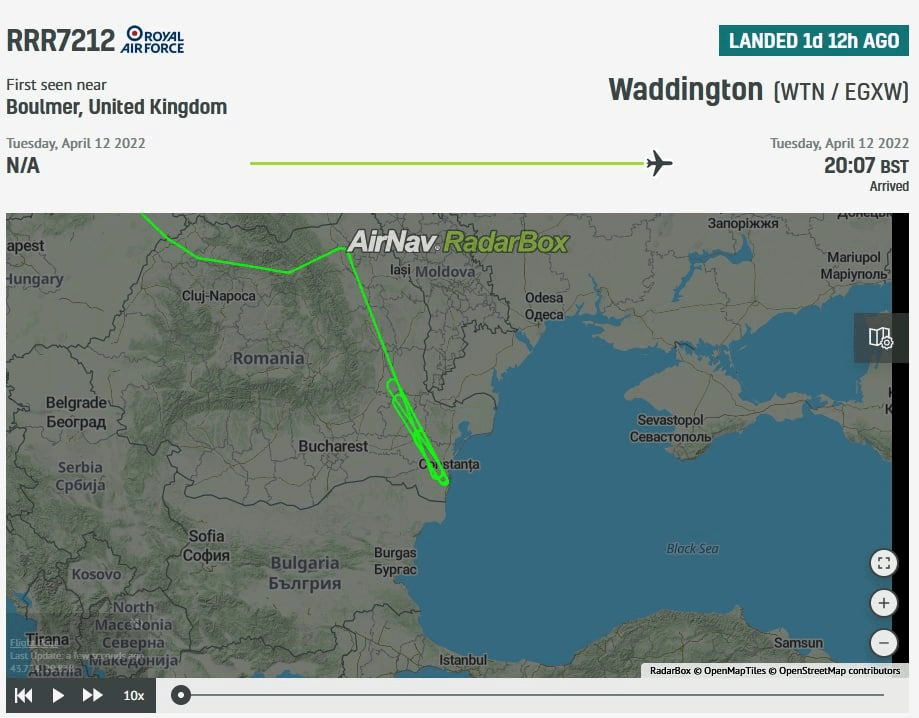
Per Southfront.org
Movement of a British reconnaissance plane through Romanian territory. It is likely that the transponders were turned off before flying into the Black Sea.
The operation was conducted in full cooperation between the Navy and NATO forces.
According to air monitoring data of April 12, a British reconnaissance aircraft RC-135 was actively working in the Black Sea area and UAV RQ-4 Global Hawk flights were recorded at different times. On that day, Alliance reconnaissance confirmed the presence of the Moskva, checked signatures and received comprehensive data on the location of other Russian Black Sea Fleet ships.
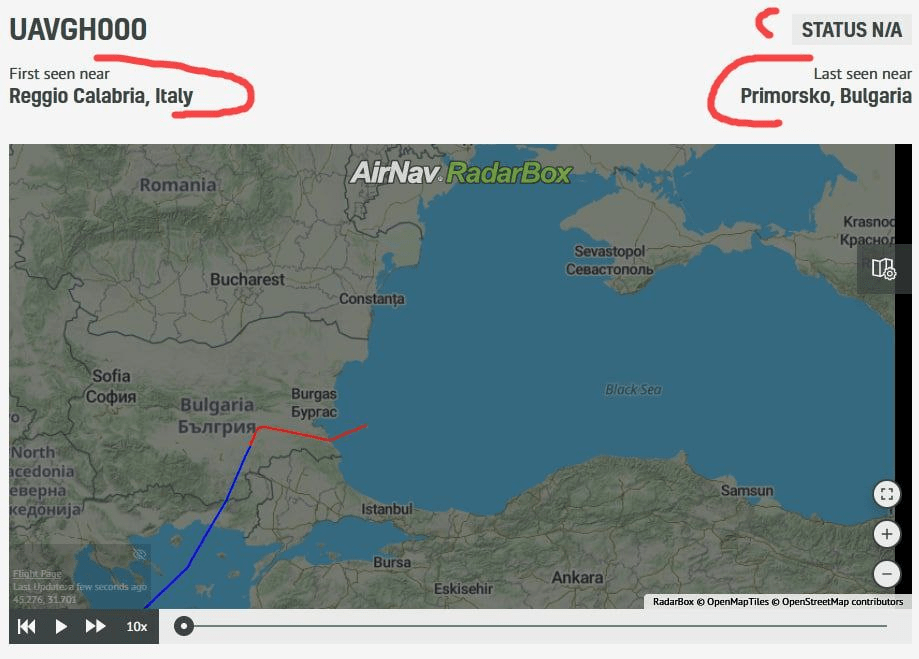
The flight of American reconnaissance aircraft in the Black Sea.
The flight data of the U.S. RC-135 and RQ-4 planes became unavailable. The reason was that the aerial reconnaissance aircraft flew with their transponders turned off, and civilian airspace monitoring equipment could not detect them, which is more than a clear sign of a military reconnaissance mission.
The missile strike on the aged cruiser was carried out using the Neptune missile system, a modern missile system made with military microelectronics manufactured in Western Europe. Thus, it was able to receive external target designation from NATO reconnaissance aircraft. According to a number of reports, the attack on the cruiser also involved Bayraktar UAVs, which served for distraction of the Russian Navy.
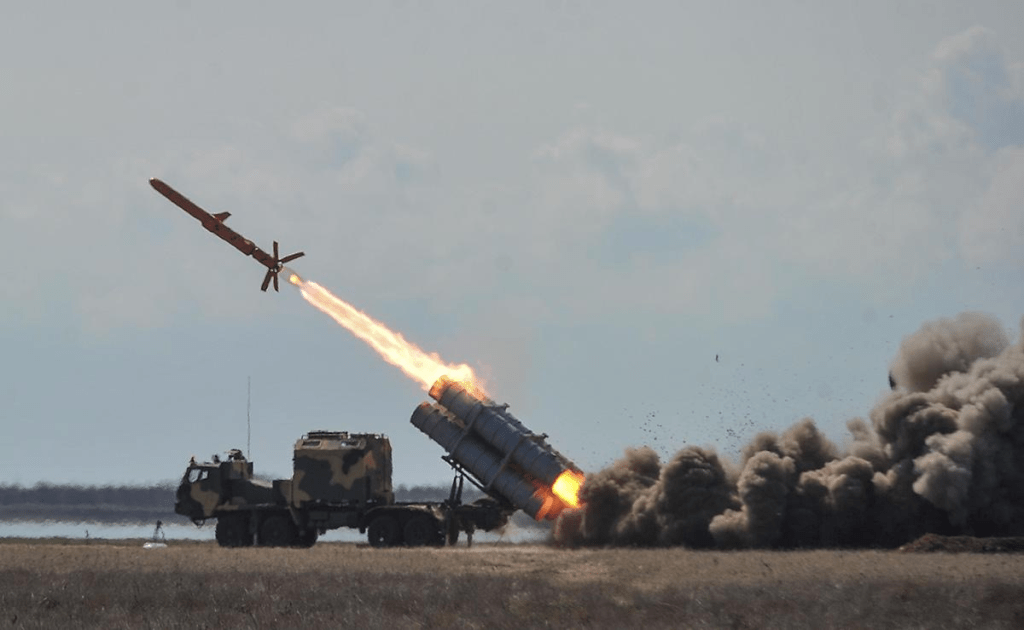
The cruiser itself was in poor technical condition. Previously, the cruiser had been unable to undergo repairs and maintenance for several years, and the Defense Ministry had refused to upgrade it. That’s why, even the Moscow’s ability to repel missile attacks is questioned.
Old ship, poor damage control = fragility.
What conclusions and predictions can be made at this time:
1. The naval blockade of Ukrainian ports is threatened. The Black Sea Fleet, due to its small number, cannot continue to lose surface ships. Russia has to look for other means to keep the coast and Ukrainian ports under control.
2. The attacks on the Russian Black Sea Fleet will continue, including with the NSM SCARs, the range of which is up to 300 km and allows the UAF to destroy Russian warships almost in the whole water area of the Black Sea, including the coast of Crimea. The Black Sea Fleet will be gradually pushed out of the waters of the Black Sea to the coast of the peninsula.
3. The main direction of the AFU offensive becomes the South of Ukraine, the Kherson and Mykolaiv regions. Britain has repeatedly made it clear that Ukraine’s Black Sea ports, primarily Odessa, are of strategic importance.
Likely Russian response – heavy bombers with fighter escorts and ECM jamming equipment to neutralize NATO ECM controllers over Romania and the Black Sea.
That also means modifying and accelerating the South Front’s schedule for moving on Odessa.
And so a day later, we are already seeing the escalation with the deployment of Russian air force Tu-22M bombers flew into Ukrainian air space on Thursday and dropped unguided bombs on Ukrainian troops in the besieged city of Mariupol, on the Sea of Azov coast.
Reportedly they had their effect – the Illich plant has fallen leaving just Azovstal.
The Russian Ministry of Defence confirmed that Russian and DPR troops took control over the Illich Iron and Steel Plant in the city of Mariupol.
“The grouping of Russian troops and units of the Donetsk people’s militia have completely liberated Illich Steelworks from Ukrainian nationalists as a result of offensive in Mariupol city.” – the report reads.
But the broader message has also been heard in Russia.
Here is Russian State Television on escalation:
Carpet bombing the Azov militant holdouts in the Azovstal.
And, a day later, here we see Russian Tu-160 heavy bomber with a Khibiny (L-175V) ECM aircraft and fighter escorts (appear to be Su-57s) flying over Vyazma, Russia (~100 miles to Kiev)
Deja Vu
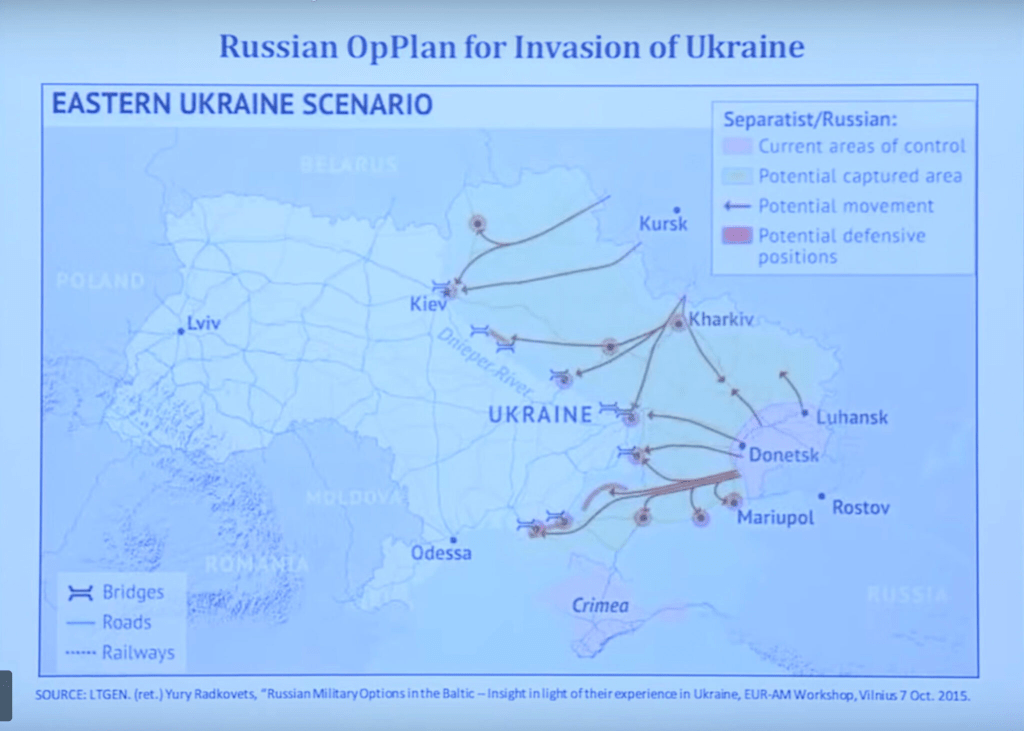
Note the date – 2015.
Here is Larry Johnson explaining the hard realities of the Ukraine Campaign: https://sonar21.com/at-least-one-american-briefing-west-point-cadets-understands-russia/
AT LEAST ONE AMERICAN BRIEFING WEST POINT CADETS UNDERSTANDS RUSSIA
13 April 2022 by Larry Johnson
I stumbled across a video of Dr. Philip Karber, a former U.S. Marine and founder of the Potomac Foundation, briefing West Point cadets in April 2018 on the war in the Donbas and Russian capabilities. It is remarkable and worth your time because it lays out in stark terms the delusion of the American military and the harsh reality of Russian military capabilities.
Andrei Raevsky (aka The Saker) provides a helpful summary of Karber’s key points:
- Russia has the most advanced and dense, data-linked air defense on earth.
- In a war against Russia, U.S. army cannot expect much air assistance for at least the first several weeks. Even stealth aircraft will not be of much use because of the distance they must fly in order to reach targets in Ukraine and/or Russia.
- Russian EW (electronic warfare) is much more advanced and more ‘combat-ized’ than in the U.S. RF utilizes it in combat squads whereas U.S. barely has any and only at the divisional level
- Russian EW shuts down all communications in huge areas along the front, no cellphones, military radios etc. They break GPS links with drones, making them useless and can even fry the fuses on artillery shells midflight.
- U.S. army produces 10x the frequency emissions of a Ukrainian brigade, which would make it extremely visible to all sorts of Russian EW, drones, advanced weapons.
- Russia has far more artillery than U.S. and far greater variety of munition types.
Remember, these are the items Karber identifies as key. This is not Raevsky’s opinion. The video is unnerving in part because it is four years old yet predicts the kind of war Russia is now waging inside Ukraine.
Go to the 17:40 mark in the video and listen as Karber describes the Russian Operations Plan for Invading Ukraine. Even though this video is four years old it is still relevant. More so than ever. Here is the map of the proposed 2014 Russian invasion plan. Look familiar?

Important to note that Russia made some significant alterations to this plan. Their axis of attack from the north through Chernobyl was not on the 2014 plan.
Karber’s two most salient conclusions from his briefing should scare the hell out of U.S. military commanders.
First, from the last year of WW II until now the US has always fought with air superiority and never faced a comparable air force. Russia changes that calculus. Not only does it have a robust combat air capability that rivals anything the United States or NATO can put in the air, the Russians have the largest interconnected air defense system in the world. Five systems that are all data linked according to Karber. And this was the status quo from four years ago. Russian has made additional significant technological gains on this front.
One of the most important developments is Russia’s dramatic expanded use of drones/UAVs. Russian tanks have capability to operate a UAV from the tank to obtain intelligence and launch an aerial attack.
The second, and far more concerning Russian advantage is its formidable Electronic Warfare capabiltiy–i.e., they can listen, jam communications and hit targets emitting an electronic signature. The US Army, by contrast, does not have a competent, organized EW capability. Compounding the threat is the U.S. Army’s over reliance on computer systems to gather and disseminate intelligence and other essential military communications. This means that U.S. command posts and units will be easier to target and destroy.
Another ominous observation from Karber concerns use of thermobaric weapons. Karber describes them as “Napalm on steroids.” The Ukrainian soldiers dug in at fortified positions are discovering this horror first hand. These bombs give Russia the ability to devastate company and brigade sized units. It eliminates Russia’s need to send troops against a fortification and risk incurring thousands of casualties.
The war in the Donbas has been going on for eight years. Until now, Russia did not fully engage its full military capabilities. Whatever success Ukraine enjoyed prior to the launch of the special military operation is now a distant memory. If Dr. Karber is to be believed, the Ukrainian Army posed a more serious threat than any army that NATO could field. In other words, the last six weeks represent a proxy war between Russia and NATO and NATO is losing.
Countdown to the Cauldron
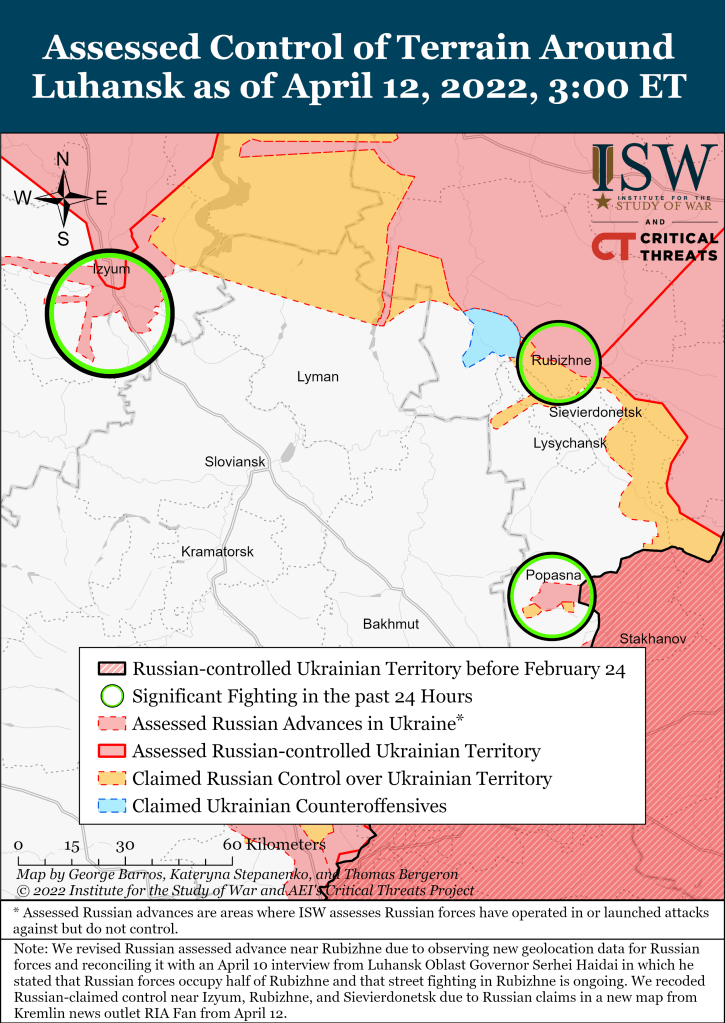
Several developments suggest it’s but a few days before the 1st Guards Tank Army drives down M-03 towards Sloviansk:
- Buildup of air transport for the 76th Guards Air Assault Division — likely to be deployed in a blocking position behind Ukrainian forces ahead of the armored attack
- Continued concentration of forces among the 35th and 41st Combined Arms Armies in Belgorod and Voronezh Oblasts.
- Increased probes south of Siverskyi Donets
Meanwhile, Ukrainian casualties continued to mount as Russian rocket attacks hit Ukrainian supply and reinforcement staging areas in Dnipro and Nikolayev killing over 1000.
Meanwhile in Mariupol, an escape breakout involving some 50 civilian vehicles, marked with a Russian “Z”, failed.
Here is @Wargonzo – a pro-Russian source.
On a breakthrough from Mariupol. There are many rumors and discrepancies. Here’s what the @wargonzo project knows, I’m breaking it down into numbers and numbers.
At the time of the breakthrough, there were about 1,500 neo-Nazis (Azov militants and AFU fighters) at the Ilyich plant.
Of these, about 800 were going to go for a breakthrough in the first column, the rest had to go out along the corridor cut by them.
The column consisted of about 120 pieces of equipment, including automobiles. At the head was a tank, 2 Gvozdika self-propelled guns and up to 10 infantry fighting vehicles, as well as MTLBs, armored cars and trucks.
More than 100 Ukrainian marines surrendered. Including the political officer of the 36th Marine Brigade of the Armed Forces of Ukraine.
More than half of those who were going to break through retreated back to the plant. Several dozen were destroyed by artillery strikes of the NM DPR. Up to 10 groups of 3-4 people were scattered and tried to seep through the environment. The search and elimination operation continues.
Hence the data on the second smaller breakthrough. We are talking about these wandering groups, which the special forces and fighters at posts enter into battle with if they are detected. Hence, a more thorough check of the car on the Volnovakha-Mariupol highway.
So no panic.”
Pardon the soundtrack on this first one. We try to avoid presenting highly sensitive images but the first one might fall in that category. Viewer discretion advised.
Otherwise, we can see prisoner round-ups thereafter and pressed attacks inside the factory.
This is a radio jamming platoon (or what’s left of a radio jamming company, it’s not clear) that had been part of or attached to the 36th Separate Marine Infantry Brigade.
One of Russia’s leading war correspondents, who asks them about their situation before the breakout, how the breakout went, what treatment the wounded received from Russian or Donetsk medics, etc.
The bearded man at around 0:52 claims to be a zampolit a.k.a. a commissar or political officer, although he claims not to have been trained as such—i.e. he was only “acting” in that role.
The Russian journalist (who mentions he did receive such training, way back) is surprised to discover that such a function still exists.
Here is a Patrick Lancaster video near the seaport, speaking with civilians caught in the middle:
Drone footage of Russian tanks clearing sniper positions
On the ground
Finally, Russian/DPR special operators clearing Azov factory tunnels
Reportedly, NATO instructors and contractors (perhaps including a couple of retired senior American officers) are trapped in Mariupol and Azov Steel Factory.
According to the @wargonzo project from sources on the Donbas frontline, based on an analysis of radio intercepts of enemy communications, there are at least two high-ranking retired American officers in the air raid shelters at Azov-Stal.
According to our sources, they entered Mariupol together with PMC “Academy” and most likely are not active employees of the Pentagon. However, at the same time they are extremely important persons for Washington.
“These officers are aware of many covert US operations in third countries and are the bearer of information that is extremely sensitive to Washington,” a source familiar with the analysis of radio intercepts told the @wargonzo project.
It is also noted that in order to conceal this “sensitive information”, the American intelligence services are ready to order the Azov militants to eliminate these two officers. Whether they are alive at the moment is not yet known for sure.”
So they say.
“PMC Academy” is actually “Academi” formerly known as Blackwater. If you don’t recognize that word from the Iraq War, check them out.
Some links:
Here is Wikipedia: https://en.wikipedia.org/wiki/Blackwater_(company)
There’s a War Going on for Your Mind
Americans Are “In Charge” of the War Says French Journalist Who Returned From Ukraine
“I found myself facing the Pentagon.”

Published 15 hours ago on 12 April, 2022

Anadolu Agency via Getty Images
A French journalist who returned from Ukraine after arriving with volunteer fighters told broadcaster CNews that Americans are directly “in charge” of the war on the ground.
The assertion was made by Le Figaro senior international correspondent Georges Malbrunot.
Malbrunot said he had accompanied French volunteer fighters, two of whom had previously fought against ISIS.
“I had the surprise, and so did they, to discover that to be able to enter the Ukrainian army, well it’s the Americans who are in charge,” said Malbrunot.
Adding that he and the volunteers “almost got arrested” by the Americans, who asserted they were in charge, the journalist then revealed that they were forced to sign a contract “until the end of the war.”
“And who is in charge? It’s the Americans, I saw it with my own eyes,” said Malbrunot, adding, “I thought I was with the international brigades, and I found myself facing the Pentagon.”
Malbrunot also mentioned America providing Ukraine with switchblade suicide drones, something highlighted by Defense Secretary Lloyd Austin in a tweet that revealed Ukrainian soldiers were being trained to use the devices in Biloxi, Mississippi.
Citing a French intelligence source, Malbrunot also tweeted that British SAS units “have been present in Ukraine since the beginning of the war, as did the American Deltas.”
Russia is apparently well aware of the “secret war” being waged in Ukraine by foreign commandos who have been in the region since February.

Both the United States and the UK have publicly asserted that there won’t be “boots on the ground” in Ukraine, but apparently there has been a US-UK military presence since the start of the war.
“Polls showed in the run up to the war the overwhelming majority of Americans wanted our government to stay out of it but our leaders know best and are more than happy to risk World War III in defense of Ukraine’s puppet regime,” writes Chris Menahan.
Truth and Censorship: Greenwald on the Ukraine Proxy War

Greenwald: https://greenwald.substack.com/p/western-dissent-from-usnato-policy?s=r
Western Dissent from US/NATO Policy on Ukraine is Small, Yet the Censorship Campaign is Extreme
Preventing populations from asking who benefits from a protracted proxy war, and who pays the price, is paramount. A closed propaganda system achieves that.

If one wishes to be exposed to news, information or perspective that contravenes the prevailing US/NATO view on the war in Ukraine, a rigorous search is required. And there is no guarantee that search will succeed. That is because the state/corporate censorship regime that has been imposed in the West with regard to this war is stunningly aggressive, rapid and comprehensive.
On a virtually daily basis, any off-key news agency, independent platform or individual citizen is liable to be banished from the internet. In early March, barely a week after Russia’s invasion of Ukraine, the twenty-seven nation European Union — citing “disinformation” and “public order and security” — officially banned the Russian state-news outlets RT and Sputnik from being heard anywhere in Europe. In what Reuters called “an unprecedented move,” all television and online platforms were barred by force of law from airing content from those two outlets. Even prior to that censorship order from the state, Facebook and Google were already banning those outlets, and Twitter immediately announced they would as well, in compliance with the new EU law.
But what was “unprecedented” just six weeks ago has now become commonplace, even normalized. Any platform devoted to offering inconvenient-to-NATO news or alternative perspectives is guaranteed a very short lifespan. Less than two weeks after the EU’s decree, Google announced that it was voluntarily banning all Russian-affiliated media worldwide, meaning Americans and all other non-Europeans were now blocked from viewing those channels on YouTube if they wished to. As so often happens with Big Tech censorship, much of the pressure on Google to more aggressively censor content about the war in Ukraine came from its own workforce: “Workers across Google had been urging YouTube to take additional punitive measures against Russian channels.”
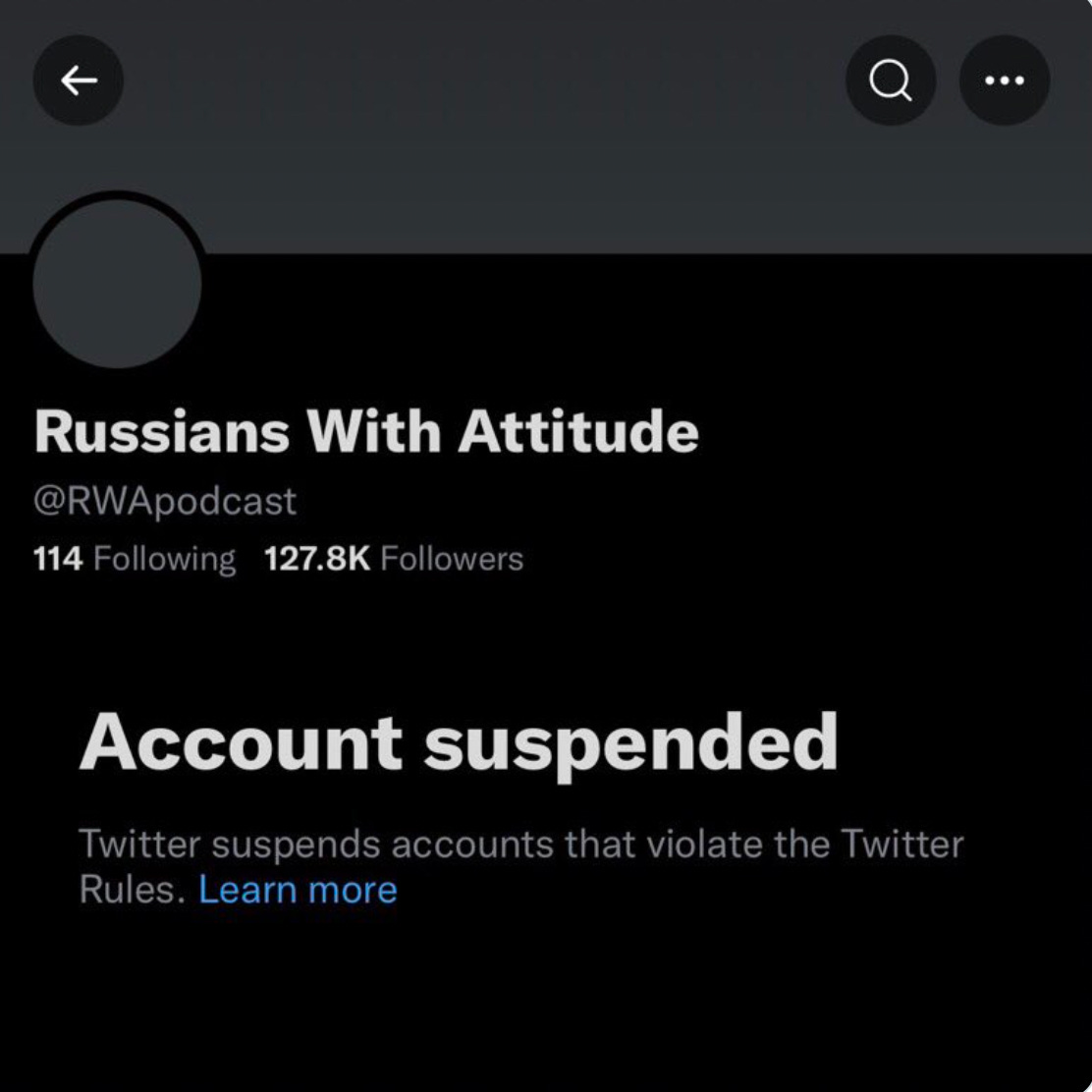
So prolific and fast-moving is this censorship regime that it is virtually impossible to count how many platforms, agencies and individuals have been banished for the crime of expressing views deemed “pro-Russian.” On Tuesday, Twitter, with no explanation as usual, suddenly banned one of the most informative, reliable and careful dissident accounts, named “Russians With Attitude.” Created in late 2020 by two English-speaking Russians, the account exploded in popularity since the start of the war, from roughly 20,000 followers before the invasion to more than 125,000 followers at the time Twitter banned it. An accompanying podcast with the same name also exploded in popularity and, at least as of now, can still be heard on Patreon.
What makes this outburst of Western censorship so notable — and what is at least partially driving it — is that there is a clear, demonstrable hunger in the West for news and information that is banished by Western news sources, ones which loyally and unquestioningly mimic claims from the U.S. government, NATO, and Ukrainian officials.
As The Washington Post acknowledged when reporting Big Tech’s “unprecedented” banning of RT, Sputnik and other Russian sources of news: “In the first four days of Russia’s invasion of Ukraine, viewership of more than a dozen Russian state-backed propaganda channels on YouTube spiked to unusually high levels.”
Note that this censorship regime is completely one-sided and, as usual, entirely aligned with U.S. foreign policy. Western news outlets and social media platforms have been flooded with pro-Ukrainian propaganda and outright lies from the start of the war. A New York Times article from early March put it very delicately in its headline: “Fact and Mythmaking Blend in Ukraine’s Information War.” Axios was similarly understated in recognizing this fact: “Ukraine misinformation is spreading — and not just from Russia.” Members of the U.S. Congress have gleefully spread fabrications that went viral to millions of people, with no action from censorship-happy Silicon Valley corporations. That is not a surprise: all participants in war use disinformation and propaganda to manipulate public opinion in their favor, and that certainly includes all direct and proxy-war belligerents in the war in Ukraine.
Yet there is little to no censorship — either by Western states or by Silicon Valley monopolies — of pro-Ukrainian disinformation, propaganda and lies. The censorship goes only in one direction: to silence any voices deemed “pro-Russian,” regardless of whether they spread disinformation. The “Russians With Attitude” Twitter account became popular in part because they sometimes criticized Russia, in part because they were more careful with facts and viral claims that most U.S. corporate media outlets, and in part because there is such a paucity of outlets that are willing to offer any information that undercuts what the U.S. Government and NATO want you to believe about the war.
Their crime, like the crime of so many other banished accounts, was not disinformation but skepticism about the US/NATO propaganda campaign. Put another way, it is not “disinformation” but rather viewpoint-error that is targeted for silencing. One can spread as many lies and as much disinformation as one wants provided that it is designed to advance the NATO agenda in Ukraine (just as one is free to spread disinformation provided that its purpose is to strengthen the Democratic Party, which wields its majoritarian power in Washington to demand greater censorship and commands the support of most of Silicon Valley). But what one cannot do is question the NATO/Ukrainian propaganda framework without running a very substantial risk of banishment.
It is unsurprising that Silicon Valley monopolies exercise their censorship power in full alignment with the foreign policy interests of the U.S. Government. Many of the key tech monopolies — such as Google and Amazon — routinely seek and obtain highly lucrative contracts with the U.S. security state, including both the CIA and NSA. Their top executives enjoy very close relationships with top Democratic Party officials. And Congressional Democrats have repeatedly hauled tech executives before their various Committees to explicitly threaten them with legal and regulatory reprisals if they do not censor more in accordance with the policy goals and political interests of that party.
But one question lingers: why is there so much urgency about silencing the small pockets of dissenting voices about the war in Ukraine? This war has united the establishment wings of both parties and virtually the entire corporate media with a lockstep consensus not seen since the days and weeks after the 9/11 attack. One can count on both hands the number of prominent political and media figures who have been willing to dissent even minimally from that bipartisan Washington consensus — dissent that instantly provokes vilification in the form of attacks on one’s patriotism and loyalties. Why is there such fear of allowing these isolated and demonized voices to be heard at all?
The answer seems clear. The benefits from this war for multiple key Washington power centers cannot be overstated. The billions of dollars in aid and weapons being sent by the U.S. to Ukraine are flying so fast and with such seeming randomness that it is difficult to track. “Biden approves $350 million in military aid for Ukraine,” Reuters said on February 26; “Biden announces $800 million in military aid for Ukraine,” announced The New York Times on March 16; on March 30, NBC’s headline read: “Ukraine to receive additional $500 million in aid from U.S., Biden announces”; on Tuesday, Reuters announced: “U.S. to announce $750 million more in weapons for Ukraine, officials say.” By design, these gigantic numbers have long ago lost any meaning and provoke barely a peep of questioning let alone objection.
It is not a mystery who is benefiting from this orgy of military spending. On Tuesday, Reuters reported that “the Pentagon will host leaders from the top eight U.S. weapons manufacturers on Wednesday to discuss the industry’s capacity to meet Ukraine’s weapons needs if the war with Russia lasts years.” Among those participating in this meeting about the need to increase weapons manufacturing to feed the proxy war in Ukraine is Raytheon, which is fortunate to have retired General Lloyd Austin as Defense Secretary, a position to which he ascended from the Raytheon Board of Directors. It is virtually impossible to imagine an event more favorable to the weapons manufacturer industry than this war in Ukraine:
Demand for weapons has shot up after Russia’s invasion on Feb. 24 spurred U.S. and allied weapons transfers to Ukraine. Resupplying as well as planning for a longer war is expected to be discussed at the meeting, the sources told Reuters on condition of anonymity. . .
Resupplying as well as planning for a longer war is expected to be discussed at the meeting. . . . The White House said last week that it has provided more than $1.7 billion in security assistance to Ukraine since the invasion, including over 5,000 Javelins and more than 1,400 Stingers.
This permanent power faction is far from the only one to be reaping benefits from the war in Ukraine and to have its fortunes depend upon prolonging the war as long as possible. The union of the U.S. security state, Democratic Party neocons, and their media allies has not been riding this high since the glory days of 2002. One of MSNBC’s most vocal DNC boosters, Chris Hayes, gushed that the war in Ukraine has revitalized faith and trust in the CIA and intelligence community more than any event in recent memory — deservedly so, he said: “The last few weeks have been like the Iraq War in reverse for US intelligence.” One can barely read a mainstream newspaper or watch a corporate news outlet without seeing the nation’s most bloodthirsty warmongering band of neocons — David Frum, Bill Kristol, Liz Cheney, Wesley Clark, Anne Applebaum, Adam Kinzinger — being celebrated as wise experts and heroic warriors for freedom.
This war has been very good indeed for the permanent Washington political and media class. And although it was taboo for weeks to say so, it is now beyond clear that the only goal that the U.S. and its allies have when it comes to the war in Ukraine is to keep it dragging on for as long as possible. Not only are there no serious American diplomatic efforts to end the war, but the goal is to ensure that does not happen. They are now saying that explicitly, and it is not hard to understand why.
The benefits from endless quagmire in Ukraine are as immense as they are obvious. The military budget skyrockets. Punishment is imposed on the arch-nemesis of the Democratic Party — Russia and Putin — while they are bogged down in a war from which Ukrainians suffer most. The citizenry unites behind their leaders and is distracted
 Econophysics2020