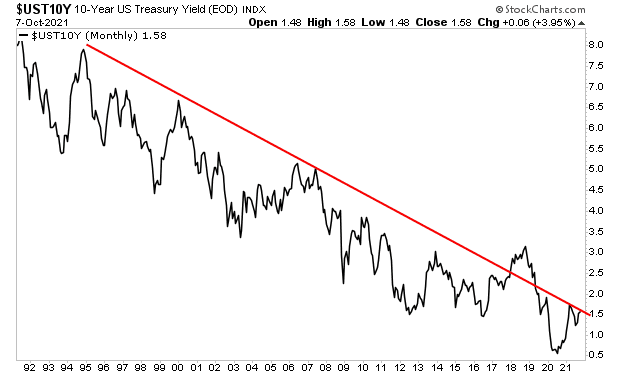
US debt is currently ~$29 trillion – up ~$6 trillion in 2 years.
All signs are Joe “10% for the Big Guy” intneds to double that rate this year even as supply chains are incapable of handing the modest economic growth to date.
No surprise, the 14% inflation we’re seeing (yes – it’s 14%) is where the dough is flowing.
That is, the ~$1 trillion/year yield suppression QE purchases by the Fed.
In 2018, rates broke to the upside and were doused.
However, this time, we have a constrained supply chain, Europe spinning out, Russia’s worsening food inflation and the prospect for the world’s largest wheat exporter to cap exports, and China running at low speed.
Commodity futures? Well, cotton’s price surge comes amid new concerns about the quantity and quality of the crops in top producers India and the US as harvest approaches. A pop in cotton import demand by China also undergirds the bullish tone.
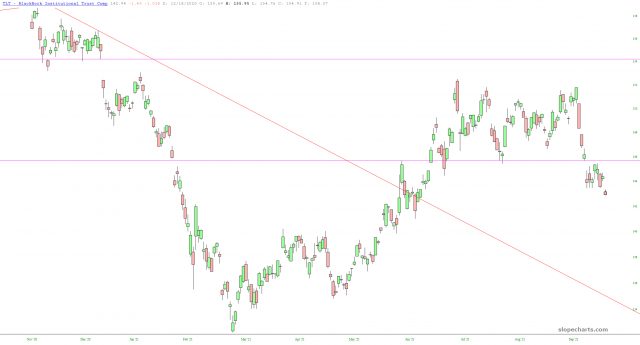
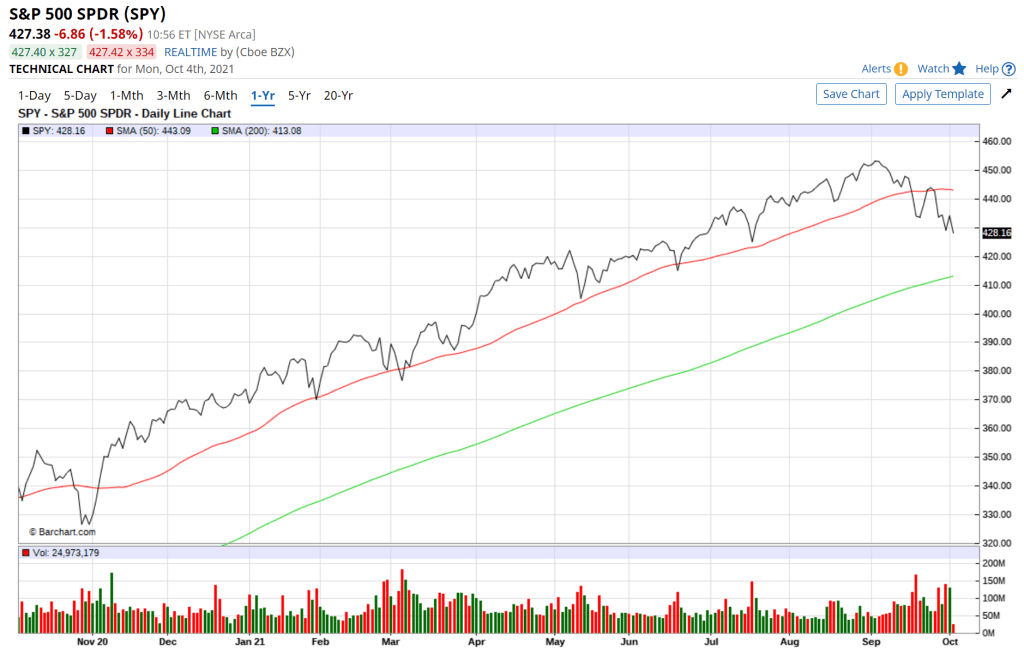
Check out TLT (iShares 20 Plus Year Treasury Bond ETF) crumbling away as the world realizes lending money to a failing nation isn’t a great idea.
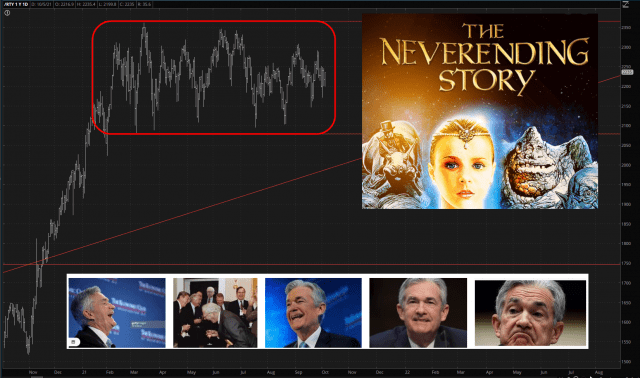
Higher interest rates, higher inflation, and a plunging Fed reputation?
The trend’s your friend until it ends.
And with rates, it might be end game.
Just remember who is “in charge” and where he is laser-focused:
In mid-April 2021, I began receiving reports from sources in China and the United States that certain regions in China had begun to experience ongoing power disruptions at their warehouses and manufacturing facilities. Most notable of these was in south China’s Guangdong megaregion, where in June operations at the Taishan Nuclear Power Plant had become disrupted by a small number of faulty claddings for the fuel rods, ultimately forcing state-owned General Nuclear Power Group to shut down Unit 1 (there are two units) for maintenance and repair. Concurrently, available power imported to the Guangdong region from Yunnan province’s considerable hydroelectric capacity was reduced due to drier-than-expected weather throughout the spring.
Taken together, some estimates are that total power available to the region fell by as much as 15% by June. In response, officials began quietly rationing power to factories, cutting business operation days by 1 or 2 days depending on the facilities’ power requirements.
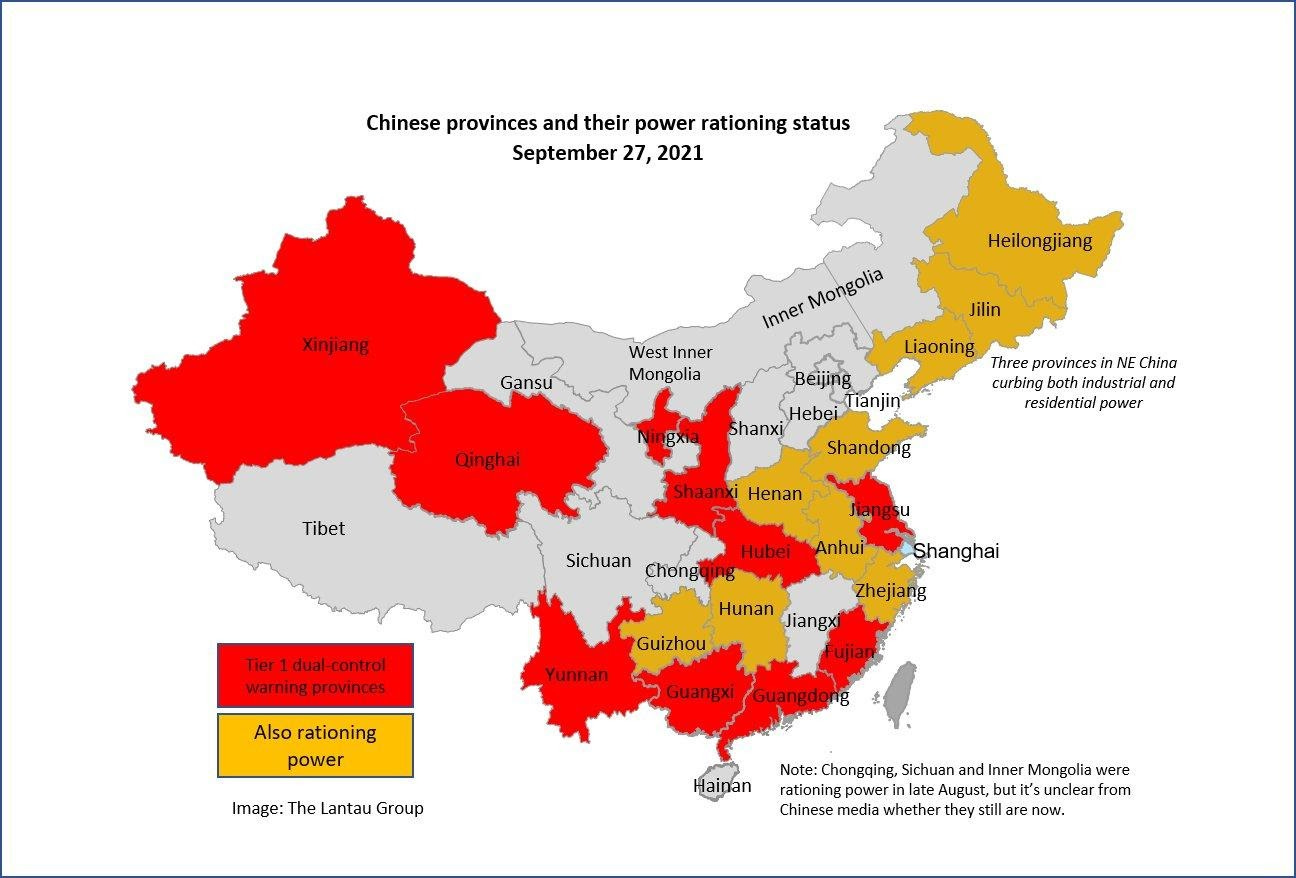
In recent weeks, however, officials have begun a much more aggressive rationing program (Figure 1), with factories in much of Guangdong now seeing only 1-2 days per week of power use allowed. Similar situations are reportedly occurring in Jiangsu, Hubei, and Fujian provinces, all major manufacturing regions. As just one example, one of my US-based import customers has reported that a key supplier in Jiangsu is down to a single day per week of power availability. Limited-but-expanded power rationing is also occurring in Zhejiang, Shandong, Liaoning, and other important heavy industrial, chemical, and energy-product hubs.
Figure 1 – Chinese Province Power Rationing Regime – Courtesy of The Lantau Group
The primary causes of power disruptions are the aforementioned reduced availability of hydroelectric power in much of southern China, as well as limited supplies of coal due to the ongoing China/Australia trade dispute. The latter cause is expected to be more sustained in impact, as the year-long embargo by China on Australian thermal coal has depleted China’s strategic reserves and caused commercial and residential prices to rapidly spike. China imports about 10% of its annual thermal coal needs; of this, Australia was close to 70% of the total prior to the mid-2020 embargo. It is expected that China will be forced to drop the embargo ahead of the fourth quarter, but this is not certain. Reopening its markets to Australian coal imports would be an important stabilizing step for China’s manufacturing base, but would nonetheless take weeks or even months to ramp back up to normal output.
If China does not capitulate on the importation of Australian coal and cannot close the gap with imports from Brazil, South Africa, and the US, the southern region will continue to see constrained power availability, reducing export volumes especially from Shenzhen’s ports, Hong Kong, and Xiamen, as well as Tianjin, Dalian, and Qingdao in the north. We would expect in this scenario to see these ports be utilized by ocean carriers for more transshipments out of Southeast Asia or central China, while export-focused capacity shifts to Ningbo and Shanghai, as well as alleviating significant congestion pressure at Kaohsiung and Busan. Freight rates are anticipated by some maritime industry players to soften somewhat, though a bullish case for barely-reduced rates could be made that a very large backlog of existing cargo and ongoing delays at US and European ports will keep volumes at a high level through Lunar New Year at least, with a strong likelihood of continuing through the ILWU negotiations.
Looking at 2022, any significant level of ongoing power disruptions will begin to cause fractures in China’s economy, particularly in the finance and heavy manufacturing sectors as well as within the population. Such fissures have in the past led to increased belligerence by China against neighboring and regional countries, which could have unexpected disruptive effects on maritime and air traffic in the Far East. With regard to which sectors of the economic base will receive favored treatment for any surplus power, heavy manufacturing (auto, shipbuilding, infrastructure), high technology, energy (renewable and traditional), petrochemicals, medical, and metal processing will likely be protected first. These are considered critical industries in China due to the PLA’s direct investments into these sectors (as well as the in-kind benefits to China’s military industrial complex), with industries such as homegoods, consumer electronics, and garments receiving the least support. This will in particular impact retailers in the US and Europe who are already falling short on inventory, and were hoping for a strong late-year push to close the earnings year on a high note.
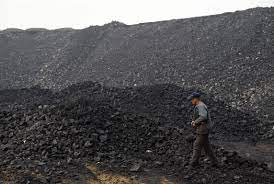
More broadly, it should be expected that the continuity and consistency that China-based supply chains have historically enjoyed will be diminished in the short- to intermediate-term. Fortis expects that Xi will tip China’s dual-circulation economic strategy in favor of protecting domestic consumers, particularly to offset the political instability introduced by energy and food price increases. We can also reasonably expect to see internal enemies of the CCP and PLA be targeted for power rationing, or even villainized as over-users of precious energy resources at the expense of the civilian population. In closing, the energy disruptions in China are but one more canary in the coal mine indicating accelerating catastrophic failure cascades, further consolidation of internal power by Xi and the CCP, and an ongoing bifurcation of geopolitical spheres between China and the US.
I’ve long sought to avoid the COVID-19 vaccine debate, because there are plenty of voices on either side, and there are many other facets of the tragedy that have been largely ignored. However, recent events & discoveries have compelled me to temporarily set my neutrality aside. The large-scale implementation of vaccine mandates, within the context of the findings of my extensive research,
It is indisputable that the mRNA vaccines have saved thousands of lives, and I gladly received the Moderna jabs because it was the best thing I could do to protect my vulnerable parents. It is also increasingly clear that the efficacy of the mRNA vaccines is declining, and that the Biden administration is ignoring this trend and doubling down on the vaccine strategy through ever-widening mandates.
No one on Earth was more qualified to make judgments on the utility of CoV vaccines than Dr. Fauci and his NIAID. They could not have not known the risks. What they didn’t know – or didn’t mention – was that DARPA was on the record as having rejected a similar proposal in bats just 3 months before the contract was signed for MERS-CoV/pan-CoV vaccine development, with the same spike ‘active ingredient.’
I’d bet that most people wouldn’t be so enthusiastic about the ‘science’ if they knew that basic animal trials for proof-of-concept involving spike proteins for immune response were rejected by DARPA in 2018, only to be gambled on out of necessity because of the pandemic. I’m not trying to imply that the issue isn’t complex; my concern is that our government is literally working to censor vital public discussions about those complexities.
Mandating mass vaccination while using a Supreme Court ruling from 1905 as a precedent [one that upholds state authority for mandates, not federal], in the midst of unconstitutional undermining of 1st, 9th, 10th & 14th Amendment rights, is disgusting. Further, mandates that involve censorship to prevent discussion on the specific efficacy and risks of the mandated prophylactic cannot possibly be constitutional – and will destroy the public’s trust in the motives of its leaders.
As it should.
1-Allegory of the Depraved
In my most-read article, Who watches the Watchmen?, the answer to the titular question was nobody. It’s depressingly obvious that scientists [and virologists in particular] have conducted much of their research under the intentionally blind eye of the American scientific establishment. Each new release of FOIA emails has piled on further evidence of scientists intentionally publishing propaganda designed to smother any academic research into a non-natural origin story for the virus that causes COVID-19.
2 weeks ago, the investigative group DRASTIC published an analysis of a proposed research project that EcoHealth Alliance submitted to DARPA as a bid to join their PREEMPT program in 2018. I can speak with some authority about their analysis because I’m a member of DRASTIC – and I helped write our report, including much of the introduction. I’ve since realized that the implications of the proposal in regards to US vaccine policy have been missed, and therefore it’s important to address them specifically.
What is DRASTIC?
DRASTIC’s the sort of tongue-in-cheek acronym that one would never have expected to one day represent the leading edge of the global search for the origins of the COVID-19 pandemic. At the same time, it’s a perfect metaphor for the intense, pragmatic approach that must be taken to address both the pandemic and the structural erosion of a scientific establishment that sacrificed objectivity in an attempt to maintain the illusion of control.
Our collection of scientists and researchers have published more than 80 peer-reviewed papers, pre-prints and articles related to the origins of the COVID-19 pandemic, but the PREEMPT analysis is the first publication to be released by DRASTIC as a full group.
U.S. Representative Mike Gallagher, of Wisconsin, released an excellent 7-minute video that summarizes key findings from DRASTIC’s analysis of these documents. In order to save space in this post, I highly encourage readers to take a few minutes to watch this or one of the other videos linked below. My focus for this article is to explain elements that haven’t been discussed elsewhere:
New documents released by Drastic Research show Peter Daszak and the EcoHealth Alliance had applied for funds that would allow them to further modify coronavirus spike proteins and find potential furin cleavage sites.
The COVID pandemic has killed more than 675,000 Americans since March, 2020, and it has upended the rhythm of daily life in ways that we are still adapting to 18 months later. Only recently, however, has the pandemic itself begun to feel truly pervasive – as the ages of the sick and dying have lowered – as a result of the ‘delta’ variant.
There are many factors that have contributed to the global delta wave, but at its core the variant’s success is a function of its exponentially greater production of infective particles, which has simply overwhelmed the immune systems of the young whom are less susceptible than those of their parents and grandparents. Another factor is that children under 12 have been unable to get vaccinated because of the approved age limit. My own perspective is that the dynamic is fueled, at least in part, by highly effective aerosol transmission, in which case our current mitigation protocols are potentially exacerbating the evolution and spread of the delta variant.
I spent the first year of the pandemic analyzing the epidemiological data in the United States, in an effort to use my prior to experience to educate others about what was happening, and what to expect. Recently, I paused my DRASTIC work for a day to catch up on the latest numbers, and I mixed in vaccine data so that I could see for myself what has been unfolding behind the rhetoric on both sides.
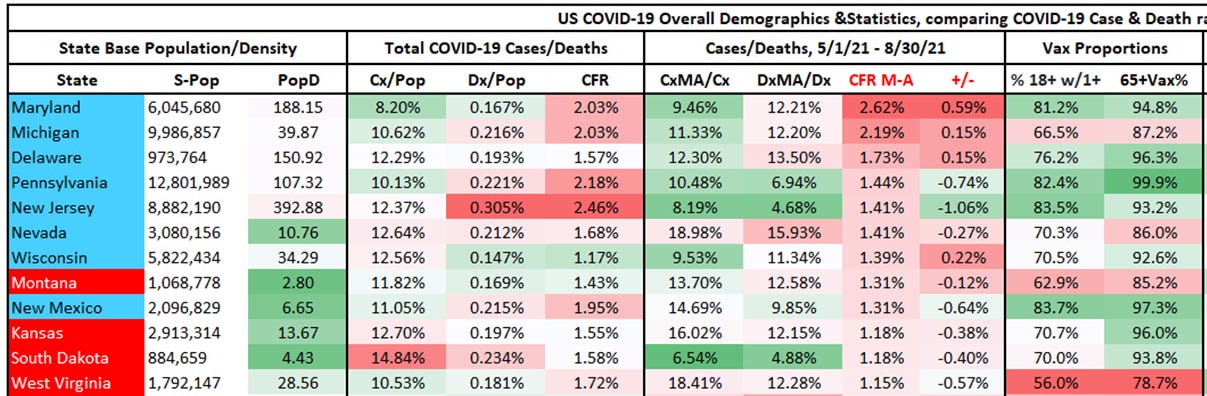
States with the highest COVID-19 case fatality rates [CFR] during the Delta surge [May-Aug]
More complete discussions of this phenomenon on my Twitter feed, but the main theme is that case fatality rates [CFR’s] since May 1st are losing their previously strong negative correlation with state population vaccination proportions. 4 of the states pictured above actually have higher CFR’s during the delta wave than in the pandemic overall, which is in opposition to the prevailing trends throughout the last 20 months. The discrepancy is much bigger than any state’s case trends can account for [CFR’s fall when cases surge, because deaths are a lagging metric].
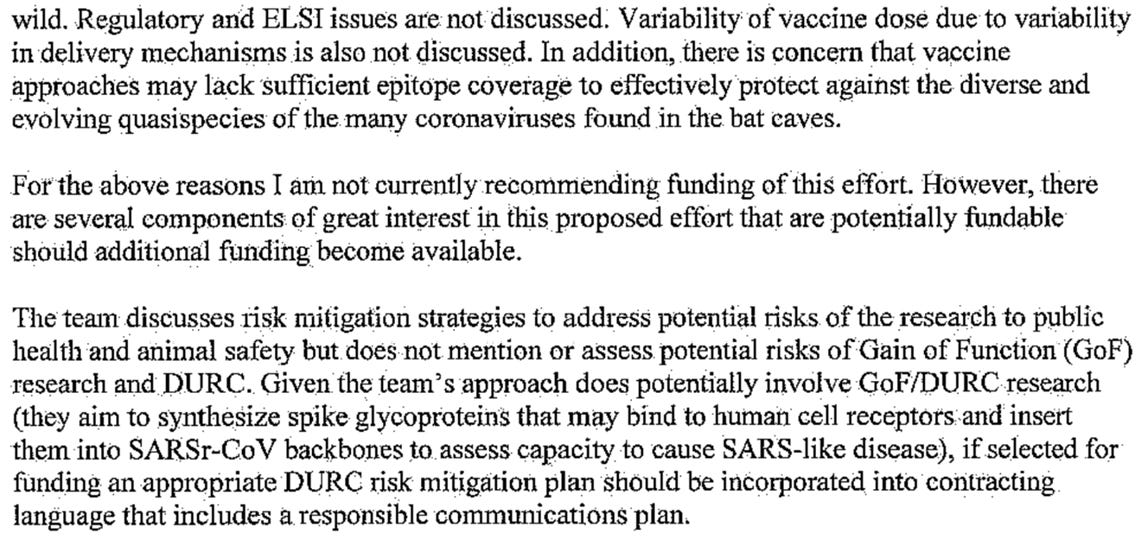
Science is mandating their band-aids – for us – to cover up their self-inflicted gunshot wound. If the public knew that the DOD had rejected a similar type of research on BATS, 3 months before moving forward with initial vaccine research for humans, they might be concerned. Below is the relevant section from the PREEMPT proposal:
An excerpt from the proposal’s rejection letter.
There was no justifiable reason to extensively fiddle with human immune comparisons for this self-disseminating bat vaccine meant to suppress emergence of SARS-like CoVs. EcoHealth Alliance and the Wuhan Institute of Virology [WIV] already knew enough to target bats without working with human/primate cells as well, because extensive work creating chimaeric viruses to test the human threat of bat coronaviruses in the wild was a large part of what the WIV and UNC-Chapel Hill had been experimenting with for several years.
Which is a good reason to question the necessity of those experiments. But…
The overlooked key finding (in my opinion) is the epitope coverage aspect of the rejection, within the first paragraph. Epitope coverage is key in the development of effective vaccines; it’s the scientific term for how much of a target virus’s genome is included in a vaccine’s ‘active ingredient’ [the genetic material of the targeted virus/viruses, however attenuated]; guessing next year’s mixture of dominant flu strains is how our annual flu vaccines are chosen and produced. The efficacy of flu vaccines is partly determined by how good scientist’s projections are, but our familiarity with flu vaccines has made it easy for the public to overlook what scientists already know – that coronaviruses work quite differently.
Viral quasispecies ‘swarms’, as D. Sirotkin pointed out, are an unknown feature of many viruses amongst the public. I certainly had never heard of the phenomenon prior to researching COVID-19.
The NIH, on the other hand, knows more about this phenomenon than any other public institution on Earth; for more than a decade Dr. Fauci’s NIAID has partnered with [funded] many of the world’s best coronavirologists, and the Vaccine Research Center within the NIAID shares many of the mRNA patents used to produce the Moderna COVID-19 vaccine.
Here’s the rub: the current mRNA vaccines are designed as quick-response platforms for pandemic emergencies. Dr. Fauci’s primary focus in this regard has been a universal flu vaccine, and thus far mRNA is still a pandemic-centered technology. In 2018, they expanded this program to include MERS-COV and a general pan-CoV vaccine. As I wrote within our PREEMPT analysis, the new oversight panel known as the P3CO was HHS’s way of carving out an exemption for the gain-of-function work needed for their coronavirus vaccine research.
There’s just one problem, which some observers have been pointing out for years – the recombination/quasispecies elements of CoV variant evolution is less optimal for a partial-coverage epitope [see sterilizing immunity] strategy than for other viruses, especially since the part they specifically target and use in their vaccines is (obviously) the spike that drives infectivity. The DARPA program director knew enough to know that EHA’s proposal was of questionable value under these conditions, even if he may have been curious himself about what the data might show. Therefore, it only makes sense that he would decline a project that didn’t show as much promise in the specific area covered under the proposal. It’s also not surprising that no one has bothered to admit the existence of this proposal.
Dr. Fauci’s enthusiastic support of censorship during the last 20 months begins to make a little more sense after you consider that the scientific establishment he holds unofficial sway over was heavily involved in research that has a statistically significant chance of playing a role in the emergence of SARS-CoV-2. In February, I broke the story that Fauci appeared to be directly directly involved in the developmentof a natural-origin narrative and the censorship that worked to prevent research into an alternative hypothesis; every release of FOIA documents since has simply added evidence in support of that claim.
Fauci also worked with the presidential science advisor, Kelvin Droegemeier, to keep information regarding these compromising connections from becoming known – including from President Trump and his national security team. Instead, Fauci demonized efforts to question all of it, including DRASTIC’s work that sought to uncover what was happening in Wuhan. He’s been demonizing Americans and forcing them to accept the vaccines that he knows are a stop-gap measure at best, and whose long term effects are completely unknown. He’s been defended by the same group of scientists justifying ostracism and calling for questioning science to be a hate crime.*
[*Peter Hotez, of course, has been conducting research for the VRC’s CoV vaccines for a decade]
You can’t get much sicker than blaming innocent people for the problems you may have created and worked extensively to prevent public awareness of the incriminating links. But that’s where we are today.
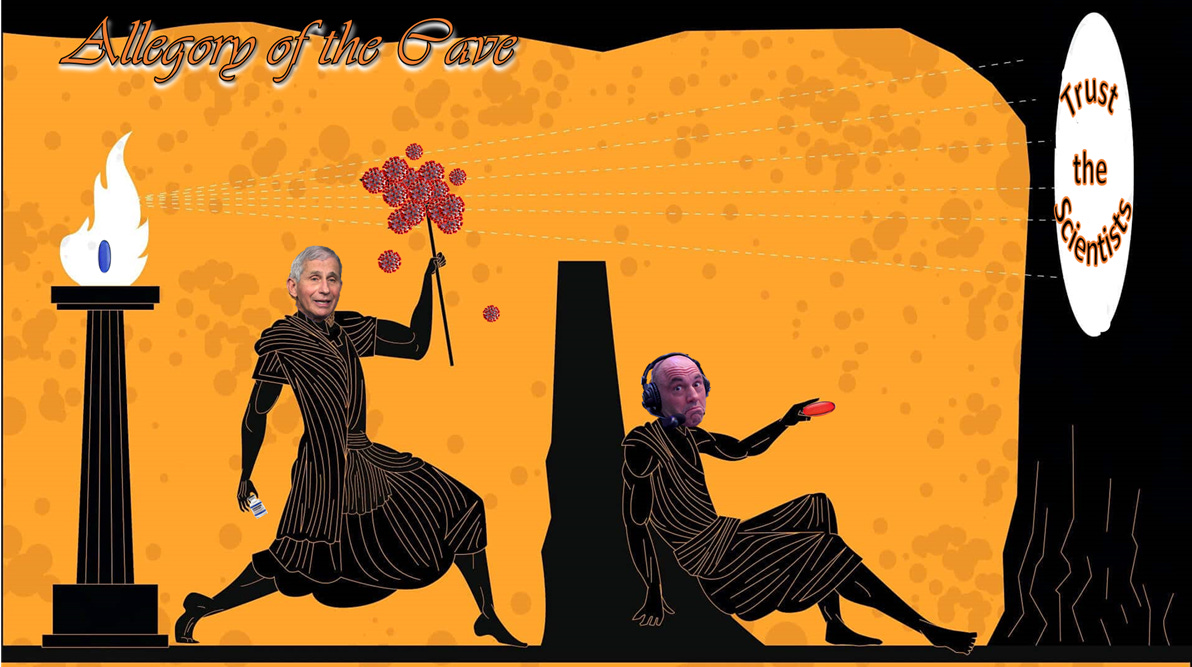
I’ve often referenced Prometheus, Pandora and Plato’s Allegory of the Cave in my analyses of COVID-19, like many others. But, perhaps the best Greek metaphor for ‘Science’ is the Ring of Gyges, which can also be found within Plato’s Republic.
The story centers on a ring that, when worn, makes its bearer invisible to others, much like the One Ring that Frodo bears throughout the Lord of the Rings. Extended use of the ring invariably corrupts the soul. Are we not witnessing the result of unquestioned faith in scientists, writ large? How else can rational men come to believe that questioning the blatant suppression of potentially damaging evidence should be considered a hate crime?
The correct answer to the pandemic is not to grant further immunity to undeserved scientific arrogance. The correct answer to the pandemic is to hold anyone and everyone accountable, based on an open and exhaustive inquiry. No constitutionally questionable proclamations should EVER be based on the guidance of those whose actions may have precipitated the crisis itself.
Translation: Using Supreme Court rulings [i.e. 1905] that predate the discovery of antibiotics as precedent for mandating mRNA vaccines is unfounded, at best. At worst, it is unconscionable to force compliance for a vaccine mechanism for which animal trials were rejected 3 years ago.
Having fought for freedom overseas, I cannot stand silent as mandates and censorship destroy our liberties here at home, regardless of any justifications related to the pandemic. The victims of the pandemic deserve justice, and every additional day that the majority in Congress delays any and all investigations into its origins ensures another day of countless American lives being lost.
Encouraging mandated compliance without exhibiting integrity is disgusting, and a betrayal of the public trust. Should the same scientists be found in some measure to have been complicit in conducting experiments that later resulted in a lab release, the intentional tearing apart of our society wouldn’t be disgusting – it would be horrific.
No cause is so righteous that it supersedes the rights of those it purports to defend.
As I wrote in July:
The COVID-19 pandemic has manifestly proven that there is no lie so ‘noble’ that it overrides the rights and wisdom of a free and informed public. That doesn’t mean that the public will inherently do better.
It’s just acknowledging the inescapable conclusion – that we can’t possibly do worse.
The elephant in the room is whether you’re going to be renominated. Renominating you means gambling that, for the next five years, a Republican majority at the Federal Reserve, with a Republican chair who has regularly voted to deregulate Wall Street, won’t drive this economy over a financial cliff again.” – Elizabeth Warren (emphasis added)
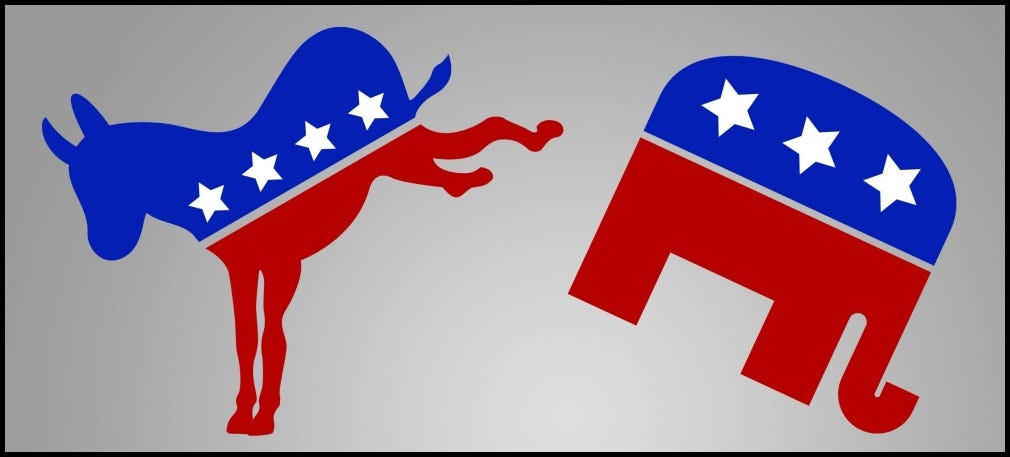
It’s no coincidence that Senator Warren led her barrage against Jerome Powell with an elephant – the elephant being the mascot of the other team, after all. In doing so, Warren has made clear her decision to make Powell’s potential renomination as Chair of the Federal Reserve yet another partisan battle. Jerome Powell is now an elephant, and we predict he will be donkey-kicked to the curb of history in short order.
The United States is an endlessly fascinating place to observe the rawness of power. When it became clear that the judiciary could be gamed to make it the most equal among the three equal branches of government, the appointment and confirmation of federal judges transformed from a sleepy afterthought that routinely sailed through the US Senate by unanimous consent into a hyper-partisan affair. Supreme Court nominations have dissolved into nuclear wars between the parties, with all manner of brass-knuckle political tactics considered fair game.
It wasn’t always this way. Ultra-conservative Antonin Scalia was confirmed to the Supreme Court by a Senate vote of 98-0, as was John Paul Stevens. Sandra Day O’Connor outdid them both with a vote of 99-0.
And then Bork became a verb.
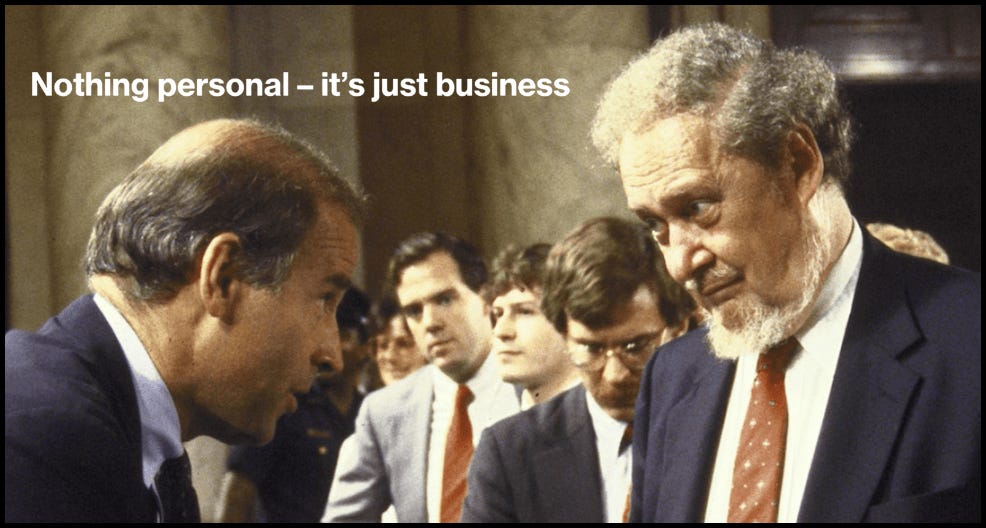
When President Ronald Reagan nominated Robert Bork to the Supreme Court in 1987, none other than current President Joe Biden presided over his nomination in the Senate, and Biden’s behavior changed history forever. Here’s how The Hill described it in an opinion piece published in 2020:
“As head of the Senate Judiciary Committee, he presided over the infamous Robert Bork hearings. His smearing of Bork for his original-intent judicial philosophy transformed hearings for Supreme Court nominees into bloody ideological battles. Henceforth, all conservative nominees were subjected to “Borking.”
Brutal to Bork from the start, Biden treated him not as a serious judge but as a stooge for what Biden called the “Reagan-Meese” agenda…
Biden considers his defeat of Bork one of the most glorious moments of his career. But for the Republic, it marked one of the lowest. It further cemented the groundwork for a politicized judiciary which has taken decisions out of the hands of the people and placed them in the hands of nine lawyers. It undermined the integrity of the confirmation process.”
With that backdrop, consider the following question. Who has more power in the US today – a Supreme Court justice, the Vice President, a US Senator, or the Chair of the Federal Reserve? The answer is as obvious as it is an indictment of US fiscal and monetary policy over the past few decades. The Supreme Court printer doesn’t go BRRR…. Vice President Harris can’t rescue the stock market with a press release. The typical US Senator struggles to stay awake during roll call.
Jerome Powell has all the power, and his time on the throne is limited. The Federal Reserve was originally designed to have maximum independence, but it has accumulated enough political influence that the Fed Chair is probably the second-most powerful person in the country. The days of objectively analyzing the actual performance of the person in the job when considering renomination are over, and Powell shares much of the blame.
Although the Fed was becoming more politicized before Powell became chair, he erased whatever independence remained when he acquiesced to President Trump’s relentless and often disrespectful demands for looser policy. Trump was obsessed with the stock market, viewing it as an important measure of his competency. Frustrated by the disparity between US and European interest rates, Trump openly mocked Powell on Twitter, demanded he “do more” to help the economy, and blamed him when the stock market wobbled.
This was a dangerous red line for any President to cross, and if Powell had any personal dignity or concern for his institution he would have resigned. The ensuing chaos in global markets would have taught Trump (and future Presidents) the value of an independent Fed Chair.
Instead, Powell folded.
In Let Them Eat Pizza, we raged against Robert Kaplan, soon-to-be former President and CEO of the Federal Reserve Bank of Dallas. The piece touched a nerve, garnering 24,000 views in just a few days. While the insider trading scandal at the Fed continues to mushroom, expanding just yesterday to Fed Vice Chair Richard Clarida, we think the Kaplan scandal has a lot more legs.
According to Wall Street on Parade, the Dallas Fed refuses to release precise details of Kaplan’s trades, including the dates he bought and sold, as well as whether he ever shorted the market. Wall Street on Parade would like to match the timing of Kaplan’s trades with his numerous media appearances, some of which were incendiary and moved markets. That the Dallas Fed is slow rolling the release of these details tells you all you need to know about what they show. This information belongs to the public, and it will eventually come out. Get ready for the worst.
In 3,170 miles, we discussed bank runs – both literal and figurative. The speed with which such runs occur continues to surprise people. Elizabeth Warren is a thorn in the side of many on Wall Street. You might not agree with her politics, but she is smart, tough, and knows how the political game is played. She knows a good wedge when she sees one and understands the value of a high-profile political scalp. In contrast, Powell and the other members of the Fed are political rookies, new to the game they inadvertently invited themselves into. They are no match for the likes of Warren.
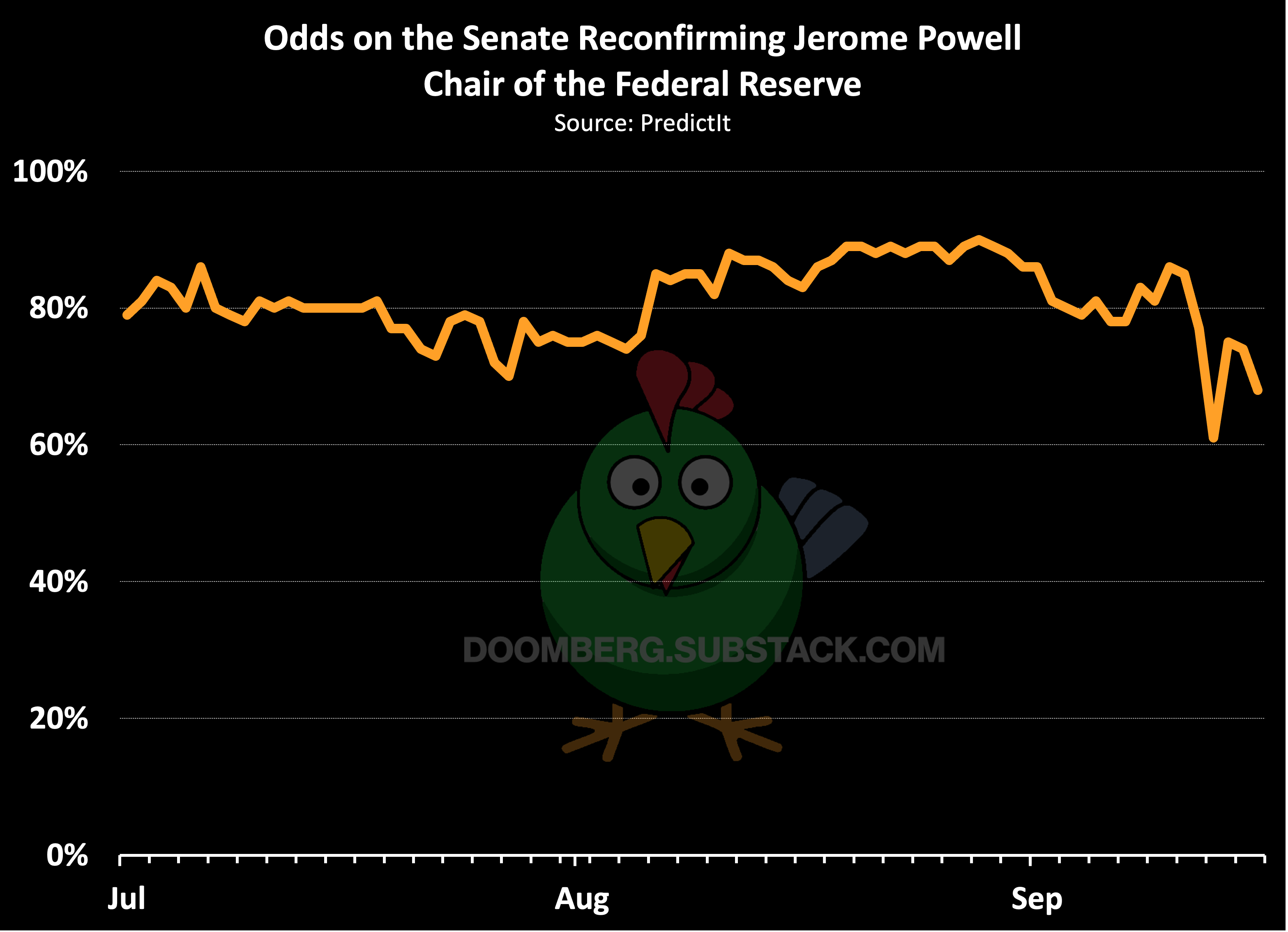
The insider trading scandal at the Fed is going to trigger a bank run on Powell’s political prospects. Already, the prediction markets are starting to sniff this out. The chart below from PredictIt shows the betting odds that Powell gets another term. We don’t give investment advice here at Doomberg, nor are we experts in technical analysis, but that chart sure doesn’t look healthy to us. And for good reason.
Powell is going to get Borked.
If you enjoy Doomberg, subscribe and share a link with your most paranoid friend!✓
Factories in at least ten Chinese provinces have either cut output or closed temporarily this month, after government-imposed power cuts to curb carbon emissions.
By Friday, at least 10 publicly listed companies told the Shanghai and Shenzhen stock exchanges their factory output had been hit by the power cuts, and their 2021 earnings could be adversely affected.
The cuts followed China’s economic planning agency, the National Development and Reform Commission, released a “dual-control” plan to restrict energy-intensive activities and consumption.
The plan commanded provincial governments to ration electricity consumption to control emissions in line with President Xi Jinping’s target for carbon emissions to peak by 2030, and to achieve carbon-neutrality by 2060.
Affected provinces include Jiangsu, Guangdong and Zhejiang, which are among the most industrialised in China, their factories producing steel products, plastics, home appliances, chemicals and textiles. All three provinces had received ‘red ratings’ for missing consumption targets.
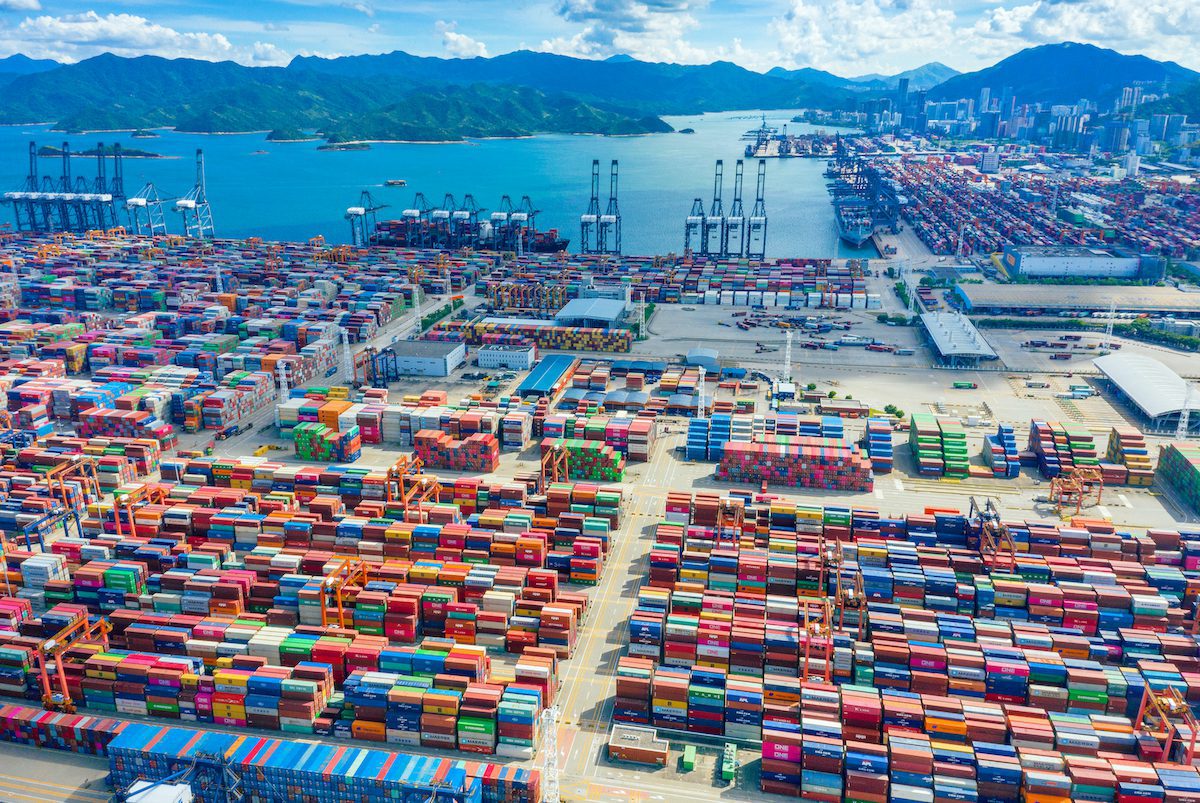
The provinces are also home to China’s busiest ports, Ningbo, Guangzhou, Nansha, Yantian and Shekou. And Jiangsu province lies along the Yangtze River Delta and its container exports are usually processed by Shanghai or Ningbo.
As this is the peak season for container shipments to US and European retailers, the new moves could exacerbate delays in receiving shipments at the ports, especially when the power cuts last beyond the end of September. And congestion on the US west coast has held up shipments, with some 70 ships waiting outside Los Angeles and Long Beach due to surging imports and insufficient trucking and land-based logistics.
Linerlytica analyst Tan Hua Joo told The Loadstar:, “There will be an impact on factory production and this will surely affect container shipment volumes in the short term. It’s still unclear how long the rationing will be in place, so it is not possible to predict the longer term impact.”
Most of China’s electricity supply is coal-fired and, although the affected industries can use renewable energy as a substitute, the take-up will not happen overnight, even though the government has been investing heavily in wind energy.
Econophysics comment:
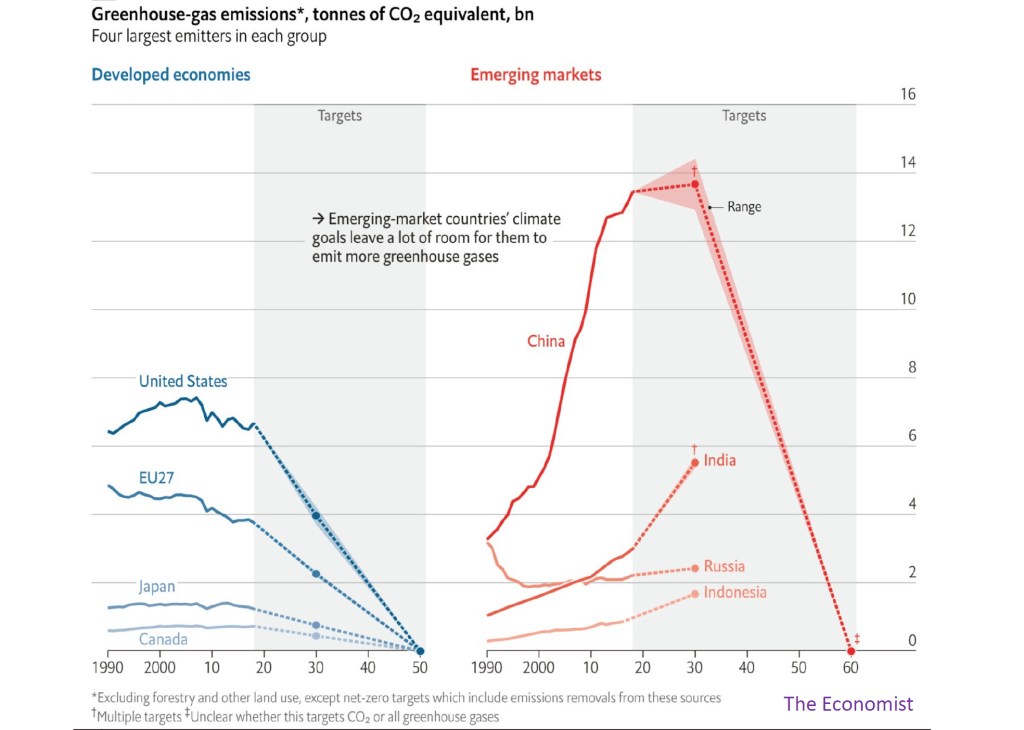
Here’s what it would take for China to be “carbon-neutral”.
Does anyone really think this is happening anytime?
Evergrande’s Fall Shows How Xi Has Created a China Crisis
The developer’s collapse isn’t leading to global contagion, but China’s looming economic disaster might.
A major mistake of the Cold War was the tendency of Western observers to overestimate the Soviet Union. I have often wondered if the same mistake is being repeated with the People’s Republic of China. Then again, for every article over the last 10 years that predicted China’s economy would overtake that of the U.S., there were at least two prophesying a “China crisis.”
“The endgame of Chinese communist rule has now begun,” wrote David Shambaugh in 2015. Wisely, he added: “Its demise is likely to be protracted.” That same year, Jim Chanos of Kynikos Associates warned, “We’re getting inexorably to a tipping point in China.”
Last week began with yet another China tipping point. The impending collapse of the giant property developer China Evergrande Group, we were warned, could be China’s “Lehman Moment.” For 24 hours, global stock markets retreated by a couple of percentage points. By Tuesday morning, however, the story appeared to be over. The jitters subsided and investors got back to parsing the utterances of U.S. Federal Reserve Chair Jay Powell to make sure that nothing he said was surprising.
So if the China crisis never happens — no matter how many times China permabears like Chanos predict it — does China eventually overtake the U.S.? Thus far, it has done so only in terms of gross domestic product adjusted on the basis of “purchasing power parity,” which allows for the fact that a meal in Chongqing is quite a bit cheaper than one in Chicago. On a current dollar basis, China’s GDP last year was still just 72% of U.S. GDP, even with Hong Kong included.
Will China surpass America? No, I don’t think so. Nearly three years ago, in the heat of a lively debate in Seoul, I bet the Chinese economist Justin Yifu Lin 20,000 yuan (roughly $3,000) that China’s economy — defined as GDP in current dollars — would not overtake that of the U.S. in the next 20 years. I am sticking with that bet, even if the Lehman Moment for the Chinese financial system never comes. Here’s why.
Let’s begin by recalling how many experts believed the Soviets would overtake America. In successive editions, the economist Paul Samuelson’s hugely influential economics textbook carried a chart projecting that the gross national product of the Soviet Union would exceed that of the U.S. at some point between 1984 and 1997. The 1967 edition suggested that the great overtaking could happen as early as 1977. By the 1980 edition, the time frame had been moved forward to 2002-2012. The graph was quietly dropped after that.
Samuelson was by no means the only American scholar to make this mistake. A late as 1984, Harvard’s liberal guru John Kenneth Galbraith could still insist that “the Russian system succeeds because, in contrast with the Western industrial economies, it makes full use of its manpower.” Economists who discerned the miserable realities of the planned economy, such as G. Warren Nutter of the University of Virginia, were few and far between — almost as rare as historians, such as Robert Conquest, who grasped the enormity of the Soviet system’s crimes against its own citizens.
We know now how wrong Samuelson, Galbraith et al. were. After 1945, according to the late Angus Maddison’s estimates, the Soviet economy was never more than 44% the size of that of the U.S. By 1991, Soviet GDP was less than a third of U.S. GDP.
China has of course learned lessons from the Soviet experience. Beginning in the late 1970s with Deng Xiaoping, China’s leaders understood that the Communist Party could harness market forces for the perpetuation of their own power, but they must never relax the party’s political grip. If there is one thing the CCP can be relied on never to produce, it is a Chinese Mikhail Gorbachev.
In the same way, the Chinese have learned from the American experience. I remember vividly how, in the wake of the 2008 collapse of Lehman Brothers, eminent Chinese economists visited Harvard (where I taught at the time) and doubtless many other institutions to research the causes of the global financial crisis. Somewhere in President Xi Jinping’s office there must be a copy of the report they subsequently wrote. If there is another thing the CCP can be relied on never to produce, it is a Chinese Lehman Moment.
Yet, as the great English historian A.J.P. Taylor once observed of the French Emperor Napoleon III, he “learned from the mistakes of the past how to make new ones.” As I contemplate Xi, I find myself wondering if the Communist Party has inadvertently produced a Chinese version of Napoleon III, whose reign was also marked by rampant real estate development. (The Paris you see today was in large measure the achievement of his prefect of the Seine, Georges-Eugene Haussmann.)
Evergrande is mainly significant as an illustration of how the Chinese economic model has evolved over the past decades of urbanization on steroids. It is China’s second-largest property developer, with an estimated $355 billion of assets across 1,300 developments. It has around 200,000 employees, and usually hires 3-4 million laborers a year for construction work.
It is also the most-indebted property developer in the world, with on-balance-sheet liabilities equivalent to nearly 2% of China’s annual GDP, and off-balance-sheet obligations equal to another 1%. Among its liabilities are $37 billion in bills and trade payables owed to suppliers and contractors, and an estimated $6 billion in high-yielding wealth management products, which it has sold to more than 80,000 retail investors.
Evergrande is just one of many such leveraged real estate companies in China. It just happens to be the most overstretched, so it was the first to get in trouble when the government introduced its “three red lines.” These specified that a property developer’s ratio of liabilities to assets must be below 70%; its ratio of net debt to equity below 100%; and its ratio of cash to short-term debt at least 100%. Evergrande was on the wrong side of all three lines, but it was in good company. Of the country’s 15 biggest developers, only one is fully compliant with the new rules, according to data in the South China Morning Post.
When the Chinese government decides to make an example of an over-leveraged player, we know what happens next, and it’s not a global financial crisis — not even a domestic one. There will be some more brinkmanship, as there was last week, with some bondholders (onshore) getting paid and others (offshore) being asked to wait. But at some point soon — probably before the October holiday — the government will force through a formal restructuring and bankruptcy process. Those considered politically important will get off lightly; the politically disposable will lose their shirts; a few top executives will face jail. That was what happened with the travel conglomerate HNA Group Co. in 2018. It was what happened to Baoshang Bank Co. in May 2019.
The most sanguine take I read last week came from the always interesting MacroPolo series of papers published by the Paulson Institute, founded by former Treasury Secretary Hank Paulson (himself something of an authority on Lehman Moments). According to Houze Song, the Evergrande crisis was the result of a policy error, because “China’s financial regulators … preoccupied with stifling a property and land sales bubble … mandated banks to cut back on mortgage loans.” Fewer mortgages drove down housing prices, pushing Evergrande to the brink of insolvency. However, everything will turn out fine because:
1) The central bank will further relax mortgage policy to alleviate the liquidity crunch for the property sector;
2) Property sales will rebound as demand for housing remains healthy;
3) The more vulnerable firms will be able to sell their assets (e.g., land) to raise cash.
“These dynamics will be mutually reinforcing,” he concludes, “and will help to stabilize the property sector as it muddles through this year.”
The People’s Bank of China has already taken action. On Thursday, it sought to alleviate the financial stress with the equivalent of $17 billion in the form of seven- and 14-day reverse repurchase agreements, its largest open-market operation since January. Evergrande shares in Hong Kong duly rallied. Crisis over. Stand down the plunge protection team.
All this goes to show that a Lehman Moment was never in the cards. China’s state-controlled financial system has state-controlled crises, which are targeted at particular firms “pour encourager les autres”— not to trigger the kind of generalized bank run that drove the global financial system to the point of collapse in the winter of 2008-2009.
Nevertheless, it is possible to avoid financial contagion without necessarily avoiding a more insidious macroeconomic contagion. As the Harvard economist Ken Rogoff showed last year in a paper co-authored with Yuanchen Yang of Beijing’s Tsinghua University, real estate plays an even bigger role in China’s economy today than it did in the U.S. economy on the eve of the financial crisis. The impact of real estate-related activities amounted to 18.9% of U.S. GDP in 2005, its pre-crisis peak. The equivalent figure for China in 2016 was 28.7%. None of the 10 other countries in their sample come close, except Spain on the eve of the financial crisis (28.7% in 2006).
Building a Bubble
Impact on GDP of activities related to real estate
Source: Rogoff & Yang; “China and the World’s Economy”
The detail is eye-popping. In all, around 27% of Chinese bank loans come from the real estate sector. Real estate is the main form of collateral for loan securitization. In 2017, almost 18% of the urban labor force was employed in real estate and related industries. In 2018, the sale of land by local governments accounted for as much as 35% of their revenues.
Much as happened in Japan in the housing bubble of the late 1980s, the market value of China’s housing stock is now more than double that of the U.S. and triple that of Europe. This means that housing wealth forms a significantly larger share of overall assets in China (78%) than it does in the U.S. (35%). Rogoff and Yang conclude that Chinese households’ consumption is therefore “significantly more sensitive to a decline in housing prices” than that of their American and Japanese counterparts. A “20% fall in real estate activity could lead to a 5-10% fall in GDP, even without amplification from a banking crisis, or accounting for the importance of real estate as collateral.”
To put it simply, China’s growth has been boosted for many years by the construction of an excess supply of housing units. This has been financed by an unsustainable mountain of debt. As the Beijing-based economist Michael Pettis noted last week, “China’s official debt-to-GDP ratio has soared by nearly 45 percentage points in the past five years, leaving it with among the highest debt ratios for any developing country in history.”
Relative to the size of the economy, nonfinancial corporate debt in China is now even bigger than it was in Japan in the late 1980s. And both tower blocks and debts have been going up at a time when the Chinese workforce has begun to come down. With the birthrate falling, the total population is forecast by the United Nations to shrink by around 25% by the end of the century — conceivably even by 50%.
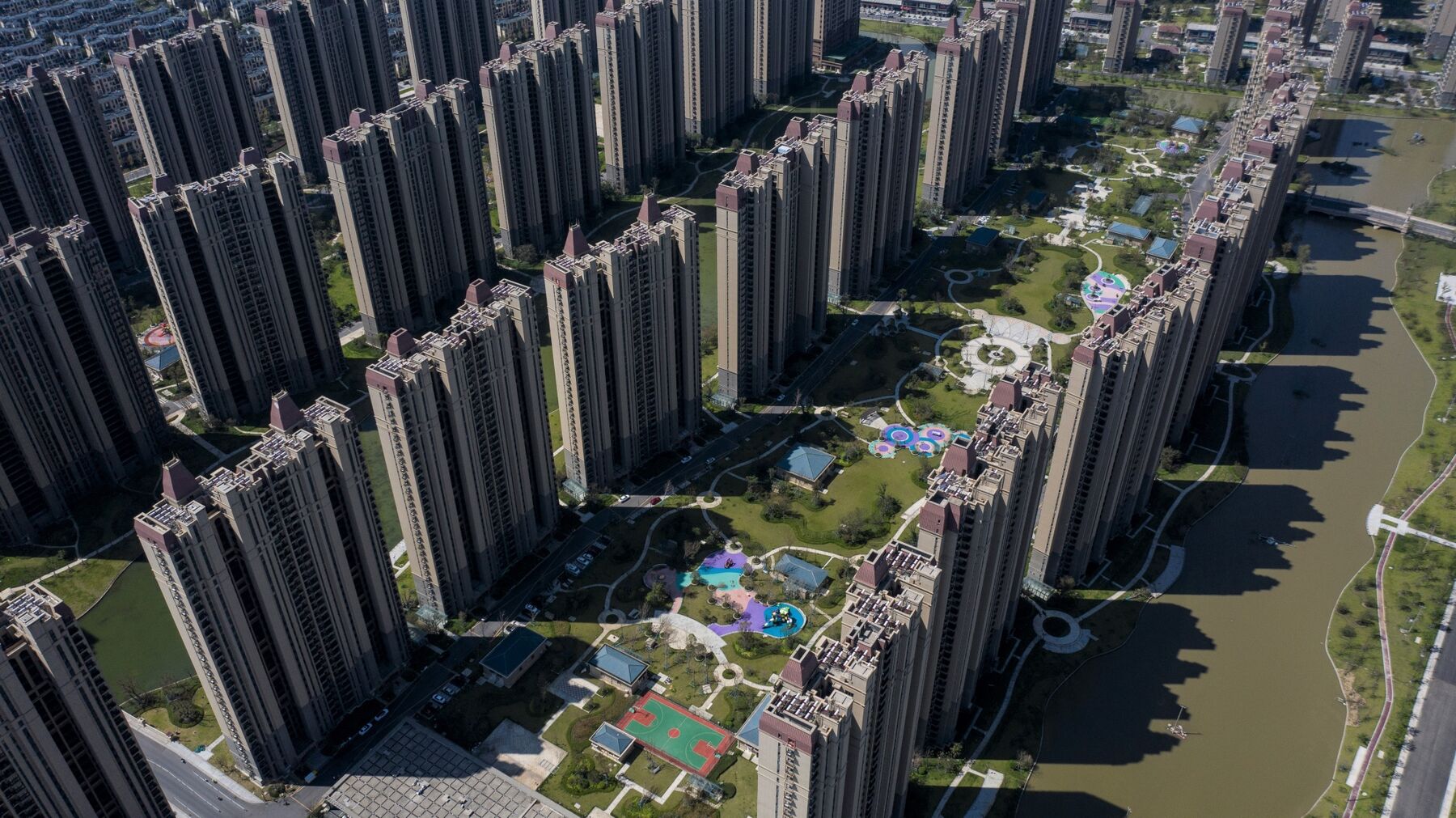
The result is not so much the proverbial bridges to nowhere as homes for no one. Between a fifth and a quarter of Chinese housing stock is estimated to be empty. Last week, the Rhodium Group’s Logan Wright estimated that there was enough empty property in China to house more than 90 million people.
Of course, no “China crisis” article for the past 20 years has been complete without images of uninhabited ghost cities. But there was always the counterargument: “If you build it, they will come.” Well, they built 15 high-rise apartment blocks in the southwestern city of Kunming back in 2013. Unfortunately, the developer ran out of money and the buildings turned out to be defective. Last month, “Sunshine City II” was spectacularly demolished in a succession of controlled explosions. That one video clip impressed me more than all the ghost city videos I’ve seen over the years. Nothing says “wealth destruction” quite like toppling tower blocks.
The crisis in real estate has much wider ramifications than the inevitable restructuring of Evergrande. Other developers are under pressure (the fact that one is called Fantasia says it all). Housing sales are down. So are land sales by local governments. Exposed banks are under pressure, as are the steel producers and iron-ore exporters who for so long grew rich on Chinese construction. And, as falling apartment prices reduce household wealth — just as Rogoff and Yang foresaw — we can expect a significant impact on consumption. The August data already showed a decline in year-on-year retail sales growth from 8.5% in July to 2.5%, though this partly reflected the effects of anti-Covid restrictions. That slowdown seems likely to persist through September and October.
For years, Pettis and others have argued that China’s growth rates were artificially inflated and that the steroid-free growth rate was probably half the official target. Some China economists quoted in the press last week suggested a growth rate closer to 4% in the coming decade. Leland Miller, of China Beige Book, even suggested a rate of 1% or 2% 10 years from now.
It will be interesting to see if the International Monetary Fund revises down its growth projections for China in next month’s World Economic Outlook. Back in the summer of 2020, the IMF thought China’s economy would grow 9.2% this year and 5.7% next year. The 2021 figure has since been lowered to 8.1%. The most recent 2023 projection was 5.4%. All these numbers look on the high side to me, even allowing for the unreliability of Chinese statistics. (Thank heavens the managing director of the IMF would never contemplate overstating China’s economic performance! Oh wait, that’s precisely what Kristalina Georgieva is accused of having done when she was at the World Bank.)
Inflated – IMF forecasts of China’s real GDP growth rate
Many foreign investors have been on the wrong side of all this. In the 15 months through June 2021, they poured $527 billion into Chinese stocks and bonds. A good deal of that money found its way via the offshore dollar bond market into high-yielding real estate debt. Among the funds known to hold Evergrande debt are Fidelity International Ltd., UBS Asset Management, Amundi Asset Management SA, and BlackRock Inc. Last week it fell to Ray Dalio of Bridgewater Associates to rally the China bulls. The Evergrande crisis was “all manageable,” he said. The system would be “protected.” But it Is striking that on Aug. 3, George Soros warned investors in China that they faced “a rude awakening,” and on Sept. 6, he called out “BlackRock’s China Blunder.” When Soros and Kyle Bass are on the same side, things get interesting. (Bass’s fund, Hayman Capital Management, has been short China for years.)
“The regime which is destroyed by a revolution is almost always an improvement on its immediate predecessor,” wrote Alexis de Tocqueville in “The Old Regime and the Revolution.” “And experience teaches that the most critical moment for bad governments is the one which witnesses their first steps toward reform.” I often thought of that passage as I watched Gorbachev inadvertently destroy the Soviet Union by trying to reform it. Only recently did it occur to me that it might also apply to Xi, the anti-Gorbachev. Although his reforms go in the opposite direction from Gorbachev’s — turning back the political clock to Marxism-Leninism, rather than forward to liberalism — the effect may be the same.
“None of the various systems related to elections had numbers that would balance and agree with each other. In some cases, these differences were significant.”
“There appears to be many 27, 807 ballots cast from individuals who had moved prior to the election.
“Files were missing from the Election Management System (EMS) Server.
“Ballot images 284,412 on the EMS were corrupt or missing.
“Logs appeared to be intentionally rolled over, and all the data in the database related to the 2020 General Election had been fully cleared.
“On the ballot side, batches were not always clearly delineated, duplicated ballots were missing the required serial numbers, originals were duplicated more than once, and the Auditors were never provided Chain-of-Custody documentation for the ballots for the time period prior to the ballot’s movement into the Auditors’ care. This all increased the complexity and difficulty in properly auditing the results; and added ambiguity into the final conclusions.
“Maricopa County failed to follow basic cyber security best practices and guidelines from CISA”