The quantity of USDs in circulation has been growing at an accelerating rate since the JFK/LBJ Guns and Butter program. The bill came due when Nixon came along. One option was to cut spending and raise taxes to pay off the debt. Nixon took the other option and closed the gold window giving rise to the PetroDollar.
And so, inflation (the M2 stock) doubled in ~10 years.
Doubling slowed from the Reagan years but continued into the 1990s under Greenspan’s policyes – only slowed when the Republican Congress balanced the Federal Budget.
The Congress under Bush 2.0 and Obama took the M2 from ~$5 trillion (2000) to ~$12 trillion (2016). That’s a 140% raise in 16 years.
Congress under Trump took the M2 from $12 trillion to $18 trillion. Call that ~50% in 4 years on par with the JFK/LBJ spending program.
Congress under the Sock Puppet is already adding debt (and the M2) at the rate of over $2 trillion per year. And between his “COVID relief” legislation, his “infrastructure” plan, and his family plan, thr corrupt Sock Puppet has called for $6 trillion in new federal spending within the first 100 days of his presidency.
Over the last 50 years, the M2 is up ~20X
While the US population is up 2.5.
Any surprise the cost of housing is as high as it is? And accelerating?
Perhaps Inflationistas Should Be Watching Crude Oil?
Commodities prices have risen rather sharply over the past 12-18 months, adding to worries of pricing pressure and inflation.
As you can see in the chart above, businesses are taking note. The word “inflation” is being mentioned at a record rate by S&P 500 companies on earnings calls.
Although there are several inputs that effect consumer prices and inflation, perhaps one major indicator is worth watching right now: Crude Oil.
How crude oil trades directly effects energy prices… and those prices are major inputs for both consumers and businesses. And right now crude oil is trading at an incredibly important “long-term” resistance level.
Since peaking in 2008, crude oil has been trading within a declining price channel (marked by lower highs on the “monthly” chart above). But the past several months have seen crude oil (along with other commodities) surge in price. And this now has oil trading at dual price resistance, marked by its prior two highs as well as the falling downtrend line. While a move lower may keep inflation in check, a breakout move higher would embolden inflationistas and bring worries of higher prices to the fore.
Humbly speaking, I think what crude oil does at (1) will determine if inflation is going to become an issue in the months ahead. Stay tuned!
If the Sock Puppet gets its way with its Climate Action Plan, you can count on high energy costs.
I was fortune to study economics under Murray Rothbard. Quite an experience.
Then again, so was studying philosophy under Leonard Peikoff. Also quite an experience.
And, serving as a commissioned officer in the US Navy under Admiral Hyman G. Rickover. THAT was an experience.
These three guys had a lot in common. I got smacked around along the way. But recall the etymology for the modern English word – discipline. It originates as “disciplus” which later became “disciplina” meaning instruction or knowledge. Middle English has “discipline” to mean “scourge yourself”.
c. 1200, “penitential chastisement; punishment for the sake of correction,” from Old French descepline “discipline, physical punishment; teaching; suffering; martyrdom” (11c., Modern French discipline) and directly from Latin disciplina “instruction given, teaching, learning, knowledge,” also “object of instruction, knowledge, science, military discipline,” from discipulus “pupil, student, follower”
It was all of that with Rothbard, Peikoff, and Rickover.
Back to Murray.
Rothbard long ago observed that manipulating capital markets introduces complex distortions. When the Fed engages in quantitative easing (e.g., purchases Treauries) or lowers interest rates, it increases deposits, bank reserves and credit supply. As credit supply rises, interest rates fall. Similarly, when the Fed raises interest rates (directly or indirectly) credit supply falls, reinforcing the rise in interest rates.
This is the so-called “first order effect”. But such effects signal the market long-term credit supply trends. An expanding money supply subisidizes debt and destroys creditor wealth. Deals previously priced at higher interest rates now tend to go underwater. A profitable loan written at 5% can now be unprofitable. Debtors enjoy the subsidy. The longer the Fed misprices credit, the longer the inflation expectation.
What’s interesting is that which follows in society. What follows depends on who you are.
If you work and save, the Fed is your enemy. If you consume and leverage, the Fed will take care of you.
Federal Reserve Induced Inflation Has Resulted in Collapsed US Births…Twice
Total US births are collapsing and likely to continue falling significantly further over the coming decade(s). However, this isn’t our first rodeo…as total births collapsed during the 1960’s ’til early ’80’s…almost inexplicably against a fast growing childbearing population. And now, since 2007 (and not just a C-virus one off), total births have again collapsed against a growing childbearing population. I will make the case that much of this comes back to the Federal Reserve’s policies to foment stagflation/inflation which have created the birth dearth(s). Young adults (potential parents), like the canary in the coalmine, are among the most economically vulnerable to the Fed fueled asset inflation (with lagging pay increases and little to no assets riding the bubble, at least partially offsetting the rising costs of living). Their determination to delay marriage and children is the ultimate barometer of the US economic wellbeing.
The chart below (1950 through 2040) shows annual US births (blue columns…regardless parents legal/illegal status plus Census ’00/’08 birth projections through 2040), actual births (blue dashed line…including my projection from 2020 through 2040), 20 to 35 year old female childbearing population (pink line…representing roughly 80% of births among 15 to 45 year old total female childbearing population), and soaring 45+ year old post-childbearing female population (yellow line).
Looking at the US childbearing female population, there is no growth anticipated through 2040, while fertility rates continue tanking due to a slew of economic / pandemic / environmental / overpopulation concerns. The Census continued projections for rising fertility rates and total births is poorly founded.
Viewing the year-over-year change in 20 to 35 year-old childbearing females (pink columns), annual births (dashed blue line), and Federal Reserve set Fed Funds rate % (black line). We are looking at two periods of collapsed births in the US since 1950…both in conjunction with significantly increasing female childbearing populations (which of and by itself, should have resulted in flat to rising births). Instead, upon the initiation and continuation of major stagflationary/inflationary interest rate policy changes, fertility rates and total births fell precipitously.
Below, take a gander at US fertility rate (children per females) vs. Federal Funds Rate %. While other segments of the population fared far better thanks to offsetting asset inflation, young adults were not so lucky and chose to delay/refrain from marriage, family formation, and having children.
The age of first marriage for both males and females has soared by almost a decade (chart below), while the 30 year’ish window of fertility has not really changed. Females of most species can give birth during 80%+/- of their lifespans. Our species is capable of childbearing during only about 40% of the lifespan (females typically reach menopause by age 50). At age 30, 75% will be pregnant within one year of attempting to do so. By age 40, the odds drop to 40%. Also, risks of adverse outcomes for the child/mother rise dramatically as the mothers age increases. At age 20, 1 in 1,441 births will result in Down Syndrome…by age 45, 1 in 32. Simply put, women are more fertile and births are less challenging on mother and child while women are in their prime childbearing years from 20 to 30…but the current economic system simply doesn’t support this option.
Due to economic / financial pressure, dual-income households have become the norm. The percentage of childbearing age females in the labor force now is nearly double the post WWII situation. Since 2000, females have fluctuated between 65% to 70% labor force participation…well above the 40% seen in 1960 (white line below is raw female 15 to 54 year old employed / population ratio).
In order to achieve financial strength / independence, the number of women getting secondary educations has soared. As of 2019, a greater percentage of females (36.6%) have four-year or greater college degrees than males (35.4%)…compare that to the pre-war situation of 1940, with 3.8% & 5.5%, respectively. Obviously, the 4+ years of education plus the associated soaring student loan debt has pushed marriage, homeownership, and children to the latest on record.The average age that a female first marries has soared from 20 in the 1950’s to somewhere beyond 28 years old in 2021.
Consider…-The average age of a mother at first childbirth is now over 26 years old-The average age of a married mother at first childbirth is now over 29 years old…versus unmarried mothers closer to 24.-Women with a college education (heavily impacting financial capability of supporting a family) are now approaching 31 years of age before first childbirth versus 24 w/out a college degree.
It’s also important to note that the decline in births is not due to abortion. Total abortions and abortions to live-birth ratio continue to decline from the 1980’s, early 90’s peak. Total abortions are down 50% since peak, and abortion to live-birth ratio is at record low levels since Roe v. Wade in 1973. Still, as of 2018, abortion to live-birth ratio was 189 abortions per 1000 live births…still significant (& massively contentious), but my point is it is a decelerating impact on total births.
Below are the Census projections for births, going back to ’00, ’08, ’12, ’14, and 2017. As can be seen, births continue to massively undershoot the Census projections. Much of the miss can be attributed to bad assumptions regarding Latino immigration rates and fertility rates…which have both been far lower than projected by the Census. The Latino population has normalized to the much lower fertility rates and economic situation than the Census could conceive.
From 2009 through 2020, there were 6.6 million fewer births (-12.5%) in the US (regardless legal/illegal status of the parents) than the Census projected there would be, in both it’s 2000 and 2008 projections. Given the flat childbearing female population, soaring average age at first marriage, and collapsing fertility rates, I’m projecting nearly 15 million fewer births (-30%) over the next decade than the ’00/’08 Census projections.
So What? Ultimately, the most inflationary thing in an economy is population growth and family formation. But the Fed’s policies, although advocating inflation via substituting currency dilution, interest rate mismanagement, quantitative easing, etc., is actually the basis of long term deflation. The merits of a financial system requiring infinite growth against an economic system meant to supply the finite needs of a population (with little to no population growth) should have been debated long ago. Now the economic system is being poked and prodded with stimulus, ZIRP, QE, untold leverage, etc. to synthetically produce growth for a financial system that can be called nothing more than a Ponzi scheme. The faster the substitution of these synthetic proxies (and their asset inflation impacts), the faster the decline in births will be. All of the trends in place to push births lower are accelerating. Whether this is intentional or de facto, I can’t say…but the outcome of collapsing US (and worldwide) births is clear.
Hear that a lot, don’t you? Usually from people who aren’t scientists, never studied science in college or grad school, and probably too a science course in their lives.
If you listen to “St. Greta”, mankind faces an imminent calamity. IPCC models forecast rapidly rising temperatures.
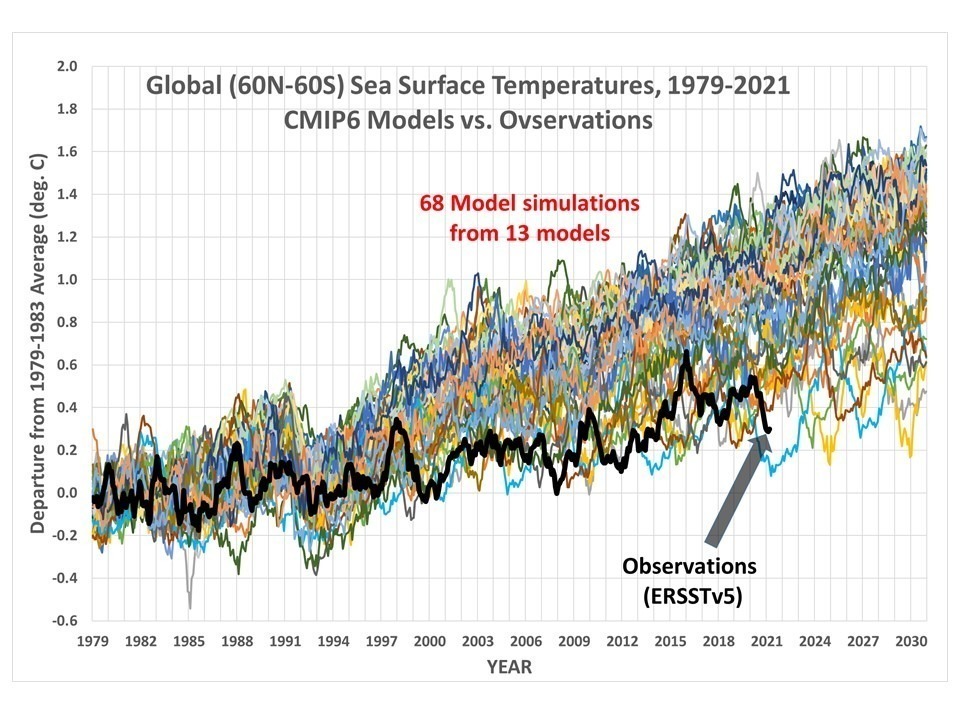
But as the graph above demonstrates, the lastest IPCC model (CMIP6) is still running hotter than actual temperatures. Just like CMIP5 and CMIP4. And all IPCC models of the past 2 decades.
Why is that?
Well, likely because the models are not handling cloud albedo well. And, is employing ECS and TCS estimates far hotter than supported by the physics. You can look up ECS and TCS for yourself – if you are reading this post, you are probably interested enough that you should know this stuff. And what albedo means.
An Earth Day Reminder: “Global Warming” is Only ~50% of What Models Predict
April 22nd, 2021 by Roy W. Spencer, Ph. D.
The claim by the Biden Administration that climate change has placed us in a moment of “profound crisis” ignores the fact that the energy policy changes being promoted are based upon computer model simulations which have produced average warming rates at least DOUBLE those observed in the last 40+ years.
Just about every climate claim made by politicians, and even many vocal scientists, has been either an exaggeration or a lie.
While it is easy for detractors of what I will show to claim I am in the scientific minority (true), or that I am a climate denier (not true; I do not deny some level of human-caused warming), the fact is that the “official” observations in recent decades are in disagreement with the “official” climate models being promoted for the purposes of implementing expensive, economically-damaging, and poverty-worsening energy policies.
Global Ocean Temperatures are Warming at Only ~50% the Rate of Climate Model Projections
Today’s example comes from global-average sea surface temperatures. The oceans provide our best gauge of how fast extra energy is accumulating in the climate system. Since John Christy and I are working on a project that explains global ocean temperatures since the late 1800s with a 1D climate model, I thought I would show you just how the observations are comparing to climate models simulations.
The plot below (Fig. 1) shows the monthly global (60N-60S) average ocean surface temperature variations since 1979 for 68 model simulations from 13 different climate models. The 42 years of observations we now have since 1979 (bold black line) shows that warming is occurring much more slowly than the average climate model says it should have.
Fig. 1. 68 CMIP6 climate model simulations of global average sea surface temperature (relative to the 5 year average, 1979-1983), and compared to observations from the ERSSTv5 dataset.
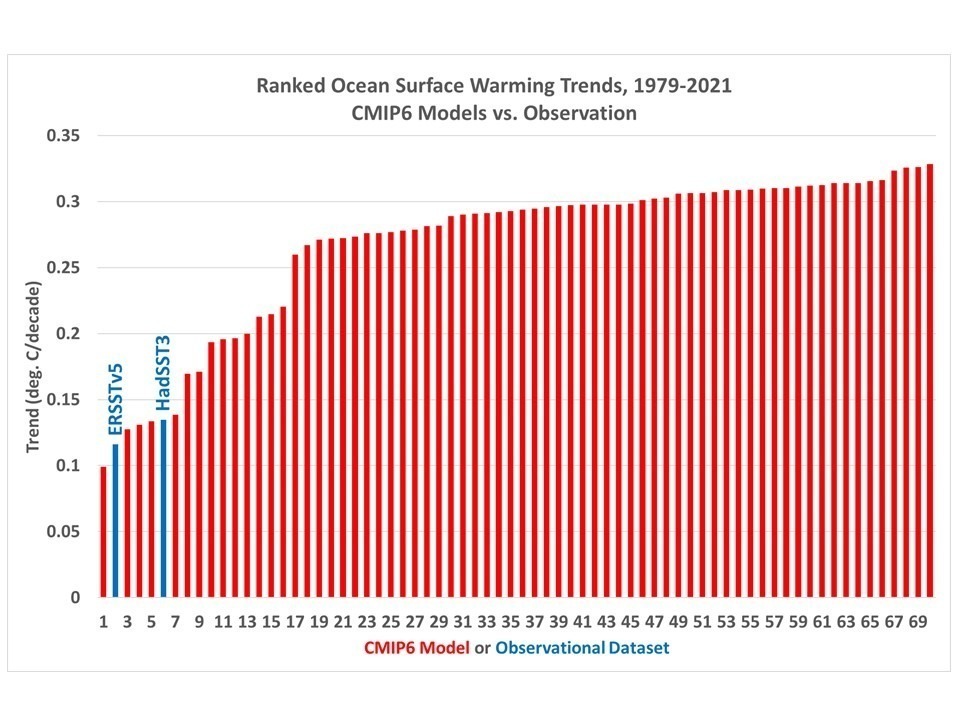
In terms of the linear temperature trends since 1979, Fig. 2 shows that 2 of the top-cited ocean temperature datasets have warming trends near the bottom of the range of climate model simulations.
Fig. 2. Linear temperature trends, 1979-2020, for the various model and observational datasets in Fig. 1, plus the HadSST3 observational record.
Deep Ocean Warming Could Be Mostly Natural
A related issue is how much the deep oceans are warming. As I have mentioned before, the (inarguable) energy imbalance associated with deep-ocean warming in recent decades is only about 1 part (less than 1 Watt per sq. m) in 300 of the natural energy flows in the climate system.
This is a very tiny energy imbalance in the climate system. We know NONE of the natural energy flows to that level of accuracy.
What that means is that global warming could be mostly natural, and we would not even know it.
I’m not claiming that is the case. I am merely pointing out the level of faith that is involved in the adjustments made to climate models, which necessarily produce warming due to increasing CO2 because those models simply assume that there is no other source of warming.
Yes, more CO2 must produce some warming. But the amount of warming makes all the difference to global energy policies.
Seldom is the public ever informed of these glaring discrepancies between basic science and what politicians and pop-scientists tell us.
Why does it matter?
It matters because there is no Climate Crisis. There is no Climate Emergency.
Yes, irregular warming is occurring. Yes, it is at least partly due to human greenhouse gas emissions. But seldom are the benefits of a somewhat warmer climate system mentioned, or the benefits of more CO2 in the atmosphere (which is required for life on Earth to exist).
But if we waste trillions of dollars (that’s just here in the U.S. — meanwhile, China will always do what is in the best interests of China) then that is trillions of dollars not available for the real necessities of life.
But how lethal is it compared to an influenza outbreak?
The 2009 swine flu pandemic was an influenza pandemic that lasted about 19 months, from January 2009 to August 2010, and was the most recent flu pandemic involving H1N1 influenza virus (the first being the 1918–1920 Spanish flu pandemic and the second being the 1977 Russian flu). First described in April 2009, the virus appeared to be a new strain of H1N1 that resulted from a previous triple reassortment of bird, swine, and human flu viruses and that further combined with a Eurasian pig flu virus, leading to the term “swine flu“.
Some studies estimated that the actual number of cases including asymptomatic and mild cases could be 700 million to 1.4 billion people—or 11 to 21 percent of the global population of 6.8 billion at the time. The lower value of 700 million is more than the 500 million people estimated to have been infected by the Spanish flu pandemic. However, the Spanish flu infected a much higher proportion of the world population at the time, with the Spanish flu infecting an estimated 500 million people, which was roughly equivalent to a third of the world population at the time of the pandemic.
The number of lab-confirmed deaths reported to the World Health Organization (WHO) is 18,449, though the 2009 H1N1 flu pandemic is estimated to have actually caused about 284,000 (range from 150,000 to 575,000) deaths. A follow-up study done in September 2010 showed that the risk of serious illness resulting from the 2009 H1N1 flu was no higher than that of the yearly seasonal flu. For comparison, the WHO estimates that 250,000 to 500,000 people die of seasonal flu annually.
Unlike most strains of influenza, the Pandemic H1N1/09 virus did not disproportionately infect adults older than 60 years; this was an unusual and characteristic feature of the H1N1 pandemic. Even in the case of previously healthy people, a small percentage develop pneumonia or acute respiratory distress syndrome (ARDS). This manifests itself as increased breathing difficulty and typically occurs three to six days after initial onset of flu symptoms. The pneumonia caused by flu can be either direct viral pneumonia or a secondary bacterial pneumonia. A November 2009 New England Journal of Medicine article recommended that flu patients whose chest X-ray indicates pneumonia receive both antivirals and antibiotics. In particular, it is a warning sign if a child seems to be getting better and then relapses with high fever, as this relapse may be bacterial pneumonia.
Wong et al, 2013 reviewed the literature analyzing the probability of mortality among people classified as H1N1 cases. They found most of the estimates ranged from 5 to 50 deaths per 100,000 cases (0.005-0.05%)) In age-stratified analyses, risk estimates rose monotonically with age, from approximately one death per 100,000 symptomatic cases in children to approximately 1,000 deaths per 100,000 symptomatic cases in the elderly (1%), although with substantial variation in the estimates within each age group.
Fast-forward to CoVid, Blackburn et al, 2021 also found that the risk for death among infected persons increased with age. Indiana’s IFR for noninstitutionalized persons older than 60 years is just below 2% (1 in 50). In comparison, the ratio is approximately 2.5 times greater than the estimated IFR for seasonal influenza, 0.8% (1 in 125), among those aged 65 years and older (5). Of note, the IFR for non-Whites is more than 3 times that for Whites, despite COVID-19 decedents in that group being 5.6 years younger on average.
References:
Blackburn, J., Yiannoutsos, C. T., Carroll, A. E., Halverson, P. K., & Menachemi, N. (2021). Infection fatality ratios for COVID-19 among noninstitutionalized persons 12 and older: Results of a random-sample prevalence study. Annals of Internal Medicine, 174(1), 135–136.
Wong, J. Y., Kelly, H., Ip, D. K. M., Wu, J. T., Leung, G. M., & Cowling, B. J. (2013). Case fatality risk of influenza A (H1N1pdm09): a systematic review: A systematic review. Epidemiology (Cambridge, Mass.), 24(6), 830–841.
April 21 (Reuters) – The Baltic Exchange’s main sea freight index surged to its highest in over a decade on Wednesday, powered by a jump in the larger capesize vessel segment on increasing iron ore shipments from Brazil.
* The Baltic dry index, which tracks rates for capesize, panamax and supramax vessel ferrying dry bulk commodities, jumped 238 points, or 9.6%, to 2,710, its highest since October 2010.
* The index recorded its biggest daily jump since Feb. 17.
* The capesize index surged 559 points, or 16.2%, to 4,014 – a peak since early October 2020.
* Average daily earnings for capesizes, which typically transport 150,000-tonne cargoes of coal and steel-making ingredient iron ore, jumped $4,638 to $33,290.
* The capesize segment has seen more fixtures reported over the last week, especially due to more demand for iron ore from Brazil, said Rebecca Galanopoulos Jones, head of research at AlibraShipping.
* Real-time shipping data showed an improvement in cargo volumes from the world’s top suppliers. Iron ore shipments by Australia and Brazil recovered last week after two weeks of declines.
* Chinese steel rebar and hot-rolled coil futures closed higher on Wednesday, amid concerns of stricter capacity and output controls in coming months.
* “The new week has set off with strength across both basins for sub-Capes, while capesize is expected to also gain up pace, as the dollar per tonne freight ceiling has risen higher, and a synchronous upwards trend across sizes is possible,” shipbroker Intermodal said in a weekly note on Tuesday.
* The panamax index jumped 133 points, or 5.2%, to a three-week high of 2,690.
* Average daily earnings for panamaxes, which usually carry coal or grain cargoes of about 60,000 tonnes to 70,00 tonnes, climbed $1,196 to $24,206.
The GIF published above presents NOAA’s temperature anomaly forcasts over the next 2 days.
As is evident, we’re looking at lower-48 temperature anomalies of upwards of a dozen degrees C below norms.
I routinely track the effects of the Solar Minimum that has begun and will run at least through 2050 due planetary dynamics reducing solar radiance. This cooling is unwinding the solar warming cycle we’ve seen since ~1840.
To date, the UK has seen the coldest April since 1922. It’s the coldest April in Germany since 1917.
With cold comes a buildup of snow.
Total snow mass for the Northern Hemisphere through April 19, is at an unprecedented 2,400 Gigatons. That’s ~700 Gigatons above the 1982-2012 average.
Like so many debacles in recent months, this one began when the Sock Puppet installed as US president by our corporatocracy last fall went with his bombastic bluster impulses in a television interview on March 17 calling Vladimir Putin a “killer”.
All national leaders fit that criterion. Hilariously, Putin loosely replied, it takes one to know one.
But the Sock Puppet’s bombast was worse than dumb – anyone with any intelligence knows Biden is dumb.
Worse – bombast was a sign of weakness.
And a “tell” that something was afoot. Only a dumb leftist hack would consider bluster a sign of strength. Talk about lack of self-awareness.
But we are talking about Corrupt Joe – owned by the credit card industry for decades.
Tbe “tell” signaled another Foggy Bottom shoe would soon drop.
Right on cue, a week later on March 24, Ukrainian President Zelensky, for all practical purposes, signed a declaration of war against Russia, via decree No. 117/2021.
Zelensky couldn’t do that without US guarantees – or thinking he had guarantees. Zelensky mentioned Ukraine’s planned accession to the military alliance no less than 19 times. Ukrainian Defense Minister Stepan Poltorak previously declared that Ukraine might mobilize up to 104,000 men this year.
Or was Poltorak Colonel Vindman’s sock puppet? Sure seems like he was.
Anyway, Ukraine mobilizes – so it’s no surprise Russia mobilizes. That’s the way these things work.
Recall more than a hundred years ago, the Hapsburgs mobilized to punish Serbia for the Black Hand’s involvement in the Archduke’s assassination. With a longer mobilization timetable than the Hapsburgs, Russia immediately mobilized. Which caused Germany to mobilize triggering a French mobilization.
And so on and so on.
What happens if you don’t mobilize?
Well, in 1940, the Third Reich mobilized along the Molotov-Ribbentrop line and Stalin didn’t. We know what happened next. Up to 30 million Russian dead.
After that disaster, no Russian will make THAT mistake again.
And so, with the Sock Puppet instigating Ukraine, the potential now exists for a terrible war on Russia’s border with the Ukraine. Even if war is averted at the very least, the Sock Puppet’s mindless “poke the bear” initiative increased the likelihood of killing a significant number of people.
That would be on top of the ~13 thousand people killed over the past seven years in the Donbass region of eastern Ukraine triggered by the Obama-Biden Administration policy.
And so now into that bloody breach rolls Ukrainian heavy armor.
Meanwhile, people in Donbass stuck on the Ukrainian side of the border declared their allegiance with Russia(!) – in fact, over the past seven years half a million residents in eastern Ukraine applied for and were granted Russian citizenship.
So what is Ukraine when so many people living there want to be Russian?
The word “Ukraine” (“Ukraina”) is most likely a word of Polish origin, meaning “border zone.” It seems to have first become a “thing” in 1653 when the region chose to rejoin Russia as Malorossia, or Little Russia.
Other regions were tacked on over time until after the Russian Revolution when Malorossia and neighboring districts were formed into the Ukrainian Soviet Socialist Republic.
Just before World War II, Stalin added western districts, which were previously part of he Austro-Hungarian Empire. Its inhabitants were Austrian, Polish, Hungarian, and Rumanian. Most of the rest, though initially Russian, had spent five centuries under foreign rule and spoke a distinctive, archaic dialect that served as the basis for creating the synthetic language now known as Ukrainian, while the rest of what is now Ukraine spoke Russian, Yiddish, and a wide assortment of village dialects.
Nikita Khrushchev, very much a product of the Ukrainian regional power center, paid it back for helping to promote him to the top job by giving it Russian Crimea—a move that was illegal under the Soviet constitution which was in effect at that time and a prime example of late Bolshevik political corruption that was undone in 2014 with great jubilation.
Bottom line: Donbass is barely Ukrainian. Ethnic Ukrainians form 58% of the population of Luhansk Oblast and 56.9% of Donetsk Oblast. Ethnic Russians form the largest minority, accounting for 39% and 38.2% of the two oblasts respectively. Modern Donbas is a predominately Russophone region with Russian as the main language of 74.9% of residents in Donetsk Oblast and 68.8% in Luhansk Oblast.
Residents of Russian origin are mainly concentrated in the larger urban centers. Russian became the main language and lingua franca in the course of industrialization, boosted by the immigration of many Russians, particularly from Kursk Oblast, to newly founded cities in Donbass. A subject of continuing research controversies, and often denied in these two oblasts, is the extent of forced emigration and deaths during the Soviet period, which particularly affected rural Ukrainians during the Holodomor – a consequence of early Soviet industrialization policies combined with two years of drought throughout southern Ukraine and the Volga region.
Prior to the Ukrainian crisis in 2013–14, the politics of the region were dominated by the pro-Russian Party of Regions, which gained about 50% of Donbas votes in the 2008 Ukrainian parliamentary election.
Simply put, this region is up for grabs, and always was. Kyiv is not where half the population care to be.
Arbitrary borders, and bombastic leaders are a recipe for war. It was true in the Balkans before the Great War.
True in the Second World War (or, Great Patriotic War, if you prefer).
Recall the Second World War began in Europe with German and Soviet armies reclaiming their historic borders in eastern Europe and ending a range of treaties beginning with Versailles. Like today’s US State Department, England and France foolishly “guaranteed” those borders and declared war when German troops marched into the east.
After the bloodbath of millions came 45 years of cold war.
There are some redlines Russia cannot allow to be crossed. Since the fall of the Soviet Union, Russia was dismembered into dozens of separate nations leaving sizeable minorities – and sometimes majorities – of Russian nationals in new lands.
Russia has long been on record it will defend its citizens wherever they are.
We saw that play out in South Ossetia. Conflict there started on August 8, 2008. Russia rolled in and Georgia’s troops ran out. Russia confiscated some of the more dangerous NATO war toys and left. Georgia has been at peace ever since.
So how far would Ukraine go to enforce arbitrary republic borders devised in the Soviet era?
And is it America’s role to defend borders set decades ago by the Soviet Union’s Politburo where hakf the population don’t want to be in Ukarine?
Without NATO, Ukraine isn’t going far against Russia.
Ukraine is the poorest country in Europe alongside Moldova, and suffers from a very high poverty rate as well as severe corruption.
An advisor of Ukrainian president described the quality of forcibly mobilized Ukrainian soldiers as “alcoholics and dodgers, drug addicts and morons”. According to many reports the increased consumption of drugs and alcohol on duty has become a serious issue in Ukrainian Armed Forces.
No surprise, Ukraine was important to Corrupt Joe as the source of cash for the Biden and Kerry families during the previous US socialist war government – COUGH HUNTER BIDEN/Chris Heinz COUGH.
Can the Ukrainian Army “counter Russian aggression?”
If an entire Russian-speaking region starts waving the Russian tricolor at rallies, singing the Russian anthem and then holds a referendum where a convincing majority votes to rejoin Russia (97% in Crimea in 2014), then Russia will annex that territory and defend it.
And if lots of people in a Russian-speaking region individually apply for Russian citizenship, swear allegiance to Russia and are issued Russian passports, Russia will try to defend them individually against attack.
Does NATO want to stop these people from declaring allegiance to Moscow? I thought we were about self-determination.
What is Ukraine to America other than a paycheck for the Biden family?
Meanwhile, Moscow is repositioning its 56th Guards Air Assault Brigade in Crimea.
Military sources in Kyiv estimate there are now 85,000 Russian troops between six and 25 miles from Ukraine’s northern and eastern borders.
Russia defends Russians as every nation should.
Consider the historical perspective. As a young KGB officer, the Black Sea was a virtual Soviet lake for Vladimir Putin – dominated in the west by Warsaw Pact members Bulgaria and Romania, and on the north and east by the USSR. Turkey occupied the south bank.
Today, three of the six countries that front on the Black Sea — Bulgaria, Romania and Turkey — are NATO members. Two of the others, Ukraine and Georgia, openly aspire to become members of NATO.
Think Putin feels a bit “pressured”? Would you under the same circumstances?
Putin sees through blustering bullies like our Sock Puppet.
The transparency of the Russian military buildup suggests that it is more of a message to the U.S. and NATO than any preparation for an invasion – control your dog or we will do it for you.
Beyond Kyiv, Putin also seems to be saying Ukraine’s admission to NATO or a stationing of U.S. or NATO forces in that country would cross a red line for Russia.
And we will not rule out military action to prevent or counter it.
The record suggests that Putin is not bluffing.
We have been here twice before.
In 2008, when Georgia invaded South Ossetia, Putin sent troops into South Ossetia, drove the Georgians out, and then invaded Georgia and occupied part of that country as an object lesson.
George W. Bush did nothing. And he was clearly a lot smarter than the Sock Puppet.
Certainly, Bush has better advisers.
In 2014, when a U.S.-backed coup overthrew the elected and pro-Russian regime in Kyiv, Putin occupied and annexed Crimea and assisted pro-Russian rebels in the Donbass in breaking free of Kyiv’s control.
In short, when it comes to Ukraine, Russia has demonstrated that it has its own red lines, which it will back up with military action.
The U.S. and NATO is not going to fight Russia over Ukraine, or to wrest Crimea or the Donbass from Putin’s control for the simple reason that – like Poland in 1939 – the cost is too high and the upside too low. Some things can’t be done.
Russia has made clear what it would fight to prevent Ukraine’s accession to NATO and NATO troops on its soil.
But U.S. policy seems to be one of “strategic ambiguity,” leaving the issue open as to what we would do.
That’s how misfires occur.
That’s how wars start.
Here’s Putin on the subject of redlines:
We really want to maintain good relations with all those engaged in international communication, including, by the way, those with whom we have not been getting along lately, to put it mildly. We really do not want to burn bridges. But if someone mistakes our good intentions for indifference or weakness and intends to burn or even blow up these bridges, they must know that Russia’s response will be asymmetrical, swift and tough.
Those behind provocations that threaten the core interests of our security will regret what they have done in a way they have not regretted anything for a long time.
At the same time, I just have to make it clear, we have enough patience, responsibility, professionalism, self-confidence and certainty in our cause, as well as common sense, when making a decision of any kind. But I hope that no one will think about crossing the “red line” with regard to Russia. We ourselves will determine in each specific case where it will be drawn.
The President of Russia delivered the Address to the Federal Assembly. The ceremony took place at the Manezh Central Exhibition Hall.April 21, 2021 13:20 Moscow
The ceremony was attended by the senators of the Russian Federation, State Duma deputies, members of the Government, the heads of the Constitutional and Supreme courts, regional governors, speakers of regional legislatures, the heads of traditional religious denominations and public activists.
* * *
President of Russia Vladimir Putin: Members of the Federation Council, State Duma deputies,
Citizens of Russia,
Today’s Presidential Address to the Federal Assembly will be dedicated mostly to internal issues. These include, naturally, healthcare, social policy and the economy. Of course, I will say a few words about external affairs and literally a few words about security issues.
It stands to reason that I will begin with last year’s events, when our country and, actually, the entire world faced a new, previously unknown and extremely dangerous infection.
It that period, including during our meetings with experts and conversations with the leaders of many states, I often heard the following description of the situation: we are faced with total uncertainty. And this is how it really was.
I could see this from the information I received from the regions. The number of people who contracted the disease and needed to be rushed to hospital kept growing. Actually, all of you are very well aware of this. Many hospitals were filled to capacity and reported that they could run out of oxygen soon, including in intensive care units. Ventilators, protective masks and PPE were actually distributed by the piece. Shops were running out of basic products, such as cereals, butter and sugar, due to increased demand.
The epidemic was on the offensive. But although there was great concern, I personally had no doubt that we would pull through.
Citizens, society and the state acted responsibly and in unison. We rallied, managed to take preventive action, to create conditions that would reduce the risk of infection, and to provide medical personnel and citizens with personal protective equipment. We increased the number of hospital beds for coronavirus patients more than five times over, to 280,000 beds.
The brief outline of measures conceals the tremendous and intensive work of millions of people in all regions of the Russian Federation. I would like to cordially thank all of you for this. Everyone worked quickly, efficiently and conscientiously.
At that time and later on, we were analysing the situation practically non-stop. I recall vividly my visit to the hospital in Kommunarka. It was necessary to experience, to see at first hand the danger facing us and to assess the working conditions of medical specialists. They immediately found themselves in the thick of events and fought for every life, while risking their own.
Today, doctors, paramedics, medical nurses and members of ambulance teams are sitting here in this hall. Once again my heartfelt thanks to you and your colleagues from all the Russian regions.
Russian researchers made a real breakthrough, and Russia now has three reliable coronavirus vaccines. These and many other achievements of the past few years highlight the country’s growing science and technological potential.
I would like to thank everyone, every person who contributed to the fight against infection, including the workers at the plants manufacturing medications, medical equipment, personal protective equipment, and enterprises working 24 hours a day, housing and utility agencies, trade companies, the Russian business community that quickly converted entire sectors so that they could manufacture essential goods, civilian and military builders, agriculture workers who gathered a record-breaking harvest, one of the biggest in the country’s history, that is, over 130 million tonnes.
The personnel of law enforcement agencies and the special services continued to carry out their duty, and the Russian Armed Forces reliably ensured our country’s security.
I would like to underscore the selfless behaviour of people working for social services, orphanages, boarding schools, retirement homes and hospices who stayed and who continue to stay with their charges. You will certainly agree with me that, while analysing developments at these institutions, one feels proud of people who are carrying out their duty there in such a responsible manner. It could move you to tears. I would like to thank them once again.
I would also like to convey my sincere gratitude to school teachers and the lecturers at universities and other education institutions. You did everything possible to enable your students and pupils to gain knowledge and successfully pass their exams, with the involvement and support of their parents.
Russia’s cultural life continued unabated. Theatres, museums and concert halls remained open to audiences online thanks to modern technology. Everyone who works in this crucial sphere rose to the occasion.
Our people showed discipline and managed to observe, let’s face it, quite exhausting, but vital precautions. Thus, acting together, we have put up an effective barrier to the pandemic.
The people’s solidarity showed in concrete actions, in caring for the loved ones and in willingness to help people in need. Millions became volunteers and engaged in building person-to-person help routes. The nationwide We Are Together campaign brought together people from different walks of life and ages. As always during challenging times, our traditional religions stepped up to provide spiritual support to the society. I see the leaders of our religions here and I would like to bow deeply to you, thank you very much
Throughout history, our people have come out victorious and overcome trials thanks to unity. Today, family, friendship, mutual assistance, graciousness and unity have come to the fore as well.
Spiritual and moral values, which are already being forgotten in some countries, have, on the contrary, made us stronger. And we will always uphold and defend these values.
Colleagues,
The pandemic broke out at a time when the aftermath of the demographic shocks of the 1940s and 1990s converged. We realise that the current demographic situation is an emergency. Unfortunately, this is how things are. We must accept and admit it and do something about it based on our understanding of this situation.
Saving the people of Russia is our top national priority. This priority underlies the stipulations of the updated Constitution concerning the protection of the family, the important role parents play in bringing up their children, strengthening social guarantees, and further developing the economy, education and culture.
Our strategy is to return to sustainable population growth to make sure that the average life expectancy in Russia increases to 78 years in 2030.
Unfortunately, the statistics show us sad and disappointing numbers. We are even seeing a certain decline. It is clear what is happening because of the pandemic, but we will keep our strategic goals in this critical sphere unchanged.
I fully realise that this is no small feat, the more so as the coronavirus has not yet been completely defeated and remains a direct threat. We see the dramatic developments in many countries where the cases of infection continue to grow. We need to keep in check the defence barriers designed to slow down the spread of the virus along our external borders and within our country.
I would like to address all citizens of Russia once again. Friends, please stay alert. I am asking you to take care of yourselves and your loved ones and to comply with the doctors’ and sanitary services’ recommendations as closely as possible.
Vaccination is of crucial importance. I would like to ask the Government, the Healthcare Ministry and the heads of the regions to monitor this process on a daily basis. The opportunity to take the jab must be available everywhere, so that we achieve the so-called herd immunity by the autumn.
The attainment of this goal depends on everyone, on all our citizens. Please, I am asking all citizens of Russia once again to get vaccinated. This is the only way to stop this deadly epidemic. There is no alternative. The other choice is much worse: to contract the disease with unpredictable consequences.
I would like to say once again that the disease is still with us. But we must start thinking already now about healing the wounds it has inflicted and restoring people’s health.
During the peak periods, our hospitals and outpatient clinics had to reduce or even suspend scheduled visits. This increased the risk of the aggravation of chronic illnesses or the risk of missing the first signs of or correctly diagnosing new illnesses.
I would like to ask the Government, the Healthcare Ministry and the constituent entities of the Russian Federation to expand the system of medical check-ups and periodic screenings, taking into account the current epidemiological situation, and to relaunch them in full measure on July 1, 2021 for people of all ages. They must involve the largest number of people possible. This is why we will increase the supply of mobile medical diagnostic systems to the regions in the near future.
One of the targets of the coronavirus is the cardiovascular system. These diseases have always been the leading cause of death. Therefore, special attention during periodic screenings must be given to people with cardiovascular diseases. I would like to instruct the Government to take additional measures to prevent the diseases that are the main causes of premature death. As I have already mentioned, these are cardiovascular diseases plus malignant tumours and respiratory system diseases.
Hepatitis C claims many young lives. Decisions must be made to reduce this threat to the health of the nation to a minimum within 10 years.
To ensure that as many people as possible can restore their health at sanatoriums and health resorts, I propose that the 20 percent rebate programme for domestic travel is extended at least until the end of the year.
Children’s health is our special priority. Indeed, the foundation for good health for many years to come is laid during childhood. Children’s rest and recreation activities must be made as affordable as possible. In this regard, this year, I propose reimbursing half of what parents spend on their children’s summer camps.
In addition, we need to expand opportunities for student tourism. Already this year, we must launch several pilot projects, including accommodation on university campuses and in dormitories in other regions for students who travel around the country during the summer.
And, of course, we must reward the young people who have done well in academic competitions and in volunteer and creative initiatives as well as the projects operated by the Russia – Land of Opportunity platform. For them, the partial reimbursement programme for tourist vouchers will remain valid during the holidays, aka the high season. This is a ground-breaking decision.
I wish to thank all the parliamentary groups which supported the decision on the taxation of high incomes, or rather, a portion of high incomes. These proceeds will go to the dedicated Circle of Kindness fund and have already been released to help children affected by rare and serious diseases, to purchase expensive medicines and medical equipment, and to cover the costs of surgeries.
On April 28, we will celebrate Ambulance Worker Day which was established as a show of respect to those who arrive first to save lives. These specialists must be provided with all necessary supplies. Within the next three years, we will make another 5,000 new ambulances available to rural communities, urban-type localities and small towns, which will replace the ambulance fleet almost in full.
I want to emphasise that public healthcare authorities in many leading countries – we are well aware of it and, in fact, they themselves are saying so – were unable to deal with the challenges of the pandemic as effectively as we did in Russia. At the same time, global health care is on the cusp of a genuine revolution. This must be recognised and clearly seen. We cannot miss it.
The pandemic has exponentially sped up the introduction of telemedicine, artificial intelligence and new approaches in diagnostics, surgery, rehabilitation and the production of medicines everywhere. We must put these technologies at the service of the people of our country.
We must build our healthcare system around this ground-breaking technology, and keep an eye on pressing everyday problems in the process. As we are all aware, they abound, mostly in primary care. There must be no such thing as waiting lines, no hassle making a diagnostics appointment or a specialist doctor appointment, or obtaining prescriptions and sick leaves, for that matter. This has often come up in our discussions lately. The funds have been set side and allocated. It is time to move quickly and efficiently to make it happen.
We have a backlog to deal with in healthcare and other social sectors, including many technical, financial and managerial challenges. However, what people need is qualified and timely medical help. I propose reviewing public healthcare problems from this perspective at an expanded meeting of the State Council some time soon. We will prepare for it and hold it shortly.
I repeat: we have gained some fundamentally new experience in fulfilling our social commitments. During the pandemic, we made direct payments to families bringing up almost 28 million children, and they received their benefits without any unnecessary paperwork or other kinds of red tape – they got the money they needed and were entitled to automatically. I know Government members have been working on this, focusing deliberately, not without some failures, but they have made every effort to accomplish this task, and coped with it. This is great, this is a good example. This approach should become the norm at all levels of government.
This is the essence of the National Social Initiative, which was discussed at a recent joint meeting of the State Council Presidium and the Agency for Strategic Initiatives.
I am calling on the regional governors: it is your direct responsibility to organise the work of local clinics, daycare nurseries and schools, and employment centres, based on the daily needs of families, of each and every person. In many regions, I have seen with my own eyes that such work has already been launched in certain areas. This needs to be done everywhere and in all social sectors.
As soon as in 2022, we must introduce the ‘social treasury’ principles. This means that all federal benefits, pensions and other social payments and services will be provided and paid in a one-stop mode, without having to visit dozens of different agencies, but simply upon marriage, the birth of a child, retirement or other life milestones. Within three years, the vast majority of public and municipal services should be provided to Russian citizens remotely, 24 hours a day, seven days a week, that is, on an ongoing basis.
Separately, we will have to discuss child-support payments, which are a sensitive topic for many families. Unfortunately, this is a problem in our country. This procedure should not be humiliating for anyone. Most issues here need to be resolved remotely and, most importantly, in the interests of the affected party. A mother with a child should not have to camp on the doorstep of various authorities to collect official documents, carrying her baby in her arms, and this is what usually happens. A system of interagency communication needs to be built, with banks included, in such a way as to ensure the unconditional execution of court decisions on the recovery of child-support payments. The state is obliged to protect the rights of the child; this is what we are talking about. I will return to this topic again later.
Colleagues,
We understand the heavy toll that the pandemic has taken on people’s welfare. Statistics show the aggravating effects of this outbreak on social inequality and poverty. It has been a challenge for all countries around the world – remember, all countries, not only Russia, are experiencing the same consequences. Certainly, we should be primarily concerned about the situation in our own country.
We are now facing price hikes that are undercutting people’s incomes. Some urgent decisions have been made, of course, but we cannot solely rely on targeted and essentially directive measures. We remember potential outcomes. Back in the late 1980s and the 1990s in the Soviet Union, they resulted in empty store shelves. But today, even when the pandemic was at its worst, we did not allow the same thing to happen.
The Government’s goal is to create conditions that will be long-term and which, I want to stress this part, colleagues, can, thanks to market mechanisms (which we have), guarantee the predictability of prices and quality replenishment of the domestic market. Nobody is saying that we will be setting prices from the top. There’s no need to muddy the waters and scare people. There are market regulatory mechanisms and they must be employed – promptly and to the extent required and appropriate to a specific situation in the economy and social sphere. We need to stimulate investment activity by reducing business risks. The two are not mutually exclusive.
Surely, the main goal right now is to ensure that people’s real incomes grow – that is, to restore them and secure their further growth. As I said, we need tangible changes in our fight against poverty.
Before anything else, the Government must provide direct support to families with children who are experiencing hardships. This has been our consistent policy and we will continue to pursue it.
We already have a system of benefits paid to parents of one or two children from the time the children are born and until they reach the age of three. Families with incomes below two subsistence minimums per family member are entitled to such benefits. The average monthly amount paid across the country is 11,300 rubles per child. Seventy-eight Russian regions pay benefits for the third child, also 11,300 rubles on average.
Please note that we are making consistent progress in this area, step by step. Last year, we introduced benefits for children aged three to seven. They range from 5,650 to 11,300 rubles per month depending on the region.
I instruct the Government to develop, by July 1, a comprehensive system of support for families with children. Our goal is to minimise the risk of poverty for such families.
But a number of new decisions need to be taken immediately, already today. It is always difficult for a single parent to raise a child. There are plenty of reasons for that. And this is not about the reasons but about supporting children. It is particularly difficult when a single-parent family is having financial problems, especially when children start going to school and family expenses objectively rise.
In particular, we must support single-parent families, where a mother or a father is bringing up a child alone, and only one of the parents is registered on the birth certificate – sorry to be speaking of such mundane things, but this is a fact of life – or the parents have divorced and one of them has the right to child-support payments. Therefore, as of July 1 this year, all children in such families aged between 8 and 16, inclusively, will receive a benefit. The national average of such benefit will be 5,650 rubles.
Of course, we must also help women who are expecting a baby and who have financial problems. It is extremely important for a mother-to-be to get support from the state and society, so that they can keep their pregnancy and know that they will receive help in raising and bringing up their child.
I propose approving a monthly subsidy for women who register at a maternity centre during early pregnancy and who have financial problems. The average subsidy for them will be 6,350 rubles a month.
Next, the sick pay for taking care of a child who falls ill depends on the employment record, which is correct, on the whole, and fair. However, young women receive much smaller sick leave payments. We have discussed this issue at the State Council, and it has been raised by the United Russia. We need to adopt legal decisions on this matter without delay, so that payments for taking care of a sick child aged up to 7 years inclusively are approved at 100 percent of the parent’s salary as soon as this year.
You understand what this means. The majority of those in this room know that the longer the employment record the larger the sick pay. Women who have a long work record usually receive full sick pay, but they usually do not have children at their age. Those who have children do not receive full pay. We must definitely help those who are expecting a baby.
I would also like to remind you that we have expanded and extended the maternity capital programme up until 2026. This benefit will now be paid already for the first child. We could not afford this before. The maternity capital has been adjusted to inflation and is almost 640,000 rubles
Free hot meals for all primary school children were approved as of January 1, 2020, and this measure has become a great help for families.
I would like to point out that all our decisions were designed to support our people. I know that many and very many people have financial problems now. The labour market and real disposable income of the people will be certainly restored, and we will move on. This has not happened yet. Therefore, I suggest approving one more one-off payment for the families that have school children, namely, 10,000 rubles per schoolchild. Moreover, this payment will also be made for the children who will only start school this year. We will transfer the money in mid-August, so that parents can get their children ready for school.
The updated Constitution of Russia includes clauses on demographic development, and protection of the family and childhood. They should be implemented in practice at all levels of government. I propose including a section aimed at supporting young people in each national project.
Friends,
During the pandemic, many young doctors and nurses, recent graduates as well as residents and students of medical universities worked courageously in the so-called red zones, joining their senior colleagues. In that extraordinary situation, teachers, schoolchildren, college and university students continued to teach and study, to have exams. Young family members supported their parents and older relatives. The youth of Russia proved to be extremely worthy during that period of trials. We can be proud of them.
We will do everything to open up as many life opportunities as possible for the younger generation. Their journey certainly begins at school, and I am sure that school will always be a second home for children; a new home, comfortable and modern.
Under the existing federal programme and with additional resources provided by the VEB Development Bank, we will build at least 1,300 new schools for more than a million children by the end of 2024. We will also purchase at least 16,000 school buses over the next four years. All school buses must be modern and safe.
Classroom teachers have been receiving a monthly addition to their salaries since last year. A very necessary and, I am sure, fair decision. I remember how we held discussions on this matter last year.
However, I have received requests, letters from teachers in secondary vocational institutions who say they have been forgotten. This is actually true. Justice must be restored. We have to fix this and establish the same additional payment of 5,000 rubles for supervisors of educational groups at technical schools and colleges.
I propose allocating an additional 10 billion rubles in the next two years for major repairs and technical equipment of our pedagogical universities. I ask the Government to pay close attention to up-to-date training of future teachers. The future of Russia largely depends on them.
Furthermore, school teaching teams should be expanded with teaching assistants, mentors and counsellors, whose job will be to organise exciting projects for children at schools.
It is very important that our young people should look to and be inspired by the achievements and victories of our outstanding ancestors and contemporaries, by their love for our Motherland and aspiration to make a personal contribution to its development. Children should have the opportunity to explore the national history and the multinational culture, our achievements in science and technology, literature and art in advanced formats. You know, I still open certain school textbooks occasionally and am surprised at what I see there – as if what is written there has nothing to do with us at all. Who writes such textbooks? Who approves them? It is unbelievable. They mention everything, the ‘second front’ and a lot of other facts, but not the Battle of Stalingrad – how is that possible? Amazing! I do not even want to comment.
I propose allocating an additional 24 billion rubles within the next three years to renovate cultural centres, libraries and museums in rural areas and small historical towns. This is another crucial area.
It is important to resume the activities of the Knowledge Society – we all remember well what it is – based on a modern digital platform. It seems to have been operational lately, but no one seems to notice it is there, either. Also, in order to support projects in culture, art and creative activities, we will set up a Presidential fund for cultural initiatives. Already this year, we will use its competitive grants to finance over 1,500 creative teams.
Colleagues,
A month from now, 11th grade students will be taking exams. Based on the results, most of them, about 60 percent, will enrol in universities and have their tuition covered from the budget. It can be safely stated that practically no country in the world apart from Russia has this kind of broad and free access to higher education.
In the next two years, we will make an additional 45,000 state-funded places available at our universities. At least 70 percent of them will go to the regions which need university graduates.
Starting this year, at least 100 universities in the constituent entities of our Federation will receive grants in the amount of 100 million rubles or more for opening student technoparks and business incubators, upgrading academic and laboratory facilities, and running training programmes. All state universities will be eligible for this support, including the ones that train future teachers, medical doctors, transport and culture workers. I am confident that the young generation of Russians, Russian scientists, will make their names known in the meaningful research projects that are yet to come.
This year was declared Science and Technology Year in our country. We realise that science is absolutely key in the modern world. Until 2024, Russia will allocate 1.63 trillion rubles from the federal budget alone for civil, including fundamental, research. But that is not all.
We are about to launch ground-breaking programmes in areas that are critical to our country. They will be given the status of nationwide projects. I would like to discuss some of them separately just to give you a sense.
First, we must have a solid and reliable shield to give us sanitary and biological safety. We now understand what it is about. It is imperative to ensure Russia’s independence in the production of the entire range of vaccines and pharmaceutical substances, including medications against infections that are resistant to the current generation of antibiotics. Importantly, this must be achieved with the maximum engagement of Russian-made equipment and domestic components.
In the event of an infection as dangerous as the coronavirus, or, God forbid, even more dangerous, Russia must be prepared to develop its own test systems within four days, precisely four days, and to create an efficacious domestic vaccine and start its mass production as soon as possible. These are the goals that we are setting for ourselves. The timeframe for achieving these goals is 2030. But the sooner we get there, the better.
Second, we need new comprehensive approaches to the development of our energy sector, including new solutions for nuclear generation in the promising areas of hydrogen energy and energy storage.
Third, we must find answers to the climate change challenges, adjust our agriculture, industry, the housing and utilities sector and the entire infrastructure to them, create a carbon utilisation sector, bring down emissions and introduce strict control and monitoring measures.
Over the next 30 years, the cumulative emissions in Russia must be smaller than in the EU. It is an ambitious goal, considering the size of our country and the specific features of its geography, climate and economic structure. However, I have no doubt whatsoever that it is a perfectly realistic goal in light of our research and technological potential.
Our new energy and pharmaceutical sectors and the solution of climate problems must provide a powerful boost to a comprehensive modernisation of all economic sectors and the social sphere. It is a direct path to the creation of modern and well-paid jobs.
The efforts taken by each level of government, business, development institutions and the Russian Academy of Sciences must have in view the main, central task: to improve the quality of life for our people. I would like to point out that our position on environmental protection is a matter of principle in this respect, and it will definitely remain unchanged.
The dangers of the alternative position have been recently exemplified by the events in Norilsk, Usolye-Sibirskoye and several other places. We will certainly help the people who live there, but we must also preclude a repetition of such environmental disasters.
I would like to ask those responsible to accelerate the adoption of a law on the financial responsibility of enterprise owners for clearing up the accumulated pollution and for the reclamation of industrial sites. This is a very simple approach. Here it is: if you have benefited from polluting the environment, clean up after yourself. We must act harshly. Rosprirodnadoz [the Federal Service for Supervision of Natural Resources] and other regulatory authorities must do their jobs.
I would like to add that the “polluter pays” principle must also be employed in full in the waste disposal sector to ensure transition to the so-called closed-loop economy. With this aim in view, we must launch a mechanism of extended producers and importers’ responsibility for the management of products and packaging wastes as soon as this year.
I also propose marking environmental payments to the federal budget. I know that experts and financial specialists do not like such special marks, but I see this as a vital sphere of our activity. We can make an exception in this case, and invest these funds in clearing up accumulated pollution and improving the environment.
Also, as I said, the amount of hazardous emissions in Russia’s 12 largest industrial centres must be reduced by 20 percent by 2024. We have already discussed this. Obviously, this goal must be accomplished through a comprehensive modernisation of the industrial sector, the housing and utilities sector, transport and energy.
Moreover, I propose expanding the emission quota system to all Russian cities with major air quality problems and introduce strict liability for non-compliance with environmental regulations. Of course, this requires transparent monitoring.
We will definitely support the efforts of businesses to upgrade their facilities up to current environmental standards. For example, upgrading will begin this year at aluminium plants in Bratsk, Irkutsk, Krasnoyarsk and Novokuznetsk based on the state guarantee mechanism. I will later name other cities and towns in other contexts but it does not mean that our work is limited to those areas. They only serve as examples.
Colleagues,
Last year, we allocated unprecedented resources for supporting the economy. Among other things, we managed to preserve over 5 million jobs through subsidised loans for wage payments. I want to stress that this programme succeeded but it succeeded precisely because businesses acted responsibly and did everything they could to keep their employees. We could see that.
Unfortunately, it was not possible to prevent layoffs completely. I understand how hard it is for those who lost their jobs. The Government was instructed to ensure that the labour market recovers by the end of the year. Still, this problem must be solved sooner so that people can have a stable income again. The Government will be encouraging entrepreneurial initiatives and stimulate private investments that create new jobs.
As you know, last year, social insurance contributions for small and medium-sized businesses were reduced by half, from 30 to 15 percent. This decision will remain in force permanently and is not subject to review.
I instruct the Government to present, within the next month, additional proposals on supporting small and medium-sized businesses, such as tax incentives, accessible loans and expanding product distribution and sales, including to major state-run companies.
As for other decisions in the economic sphere, I would like to mention the following.
First, we have already scrapped many archaic norms and requirements in construction and other fields and discontinued many unnecessary control inspections, but we also need to increase the momentum to achieve substantive, clear and tangible results in improving the business climate. For example, building a turnkey factory in Russia should be faster, more economically efficient and easier than in other regions of the world, including countries with developed economies.
Furthermore, we need to simplify the working conditions for non-commodity exporters. We have certainly been pursuing this policy line for a few years now, but we still need to remove all excessive restrictions in forex control for these exporters. This is one of the problems. The new procedure should start functioning in July. We have discussed this matter more than once. All amendments to the legislation must be adopted as quickly as possible during the spring session.
Secondly, the talent of an entrepreneur is primarily the talent of a creator, an aspiration to change life for the better, to create new jobs. The state will definitely support this attitude.
In the modern world where the market situation sometimes changes almost every day, businesses have to deal with high risks, especially when investing in long-term projects. To address this, we will be adjusting the entire private investment support system. We will evaluate how effective the projects are by the new products, services, and technologies they provide people with and how they improve the potential of Russia and each individual region.
The Special Investment Contract mechanism has already been improved; we have implemented a new instrument – Investment Protection and Promotion Agreements. We have consolidated development institutions on the basis of VEB. Their job is to reduce the risks for investing private capital, to help in the creation of new markets and investment mechanisms, the same as with the Project Finance Factory mechanism already in place. It is currently supporting more than 40 commercial projects with a total investment of 3 trillion rubles.
I am waiting for proposals from the Government on the implementation of the ideas proposed in March at a meeting with Russian businesses. Colleagues, you are well aware of this.
Third, we are making all major decisions concerning the economy through a dialogue with the business community. This is the practice established over many years. Of course, we have the right to expect that the auxiliary financial instruments and support mechanisms will bring the most desired result, which is converting profit into investment and development.
There is an important thing I want to say although it is nothing new to businesses. They know it already. The corporate sector is expected to make a record profit this year, despite all the problems that we are dealing with. Despite these problems, this is the real picture. We will take note of how this profit will be used and, based on the annual results, we may decide to calibrate the tax legislation. I want to see specific proposals from the Government. Off the record, I should note: some withdraw dividends while others invest in the development of their companies and entire industries. We will be encouraging those who invest.
Last year, we substantially increased budget expenditure while managing to maintain the stability of state finances. The Government and the Central Bank must continue to pursue a responsible financial policy. Ensuring macroeconomic stability and containing inflation within set parameters is an extremely important task. I assume that it will definitely be accomplished.
At the same time, thanks to our budget capacity and our reserves, we can allocate more funds to support investment in infrastructure and provide regions with new development instruments. Launching these instruments will require the law to be amended. I expect that all parliamentary parties – A Just Russia, the Liberal Democratic Party, the Communist Party and United Russia – will uphold these amendments.
In this regard, I want to thank all constructive public forces in the country for their responsible and patriotic attitude during this difficult epidemic. These are not just meaningless words because it was this attitude and its practical significance that helped all of us preserve the balance and stability of Russia’s government and political system. This is always important but it is especially relevant because we are preparing for the elections to the State Duma and other government bodies, considering the extensive work we will have to carry out. I hope that this competitive mindset that unites us in the face of common goals will persist.
Colleagues,
The country is developing and moving forward, but this is only taking place when the regions of the Russian Federation are developing. A striving of the heads of constituent entities to make their regions successful and self-sufficient must be and will be encouraged in every way.
We will support those who assume responsibility and launch constructive projects. I am confident that every Russian region has huge potential. To help make positive and productive use of this potential, what must we reduce first of all? The governors know what I am referring to: we must reduce the debt burden. These topics must be thoroughly discussed once again.
I ask the Government to submit by June 1 the proposals on ensuring long-term stability of regional and municipal finance and on increasing the regions’ self-sufficiency. We will discuss them in summer at a State Council meeting, and we will do so with due regard for the priority decisions about which I will tell you now.
First of all, we must help regions with large commercial debts. Here is what I suggest: the amount of a region’s commercial debt that exceeds 25 percent of the given region’s own revenues will be replaced with budgetary loans that will mature in 2029.
In addition, I propose restructuring the budgetary loans, yes, budgetary loans that were issued to the regions last year for taking measures to combat the pandemic. I believe that this would be fair. I would like to remind everyone that these loans will mature in two months, on July 1. I suggest extending them to 2029 as well.
I would like to emphasise that the restructuring of accumulated debts should be used as a mechanism of increasing the self-sufficiency of regional economies, especially considering that we will be offering a fundamentally new development tool to our constituent entities. I am referring to the so-called budgetary infrastructure loans with an interest rate of not more than 3 percent per annum and with maturity in 15 years. We intend to allocate a total of at least 0.5 trillion rubles, that is, 500 billion rubles of such infrastructure loans by the end of 2023.
Regional debt restructuring must be based on the concept of justice, which has always been the case, actually. Some constituent entities have large accumulated commercial debts, while other entities did not take out many loans. The latter may feel neglected in this case. This will not do, and we will not permit this. We will support those who have always pursued and continue to pursue a balanced financial policy. The principle of the distribution of infrastructure loans will be as follows: the fewer debts a region had, the more it will be able to receive in infrastructure loans.
We are one country. All levels of government and business must work to one end. Debt restructuring and an innovative investment resource in the form of infrastructure loans will allow us to expand the planning horizon and to launch new solutions that are tied in with the implementation of national projects, sector-specific strategies and a comprehensive plan for upgrading the backbone infrastructure.
Federal infrastructure loans are a powerful resource, but whether they will help us get ahead or attract private investment hugely depends on what regional management teams do and on their ability to conduct an open and candid dialogue with businesses, investors, and, of course, primarily, individuals.
The infrastructure projects in the regions must be implemented, primarily, in the interests of the people, and serve as investment in the creation of new jobs and in promoting the well-being of millions of Russian households and securing the future of our children. The priorities will be building motorways and bypasses in urban areas, upgrading the housing and utilities sector infrastructure and the public transport system, as well as conducting integrated development of territories and building tourist facilities.
Please note that the infrastructure and budget loans will be fully under the control of the Federal Treasury and will be provided exclusively for specific projects that have been thoroughly analysed by experts at the federal level. While we are at it, I would like to say something to regional leaders and the Government: listen, let’s work in a rhythmic and business-like manner. I do not want to use harsh or rude language at this rostrum, but things must be done on time and projects must be prepared, not just pictures shown to the Government. In turn, the Government must quickly process the projects and help the regions deal with things they have problems dealing with. You must help your colleagues, you understand that? Not trash what they have brought to you and say they did a bad job. Some of them are unable to do what you ask of them. Help them, and then things will be on the path forwards.
The scale of the projects may vary, but most importantly, as I said, they must benefit our people and open up new opportunities. For example, in conjunction with our major companies and using the proposed mechanism, the Yamalo-Nenets Autonomous Area will begin the construction of the Northern Latitudinal Railway. This is the railway that will spur the development of the richest resources of the Arctic. This project has been in the works for a long time now, and it’s time to launch it, since we can do so now. For example, as a result, Nizhny Novgorod will be able to continue building the metro and to start renovating the city centre. Chelyabinsk, another city with a million-plus residents, will also have the opportunity to upgrade its transport system through a long-standing metro construction project. I am aware of other similar projects in Krasnoyarsk and other regions.
And, of course, the construction of new facilities must be at a qualitatively higher level. I want the Government to draft a clear step-by-step plan for the end-to-end and widespread use of digital design, and the production and introduction of cutting-edge energy-efficient materials. This is also important if we want to tackle the climate and environmental challenges.
Large-scale infrastructure development sets fundamentally new tasks before the construction industry. In the difficult past year, it worked smoothly and built over 80 million square metres of housing. This is a good result. The more we build, the more affordable housing will there be for Russian families.
Therefore, we have an ambitious goal. We have already discussed it as well and this ambitious goal has not disappeared– we plan to build 120 million square metres of housing every year. That said, we must certainly envisage a special mechanism for supporting private housing construction.
As for large-scale construction, the DOM.RF development institute will attract financial resources through the placement of bonds. This is a tried and tested mechanism that generally works well. These resources must go to developers as targeted loans.
I would like to emphasise that federal budget subsidies will allow DOM.RF to issue loans to developers at a minimal annual rate of about 3–4 percent. The construction of residential neighbourhoods in Tula, Tyumen, the Sakhalin Region and Kuzbass will be pilot projects for developing this model.
Improvement of cities and towns and housing construction growth play a major role in the development of the regions. We must take care of the urgent, daily problems of local residents. Quite a few Russian families live in areas connected to gas networks but their homes still have no access to gas for some reason. It seems the pipe is there but there is no gas at home.
I would like to ask the Government to work out, in cooperation with the regions, a clear-cut plan for bringing gas to such households. In this context, I support United Russia’s initiative, notably, that people do not have to pay for laying gas pipes directly to the border of their land plots in a residential area.
As I have already said, the Government must analyse all details in cooperation with Gazprom and other companies and agencies that work in this area to prevent any setbacks. Otherwise, I will say something from this rostrum and people will be waiting for it but because you don’t put some squiggles or commas in the right place everything will get bogged down again. This is unacceptable, and I will check on it myself, so please pay attention. Mosoblgaz and other companies must understand what they must do, in what timeframe and how much money they have at their disposal.
The goal is certainly more extensive. We must offer every region our solutions on public access to reliable and clean energy sources. This may be electricity, including from renewable sources, or environmentally friendly use of coal, which is also an option in the modern world, pipeline or liquefied gas. I instruct the regional heads to prepare, in coordination with the Government, detailed plans of action and start implementing them next year.
For example, in Kamchatka we must envisage the creation of local gas-receiving infrastructure to ensure reliable long-term gas supplies to the residents and companies of the Kamchatka Territory.
Colleagues,
We will not only give fundamentally new development tools to the regions, but will also directly invest federal resources into the settlement of the worst systemic problems, which will have a compound effect on boosting the regions’ growth and improving the quality of people’s lives.
We will begin with allocations from the National Welfare Fund for building mainline motorways. First of all, we should finance the ongoing construction of the Moscow-Kazan high-speed road and, more than that, extend it all the way to Yekaterinburg, completing this project within three years.
This way, together with the existing Moscow-St Petersburg high-speed road and the Central Ring Road, this will ensure safe high-speed motorway transit across the entire European part of Russia, from the Baltic Sea to the Urals, by 2024.
However, it is not enough to simply connect the end-of-line destinations. What good will this do, if it does not change anything about life in villages or small towns but only gives the people there an opportunity to watch high-speed trains and vehicles rush past? The backbone infrastructure must definitely lead to the development of all the territories where it has been built, giving rise to the development of a modern regional network.
The constituent entities will now be able to use infrastructure loans to speed up the implementation of these construction projects. But in their development plans, our colleagues should remember and take into account that the federal and regional mainlines must function as a unified system in the interests of our citizens, businesses and regions. In this way, the infrastructure loans and the resources of the National Welfare Fund will be working for the benefit of all Russian regions.
The same goes for our new national project in the tourist sphere. A programme of easy loans will be launched soon to finance the construction and renovation of hotels and other tourist infrastructure. The interest rate on these loans will be 3–5 percent as well, and the loans will mature in 15 years.
There are many other pilot projects. I will only mention some of them: the development of Sheregesh, the leading mountain ski resort in Kuzbass; the creation of a yachting resort in the Bay of Balaklava in Sevastopol; and the development of the tourist industry on the Altai and in the Kaliningrad Region.
The infrastructure loans project will give a new impetus to entire tourist clusters. In particular, several regions in Central Russia will be able to modernise and expand the Golden Ring route at a fundamentally new level, realising the tourist potential of small towns such as Tarusa, Palekh, Murom, Gorokhovets, Tutayev and Borovsk. Development projects will be launched in the Volga Region cities, the Crimean resorts, the Black Sea and Pacific coast areas, as well as in our resort towns such as Staraya Russa in the Novgorod Region and Kavkazskiye Mineralnye Vody in the Caucasus, including its gem, Kislovodsk.
Russia is a hospitable country that is open to its good friends. You surely remember what happened during the 2018 football championships. As soon as the epidemiological situation allows, we will lift the remaining restrictions and millions of tourists from all over the world will come to Russia again. We have a practical task at hand: to ensure that e-visas for travel to Russia are available remotely and without undue formalities within a matter of four days in the majority of countries.
Colleagues,
The meaning and purpose of Russia’s policy in the international arena – I will just say a few words about this to conclude my address – is to ensure peace and security for the well-being of our citizens, for the stable development of our country. Russia certainly has its own interests we defend and will continue to defend within the framework of international law, as all other states do. And if someone refuses to understand this obvious thing or does not want to conduct a dialogue and chooses a selfish and arrogant tone with us, Russia will always find a way to defend its stance.
At the same time, unfortunately, everyone in the world seems to be used to the practice of politically motivated, illegal economic sanctions and to certain actors’ brutal attempts to impose their will on others by force. But today, this practice is degenerating into something even more dangerous – I am referring to the recently exposed direct interference in Belarus in an attempt to orchestrate a coup d’état and assassinate the President of that country. At the same time, it is typical that even such flagrant actions have not been condemned by the so-called collective West. Nobody seemed to notice. Everyone pretends nothing is happening.
But listen, you can think whatever you like of, say, Ukrainian President [Viktor] Yanukovych or [Nicolas] Maduro in Venezuela. I repeat, you can like or dislike them, including Yanukovych who almost got killed, too, and removed from power via an armed coup. You can have your own opinion of President of Belarus Alexander Lukashenko’s policy. But the practice of staging coups d’état and planning political assassinations, including those of high-ranking officials – well, this goes too far. This is beyond any limits.
Suffice it to mention the admission made by the detained participants in the conspiracy about a planned siege of Minsk, including plans to block the city infrastructure and communications, and a complete shutdown of the entire power system in the capital of Belarus! This actually means they were preparing a massive cyberattack. What else could it be? You know, you cannot just do it all with one switch.
Clearly, there is a reason why our Western colleagues have been stubbornly rejecting Russia’s numerous proposals to establish an international dialogue on information and cyber security. We have come up with these proposals many times. They avoid even discussing this matter.
What if there had been a real attempt at a coup d’état in Belarus? After all, this was the ultimate goal. How many people would have been hurt? What would have become of Belarus? Nobody is thinking about this.
Just as no one was thinking about the future of Ukraine during the coup in that country.
All the while, unfriendly moves towards Russia have also continued unabated. Some countries have taken up an unseemly routine where they pick on Russia for any reason, most often, for no reason at all. It is some kind of new sport of who shouts the loudest.
In this regard, we behave in an extremely restrained manner, I would even say, modestly, and I am saying this without irony. Often, we prefer not to respond at all, not just to unfriendly moves, but even to outright rudeness. We want to maintain good relations with everyone who participates in the international dialogue. But we see what is happening in real life. As I said, every now and then they are picking on Russia, for no reason. And of course, all sorts of petty Tabaquis are running around them like Tabaqui ran around Shere Khan – everything is like in Kipling’s book – howling along in order to make their sovereign happy. Kipling was a great writer.
We really want to maintain good relations with all those engaged in international communication, including, by the way, those with whom we have not been getting along lately, to put it mildly. We really do not want to burn bridges. But if someone mistakes our good intentions for indifference or weakness and intends to burn or even blow up these bridges, they must know that Russia’s response will be asymmetrical, swift and tough.
Those behind provocations that threaten the core interests of our security will regret what they have done in a way they have not regretted anything for a long time.
At the same time, I just have to make it clear, we have enough patience, responsibility, professionalism, self-confidence and certainty in our cause, as well as common sense, when making a decision of any kind. But I hope that no one will think about crossing the “red line” with regard to Russia. We ourselves will determine in each specific case where it will be drawn.
I will now say, just as I always do during the annual addresses to the Federal Assembly, that the improvement and qualitative strengthening of Russia’s Armed Forces continues on a regular basis. In particular, special attention will be given to the development of military education both at military school and academies and at military training centres at civilian universities.
By 2024, the share of modern weapons and military equipment in the armed forces will reach nearly 76 percent, which is a very good indicator. This share in the nuclear triad will be over 88 percent before this year is out.
Standing on combat duty are the latest Avangard hypersonic intercontinental missile systems and the Peresvet combat laser systems, and the first regiment armed with Sarmat super-heavy intercontinental ballistic missiles is scheduled to go on combat duty in late 2022.
The number of combat air systems with Kinzhal hypersonic missiles, and warships armed with precision hypersonic weapons such as Kinzhal that I mentioned, and with the Kalibr missiles, is increasing. The Tsirkon hypersonic missiles will be put on combat duty soon. Work is underway on other modern combat systems, including Poseidon and Burevestnik, in accordance with the development plans of the Armed Forces.
As the leader in the creation of new-generation combat systems and in the development of modern nuclear forces, Russia is urging its partners once again to discuss the issues related to strategic armaments and to ensuring global stability. The subject matter and the goal of these talks could be the creation of an environment for a conflict-free coexistence based on the security equation, which would include not only the traditional strategic armaments, such as intercontinental ballistic missiles, heavy bombers and submarines, but – I would like to emphasise this – all offensive and defensive systems capable of attaining strategic goals regardless of the armament.
The five nuclear countries bear special responsibility. I hope that the initiative on a personal meeting of the heads of state of the permanent members of the UN Security Council, which we proposed last year, will materialise and will be held as soon as the epidemiological situation allows.
Russia is always open to broad international cooperation. We have consistently advocated the preservation and strengthening of the key role of the United Nations in international affairs, and we try to provide assistance to the settlement of regional conflicts and have already done a great deal to stabilise the situation in Syria and to launch a political dialogue in Libya. As you know, Russia played the main role in stopping the armed conflict in Nagorno-Karabakh.
It is on the basis of mutual respect that we are building relations with the absolute majority of the world’s countries: in Asia, Latin America, Africa and many European countries. We are consistently expanding as a priority contacts with our closest partners in the Shanghai Cooperation Organisation, BRICS, the Commonwealth of Independent States, and our allies in the Collective Security Treaty Organisation.
Our common projects in the Eurasian Economic Union are aimed at ensuring economic growth and the wellbeing of our people. There are new, interesting projects here, such as the development of transport-and-logistics corridors. I am sure they will become a reliable infrastructure backbone for large-scale Eurasian partnership. The Russian ideas of this broad, open association are already being put into practice, in part, via alignment with other integration processes.
All these projects are not just geopolitical ideas but strictly practical instruments for resolving national development tasks.
Colleagues,
I began today’s Address with urgent healthcare issues, and concluding it, I would like to say the following. Nobody in the world knew what misfortune we would have to face. However, we, citizens of Russia, have already done much and will do all we can to counter the threat of the epidemic. Our country has reliable resources for this. We created them in healthcare, science, education and industry in previous years.
However, we must definitely move forward. We have mapped out national development tasks. Naturally, the challenge of the epidemic has made objective adjustments to our work. Today’s Address contains instructions on demography and family support, as well as on efforts to fight poverty, increase incomes, create jobs, improve the business environment and raise state management to a new level.
I would like to ask the Government to focus on these tasks in preparing new initiatives on Russia’s socioeconomic development and instruct it to present them by July 1 of this year.
What do I have in mind? Doing everyday work, we must certainly not forget about our strategic development goals and our national development goals, and we must improve the mechanisms for reaching them.
We will discuss the Government’s proposals with the participation of the relevant State Council commissions, our business associations, experts and the Civic Chamber. Following such a broad discussion, we will make final decisions on further financial and organisational actions at the meeting of the Council for Strategic Development and National Projects.
Now I would like to address all citizens of Russia once again to say that we will do everything in our power to achieve the goals set. I am sure we will move forward together and accomplish all the tasks that we have set for ourselves.
By the rude bridge that arched the flood, Their flag to April’s breeze unfurled, Here once the embattled farmers stood, And fired the shot heard round the world.
The foe long since in silence slept; Alike the conqueror silent sleeps; And Time the ruined bridge has swept Down the dark stream which seaward creeps.
On this green bank, by this soft stream, We set to-day a votive stone; That memory may their deed redeem, When, like our sires, our sons are gone.
Spirit, that made those heroes dare To die, and leave their children free, Bid Time and Nature gently spare The shaft we raise to them and thee.
Listen, my children, and you shall hear Of the midnight ride of Paul Revere, On the eighteenth of April, in Seventy-Five: Hardly a man is now alive Who remembers that famous day and year.
He said to his friend, “If the British march By land or sea from the town to-night, Hang a lantern aloft in the belfry-arch Of the North-Church-tower, as a signal-light,— One if by land, and two if by sea; And I on the opposite shore will be, Ready to ride and spread the alarm Through every Middlesex village and farm, For the country-folk to be up and to arm.”
Then he said “Good night!” and with muffled oar Silently rowed to the Charlestown shore, Just as the moon rose over the bay, Where swinging wide at her moorings lay The Somerset, British man-of-war: A phantom ship, with each mast and spar Across the moon, like a prison-bar, And a huge black hulk, that was magnified By its own reflection in the tide.
Meanwhile, his friend, through alley and street Wanders and watches with eager ears, Till in the silence around him he hears The muster of men at the barrack door, The sound of arms, and the tramp of feet, And the measured tread of the grenadiers Marching down to their boats on the shore.
Then he climbed to the tower of the church, Up the wooden stairs, with stealthy tread, To the belfry-chamber overhead, And startled the pigeons from their perch On the sombre rafters, that round him made Masses and moving shapes of shade,— By the trembling ladder, steep and tall, To the highest window in the wall, Where he paused to listen and look down A moment on the roofs of the town, And the moonlight flowing over all.
Beneath, in the churchyard, lay the dead, In their night-encampment on the hill, Wrapped in silence so deep and still That he could hear, like a sentinel’s tread, The watchful night-wind, as it went Creeping along from tent to tent, And seeming to whisper, “All is well!” A moment only he feels the spell Of the place and the hour, and the secret dread Of the lonely belfry and the dead; For suddenly all his thoughts are bent On a shadowy something far away, Where the river widens to meet the bay,— A line of black, that bends and floats On the rising tide, like a bridge of boats.
Meanwhile, impatient to mount and ride, Booted and spurred, with a heavy stride, On the opposite shore walked Paul Revere. Now he patted his horse’s side, Now gazed on the landscape far and near, Then impetuous stamped the earth, And turned and tightened his saddle-girth; But mostly he watched with eager search The belfry-tower of the old North Church, As it rose above the graves on the hill, Lonely and spectral and sombre and still. And lo! as he looks, on the belfry’s height, A glimmer, and then a gleam of light! He springs to the saddle, the bridle he turns, But lingers and gazes, till full on his sight A second lamp in the belfry burns!
A hurry of hoofs in a village-street, A shape in the moonlight, a bulk in the dark, And beneath from the pebbles, in passing, a spark Struck out by a steed that flies fearless and fleet: That was all! And yet, through the gloom and the light, The fate of a nation was riding that night; And the spark struck out by that steed, in his flight, Kindled the land into flame with its heat.
He has left the village and mounted the steep, And beneath him, tranquil and broad and deep, Is the Mystic, meeting the ocean tides; And under the alders, that skirt its edge, Now soft on the sand, now loud on the ledge, Is heard the tramp of his steed as he rides.
It was twelve by the village clock When he crossed the bridge into Medford town. He heard the crowing of the cock, And the barking of the farmer’s dog, And felt the damp of the river-fog, That rises when the sun goes down.
It was one by the village clock, When he galloped into Lexington. He saw the gilded weathercock Swim in the moonlight as he passed, And the meeting-house windows, blank and bare, Gaze at him with a spectral glare, As if they already stood aghast At the bloody work they would look upon.
It was two by the village clock, When he came to the bridge in Concord town. He heard the bleating of the flock, And the twitter of birds among the trees, And felt the breath of the morning breeze Blowing over the meadows brown. And one was safe and asleep in his bed Who at the bridge would be first to fall, Who that day would be lying dead, Pierced by a British musket-ball.
You know the rest. In the books you have read, How the British Regulars fired and fled,— How the farmers gave them ball for ball, From behind each fence and farmyard-wall, Chasing the red-coats down the lane, Then crossing the fields to emerge again Under the trees at the turn of the road, And only pausing to fire and load.
So through the night rode Paul Revere; And so through the night went his cry of alarm To every Middlesex village and farm,— A cry of defiance, and not of fear, A voice in the darkness, a knock at the door, And a word that shall echo forevermore! For, borne on the night-wind of the Past, Through all our history, to the last, In the hour of darkness and peril and need, The people will waken and listen to hear The hurrying hoof-beats of that steed,

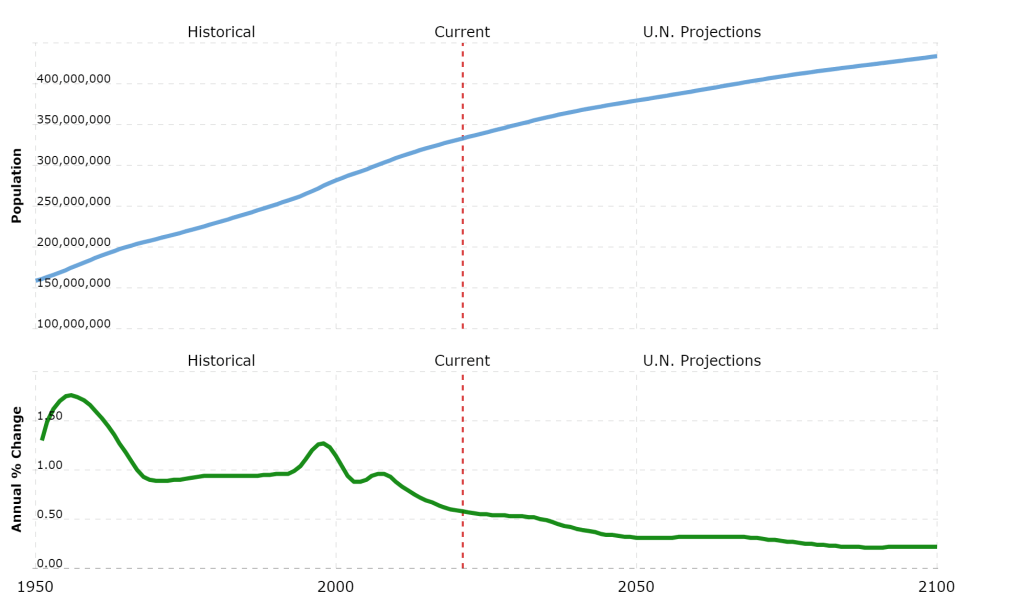

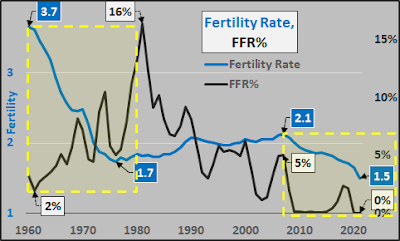


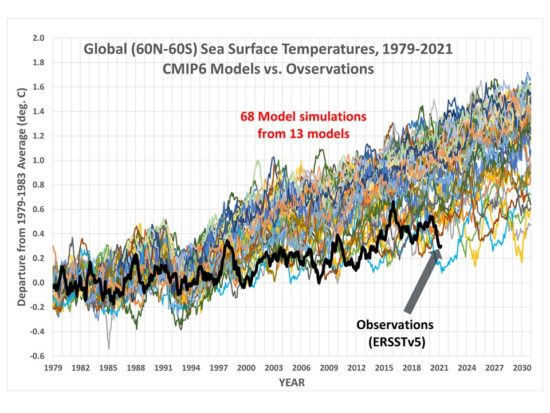
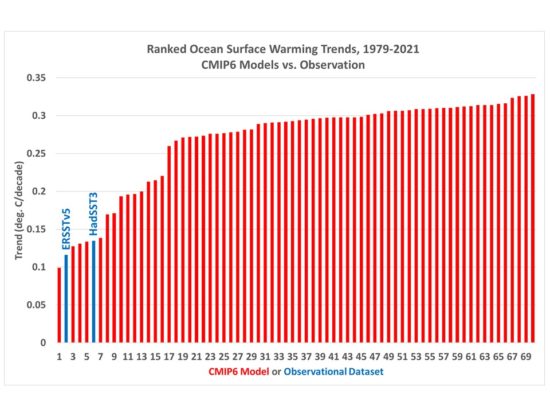
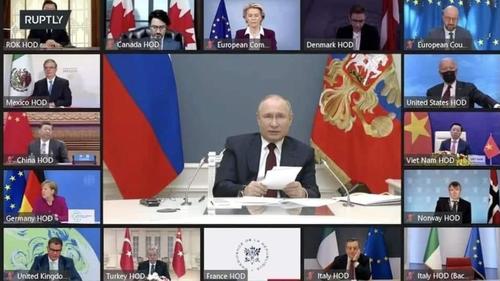
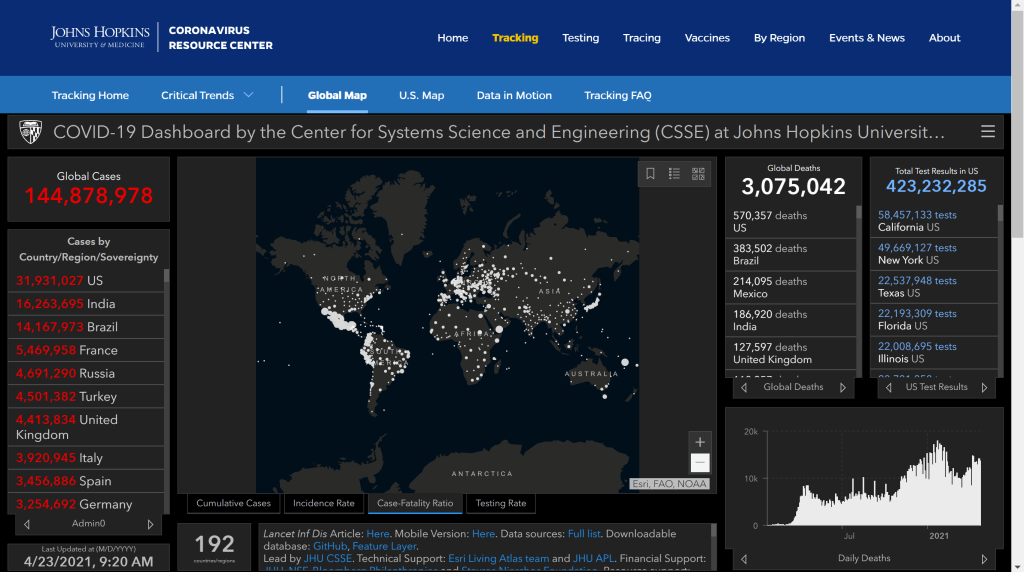

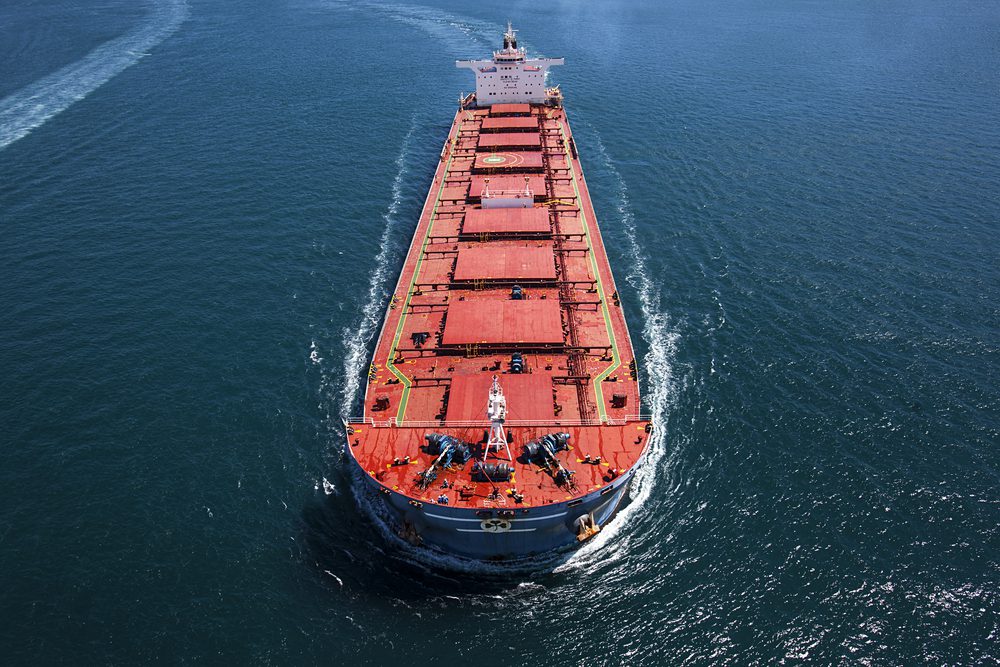

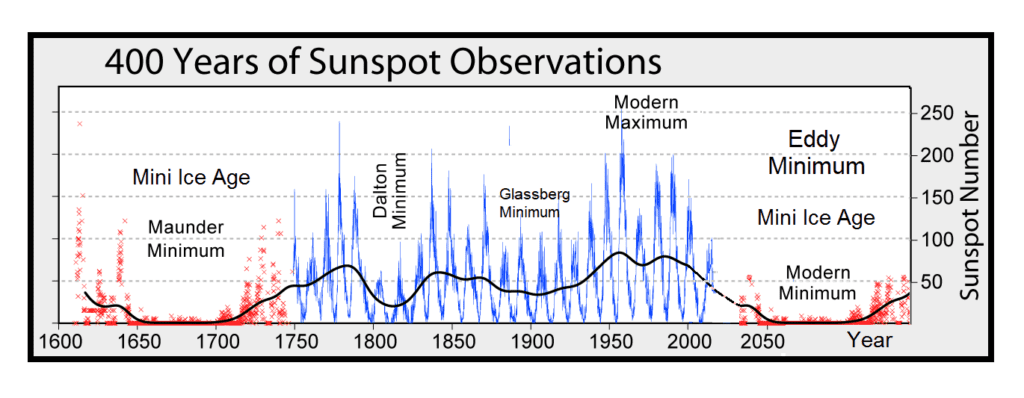
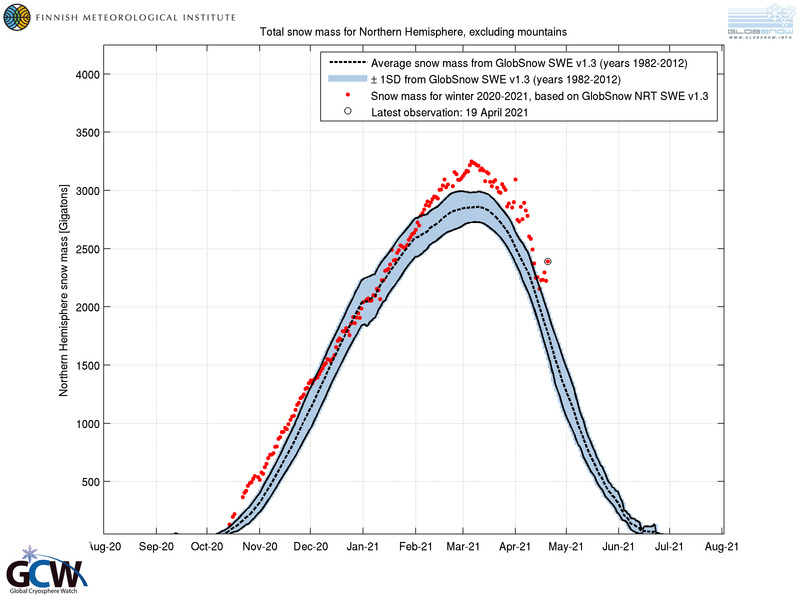



 Econophysics2020