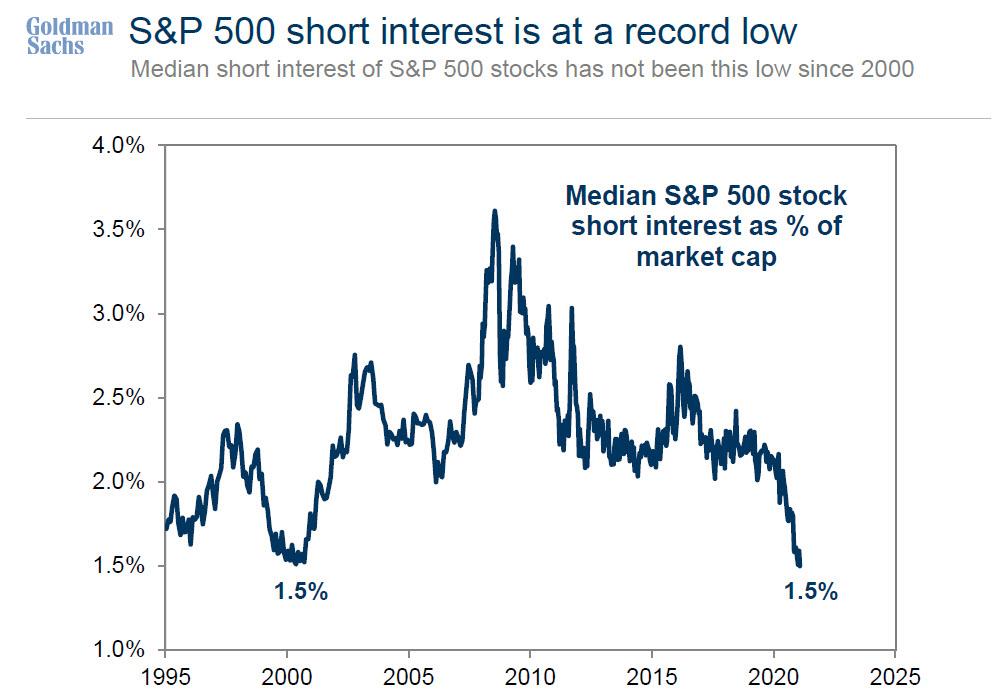
Tim Knight flags eight stocks in the financial space likely to weaken in the months ahead: https://slopeofhope.com/2021/03/sector-focus-financials.html
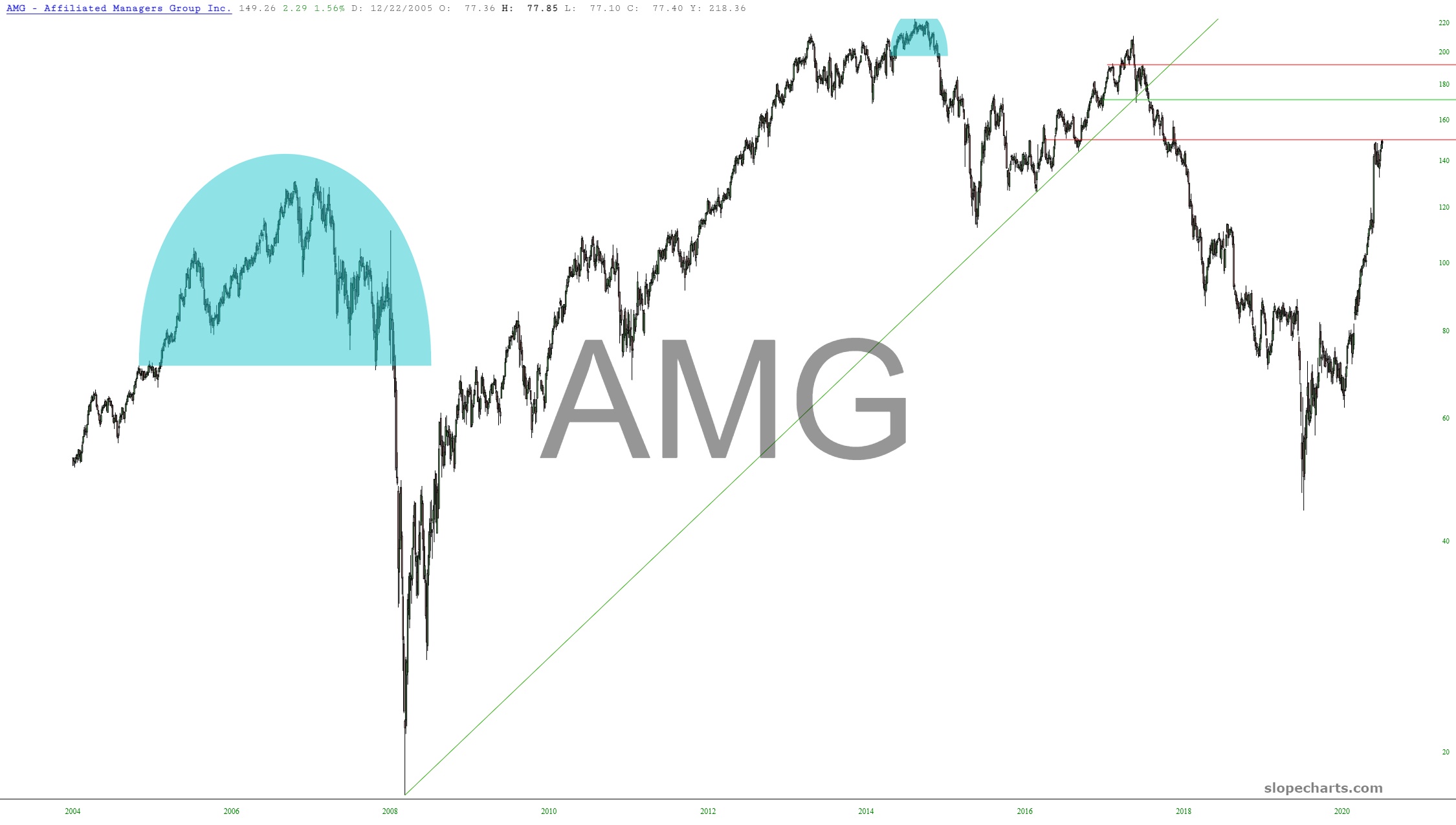
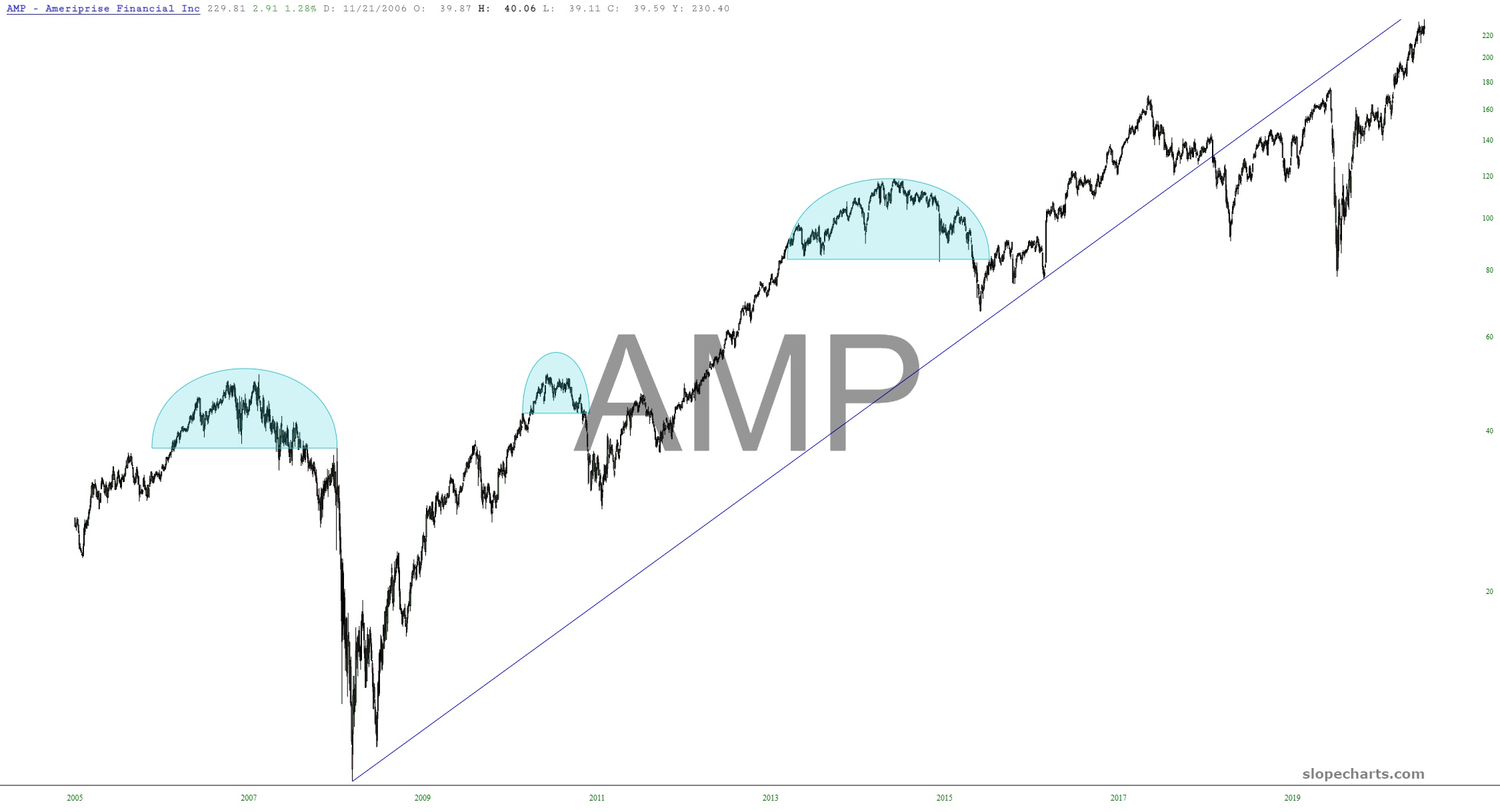

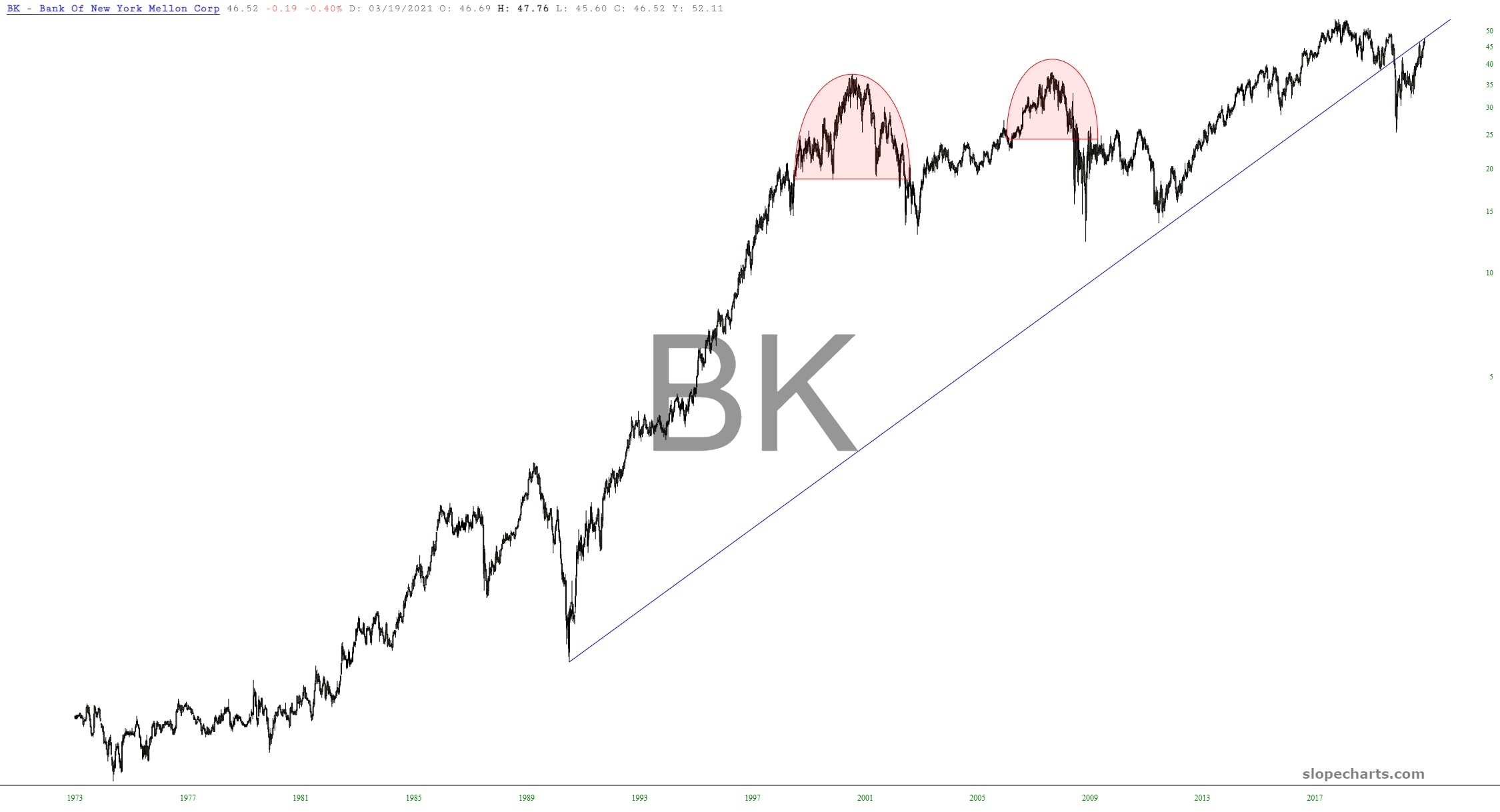
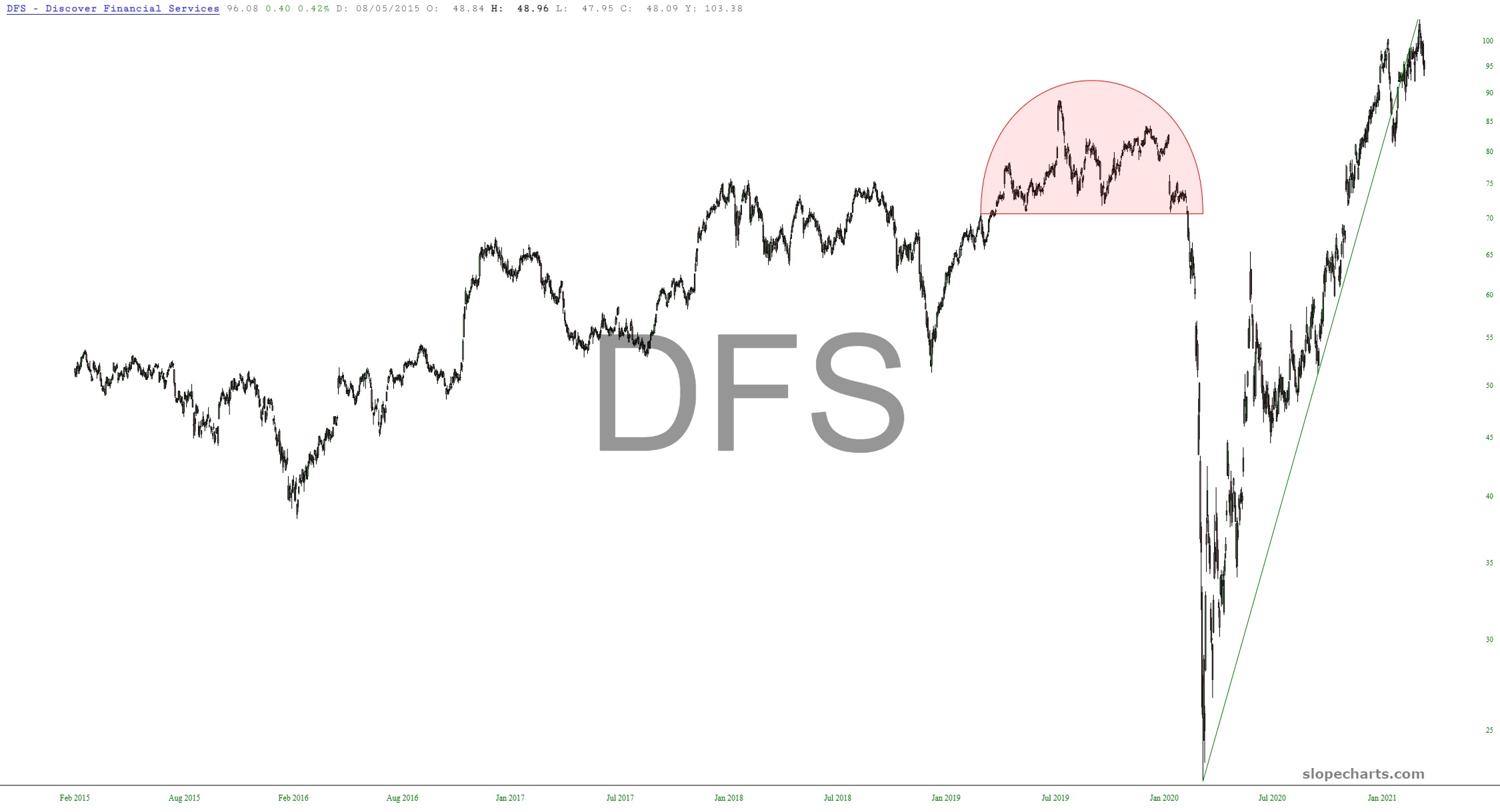
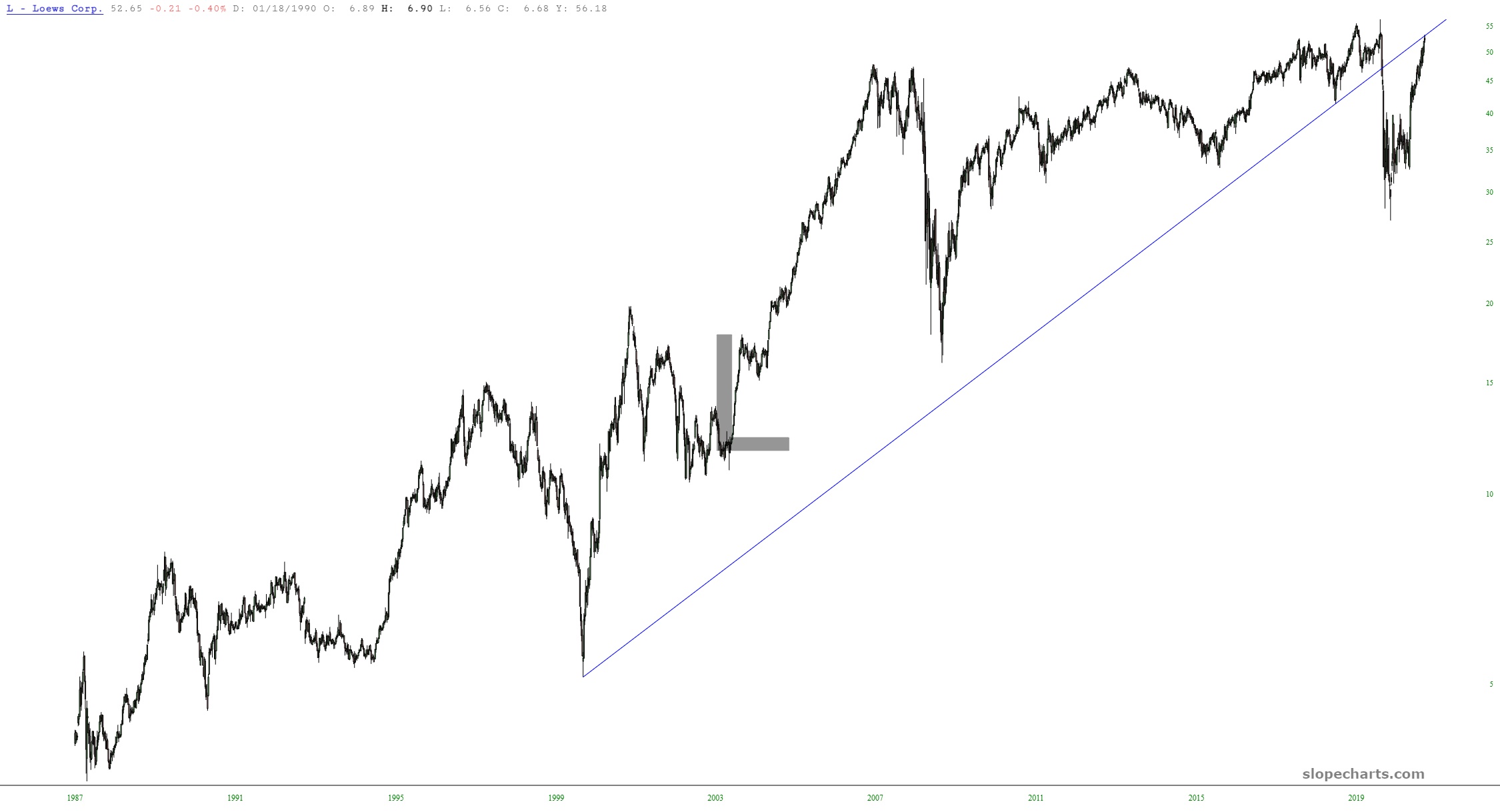
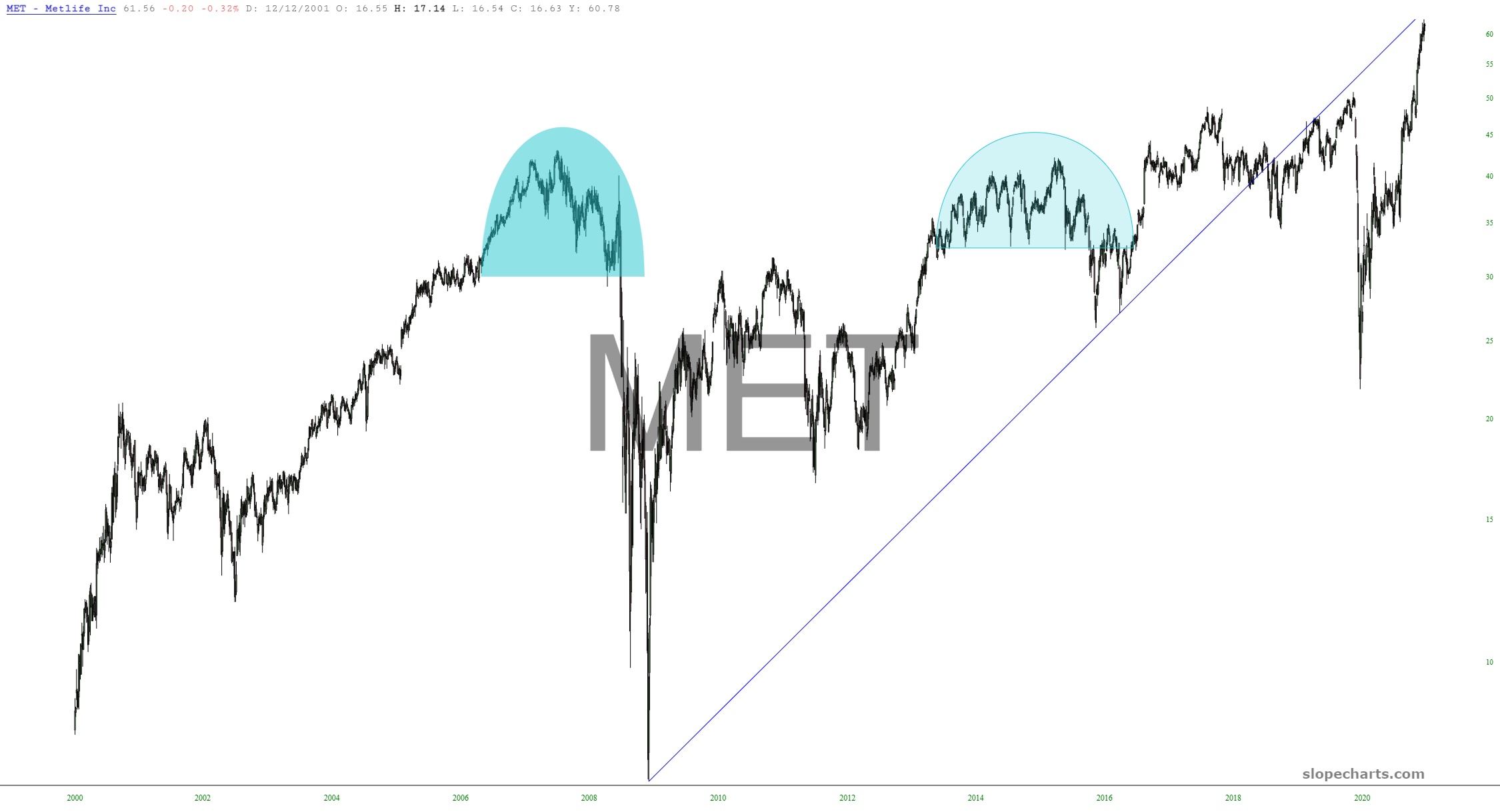

Tim Knight flags eight stocks in the financial space likely to weaken in the months ahead: https://slopeofhope.com/2021/03/sector-focus-financials.html
Courtesy of Tyler Durden: https://www.zerohedge.com/markets/another-mega-short-squeeze-deck
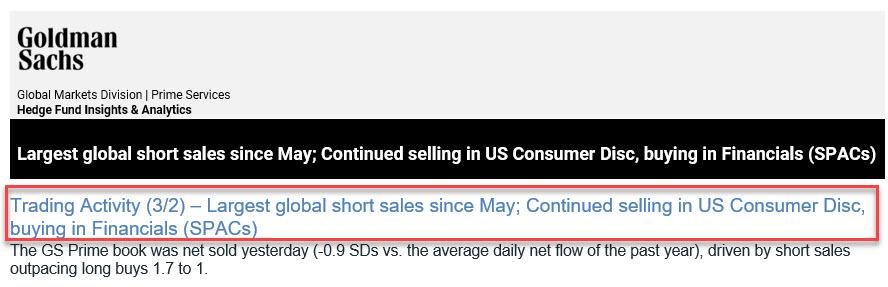
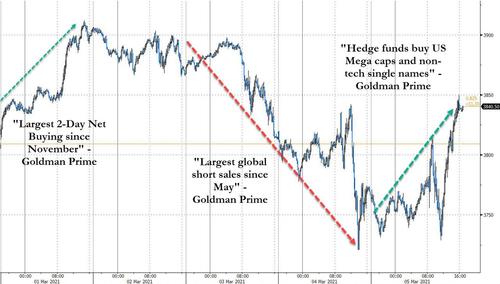
At the end of the first week of March which saw an eruption in violent market turbulence in the aftermath of the sharp spike in bond yields and the catastrophic 7Y auction we pointed out an observation from Goldman’s Prime Broker desk, which noted that halfway through the week, Goldman traders saw the “largest global short sales since May” with the GS Prime book was net sold yesterday (-0.9 SDs vs. the average daily net flow of the past year), driven by short sales outpacing long buys 1.7 to 1.” In fact, the mid-week puke wasn’t so much selling as short-selling, as “modest net selling (-0.5 SDs) was driven by short sales outpacing long buys 1.5 to 1.”
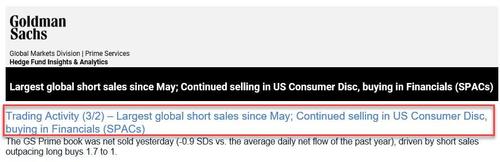
This prompted us to predict that what was coming would be a “mega squeeze” in stocks.
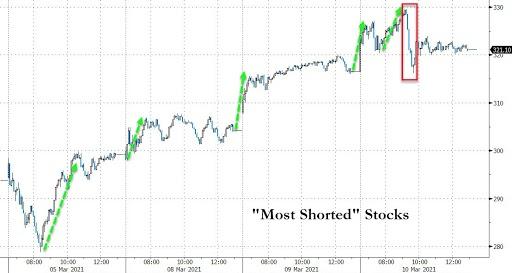
Sure enough just a few days later, on March 10, when stocks did explode higher in the second week of March, Goldman’s Prime Brokerage Service observed that Tuesday’s eruption was the result of “risk unwind in Macro Products vs. large net buying in Single Names” led by TMT and Consumer Disc stocks, with the Goldman Prime book net bought for a fifth straight day in which “trading flows were risk-off with short covers outpacing long sales 4 to 1.” And just to make sure there is no confusion, Goldman prime said that “yesterday’s de-grossing activity – short covers and long sales combined – was the largest since late January (-2.0 SDs).“
Furthermore, Bloomberg added that short covering in unprofitable tech firms helped the group halt seven straight days of selling and score the third-biggest net buying of the year. In fact, in the first two days of that week, Goldman basket of the most-shorted tech stocks soared 7%, more than double the return of the Russell 3000.
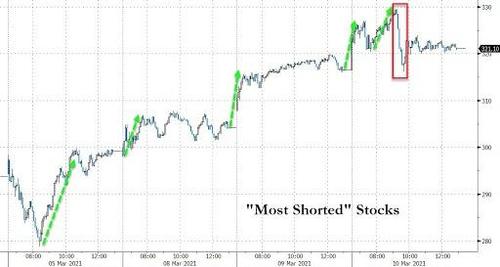
Commenting on the move, Andrew Brenner, the head of international fixed-income at NatAlliance Securities in New York told Bloomberg that “we see yesterday’s move as short covering without legs.” Ok fine, but tell that to any Nasdaq shorts whose legs – and everything else – was steamrolled in the historic move higher.
We concluded our post by saying that “with the latest iteration of shorts now out of the picture, it’s time for a new cohort of bears to take their place, and we wouldn’t be surprised if we see renewed weakness in the Nasdaq as a flood of new shorts hammers the tech index only to then suffer another massive squeeze and so on, rinse, repeat.”
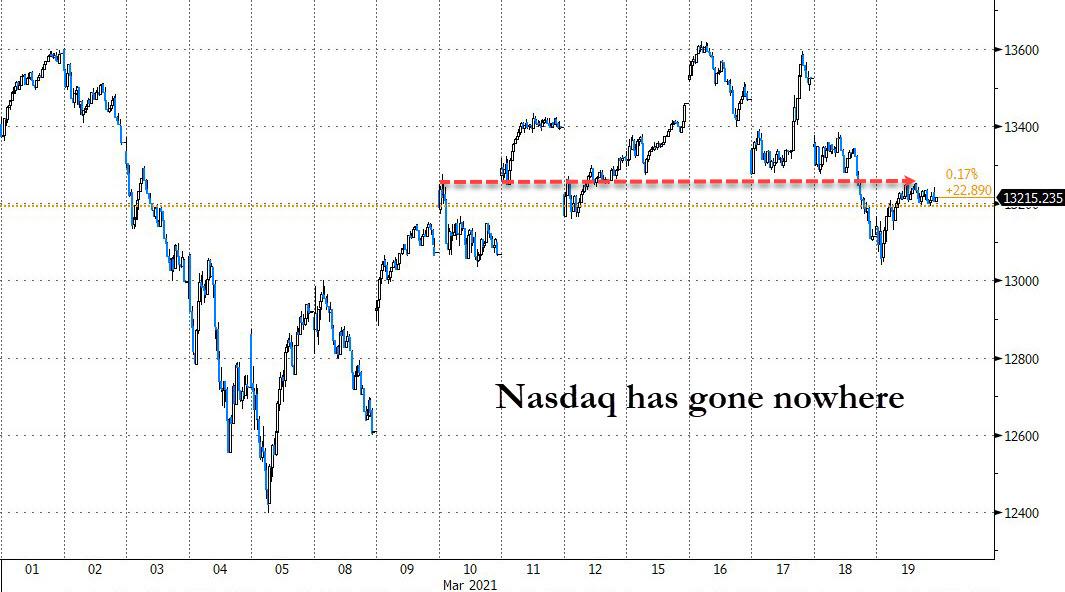
Well, one again that is indeed what happened because while the Nasdaq did move sharply higher for a few days, it closed on Friday precisely at the March 10 short squeeze high as every squeeze higher has been met with a fresh burst of shorting.
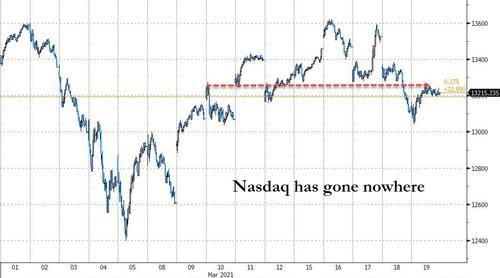
We bring all this up because we now have the latest Goldman Prime data and – drumroll – we appear to be headed for another mega squeeze!
As Goldman’s hedge fund client-facing desk wrote after the close on Friday, in a reversal of last week’s buying activity, “the GS Prime book saw the largest $ net selling since Dec ‘18 (-2.5 SDs), driven by short sales and long sales (3 to 1).” The bank then reveals that all regions and sectors saw increased shorting on the week with “Single Names/Macro Products were both net sold and made up 70%/30% of the $ net selling. With the exception of Asia which was net bought driven by long buying in Japan, all regions were net sold led by North America and Europe.” Finally, broken down by industry, “10 of 11 global sectors were net sold led by Consumer Disc, Comm Svcs, Info Tech, and Materials, while Financials was the only net bought sector.”
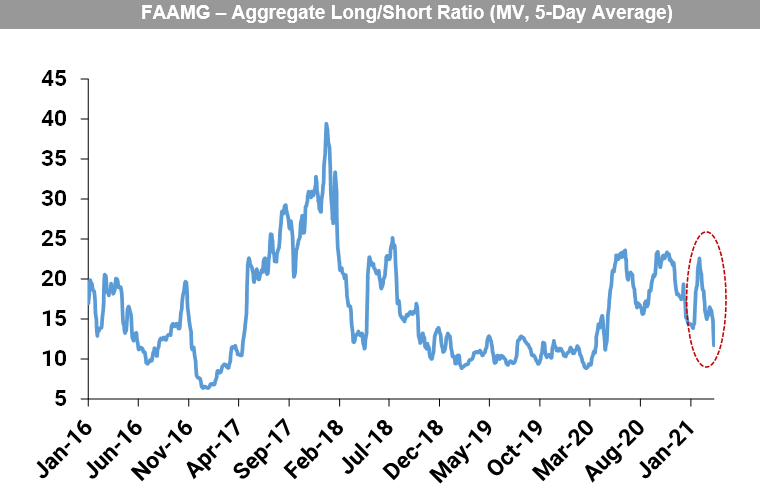
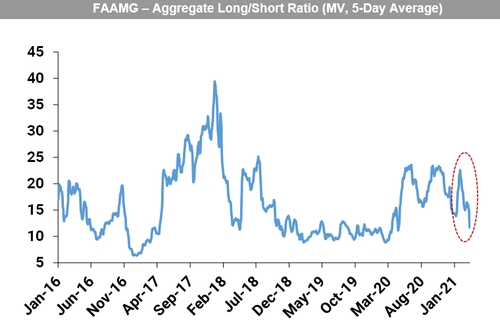
But what is most notable is that like two weeks ago, Goldman Prime reveals that “the largest net selling in US TMT Mega Caps since Mar ’20 driven by short sales” and the aggregate long/short ratio (MV) in FAAMG dropped -34% week/week on the GS Prime book to 10.41, which is the lowest level since Mar ’20 and in the 19th percentile vs. the past five years.
One final – and perhaps remarkable observation in light of the juggernaut that FAAMG had been for much of 2020 – the TMT Mega Caps (FAAMGs) collectively now make up 13.5% of the overall US net exposure in Single Names, down from 13.9% at the end of last week and 14.6% at the start of this year, according to GS Prime. The current level is in the 16th percentile vs. the past year and in the 55th percentile vs. the past five years. In short: traders are rapidly rotating away from the best performing sector of 2020.
Adding insult to injury the latest Goldman Prime data also shows that hedge funds haven’t generated any net alpha since the start of 2020 (!) for one simple reason: while the longs are modestly in the green, it is the collective shorts that keep steamrolling the “2 and 20” space, and every time hedge fund layer on shorts, an initial spike in covering leads to a furious cascade of closing out of bearish positions perhaps as a result of the market’s muscle memory where every attempt to go short has lead to pain and suffering for the bears leading to the lowest marketwide net short in history!
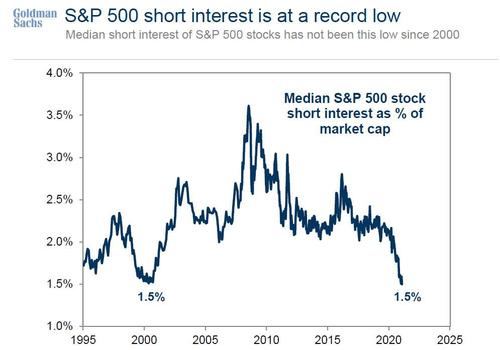
What does all this mean? Well, as a result of last week’s aggressive attempt to pile on shorts – the most since Dec 2018 when stocks collapsed due to Powell’s final rate hike which was seen as a huge policy mistake – we are once again facing the threat of a massive short squeeze, one exacerbated by the fact that hedge funds are now once again red for the year, as shown by the black line below…
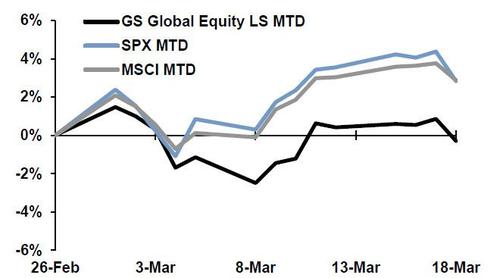
… making them extremely jittery and likely to close out any potentially devastating shorts at the sign of even the faintest of bullish catalysts. Well, with not one, not two but three appearances by Fed Chair Powell this week, all eager to make up for his latest FOMC fiasco that sent yields to fresh 2021 highs, there will be ample triggers for another face-ripping squeeze in the week ahead, and we are confident that in just a few days we will be once again discussing the latest “mega squeeze” leading to another historic market meltup with the full blessing of the Federal Reserve.
Recall Tyler in Fight Club:
The first rule of Fight Club is: You do not talk about Fight Club. The second rule of Fight Club is: You do not talk about Fight Club. Third rule of Fight Club: someone yells stop, goes limp, taps out, the fight is over. Fourth rule: only two guys to a fight. Fifth rule: one fight at a time, fellas. Sixth rule: no shirts, no shoes. Seventh rule: fights will go on as long as they have to. And the eighth and final rule: if this is your first night at Fight Club, you have to fight.

On St. Patrick’s Day, Charles Hugh Smith succinctly summarized the melt-up of the US economy (https://www.oftwominds.com/blogmar21/dead-money3-21.html)
In the era of widespread prosperity in the 1960s and 1970s, the velocity of money ratio remained in a band between 1.7 and 1.8, moving up toward 2 in the inflationary late 70s as it made sense to trade cash that was losing value for goods and services before it lost even more purchasing power.
Velocity returned to this range in the 1980s boom, and then rocketed to postwar highs at 2.2 in the Internet boom of the 1990s. Since that top in 1997, money velocity has been in a secular decline. As every Fed-inflated financial bubble pops, money velocity takes another leg down. Even before the pandemic, it was in a steady free-fall even as the supply of money steadily rocketed higher.
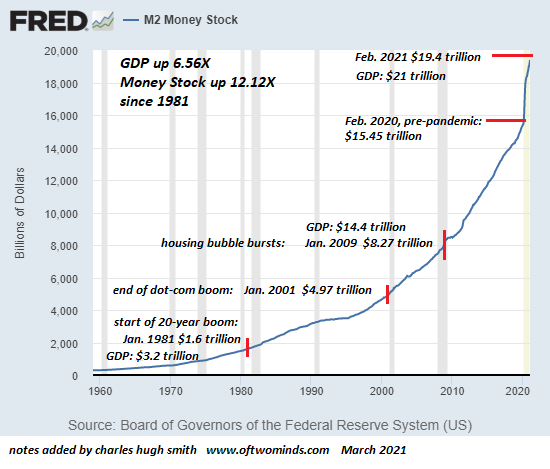
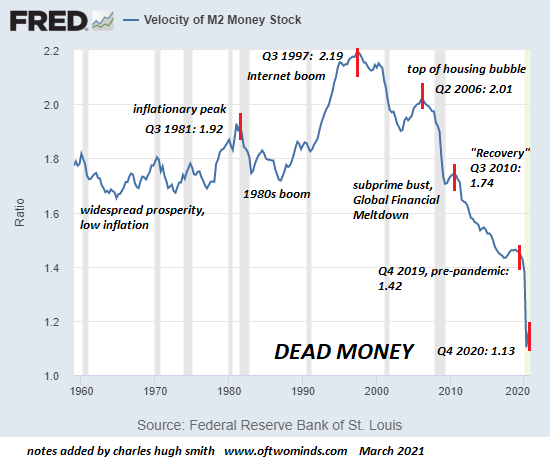
So what do we make of this stunning expansion of money and equally stunning collapse of money velocity? Ours is a Dead Money Economy. New money is created in the trillions of dollars, but it is either shipped overseas to exporters selling goods to Americans or it’s being stashed somewhere rather than being exchanged for domestically produced goods and services.
The rest of Smith’s piece expands on this obvious dynamic. But let’s pick up with the “how” of these dynamics with Weimin Chen’s note (https://www.austriancenter.com/what-the-shipping-container-shortage-reveals-about-us-china-trade/), in which he focuses on the stunning levels of shipping container flows.
Despite the record unemployment rate, widespread hardship to businesses, strains on the healthcare system, political turmoil, and general disruption to daily life in 2020, U.S. consumers have managed to ramp up their habit of buying things. Demand for physical goods replaced some of the previous demand for in-person service-related experiences and much of that demand was met with a surge of imports from China as domestic production slowed down due to lockdown measures. Up until recently, global supply chains managed to find their footing and could meet demand, but news has emerged that reveals stresses on the world’s shipping infrastructure and uncovers clues about the economic outlook.
Container Shortage and Chinese Exports
Global logistical networks recently began to suffer from a shortage of shipping containers as demand has suddenly risen. Freight rates from China to the U.S. have jumped by 300%. The container situation has become so extreme that hundreds of thousands of containers have been sent off empty from U.S. ports, mostly to China as exporters demand empty containers with increasing urgency. An estimated 177,938 containers, were rejected from loading U.S. export items at the ports of Los Angeles and New York/New Jersey alone and then sent across the Pacific.
The recent imbalance of shipping containers illustrates the latest state of affairs surrounding the US and Chinese economies. As exports of consumer goods from Asia eclipse exports of mostly commodity and raw materials from the U.S. — in this case, even blocking US agricultural exports from having shipping containers to reach foreign markets — the trade deficit between the two countries may become more important to these highly competitive economies.
When Trade Deficits Matter
The Austrian perspective on the U.S. trade deficit has long been that given the continued relative productivity of the U.S. economy, foreign desires to invest in the U.S., and demand for the dollar abroad, the trade deficit is a ‘pseudo-problem.’ The US competitive advantage vis-à-vis other countries in recent decades has made running a trade deficit highly probable and even favorable for Americans as they enjoy the consumption of cheaper imports.
Thus far, the parties involved have been satisfied with this arrangement as U.S. consumers bring in goods at favorable prices and producers receive a reliably stable world reserve currency; the U.S. dollar. However, the underlying conditions particular to the U.S. economy in relation to China may be changing. There are two aspects of the U.S.-China trade deficit that merit attention. The first is the effect of net consumption by the U.S. coupled with dovish monetary and fiscal policies whereas the second is what China plans to do with U.S. dollar accumulated through exports.
On the U.S. side of the equation, easy money from the central bank coupled with fiscal stimulus extended to consumers has juiced buying activity as the lockdowns have forced people to stay home and spend. It’s no wonder that shipping containers are rushing to get back to China. With the U.S. taking big hits to production and foreign investment in 2020, along with explosive increases in the money supply, critical questions arise regarding the nature of this trade deficit and how long the status quo can continue as the country pushes the boundaries of its exorbitant privilege. Indeed, the health of the dollar itself as it relates to trade deficits would be an indicator to watch in coming years.
In running a trade surplus with the U.S., China has traditionally exchanged its U.S. dollars for U.S. Treasuries to add to its balance sheet and to maintain its export advantage. In recent years, however, China has reduced its holdings in Treasuries. This trend has also coincided with massive spending on the part of China in the last decade on the Belt and Road Initiative (BRI) infrastructure and trade corridor project which involves 71 countries across Eurasia and Africa that encompass two-thirds of the global population and one-third of world GDP.
Given the continued global dollar demand, it would be shrewd for China to use accumulated dollars to acquire foreign assets and invest in projects that have the potential to generate future income. The trade war with the US in recent years has driven China to deepen its flow of trade toward surpluses with other emerging markets and forge strategic global relations.
As containers carry goods from China to the U.S. and rush to return empty to bring more, the moment provides a glimpse into a potentially precarious arrangement between the two countries. While the U.S. presently consumes itself into debt and liabilities, China has leveraged its productive surpluses from this relationship into increasingly influential assets that may strengthen its position and further challenge the U.S., and perhaps even the dollar itself.
Peter Schiff this tale a punchline (https://schiffgold.com/guest-commentaries/what-is-the-shipping-container-shortage-telling-us-about-the-economy/).
The annual trade deficit for goods came in at an all-time high in January, increasing $3.4 billion to a record $221.1 billion. In another sign of the massive trade imbalance, there is a shortage of shipping containers to bring things into the US.
In a nutshell, the Federal Reserve is printing money and the US government is giving it to unemployed people who aren’t producing anything. As Peter pointed out, “They’re buying the stuff that people in other countries are employed making.”
“So, it’s the productivity of the rest of the world that Americans are living off of, and the trade deficit evidences that and shows you that our whole economy, our whole recovery, is a fraud.”
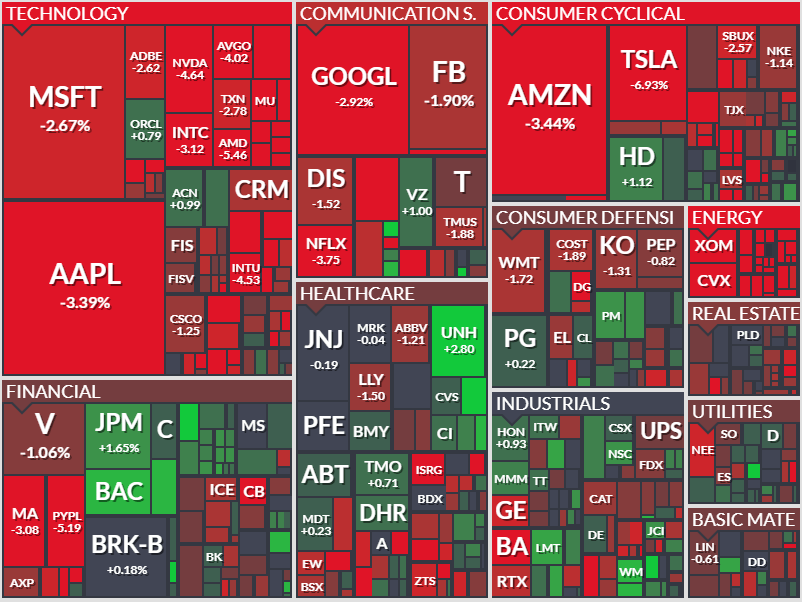
Tim Knight at Slope of Hope: https://slopeofhope.com/2021/03/jerome-pow.html
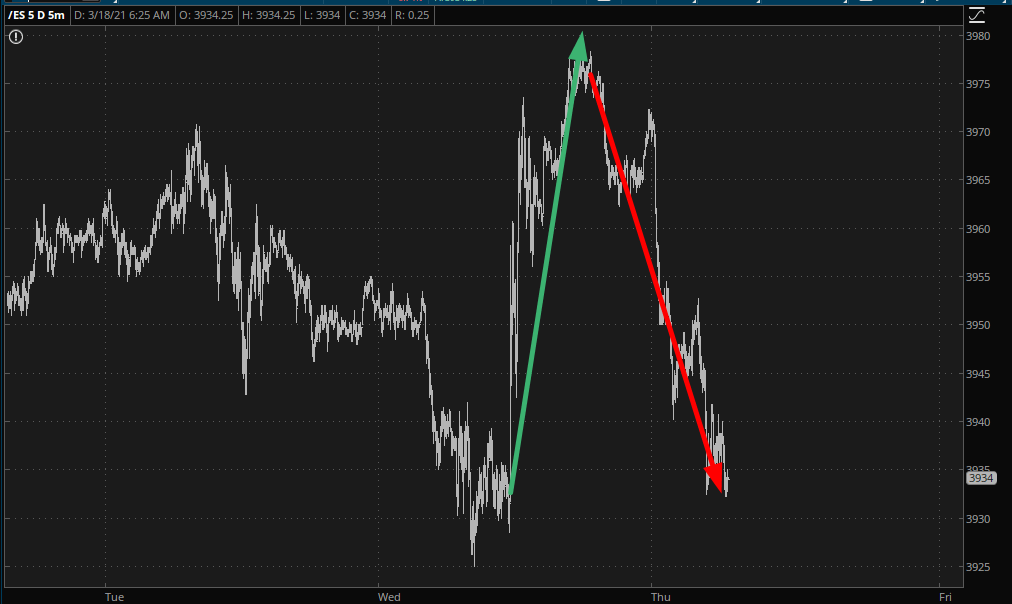
Well that didn’t take long. Yesterday, the good people of our once-great Republic had about half a trillion dollars shoved into their bank accounts. The great hope was that this mountain of “stimmy” would flow directly into equities, pushing the Dow to – – what? – – 90,000 in a few months? Added to which, the good, good people of the Fed pledged interest rates would stay at 0%….……well at least their interest rates, not the actual market’s……….through the end of 2023. Since they can see clearly what’s going to happen for the next three years. Absolutely.
Here’s the ES over the past couple of days. It decided Powell is full of it:
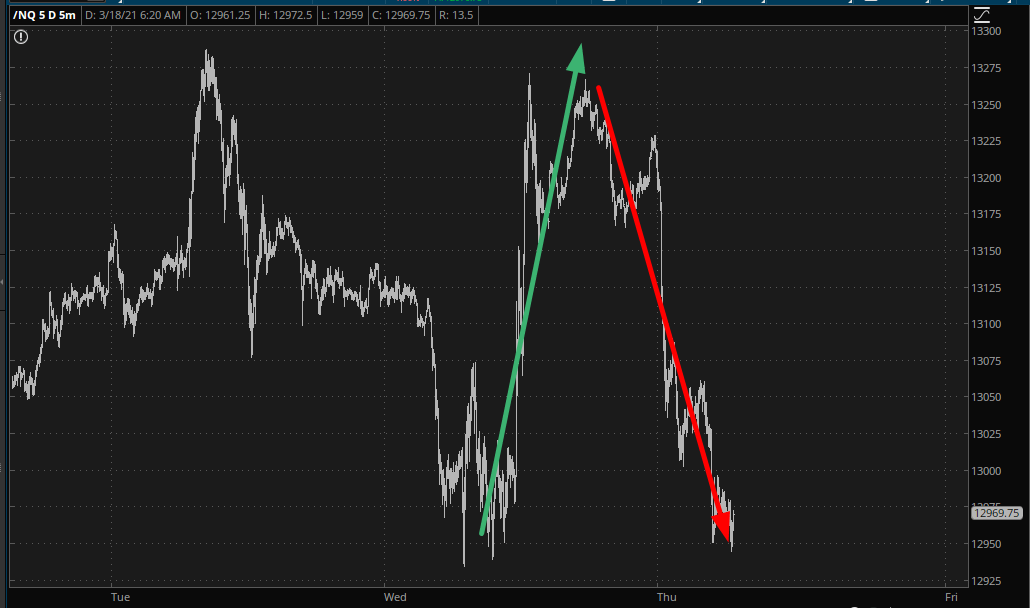
Not to be outdone, the NQ likewise vomited its gains all over the linoleum.
And, of course, gold completely fell to pieces, since That’s What Gold Does.

The reason? Bonds keep plunging. Day after day. Week after week. Month after month. And why wouldn’t they? Would you want to buy the debt instrument of a collapsing republic which will repay the debt in freshly-printed, worthless “money” 30 years down the road? Yeah, that’s what I thought.
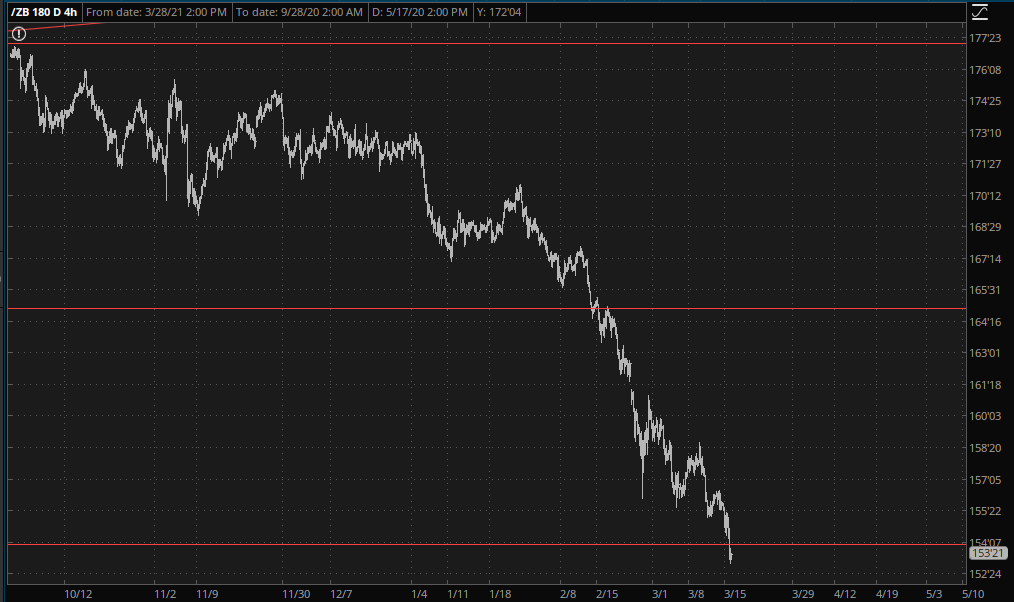
Thus, the NQ topping pattern still has a chance.

When I did my post yesterday evening, the markets were poised for yet more lifetime highs. Maybe there was a little truth in what I was writing.

Yahoo News: https://www.yahoo.com/gma/putin-challenges-biden-debate-president-181100287.html
Russian President Vladimir Putin has reacted to President Joe Biden calling him a “killer” by challenging Biden to take part in a conversation with him broadcast live online.
“I’ve just thought of this now,” Putin told a Russian state television reporter. “I want to propose to President Biden to continue our discussion, but on the condition that we do it basically live, as it’s called. Without any delays and directly in an open, direct discussion. It seems to me that would be interesting for the people of Russia and for the people of the United States.”
Putin’s invitation seemed to amount to a challenge to Biden to a live televised debate, following a day of diplomatic uproar that began when Biden said he thought Putin was a “killer” in an interview with ABC News’ George Stephanopoulos. Russia recalled its ambassador to the United States in response to the remark.
After issuing his invitation, Putin said he didn’t want to delay, proposing he and Biden hold the discussion as early as Friday.
“I don’t want to put this off for long. I want to go the taiga this weekend to relax a little,” Putin said. “So we could do it tomorrow or Monday. We are ready at any time convenient for the American side.”

In response to reporters’ questions, White House press secretary Jen Psaki suggested the discussion was unlikely to happen and noted that Biden is scheduled to travel to Georgia on Friday.
“I’ll have to get back to you if that is something we’re entertaining. I would say that the president already had a conversation with President Putin,” Psaki said, noting Biden still had other word leaders to talk with. “The president, of course, will be in Georgia tomorrow and quite busy,” she said.
Biden’s remarks in the ABC interview that aired Wednesday has triggered a furious reaction from Russia’s government, which unleashed a barrage of criticism and took the extraordinary step of recalling its ambassador back to Moscow for “consultations” over the comments.
In the interview, Stephanopoulos asked Biden if he thinks Putin “is a killer.”
“Mmm hmm, I do,” Biden responded.
Before issuing the discussion challenge, Putin reacted to Biden’s comment earlier with a playground retort: “I know you are, but what am I.”
“You know, I remember, in childhood, when we were arguing with each other in the courtyard, we would say, ‘I know you are, but what am I,’” Putin said. “And that’s no accident. It’s not just a childish saying. There is a very deep meaning in that.”
Putin suggested Biden was accusing him of what the U.S. itself is guilty of. He referred to the killings of Native Americans people during colonization and the injustice faced by African Americans.
The Russian leader also said he wished Biden “good health.”
“I would say to him: ‘Be well.’ I wish him good health. I say that without any irony, without jokes,” Putin said.
But while Putin has presented himself as responding with good humor, the rest of the Russian government has reacted with a torrent of outrage against Biden, who in the ABC interview also warned Putin would “pay a price” for meddling in American elections.
Kremlin spokesman Dmitry Peskov told reporters Thursday that Biden’s words had confirmed for them that Biden has no interest in improving relations with Russia.
“I’ll say only that these remarks by the U.S. president are very bad. He definitely doesn’t want to normalize relations with our country. And we’ll be acting based precisely on this premise,” Peskov said.

The move to recall its ambassador is almost unheard of in recent U.S.-Russian relations. The last time Russia recalled its ambassador for consultations was reportedly in 1998 in protest over the bombing of Iraq ordered by then-President Bill Clinton.
The Russian embassy in Washington D.C. said the ambassador, Anatoly Antonov, would leave Saturday. It said Antonov’s would have a meeting with the foreign ministry in Moscow to “discuss ways to rectify Russia-U.S. ties that are in crisis.”
Maria Zakharova, a spokesperson for Russia’s foreign ministry, said in a statement, “We are interested in not allowing the irreversible degradation” of relations with the U.S. “If the American realize the risks connected with that.”
Live debate? I guess that means the Sock Puppet can’t bring his teleprompter where his aides tell him what to say.
So, not happening.

Babylon Bee Exclusive: https://babylonbee.com/news/new-m1-abrams-tanks-to-come-equipped-with-changing-tables
LIMA, OH—As part of an ever-progressing military, a new feature has been added to the next line of M1 Abrams tanks: a diaper changing table.
“The horrors of war have often been unfriendly to the busy mom on the go,” said Department of Defense spokesman Clayton Brown. “Our mission is to change things so pregnant women and working moms all feel welcome in our quagmires in the Middle East and have opportunities to blow up the locals with depleted uranium shells.”
In addition to the changing table, each new tank will also be slightly larger in order to fit a private lounge for breastfeeding. So far, women in the military love the new components. “It’s really great as a mom to have these additional features,” said Private Lorraine Hodges, though she said the tank isn’t great for small children since it’s “very noisy” and “constantly under attack.”
The new tanks should be deployed worldwide very soon, as many hotspots aren’t doing very well since backup troops had to be rerouted to rebut Tucker Carlson on Twitter.

Scotland’s coldest winter in a decade will drag on in what the Weather Outlook calls a three-week “polar spring”. Central UK faces an 85% chance of snow with potential for southernto experience unseasonable lows of -5C (23F).
Central Europe expect a spring burial, with the Alps adding to the 3 meters (10 feet) of snow they’ve already suffered this week. Record-smashing totals will also hit Scandinavia and the Balkans. North Africa is also on fore rare, heavy late-March flurries.
All of this is on top of unusually high snowfall this year in the northern hemisphere – >2 sigma.

Oh, and don’t forget the increased volcanic activity associated with the solar minimum. As reported by the Smithsonian’s Global Volcanisn Program: https://volcano.si.edu/gvp_currenteruptions.cfm#:~:text=Overall%20there%20are%2045%20volcanoes,started%20eruption%20at%20the%20top.
Overall there are 45 volcanoes with continuing eruptions as of the Stop Dates indicated, and as reported through the last data update (28 January 2021), sorted with the most recently started eruption at the top. Information about more recently started eruptions can be found in the Weekly Report.
45 volcanoes compared to the 20 normally erupting.
Evil Speculator warns us about the ides of March: https://evilspeculator.com/beware-the-ides-of-march/
Soothsayer. Caesar!
Caesar. Ha! who calls?
Casca. Bid every noise be still: peace yet again!
Caesar. Who is it in the press that calls on me?100
I hear a tongue, shriller than all the music,
Cry ‘Caesar!’ Speak; Caesar is turn’d to hear.
Soothsayer. Beware the ides of March.
Caesar. What man is that?
Brutus. A soothsayer bids you beware the ides of March.105
Caesar. Set him before me; let me see his face.
Cassius. Fellow, come from the throng; look upon Caesar.
Caesar. What say’st thou to me now? speak once again.
Soothsayer. Beware the ides of March.
Caesar. He is a dreamer; let us leave him: pass.
William Shakespeare, “The Tragedy of Julius Caesar,” Act I, Scene 2
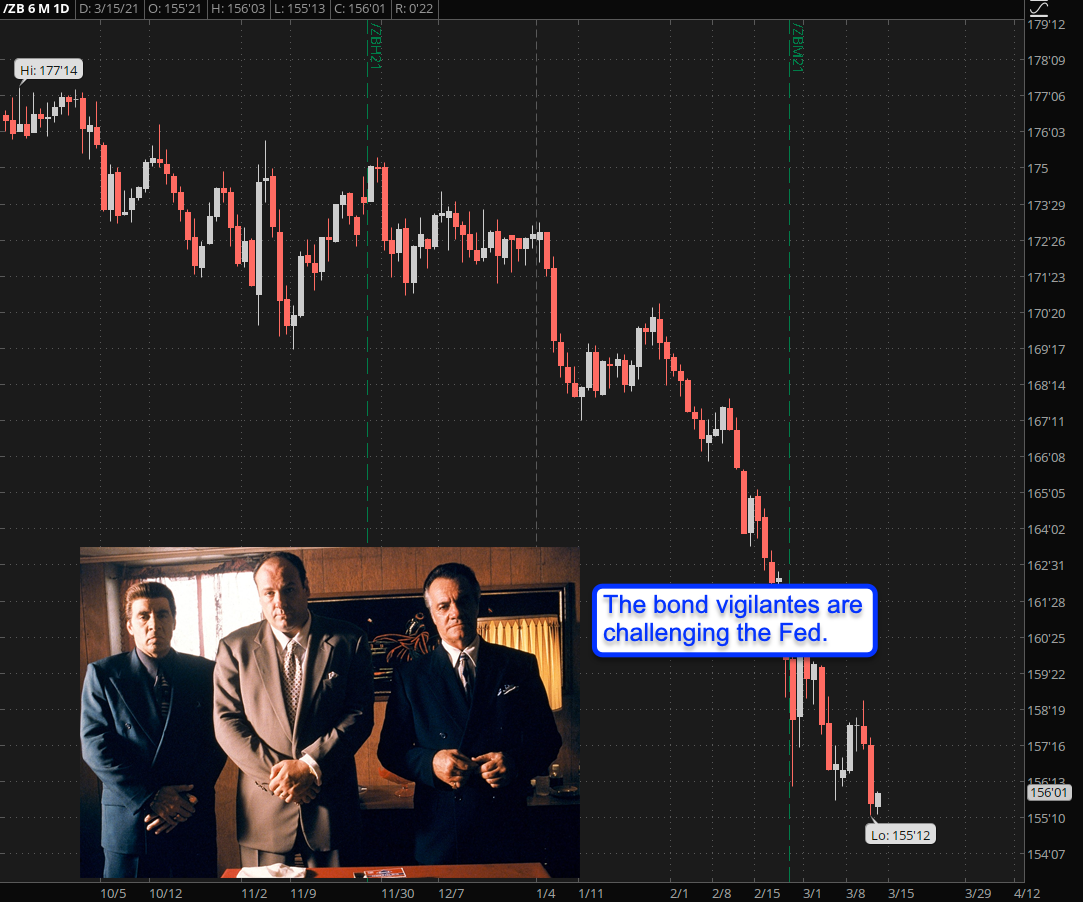
All eyes are on the Fed this week and how it will respond to the bond vigilantes who have effectively thrown down the gauntlet and are now waiting for the FOMC to respond in kind. First up let me be clear that the ZB trading near 155 is not that unusual which should be quickly apparent when pulling up a long term chart.
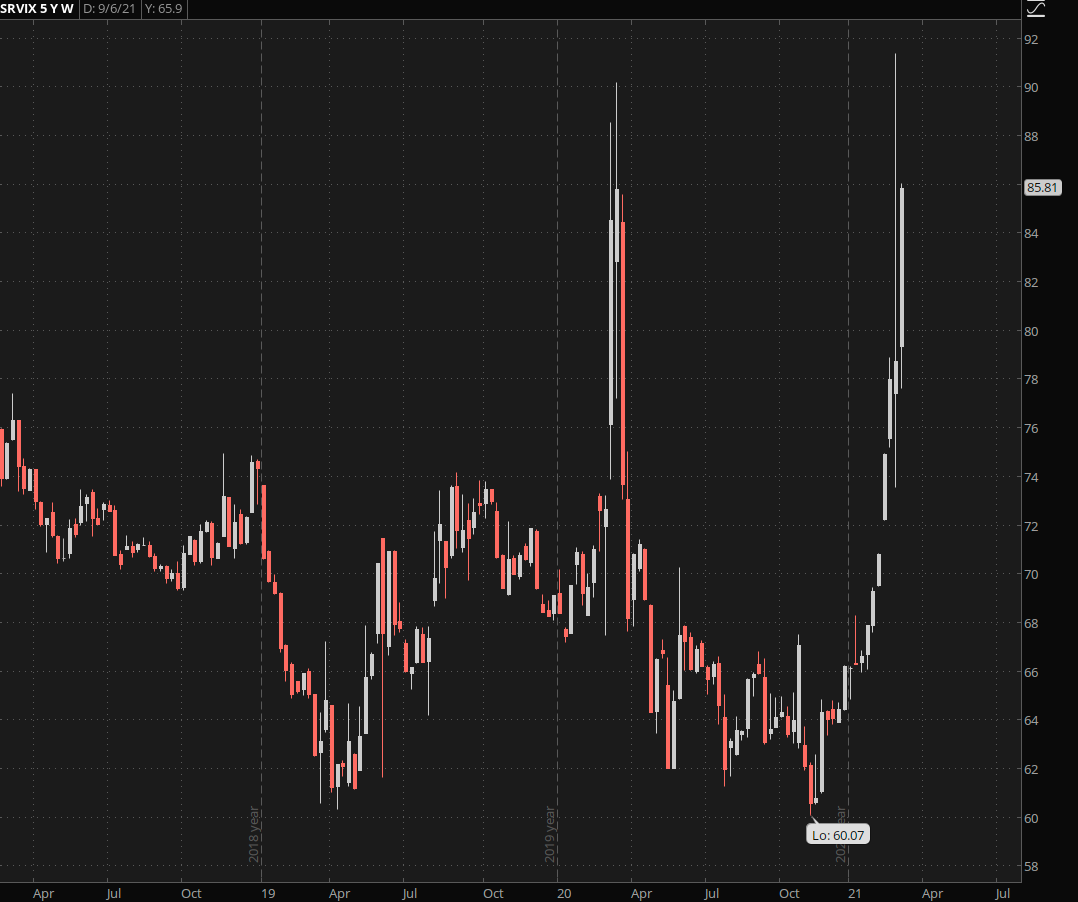
What’s worrisome is velocity of the current sell off and in particular the context in which it’s happening. The swap rate index which you are now are familiar with continues to climb higher by the day.
Nobody really knows what exactly this means as the OTC swap rate market is not something us mere mortals will ever be given access to. But clearly something extraordinary is going on and it can’t be good.
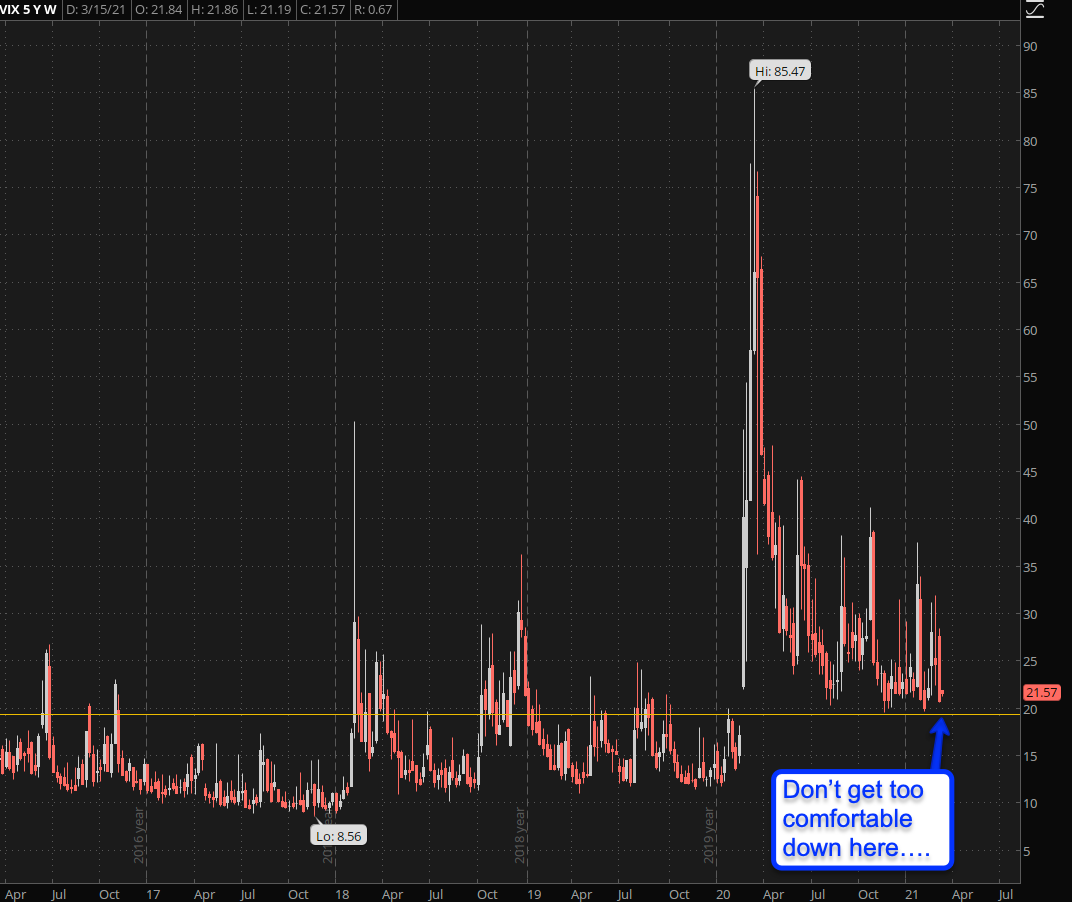
Meanwhile the VIX has descended back toward its new old baseline, but I for one won’t be getting too comfortable down here as this situation appears to be temporary.
Have a WordPress.com account? Log in now.